A mango sago pudding recipe creates a silky, refreshing dessert that combines soft tapioca pearls with creamy mango puree and sweetened condensed milk. This tropical pudding is a beloved Filipino and Southeast Asian treat that delivers bright mango flavor with delicate texture in every spoonful. The mango sago pudding recipe is incredibly simple to prepare, requiring just a handful of ingredients and basic cooking techniques that beginners can easily master. Whether served chilled as a summer dessert or incorporated into special celebrations, this classic mango sago pudding recipe offers comfort and sophistication on the same plate.
| Prep Time | Cook Time | Total Time | Servings | Difficulty | Cuisine |
|---|---|---|---|---|---|
| 15 minutes | 25 minutes | 40 minutes | 6 servings | Easy | Filipino/Southeast Asian |
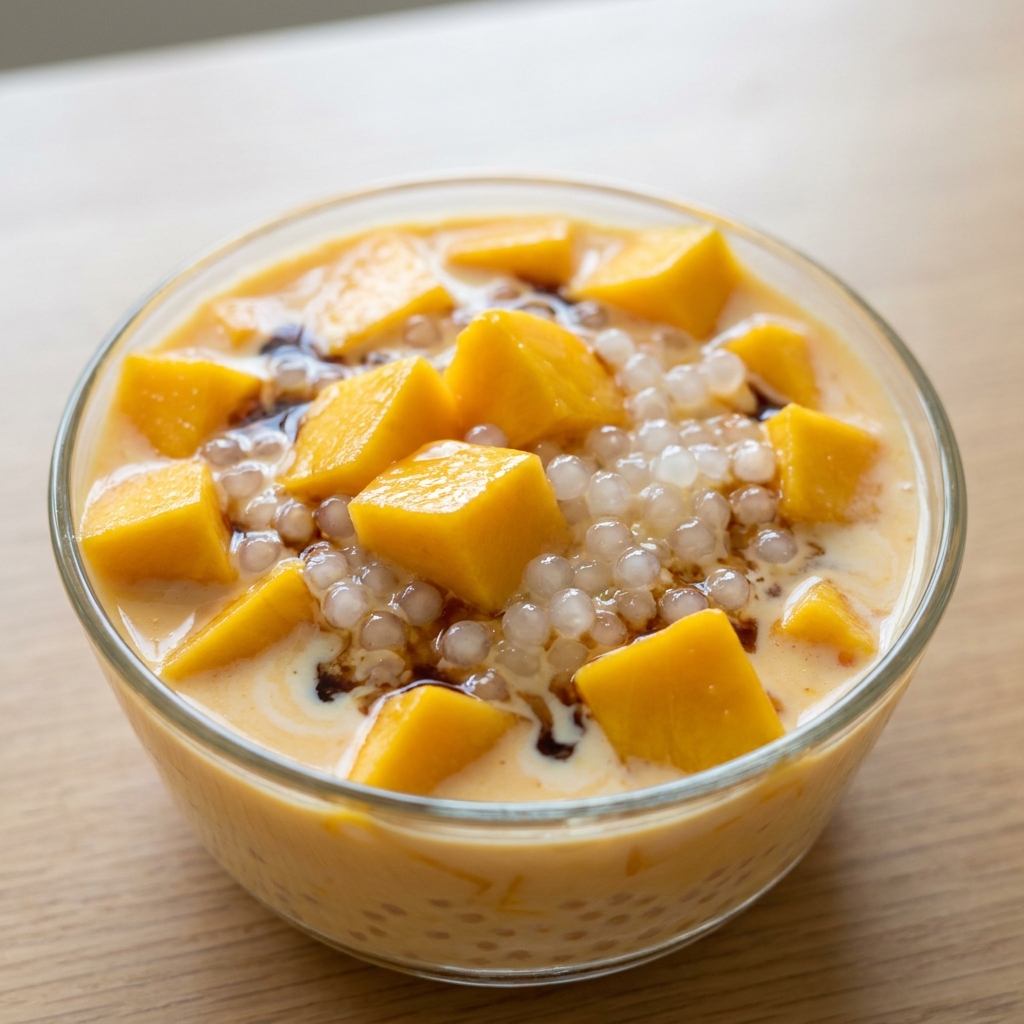
Table of Contents
Table of Contents
Why This Mango Sago Pudding Recipe Works
The mango sago pudding recipe works beautifully because it balances simplicity with impressive results that satisfy any dessert craving. I have made this mango sago pudding recipe countless times for family gatherings, and it never fails to draw compliments from guests. The combination of tender sago pearls and smooth mango puree creates a luxurious texture that feels indulgent without requiring specialized baking skills or equipment. What makes this mango sago pudding recipe so reliable is that every ingredient plays a specific role—the sago provides structure and chewiness, the mango delivers bright tropical flavor, and the condensed milk adds richness and sweetness.
This mango sago pudding recipe appeals to home cooks because preparation happens entirely on the stovetop, with minimal active time required. The flavors naturally complement each other without competing or overwhelming the palate, making this dessert appropriate for family dinners and formal occasions alike. Most importantly, this mango sago pudding recipe adapts beautifully to ingredient variations, allowing you to adjust sweetness, texture, and flavor intensity according to personal preferences.
The versatility of this mango sago pudding recipe cannot be overstated—you can serve it warm, at room temperature, or thoroughly chilled. The pudding holds well in the refrigerator for several days, making it an ideal make-ahead dessert for busy cooks. Every element of this mango sago pudding recipe has been tested and refined to deliver consistent, delicious results that anyone can achieve in their home kitchen.
What truly distinguishes this mango sago pudding recipe is how it captures the essence of tropical desserts while remaining accessible and affordable. The ingredient list remains short and budget-friendly, yet the final result tastes like it came from a professional pastry kitchen. This mango sago pudding recipe represents the perfect balance between ease of preparation and sophisticated flavor delivery.
Mango Sago Pudding Ingredients
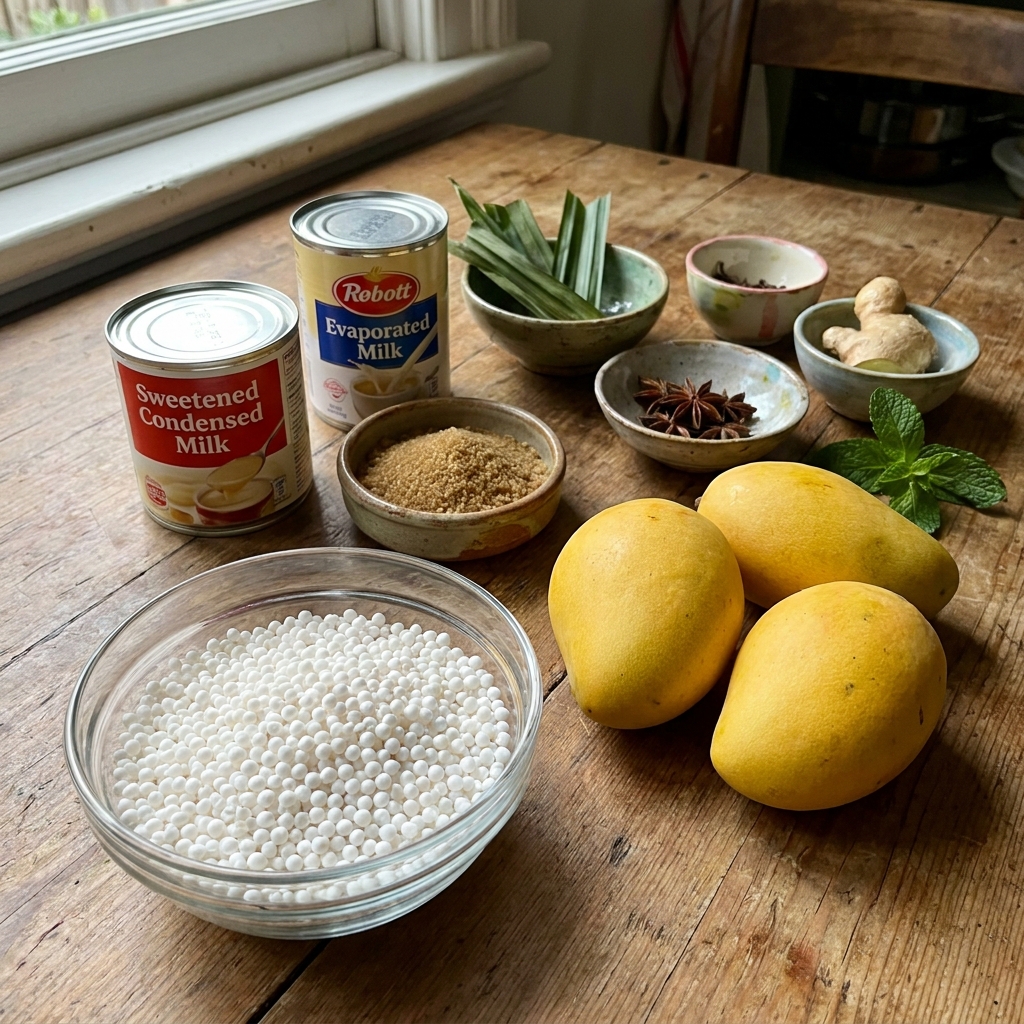
Creating an exceptional mango sago pudding requires fresh, quality ingredients that work in harmony to produce silky texture and bright mango flavor throughout. Here are all the ingredients you need to make this classic mango sago pudding recipe successfully.
| Ingredient | Quantity | Notes with Alternatives |
|---|---|---|
| Small tapioca sago pearls | 1/2 cup | Use pearl tapioca as a substitute for slightly larger texture. Small sago cooks faster and creates a more refined pudding. |
| Fresh ripe mangoes | 3 to 4 medium | Choose fragrant, yielding mangoes. Frozen mango puree works as a convenient alternative during off-season months. |
| Sweetened condensed milk | 1 can (14 oz) | Essential for richness and sweetness. Do not substitute with regular milk, as it lacks the needed fat and sugar content. |
| Evaporated milk | 1 can (12 oz) | Provides creamy texture without whipping cream. Non-dairy evaporated coconut milk works well for vegan versions. |
| Brown sugar | 1/4 cup | Brown sugar adds subtle caramel notes to the sago cooking liquid. White sugar can be used if brown sugar is unavailable. |
| Water | 3 cups | Use filtered water for cleaner flavor. This liquid becomes the sago syrup base. |
| Salt | 1/4 teaspoon | Enhances all flavors without making pudding taste salty. Sea salt or kosher salt both work well. |
The foundation of an excellent mango sago pudding recipe begins with selecting the finest ingredients available at your local market. Fresh, fragrant mangoes are non-negotiable for this mango sago pudding recipe, as they provide the signature tropical flavor that defines this dessert.
How to Make Mango Sago Pudding
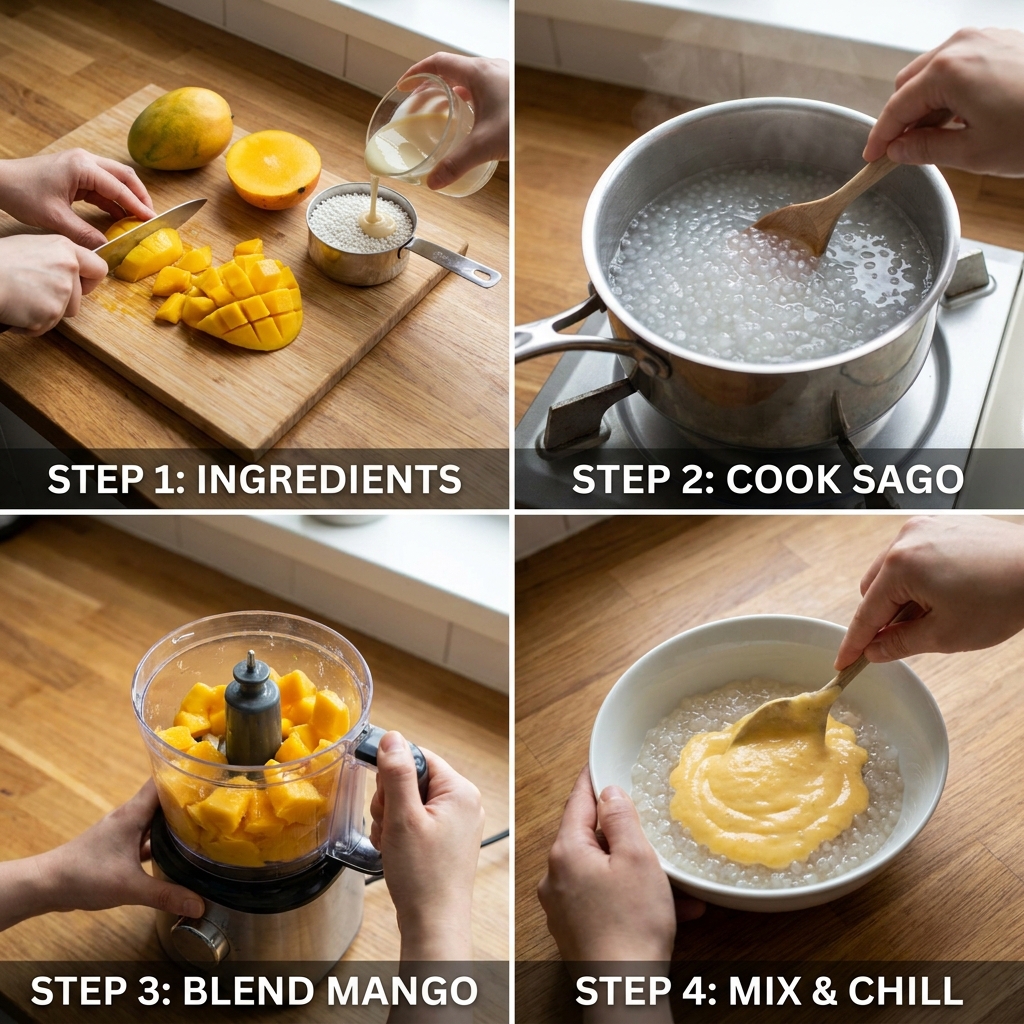
Making a perfect mango sago pudding requires following these steps carefully to develop the correct texture, flavor balance, and creamy consistency that defines this beloved dessert. This mango sago pudding recipe process is straightforward and takes about forty minutes from start to finish, allowing ample time for cooling before serving.
Preparing the Sago Base
- Boil three cups of water in a medium-sized saucepan over high heat, allowing it to reach a rolling boil.
- Add one-quarter cup of brown sugar and one-quarter teaspoon of salt to the boiling water, stirring until completely dissolved.
- Slowly pour one-half cup of small tapioca sago pearls into the boiling water, stirring continuously to prevent clumping.
- Reduce heat to medium and continue stirring frequently for twelve to fifteen minutes until sago pearls become translucent and soft.
- Add one can of evaporated milk to the cooked sago while still hot, stirring gently to combine without breaking the delicate pearls.
- Pour the hot sago mixture into a shallow bowl or container and allow it to cool to room temperature for approximately twenty minutes.
Creating the Mango Puree
- Select three to four ripe mangoes and carefully peel away the skin using a sharp vegetable peeler or knife.
- Cut the mango flesh away from the large central pit and discard the seed.
- Blend the mango flesh in a food processor or high-powered blender until completely smooth, ensuring no fibrous pieces remain.
- Strain the mango puree through a fine mesh sieve if desired to create an ultra-smooth texture for your mango sago pudding recipe.
- Measure approximately two cups of mango puree and set aside.
Combining Into Final Mango Sago Pudding
- Pour the cooled sago mixture into a large mixing bowl.
- Add one can of sweetened condensed milk to the sago, folding gently to distribute the creamy liquid throughout without crushing the pearls.
- Add the two cups of fresh mango puree to the sago and condensed milk mixture, folding carefully to combine.
- Taste the mango sago pudding recipe and adjust sweetness with additional brown sugar or mango puree according to your preferences.
- Refrigerate the finished mango sago pudding recipe for at least one hour before serving chilled.
- Stir the mango sago pudding gently before serving to redistribute the layers and ensure consistent flavor throughout each bowl.
Chef Tips for Perfect Mango Sago Pudding
Achieving excellence with your mango sago pudding recipe requires attention to specific details that separate good pudding from extraordinary mango sago pudding. These professional tips will elevate your dessert and ensure consistent results every single time.
- Cook the mango sago pudding recipe sago pearls until completely translucent, typically twelve to fifteen minutes of consistent stirring—undercooked sago remains gritty and unpleasant, while overcooked sago becomes mushy and loses its delicate texture that defines great pudding.
- Use the freshest mangoes available during peak mango season for maximum flavor intensity in your mango sago pudding recipe—if mangoes lack fragrance at the market, they will also lack the bright tropical flavor essential to this dessert.
- Add the evaporated milk to the hot sago immediately after cooking, as this allows proper integration and prevents the pudding from becoming grainy or separated in texture.
- Chill the mango sago pudding recipe for at least one hour before serving to allow flavors to meld and textures to set properly—rushed pudding served warm lacks the silky, refined consistency that makes this dessert special.
- Fold gently when combining ingredients rather than vigorously stirring to maintain the structural integrity of delicate sago pearls throughout your mango sago pudding.
- Reserve a few whole sago pearls before blending for visual presentation, as these provide textural interest and confirm the pudding’s authentic preparation method.
Common Mango Sago Pudding Mistakes to Avoid
Even simple recipes like mango sago pudding can develop problems when common mistakes occur during preparation or cooking. Understanding these pitfalls helps ensure your mango sago pudding recipe succeeds every time.
Adding sago too quickly to boiling water: This mistake happens when cooks rush the process and dump all sago at once, causing massive clumping and uneven cooking throughout the pudding. Fix this by adding sago slowly while stirring continuously, allowing each pearl to separate before more pearls enter the water. Preventing this ensures your mango sago pudding recipe develops the proper silky texture.
Using underripe or flavorless mangoes: This common error results in mango sago pudding that tastes bland and disappointing despite following instructions correctly. Choose mangoes that yield slightly to gentle pressure and emit a sweet, fragrant aroma—these indicators guarantee your mango sago pudding recipe will deliver bright tropical flavor.
Substituting regular milk for evaporated or condensed milk: This creates mango sago pudding that lacks body, richness, and proper consistency because regular milk contains insufficient fat and solids. Stick to the exact ingredients in this mango sago pudding recipe, as evaporated and condensed milk serve essential structural purposes.
Skipping the cooling period: This mistake results in mango sago pudding that remains too thin and runny, as flavors have not properly integrated and sago has not set correctly. Always allow your mango sago pudding recipe to chill for minimum one hour, which allows the texture to firm up properly.
Over-stirring when combining ingredients: Vigorous mixing breaks down delicate sago pearls and creates mushy mango sago pudding lacking the pleasant chewy texture that makes this dessert appealing. Fold gently when creating your mango sago pudding recipe to maintain perfect pearl integrity.
Best Mango Sago Pudding Variations and Substitutions
The wonderful flexibility of mango sago pudding recipe allows countless variations that adapt this classic to different tastes, dietary needs, and ingredient availability. Each variation maintains the essential character of traditional pudding while introducing exciting new dimensions to this beloved dessert.
| Ingredient | Substitution | Impact on Flavor |
|---|---|---|
| Sweetened condensed milk | Sweetened condensed coconut milk | Creates richer coconut undertones while maintaining creamy texture—excellent for tropical variation of mango sago pudding recipe. |
| Evaporated milk | Evaporated coconut milk | Delivers authentic Southeast Asian flavor profile to mango sago pudding recipe with minimal texture change—perfect for vegan versions. |
| Fresh mango puree | Combination of mango and pineapple puree | Adds tartness and complexity to mango sago pudding recipe while maintaining tropical character—use equal parts of each puree. |
| Brown sugar in sago base | White sugar with vanilla extract | Creates lighter, more subtle flavor while adding vanilla aromatics to mango sago pudding—reduces caramel notes from brown sugar. |
| Standard sago pearls | Pearl tapioca or boba pearls | Creates larger, chewier texture in mango sago pudding recipe—requires extended cooking time of three to five minutes. |
| All mango puree | Fifty percent mango, fifty percent passion fruit puree | Introduces bright tartness and complexity to mango sago pudding recipe while maintaining tropical essence. |
Creative experimentation with this mango sago pudding recipe encourages personal expression and allows you to customize this dessert to match specific dietary needs or flavor preferences. Each variation of mango sago pudding recipe maintains authenticity while introducing exciting new dimensions that keep this classic dessert fresh and interesting.
Serving Suggestions for Mango Sago Pudding
Mango sago pudding shines when served with thoughtfully chosen accompaniments that complement its tropical character and creamy texture without overpowering delicate flavors. This elegant dessert deserves presentation that honors its sophistication and refreshing nature.
Serve your mango sago pudding recipe in tall glasses or bowls with a layer of crushed graham crackers at the bottom, creating pleasing visual contrast and adding subtle texture. Top each serving with fresh mango cubes, toasted coconut flakes, and a drizzle of honey for elegant presentation that showcases the pudding’s natural beauty. For family gatherings, present mango sago pudding in a large glass bowl layered with graham crackers, allowing guests to serve themselves while admiring the beautiful golden color of the pudding.
Pair mango sago pudding recipe with light beverages such as iced tea, fresh limeade, or sparkling lemonade that complement tropical flavors without competing. During warm summer dinners, serve mango sago pudding as a refreshing palate cleanser after rich main courses, as the pudding’s cooling nature provides satisfying contrast. For special occasions, garnish each mango sago pudding serving with candied mango strips, edible flowers, and a small scoop of vanilla ice cream for sophisticated presentation.
Mango sago pudding recipe works beautifully as a weeknight family dessert, allowing children and adults alike to enjoy fresh tropical flavors in comforting format. This pudding also excels at potlucks and dinner parties, as mango sago pudding maintains its texture and flavor for several hours at room temperature or several days when properly refrigerated.

Storage and Reheating for Mango Sago Pudding
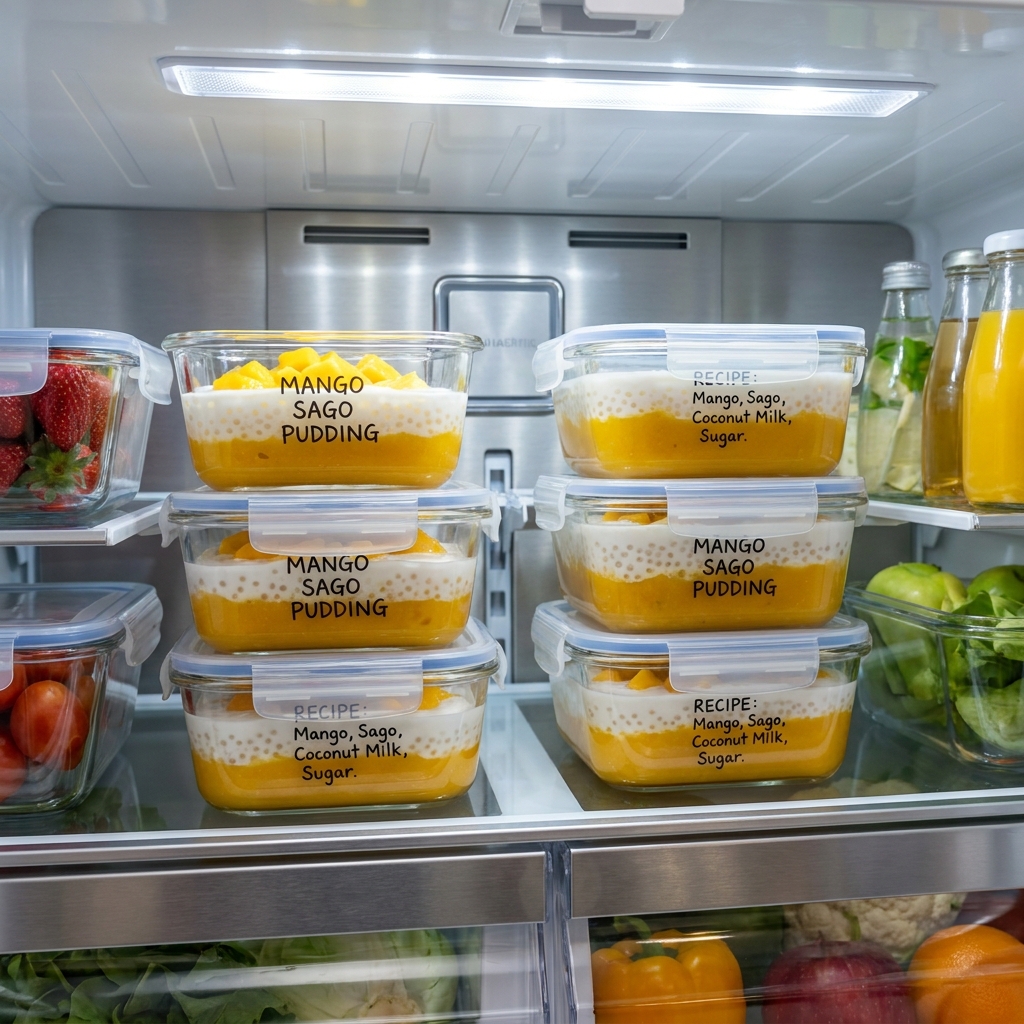
Proper storage ensures your mango sago pudding recipe remains fresh, delicious, and safe for consumption throughout the week, making this pudding an ideal make-ahead dessert for busy households. Understanding correct storage and handling procedures maximizes the enjoyment of this tropical treat.
| Method | Duration | Instructions |
|---|---|---|
| Refrigerator Storage | 3 to 5 days | Transfer mango sago pudding recipe to an airtight glass container and refrigerate immediately after cooling. Stir gently before serving to redistribute layers and ensure consistent flavor throughout each portion of pudding. |
| Freezer Storage | Up to 2 months | Pour mango sago pudding recipe into individual serving containers or ice cube trays, leaving slight headspace for expansion. Thaw overnight in refrigerator before serving—texture may become slightly grainy after freezing due to sago nature. |
| Make-Ahead Preparation | 12 hours in advance | Prepare mango sago pudding recipe completely through sago cooking step, then refrigerate covered. Add fresh mango puree and condensed milk just before serving to maintain bright flavor and prevent browning of fresh fruit. |
| Component Preparation | Sago base lasts 5 days, mango puree lasts 3 days | Prepare sago base and mango puree separately, storing each in airtight containers. Combine on the day of serving for maximum freshness and vibrant mango flavor in your pudding. |
| Room Temperature Storage | Up to 4 hours | Keep mango sago pudding recipe in a cool location away from direct heat or sunlight. This works well for potlucks and outdoor gatherings when refrigeration is temporarily unavailable. |
The wonderful shelf stability of mango sago pudding recipe makes it perfect for meal preppers and those who appreciate having homemade desserts readily available. This pudding actually improves as it sits, with flavors becoming more integrated and complex over twenty-four hours of storage.
Nutritional Information for Mango Sago Pudding
Understanding the nutritional profile of mango sago pudding recipe helps informed dietary choices while enjoying this delicious tropical dessert. The following nutritional information applies per standard serving of mango sago pudding, calculated for six equal portions.
| Nutrient | Amount per Serving |
|---|---|
| Calories | 245 |
| Total Fat | 3.2g |
| Saturated Fat | 2.8g |
| Cholesterol | 12mg |
| Sodium | 78mg |
| Total Carbohydrates | 52g |
| Dietary Fiber | 1.2g |
| Total Sugars | 45g |
| Protein | 2.1g |
| Vitamin C | 28mg |
| Calcium | 142mg |
Approximate values based on USDA data for mango sago pudding recipe ingredients. Individual nutritional content may vary based on specific brands used and exact preparation methods. Fresh mangoes provide significant vitamin C content, making this mango sago pudding recipe a naturally nutrient-rich dessert choice.
Frequently Asked Questions About Mango Sago Pudding
Can I make mango sago pudding recipe without condensed milk for a lighter version?
You can substitute half of the sweetened condensed milk with Greek yogurt or heavy cream to reduce overall sweetness while maintaining creamy texture in your mango sago pudding. However, condensed milk provides essential sweetness and texture that defines authentic mango sago pudding, so avoid completely eliminating it. If reducing sugar is your goal, use lighter evaporated milk and add less brown sugar to the sago cooking liquid.
How do I know when the sago pearls are perfectly cooked for mango sago pudding recipe?
Perfectly cooked sago pearls should be completely translucent with no opaque white center remaining—this indicates the tapioca has absorbed enough liquid and heat to cook through. Bite a pearl between your teeth; it should be soft and slightly chewy rather than gritty or mushy. If sago still appears cloudy after fifteen minutes, continue cooking for two to three additional minutes before adding evaporated milk to your pudding.
What can I use as a substitute for sago pearls in mango sago pudding recipe?
Pearl tapioca works excellently as a larger-textured alternative, though it requires five to eight additional minutes of cooking time compared to traditional sago. Boba pearls create fun Asian-inspired texture while maintaining pudding’s essential character. Small pasta shapes like orzo provide unique texture variation, though they lack the traditional chewy quality of authentic mango sago pudding.
Can I prepare mango sago pudding recipe hours in advance for entertaining?
You should prepare the sago base and mango puree separately up to one day in advance, storing each in airtight containers. Combine components only a few hours before serving to prevent browning of fresh mango and maintain bright tropical flavor throughout your mango sago pudding. This approach delivers maximum flavor and texture while allowing convenient advance preparation for entertaining.
How should I serve mango sago pudding recipe to guests at formal dinner parties?
Present mango sago pudding in elegant individual glasses with thin layers of graham cracker crumbles alternating with pudding, topped with candied mango strips and coconut flakes. Serve chilled but not ice cold, as this preserves the delicate mango flavor that becomes muted at very low temperatures. Place glasses on small doilies or serving plates with dessert spoons for sophisticated presentation of your homemade pudding.
Is mango sago pudding recipe suitable for freezing, and how does freezing affect texture?
Mango sago pudding freezes successfully for up to two months when stored in airtight containers with headspace for expansion. However, freezing and thawing may cause slight graininess in texture as ice crystals form within the pudding and sago pearls. Most home cooks find the minor texture change acceptable when mango sago pudding is thawed overnight in the refrigerator before serving.
What flavor profile works best when customizing mango sago pudding recipe variations?
Tropical fruits like pineapple, passion fruit, and coconut complement mango naturally in sago pudding variations. Citrus elements such as lime juice or passion fruit add brightness and balance sweetness without overwhelming delicate pudding. Avoid strongly flavored additions like ginger or cardamom, which can dominate the subtle mango essence that makes traditional mango sago pudding special.
How do I prevent my mango sago pudding recipe from becoming watery or separated?
Prevent separation by folding ingredients gently rather than vigorously stirring, which breaks down the sago structure and releases excess moisture into your pudding. Use room-temperature sago base before adding condensed milk and mango puree, as temperature differences can cause slight separation. Always add evaporated milk immediately after cooking sago, allowing proper integration while heat is still present in your pudding.
Can I make a dairy-free version of mango sago pudding recipe?
Create dairy-free mango sago pudding by substituting evaporated condensed coconut milk for all dairy products, using full-fat coconut milk for richness equivalent to cream. Sweetened coconut milk varieties work beautifully in place of condensed milk, maintaining traditional sweetness and mouthfeel. The resulting mango sago pudding maintains authentic character while accommodating dietary restrictions perfectly.
Why does my mango sago pudding recipe taste less flavorful than restaurant versions?
Restaurant mango sago pudding often uses more concentrated mango puree and additional mango essence compared to home recipes, creating more pronounced tropical flavor. Increase the amount of fresh mango puree to three cups or add a small amount of mango flavoring extract to intensify flavor in your homemade pudding. Additionally, using the sweetest, most fragrant mangoes available ensures maximum natural mango taste throughout your pudding.
What is the best way to reheat leftover mango sago pudding recipe if served warm?
Mango sago pudding is traditionally served cold, but you can gently warm it by placing the container in a warm water bath for five to ten minutes until pudding reaches desired temperature. Never microwave mango sago pudding, as heat distribution becomes uneven and sago pearls may rupture or become rubbery. Serve warmed pudding immediately, as reheating can affect delicate texture and fresh fruit flavors inherent in this beautiful dessert.
Conclusion
The mango sago pudding recipe delivers a sophisticated tropical dessert that satisfies cravings for something refreshing, creamy, and impressive without requiring advanced cooking skills. This pudding represents the perfect intersection of simplicity and elegance, offering restaurant-quality results from your home kitchen. The mango sago pudding recipe’s flexibility allows endless customization while maintaining the essential character that makes this classic Southeast Asian treat beloved worldwide. Whether you serve this pudding at family gatherings, dinner parties, or quiet evenings at home, the bright mango flavor and silky texture will create memorable eating experiences. Your first batch of homemade mango sago pudding will likely become the first of many, as this timeless recipe deserves a permanent place in your cooking rotation alongside other beloved family favorites.
Related Recipes You’ll Love
tiktok ramen noodles recipe
tiktok tomato feta pasta recipe
no butter single serve chocolate chip recipe
instant mango ice cream with cool whip curry
chana masala instant pot zero oil
homemade mounds bars 3 ingredients
berry cottage cheese breakfast bowl
healthy chocolate coconut snack cake gluten free
chocolate chip cookie dough brownie bites
bariatric gelatin recipe for weight loss
silken tofu miso dressing recipe
pink gelatin trick recipe for weight loss
caribbean curry bowl homemade recipe
Expert Resources and Food Safety
USDA FoodData Central: Nutritional Information Database
FDA Food Safety Resources: Food Storage and Handling Guidelines
Print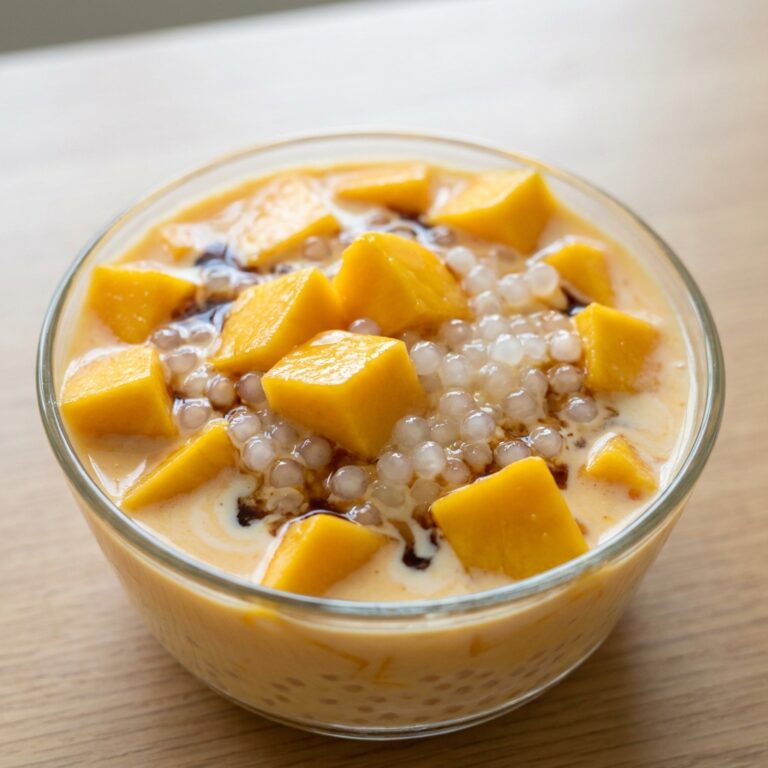
Viral Mango Sago Pudding Recipe 2026
A mango sago pudding recipe creates a silky, refreshing dessert that combines soft tapioca pearls with creamy mango puree and sweetened condensed milk. This tropical pudding is a beloved Filipino and Southeast Asian treat that delivers bright mango flavor with delicate texture in every spoonful.
- Total Time: 40 minutes
- Yield: 6 servings 1x
Ingredients
- 1/2 cup small tapioca sago pearls
- 3 to 4 medium fresh ripe mangoes
- 1 can sweetened condensed milk, 14 oz
- 1 can evaporated milk, 12 oz
- 1/4 cup brown sugar
- 3 cups water
- 1/4 teaspoon salt
Instructions
- Boil three cups of water in a medium-sized saucepan over high heat until it reaches a rolling boil.
- Add brown sugar and salt to the boiling water, stirring until completely dissolved.
- Slowly pour the small tapioca sago pearls into the boiling water while stirring continuously to prevent clumping.
- Reduce heat to medium and continue stirring frequently for 12 to 15 minutes until the sago pearls become translucent and soft.
- Add evaporated milk to the cooked sago while still hot, stirring gently to combine without breaking the pearls.
- Pour the hot sago mixture into a shallow bowl or container and allow it to cool to room temperature for about 20 minutes.
- Peel the ripe mangoes using a sharp vegetable peeler or knife.
- Cut the mango flesh away from the large central pit and discard the seed.
- Blend the mango flesh in a food processor or high-powered blender until completely smooth.
- Strain the mango puree through a fine mesh sieve if desired for an ultra-smooth texture.
- Measure about two cups of mango puree and set aside.
- Pour the cooled sago mixture into a large mixing bowl.
- Add the sweetened condensed milk to the sago and fold gently to distribute the creamy liquid without crushing the pearls.
- Add the fresh mango puree to the sago and condensed milk mixture.
- Fold carefully to combine into a silky mango sago pudding.
- Taste and adjust sweetness with additional brown sugar or mango puree if desired.
- Refrigerate the finished mango sago pudding for at least one hour before serving chilled.
- Stir gently before serving to redistribute the layers and ensure consistent flavor throughout each bowl.
Notes
Use fresh, fragrant ripe mangoes for the brightest tropical flavor. Add sago slowly while stirring continuously to prevent clumping, and chill the pudding for at least one hour before serving for the best silky texture.
- Prep Time: 15 minutes
- Cook Time: 25 minutes
- Category: Dessert
- Method: Stovetop
- Cuisine: Filipino/Southeast Asian
- Diet: Vegetarian
Nutrition
- Serving Size: 1 serving
- Calories: 245
- Sugar: 45g
- Sodium: 78mg
- Fat: 3.2g
- Saturated Fat: 2.8g
- Unsaturated Fat: 0.4g
- Trans Fat: 0g
- Carbohydrates: 52g
- Fiber: 1.2g
- Protein: 2.1g
- Cholesterol: 12mg