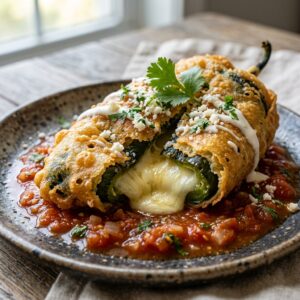
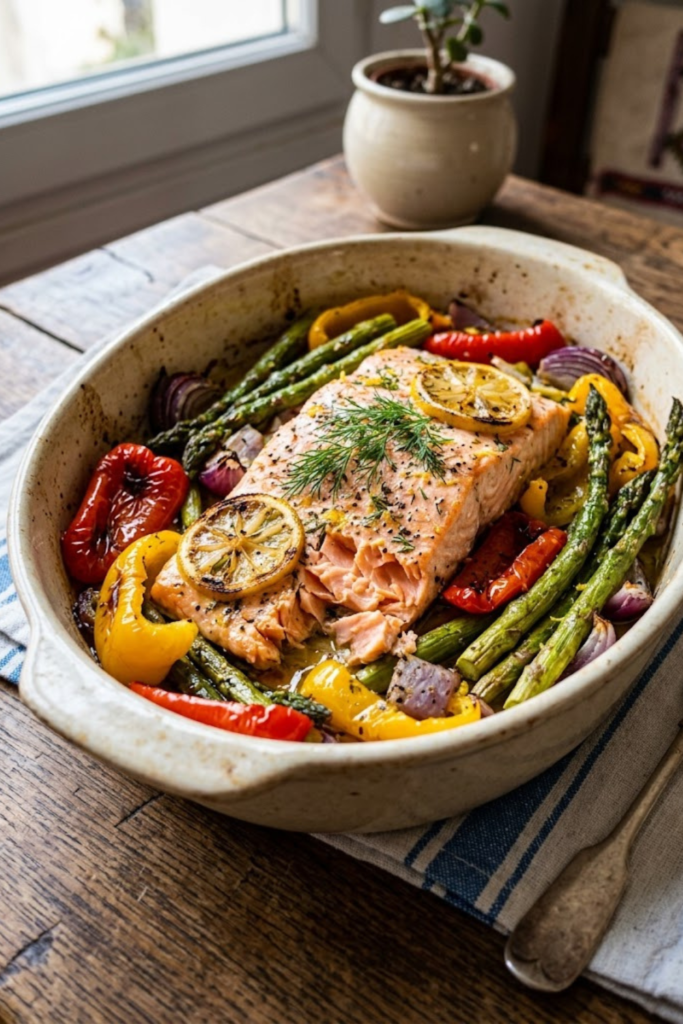
Did you know that nearly 70% of home cooks feel intimidated by cooking fish, yet eating fatty fish twice a week can boost your brain health significantly? I used to be one of those people! I’d stare at a beautiful piece of fish and worry I’d turn it into a rubber tire. But honestly, baked salmon with roasted vegetables changed my entire kitchen game. It is so simple. You just toss everything on a pan and let the oven do the hard work. This recipe is my go-to when I want to feel like a fancy chef without actually doing much work!
Selecting Your Fish
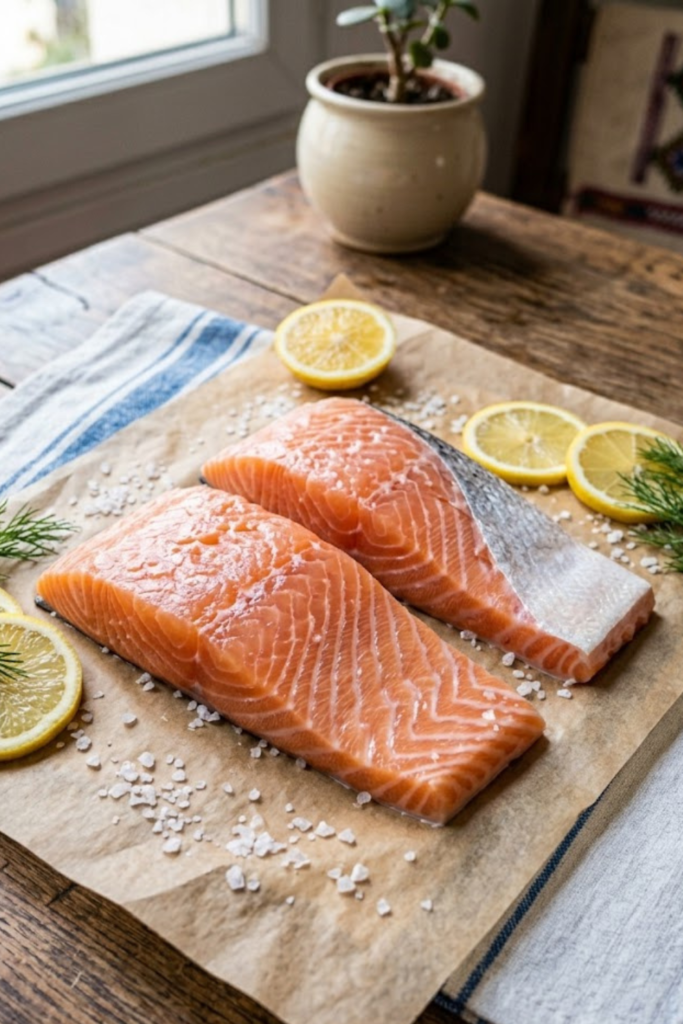
Picking out a piece of salmon can feel like a guessing game if you don’t know what to look for. I used to think all salmon was the same, but that mistake led to some pretty bad dinners. Getting the right fish is the most important step for your baked salmon with roasted vegetables. If the fish isn’t good, no amount of seasoning will save it. You want something that looks like it just came out of the water, not something that has been sitting on ice for a week.
Trust Your Nose First
The very first thing you should do is use your nose. I know it sounds weird to sniff around at the grocery store, but it works. Fresh salmon should have a very mild, clean scent. It should smell like fresh water or the sea. If you catch a whiff of anything “fishy” or sour, put it back immediately. One time, I bought a fillet that looked okay but smelled a bit off. I thought cooking it would fix the smell. It didn’t. The whole house smelled like old boots for three days! Now, I always trust my nose above everything else. If the store won’t let you get close enough to smell it, that might be a sign to shop somewhere else.
Look at the Color and Texture
Next, you want to look at the color and the way the meat looks. For wild salmon, you want a deep red or bright pink color. Farmed salmon is usually a lighter, paler pink. Both are fine, but you want the color to be even across the whole piece. Avoid any fish that has dark spots or looks brown around the edges. Also, look at the surface of the meat. It should look moist and shiny, not dry or slimy. If you can, ask the worker to poke the fish through the plastic or paper. It should be firm and springy. If their finger leaves a dent that doesn’t go away, the fish is getting old and losing its moisture.
Wild-Caught or Farmed?
You’ll see labels for “wild-caught” and “farmed” (or “Atlantic”) salmon. In my kitchen, I prefer wild-caught because the flavor is much stronger and it has less fat. However, it can be pricey. Farmed salmon is often thicker and has more of those white fat lines, which makes it very buttery. Either one works for this recipe, but I suggest trying both to see which one your family likes better. Just make sure the farmed stuff is from a good source. Some farmed fish can be a bit mushy if the quality is low.
Don’t Be Afraid to Talk to the Butcher
Finally, talk to the person behind the counter. I used to be shy, but now I ask them which fish came in today. They usually know which shipment is the freshest. Ask them to cut your fillets into even sizes, too. This helps everything cook at the same speed in the oven. Getting pieces that are about the same thickness means one person won’t get a dry piece while yours is still raw. It makes the whole process much smoother.
Prepping the Veggies for Maximum Flavor
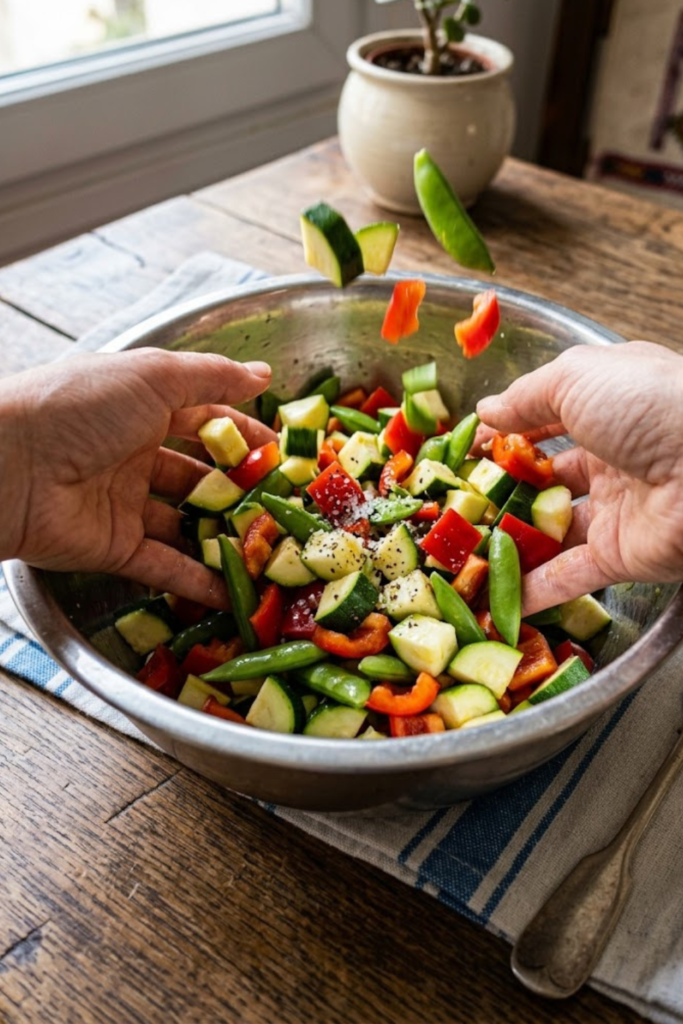
Prepping the veggies is actually my favorite part of making baked salmon with roasted vegetables. It feels like a little art project, but one you actually get to eat later! I used to just throw everything on a pan and hope for the best, but that usually ended in a soggy mess. I’ve learned a few tricks over the years that make a huge difference in how they turn out. You want them to be tender but also have those nice crispy edges that everyone fights over at the dinner table.
Timing is Everything
I learned pretty fast that not all vegetables are created equal in the oven. If you put carrots and spinach on the same pan at the exact same time, you are going to have a bad day. One will be hard as a rock and the other will be a pile of slime. For this meal, I usually stick with what I call “the big three”: broccoli, bell peppers, and zucchini. These guys all take about 15 to 18 minutes at 400 degrees, which is perfect for the fish. I make sure to cut them all into the same size pieces. If one piece is huge and another is tiny, the tiny one will turn into a little charcoal nugget before the big one is even warm.
Give Them Some Space
This was my biggest mistake for a long time. I would pile the veggies on top of each other because I was lazy and didn’t want to wash a second baking sheet. Huge fail! When they are all bunched up and touching, they release steam. Instead of roasting and getting brown, they just get soggy and sad. You want to give them their own little “personal space” on the parchment paper. If you hear them sizzling when they hit the pan, you are doing it right. If you see a lot of water pooling on the pan, you probably put way too many on there at once.
Don’t Skimp on the Oil
You really need to use enough oil to get that roasted flavor. I used to be stingy with the olive oil because I thought I was being “extra healthy,” but the veggies just came out dry and tasteless. Now, I use about two tablespoons for a whole sheet pan. I toss them in a big bowl first to make sure every single piece is coated before they go on the tray. I sprinkle on some garlic powder, salt, and black pepper. It is simple, but it tastes amazing. Sometimes I add a little dried oregano if I want it to smell like a fancy Italian kitchen. Just make sure you toss them well so the flavor is everywhere, not just on the top ones.
The Baking Process: Getting it Right Every Time
Alright, your oven is preheated and your pan is ready to go. This is usually the part where most people start to get a little nervous. I used to be the same way! I was so scared of undercooked fish that I would leave it in until it was basically a pink brick. But cooking baked salmon with roasted vegetables is actually much easier than it looks if you follow a few simple rules. You want the fish to be flaky and the veggies to be soft, and that all starts with the right heat.
Finding the Magic Temperature
I always set my oven to 400 degrees Fahrenheit. Some people say lower is better, but I disagree for this specific meal. At 400, the vegetables get that nice roasted flavor and the salmon cooks fast enough to stay juicy. If you go too low, the veggies just sit there and get mushy. If you go too high, the outside of the fish burns before the inside is ready. I usually put my tray right in the middle of the oven so the heat hits everything evenly. It’s a solid middle ground that hasn’t failed me yet. Most fillets take about 12 to 15 minutes at this heat, depending on how thick they are.
The Fork Test and the “White Stuff”
The biggest question I get from my friends is, “How do I know it’s done?” I don’t like using fancy thermometers because I always lose them in the junk drawer. Instead, I use a regular old fork. Just poke the thickest part of the salmon and twist a little bit. If the meat flakes apart easily, it is done. If it still feels tough or looks dark and translucent in the middle, give it two more minutes. You might see some white stuff oozing out of the fish while it bakes. Don’t panic! It’s just a protein called albumin. It’s totally safe to eat, but if there is a lot of it, you might have cooked it a bit too long. Think of it like a little signal from the fish to pay attention.
Don’t Forget the Resting Time
The final step is actually the hardest part: waiting. Once you pull that tray out, let it sit on the counter for about five minutes. I know the kitchen smells amazing and you’re probably starving, but those five minutes are huge for the texture. It lets the juices move back into the center of the meat so it doesn’t all run out on the plate when you take your first bite. One time I was so hungry I ate it right off the pan and burned my mouth, and the fish felt dry. Just set a timer and wait. Your dinner will be much better for it.
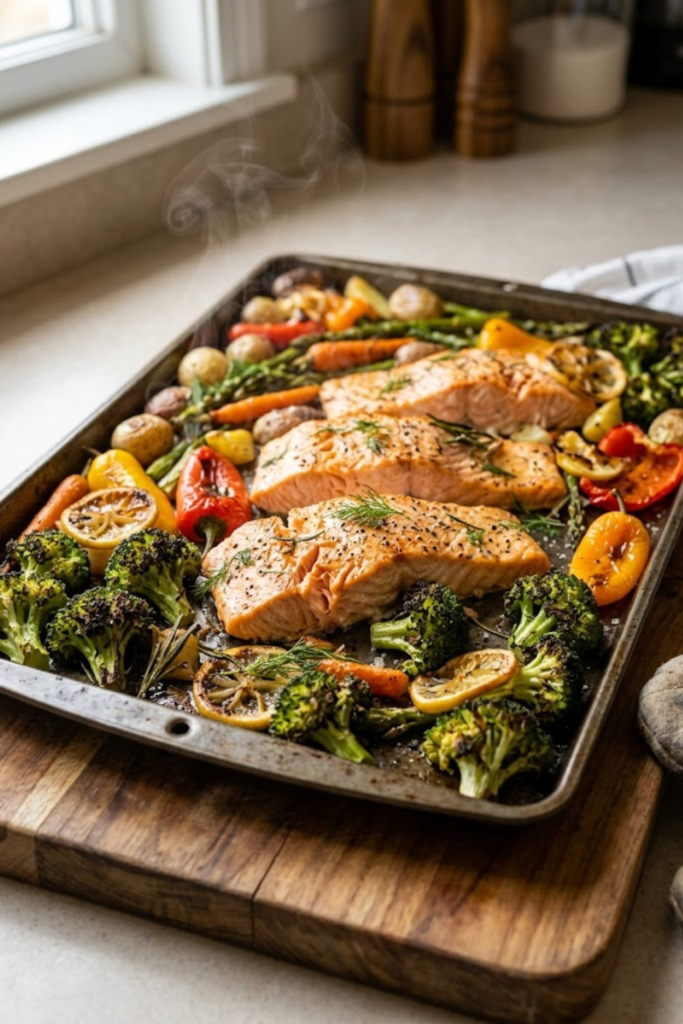
It is hard to believe how much a simple sheet pan meal can change your weekly routine. I really hope this guide helps you feel more confident when you stand in front of that oven. For a long time, I was stuck eating the same three boring meals every single week because I was too scared to try anything that seemed “fancy.” But once I got the hang of this baked salmon with roasted vegetables, everything in my kitchen changed. It is one of those rare recipes that is actually really good for you but does not taste like you are eating healthy “diet” food. Even my picky eaters at home started asking for seconds, which is a total win in my book!
I think about all the times I messed up and made dry fish or mushy peppers, and I just have to laugh now. Those mistakes were just part of the process of becoming a better cook. You don’t have to be a professional chef to make a meal that looks and tastes incredible. Cooking is really just about making something that brings your family together at the end of a stressful day. I also love that this whole meal uses only one pan. As a teacher, I spend all day dealing with a million things, and the last thing I want is to spend an hour scrubbing dishes. With this recipe, you just throw away the parchment paper and you are basically done. It gives me my evenings back, and I really value that quiet time.
If you found these tips helpful, please take a second to share this on Pinterest. It really helps other home cooks find these simple tricks, and it makes me feel good to know I’m helping people out. Pinning it also means you won’t lose the temperature settings or the vegetable tips when you are at the grocery store later. If you want to try different things, go for it! Sometimes I swap the broccoli for asparagus or throw in some cherry tomatoes for a pop of color. The more you make it, the more you will find what works for your own taste. This meal is a total lifesaver for busy weeknights, and I really hope you enjoy every single bite. Happy baking!