Sticky pineapple ribs are tender, fall-off-the-bone ribs coated in a caramelized tropical glaze that combines sweet pineapple juice, tangy vinegar, and savory spices. This sticky pineapple ribs recipe delivers restaurant-quality results at home with simple ingredients and straightforward cooking techniques. The sticky pineapple ribs glaze caramelizes beautifully during the final cooking stage, creating a glossy, finger-licking coating that keeps your guests coming back for more. Whether you’re grilling for a summer barbecue or baking in the oven, this sticky pineapple ribs dish never disappoints with its perfect balance of sweet and smoky flavors.
| Prep Time | Cook Time | Total Time | Servings | Difficulty | Cuisine |
|---|---|---|---|---|---|
| 20 minutes | 2 hours 30 minutes | 2 hours 50 minutes | 4-6 servings | Easy | American BBQ |
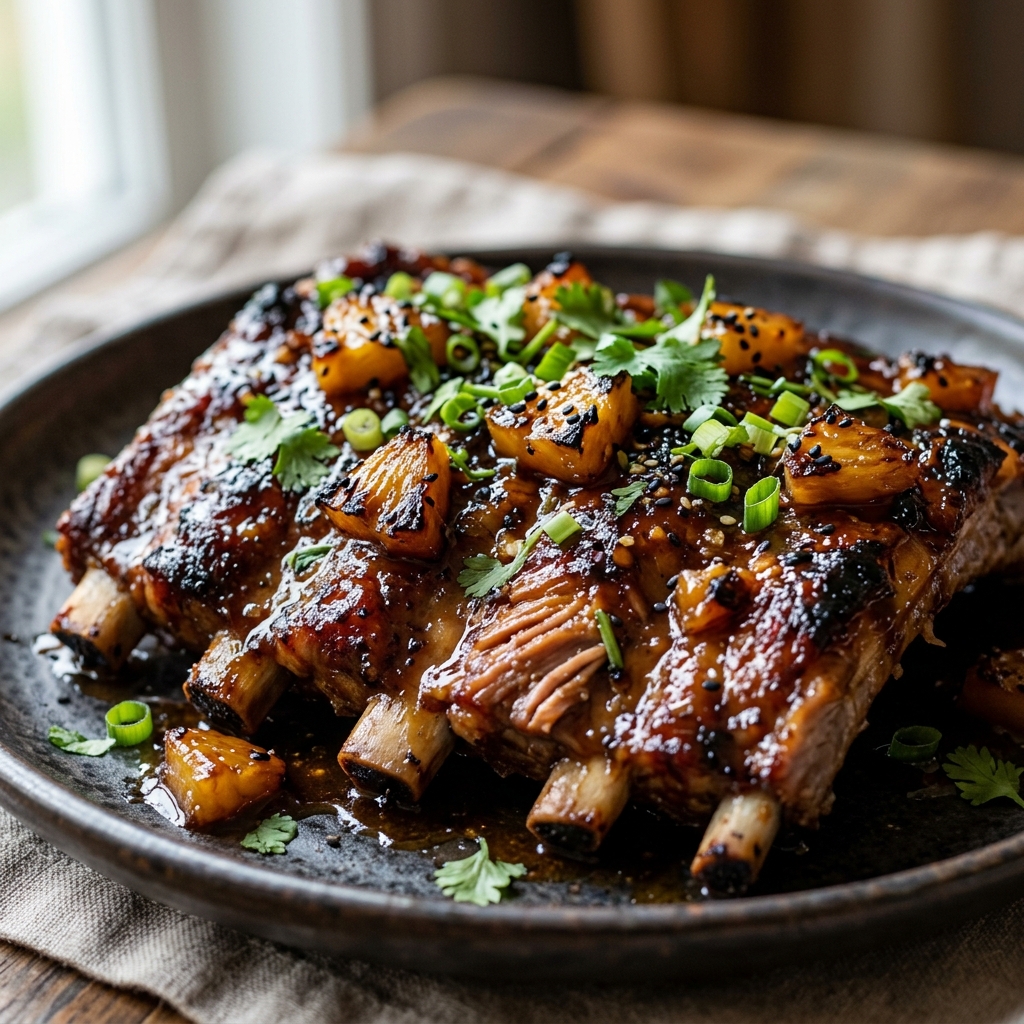
Table of Contents
Table of Contents
Why This Sticky Pineapple Ribs Recipe Works
The sticky pineapple ribs concept succeeds because it balances three essential flavors that complement tender ribs perfectly. Sweet pineapple juice provides natural sugars that caramelize during cooking, creating that signature sticky coating everyone craves. The sticky pineapple ribs glaze contains enough acid from vinegar and citrus to cut through the richness of the meat, preventing the dish from becoming one-dimensional or overly sweet.
From my experience preparing this recipe dozens of times, I’ve found that sticky pineapple ribs work beautifully whether you’re using baby back ribs, spare ribs, or beef ribs. The cooking method matters less than proper preparation and timing. Low and slow cooking ensures the meat becomes tender enough to separate from the bone with minimal effort.
The flavor profile of sticky pineapple ribs appeals to both traditionalists and adventurous eaters. Those who love classic barbecue appreciate the smokiness, while those seeking tropical flavors embrace the pineapple component. Sticky pineapple ribs deliver complexity without requiring advanced cooking skills or expensive equipment.
Home cooks love sticky pineapple ribs because the glaze develops during the cooking process with minimal intervention. Unlike recipes requiring constant basting, sticky pineapple ribs need just a few glaze applications during the final stage. The result is restaurant-quality sticky pineapple ribs that look and taste like you spent hours in the kitchen when preparation actually takes minimal time.
Sticky Pineapple Ribs Ingredients
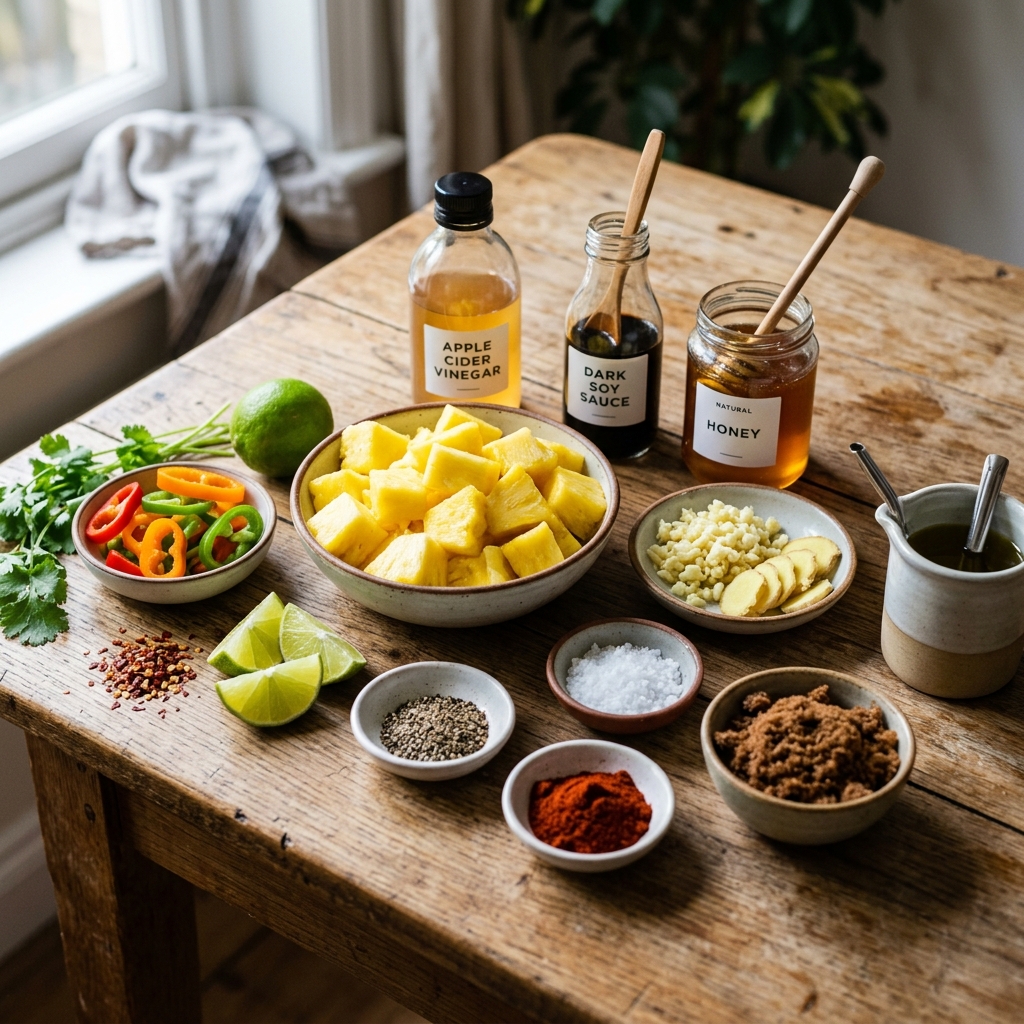
The sticky pineapple ribs ingredients are straightforward and commonly available at any grocery store, making this recipe accessible for weeknight dinners or special occasions.
| Ingredient | Quantity | Notes with Alternatives |
|---|---|---|
| Baby back ribs | 3-4 racks (about 6-8 pounds) | Spare ribs or beef ribs work equally well; choose ribs with good meat coverage |
| Pineapple juice | 2 cups fresh or canned | Fresh juice yields better flavor; avoid juice with added sugars when possible |
| Brown sugar | 1 cup packed | Use dark brown sugar for deeper molasses flavor |
| Apple cider vinegar | 1/2 cup | White vinegar works as a substitute but lacks depth |
| Soy sauce | 1/4 cup | Tamari or coconut aminos provide gluten-free options |
| Garlic cloves | 6 cloves minced | Fresh garlic is essential; garlic powder lacks the same punch |
| Fresh ginger | 2 tablespoons minced | Ground ginger can substitute at 1 tablespoon, though fresh is preferred |
| Pineapple chunks | 1 cup fresh or canned | Fresh pineapple adds brightness; canned works for convenience |
| Paprika | 2 teaspoons | Use smoked paprika for deeper BBQ flavor |
| Black pepper | 1 teaspoon | Freshly ground pepper enhances flavor significantly |
| Kosher salt | 1 teaspoon | Adjust based on other ingredients and personal preference |
| Honey | 2 tablespoons | Adds richness to the sticky pineapple ribs glaze |
| Fresh lime juice | 2 tablespoons | Essential for brightness; lemon juice offers a similar acidic note |
| Olive oil | 2 tablespoons | Use for rubbing ribs before cooking |
High-quality sticky pineapple ribs start with excellent pineapple juice and fresh spices. The sticky pineapple ribs glaze relies on the natural sweetness of pineapple balanced with acidic components, so don’t skip the lime juice or apple cider vinegar.
How to Make Sticky Pineapple Ribs
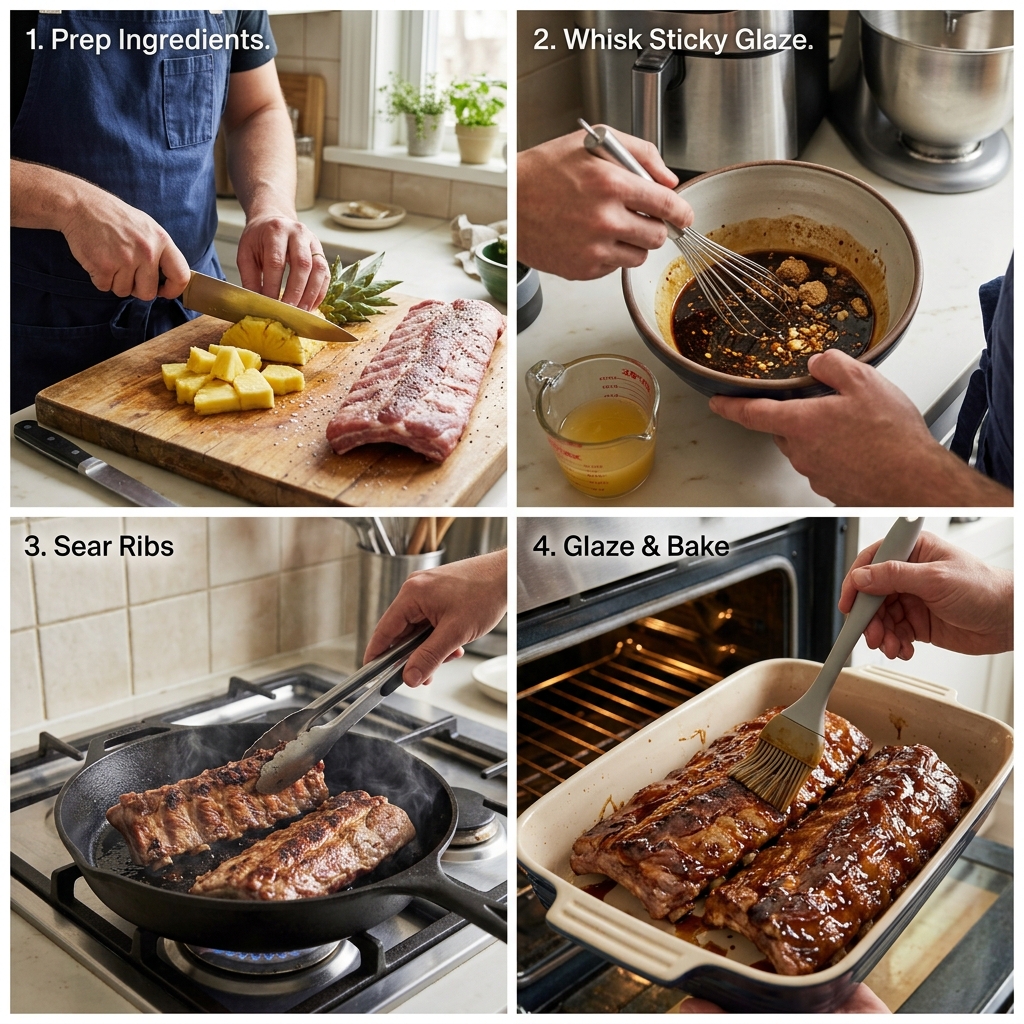
The sticky pineapple ribs cooking process involves three main phases: preparation, low-temperature cooking, and glaze application. Each step builds flavor and ensures the meat becomes tender and juicy while the glaze caramelizes to perfection.
Prepare and Season the Ribs
- Remove the membrane from the back of the ribs by sliding a knife underneath and peeling it away completely.
- Pat the ribs dry with paper towels to ensure even seasoning and better glaze adhesion.
- Rub the ribs generously with olive oil on both sides, coating every surface.
- Season both sides with kosher salt, black pepper, and paprika, pressing the spices into the meat.
- Let the seasoned ribs sit at room temperature for 30 minutes before cooking.
Cook the Ribs Low and Slow
- Preheat your oven to 275°F or prepare your grill for indirect heat at the same temperature.
- Place the ribs bone-side down on a foil-lined baking sheet or grill grates.
- Cook the ribs uncovered for 2 hours, allowing the meat to tenderize gradually.
- Check the ribs halfway through cooking and rotate the pan for even heat distribution.
- The sticky pineapple ribs are ready for glazing when the meat pulls back from the bones by about a quarter inch.
Make and Apply the Sticky Pineapple Ribs Glaze
- Combine pineapple juice, brown sugar, apple cider vinegar, and soy sauce in a medium saucepan.
- Add minced garlic, ginger, honey, and lime juice to the mixture.
- Bring the glaze to a simmer over medium heat, stirring occasionally.
- Simmer for 10-12 minutes until the glaze reduces by about one-third and thickens slightly.
- Add the pineapple chunks and simmer for an additional 3 minutes.
- Taste the sticky pineapple ribs glaze and adjust seasonings as needed.
- Remove the ribs from the oven and brush generously with the glaze, covering all surfaces.
- Return the ribs to the oven or grill and cook for an additional 20-25 minutes until the glaze becomes sticky and caramelized.
- Apply a second coat of sticky pineapple ribs glaze during the final 10 minutes of cooking.
- Remove the ribs from heat and let them rest for 5 minutes before serving.
Chef Tips for Perfect Sticky Pineapple Ribs
These expert tips transform your sticky pineapple ribs from good to exceptional, ensuring consistent results every time you prepare this recipe.
- Use fresh pineapple juice for sticky pineapple ribs: Fresh juice creates a more complex glaze than canned juice, delivering brighter tropical flavors that define this dish. If using canned juice, select brands without added sugars or preservatives to maintain the integrity of the sticky pineapple ribs flavor profile.
- Don’t skip the low-temperature phase: The 275°F cooking temperature allows collagen in the ribs to break down into gelatin, creating that tender, melt-in-your-mouth texture. Cooking at higher temperatures toughens the meat, making sticky pineapple ribs disappointing regardless of glaze quality.
- Remove the membrane from sticky pineapple ribs before cooking: This thin layer prevents seasonings and glaze from penetrating the meat properly. Taking two minutes to remove it dramatically improves how your sticky pineapple ribs absorb all the delicious flavors.
- Apply the glaze in the final 30 minutes: Adding the sticky pineapple ribs glaze too early allows the sugars to burn rather than caramelize. The final 30 minutes of cooking creates that glossy, stick-to-your-fingers coating that makes sticky pineapple ribs irresistible.
- Reduce the glaze adequately before brushing sticky pineapple ribs: A thin glaze runs off the meat and burns on the pan. Simmer until it coats the back of a spoon, ensuring the sticky pineapple ribs develop a proper caramelized exterior.
- Let sticky pineapple ribs rest before cutting: This 5-minute rest redistributes juices throughout the meat, preventing them from running onto the plate when you cut between the bones.
Common Sticky Pineapple Ribs Mistakes to Avoid
Understanding what goes wrong with sticky pineapple ribs helps you prevent disappointing results and achieve restaurant-quality ribs every single time.
- Mistake: Cooking ribs too fast at high heat Why it happens: Home cooks often want to speed up cooking time, raising oven temperatures to 375°F or higher. How to fix it: Stick with 275°F and plan for a 2.5-hour cooking window. Sticky pineapple ribs require time for the low and slow method to work properly, creating that signature tender texture impossible to achieve at higher temperatures.
- Mistake: Using ribs with insufficient meat coverage Why it happens: Budget-friendly ribs sometimes have thin meat sections or large bone-to-meat ratios. How to fix it: Select ribs with visible meat on the bones and good thickness. Quality sticky pineapple ribs depend on sufficient meat that becomes tender during cooking while maintaining structural integrity.
- Mistake: Applying glaze too early in the cooking process Why it happens: Impatient cooks brush glaze after just one hour of cooking. How to fix it: Wait until the ribs have cooked for at least 1.5-2 hours before applying the sticky pineapple ribs glaze. Early application causes the sugars to burn, creating bitter sticky pineapple ribs rather than caramelized ones.
- Mistake: Using canned pineapple juice with added sugar Why it happens: Convenience products often contain extra sweeteners to mask flavor. How to fix it: Check labels carefully and select pure pineapple juice. The sticky pineapple ribs glaze already contains sufficient brown sugar, so additional sweeteners create an overly saccharine dish.
- Mistake: Skipping the membrane removal from sticky pineapple ribs Why it happens: Many people don’t realize this step exists or underestimate its importance. How to fix it: Always remove the thin, silvery membrane on the back of ribs before seasoning. This barrier prevents sticky pineapple ribs from absorbing all the wonderful spices and glaze flavors.
- Mistake: Not reducing the glaze before applying to sticky pineapple ribs Why it happens: Some cooks brush on thin liquid thinking it will thicken during cooking. How to fix it: Simmer the glaze until it reduces by one-third, coating the back of a spoon. Properly reduced sticky pineapple ribs glaze creates that glossy, stick-to-your-fingers exterior everyone loves.
Best Sticky Pineapple Ribs Variations and Substitutions
These variations let you customize your sticky pineapple ribs to match personal preferences, dietary needs, or ingredient availability without compromising the core recipe.
| Ingredient | Substitution | Impact on Flavor |
|---|---|---|
| Brown sugar in sticky pineapple ribs glaze | Coconut sugar or maple syrup | Creates deeper, more complex sweetness; maple imparts subtle earthiness to sticky pineapple ribs |
| Apple cider vinegar | Rice vinegar or white wine vinegar | Rice vinegar adds mild sweetness; white vinegar intensifies tanginess in sticky pineapple ribs |
| Soy sauce for sticky pineapple ribs | Tamari or coconut aminos | Tamari provides gluten-free option with similar umami depth; coconut aminos offer milder flavor |
| Fresh ginger in sticky pineapple ribs | Ground ginger at one-third the amount | Ground ginger delivers more concentrated spice; use sparingly to avoid overwhelming sticky pineapple ribs |
| Pineapple juice base | Mango juice or passion fruit juice | Mango creates sweeter, more tropical sticky pineapple ribs; passion fruit adds tartness |
| Honey in sticky pineapple ribs glaze | Agave nectar or corn syrup | Agave dissolves more easily; corn syrup creates glossier coating on sticky pineapple ribs |
| Fresh pineapple chunks | Diced mango or papaya | Mango adds subtle sweetness; papaya provides lighter, more delicate tropical note to sticky pineapple ribs |
| Paprika for seasoning | Cayenne pepper or chili powder | Cayenne adds heat; chili powder introduces smokiness and depth to sticky pineapple ribs |
Creating Asian-inspired sticky pineapple ribs requires adding sesame oil and rice wine instead of some apple cider vinegar. This variation enhances the umami profile while maintaining the tropical pineapple characteristics that define sticky pineapple ribs.
For spicier sticky pineapple ribs, incorporate red pepper flakes or fresh Thai chilies into the glaze. The heat complements the sweetness beautifully, creating a more complex sticky pineapple ribs experience for adventurous palates.
Vegetarians can adapt the concept by preparing cauliflower steaks or firm tofu with the sticky pineapple ribs glaze, creating a plant-based version that delivers the same tropical sweetness.
Serving Suggestions for Sticky Pineapple Ribs
Presenting sticky pineapple ribs with thoughtful side dishes and accompaniments elevates your meal from simple dinner to memorable gathering.
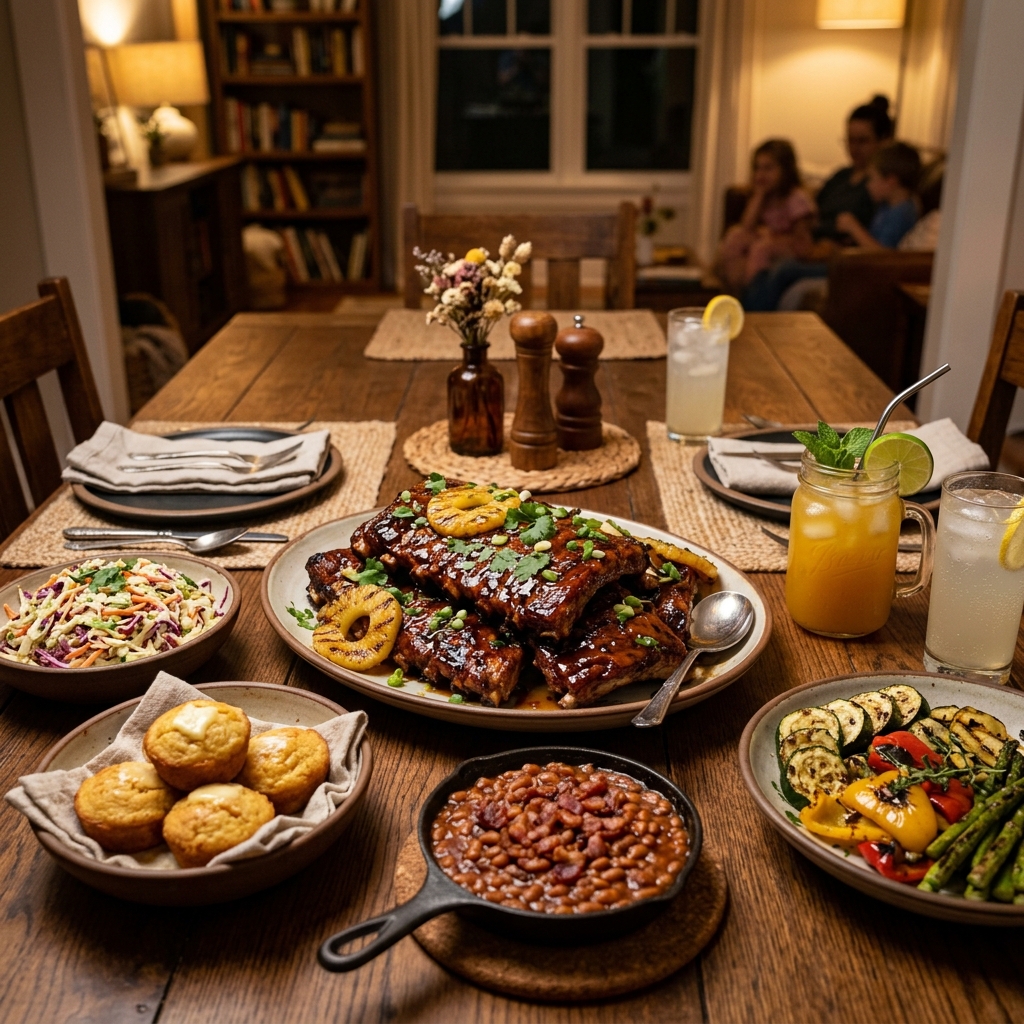
Classic BBQ sides complement sticky pineapple ribs perfectly. Creamy coleslaw provides cooling contrast to the sweet glaze, while baked beans add earthiness and substance. Cornbread or grilled corn on the cob pairs beautifully with sticky pineapple ribs, reinforcing the comfort-food appeal of this dish. Grilled vegetables like zucchini and bell peppers round out the meal with nutritious options.
For beverage pairing with sticky pineapple ribs, consider tropical options like sparkling mango juice, iced hibiscus tea, or refreshing coconut water. Non-alcoholic ginger ale complements sticky pineapple ribs with its spicy sweetness, while iced tea provides familiar refreshment that doesn’t compete with the glaze flavors.
Fresh salads offer lighter contrast to the rich, sticky pineapple ribs. A crisp green salad with citrus vinaigrette or a refreshing mango salsa provide acidic brightness that cuts through the glaze’s richness. Asian cucumber salad works beautifully with sticky pineapple ribs, sharing tropical and aromatic notes.
Casual weeknight dinners benefit from sticky pineapple ribs paired with simple rice and steamed broccoli, creating an easy weeknight meal requiring minimal prep. Family gatherings and summer barbecues deserve more elaborate presentations with multiple side dishes, encouraging guests to build personalized plates. Holiday occasions call for elegant plating of sticky pineapple ribs with garnishes of fresh cilantro and lime wedges, transforming casual ribs into special-occasion fare.
Storage and Reheating for Sticky Pineapple Ribs
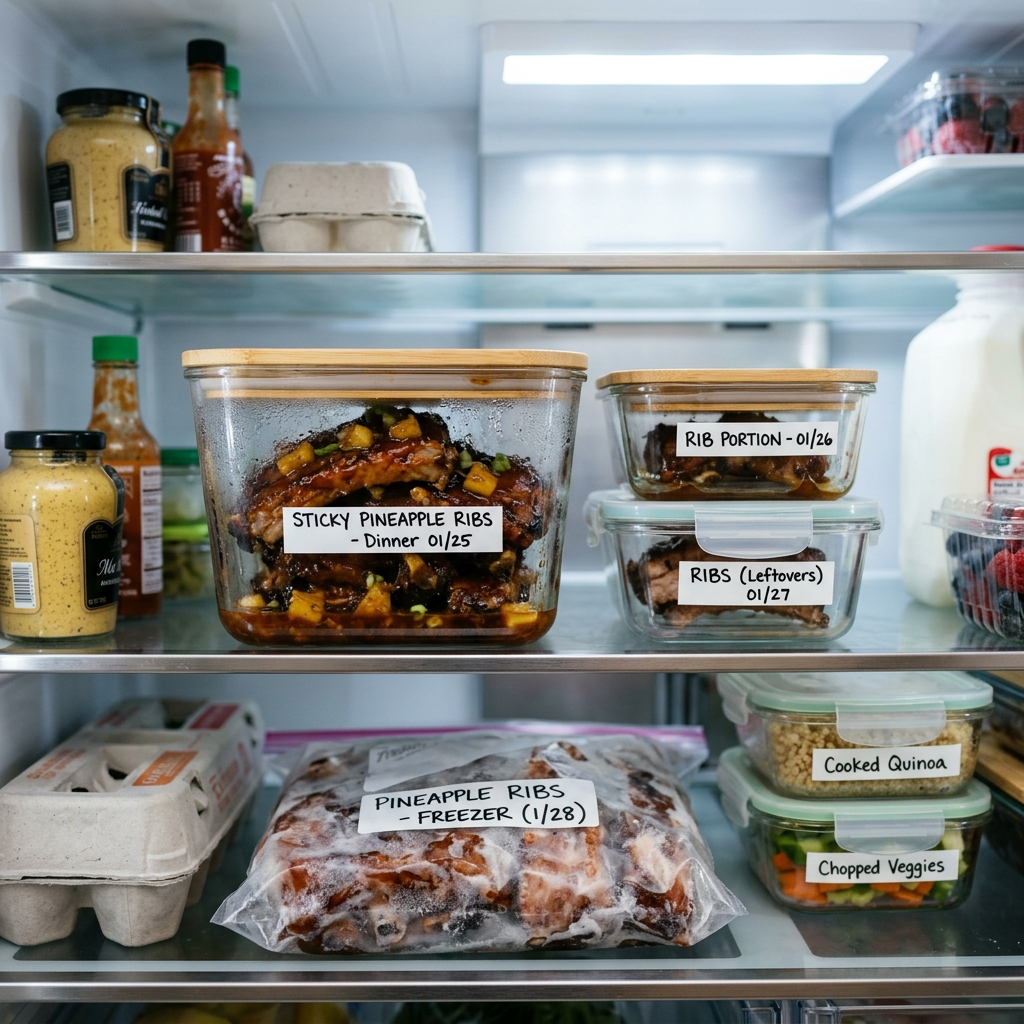
Proper storage ensures your sticky pineapple ribs maintain quality and safety for several days, making meal prep and leftovers seamless.
| Method | Duration | Instructions |
|---|---|---|
| Refrigerator Storage | 3-4 days | Place sticky pineapple ribs in airtight containers or wrap tightly with plastic wrap. Store on the coldest shelf of your refrigerator. The glaze may harden slightly when cold, which is normal and doesn’t affect quality. |
| Freezer Storage | Up to 3 months | Wrap sticky pineapple ribs individually in plastic wrap, then aluminum foil to prevent freezer burn. Label with the date. Thaw in the refrigerator overnight before reheating to maintain meat quality and texture. |
| Oven Reheating | N/A | Preheat oven to 300°F. Place sticky pineapple ribs on a foil-lined baking sheet and cover loosely with foil. Heat for 15-20 minutes until warmed through. Remove foil for the final 5 minutes to restore glaze shine. |
| Grill Reheating | N/A | Heat grill to medium-low heat. Place sticky pineapple ribs on grates, bone-side down. Cover and heat for 10-15 minutes, rotating occasionally for even warming. The glaze will freshen as it warms slightly. |
| Microwave Reheating | N/A | Place sticky pineapple ribs on a microwave-safe plate and cover loosely with a damp paper towel. Heat in 30-second intervals, checking after each interval to prevent overheating, which toughens the meat. |
| Make-Ahead Preparation | Up to 24 hours | Season the ribs and prepare the sticky pineapple ribs glaze the day before cooking. Store both separately in the refrigerator. Cook as directed, adding just 5-10 extra minutes to account for ribs starting at refrigerator temperature. |
For best results, separate sticky pineapple ribs into individual portions before storage, allowing you to reheat only what you need. The glaze may thicken significantly when cold, so you can thin it slightly with additional pineapple juice when reheating for glossier presentation.
Food safety matters with any meat dish, so never leave cooked sticky pineapple ribs at room temperature longer than 2 hours. If your sticky pineapple ribs sit longer than 2 hours, especially in warm conditions, discard them rather than risk foodborne illness.
Nutritional Information for Sticky Pineapple Ribs
Understanding the nutritional profile of sticky pineapple ribs helps you incorporate this delicious dish into balanced meal planning.
| Nutrient | Amount per Serving |
|---|---|
| Calories | 425 calories |
| Protein | 38 grams |
| Fat | 22 grams |
| Saturated Fat | 8 grams |
| Carbohydrates | 22 grams |
| Fiber | 0 grams |
| Sugar | 19 grams |
| Sodium | 480 milligrams |
| Iron | 2.8 milligrams |
| Calcium | 35 milligrams |
Approximate values based on serving 6 portions from the full recipe. Individual nutritional content varies based on specific ingredients and cooking methods used for your sticky pineapple ribs. The sticky pineapple ribs glaze contributes most of the carbohydrates and sugars, making portion control important for those monitoring sugar intake.
Pork ribs provide excellent protein and iron, supporting muscle maintenance and energy levels. The sticky pineapple ribs also deliver B vitamins essential for metabolism. Balancing sticky pineapple ribs with vegetable-heavy sides increases fiber content and nutritional completeness of your meal.
Frequently Asked Questions About Sticky Pineapple Ribs
Can I make sticky pineapple ribs in a slow cooker?
Yes, you can prepare sticky pineapple ribs in a slow cooker for convenience. Cut the ribs into smaller pieces and place them in the slow cooker with half the glaze recipe. Cook on low for 6-8 hours, then brush with additional glaze and cook uncovered for the final 30 minutes. Slow cooker sticky pineapple ribs require less active cooking but produce slightly less caramelized exteriors than oven-baked versions.
How do I know when sticky pineapple ribs are fully cooked?
Properly cooked sticky pineapple ribs should have meat that pulls back from the bones by about a quarter inch and separates easily when you tug with a fork. The meat should be tender enough to break apart with minimal pressure. If the sticky pineapple ribs still cling tightly to the bones after 2 hours, continue cooking for additional 15-20 minutes.
Can I grill sticky pineapple ribs instead of baking them?
Absolutely, grilling is an excellent method for sticky pineapple ribs. Set your grill for indirect heat at 275°F using the two-zone method, with heat on one side only. Place sticky pineapple ribs bone-side down on the cooler side and close the lid. Grill for approximately 2.5 hours before applying the glaze and grilling for an additional 25-30 minutes. Grilled sticky pineapple ribs may develop a subtle smoky character compared to oven-baked versions.
What type of pineapple juice works best for sticky pineapple ribs?
Fresh pineapple juice creates the best sticky pineapple ribs glaze because it contains complex fruit flavors absent in canned varieties. If using canned juice, select 100% pure pineapple juice without added sugars, preservatives, or corn syrup. Fresh-squeezed juice from a juice bar offers the most vibrant sticky pineapple ribs flavor profile, though store-bought fresh juice works admirably when fresh-squeezed isn’t available.
Can I prepare the sticky pineapple ribs glaze ahead of time?
Yes, preparing the sticky pineapple ribs glaze 1-2 days in advance saves cooking day time and actually improves flavor as ingredients meld together. Store the cooked glaze in an airtight container in the refrigerator. Reheat gently over medium heat before brushing onto sticky pineapple ribs, thinning with additional pineapple juice if the glaze thickened during storage.
How do I prevent sticky pineapple ribs from burning?
Use medium oven temperatures rather than high heat to prevent sticky pineapple ribs from burning. Never apply glaze during the first 1.5 hours of cooking. Line your baking sheet with aluminum foil for easier cleanup and to reflect heat more evenly. If sticky pineapple ribs begin darkening too quickly during the final glaze phase, loosely tent them with foil to slow browning while cooking continues.
Can I freeze cooked sticky pineapple ribs?
Yes, cooked sticky pineapple ribs freeze beautifully for up to 3 months. Wrap them individually in plastic wrap then aluminum foil to prevent freezer burn. Thaw overnight in the refrigerator before reheating. Frozen sticky pineapple ribs maintain texture and flavor quality, making them perfect for meal prep and convenient future meals.
What can I substitute for the pineapple in sticky pineapple ribs?
Mango juice creates tropical sticky pineapple ribs with a sweeter, more delicate flavor profile. Passion fruit juice delivers brighter tartness while maintaining tropical characteristics. Papaya juice offers lighter, more subtle tropical notes than pineapple. Each substitution maintains the sticky pineapple ribs concept while creating unique flavor variations based on your preferences.
Should I remove the rib membrane before cooking sticky pineapple ribs?
Absolutely, removing the membrane is essential for the best sticky pineapple ribs. This thin, silvery layer on the back of ribs prevents seasonings and glaze from penetrating the meat effectively. Slide a knife under the membrane and peel it away completely before seasoning. Sticky pineapple ribs prepared with membrane removal absorb flavors much more effectively than those cooked with it intact.
Can I make sticky pineapple ribs for a crowd?
Yes, sticky pineapple ribs scale beautifully for large gatherings. Multiply the ingredient quantities by the number of portions needed. Cook multiple racks simultaneously if your oven space allows, or prepare sticky pineapple ribs in batches. The glaze recipe makes enough for 3-4 racks easily, so prepare additional glaze if cooking significantly more sticky pineapple ribs for parties.
What are beginner tips for first-time sticky pineapple ribs cooking?
Start with baby back ribs as they’re more forgiving than other varieties. Don’t rush the low-temperature cooking phase even if you’re eager to apply glaze. Measure ingredients carefully for consistent sticky pineapple ribs results. Keep the oven door closed during cooking to maintain steady temperatures. Practice makes perfect with sticky pineapple ribs, so don’t worry if your first attempt isn’t restaurant-quality; each batch teaches you something new about this rewarding recipe.
Conclusion
Sticky pineapple ribs deliver impressive results that look and taste far more complicated than the simple cooking method actually requires. The combination of low-temperature cooking with pineapple-based glaze creates ribs that satisfy cravings for both tropical sweetness and savory depth. Whether you’re hosting a casual family dinner, planning a summer barbecue, or preparing a special occasion meal, sticky pineapple ribs impress reliably with their fall-off-the-bone tenderness and caramelized exterior. The glaze becomes the star of the show as it transforms simple ribs into a memorable dish that guests will request again and again. Once you master this sticky pineapple ribs recipe, you’ll find yourself making it regularly for celebrations and weeknight meals alike. The satisfying combination of sweet pineapple, savory spices, and perfectly tender meat makes sticky pineapple ribs a true winner that never disappoints.
Related Recipes You’ll Love
Harissa Chickpeas With Turmeric Rice recipe
Basic Cooked Plantains recipe
Bowen Yang’s Mapo Tofu recipe
Roasted Nectarine Mess With Pistachio Dukkah Recipe
Mojo Shrimp With Couscous and Fried Capers Recipe
Sesame and Pistachio Butter Cookies recipe
Roasted Chicken With Fennel and Peaches recipe
Expert Resources and Food Safety
For professional cooking guidance, check out USDA food safety guidelines for meat preparation and Academy of Nutrition and Dietetics nutritional guidance to ensure your sticky pineapple ribs meet food safety standards and dietary goals.
Print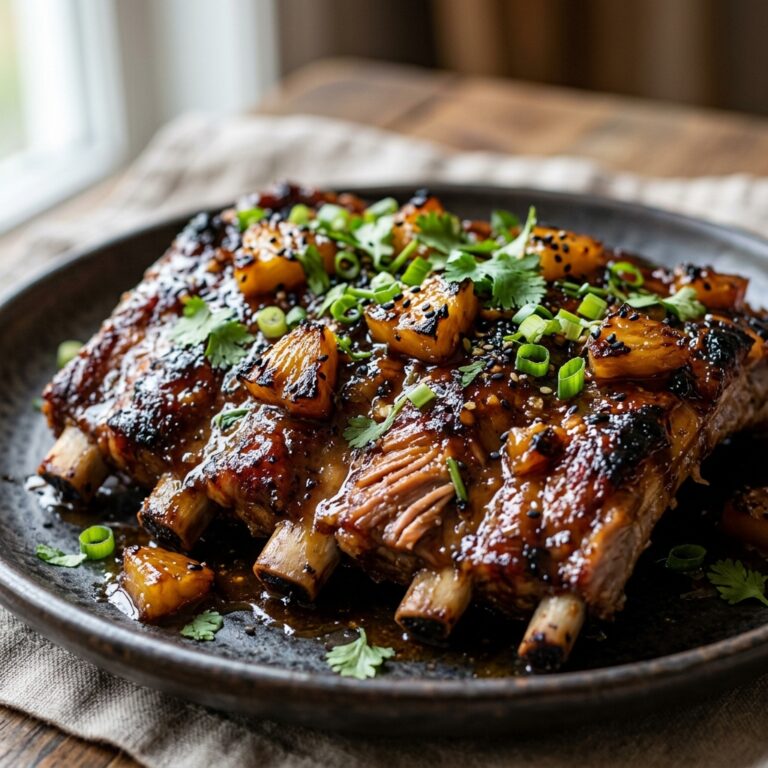
Sticky Pineapple Ribs 2026
Sticky pineapple ribs are tender, fall-off-the-bone ribs coated in a caramelized tropical glaze that combines sweet pineapple juice, tangy vinegar, and savory spices.
- Total Time: 2 hours 50 minutes
- Yield: 4–6 servings 1x
Ingredients
- 3–4 racks baby back ribs (about 6–8 pounds)
- 2 cups pineapple juice
- 1 cup brown sugar, packed
- 1/2 cup apple cider vinegar
- 1/4 cup soy sauce
- 6 garlic cloves, minced
- 2 tablespoons fresh ginger, minced
- 1 cup pineapple chunks
- 2 teaspoons paprika
- 1 teaspoon black pepper
- 1 teaspoon kosher salt
- 2 tablespoons honey
- 2 tablespoons fresh lime juice
- 2 tablespoons olive oil
Instructions
- Remove the membrane from the back of the ribs by sliding a knife underneath and peeling it away completely.
- Pat the ribs dry with paper towels to ensure even seasoning and better glaze adhesion.
- Rub the ribs generously with olive oil on both sides, coating every surface.
- Season both sides with kosher salt, black pepper, and paprika, pressing the spices into the meat.
- Let the seasoned ribs sit at room temperature for 30 minutes before cooking.
- Preheat your oven to 275°F or prepare your grill for indirect heat at the same temperature.
- Place the ribs bone-side down on a foil-lined baking sheet or grill grates.
- Cook the ribs uncovered for 2 hours, allowing the meat to tenderize gradually.
- Check the ribs halfway through cooking and rotate the pan for even heat distribution.
- Combine pineapple juice, brown sugar, apple cider vinegar, and soy sauce in a medium saucepan.
- Add minced garlic, ginger, honey, and lime juice to the mixture.
- Bring the glaze to a simmer over medium heat, stirring occasionally.
- Simmer for 10-12 minutes until the glaze reduces by about one-third and thickens slightly.
- Add the pineapple chunks and simmer for an additional 3 minutes.
- Taste the sticky pineapple ribs glaze and adjust seasonings as needed.
- Remove the ribs from the oven and brush generously with the glaze, covering all surfaces.
- Return the ribs to the oven or grill and cook for an additional 20-25 minutes until the glaze becomes sticky and caramelized.
- Apply a second coat of sticky pineapple ribs glaze during the final 10 minutes of cooking.
- Remove the ribs from heat and let them rest for 5 minutes before serving.
Notes
Use fresh pineapple juice for best results. Don’t skip the low-temperature phase at 275°F to ensure that tender, melt-in-your-mouth texture. Apply the glaze only during the final 30 minutes of cooking to prevent the sugars from burning.
- Prep Time: 20 minutes
- Cook Time: 2 hours 30 minutes
- Category: Main Dish
- Method: Baking/Grilling
- Cuisine: American BBQ
- Diet: Halal
Nutrition
- Serving Size: 1 serving
- Calories: 425
- Sugar: 19 grams
- Sodium: 480 milligrams
- Fat: 22 grams
- Saturated Fat: 8 grams
- Unsaturated Fat: 14 grams
- Trans Fat: 0 grams
- Carbohydrates: 22 grams
- Fiber: 0 grams
- Protein: 38 grams
- Cholesterol: 110 milligrams