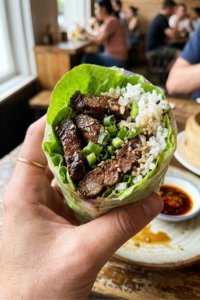
I’ve always loved how a fresh tuna avocado poke bowl feels like a mini-vacation in a bowl. Last Tuesday, I tried to make one for lunch and realized I didn’t have any ginger, so I had to run to the store in my slippers! It’s actually super easy to make at home once you get the hang of it. You just need some good fish and a few simple items from your pantry to get that restaurant taste. I promise, making this yourself is way better than paying twenty dollars at a fancy cafe.
Finding the Right Sashimi-Grade Tuna
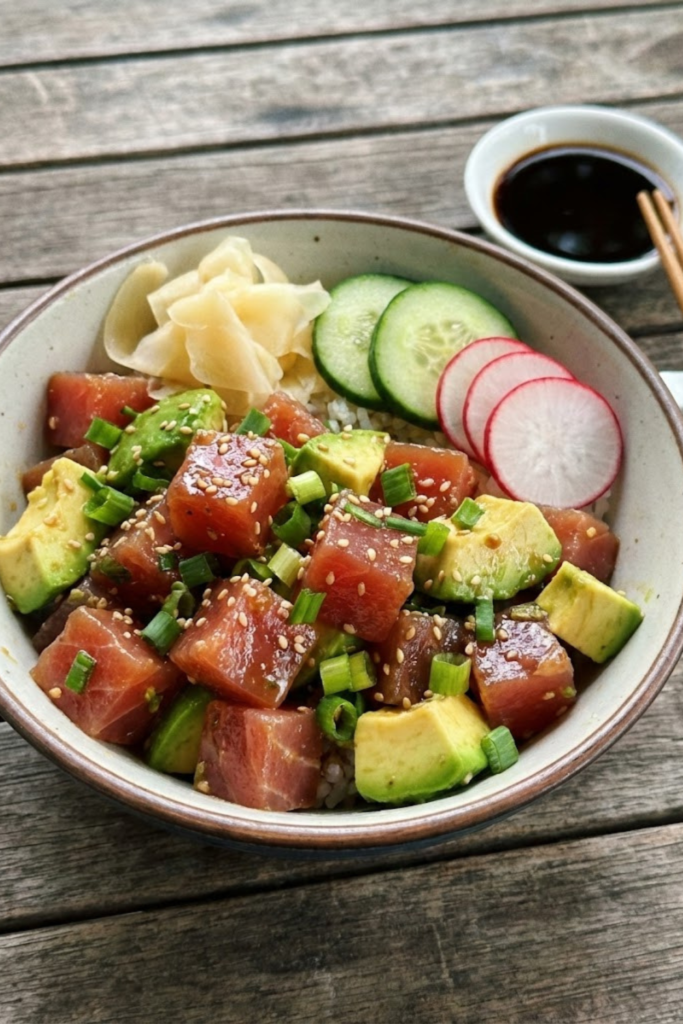
When I first started making these bowls at home, I was honestly terrified of the fish counter. I would just stand there and stare at the glass, hoping the fish would somehow tell me if it was safe to eat raw! I remember one time I bought a piece of tuna that looked okay, but when I got it home, it smelled like an old wet dog. I had to throw the whole thing away and we ended up eating cereal for dinner. It was a total bummer, but it taught me a huge lesson about quality. Now, I’ve learned that you can’t just pick any random piece of fish if you want that melt-in-your-mouth feel for your tuna avocado poke bowl.
What Does Sushi-Grade Actually Mean?
A lot of people think “sushi-grade” is just a fancy marketing trick to make the fish more expensive. I used to think that too! But it’s actually about how the fish was handled. Basically, it means the tuna was frozen at super low temperatures right after it was caught to kill off any tiny parasites. This makes it safe for us to eat without cooking it first. When I see that label at my local shop, it makes me feel a lot better about serving it to my family. Just remember that there isn’t a big government agency checking every piece, so you still have to use your own brain and senses to pick the best one.
How to Spot the Freshest Catch
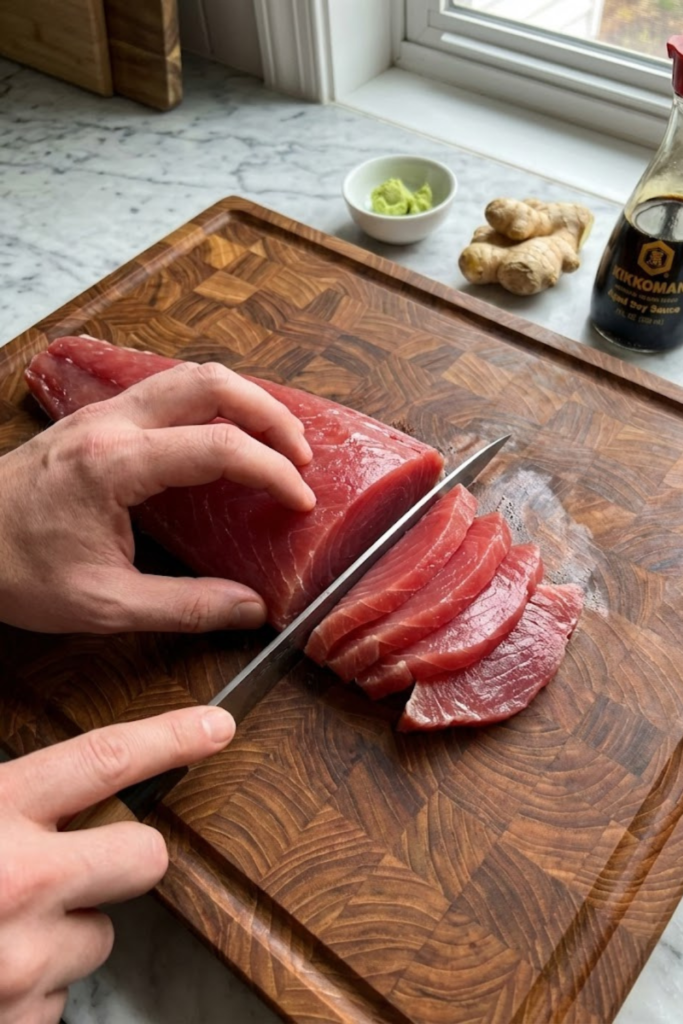
When I’m looking through the glass, I always look for a deep, pretty red color. If the tuna looks a bit brown or grey around the edges, that’s a big red flag for me. It usually means the fish has been sitting out way too long and has started to oxidize. Also, look at the texture. You want the meat to look firm and moist, not slimy or “gummy.” I also look for the “bloodline,” which is the really dark part of the tuna. Most people don’t like the taste of that, so I try to find a piece where the bloodline is already trimmed off so I don’t have to do it myself and waste money.
Don’t Be Afraid to Talk to the Fishmonger
I used to be shy, but now I’m that person who asks a million questions. I always ask, “Hey, when did this come in?” or “Is this the freshest stuff you have today?” Most of the time, the people behind the counter are super happy to help because they take pride in their work. One time, the guy at my shop actually pulled a fresh loin out from the back because the one in the display was a day old. It never hurts to ask! If the fish smells like the ocean, you are good to go. If it smells “fishy” or sour, just walk away and try a different store. Your stomach will thank you later!
The Secret to Fluffy Poke Rice
I used to think that rice was just… well, rice. I would grab whatever big bag was on sale at the grocery store and just toss it in a pot with some water. But boy, was I wrong when I tried that for my very first tuna avocado poke bowl. The rice I used was that long-grain stuff, and it was so dry and stiff. It felt like I was eating tiny sticks with my fish! It didn’t hold the sauce at all. I learned pretty fast that if you want your bowl to taste like the ones you get at a fancy restaurant, you have to treat the rice with some real respect. It is the foundation of the whole meal, so if the rice is bad, the whole bowl just feels off.
Why Short-Grain Rice is a Must
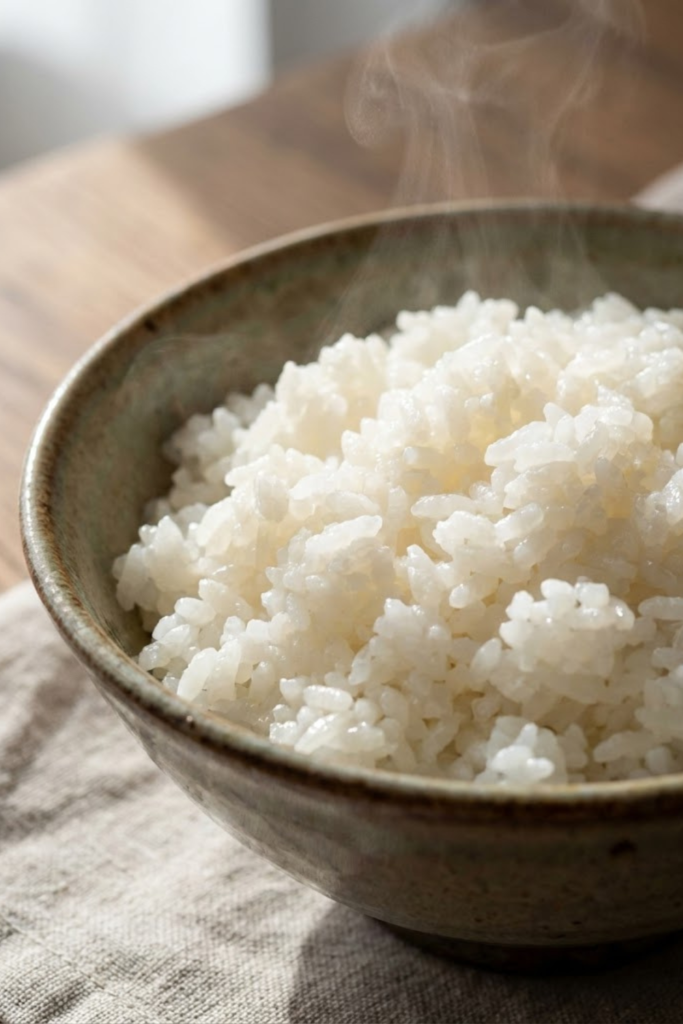
After my big fail with the long rice, I did some reading and talked to a friend who cooks a lot. They told me I had to use short-grain Japanese rice, often called sushi rice. This kind of rice has more starch in it, which makes it a little bit sticky. You want that stickiness because it helps the rice stay together on your spoon or chopsticks. When I switched to short-grain, my tuna avocado poke bowl finally started to look and feel right. It has this soft, chewy texture that goes so well with the buttery avocado. Don’t try to use jasmine or basmati rice here; it just won’t be the same experience.
The Wash and Soak Method I Use
One big mistake I used to make was skipping the wash. I thought it was a waste of time! But now I know better. I put my rice in a bowl and run cold water over it, then I swish it around with my hand. The water gets all cloudy and white—that is the extra starch you want to get rid of so the rice doesn’t turn into a big glob of glue. I do this about four or five times until the water is mostly clear. Then, I let the rice sit in the water for about 20 minutes before I even turn on the stove. This “soak” helps the grains cook evenly so you don’t end up with some bits that are hard and others that are mushy.
Seasoning for that Perfect Zing
Once the rice is cooked and still hot, I don’t just leave it plain. I make a little mixture of rice vinegar, a spoonful of sugar, and a bit of salt. I heat it up just enough so the sugar melts, then I drizzle it over the rice. I use a wooden spoon to “fold” it in gently. You don’t want to mash the grains! This gives the rice a bright, tangy flavor that really cuts through the fatty taste of the tuna and avocado. I usually let it cool down to room temperature before I start building my bowl. If the rice is too hot, it will actually start to cook the raw tuna, and that is definitely not what we want!
Mixing the Perfect Soy-Ginger Dressing
I’ve always believed that the dressing is the soul of any good meal. You can have the freshest fish and the fluffiest rice in the neighborhood, but if your sauce is boring, your tuna avocado poke bowl is going to taste like a sad desk lunch. I remember the first time I tried to make a homemade sauce for this. I didn’t measure anything and just poured a bunch of stuff into a plastic bowl. It was so salty that my eyes actually watered when I took a bite! I felt so bad because I had spent all that money on the tuna, and then I went and ruined it with a bad sauce. Now, I’m much more careful about how I mix things together because I want every bite to taste balanced and delicious.
Finding the Balance Between Salty and Sweet
The base of your dressing is almost always going to be soy sauce. If you are worried about the salt, you can use a low-sodium version or even tamari if you are avoiding gluten. But the real trick I learned is that you need something to fight back against all that saltiness. I like to add a tiny splash of rice vinegar for some acid and a little bit of honey or maple syrup. It sounds weird to put sugar in a fish sauce, but it really makes the flavors pop! Don’t overdo the sesame oil, though. One time I put in three tablespoons because I love the smell, but it made the whole bowl feel heavy and greasy. Just a teaspoon or two is usually enough to give it that nutty vibe without taking over everything else.
Why Fresh Ginger is a Game Changer
Please, if you take one thing away from my tips today, it’s that you have to use fresh ginger. I used to keep a jar of that dried ginger powder in my kitchen cabinet for years, and I tried using it in my tuna avocado poke bowl once. It was awful! It tasted dusty and didn’t have any of that bright, zingy heat that fresh ginger has. Now, I keep a big piece of ginger root in my freezer. When I need some for a sauce, I just pull it out and grate it right into the bowl while it’s still frozen. It’s much easier to grate that way, and it melts right into the soy sauce. It adds a little bit of a “burn” that feels so refreshing when you eat it with the cool tuna and creamy avocado.
Making it Spicy for the Brave
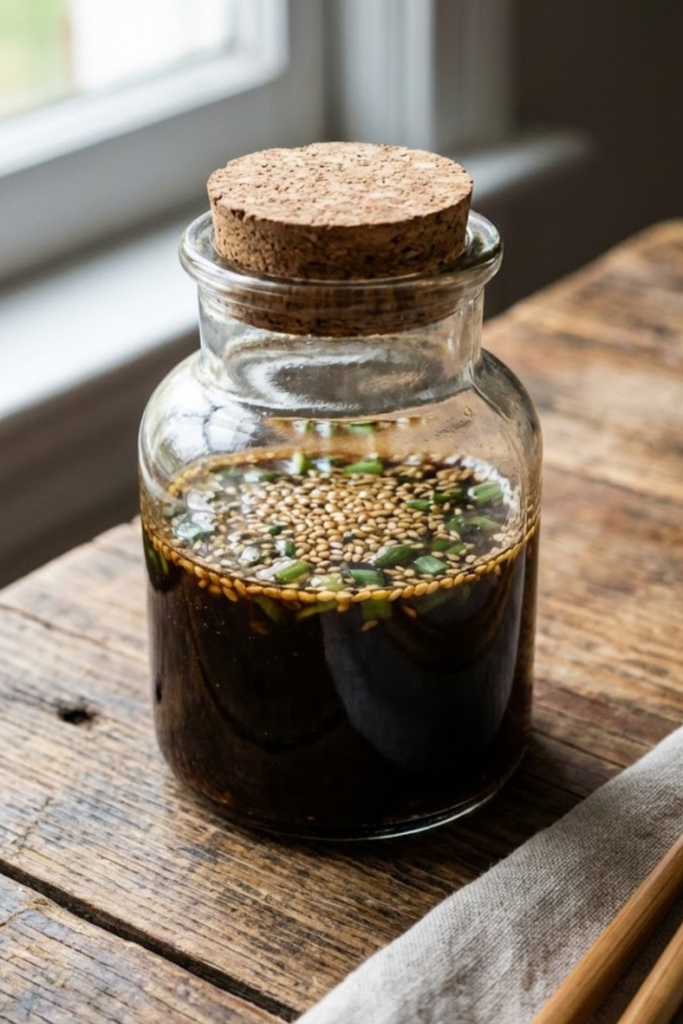
Some days I want my bowl to have a bit of a kick. If you’re like me and you enjoy a little heat, you can add a squirt of sriracha or some red pepper flakes. My husband loves it when I mix a little bit of wasabi paste into the dressing, but you have to be careful with that stuff. If you don’t whisk it in well, you might get a giant clump of wasabi that hits your nose like a freight train! I also like to add some chopped green onions directly into the sauce. It lets them soak up the flavors before they hit the bowl. Making the sauce ahead of time is actually a great idea because it gives the ginger and garlic time to really hang out and get to know the soy sauce. Just give it a good shake before you pour it over your masterpiece!
Assembling Your Masterpiece
Building the bowl is honestly my favorite part of the whole process because it’s where all your hard work finally starts to look like a real meal. I used to be so impatient that I would just throw everything into a big plastic pile and start eating standing up at the counter. But then I realized that we really do eat with our eyes first! If it looks like a big brown blob, nobody is going to get excited about it, even if the fish is top-tier. Making a tuna avocado poke bowl at home in 2026 is like being a little bit of an artist, but instead of using paint and a canvas, you’re using colorful fish and fresh veggies. I like to take my time here, especially on a quiet afternoon when I’m not busy with work or chores.
Handling the Avocado Like a Pro
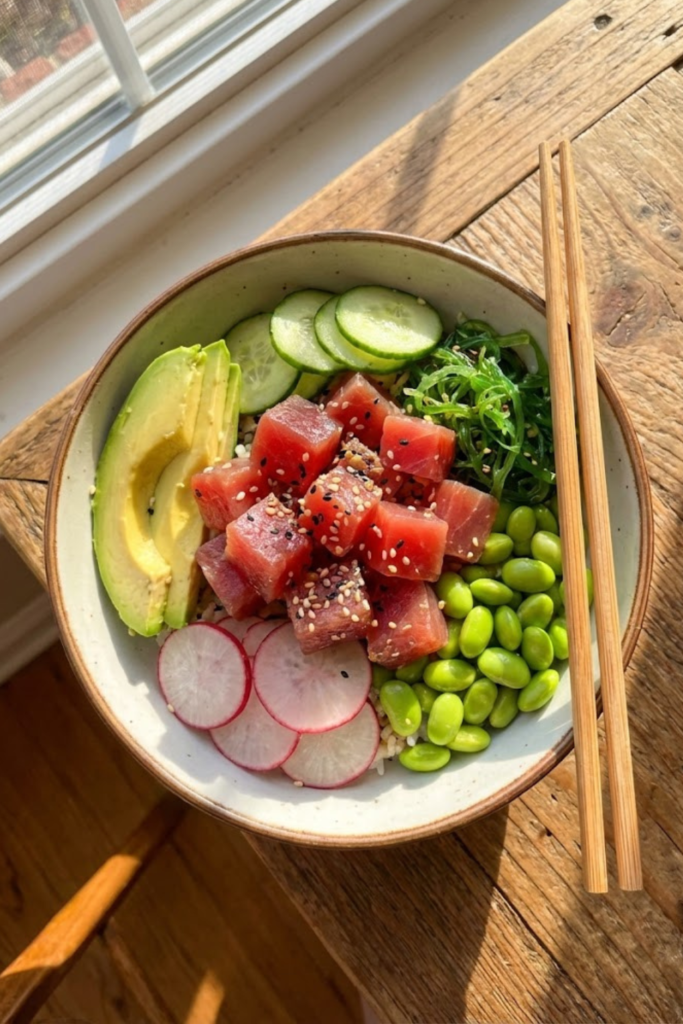
Avocados are so tricky to get right! I sometimes call them “the fruit of frustration” because they always seem to be either hard as a brick or completely brown and mushy inside. When I finally find a perfect one at the store, I feel like I just won the lottery. To get those nice, clean cubes for your bowl, I usually cut it in half, pull out the pit (please be careful with the knife!), and then slice it into a grid while it’s still inside the skin. Then, I just use a big spoon to scoop the cubes right out. One thing I learned the hard way is that you have to be super gentle. If you toss the avocado too hard with the tuna and the heavy sauce, it basically turns into guacamole. It still tastes okay, but it doesn’t look nearly as pretty!
Layering Textures for the Best Bite
A truly great poke bowl needs a lot of variety in every bite. If every single thing in the bowl is soft, it starts to feel a bit boring after a while. I love adding very thinly sliced radishes because they give a sharp little “snap” and a tiny bit of heat that wakes up your mouth. Cucumbers are another must-have for me because they are so watery and refreshing against the salty tuna. I usually peel mine in strips so they look fancy, like the ones I saw in a food magazine just last week. If I have some dried seaweed or even just some torn-up nori sheets, I’ll tuck those into the side of the bowl. It makes the whole experience feel way more authentic, like you’re actually sitting at a beach shack on vacation.
The Finishing Sprinkle
Last but not least, you absolutely cannot forget the garnishes. I am totally obsessed with something called Furikake. It’s a Japanese seasoning that has salt, sugar, and tiny bits of dried seaweed and fish. I keep a big jar of it in my pantry at all times because it makes everything taste ten times better. If you don’t have a specialty shop nearby, just some toasted sesame seeds will do the trick perfectly. I usually sprinkle a few extra green onions on top just for that bright green color. By the time I’m done, the bowl is so vibrant and beautiful that I almost don’t want to eat it and ruin the look. But then I smell that ginger and soy sauce, and I can’t help myself!
Why Making This Bowl is Always Worth It
I really hope you feel ready to go out and grab some fish now! Looking back at how much I used to spend at that little poke shop down the street from my school, I honestly feel a bit silly. I was paying nearly twenty dollars for a bowl that usually had way too much rice and only a tiny bit of fish. By making my own tuna avocado poke bowl at home, I save so much money, and I get to put as much tuna as I actually want. It’s become my favorite way to treat myself after a long week of grading papers and dealing with loud hallways. There is just something so peaceful about chopping up fresh veggies and putting together a meal that feels this healthy and fancy without having to leave my house.
I’ve found that my friends are always super impressed when I make this for them, too. They think I have some secret chef skills, but like I’ve shown you, it’s really just about buying the right ingredients and being a little patient with your rice. One time, I brought a deconstructed version of this to a potluck, and it was the first thing to disappear! People love how light it feels compared to the usual heavy pasta salads or chips. Plus, it’s so easy to change things up if you get bored. Sometimes I’ll add a little bit of mango if I want it sweet, or extra radishes if I’m feeling like I need more crunch.
If you’re still a little nervous about the raw fish part, just start small. Talk to the person at the counter like I mentioned earlier. Once you find a store you trust, the rest is easy. I promise that once you taste that first bite of cold, marinated tuna with the creamy avocado and that zingy ginger dressing, you won’t want to go back to the pre-made ones. It’s a total game changer for your lunch routine, especially if you’re trying to eat better in 2026. Just remember to keep your fish cold until the very last second, and don’t forget to wash that rice!
If you enjoyed learning how to make this, please share this recipe! I’d love for more people to realize that “fancy” food doesn’t have to be hard or scary to make. Don’t forget to pin this recipe to your Pinterest healthy lunch board so you can find it next time you’re craving something fresh! Happy eating!