I used to be terrified of cooking beef roasts. Seriously! My first attempt was so tough we actually ordered pizza instead. But after years of testing (and tasting!), I’ve found the secret. Did you know that the “low and slow” method breaks down collagen better than any other cooking style? It’s true! This slow cooker pot roast is going to change your weeknight rotation forever. It is warm. It is comforting. It is exactly what you need after a long day. We are going to turn a simple chuck roast into a culinary masterpiece that falls apart at the touch of a fork. Let’s get cooking!
Selecting the Best Cut of Beef for Pot Roast
Look, I’ve been there. You’re standing in the meat aisle of the grocery store, staring at twenty different packages of red meat, and you have absolutely no clue which one to grab. The first time I tried to make a slow cooker pot roast, I grabbed a “Bottom Round” roast because it was on sale and looked nice and lean. I thought I was being healthy.
Big mistake. Huge.
I cooked that thing for eight hours, and when we sat down to eat, it was tough as shoe leather. Me and my husband tried to be nice about it, chewing endlessly, but we eventually gave up and made sandwiches. I was so frustrated I almost threw the crockpot out the window! But I learned a hard lesson that day: fat is your friend.
Why Chuck Roast is King
If you want that melt-in-your-mouth experience, you have to buy a chuck roast. Period. I don’t even look at the other cuts anymore. The chuck comes from the shoulder of the cow, and it’s loaded with fat and connective tissue.
Now, I know “connective tissue” sounds gross, but hear me out. When you cook it low and slow, that tissue breaks down and turns into gelatin. That gelatin is what keeps the meat moist and gives the gravy that rich, sticky texture we all love.
If you try to use a leaner cut like a sirloin or round roast, there isn’t enough fat to keep it basted from the inside. It just dries out. I’ve tried using brisket before, and while it’s tasty, it’s usually way more expensive and better suited for smoking. Stick to the chuck. It’s cheaper and honestly tastes better in a slow cooker.
Looking for the Marbling
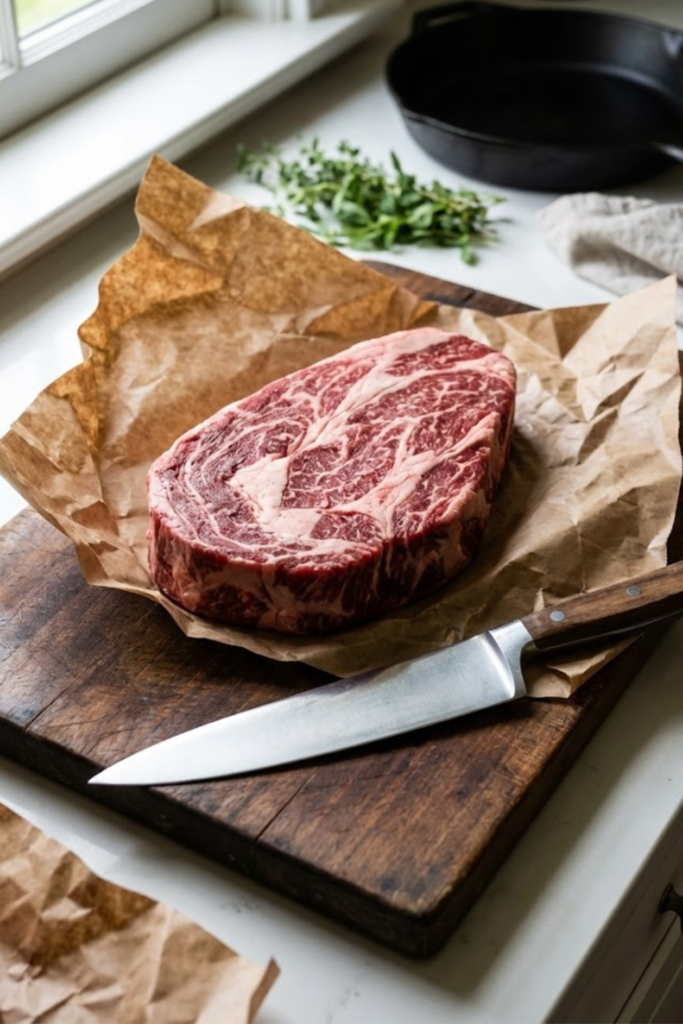
When you are digging through the meat case, don’t just grab the first chuck roast you see. You gotta be picky! I always look for a piece that has good marbling. These are the little white flecks of fat running through the red meat.
You want a roast that looks like a road map of white lines. If it’s just a big block of red meat with one thick strip of fat on the outside, put it back. You want the fat inside the meat. That internal fat is going to melt down and baste the roast from the inside out while it cooks. It makes a massive difference in the flavor.
Bone-in vs. Boneless
This is a common debate. Personally, I usually go for a boneless chuck roast. It’s just easier to slice and serve when you are trying to get dinner on the table for a hungry family. You don’t have to wrestle with a bone while the meat is falling apart.
However, if you can find a bone-in roast (sometimes called a 7-bone roast because the bone looks like a ‘7’), grab it! The bone releases extra collagen and marrow into the broth, making the beef flavor even deeper. It’s a bit more work to serve, but the taste is incredible. Just make sure you account for the weight of the bone when you are planning your portions.
Getting the Size Right
For a standard 6-quart slow cooker, a 3 to 5-pound roast is the sweet spot. Anything smaller than 3 pounds tends to cook too fast and dry out before your veggies are tender. Anything bigger than 5 pounds might not fit, or it might cook unevenly.
I usually aim for about half a pound of meat per person. That sounds like a lot, but remember, the roast will shrink quite a bit as the fat renders down. Plus, leftovers are the best part! There is nothing better than a roast beef sandwich the next day. If your roast is too big for the pot, don’t panic. Just cut it in half and squish the pieces in side-by-side. It’ll cook just fine.
So, don’t be afraid of the fat, grab a chuck roast, and get ready for the best meal of your life. Trust me, your family is gonna thank you.
Essential Ingredients for Rich Flavor
Let’s be real for a second. You can have the best piece of meat in the world, but if you toss it in a pot with just water, it’s going to taste like wet socks. I learned this the hard way. My early attempts at slow cooker beef recipes were incredibly bland. I was terrified of over-seasoning, so I ended up under-seasoning everything. It was tragic.
Over time, I realized that the slow cooker dulls flavors over long cooking times. You have to go big or go home. You need ingredients that can stand up to 8 hours of heat and still punch you in the taste buds.
The Root Vegetable Debate
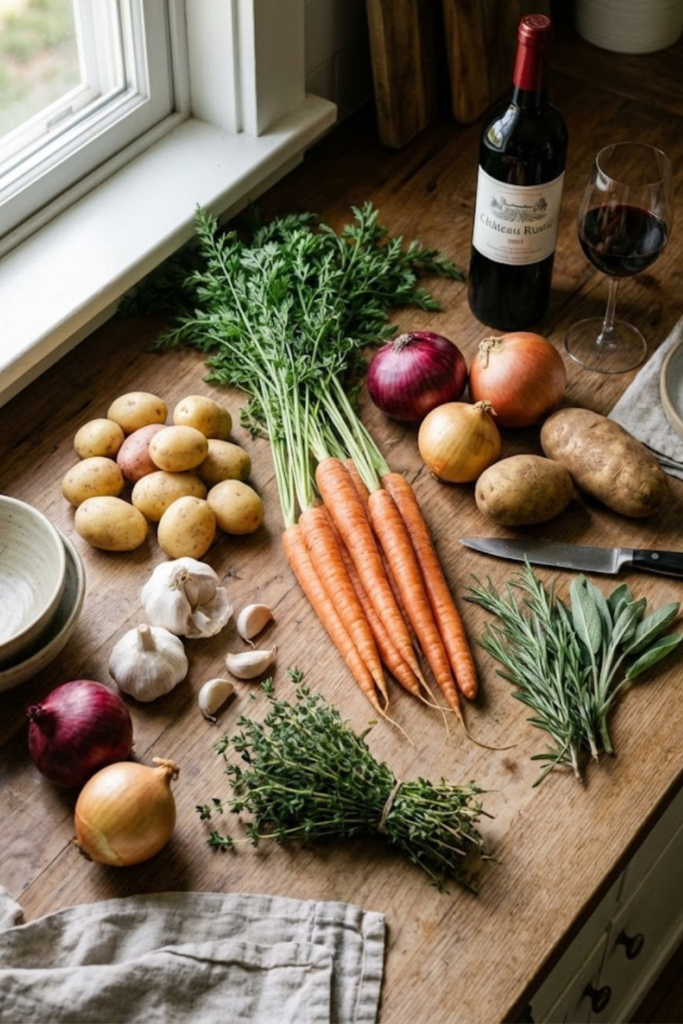
Here is a mistake I made for years: using Russet potatoes. Don’t do it! Russets are high in starch and fall apart when cooked for a long time. I used to open the lid to find my potatoes had disintegrated into a gritty mush at the bottom of the pot. Not appetizing.
Now, I only use Yukon Gold potatoes. They have a waxy skin and a creamy interior that holds its shape perfectly. You don’t even have to peel them! Just give them a scrub and chop them into big chunks.
For carrots, stop buying those little baby carrots. They lack flavor. Buy whole, large carrots and chop them into 2-inch pieces. They add a natural sweetness that balances out the savory beef broth.
Building the Aromatic Base
You cannot skip the onions and garlic. I repeat: do not skip them. I usually grab a big yellow onion and cut it into thick wedges. If you slice them too thin, they melt away. We want them to stick around and flavor the gravy.
As for garlic, forget the jarred stuff. It tastes like preservatives. Smash 4 or 5 fresh garlic cloves and toss them in whole. When you eat a piece of roasted garlic that’s been cooking in beef fat all day? Oh my stars. It is heaven.
Liquid Gold for the Gravy
This is where the magic happens. A lot of recipes call for water. Please, for the love of food, use beef broth. It adds a richness that water just can’t compete with. But if you want to take it to the next level? Add a splash of red wine.
I usually use a Cabernet or Merlot. The alcohol cooks off, leaving behind a deep, complex acidity that cuts through the rich fat. If you don’t do alcohol, a tablespoon of balsamic vinegar works wonders too.
And here is my secret weapon: Worcestershire sauce. It’s a mouthful to say, but it adds that “umami” flavor—the savory deepness—that makes the dish taste like it came from a restaurant.
Fresh vs. Dried Herbs
I used to be lazy and just shake in some dried herbs. It works in a pinch, but using fresh thyme and rosemary sprigs makes the house smell incredible.
I don’t even bother chopping them. I just tie a few sprigs together with kitchen twine and toss the whole bundle on top of the roast. When it’s done, you just fish out the stems. It’s an easy hack that makes you look like a pro chef.
So, gather up these ingredients. It might seem like a lot, but this combination creates a savory gravy that you will want to drink straight from the ladle. (I have done that. Don’t judge me.)
Searing the Meat: The Step You Shouldn’t Skip
Okay, listen. I know exactly what you are thinking right now. “Samah, I bought a slow cooker so I wouldn’t have to dirty another pan!” I get it. I really do.
For the longest time, I was the queen of the “dump and go” method. I would take the cold, raw meat straight from the package and plop it right into the crockpot. I thought I was saving prep time and being efficient. But honestly? The meat always came out looking kinda gray and sad. It tasted fine, I guess, but it lacked that deep, restaurant-quality richness I was craving.
It wasn’t until I watched a cooking show about the Maillard reaction that the lightbulb went on. That is just a fancy science term for browning meat. When you sear the beef, you aren’t “locking in juices” (that’s a myth, by the way). You are actually caramelizing the proteins and sugars on the surface. That is where the flavor lives.
The Aggressive Seasoning Rule
Before the meat even touches the pan, you need to season it. And I don’t mean a polite little sprinkle of salt. You need to coat that roast aggressively.
I used to be scared of over-salting, but remember, this is a thick piece of meat. The salt has to penetrate all the way to the center. I use coarse Kosher salt and freshly cracked black pepper. Pat the meat dry with paper towels first—wet meat steams instead of sears—and then press the seasoning into the flesh.
Getting the Pan Ripping Hot
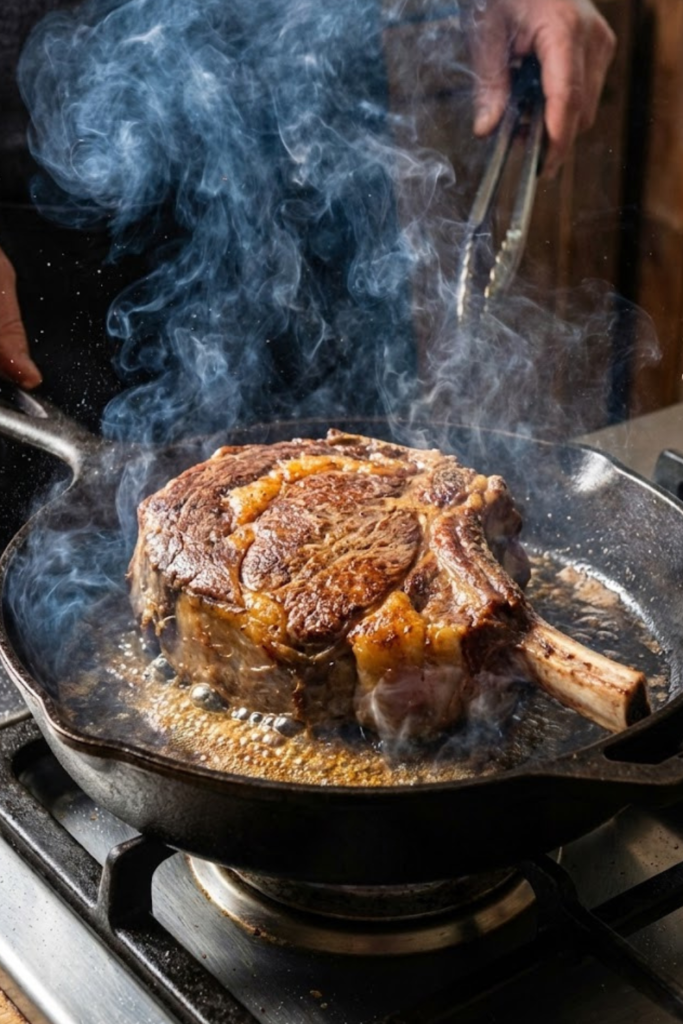
You want your skillet screaming hot. I prefer using my cast iron because it holds heat like a champ. Add a little oil with a high smoke point, like avocado oil or canola.
When you put the meat in, it should sizzle loudly. If it doesn’t sizzle, take it out and wait. And here is the hard part: don’t touch it! Let it sit there for 3-4 minutes per side until it forms a deep, dark brown crust. It might get a little smoky in your kitchen (I’ve set off my smoke detector more times than I care to admit), but it is worth it.
Don’t Waste the “Fond”
After you move the browned beef to the slow cooker, look at the bottom of your pan. See those stuck-on brown bits? That is called “fond,” and it is pure flavor gold. Do not wash that pan!
Pour a little bit of your beef broth or red wine into the hot skillet. It will hiss and bubble violently. Use a wooden spoon to scrape up all those crispy bits. This process is called deglazing pan. Pour that dark, flavorful liquid right over your roast. This simple step adds a flavor profile to your gravy that you just can’t get any other way.
If You Absolutely Must Skip It
Look, life happens. Sometimes you have ten minutes to get out the door and you just can’t deal with a splattering grease pan. If you have to skip the sear, it’s not the end of the world.
To compensate for the lack of browning, I usually add a little extra Worcestershire sauce or even a splash of soy sauce to the braising liquid. It helps mimic that savory depth. But if you have the time, please sear it. Your tastebuds will thank you.
Step-by-Step Slow Cooking Instructions
So, you have got your chopped veggies and your seared meat. Now comes the part where people usually mess up. You might think, “It’s a bucket that gets hot, how hard can it be?” Well, I have managed to mess it up plenty of times, so let me save you the trouble. There is actually an art to layering your one pot meal.
The Strategy of Layering
I used to just dump everything into the pot willy-nilly. Meat on the bottom, veggies on top, broth wherever. The result? My potatoes were still crunchy, and the bottom of my roast was burnt to a crisp. Not cool.
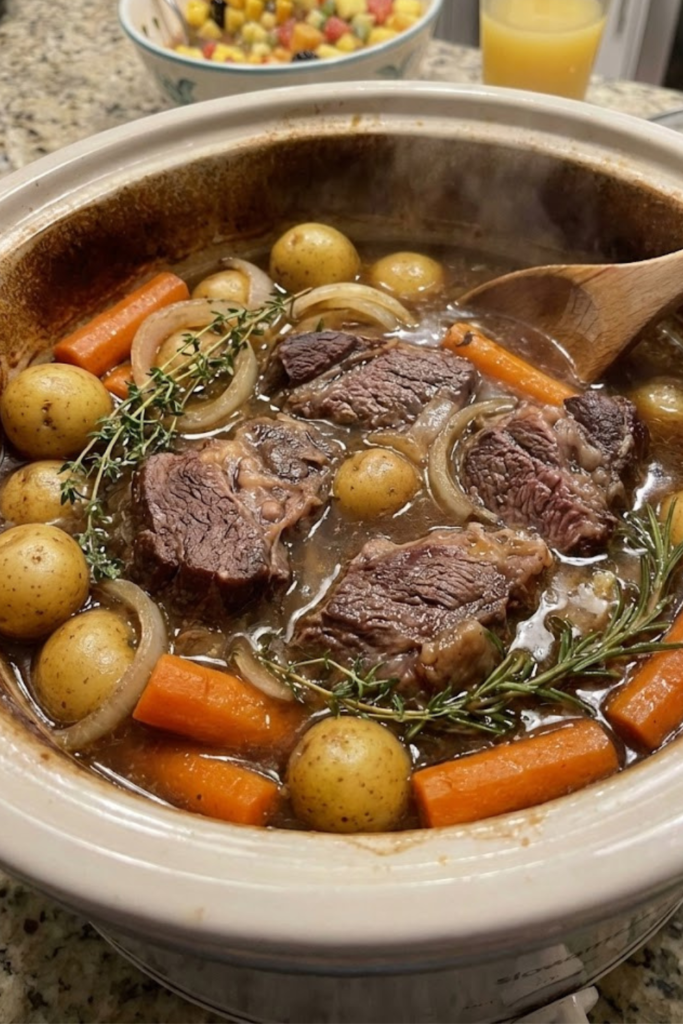
You have to build a foundation. Put your hard root vegetables—the potatoes, carrots, and onions—at the very bottom of the crock. These guys need the most direct heat to soften up.
Place your seared roast right on top of that veggie bed. The vegetables act like a natural roasting rack, keeping the meat from touching the direct heat source at the bottom. This allows the air and liquid to circulate around the beef, cooking it evenly. It makes a huge difference in the texture.
High vs. Low: The Great Debate
I am an impatient person. I admit it. When I started cooking, I always used the “High” setting because I wanted dinner now. But here is the hard truth: for a tough cut like chuck, high heat is the enemy.
Cooking on High (usually 4-5 hours) boils the meat. It tightens up the muscle fibers before the fat has time to render. You end up with chewy meat.
For the best low and slow cooking results, you really need to set it to “Low” for 8 to 10 hours. This gentle heat gives the connective tissue and collagen enough time to slowly break down into gelatin. That is what gives you that silky, sticky mouthfeel. If you try to rush it, you ruin it.
The “No Peeking” Rule
This is the hardest rule to follow. Your house is going to smell amazing after about four hours. You are going to want to lift the lid and check on it.
Don’t do it!
Every time you lift the lid on kitchen appliances like slow cookers, you release a massive amount of heat and steam. It can take the pot 20 to 30 minutes just to get back up to the proper cooking temperature. If you check it three times, you’ve just added an hour to your dinner time. Trust the process and keep the lid closed.
How to Tell When It’s Done
Timers are great, but meat is organic. It’s done when it’s done. Do not rely solely on the clock.
The only way to know if it is ready is the “fork test.” Stick a fork into the thickest part of the meat and twist. If the meat offers any resistance or feels rubbery, it is not ready. Close the lid and give it another 30 minutes.
When it is truly fork tender beef, the meat should yield instantly and start to fall apart with zero effort. That is when you know you have achieved pot roast perfection.

Creating the Perfect Gravy from Drippings
I used to think that the liquid left at the bottom of the slow cooker was just “juice” that you poured over the meat. I was wrong. That liquid is liquid gold, but if you serve it straight up, it’s usually kind of greasy and thin.
My first few attempts at making gravy were a total disaster. I once tried to thicken the sauce by dumping a spoonful of flour directly into the hot liquid. Big mistake! I ended up with a lumpy, white-speckled mess that looked totally unappetizing. We had to strain it through our teeth, which is not exactly a high-class dining experience.
Straining the Liquid
First things first, you need to separate the treasure from the trash. By the time your roast is fork-tender, the onions and garlic you put in at the beginning have basically melted into mush. They gave their lives for flavor, but we don’t want to eat them now.
Remove the roast and the big veggies (potatoes and carrots) to a platter and cover them with foil to keep warm. Then, pour all that dark, rich liquid through a fine-mesh sieve into a saucepan. This gets rid of the bits and gives you a smooth base for your savory gravy.
The Cornstarch Slurry Method
Here is the trick I learned that changed everything. To thicken the sauce without lumps, you need a cornstarch slurry. It sounds fancy, but it’s just equal parts cornstarch and cold water.
I usually mix 2 tablespoons of cornstarch with 2 tablespoons of cold water in a small cup until it looks like milk. Whisk this mixture into your simmering beef drippings on the stove. Let it bubble for about 2 or 3 minutes. You will watch it transform from a thin soup into a thick, glossy sauce right before your eyes. It is surprisingly satisfying to watch.
This method is also great because it creates a gluten free gravy, assuming your beef broth didn’t have hidden wheat in it.
Adjusting the Flavor Profile
Before you pour that gravy into a boat, you have to taste it. Be careful, it’s hot!
Sometimes, the slow cooker can mute flavors. If it tastes a little “flat,” add a pinch more salt. If it tastes too rich or fatty, add a tiny splash of vinegar or lemon juice. That little bit of acid wakes up the flavor profile and cuts through the heaviness.
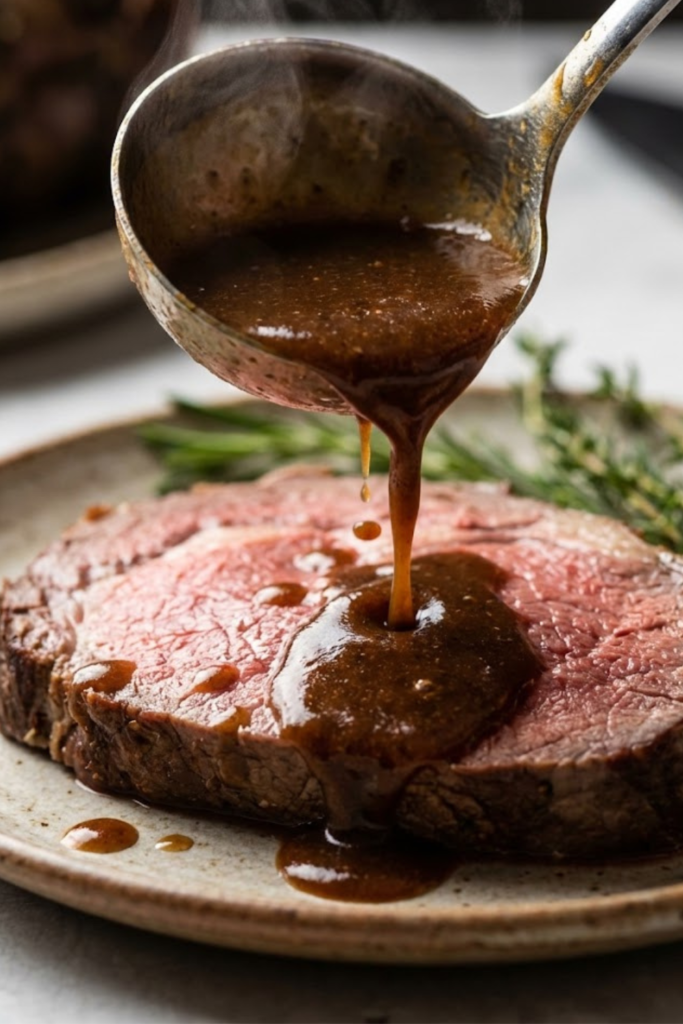
Once it’s perfect, pour that luscious brown gravy all over the meat and mashed potatoes. It is the best part of the whole meal, hands down. You might even find yourself licking the plate. I won’t tell anyone.
Making a slow cooker pot roast isn’t just about following a recipe; it’s about patience. I remember the first time I actually nailed this dish. I had followed every step—seared the meat until the smoke detector chirped, chopped the Yukon Gold potatoes into big hearty chunks, and forced myself to leave that lid closed for the full eight hours. When I walked into the kitchen that evening, the smell hit me like a warm hug. It smelled like my grandmother’s kitchen used to smell, rich and savory and safe.
When I pulled the meat apart with just two forks, and it shredded effortlessly? I felt like a total rockstar. It was a small victory, sure, but after so many tough, chewy failures, it felt huge.
I really hope you give this method a try. It has become one of my go-to family dinner ideas simply because it is so forgiving once you get the basics right. Plus, if you are lucky enough to have any left over, the leftover roast ideas are endless—think shredded beef tacos or the best grilled cheese sandwich of your life. It really is the ultimate comfort food dinner for those cold nights when you just need something warm in your belly.
If you found this guide helpful (and I really hope you did), do me a huge favor. Hover over the image below and pin this recipe to your “Sunday Dinners” or “Hearty Winter Meals” board on Pinterest. It helps other home cooks find these tips, and it helps me keep the lights on and the beef broth flowing!