“Did you know that nearly 26 million pounds of corned beef are sold in the week leading up to St. Patrick’s Day?”. I used to think boiling the life out of a brisket was the only way, but boy, was I wrong!. Using a slow cooker completely changes the game, turning a tough cut into butter-soft perfection while you go about your day. This isn’t just a meal; it’s a cozy, salty, savory tradition that fills your house with the best aroma imaginable.
Choosing the Best Cut: Flat Cut vs. Point Cut
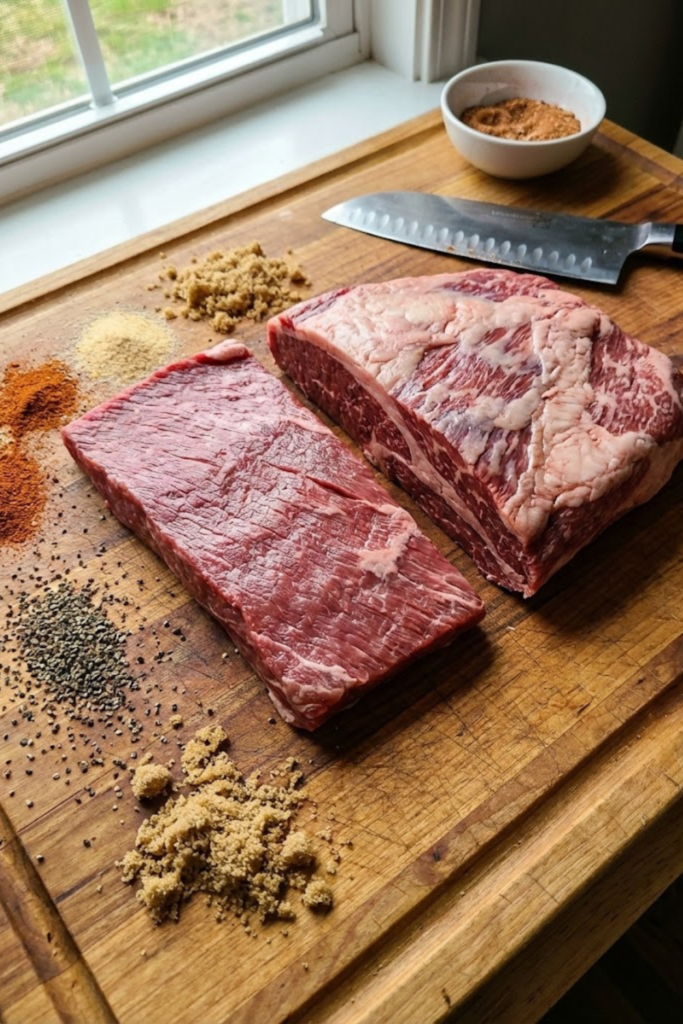
Walking up to the meat counter at the grocery store can feel a bit confusing. You see those big plastic bags of beef, and usually, there are two different types sitting right there. One package says “flat cut” and the other one says “point cut.” If you are like me, you might just grab the one that is on sale and head for the checkout. But wait! The cut you pick really changes how your dinner turns out, especially when you are using a slow cooker for several hours. Both pieces of meat come from the brisket, but they behave very differently once they start heating up in that crockpot.
What Is the Flat Cut?
The flat cut is exactly what it sounds like. It is a long, thin piece of meat that has a very consistent thickness all the way across. This is the cut most people think of when they imagine a classic St. Patrick’s Day plate. Because it has a more uniform shape and is leaner, it is much easier to slice into those nice, pretty pieces. If you want your dinner plate to look like a photo from a fancy cooking magazine, this is the one to buy. Just keep in mind that since it has less fat, it can get a little bit dry if you leave it in the crockpot too long.
The Benefits of the Point Cut
Now, let’s talk about the point cut. This piece is thicker, usually a bit smaller in surface area, and has a lot more fat marbling throughout the meat. In my house, I usually say fat is flavor. The point cut is super tender and juicy because all that extra fat melts down while it cooks. It won’t slice into nice, neat rectangles like the flat cut does. Instead, it kind of falls apart or shreds when you touch it with a fork. If you want meat that melts in your mouth, don’t be afraid of the point cut. It might look a little messy, but the taste is really good.
My Teacher Tip for Buying
I have tried both of these many times over the years. For a family dinner where I want to serve nice slices of beef next to the red potatoes, I go with the flat cut. It looks better on the table. But if I am just making a big batch for sandwiches or tacos, the point cut wins every time. Make sure you check the spice packet too! Most of these come with a little bag of seeds and peppercorns tucked inside. If your meat doesn’t have one, you’ll need to buy your own pickling spices. Don’t worry about the extra fat on top; you can always trim that off after it finishes cooking!
Prepping Your Red Potatoes and Veggies for Maximum Flavor
I’ll be honest, the first time I made this, I just threw everything in the pot at once and hoped for the best. Big mistake! I ended up with a mushy mess of grey cabbage that looked like it had been through a blender. My family still ate it—because they’re nice like that—but it wasn’t the “mouthwatering” feast I was going for. Since then, I’ve learned that timing is everything when it comes to the veggies.
The Potato Secret
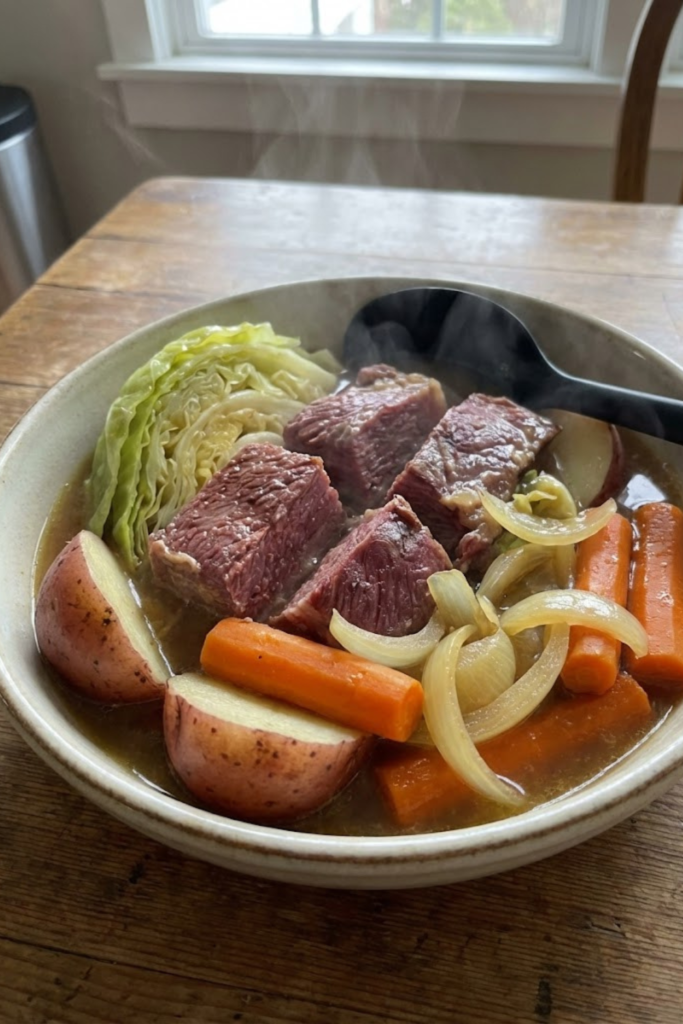
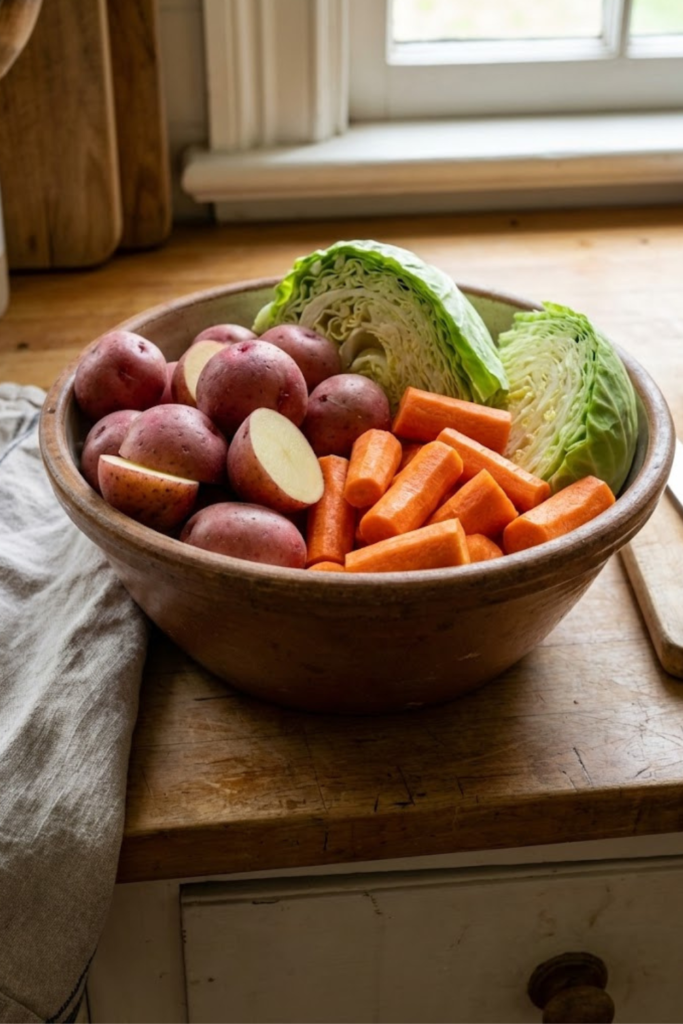
I always grab a bag of red potatoes for this recipe. Why? Because they hold their shape like a champ even after eight hours of heat. I used to try peeling them, but that’s just extra work you don’t need! Just scrub them good and cut the big ones in half. I like to keep them about two inches thick so they don’t turn into mashed potatoes by dinner time.
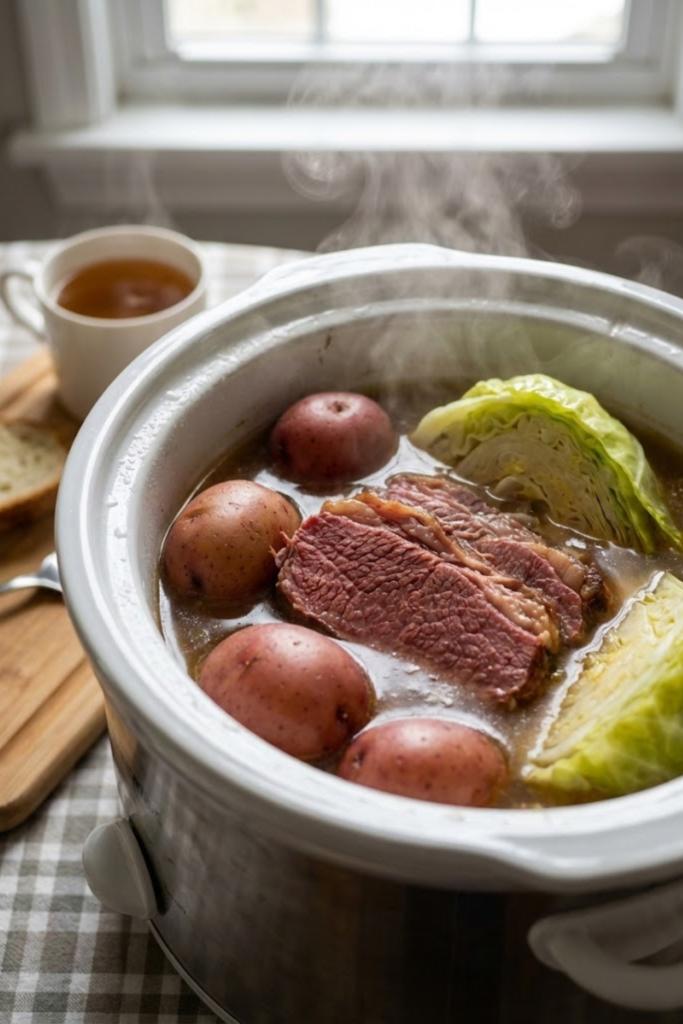
Lay these beauties right at the bottom of the slow cooker. They act like a little rack for your beef brisket, soaking up all those salty juices while the meat sits on top. It’s like they’re bathing in flavor all day long! If you use Russets, they just fall apart, so stick to the red ones or maybe some Yukon Golds if you’re feeling fancy.
Don’t Forget the Carrots and Onions
For the carrots, I buy the whole ones and peel them myself. Those little “baby” carrots are okay in a pinch, but they lose their sweetness way too fast. I chop them into big, chunky sticks—about three inches long. Throw those in with a roughly chopped yellow onion.
You want these aromatics to be big enough that they don’t disappear into the cooking liquid. I once cut the onions too small and I couldn’t even find them later! It was like a magic trick I didn’t want to see. Now I keep everything chunky. It makes the final plate look so much more rustic and home-cooked.
The Cabbage Timing Trick
Here is where most people mess up: the cabbage. If you put it in at the start, it turns into slime. It’s gross. Instead, I wait until there is only about 90 minutes left on the timer. I cut the head into thick wedges, keeping the core attached so the leaves don’t float away.
Tuck those wedges right on top of the meat and splash a little of the broth over them. They steam perfectly this way! They stay a bit crunchy and bright green, which is exactly what you want. Trust me, waiting until the end to add the greens is the best “teacher tip” I can give you.
The Low and Slow Secret to Tender Brisket
Brisket is a really tough cut of meat. It comes from the chest area of the cow, which means that muscle worked hard while the animal was moving around. Because of that, it has a lot of stringy tissue that takes a long time to break down. If you try to rush it, you will end up chewing on something that feels like a rubber boot. I learned this the hard way a few years ago when I tried to make a quick dinner for some friends. It was a total disaster! The secret to a great meal is staying “low and slow.” This is why a slow cooker is the best tool for this job.
Why the High Setting is Your Enemy
I know we are all busy people. Between work and school and everything else, we want dinner to be ready as fast as possible. But putting your crockpot on the “high” setting for four hours is usually a bad idea for corned beef. When you use high heat, the meat fibers get tight and squeeze out all the juice. It stays tough and dry even if it is sitting in liquid. On the “low” setting, the heat is gentle. It gives the tough parts of the meat time to slowly melt and turn into soft gelatin. This is what makes the beef feel like butter when you finally eat it. If you have the time, always go for 8 to 10 hours on low. It makes a huge difference.
Boosting Your Flavor with Spices
Most of the time, your beef will come with a tiny little plastic bag of seeds and pepper. It is a good start, but I like to add more. I usually throw in four or five cloves of smashed garlic and two or three bay leaves. Sometimes I even add a splash of apple cider vinegar or a little bit of beef broth instead of just plain water. Please don’t add extra salt! This meat is already very salty from the way it was cured at the factory. I made that mistake once and the food was so salty I couldn’t even finish my plate. The extra garlic and bay leaves will make your whole house smell amazing while you wait.
The Fork-Tender Test
How do you know it is done? Don’t just trust the timer on the wall. Every slow cooker is a little bit different. I always use what I call the “fork test.” Stick a fork into the thickest part of the brisket and give it a little twist. If the meat fights back or feels rubbery, it needs another hour in the pot. If the fork slides in easily and the meat starts to pull apart, it is perfect. People call this being “fork-tender.” You want it to be soft enough to eat easily, but not so soft that it turns into a pile of mush. Finding that sweet spot is the goal!
Serving Suggestions and Leftover Magic
The timer finally goes off, and your house smells like a dream. You might be tempted to just pull the meat out and start eating right away. I get it! I have been there many times myself. But how you slice and serve this meal matters just as much as how you cook it. If you mess up the slicing, all that hard work of cooking it for ten hours won’t matter because the meat will still feel tough to chew. Nobody wants to spend all day waiting for a meal that feels like work to eat. Serving this correctly is the final step to a perfect holiday dinner.
Always Slice Against the Grain
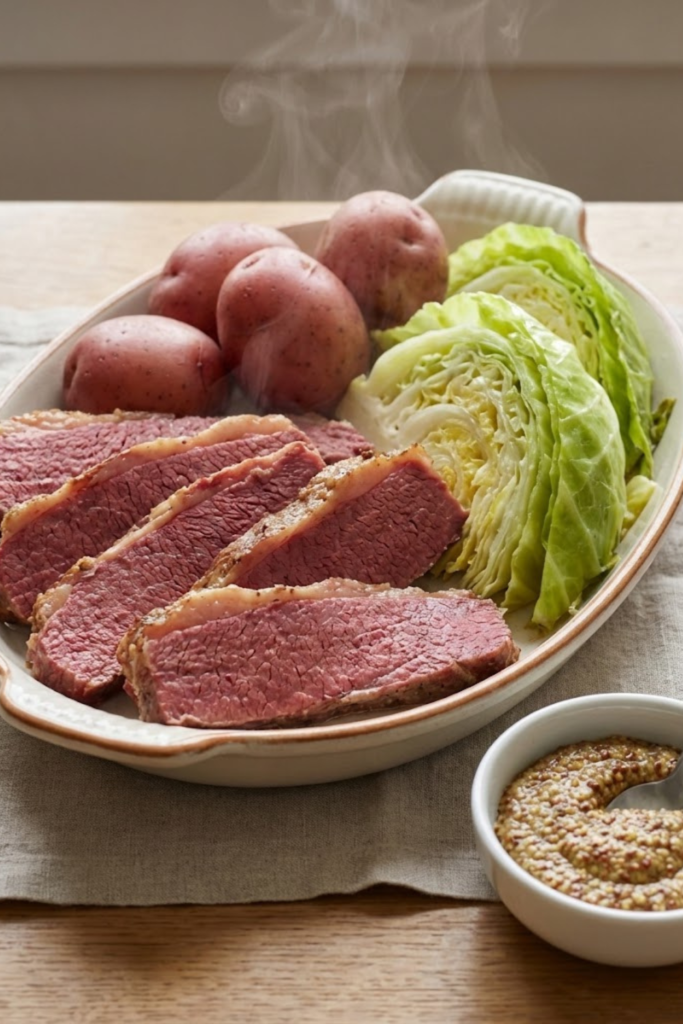
This is the most important part of the whole process. If you look closely at the meat, you will see long lines or fibers running across it. You want to cut across those lines, not with them. I tell my kids it is like a piece of wood. If you cut across the grain, the meat will just fall apart in your mouth. If you cut along the grain, it is like trying to chew on a bunch of thick rubber bands. Take your time and use your sharpest knife. I usually let the meat rest on a cutting board for about ten minutes before I even touch it. This helps the juices stay inside the beef instead of running all over your kitchen counter.
The Best Toppings for Your Plate
You can’t just serve this plain! Well, you can, but it is so much better with a little bit of help. In my kitchen, we always have a jar of grainy brown mustard on the table. The vinegar in the mustard really cuts through the saltiness of the beef. Some people like a creamy horseradish sauce too. It gives a little kick that wakes up your nose! I also like to take a big ladle and pour some of that hot cooking liquid right over the sliced meat on the platter. It keeps everything warm and juicy while everyone is getting their seats and filling their plates with cabbage and potatoes.
Leftover Magic
Honestly, sometimes the leftovers are better than the main meal. My favorite thing to make the next morning is a big pan of corned beef hash. I just chop up the leftover red potatoes and beef into tiny cubes and fry them in a skillet until they are crispy. Put a fried egg on top and you have the best breakfast ever. Or, if you have rye bread and Swiss cheese, you can make a Reuben sandwich for lunch. We never have any food left after the second day because it is just too good to waste. It is the gift that keeps on giving for your family.
Your New Favorite Holiday Tradition
I honestly think that making Slow Cooker Corned Beef and Cabbage with Red Potatoes is the most relaxing way to handle a holiday meal. Usually, when I am cooking for a big group or a special occasion, I feel like I am running around the kitchen like a crazy person. I’m checking the oven, stirring pots on the stove, and worrying that something is going to burn. But with this recipe, the crockpot does all the heavy lifting. Once you drop that brisket in and walk away, the hard part is over. It gives me so much more time to actually sit down and talk with my family instead of being stuck over a hot stove all afternoon.
Simple Cooking is the Best Cooking
Over the years, I have learned that you don’t need fancy tools or super expensive ingredients to make a meal that people will remember. You just need a little bit of patience. That is why the “low and slow” method works so well. It is a lesson I try to teach my students all the time: good things take time! If you rush the meat, it won’t be good. If you wait and let it simmer in those juices, it turns into something amazing. It is a very rewarding feeling to open that lid at the end of the day and see those perfectly cooked red potatoes and that tender beef waiting for you.
Making Memories Around the Table
There is something really special about the smell of corned beef filling up the house. It makes everything feel cozy and warm, even if it is still a bit chilly outside. My kids always know exactly what is for dinner the second they walk through the front door after school. We look forward to this every March, but honestly, it is so easy that I have started making it in the middle of winter too. It’s a great way to feed a crowd without spending a ton of money, and everyone always leaves the table feeling full and happy.
Save This Recipe on Pinterest!
I really hope this guide helps you make the best dinner ever this year. If you found these teacher tips helpful, please do me a huge favor! Take a second to save this recipe to your favorite St. Patrick’s Day or Slow Cooker board on Pinterest. It helps other people find the recipe so they can have a stress-free dinner too. Plus, you’ll be able to find it easily next year when you’re ready to cook it all over again. Thank you so much for reading, and I hope you enjoy every single bite of your corned beef and cabbage!