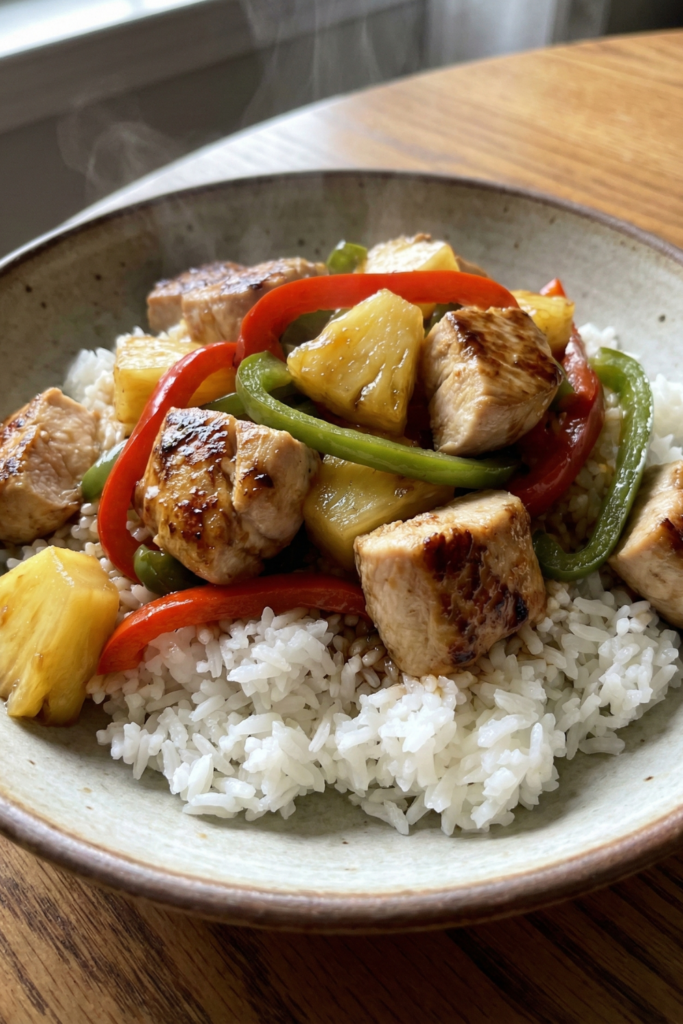
I used to think mixing fruit with dinner was a little strange. Honestly, I avoided “Hawaiian” pizzas like the plague! But let me tell you, one bite of this homemade pineapple chicken and rice, and my whole world changed. It is the perfect balance of savory soy and sweet fruit that just works. Have you ever struggled with chicken that comes out dry or rubbery? We have all been there.
This guide is going to change that for you. We are talking about tender chunks of protein, vibrant veggies, and that sticky, irresistible sauce that coats every grain of rice. Whether you are meal prepping for a busy week or trying to impress the in-laws, this dish is a total lifesaver. Let’s get cooking!
Essential Ingredients for Pineapple Chicken
When I first started trying to make a decent pineapple chicken and rice dinner, I honestly thought I could just throw whatever I had in the fridge into a pan and call it a day. I was wrong. I remember one specific Tuesday where I used a rock-hard, green pineapple and some leftover baked chicken breast. It was a disaster. The fruit was sour enough to make my eyes water, and the meat was like chewing on a rubber tire. My kids were not impressed, and frankly, neither was I.
It took me a few tries and a lot of burnt pans to figure out that the specific ingredients you choose actually matter a lot. You don’t need fancy stuff, but picking the right basics makes a huge difference.
The Pineapple: Fresh vs. Canned
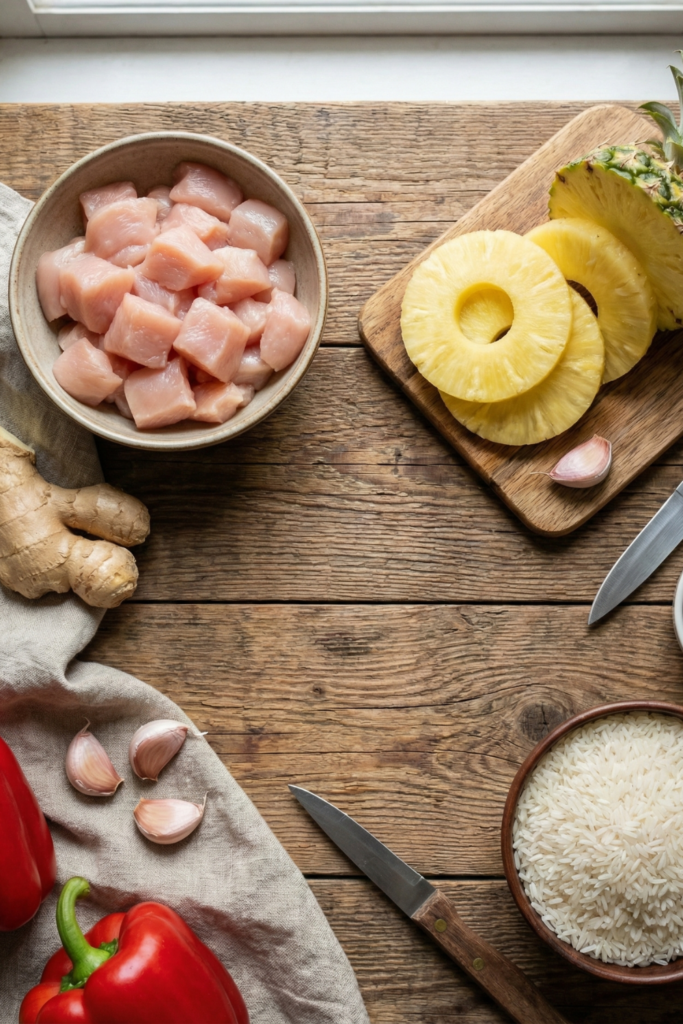
Okay, let’s talk fruit. For the absolute best flavor, fresh pineapple is the way to go. It has an enzyme called bromelain that actually helps tenderize the meat, and the texture stays firm when you cook it. When you are at the store, give the pineapple a sniff at the bottom. If it smells sweet and tropical, it is ready. If it smells like nothing, put it back.
However, I get it—cutting a pineapple is a pain. I have definitely sliced my finger trying to get the eyes out. If you need to use canned, that is totally fine! Just make sure you buy the chunks packed in pineapple juice, not heavy syrup. The syrup makes the dish way too sweet, and we want a balance. The juice can also be used in your sauce later, so don’t drain it down the sink!
Choosing the Right Chicken
I used to be a strict “chicken breast only” person because I thought it was healthier. But for a stir-fry style dish like this, boneless skinless chicken thighs are a total game changer. Thigh meat has a slightly higher fat content, which keeps it moist even if you accidentally leave it in the pan a minute too long.
If you are stuck on using breasts, that is okay too. Just be careful not to overcook them. Cut your chicken into bite-sized pieces, about one inch big. Uniform pieces cook evenly, so you don’t end up with some bits raw and others burnt.
Rice and Aromatics
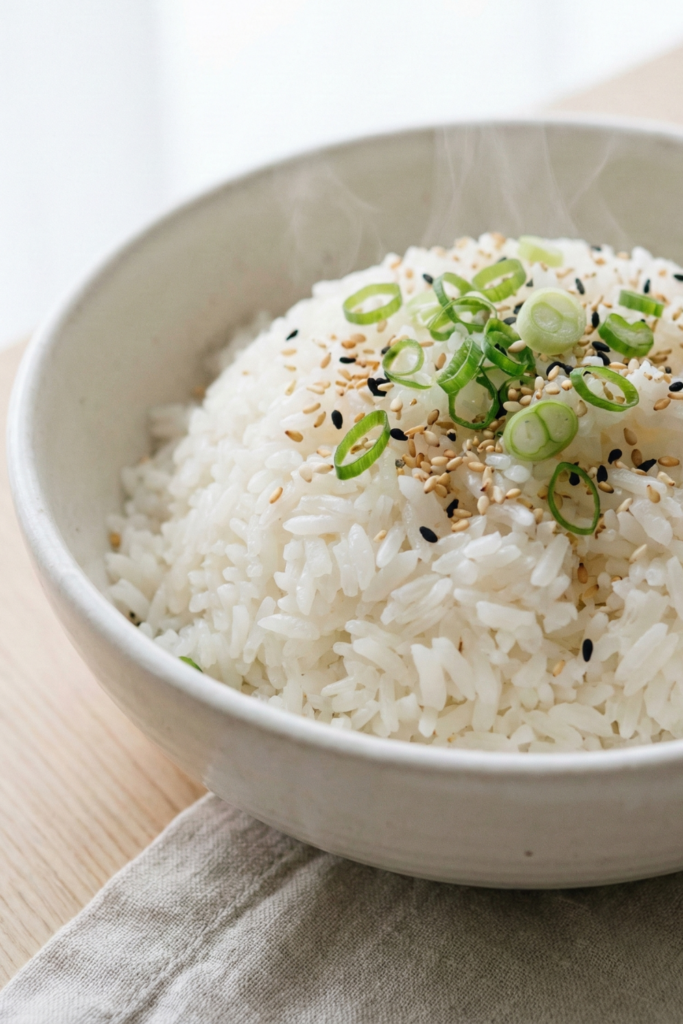
The rice is the bed for all this deliciousness, so don’t treat it like an afterthought. I prefer Jasmine rice for this recipe. It has a nice floral scent and gets fluffy rather than sticky. Sticky rice can turn into a glob of glue if you aren’t careful.
Lastly, don’t skip the fresh stuff. Fresh ginger and garlic are non-negotiables here. I tried using the powdered stuff once when I was lazy, and the flavor just fell flat. It takes two minutes to chop them up, and the smell alone is worth it. Also, grab some red and green bell peppers for a nice crunch and a pop of color. It makes the dish look like it came from a restaurant!
Mastering the Sweet and Sour Sauce
I have a bit of a confession to make. For the longest time, I relied on those jars of neon-orange sauce from the grocery store aisle. You know the ones—they practically glow in the dark and taste mostly like corn syrup. When I finally decided to make pineapple chicken and rice from scratch, I figured the sauce would be the easy part. Boy, was I wrong.
My first attempt was a total chemistry experiment gone bad. I just threw vinegar and sugar into the pan without measuring anything. It tasted like a weird, hot salad dressing. My husband was polite about it, but I saw him chugging water after every bite to wash away the acidity. It was pretty embarrassing, but I learned my lesson.
Getting the Liquid Ratio Right
The trick to a sauce that actually tastes good is balance. You can’t just rely on the pineapple fruit to do all the work. You need a base that hits all the notes: salty, sweet, and sour.
I found that using the juice from the canned pineapple is a lifesaver here. Don’t pour that gold down the drain! Mix that juice with soy sauce and rice vinegar. Please, do yourself a favor and buy rice vinegar. Regular white distilled vinegar is way too harsh; it makes the kitchen smell like you are cleaning the floors. The rice vinegar is milder and sweeter.
If you like things spicy, this is the time to throw in some red pepper flakes. I usually sneak a pinch in, but not too much or the kids will complain.
The Slurry Situation
Here is where I messed up big time in the past. I wanted the sauce to be thick and sticky, right? So, I took a spoonful of cornstarch and dumped it directly into the boiling pan.
Big mistake. Huge.
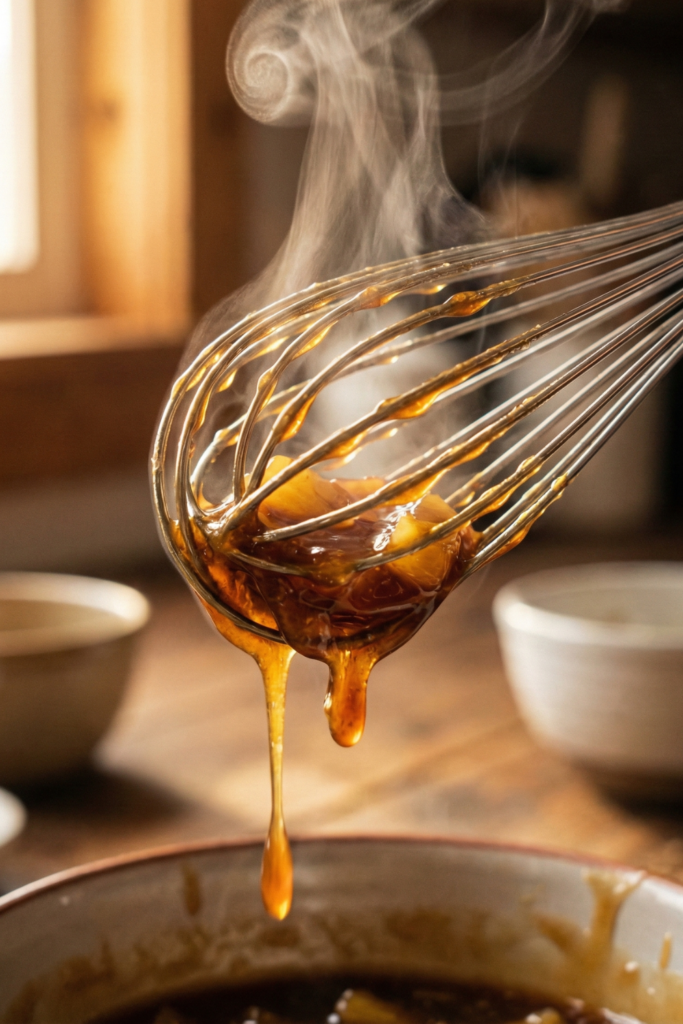
The powder instantly clumped up into these little chewy white balls that wouldn’t dissolve no matter how hard I whisked. It was gross. To get that glossy, restaurant-style glaze on your pineapple chicken and rice, you have to make a “slurry” first.
It sounds fancy, but it’s just mixing cornstarch with cold water in a separate little bowl until it looks like milk. Then, you pour that into the bubbling sauce. It thickens up in seconds. It’s like magic!
Taste Before You Toss
Finally, you have to taste it before you combine everything. Your pineapple might be sweeter than mine, or your soy sauce might be saltier. Grab a spoon and give it a try.
If your face puckers up, add a little brown sugar or honey. If it tastes flat, add a splash more vinegar. You want it to be strong because once it coats the plain rice and chicken, the flavor dilutes a bit.
Getting this sauce right is the difference between a sad bowl of mush and a dinner that makes you feel like a rockstar. Once that sauce bubbles and turns glossy, you are ready to go.
Step-by-Step Cooking Instructions
I used to be terrified of stir-frying. It just seemed so fast and chaotic! I vividly remember setting off the smoke alarm in my first apartment because I had the heat way too high and zero clue what I was doing. My neighbors probably hated me. But over the years, I’ve learned that making pineapple chicken and rice is actually pretty rhythmic once you get the hang of it. It’s a dance, really.
The biggest lesson I learned? Do not walk away from the stove. This isn’t a slow cooker meal where you can go fold laundry. Things happen fast here.
Searing the Meat Without the Steam
Here is a mistake I made for years: I would dump all the cubed chicken into the pan at once. I thought I was saving time. But what actually happened was the pan temperature dropped like a rock, and the chicken started releasing water. instead of getting that nice, golden-brown crust, the meat just boiled in its own juices. It looked grey and sad.
To avoid the grey meat situation, you have to cook in batches. It’s annoying, I know. But it’s worth it.
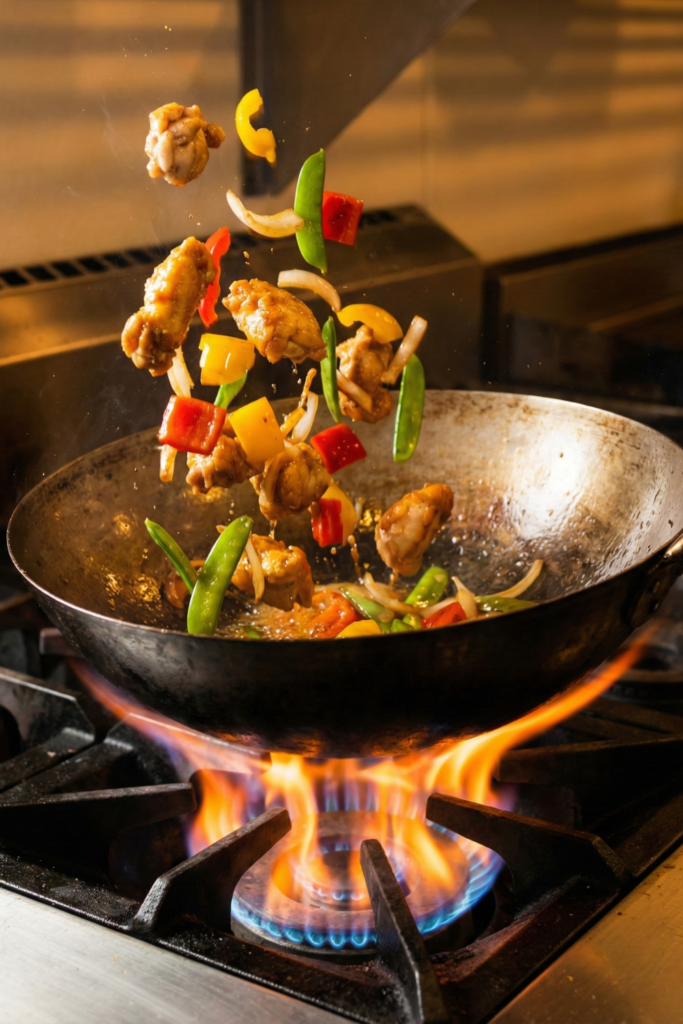
Put a single layer of chicken in the hot oil and then—this is the hard part—don’t touch it! Let it sit there for a minute or two. You want that sear to lock in the flavor. If you move it too much, it won’t brown. Once it’s golden, flip it. If the chicken sticks to the pan, it’s not ready to flip yet. Give it another minute.
The Veggie Crunch
After you take the chicken out, it’s veggie time. I used to cook the vegetables until they were basically baby food. Nobody wants a mushy bell pepper in their pineapple chicken and rice. It ruins the whole texture.
Toss your onions and peppers into the hot pan. You want to hear a loud sizzle. If it’s quiet, your pan isn’t hot enough. Keep things moving. You literally just want to soften them slightly, so they still have a bit of a “snap” when you bite into them. This usually takes just 2 or 3 minutes.
If you are adding garlic and ginger (which you should be!), add them in the last 30 seconds. I’ve burned garlic more times than I can count because I added it too early. Burnt garlic tastes bitter and awful, and there is no fixing it.
The Final Assembly
Now for the best part. Add your chicken back into the pan with the veggies. Give the sauce you made earlier a quick whisk because cornstarch loves to settle at the bottom of the bowl.
Pour the sauce over everything. It will look watery for about ten seconds, and you might panic. Don’t panic! As soon as it bubbles, that cornstarch slurry kicks in and it will transform into a thick, glossy glaze that coats everything perfectly.
Finally, gently fold in your pineapple chunks. I put them in last because warm fruit is good, but hot, disintegrated fruit mush is not. You just want to warm them through. Serve it immediately over your fluffy rice. There is honestly nothing better than seeing that steam rise up, smelling like soy sauce and sweet pineapple.
Perfect Rice Pairings and Preparation
I used to think cooking rice was the easiest thing in the world. I mean, it’s just water and grains, right? How hard can it be? Well, let me tell you about the time I served a dinner party what essentially amounted to rice pudding under a stir-fry. It was a gloopy, sticky mess. I was mortified. The pineapple chicken and rice tasted fine, but the texture was all wrong because the rice had zero fluff factor.
Rice is deceptive. It seems simple, but if you don’t treat it with a little respect, it will betray you. Over the years, I’ve learned that the rice is just as important as the main dish. You wouldn’t put a beautiful painting in a broken frame, would you?
The Rinse is Real
If there is one thing you take away from this section, let it be this: Wash. Your. Rice.
I used to skip this step because I was lazy. I figured, “Hey, the boiling water kills the germs, right?” But it’s not about germs; it’s about starch. If you don’t rinse the grains, that excess starch turns into a glue-like paste when it cooks.
Dump your Jasmine rice into a mesh sieve and run it under cold water. At first, the water will look milky and cloudy. Keep rinsing and swishing it around with your hand until the water runs mostly clear. It usually takes about a minute. It’s a small step, but it makes the difference between distinct, fluffy grains and a sad block of starch.
Stovetop vs. Rice Cooker
I finally caved and bought a cheap rice cooker a few years ago, and I have never looked back. It is foolproof. You press a button and walk away. But if you don’t have space for another gadget, the stovetop works fine if you follow the rules.
The golden rule? Don’t peek!
When I was learning, I constantly lifted the lid to “check” on the rice. Every time you do that, you let all the steam escape, and the temperature drops. The rice ends up cooking unevenly—crunchy on top and burnt on the bottom.
Use a 2:1 water-to-rice ratio generally, but check your package. Bring it to a boil, drop it to the lowest simmer possible, cover it, and leave it alone for 15-18 minutes. Then, turn off the heat and let it sit covered for another 10 minutes. That resting period allows the moisture to redistribute.
Level Up Your Base
If you really want to impress people with your pineapple chicken and rice, swap out half the water for coconut milk. It adds this creamy, subtle sweetness that pairs so well with the tangy pineapple sauce. It feels fancy, but it’s just opening a can.
Also, if you end up making too much rice (which I always do), don’t toss it! Day-old, cold rice is actually superior for making fried rice later in the week because it’s dried out a bit. It soaks up sauce better without getting mushy. It’s a win-win.
Storage, Reheating, and Meal Prep
I have a bit of a love-hate relationship with leftovers. On one hand, I love not having to cook dinner on a Wednesday night because past-me did the work. On the other hand, there is nothing sadder than opening a container of pineapple chicken and rice only to find the rice has turned into a solid brick and the chicken is dry as a bone.
I used to just throw the whole pan in the fridge with a loose piece of foil over it. That was a bad move. The rice dried out, and everything started tasting like “fridge air” (you know that smell?). Over time, I learned that how you store it is just as important as how you cook it if you want it to actually be edible the next day.
The Fridge Situation
First off, let everything cool down completely before you put a lid on it. If you seal hot food in a Tupperware, it creates condensation. That water drips back down onto the food, and you end up with a soggy, bacteria-friendly mess. Nobody wants that.
Once it’s cool, get it into an airtight container. This dish stays good for about 3 to 4 days. After day four, the texture of the chicken gets a little weird, and I usually toss it just to be safe. I’m pretty paranoid about food safety, especially with rice. Did you know rice can grow bacteria really fast if left out? Get it in the cold quickly!
The Microwave Revival
Reheating is where most people ruin their hard work. The microwave is convenient, but it is also a moisture vampire. It sucks the water right out of your grains.
Here is the trick I use every time: splash a little bit of water or chicken broth over the pineapple chicken and rice before you zap it. I’m talking maybe a tablespoon. Then, cover the bowl with a damp paper towel. This creates a little steam sauna inside the microwave. The rice re-absorbs that moisture and gets fluffy again instead of staying crunchy. It makes a huge difference.
Can You Freeze It?
I get asked this a lot. The short answer is: yes, but with a catch. The chicken and the sauce freeze beautifully. The rice freezes great too. The problem is the vegetables and the pineapple.
When you freeze cooked bell peppers and pineapple chunks, the water inside them expands and breaks down the cell walls. When you thaw them out, they tend to be significantly softer—kind of mushy, actually. It doesn’t bother me too much for a quick lunch, but if you are texture-sensitive, you might hate it.
If I am doing serious meal prep for the month, I will often freeze the chicken and sauce in one bag, and then just make fresh rice and stir-fry fresh veggies on the night I want to eat it. It tastes way fresher that way.
Lunchbox Wins
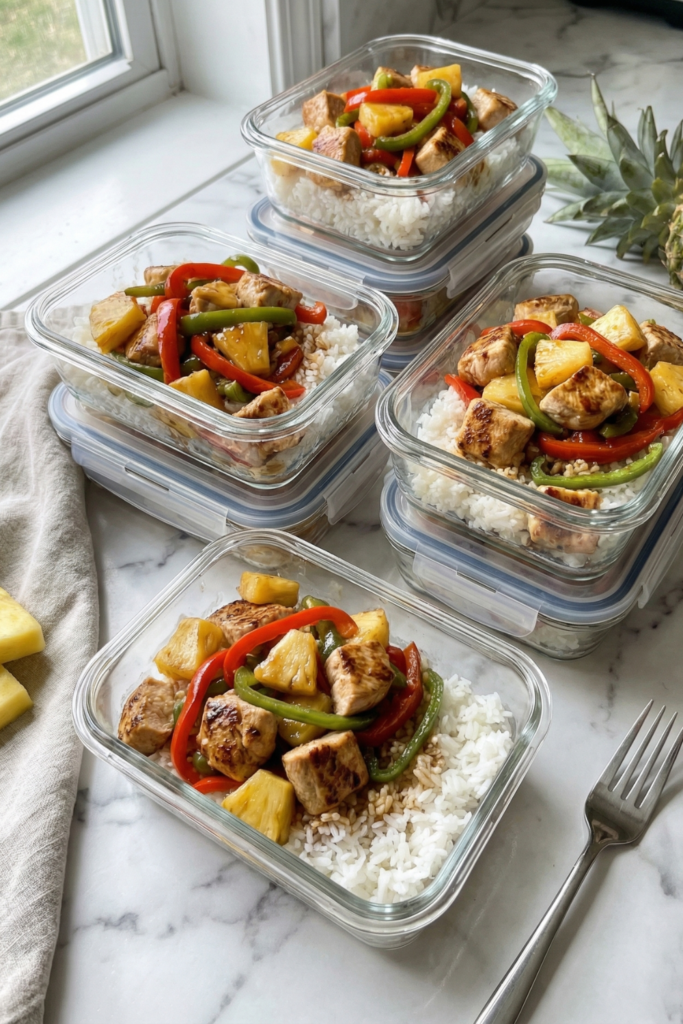
If you are packing this for work, here is a little pro tip: put the rice on the bottom and the chicken/sauce on top, but don’t mix them until you are ready to eat. If you mix it all up at 7 AM, by noon the rice has soaked up every drop of sauce. You end up with bloated, salty rice and dry chicken. Keeping them layered helps maintain the textures until lunchtime rolls around.
Honestly, looking back at my first few attempts at making pineapple chicken and rice, I can’t help but laugh. I really thought I could just microwave some frozen veggies, toss in canned chicken, and call it “gourmet.” We have come a long way since then, haven’t we?
I hope this guide has shown you that making a restaurant-quality dinner doesn’t require a culinary degree or a pantry full of expensive, obscure ingredients. It really just comes down to respecting the process—searing that chicken patiently, balancing the sweet and sour notes in your sauce, and treating your rice like the star it deserves to be.
If there is one thing I want you to take away from this, it’s that cooking should be fun. Don’t stress if your knife cuts aren’t perfect or if you accidentally add a little too much red pepper flake (just call it “spicy style” and pretend you meant to do it!). The goal is to get a hot, delicious meal on the table that makes your family smile. This recipe has become a total comfort food staple in my house, and I have a feeling it might become one in yours too.
So, go grab that fresh pineapple, fire up the stove, and enjoy the process. And hey, if you end up with leftovers, you’ve got lunch sorted for the next few days, which is the biggest win of all in my book.
Did you enjoy this recipe? If you found this guide helpful and want to save it for a rainy day, please pin this image to your “Easy Weeknight Dinners” board on Pinterest! It helps me keep the blog running and helps other home cooks find these tips. Happy cooking, everyone!