I honestly used to think I was a kitchen disaster when it came to pasta. Did you know that nearly 65% of home cooks accidentally “cook” their pesto, turning that bright green sauce into a muddy brown mess? It happened to me more times than I’d like to admit! I’d pour that fresh sauce into a piping hot pan and—poof—the magic was gone.
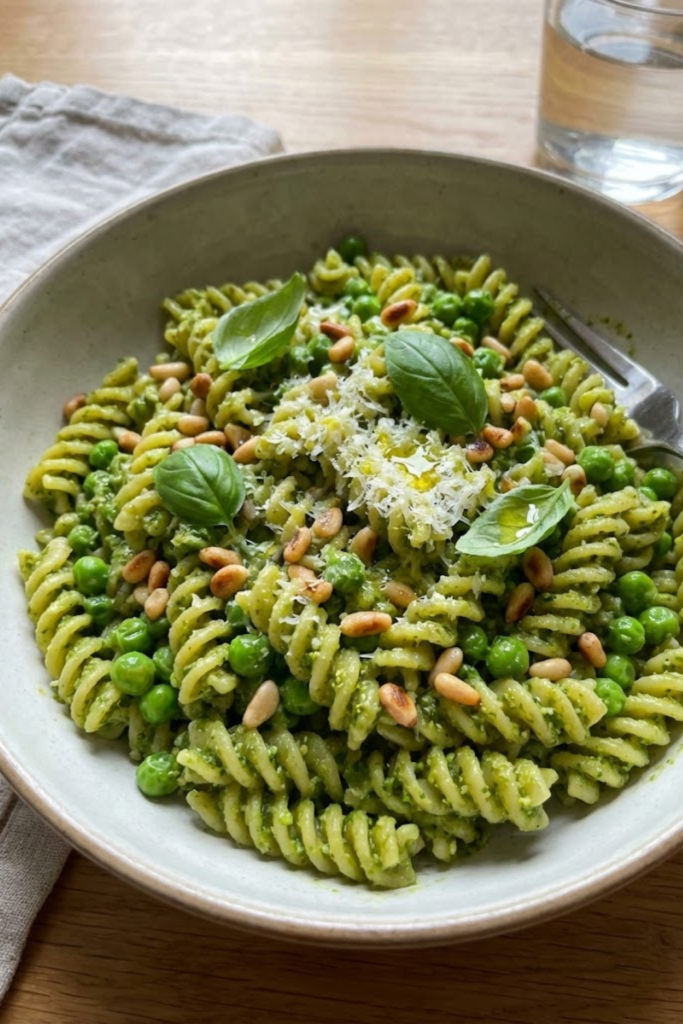
This Pesto Pasta with Peas and Roasted Pine Nuts is my redemption story. It’s snappy, it’s bright, and it’s fast enough for those Tuesday nights when you’re totally wiped. Trust me, once you get the hang of the “no-heat” sauce trick, you’ll never go back to the jarred stuff again!
Why Toasting Your Pine Nuts Changes Everything
I’ve spent a lot of years teaching and cooking, and I have found that the small stuff usually matters the most. If you are thinking about making a big bowl of Pesto Pasta with Peas and Roasted Pine Nuts, you might feel like skipping the roasting part. It feels like just one more dish to wash, right? But I am telling you, please do not skip it. Toasting those little nuts is the one thing that moves your dinner from “just fine” to “wow.” It is honestly like the difference between a cold piece of plain bread and a warm, golden slice of toast with melty butter.
The Heat Wakes Up the Natural Oils
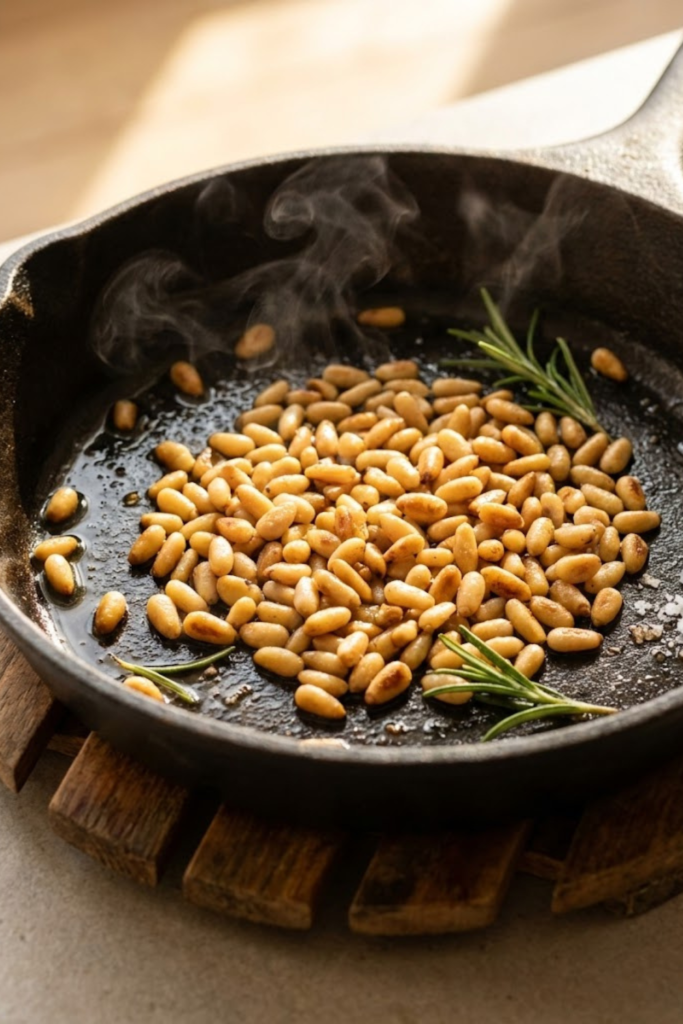
So, why does the heat do so much for the flavor? Pine nuts are packed with natural fats and oils. When they are raw, those oils are kind of sleepy and hidden away inside the nut. As soon as they hit a warm pan, the oils start to move around and get active. You will smell it almost immediately. It is a rich, nutty scent that makes your whole kitchen smell amazing. This change makes the texture go from soft and a bit waxy to very crunchy and light. In my own kitchen, I’ve found that this crunch is the best part of the Pesto Pasta with Peas and Roasted Pine Nuts. You get the soft noodles, the sweet peas, and then that toasted crunch. It creates a great balance in every bite you take.
Stove Top vs. The Oven
I usually tell people to stay away from the oven for this specific job. It is way too easy to forget they are in there while you are busy chopping basil! I prefer using a small pan on the stove. I use a medium-low heat and I do not add any extra oil or butter. The nuts have plenty of their own oil to do the work. I just stand there and keep the pan moving. You have to shake it every few seconds so they don’t sit on one side too long.
Don’t Let Them Burn
The most important thing is to watch the color. You want a light tan or a soft gold. If they turn dark brown, they get a bitter taste that can ruin the whole meal. Pine nuts are also pretty expensive, so burning a batch feels really bad on the wallet! Once they look golden, move them to a cold plate right away. If you leave them in the hot pan, they will keep cooking even with the stove off. This simple step makes your pasta taste like it came from a fancy place.
The “Pea” Factor: Fresh or Frozen?
I have a bit of a love-hate relationship with green vegetables, especially when I’m trying to feed my family after a long day of teaching. But peas? Peas are the one thing nobody at my table ever complains about. When you sit down to a bowl of Pesto Pasta with Peas and Roasted Pine Nuts, those peas are like little green jewels hidden among the noodles. They add a tiny burst of sweetness that really helps balance out the heavy garlic and salty cheese in the pesto sauce. I used to be a bit of a snob and thought I had to buy fresh pea pods from the farmer’s market and spend an hour shelling them by hand. But honestly, who has time for that? I certainly don’t anymore.
Frozen Peas Are Your Best Friend
Let me let you in on a little secret I learned: frozen peas are often way better than the “fresh” ones you see in the produce aisle. Most frozen peas are picked and frozen within just a few hours of leaving the field. This process keeps them sweet and bright green. If you buy “fresh” peas that have been sitting on a grocery shelf for a week, they start to turn starchy and taste a bit like dirt. For this Pesto Pasta with Peas and Roasted Pine Nuts, I always keep a bag of “petite” peas in my freezer. They are smaller and have a thinner skin, which feels much nicer when you are chewing them along with the pasta.
The 60-Second Rule
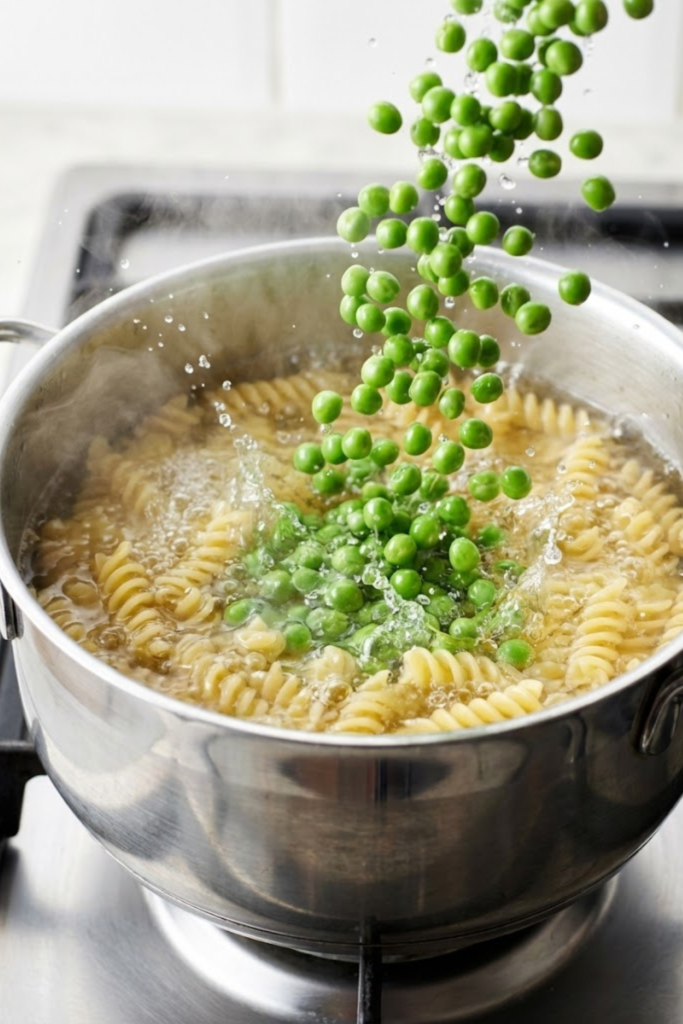
The biggest mistake I see people make is overcooking the poor things. If you boil peas for five or ten minutes, they turn into a gray mush that looks like something from a cafeteria. It’s just sad to look at. What I do is wait until my pasta is almost done. About one minute before I’m ready to drain the water, I just dump the frozen peas right into the boiling pot with the noodles. It is so easy and saves you from washing another pot. The boiling water thaws them and warms them through in about 60 seconds. This way, they stay snappy and vibrant.
Why Texture Matters in Every Bite
The reason I love adding peas to my Pesto Pasta with Peas and Roasted Pine Nuts isn’t just for the color. It’s about the “pop.” When you have soft pasta and crunchy nuts, you need something in the middle. The peas give you a soft but firm texture that makes the meal feel more complete. Plus, they have a good amount of protein and fiber. Since this is a vegetarian dish, that extra boost helps everyone feel full so they aren’t looking for a snack an hour after dinner. It’s a simple way to get some greens in without having to make a whole separate side salad.
Mastering the Pesto-to-Pasta Ratio
I have a secret that completely changed how I cook at home. For a long time, I thought that making a good Pesto Pasta with Peas and Roasted Pine Nuts was just about buying the best ingredients you could find. I would buy the expensive olive oil and the nicest fresh basil, but my pasta always came out dry or clumped together in a big green ball. It looked like a mess and felt sticky in my mouth. I finally figured out that the secret isn’t just what you put in, but how you put it all together. It’s all about the ratio of the sauce to the noodles and how you mix them at the very end.
Don’t Throw Away Your Pasta Water
The most important trick I ever learned as a teacher and a home cook is to save your pasta water. Before you pour the pot into the strainer, take a coffee mug and scoop out some of that cloudy, salty water. This water is full of starch from the pasta. When you add a few splashes of it to your Pesto Pasta with Peas and Roasted Pine Nuts, it acts like a bridge. It helps the oily pesto stick to the smooth noodles. Without it, the oil often just slides to the bottom of the bowl and stays there. I usually start with about half a cup and add it slowly until everything looks shiny and smooth.
The Big “No-Heat” Rule
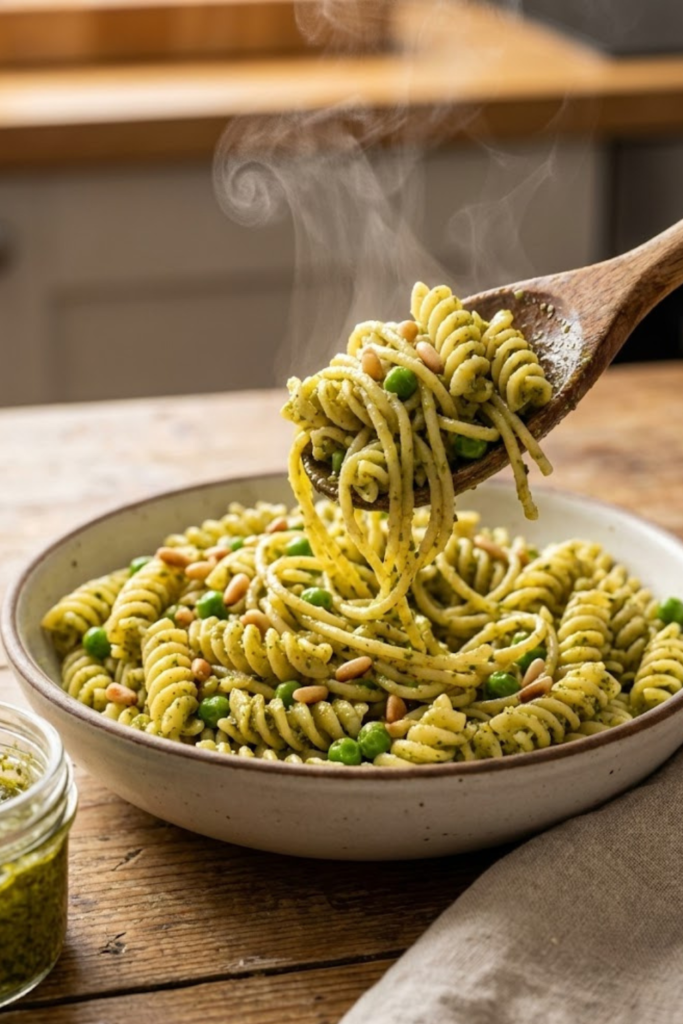
One mistake I made for years was putting my pesto into a hot frying pan. I thought I needed to “cook” the sauce to make it taste better. Don’t do that! Pesto is a raw sauce meant to be fresh. If you heat it too much, the basil loses its bright flavor and turns a dark, muddy color. Instead, I put my pesto in a large room-temperature bowl. When the pasta is done, I toss the hot noodles directly into the bowl with the sauce. The heat from the pasta is enough to warm the pesto and melt the cheese without ruining the fresh taste. This keeps the Pesto Pasta with Peas and Roasted Pine Nuts looking bright and tasting like summer.
Finishing with Extra Cheese
To get the flavor just right, I always add a bit more cheese at the very end. I like to use a mix of Parmesan and Pecorino Romano. The Pecorino is a bit saltier and gives it a nice kick that wakes up your taste buds. I sprinkle it on right before I add the roasted pine nuts. If the pasta feels a little bit too thick or dry, I just add one more splash of that magic pasta water. It makes the whole dish feel creamy and rich even though there is no actual cream in it. It’s a simple step that makes a huge difference.
Your New Go-To Dinner
I really hope you feel ready to go into your kitchen and give this a try. After years of teaching kids and cooking for my own family, I have learned that the best meals are the ones that don’t make you want to pull your hair out. This Pesto Pasta with Peas and Roasted Pine Nuts is exactly that kind of recipe. It is fast, it is healthy, and it makes you look like you really know what you are doing. Even if you are just starting out and you feel a bit nervous about burning the nuts or overcooking the pasta, just remember that every great cook started exactly where you are right now.
Sharing the Love with Family
One of the best things about this meal is how much people love it. I remember the first time I made this for a potluck at the school where I work. I was worried it was too simple, but the bowl was empty in ten minutes! People kept asking me for the secret. I just told them it’s all about the peas and that little bit of crunch from the nuts. It’s a great dish to bring to a friend who just had a baby or a neighbor who is feeling under the weather. It travels well and it looks so bright and happy in the container. Food is a way to show people you care, and this green pasta does that perfectly.
What to Do with Leftovers
If you actually have any leftovers, you are lucky! I usually make a double batch just so I can have some for lunch the next day. The flavors actually get a bit better after sitting in the fridge for a night. The garlic gets a little more mellow and the basil oils soak into the pasta. You can eat it cold like a pasta salad, or you can warm it up very slowly. If you do heat it up, add a tiny bit of water or a drop of olive oil so it doesn’t get dry. It’s the perfect lunch to take to work because it doesn’t smell too strong in the breakroom, but it still tastes like a treat.
Final Kitchen Wisdom
My final piece of advice is to just have fun with it. If you don’t have pine nuts, use walnuts. If you don’t have fusilli, use whatever noodles are in the back of your cupboard. The main goal of Pesto Pasta with Peas and Roasted Pine Nuts is to have a fresh, home-cooked meal that makes you feel good. Don’t worry about making it look like a picture in a magazine. As long as it tastes good to you and your family, you did a great job. Go ahead and grab your apron and get started—you’ve got this!
Love this recipe? Pin it to your “Quick Dinners” board on Pinterest so you never lose it!