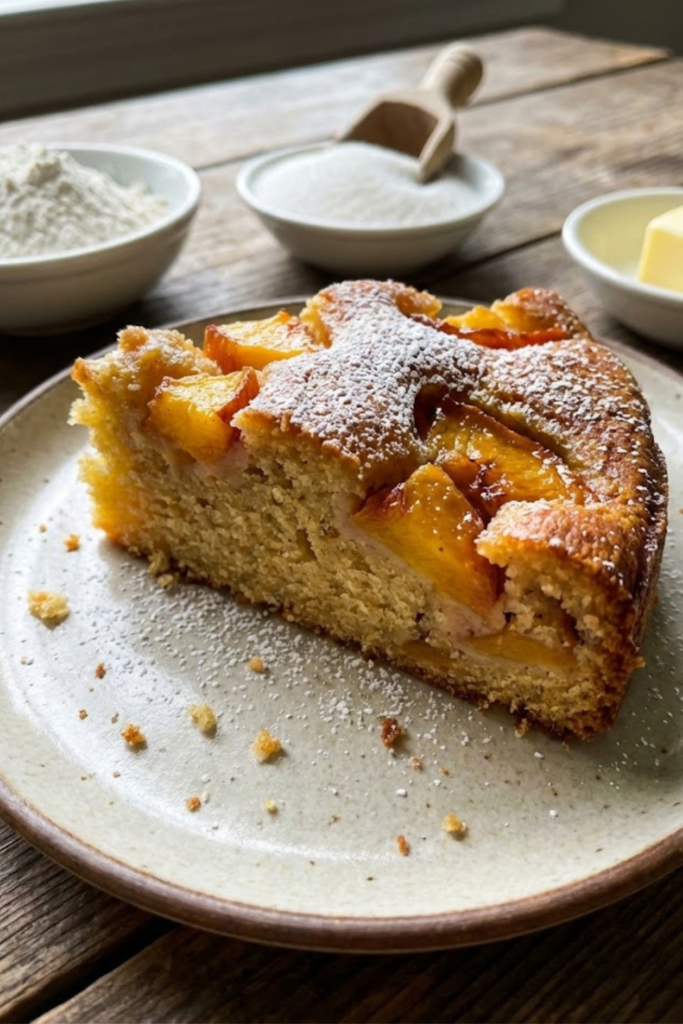
Did you know that in ancient China, peaches were considered a symbol of immortality? While I can’t promise you’ll live forever, one bite of this peach cake will definitely make you feel like you’re in heaven! I remember the first time I tried to bake with peaches; I ended up with a soggy mess that looked more like soup than cake. But after years of tweaking, I’ve found the secret to that perfect crumb. Whether you have a basket of fresh picks from the orchard or a can hiding in your pantry, we are going to turn them into something magical.
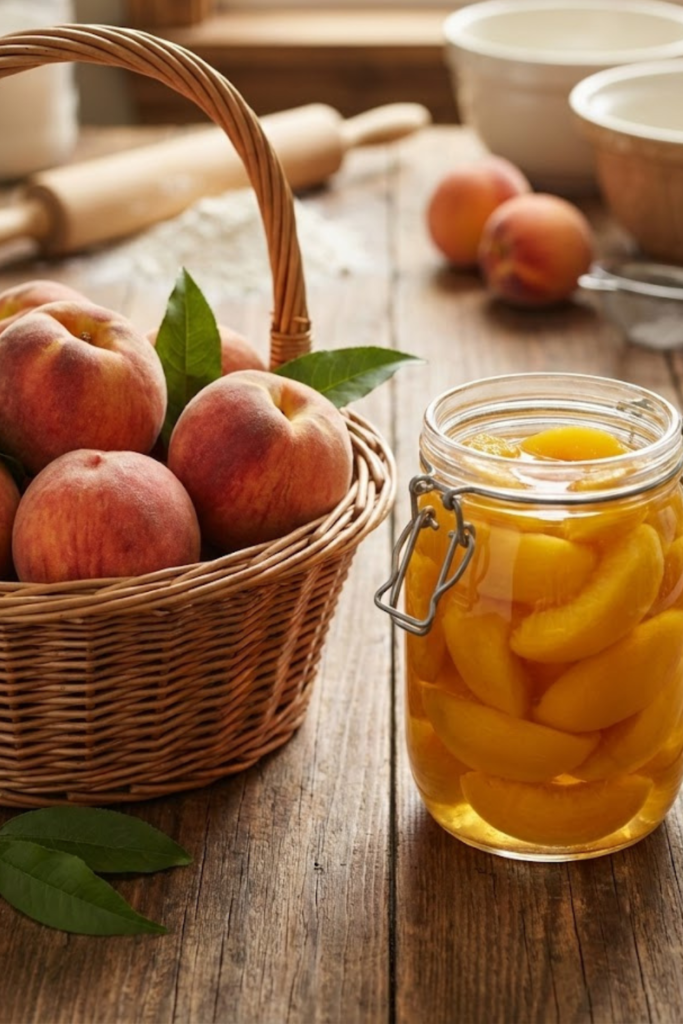
Choosing the Best Peaches for Baking: Fresh vs. Canned
I used to think a peach was just a peach. You go to the store, grab the fuzzy orange thing, and throw it in the oven, right? Wrong. I learned this the hard way about ten years ago when I tried to make a summer cobbler for a neighborhood potluck. I bought these rock-hard peaches that I’m pretty sure could have broken a window. The result was a crunchy, flavorless disaster that nobody ate. It was humiliating!
But you live and you learn. Now, I know that picking the right fruit is half the battle when it comes to fresh peach recipes. Let’s break down what actually works so you don’t end up crying over a trash can full of batter like I did.
The Battle of the Stones: Freestone vs. Clingstone
If you are buying fresh, you need to know this. There are two main types of peaches: Freestone and Clingstone.
Clingstone peaches are exactly what they sound like. The flesh clings to the pit like a toddler to a parent’s leg on the first day of school. If you try to slice these for a cake, you are going to end up with a mangled mess of fruit. They are usually the first ones to ripen in the season, but they are a pain to work with.
Freestone peaches are your best friend. The pit falls right out when you slice them open. It makes your prep time so much faster. When you are at the market, ask the farmer or look at the signs. Always go for freestone if you can find them. It saves so much frustration.
Dealing with Ripeness
You want peaches that give just a little bit when you squeeze them gently. If they are too soft, they will turn into mush in the oven. If they are hard, they won’t have that sweet, sugary flavor we want.
If you buy them hard, put them in a brown paper bag on the counter for a day or two. It traps the ethylene gas and speeds up ripening. Just don’t forget about them, or you’ll come back to a bag of fruit flies!
Can I Use Canned or Frozen Peaches?
Okay, here is the truth. I use canned peach dessert recipes all the time, especially in February when fresh fruit is gross or expensive. There is no shame in it! However, you have to be careful about the liquid.
Canned peaches sit in heavy syrup or juice. If you dump that straight into your batter, you will ruin the chemical balance. The cake will be soggy and won’t rise.
Here is my trick for canned peaches:
- Drain them in a colander.
- Rinse them off if they are in heavy syrup (it cuts the artificial sugar taste).
- Pat them dry with a paper towel. Seriously, get them as dry as possible.
For frozen peaches, the rule is similar. You must thaw them completely and drain the excess water. Frozen fruit releases a ton of liquid when it thaws. If you skip this step, your cake will be a wet mess.
The Peel Problem: To Peel or Not to Peel?
Some people leave the skin on for a rustic look. I personally don’t like the texture of cooked peach skin—it gets a little slimy. If you want to peel fresh peaches easily without mangling the fruit, use the blanching method.
Boil a pot of water. Cut a small “X” on the bottom of each peach. Drop them in the boiling water for about 30-60 seconds, then immediately fish them out and dunk them in a bowl of ice water. The skins will slip right off with your fingers. It’s actually kind of satisfying to do!
Whether you go fresh, frozen, or canned, just make sure you control that moisture. That is the real secret to a perfect crumb.
Essential Ingredients for a Moist Peach Cake
Baking is weirdly similar to chemistry class, except you get to eat the homework. I used to think I could just swap ingredients willy-nilly and everything would turn out fine. Spoiler alert: it doesn’t. I remember trying to substitute oil for butter and guessing on the flour amount once. Let’s just say the result was less “cake” and more “hockey puck.”
To get that perfect moist cake recipe texture, you have to respect the ingredients. It’s not just about what you put in, but how you treat it. Here is what you need to raid from your pantry to make this work.
The Butter Situation
We need to have a serious talk about butter. If a recipe calls for room temperature butter, please listen to it! I used to be impatient and try to beat cold butter straight from the fridge. It was a disaster. The sugar never incorporated right, and I ended up with these weird greasy pockets in the cake.
You want the butter soft enough that your finger leaves a dent, but not so soft that it’s melting. This allows air to get trapped when you mix it, giving you that fluffy lift. Also, I generally use unsalted butter so I can control the salt level myself. If you only have salted, just skip the extra pinch of salt later.
The Sugar blend
For this peach cake, I don’t just use plain white sugar. That is boring. I like to use a mix of granulated white sugar and brown sugar.
Why? Because brown sugar has molasses in it. That molasses adds moisture and a deeper, almost caramel-like flavor that pairs so well with peaches. It creates a tender brown sugar crumb that feels rich rather than just sweet. If you’ve been skipping the brown sugar, you are missing out.
The “Secret” Weapon for Moisture
Okay, it’s not really a secret, but it is a game changer. Sour cream.
If you want a sour cream cake that stays soft for days, you have to add a dollop of full-fat sour cream or plain Greek yogurt to the batter. I learned this trick from a friend’s grandmother who made the best cakes I’ve ever tasted. The acid in the sour cream tenderizes the gluten in the flour.
I’ve tried making this with just milk, and it’s fine, but it dries out faster. With sour cream, you can leave it on the counter (covered, obviously) and it’s still good three days later. It adds a richness that you just can’t get otherwise.
Flour and Flavor
For the dry stuff, standard all-purpose flour is fine. But here is a big mistake I used to make: scooping the flour with the measuring cup. Don’t do that! You end up packing it down and adding way too much flour, which makes the cake dry. Spoon the flour into the cup and level it off.
Finally, the flavor boosters. Vanilla extract is a must, obviously. But if you want people to ask, “What is in this?” add a tiny splash of almond extract. Stone fruits like peaches and cherries are related to almonds, so the flavors naturally vibe together. Just go easy on it—too much almond extract tastes like play-dough.
Follow this list, and you’re already halfway to the best cake of your life.
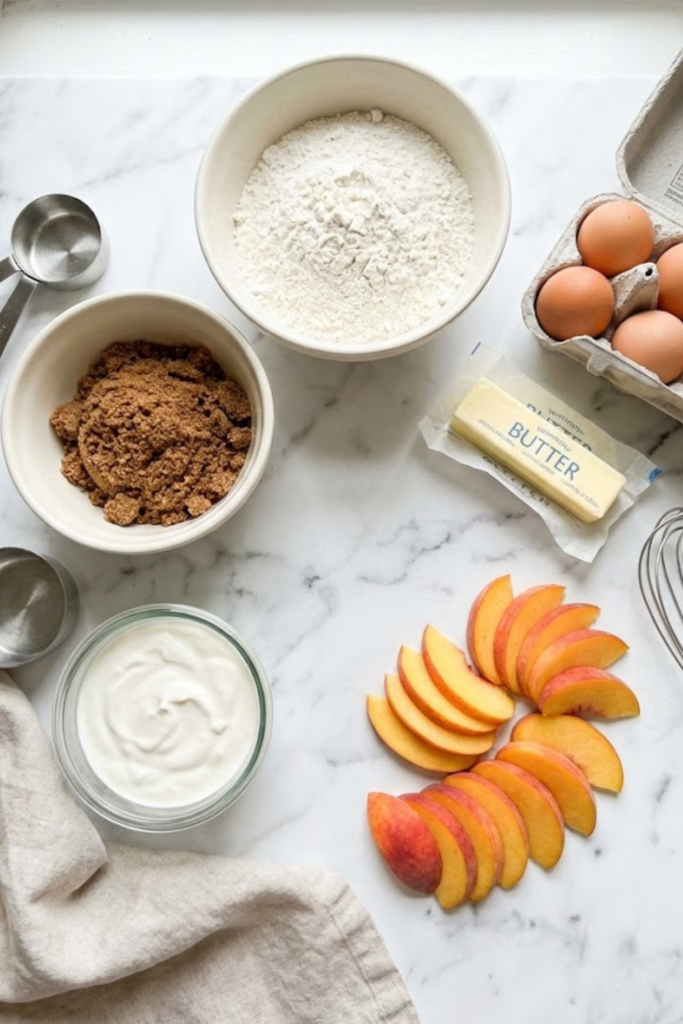
Step-by-Step Instructions: Mixing and Baking
I honestly used to be terrified of baking cakes from scratch. It felt like if I didn’t hold my mouth just right, the whole thing would deflate. I remember one time I just threw everything into a bowl at once—eggs, flour, butter, the works—and turned the mixer on high. My kitchen looked like a snow globe of flour, and the cake came out tough as shoe leather. It was a total mess.
But I figured out that the order you put things in actually matters. You don’t need a degree in science, but you do need to follow the creaming method if you want that fluffy texture.
Getting the Fluff Factor
First things first, grab your Kitchen Aid mixer or a handheld one. You need to beat the room-temperature butter and sugars together until they look pale and fluffy. This usually takes about 3 to 5 minutes.
Do not skimp on this time! I used to stop after 30 seconds because I was bored. Big mistake. This step punches little air bubbles into the butter, which makes the baking powder lift work better later on. If you skip this, your cake will be dense and sad.
The “Dry, Wet, Dry” Dance
Once your eggs and vanilla are mixed in, we have to add the flour and the milk (or sour cream). Here is the golden rule: alternate them. Add a third of the dry ingredients mix, then half of the wet, and keep swapping.
Why? Because if you dump all the flour in at once, the batter gets too thick and you have to mix it to death to get it smooth. Over-mixing develops gluten, which is great for bread but terrible for cake. We want a tender crumb, not a chewy loaf. Stop mixing the second the white streaks of flour disappear.
Folding in the Fruit
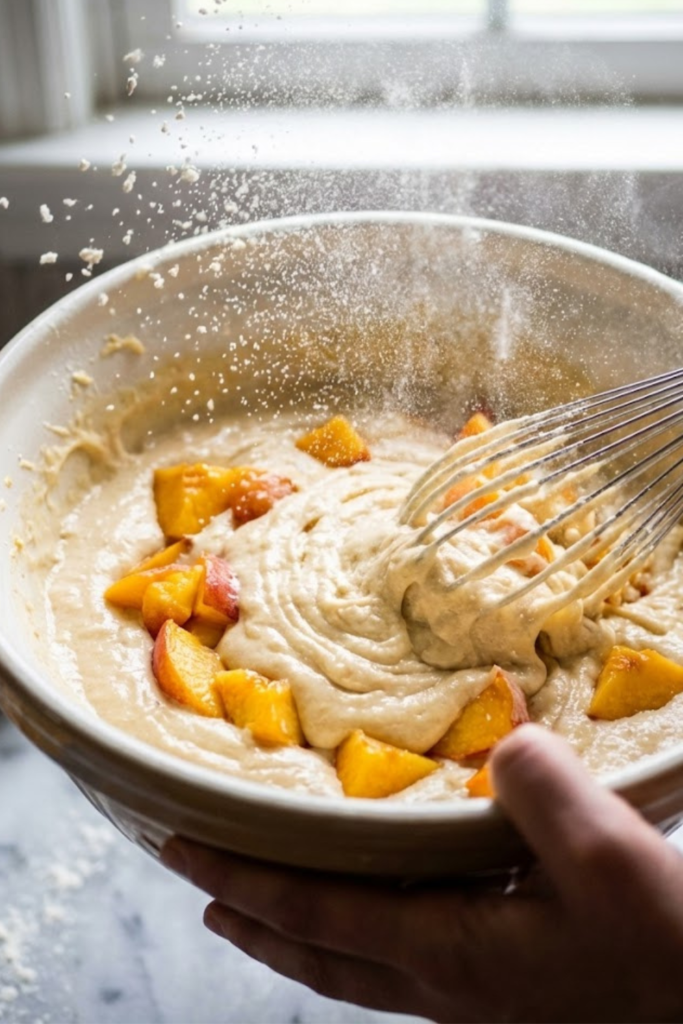
Now for the star of the show. Whether you are using freestone peaches or drained canned ones, you have to be gentle. If you use the electric mixer for this, you will shred the fruit into mush.
Use a rubber spatula and fold them in by hand. I like to toss my peach chunks in a tiny bit of flour before adding them. It gives them a little “grip” so they don’t all sink to the bottom of the 9×13 baking pan while it bakes.
Is It Done Yet?
Preheat your oven before you even start mixing. If the oven isn’t hot, the cake won’t rise. Bake it until you see a golden brown crust forming on top.
Don’t just trust the timer. Ovens lie. Use the toothpick test. Stick a toothpick into the center of the cake. If it comes out with wet batter, it needs more time. If it comes out clean or with a few moist crumbs, get that thing out of there!
Let it cool in the pan for a bit before moving it to cooling rack instructions generally say wait 10 minutes. If you try to move it while it’s piping hot, it might fall apart, and you’ll be eating cake crumbs for dinner. Which, honestly, isn’t the worst thing in the world.
Serving Suggestions and Toppings
I used to think that once the timer went off and the cake was out of the oven, my job was done. I’d literally just slap a slice on a paper plate and call it a day. But I realized something embarrassing a few years ago at a dinner party. I served this naked, plain cake, and while it tasted good, it looked kind of sad. It was like going to a fancy event in sweatpants.
You don’t have to go crazy, but a little effort in the presentation goes a long way. It turns a regular Tuesday snack into legitimate Sunday dessert ideas. Here is how I dress it up without losing my mind.
The Simple Dusting or Glaze
If you are lazy like me on most weeknights, powdered sugar is your best friend. Just put some confectioners’ sugar in a little sieve and tap it over the cooled cake. It looks like snow and hides any weird imperfections on the top crust.
But if you want to kick it up a notch, make a vanilla bean glaze. I learned a hard lesson with this once: do not—I repeat, do NOT—pour glaze over a hot cake. I did this, and the glaze completely melted and disappeared into the cake. It looked greasy and wet. Gross.
Wait until the cake is cool. Whisk together powdered sugar, a splash of milk, and vanilla bean paste. Drizzle it back and forth with a spoon. It sets up in a few minutes and looks like you bought it at a bakery.
The Cream Factor
There is something magical about warm fruit cake and cold dairy. It’s just science.
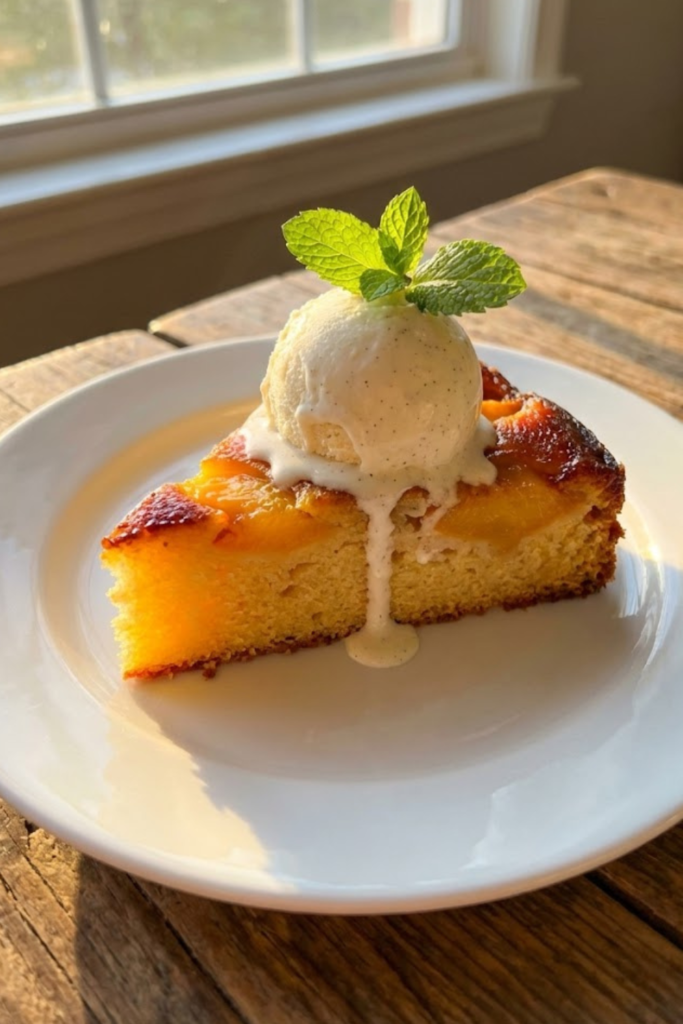
My personal favorite is a classic vanilla ice cream side. You want to serve the cake slightly warm here. Pop a slice in the microwave for 10 seconds if it’s room temp. When that cold ice cream starts melting into the warm, buttery crumbs… man, it is heaven. I’ve definitely eaten this for breakfast before. Don’t judge me.
If ice cream feels too heavy, go for a whipped cream topping. And please, try to make it yourself if you have time. I grew up on the stuff in the tub, and it’s fine in a pinch, but homemade whipped cream is superior.
Pro tip: Chill your metal bowl and whisk in the freezer for 10 minutes before you start. The cream whips up way faster. Add a drop of vanilla and barely any sugar. The cake is sweet enough; the cream should just be rich and airy.
Adding Some Crunch
Sometimes, the texture can be a little “one note” if everything is soft. I like to add a cinnamon sugar topping or some toasted nuts for contrast.
If I’m feeling fancy, I’ll toast some sliced almonds in a dry pan for like two minutes. Watch them like a hawk! I have burned more almonds than I care to admit because I walked away to check my phone. Sprinkle those over the whipped cream for a nice crunch. It balances out the soft peaches perfectly.
Honestly, however you serve it, just don’t let it go to waste. But trust me, with that scoop of ice cream, leftovers usually aren’t a problem.
Storing and Freezing Your Peach Cake
I have a bad habit of leaving baked goods out on the counter uncovered because I tell myself, “I’ll just grab another slice in an hour.” Next thing I know, it’s the next morning and the cake is stale and hard as a rock. It’s a tragedy, honestly.
If you want your hard work to last, you have to store it right. This cake is super moist because of the fruit, which is great for flavor, but it also means it can spoil faster if you aren’t careful.
Counter vs. Fridge
For the first day or two, room temperature storage is totally fine. I keep mine in a plastic cake carrier or an airtight Tupperware. If you leave it exposed to air, the edges get crunchy—and not in a good way.
However, if your kitchen is hot (like mine is in July) or if you live somewhere super humid, sticking it in the fridge is safer. Also, if you used a cream cheese frosting or whipped cream, you must refrigerate it. Don’t risk food poisoning over dessert!
Just a heads up: the fridge dries cakes out. It’s just what cold air does. So, if you do refrigerate it, let a slice sit on the counter for 15 minutes before eating it. It brings the flavor back.
Freezing for Later
Can you freeze it? Absolutely. I actually think freezing baked goods is a smart move. Sometimes I bake this cake just to freeze half of it for those nights when I desperately need something sweet but refuse to cook.
Here is my method so it doesn’t taste like freezer burn:
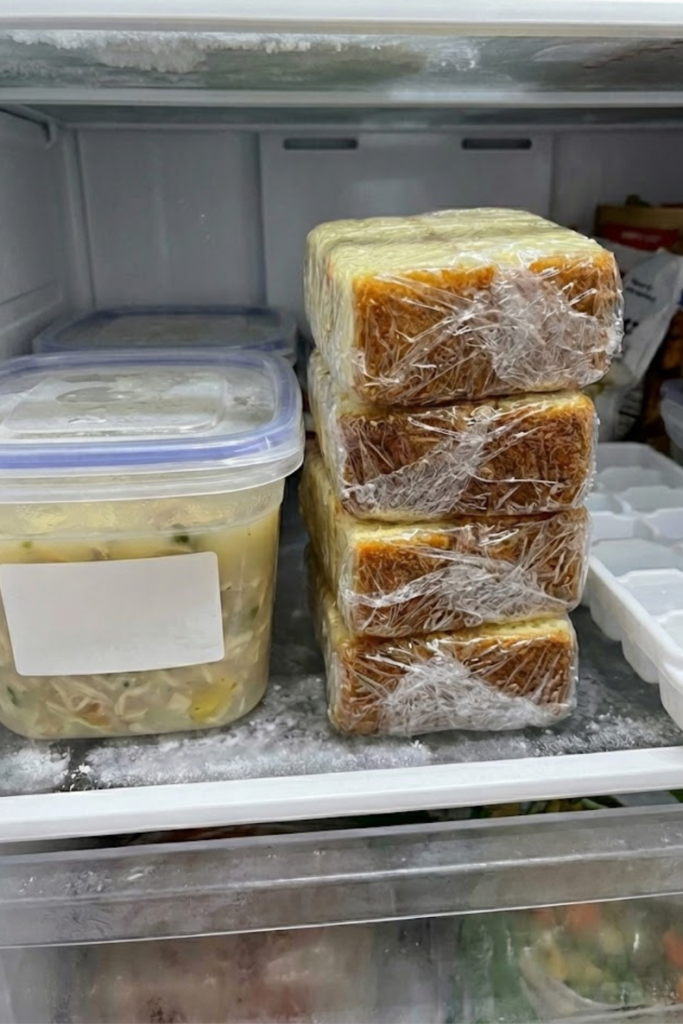
- Slice the leftover cake into individual squares.
- Wrap each square tightly in plastic wrap. I’m talking two layers.
- Then, wrap that in aluminum foil.
- Throw them all in a big freezer bag.
It stays good for about 3 months. When you want a treat, just unwrap a slice and zap it in the microwave for about 30 seconds. It tastes almost exactly like it did fresh out of the oven. It’s a total lifesaver.
Making this peach cake is honestly one of the best ways to celebrate the season (or pretend it’s summer in the middle of winter!). It’s sweet, comforting, and surprisingly easy to pull together. I remember being so intimidated by baking with fruit, thinking I’d mess it up, but once you get the hang of it, it becomes second nature.
I really hope you give this recipe a try and share it with the people you love. There is nothing quite like the smell of peaches and cinnamon filling up the house.
If you enjoyed this recipe and want to save it for later, please pin it to your favorite Dessert board on Pinterest so you can find it whenever the craving strikes! Happy baking!