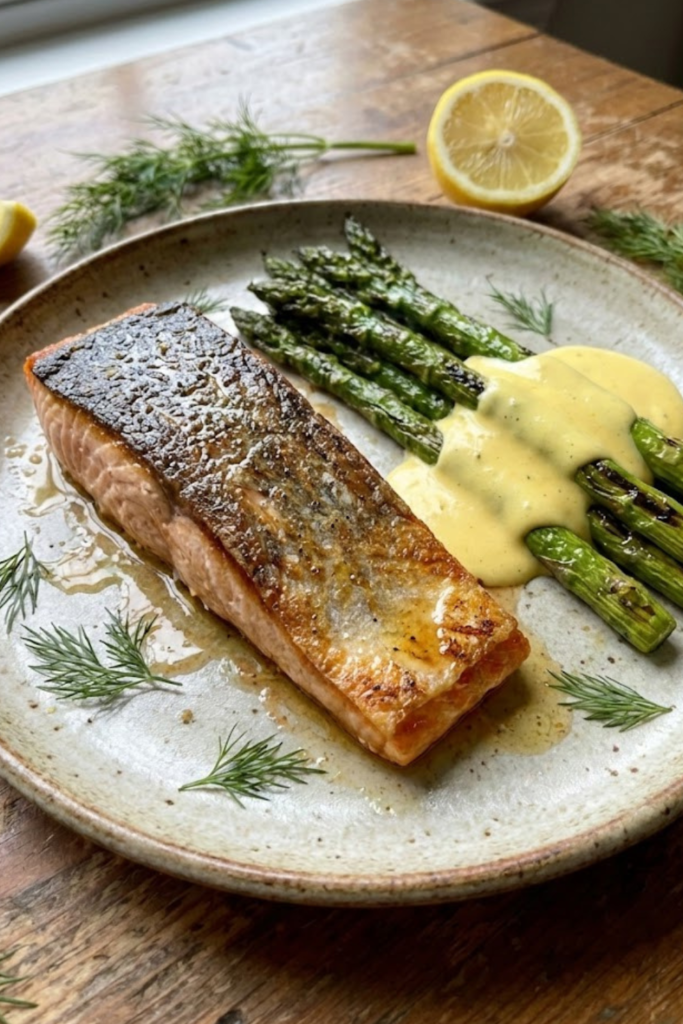
Do you know that nearly 40% of home cooks avoid making Hollandaise sauce because they are terrified it will “break” or scramble? I used to be one of them! But let me tell you, there is nothing quite like the feeling of pulling off a perfectly crispy skin salmon fillet paired with that liquid gold sauce. It’s a total game-changer. In this guide, we aren’t just cooking dinner; we are mastering a culinary staple that screams sophistication but is secretly easy to pull off on a Tuesday night. Get your skillet ready, because we are diving into the delicious world of pan-searing!
Choosing the Best Salmon Fillet for Searing
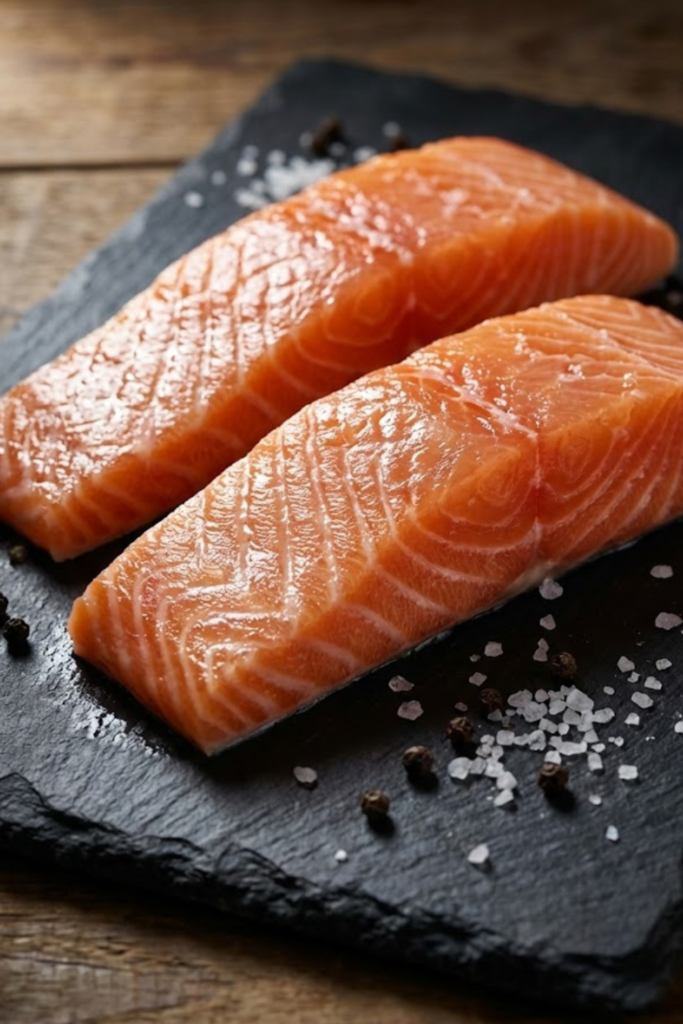
So, you are standing at the grocery store seafood counter, staring at all the fish behind the glass. It can be a little confusing, right? I used to just grab whatever piece was cheapest, but I learned the hard way that for this recipe, the fish you pick actually matters a lot.
First off, let’s talk about Wild-Caught vs. Farmed. If you can swing it with your budget, try to get King or Sockeye salmon. They have this really rich flavor and nice fat that cooks up amazing in the pan. Farmed salmon is totally fine if that is what you have—I use it plenty of times—but the wild stuff just tastes a bit more “real” to me and handles the high heat better.
Now, this next part is a big deal: Get the Skin-On Cuts. I know some folks think fish skin is kind of gross, but hear me out. For pan-searing, that skin acts like a little heat shield. It protects the tender meat so it doesn’t dry out while it cooks. Plus, when you get it super crispy? Oh man, it is honestly the best part of the meal.
Before you wrap it up, do a quick freshness check. Don’t be shy to ask the butcher to let you smell it. It should smell like the ocean or clean water, not like strong, “fishy” fish. If it smells funky, put it back. You also want to look at the meat. It should look firm. If you poke it, it should bounce back, not stay squished down.
Finally, here is a trick most people skip. The Room Temperature Rule. When you get home, don’t take the fish out of the fridge and throw it straight into a hot pan. It will cook unevenly—burnt on the outside and cold in the middle. Take it out, put it on a plate on the counter, and let it hang out for about 15 minutes before you cook. It makes a huge difference.
Prepping Your Asparagus for Perfection
Okay, moving on to the green stuff. I used to think asparagus was always stringy and tough because I didn’t know how to clean it right. But once you know the trick, it’s actually the easiest vegetable to fix.
First, put your knife away. You don’t need it for trimming. The Snap Method is the only way to go. Pick up a spear, hold it at both ends, and just bend it until it snaps. It naturally breaks right where the woody, tough part ends and the tender part begins. It’s kinda fun to do, and you never waste the good parts.
Now, about cooking it. You might see recipes telling you to boil (blanch) it in water first. I usually skip that. Why dirty another pot? I like to pan-fry the spears right in the skillet. If you toss them in after the salmon, they soak up a little bit of that flavorful fish oil, and it tastes way better than boiled veggies.
Keep the seasoning simple. Asparagus has a nice flavor on its own, so you don’t need to cover it up. I just use sea salt, some black pepper, and fresh lemon zest. That zesty lemon brightens it up and cuts through the rich sauce we are going to make later.
Finally, watch your timing. Nothing is worse than mushy asparagus. You want it “tender-crisp.” That means it’s cooked through but still has a little bit of a crunch when you bite it. It usually only takes about 5 to 7 minutes in a hot pan. If it starts looking dull and gray, you cooked it too long!

The Foolproof Hollandaise Sauce Method
Okay, let’s talk about the part that makes everyone nervous: the Hollandaise. I know, I know. People think this is the hardest sauce in the world to make. I used to avoid it because I didn’t want to waste a whole stick of butter on a sauce that separated and looked like oily scrambled eggs. But then I learned the blender trick, and seriously, it changed everything.
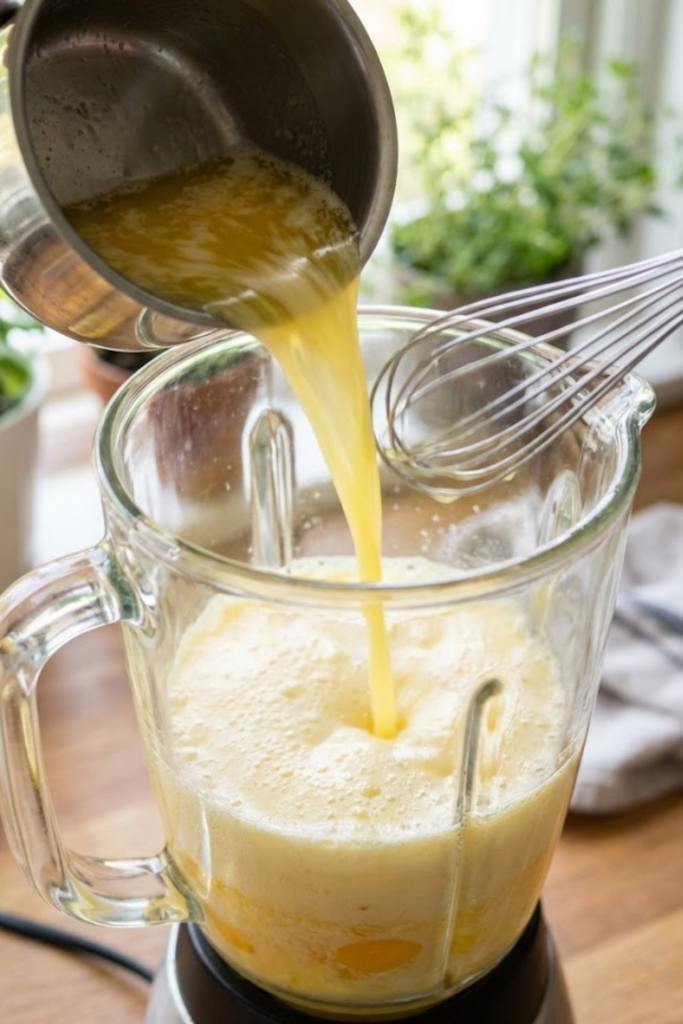
First, forget about that fancy bowl over a pot of boiling water. You don’t need to whisk until your arm falls off. The Blender Technique is the cheat code here. You just put your egg yolks and lemon juice in the blender cup first.
The real secret is Temperature Control. You need to melt your butter on the stove until it is genuinely hot and bubbling. Not burnt, but very hot. Turn the blender on low to medium, and then—this is the important part—slowly pour that hot butter in a super thin stream. The heat from the butter cooks the eggs instantly while the blender whips it all together. It turns into this thick, creamy yellow sauce in like 30 seconds.
Also, don’t forget The Acid Factor. Butter is heavy. You need that fresh lemon juice or a splash of white vinegar to cut through the fat. Taste it after you blend it. If it just tastes like melted butter, add a little more lemon to wake it up.
And if the worst happens? Here is how to fix a broken sauce. If it separates and looks greasy, don’t throw it out! Just add a single teaspoon of warm water and blend it again on high. It usually comes right back together like magic.
Step-by-Step: Searing the Salmon
Alright, this is the main event. This is where you get that restaurant-quality crust that makes everyone go “wow.” It’s actually not that hard, but you have to follow a few rules or you’ll end up with a soggy mess.
Rule number one is Dry Patting. I cannot stress this enough. If your fish is wet, it won’t sear; it will just steam in the pan. And steamed salmon is… well, it’s boring. Grab some paper towels and pat both sides of the fillet until they are bone dry. Seriously, get all that water off.
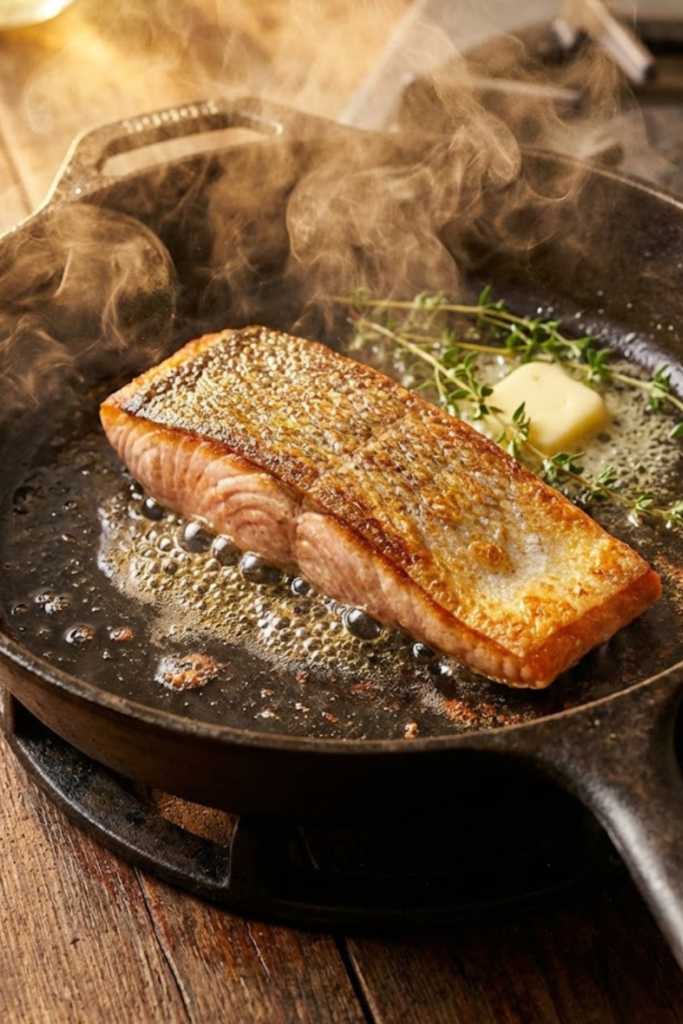
Next up is The Oil and Heat. Don’t use butter yet! Butter burns too fast at high heat. You need an oil with a “high smoke point,” like avocado oil or grapeseed oil. Olive oil is okay, but it might smoke too much. Get your skillet (cast iron is best if you have it) nice and hot over medium-high heat. You want to see wisps of smoke coming off the oil before the fish goes in.
When you lay the fish in the pan, always go Skin-Side Down. As soon as it hits the pan, it’s going to try to curl up on you. Grab your spatula and Press Down on the fillet for about 10 seconds. This keeps the skin flat against the hot metal so it cooks evenly.
Now, here is the hardest part: Don’t Touch It. Once you stop pressing, step away. I know you want to peek, but don’t. The fish will naturally stick to the pan at first. If you try to flip it too early, you will rip the skin off. Just let it cook for about 4 to 5 minutes. When the skin is crispy and ready, the fish will release from the pan on its own. It’s like magic. Flip it, cook for just another minute or two on the other side, and you are done.
Plating and Serving Suggestions
Now comes the fun part: making it look like you didn’t just throw it on a plate. You eat with your eyes first, right? That is what I tell my kids, anyway. Even if it is just a Tuesday night, it feels good to make dinner look nice.
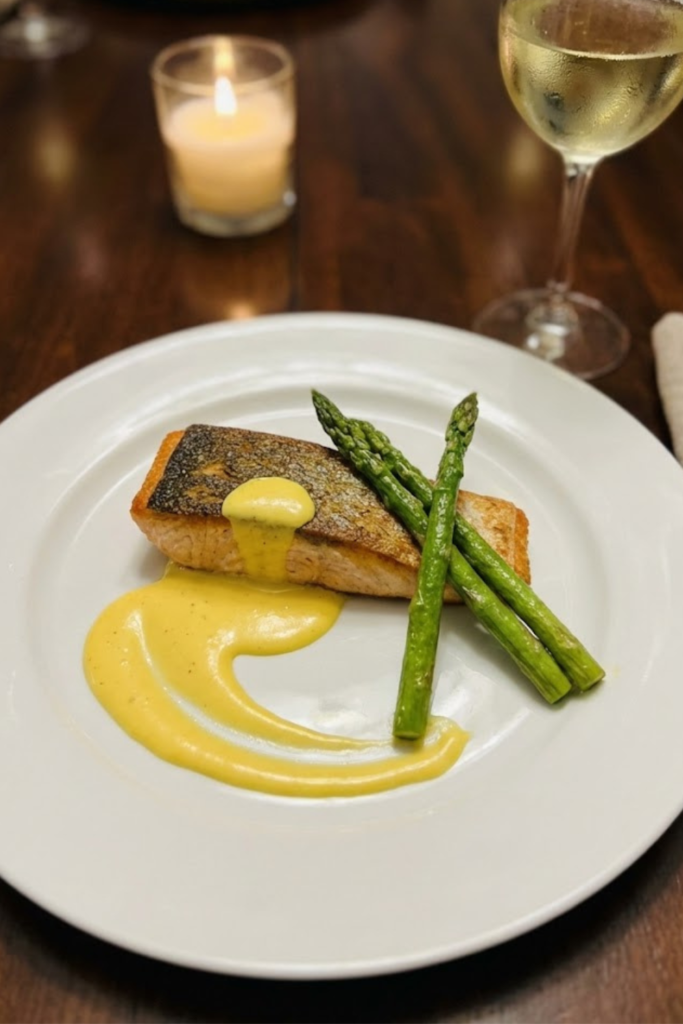
First, let’s look at The Sauce Drizzle. Don’t just drown the poor fish. I like to lay the asparagus spears across the plate first, then place the salmon right on top or leaning against them. Then, I spoon that golden Hollandaise right over the asparagus, or maybe just a little strip across the salmon. It looks fancy if you let it drip off the side a bit.
Next is the Garnish Game. A little green goes a long way. I usually chop up some fresh dill or chives and sprinkle them on top. It makes the yellow sauce pop. If I am feeling extra fancy, a tiny pinch of paprika on the sauce adds a nice red color contrast.
For drinks, Wine Pairing is key if you partake. A cold glass of Sauvignon Blanc is perfect because it is crisp and cuts through the buttery sauce. A buttery Chardonnay works too if you like things richer, but I prefer the crisp stuff.
And if you are super hungry? Think about Side Dish Add-ons. This meal is kinda light, so sometimes I roast some little red potatoes or make some wild rice to go with it. The rice is great because it soaks up any extra sauce on the plate, which is a win in my book.
So there you have it. Making Pan-Seared Salmon with Asparagus and Hollandaise isn’t just for fancy chefs with tall white hats. It’s for us regular folks who just want a really good dinner on a random weeknight. We went over how to pick the right fish so it doesn’t taste weird, the trick to snapping asparagus so you don’t eat wood, and the blender hack that makes hollandaise sauce actually doable without crying over a stove.
I hope you give this a try. It feels good to put a plate like this on the table and know you made it from scratch. It’s healthy, it’s fast, and honestly, it tastes better than what you get at most restaurants. If you liked this recipe or if it saved your dinner plans, do me a favor and Pin this recipe on Pinterest so you don’t lose it! Happy cooking!