Can I be honest with you? There are days when the sink full of dishes stares back at me like a monster from a horror movie, and I just want to order takeout. We’ve all been there! But then I remember the magic of a one-pot wonder. This isn’t just any pasta dish; it is a lifesaver wrapped in a creamy, garlic-infused sauce. My one pot chicken and artichoke cavatappi was born out of pure desperation one Tuesday night, and it turned into a family staple that I make almost weekly now.
Did you know that according to recent kitchen surveys, “less cleanup” is the number one requested feature for weeknight dinner recipes? It makes total sense! In this post, I’m going to walk you through exactly how to nail this dish without ending up with mushy pasta or dry chicken. Let’s dive into this cheesy, savory goodness!
Why You’ll Fall in Love With This One Pot Pasta
I have a confession to make. For years, I avoided one-pot pasta recipes like the plague. I was convinced that cooking the noodles right in the sauce was a shortcut that would lead to a gummy, starchy disaster. I’ve had my fair share of kitchen fails—like that time I tried to make “easy” skillet lasagna and ended up with a burnt bottom and crunchy noodles. It was a hot mess. But let me tell you, this one pot chicken and artichoke cavatappi completely changed my mind.
The “Mountain of Dishes” Struggle is Real
We all know the dread of finishing a delicious meal only to turn around and see the sink. It’s usually piled high with a pot for boiling water, a colander, a skillet for the chicken, and a saucepan for the sauce. It kills the vibe, honestly.
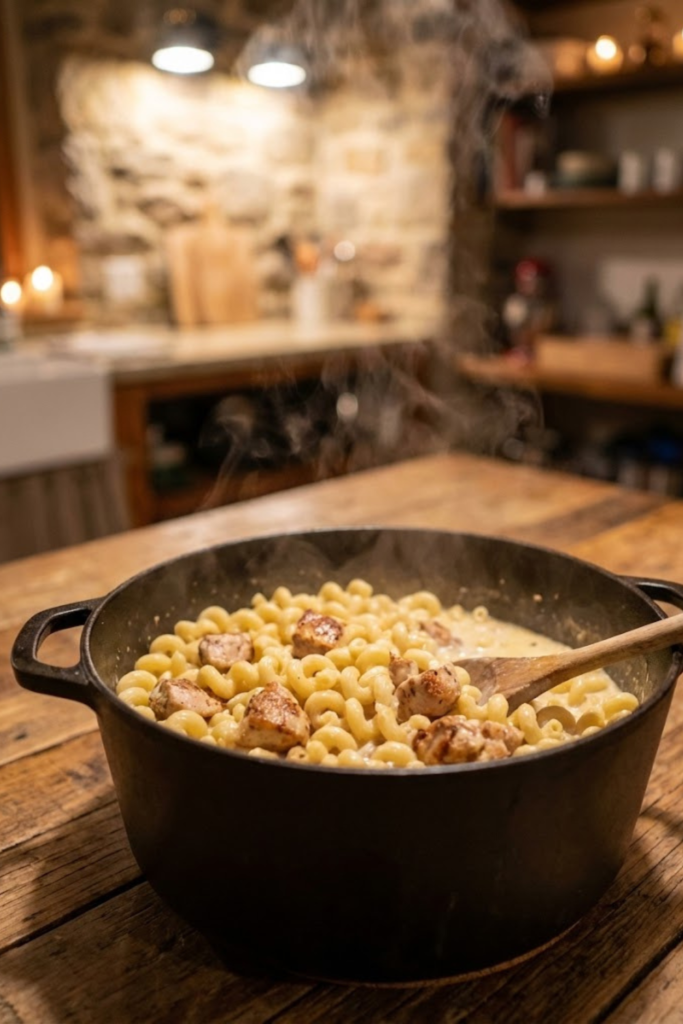
With this recipe, everything happens in a single Dutch oven or deep sauté pan. You sear the chicken, build the flavor, and boil the pasta all in the same vessel. I used to think I needed to dirty half my kitchen to make something gourmet, but I was wrong. The best part? You are left with one pot and a spoon to wash. That’s it. For anyone looking for easy cleanup dinners, this is the holy grail.
Texture Perfection (The Sciencey Part)
Here is something I learned the hard way. When you boil pasta separately and drain it, you are pouring liquid gold down the drain. That cloudy pasta water is full of starch!
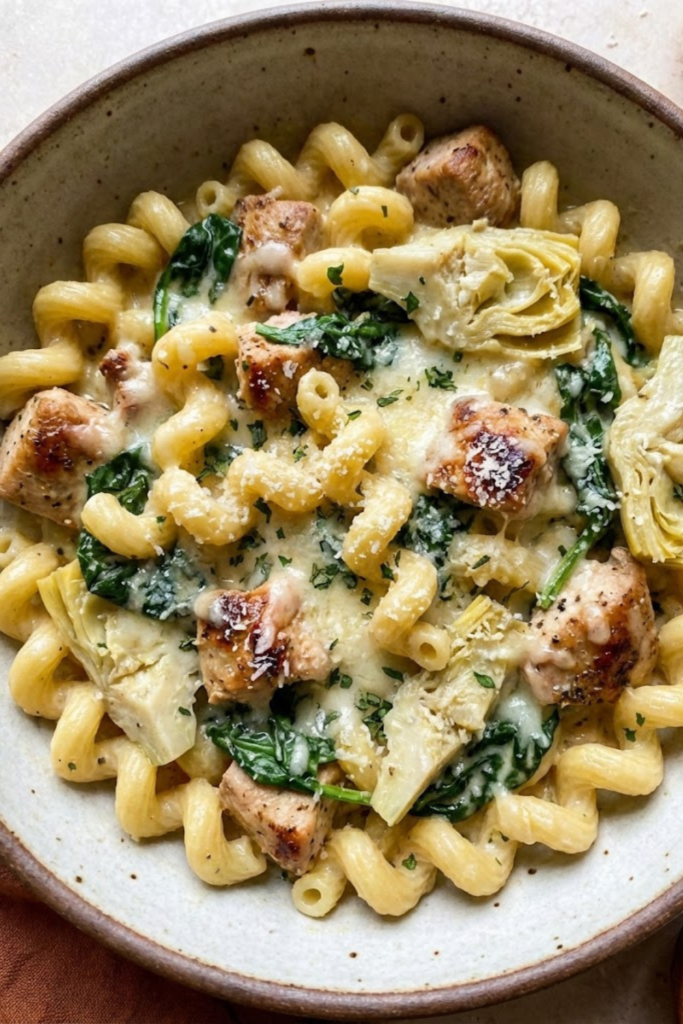
In this one pot chicken and artichoke cavatappi, the pasta releases its starch directly into the broth and cream as it cooks. This naturally thickens the liquid, creating a velvety garlic cream sauce that clings to every ridge of the pasta. It’s richer than any sauce I’ve made using the traditional method. If you’ve ever struggled with thin, watery sauces that slide right off your noodles, this technique fixes that problem instantly. It’s a total game changer for achieving that restaurant-quality texture at home.
A True 30-Minute Miracle
I’ve timed this. From the moment I chop the onion to the moment I sprinkle the parsley, it takes about 28 minutes. It fits perfectly into a rotation of 30-minute dinner ideas for those nights when you get home late and everyone is “hangry.”
I used to spend an hour just prepping and managing different burners. Now, once the liquid is in, you just have to stir it occasionally. It gives you time to pour a glass of wine or just sit down for five minutes. Trust me, once you try this method, you won’t want to go back to the multi-pot madness. It is efficient, it is delicious, and it is exactly what we need on a busy Tuesday.
Ingredients for the Perfect Chicken and Artichoke Cavatappi
When I first started cooking, I had this bad habit of thinking I could just swap out ingredients willy-nilly. I remember trying to make a creamy pasta dish using water instead of broth because I didn’t feel like going to the store. Yikes. It tasted like cardboard. Over the years, I’ve learned that while this recipe is forgiving, the right ingredients make the difference between “meh” and “OMG can I have seconds?”
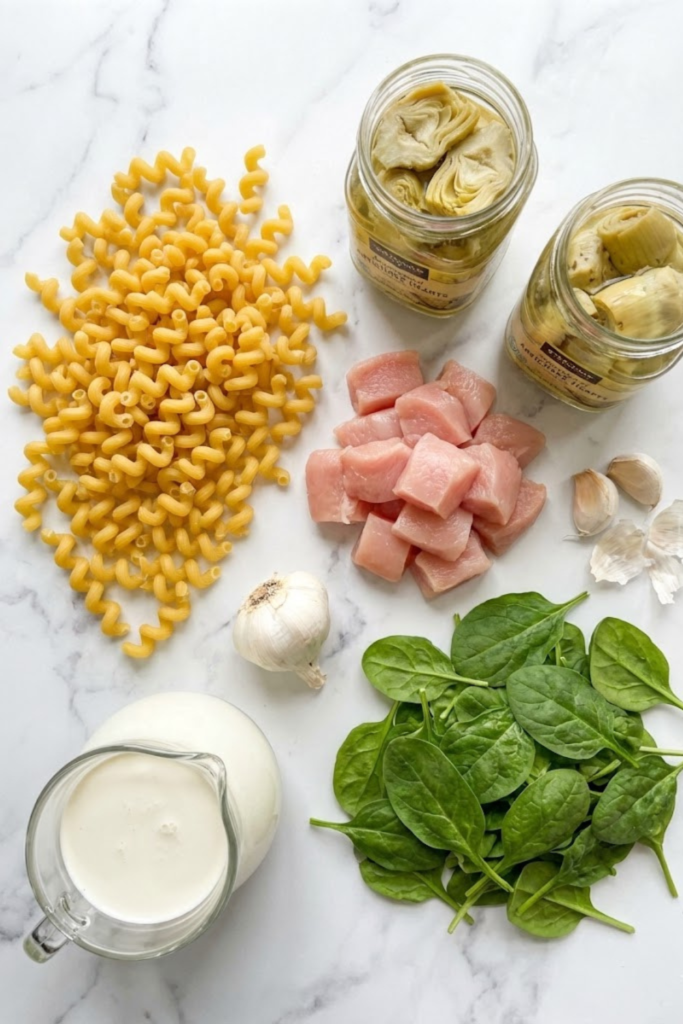
Let’s chat about what you need to make this one pot chicken and artichoke cavatappi shine.
The Chicken Situation
I usually grab boneless, skinless chicken breasts for this. They are lean and cook fast. But here is a mistake I used to make constantly: I would chop the chicken into uneven chunks.
I’d have these massive pieces that were still raw in the middle while the smaller bits turned into rubber. It was not cute. Now, I take a few extra minutes to slice the chicken into uniform, bite-sized pieces. If you are super short on time (or just feeling lazy, no judgment), you can totally use shredded rotisserie chicken. Just toss it in at the end so it doesn’t dry out.
The Star Veggie: Artichokes
Have you ever tried to prep a fresh artichoke? I did it once. I pricked my finger, spent 45 minutes trimming leaves, and ended up with about two bites of food. Never again.
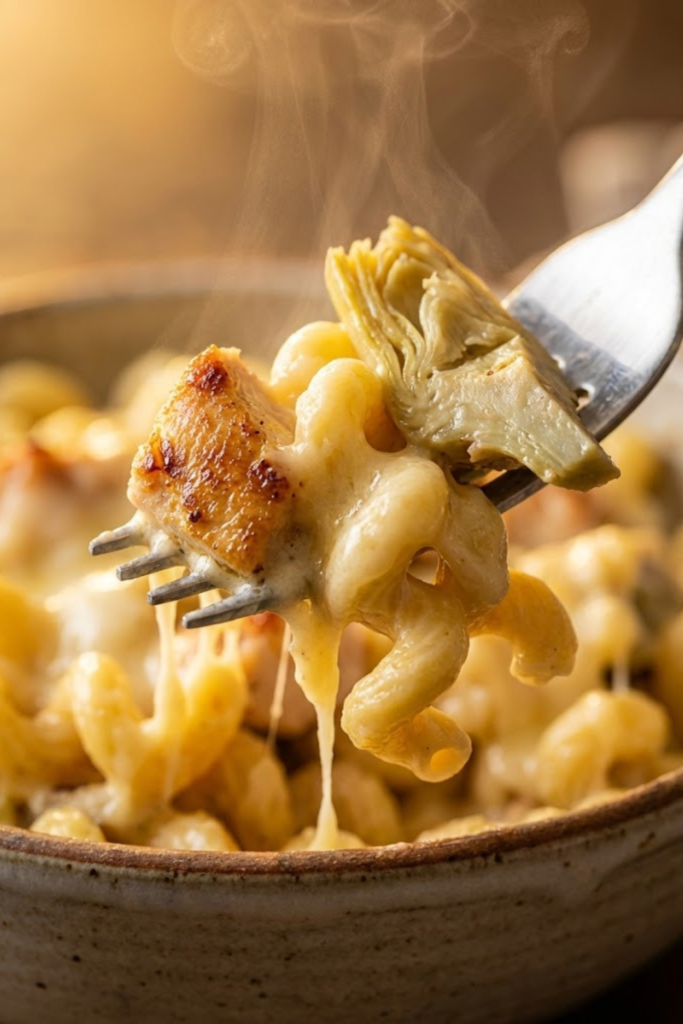
For this recipe, canned artichoke uses are where it’s at. I specifically look for quartered artichoke hearts in water or brine. They have the perfect texture for stewing in the sauce. If you love that tangy kick, you can use marinated artichoke hearts from the jar, just keep in mind they will add more oil and salt to the dish, so you might want to dial back on the added seasoning.
Why Cavatappi Rules
You might be thinking, “Can’t I just use the penne sitting in my cupboard?” You can, but hear me out. Cavatappi pasta dishes are superior for creamy sauces because of the shape.
Cavatappi (which means “corkscrew” in Italian) has ridges and a hollow center. I tried this once with spaghetti, and it was a disaster; the noodles clumped together and the sauce slid right off. The corkscrews trap the garlic cream sauce inside them, so you get a burst of flavor in every bite. It is the best pasta for sauce clinging.
Aromatics and Broth
Please, I beg you, do not use water as your liquid base. Since the pasta absorbs the liquid, you want that liquid to be flavorful. I use a low-sodium chicken broth so I can control the saltiness.
Also, don’t skimp on the garlic. I used to use the jarred stuff to save time, but it just doesn’t have the same punch. Smashing a few fresh cloves makes the kitchen smell incredible. It’s those little details that turn a simple one skillet meal into something that tastes like it came from a restaurant.
Step-by-Step: How to Make One Pot Chicken and Artichoke Cavatappi
I remember the first time I tried a one-pot pasta recipe, I stood over the stove with major trust issues. Dumping raw noodles into a pot of broth felt wrong, like I was breaking some ancient Italian law. But once I saw the results, I was a believer. There is a rhythm to this dish, and once you get it down, it’s almost meditative.
Here is exactly how to pull off this one pot chicken and artichoke cavatappi without stressing out.
Sear the Chicken (Don’t Skip This!)
First things first, get your Dutch oven nice and hot. I used to be impatient and toss the chicken into a lukewarm pan. Big mistake. The chicken would just turn this sad, pale gray color instead of getting golden brown.
You want to cook the seasoned chicken until it’s browned on the outside. We aren’t just cooking meat here; we are building a “fond.” That’s the fancy word for those sticky brown bits stuck to the bottom of the pot. That stuff is pure flavor! If you overcrowd the pan, the chicken will steam instead of sear, so give the pieces some breathing room.
Deglaze and Simmer
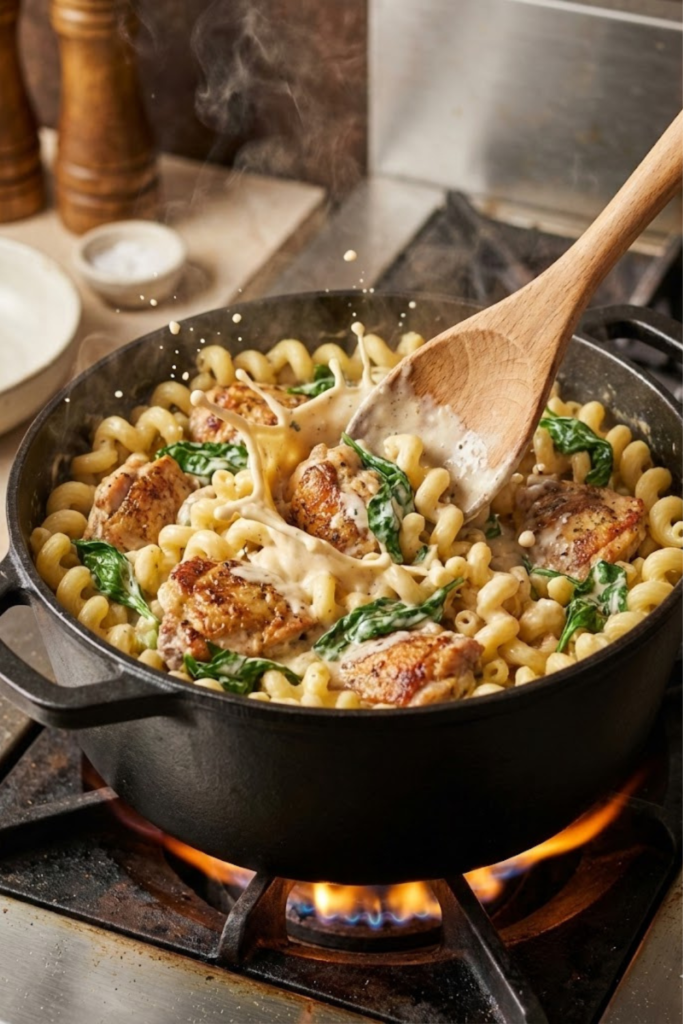
Once the chicken is set aside (or you can leave it in if you’re lazy like me), it’s time to deglaze. Pour in a splash of your chicken broth and scrape up those brown bits with a wooden spoon. This is where the magic starts.
Add the rest of the broth, your garlic, and the uncooked cavatappi pasta. It’s going to look like soup. Don’t panic. Bring it to a boil, then immediately drop it to a simmer. I’ve ruined a batch by keeping it at a rolling boil—the liquid evaporated too fast, and I ended up with crunchy pasta. Not my finest moment.
The Stirring Technique
Here is the most critical of my one pot cooking tips: Do not walk away to scroll on Instagram! Because the starch isn’t being drained away, it stays in the pot. This is great for the sauce, but it means the pasta loves to stick to the bottom.
Stir it every couple of minutes. You’ll notice the liquid getting thicker and cloudier as the pasta cooks. That is exactly what we want. It usually takes about 8 to 10 minutes for the pasta to hit al dente.
The Creamy Finish
When the pasta is just tender, kill the heat. This is crucial. If you add the heavy cream and parmesan while the pot is boiling like lava, the sauce can break and get oily. It’s a tragedy I wouldn’t wish on anyone.
Stir in your heavy cream, spinach, and artichokes gently. The residual heat will wilt the spinach and melt the cheese perfectly. You’ll be left with a glossy, skillet chicken pasta that looks like it took hours to make. Taste it, add a little salt if needed, and give yourself a pat on the back. You did it!
Expert Tips for Creamy Pasta Success
Listen, I’ve ruined enough dinners for the both of us. There was a time when my idea of “creamy pasta” was just dumping a pint of heavy cream into a pan and praying for a miracle. It usually ended up separating into a greasy mess or disappearing entirely into the noodles. It was tragic.
Over time, I’ve learned that nailing a creamy chicken pasta isn’t about luck; it’s about a few simple rules of chemistry (don’t worry, I won’t bore you with a textbook). If you want that velvety, restaurant-quality texture without the fuss, I’ve got you covered. Here are the lessons I learned the hard way so you don’t have to.
The Golden Ratio of Liquid
This is the number one thing that trips people up. In traditional boiling, you have a massive pot of water. But with one pot cooking tips, the amount of liquid matters immensely. You can’t just eyeball it and hope for the best.
Through a lot of trial and error, I found that a ratio of roughly 2 cups of liquid for every 8 ounces of pasta is the sweet spot. If you add too much broth, you’ll be waiting forever for it to reduce, and your pasta will turn to mush. If you add too little, you’ll end up with crunchy, undercooked noodles that stick to your teeth. I stick to this ratio religiously now. It creates just enough starchy water to emulsify with the cream later, giving you that perfect garlic cream sauce coating.
Stop Cooking Early (Seriously!)
I cannot stress this enough: mushy pasta is a crime against humanity. Okay, maybe that’s dramatic, but it definitely ruins the meal. When you cook pasta in its own sauce, it holds onto heat way longer than drained pasta does.
I used to cook my pasta until it was perfectly soft on the stove. By the time I got it to the table, it had turned into a solid block of paste. The trick is to pull the pot off the heat when the al dente cavatappi still has a tiny bit of “bite” or chew to it. It will continue to cook in the hot sauce for another few minutes as you stir in the spinach and cheese. Trust me on this one.
Watch the Salt Levels
I love salt. I really do. But you have to be careful with this recipe. Remember, we are using canned artichokes and parmesan cheese, both of which are naturally salty.
One time, I seasoned my chicken heavily, used regular broth, and then dumped in marinated artichokes. The result tasted like a salt lick. It was inedible. Now, I always use low-sodium broth and unsalted butter. I wait until the very end—after the cheese is melted—to taste the sauce. You can always add more salt, but you can’t take it out once it’s in there.
Don’t Fear the Starch
Finally, embrace the cloudy look of the liquid while it cooks. That starch is your best friend. It acts like a binder.
If the sauce looks a little thin when you first turn off the heat, don’t panic and add flour or cornstarch. Just let it sit for two or three minutes. As it cools slightly, that starch tightens everything up. It’s magic. You’ll go from soup to a rich, thick sauce just by letting it rest.
Variations and Substitutions to Try
I am the queen of “use what you have” cooking. There was a time when I thought a recipe was a strict set of laws, and if I didn’t have the exact specific herb, I couldn’t make dinner. How exhausting is that? Over the years, I’ve realized that the best recipes are just templates waiting for your personal touch. This one pot chicken and artichoke cavatappi is incredibly flexible, which is why it stays in my weekly rotation.
Sometimes the grocery store is out of cavatappi, or maybe you are trying to sneak more veggies into your kids’ diet. I’ve experimented with this dish more times than I can count—some versions were winners, and some… well, let’s just say we ordered pizza. Here is how you can tweak this meal without ruining it.
The Veggie Load-Up
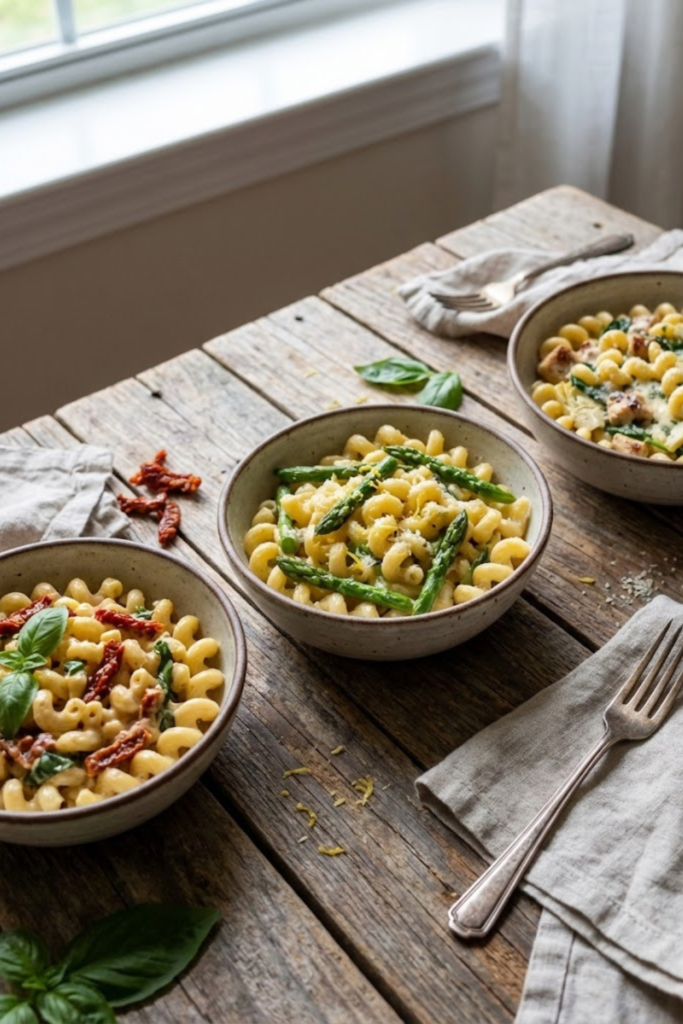
I love spinach, but sometimes I crave a little more substance. If you are looking for a vegetable packed pasta, the sky is the limit here. My absolute favorite twist is the sun-dried tomato variation.
I usually toss in about half a cup of sliced sun-dried tomatoes right when I add the broth. They rehydrate as the pasta cooks and add this sweet, tangy punch that cuts through the rich cream. It is seriously addictive. If it’s spring, chopped asparagus is fantastic, but add it during the last 3 minutes of cooking so it doesn’t turn to mush. I’ve also swapped spinach for kale, which holds up better if you plan on having leftovers. Just be sure to remove the tough stems!
Dairy-Free Options
I have a few friends who can’t do dairy, and I felt bad serving them a sad salad while everyone else ate creamy pasta. So, I went on a mission to make a dairy free cream sauce version of this.
Here is the truth: almond milk is too thin. Don’t do it. It just turns into watery broth. Full-fat coconut milk is a decent substitute, but your dinner might taste a little tropical. My top recommendation? Cashew cream. If you soak raw cashews and blend them with water, you get a thick, neutral cream that mimics heavy cream almost perfectly. It creates a lush sauce that coats the noodles beautifully without the stomach ache.
Pasta Swaps and Gluten-Free Needs
We talked about why cavatappi is king, but what if you can’t find it? Don’t stress. Fusilli or rotini are your best backups because they have similar nooks and crannies to hold the sauce. Penne works too, though it’s a bit smoother.
If you need gluten free pasta options, this recipe still works, but you have to be vigilant. Gluten-free pasta is notorious for going from “rock hard” to “disintegrated” in about 30 seconds. I usually check the pasta about two minutes before the package says it should be done. Also, gluten-free blends release starch differently, so your sauce might be a little thinner. If that happens, just let it sit off the heat for a few extra minutes—it usually tightens right up.
I honestly can’t imagine my Tuesday nights without this recipe anymore. It’s funny how a simple change in cooking method—using just one pot—can shift your entire mood. I used to dread the post-dinner cleanup so much that it ruined the meal for me. But now? I can actually sit down, enjoy my one pot chicken and artichoke cavatappi, and know that I won’t be scrubbing dishes until midnight. That peace of mind is worth its weight in gold.
This dish has firmly planted itself in my weeknight pasta rotation, right alongside tacos and pizza night. It checks every single box: it’s cheesy, it’s packed with protein, and it feels like a warm hug in a bowl. Plus, getting a restaurant-quality garlic cream sauce without needing a culinary degree? That is a major win in my book.
Real Talk: What About Leftovers?
Before I let you go, I have to mention the leftovers because, let’s be real, meal prep pasta is a life saver for busy lunches. I used to think creamy pasta couldn’t be reheated. I thought the sauce would split and get oily. But I was wrong.
Because the starch from the pasta is integrated into the sauce, this dish actually holds up surprisingly well in the fridge for about 3 days. It’s one of those rare comfort food recipes that might actually taste better the next day after the flavors have had time to hang out and get to know each other.
How to Reheat Without the Grease
Here is a little trick I learned for reheating creamy pasta. Don’t just nuke it on high power. That is how you get a greasy mess. Splash a tablespoon of water or broth (or even a little milk) into the container before you microwave it. Cover it loosely and heat it in 30-second bursts, stirring in between. The extra liquid helps bring the sauce back to life so it’s creamy again, not clumpy. It’s a game changer for leftover chicken ideas.
Let’s Stay Connected!
I really hope this recipe saves your sanity on a busy night just like it saved mine. If you give it a try, please let me know! I live for seeing your creations. Did you add sun-dried tomatoes? Did you swap the spinach for kale? I want to hear all about it.
If you loved this one pot chicken and artichoke cavatappi, do me a huge favor and share it. You can pin the image below to your “Easy Dinners” or “Easy cleanup dinners” board on Pinterest. It helps more people find the recipe and helps me keep the lights on around here. Plus, you’ll know exactly where to find it when that craving hits!
Happy cooking, my friends!