Listen, I have a confession to make: I used to be terrified of baking with maple syrup! I thought the extra liquid would turn my cookies into a flat, soggy mess. Boy, was I wrong! Did you know that Canada produces 71% of the world’s maple syrup? That is a lot of liquid gold waiting to be used. Once I nailed the ratio of flour to moisture, my life changed. These maple brown sugar cookies are not just good; they are life-altering. They have those crisp edges we all love, but the center? Oh, it’s like a soft, maple-infused cloud. If you are ready to make your kitchen smell like a cozy autumn candle, stick around. Let’s get baking!
Why Real Maple Syrup Makes a Difference
Look, I gotta be honest with you guys. The first time I tried to make a maple dessert, I grabbed that plastic squeeze bottle of “pancake syrup” sitting in my fridge door. You know the one—it’s been there for six months and is basically just high fructose corn syrup with some caramel color. The result? It was a disaster. The cookies tasted weirdly artificial, almost chemical, and they spread out into these flat, sad puddles on the baking sheet. I was so mad I almost threw the whole batch in the bin.
That was a hard lesson learned, but I’m sharing it so you don’t have to waste your ingredients.
It’s All About the Complexity
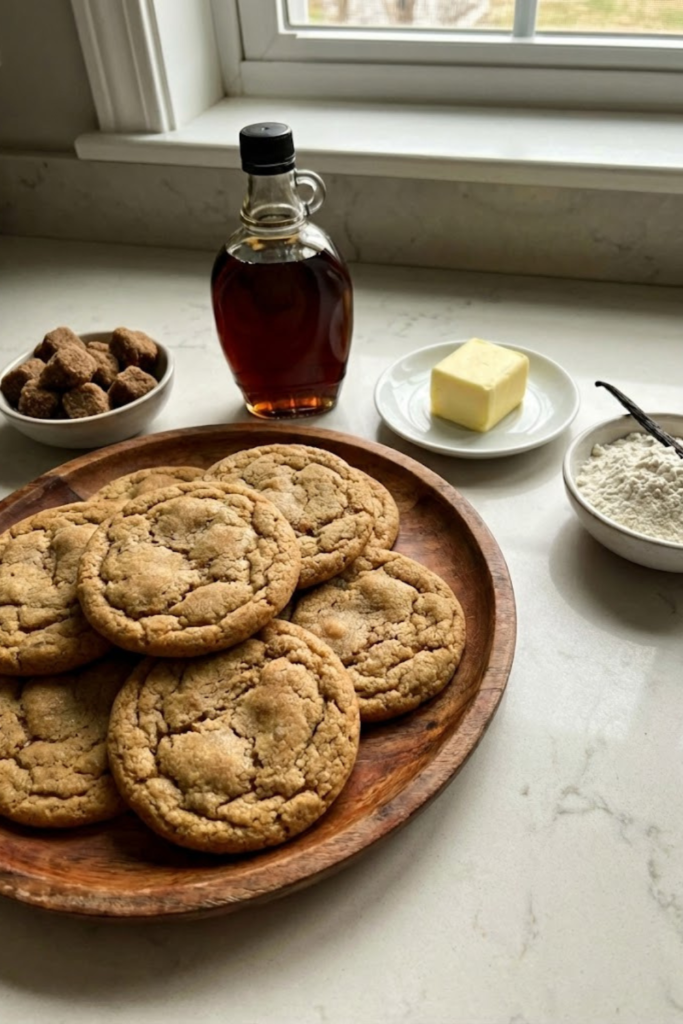
When we talk about maple brown sugar cookies, the star of the show has to be pure maple syrup. The real stuff comes from actual trees, not a factory lab. It has these deep, complex notes of caramel, vanilla, and even a hint of nuttiness that you just cannot fake with artificial flavoring.
When you bake with pure syrup, something magical happens in the oven. The sugars caramelize differently than refined white sugar. It gives the cookie a depth of flavor that hits the back of your tongue. It’s not just sweet; it’s rich. If you use the fake stuff, you just get a sugar rush without that cozy, autumnal soulfulness we are looking for.
Texture Matters
Here is the science-y part (don’t worry, I’ll keep it quick). Real maple syrup is an invert sugar. This means it holds onto moisture way better than regular granulated sugar. This is the secret weapon for keeping your cookies soft for days.
I remember baking a batch for a bake sale last year using a cheaper syrup blend because I was trying to save a few bucks. Big mistake. By the next day, those cookies were hard as rocks. Pure maple syrup helps create that chewy texture where the edges are crisp, but the middle is soft. It adds liquid volume to the dough, which hydrates the flour differently, resulting in a tender crumb.
Picking the Right Grade
Now, don’t get confused by the labels at the grocery store. I used to think “Grade A” meant it was the best quality and “Grade B” was inferior. Nope! It’s actually about color and flavor intensity.
- Golden/Delicate: This is too light. The flavor will disappear once you mix it with butter and flour.
- Amber/Rich: This is okay, good for pancakes.
- Dark/Strong Taste: This is the gold standard for baking!
I always grab Grade A Dark (it used to be called Grade B). It has a strong, intense maple flavor that stands up to the other ingredients. You want that maple punch to shine through the brown sugar.
A Tiny Health Bonus?
Okay, I know we are eating cookies here, not a kale salad. But it is kinda cool to know that pure maple syrup actually contains trace minerals like manganese and zinc. Refined sugar has zero nutrients. So, can we pretend these maple brown sugar cookies are basically vitamins? Maybe that’s a stretch, but it makes me feel better when I eat three of them in one sitting!
Just remember to store your real maple syrup in the fridge after you open it. I learned that the hard way when I found mold growing in my expensive jug after leaving it in the pantry. Tragedy! Treat your ingredients right, and they will give you the best cookies ever.
The Science of Brown Sugar in Cookie Dough
I used to think sugar was just sugar. You know? Like, if a recipe called for brown sugar and I only had white, I’d just swap it out and hope for the best. Spoiler alert: that does not work. I remember one specific Tuesday afternoon when I really needed a cookie. I swapped the sugars, and instead of these chewy, glorious maple brown sugar cookies, I ended up with pale, crunchy discs that tasted boring.
I actually cried a little bit. It was a rough week. But that failure forced me to actually learn why we use specific sugars.
It’s All About the Molasses
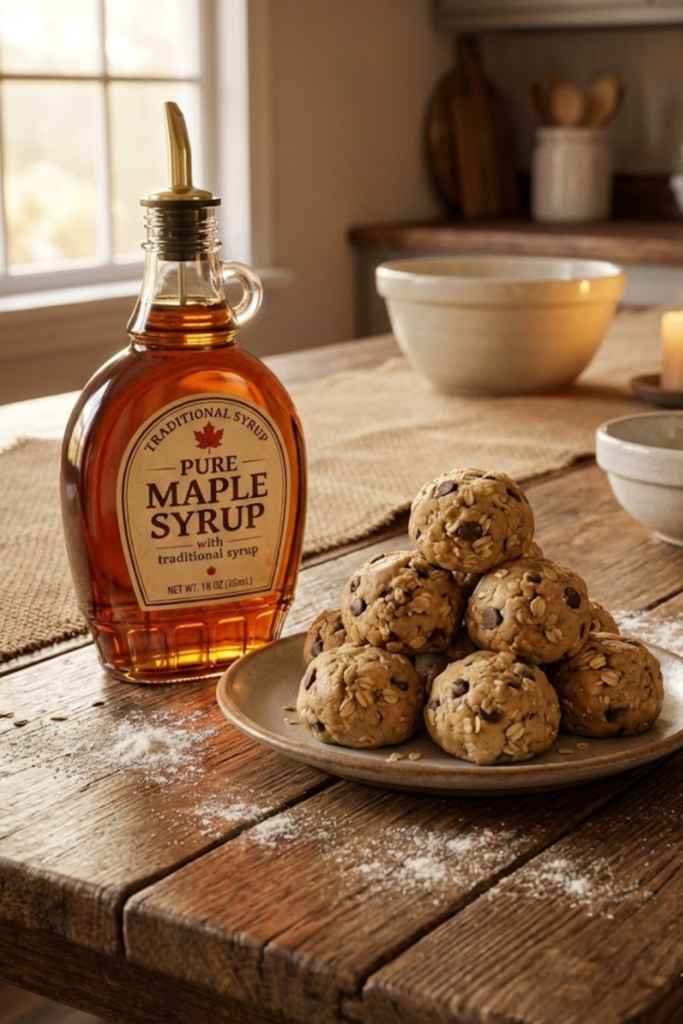
Here is the deal. Brown sugar is basically white sugar that has had molasses added back into it. That molasses isn’t just for color; it is acidic. When you mix that acidic brown sugar with baking soda (which is a base), you get a chemical reaction. It creates carbon dioxide bubbles.
That is what gives your cookies that little bit of lift and puffiness before they settle down. If you skip the brown sugar, you lose that reaction, and the texture completely changes. It’s science, but it tastes like magic.
Keeping It Soft
Have you ever noticed how a bag of brown sugar turns into a brick if you leave it open? That’s because it is hygroscopic. That is a fancy word I learned that just means it absorbs moisture from the air.
In your maple brown sugar cookies, this property is huge. The sugar holds onto the liquid (from the butter and maple syrup) and refuses to let go. This stops the water from evaporating too quickly in the oven. The result? A cookie that stays soft and chewy for days, rather than drying out into a cracker. I have baked batches that were still soft three days later—if they lasted that long without being eaten!
Dark vs. Light: The Showdown
I get asked this a lot: “Can I use light brown sugar if the recipe asks for dark?”
Technically, yes. You can. But should you? In my opinion, no. Light brown sugar has about 3.5% molasses, while dark brown sugar has nearly double that. For these cookies, I always reach for dark brown sugar.
The extra molasses gives it a deeper, toffee-like flavor that pairs so perfectly with the maple. It’s richer and moodier. If you use light brown sugar, the cookie will still work, but it will taste a bit milder. I like my cookies to have an attitude.
The Measuring Mistake
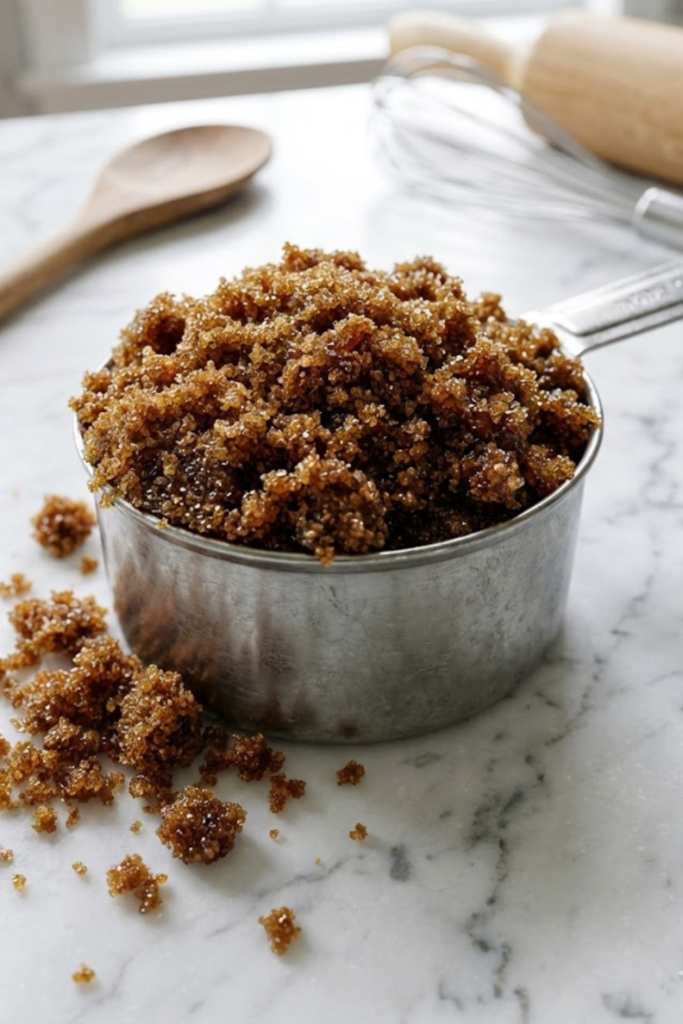
One last tip that messed me up for years. When you measure brown sugar, you have to pack it. I used to just scoop it loosely like flour, and my ratios were always off.
Press that sugar down into the cup until it’s tight. When you turn the cup over, the sugar should keep the shape of the cup, like a little sandcastle. If it crumbles immediately, you didn’t pack it enough! Getting this amount right is key to balancing the moisture in the dough.
Step-by-Step Mixing Instructions for Perfect Dough
Okay, grab your apron. This is where the magic happens, or where it falls apart if you aren’t paying attention. I’ll admit, I used to be a “dump everything in the bowl and pray” kind of baker. I thought the order of ingredients was just a suggestion.
It is not.
I learned this the hard way when I tried to rush a batch of maple brown sugar cookies for a potluck. I threw cold eggs into warm butter, and the batter curdled instantly. It looked like gross, separated cottage cheese. I panicked, baked them anyway, and they came out greasy and flat. Don’t be like past-me. Follow the steps.
The Creaming Method is Key
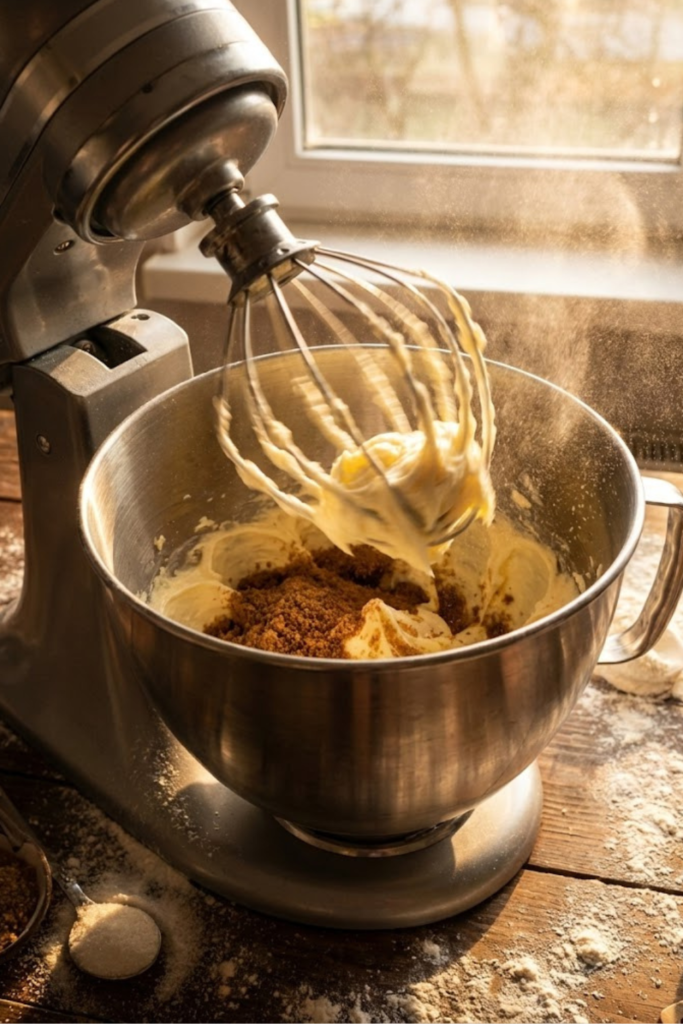
First things first: the butter and sugar. You need to beat these two together until they are light, fluffy, and pale. We call this “creaming,” but really, you are punching tiny air bubbles into the fat.
I usually let my mixer run for a solid 3 to 4 minutes. It feels like a long time when you are staring at it, but trust the process. This aeration is what gives the cookie its structure. If you stop too early, your cookies will be dense.
Temperature Tantrums
Here is the golden rule: Room. Temperature. Ingredients.
If your butter is soft but your egg is straight from the fridge, you are going to have a bad time. The cold egg will shock the butter, causing it to seize up. That smooth, creamy base you just made? Ruined.
I usually set my eggs and butter out on the counter the night before. If I forget (which happens more often than I’d like to admit), I put the eggs in a bowl of warm water for 5 minutes. Works like a charm.
The Maple Syrup Slide
This part is tricky. You are adding a lot of liquid to a fat-based mixture. Oil and water don’t like to mix, right?
Turn your mixer down to low speed. Pour the maple syrup in a slow, steady stream. Do not dump it all at once! Give the butter a chance to absorb the liquid. Scrape down the sides of the bowl with a rubber spatula constantly. You want a cohesive, emulsified batter, not a slushy mess.
Gentle with the Flour
Once your wet ingredients look beautiful, toss in your dry ingredients (flour, baking soda, salt).
Stop the mixer.
I mean it. Switch to a wooden spoon or just pulse the mixer a few times. As soon as you see the white streaks of flour disappear, quit mixing. If you overwork the dough now, you activate the gluten. Gluten is great for bread, but for maple brown sugar cookies, it makes them tough and rubbery. We want tender and chewy.
I always finish mixing the last bit by hand just to be safe. It’s a little arm workout, but the results are totally worth it.
To Chill or Not to Chill the Dough?
I am the most impatient person in the world when a craving hits. If I want maple brown sugar cookies, I want them five minutes ago. I don’t want to wait for the oven to preheat, let alone wait for dough to sit in the fridge. I used to skip this step all the time. I figured, “Hey, the oven is hot, let’s just go!”
That was a mistake.
I remember this one time I tossed a fresh batch straight into the oven because I had company coming over. Instead of thick, chewy cookies, I opened the door to find one giant, flat mega-cookie that had fused together on the pan. It was a hot mess. I had to scrape it off with a spatula and serve it in a bowl like granola. It was embarrassing.
Preventing the Spread
Here is the thing about baking with maple syrup. It adds a lot of liquid sugar to the mix. If your butter is soft and your syrup is room temp, your dough is going to be very loose.
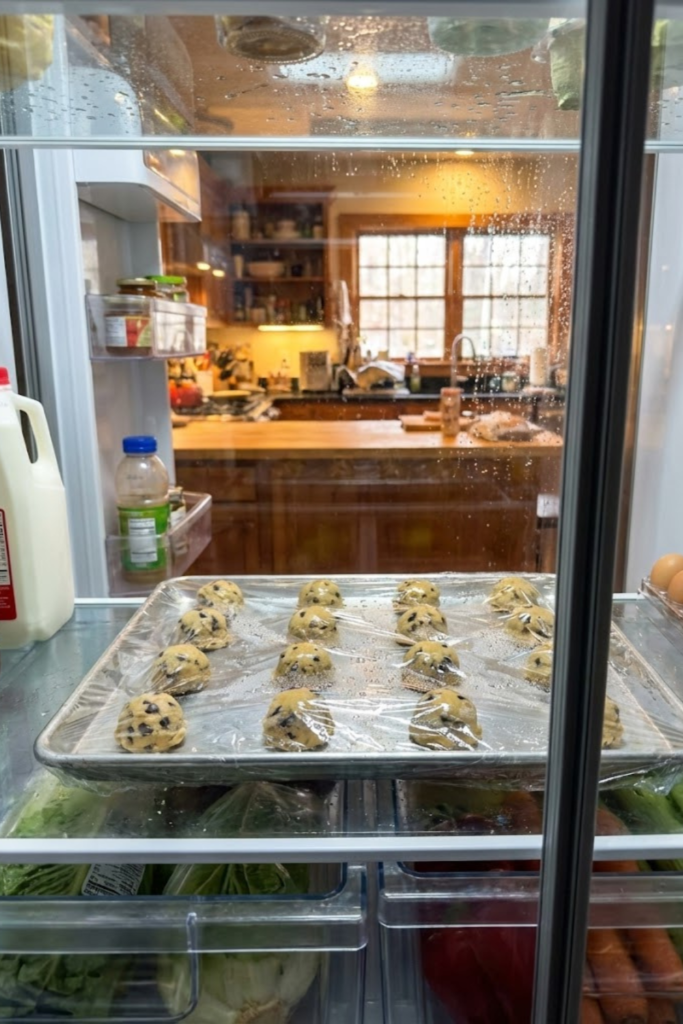
Chilling the dough is mandatory here. When you put that bowl in the fridge, you are solidifying the butter again. This means that when the cookies finally hit the hot oven, the butter takes longer to melt. That delay allows the outside edges to set before the middle spreads out too thin. That is how you get that bakery-style thickness we are all chasing.
The Flavor Deepens
It’s not just about the shape, though. It’s about the taste.
Think of cookie dough like a marinade. When you let it sit, the flour has time to fully absorb the liquid from the eggs and the syrup. This process hydrates the starch. I’ve noticed that when I chill the dough for at least an hour, the maple flavor tastes stronger. It’s deeper. The brown sugar has time to meld with the vanilla, and the whole thing just tastes more… expensive.
How Long is Too Long?
So, what’s the magic number?
- 30 Minutes: The bare minimum. This helps with handling the sticky dough so you can actually roll it.
- 2 Hours: Ideally, this is the sweet spot for texture.
- Overnight: The gold standard for flavor.
I usually aim for about two hours. I’ll make the dough, pop it in the fridge, and then go run some errands or binge-watch a show. By the time I come back, the dough is firm and ready to scoop.
A Sticky Situation
A quick tip from my kitchen to yours: this dough is naturally stickier than a regular chocolate chip cookie dough because of the syrup.
If you try to scoop it right after mixing, it’s going to stick to your hands, the spoon, and your soul. Chilling makes it so much easier to handle. If you chill it overnight and it’s rock hard (which happens), just let it sit on the counter for 10 minutes before scooping. Don’t try to chisel it out; you’ll bend your spoon. I’ve done that too.
Baking and The Maple Glaze Finish
I used to think the baking part was the easy part. You just stick the tray in the oven and walk away, right? Wrong. I ruined so many batches of maple brown sugar cookies by getting distracted by my phone. I’d be scrolling through Instagram, smell something burning, and run to the oven only to find charcoal discs.
It breaks your heart (and your wallet, maple syrup ain’t cheap!). Now, I treat the oven like a moody toddler. I watch it constantly.
Finding the Sweet Spot
Set your oven to 350°F (175°C). But here is the kicker: do you actually trust your oven dial? I don’t. My oven claims it’s 350°F, but an internal thermometer told me it was actually running at 375°F. That 25-degree difference is why my bottoms were burning before the middles were cooked.
Get an oven thermometer. It’s like five bucks and it saves your baking. For these cookies, you want a steady heat to caramelize that brown sugar without scorching it.
The Visual Cues
You want to bake these for about 10 to 12 minutes. But time is just a suggestion; your eyes are the real timer.
You are looking for the edges to be a golden brown and set. The center? It should still look a little underbaked and puffy. I used to make the mistake of waiting until the middle looked firm.
Don’t do that!
If they look done in the oven, they will be overdone on the cooling rack. The cookies continue to cook on the hot baking sheet for a few minutes after you pull them out. This is called “carryover cooking,” and it is the secret to keeping them soft. Let them sit on the hot pan for 5 minutes before moving them to a wire rack.
The Maple Glaze: Don’t Skip It!
Okay, the cookie itself is delicious. But the glaze? That is what takes it from “good” to “OMG, did you buy these at a bakery?”
It is super simple. I just whisk together:
- 1 cup powdered sugar
- 2 tablespoons pure maple syrup
- 1 tablespoon milk (or heavy cream if I’m feeling fancy)
- A pinch of salt
That pinch of salt is crucial. It cuts through the sweetness so you don’t get a toothache after one bite.
My Sticky Mistake
Here is where I messed up the first time. I was so excited to eat the cookies that I drizzled the glaze while they were still hot.
Big mistake.
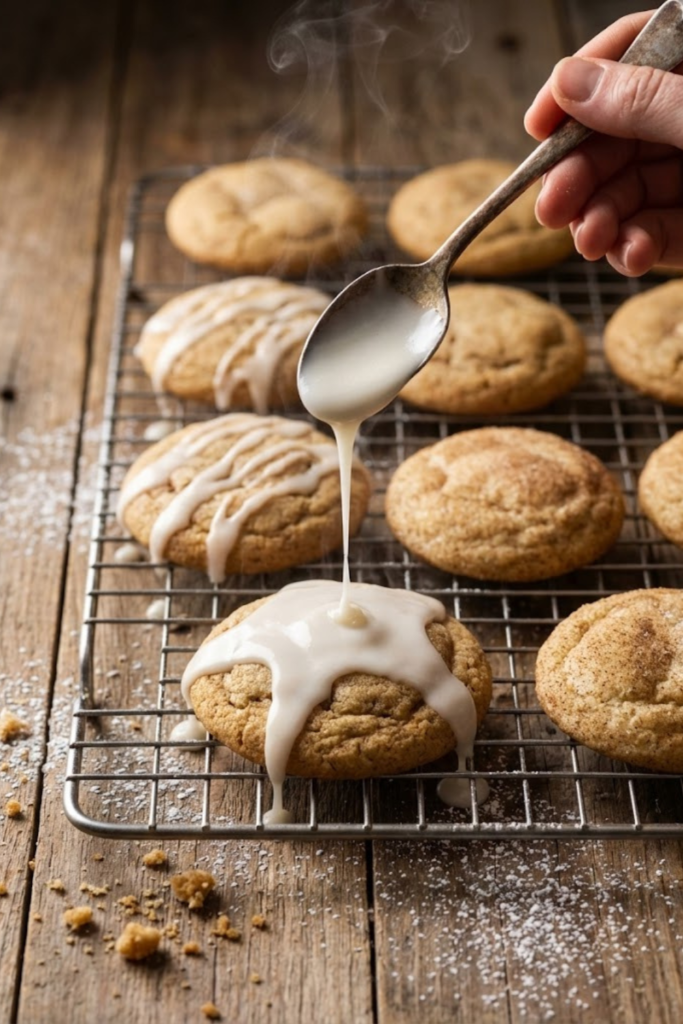
The glaze hit the hot cookie and melted instantly. It turned into a clear, sticky puddle and ran right off the sides. The cookies looked wet and sad. You have to wait until the cookies are completely cool. I know it’s hard to wait, but you gotta do it.
The Final Touch
Once they are cool, I use a spoon to drizzle the glaze back and forth in a zig-zag pattern. It doesn’t have to be perfect; rustic looks better anyway.
If you want to be extra, sprinkle a tiny bit of flaky sea salt on top of the wet glaze. The salty-sweet combo is a game changer. These maple brown sugar cookies are best eaten the same day, but if you have leftovers (yeah, right), they stay soft in a container for a few days.
So, there you have it. We’ve navigated the sticky mess of measuring syrup, survived the torture of waiting for the dough to chill, and hopefully avoided burning the bottoms of our cookies. Honestly, once you take that first bite of these maple brown sugar cookies, all that patience pays off. You get that crisp edge, that soft, chewy center, and that hit of real maple flavor that just screams “fall.”
I really hope these become a staple in your kitchen like they have in mine. Baking is all about sharing (even if you secretly want to hoard the whole batch for yourself—I won’t tell).
If you enjoyed this recipe and want to save it for your next baking marathon, please pin it to your favorite Dessert or Fall Baking board on Pinterest! It helps other bakers find the recipe and keeps it safe for when the craving hits you in 2026.
Happy baking, friends!