I’ll never forget the summer of 2018 when I tried to make my first tropical dessert for a block party. It was a total disaster! The filling was soupy, and the crust tasted like cardboard. But hey, we live and learn, right? Did you know that mangoes are actually the most popular fruit in the entire world?. It’s true! They bring this incredible sunshine to any dish. Today, I’m sharing my updated 2026 version of the mango cheesecake that finally won over my picky neighbors.. You’re going to love how the tangy cream cheese dances with the sweet, floral notes of the fruit. Let’s get into it!.
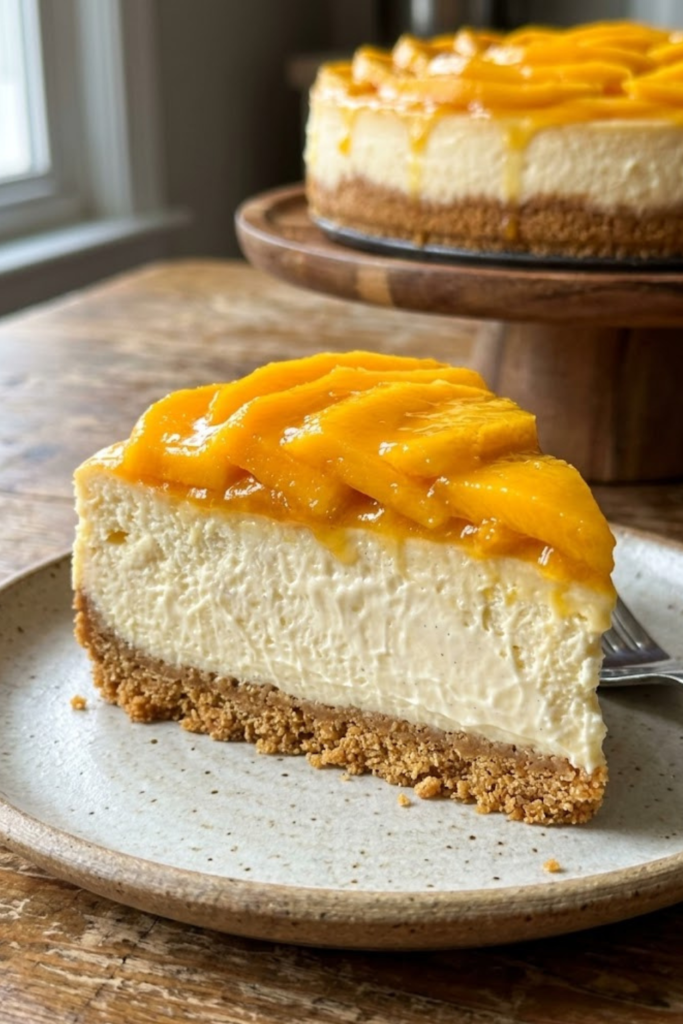
Choosing the Best Mangoes for Your Cheesecake
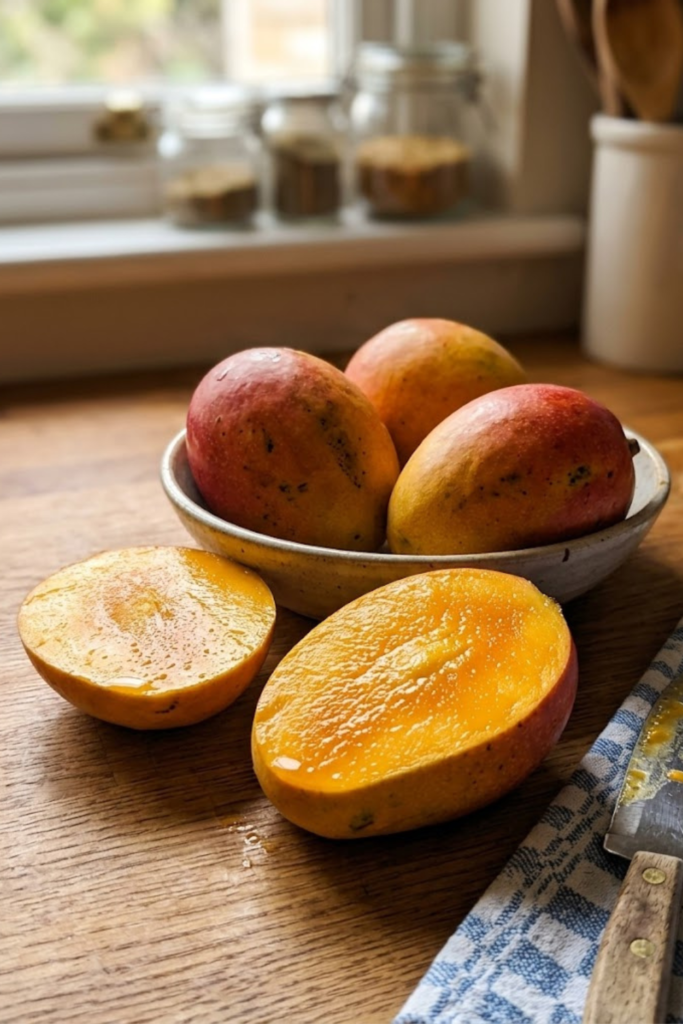
I have to tell you, picking the right fruit is basically the most important part of this whole thing. I learned this the hard way back when I was helping out with a school bake sale. I just grabbed the first big bag of red and green mangoes I saw at the grocery store. I thought, “Hey, a mango is a mango, right?” Wrong. Those things were so stringy it felt like we were eating dental floss. My poor students were picking fibers out of their teeth for an hour. It was so embarrassing! If you want your cheesecake to be a hit, you have to be picky about what you buy. You can’t just wing it with fruit that isn’t ready or the wrong type.
Look for Alphonso or Ataulfo Varieties
If you can find them, Alphonso mangoes are the absolute best for baking. They are super sweet and have a texture like butter. If those aren’t in season, look for the yellow Ataulfo ones, which people sometimes call “honey mangoes.” They are smaller and shaped a bit like a kidney. The main reason I love these is because they don’t have those long, annoying strings. When you blend them up, the sauce is perfectly smooth. I’ve tried using the bigger Tommy Atkins mangoes before, and while they look pretty, they just don’t have that deep flavor you need for a dessert. It ends up tasting kind of watered down and disappointing.
Use Your Nose and Your Hands
Don’t just look at the skin color to see if it’s ready. Some mangoes stay green even when they are sugary sweet inside! Instead, give the fruit a gentle squeeze. It should feel a little bit soft, sort of like a ripe peach. If it’s hard as a rock, leave it on the counter for a few days. But the real secret is the smell. Put your nose right by the stem. It should smell like a tropical vacation! If it doesn’t have a scent, it won’t have much taste either. I once made a cake with flavorless fruit, and it just tasted like plain cream cheese. What a waste of time that was.
Puree for a Silky Texture
I always tell people to blend their fruit instead of just chopping it up. Even the best mangoes might have a few little bits of fiber near the pit. I like to whiz mine in the blender until it’s a thick liquid. Then—and this is a big tip—I push it through a fine-mesh strainer. You might think it’s an extra step you don’t need, but it makes the cake feel so much fancier. It removes any tiny lumps so every bite is just pure, silky goodness. Your friends will think you bought it from a fancy bakery! Just don’t forget to scrape the bottom of the strainer, because that’s where the good stuff hides.
The Secret to a Buttery, Crunchy Graham Cracker Crust
Honestly, the crust is the unsung hero of any cheesecake. I remember one time I brought a mango cheesecake to a neighborhood potluck and the whole thing just disintegrated the second I tried to lift a slice. I felt so bad because everyone was looking at their plates like, “is this supposed to be a pile of sand?” It was because I didn’t get the butter ratios right and I didn’t pack it down enough. A good crust should have a nice snap to it, but it also needs to hold together under the weight of all that creamy mango filling. If the base is soggy or falling apart, the whole experience is ruined. I’ve spent a lot of afternoons in my kitchen testing different ways to get that perfect crunch, and I think I finally figured out the best method.
Don’t Make the Crumbs Too Fine
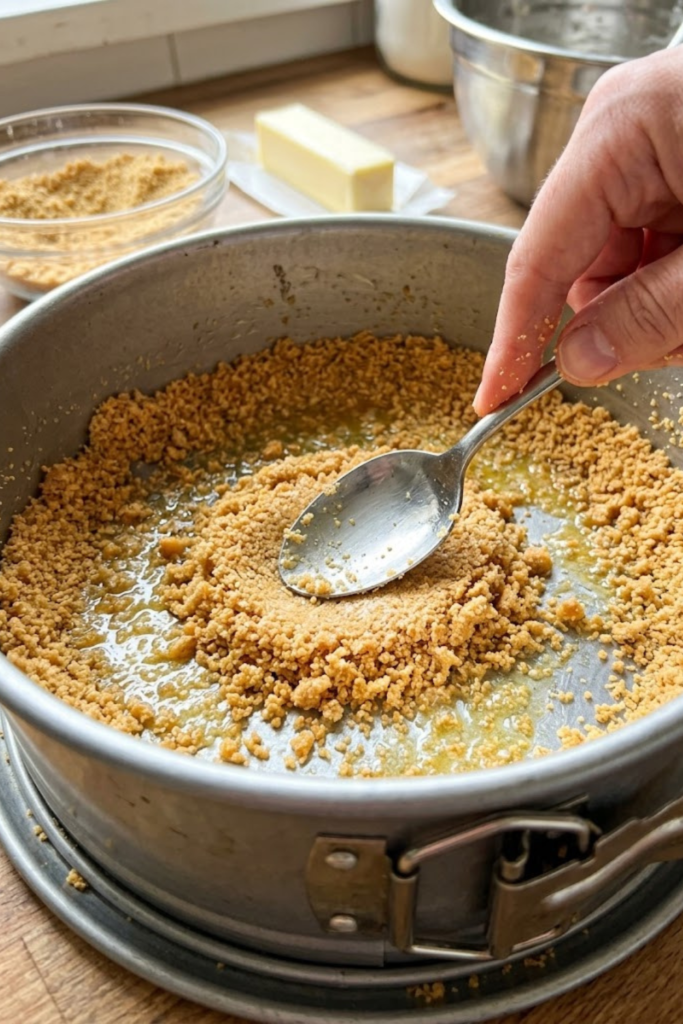
When you are crushing your graham crackers, you might be tempted to turn them into a super fine powder. I used to think that was the way to go, but I found out that if the crumbs are like dust, they soak up too much butter and turn into a greasy mess. I like to put my crackers in a big plastic bag and hit them with a rolling pin. It’s actually a great way to get out some stress after a long day at school! You want some tiny bits in there to give it texture. If you use a food processor, just pulse it a few times. You are looking for a consistency that looks like coarse sand, not flour.
Getting the Butter Just Right
This is where people usually trip up. I use about half a cup of melted butter for a standard nine-inch pan. I also like to add a tiny pinch of salt and a tablespoon of sugar to the mix. The sugar actually acts like a glue when it chills, helping everything stay together. When you stir the butter into the crumbs, it shouldn’t be dripping wet. It should just be damp enough that when you squeeze a handful in your fist, it stays in a ball. If it crumbles apart immediately, you need a drizzle more butter. If it’s oily, you might need to add a few more crushed crackers to balance it out.
The Freezer is Your Best Friend
Since this is a no-bake recipe, you aren’t putting the crust in the oven to set it. Instead, you need to use a flat-bottomed glass or a measuring cup to press the crumbs into the pan. Press down much harder than you think you need to! I usually spend about five minutes just making sure the edges are nice and tight. Once it’s packed in there, I pop the whole pan into the freezer for at least twenty minutes while I work on the mango filling. This cold blast makes the butter solid again, which creates a sturdy wall for the cheesecake. It makes the slicing process so much easier later on, and you won’t have to worry about the crust sticking to the bottom of the pan.
Achieving a Silky Smooth Cream Cheese Filling
There is honestly nothing worse than taking a big bite of a tropical dessert and hitting a cold, hard lump of plain cream cheese. It just ruins the whole vibe! I remember one holiday where I was in such a huge rush that I took the cheese straight from the fridge and tried to beat it with my hand mixer. I thought the friction of the beaters would warm it up fast. It didn’t. I ended up with something that looked like cottage cheese instead of a smooth filling. My sister-in-law just looked at my cake and asked if I forgot to let the cheese sit out. I felt about two inches tall! Ever since then, I have been the “room temperature” police in my own kitchen. If you want that professional look, you have to be patient with your ingredients.
The Room Temperature Rule
You really need to let your cream cheese sit on the counter for at least two or three hours before you start mixing. If it is even a little bit chilly, it won’t blend with the mango puree, and you’ll get those tiny white dots everywhere. I usually take mine out of the box and cut it into small cubes so it warms up faster. For those of you who are in a hurry, you can put the sealed foil packs in a bowl of warm water for fifteen minutes. Just make sure it feels soft like butter when you poke it. This is the best way to get a texture that melts in your mouth.
Swapping Sugar for a Finer Finish
I used to use regular white granulated sugar in my cheesecakes, but I noticed it sometimes stayed a bit gritty, especially in no-bake recipes. Now, I always use powdered sugar—or what some people call confectioners’ sugar. Because it is ground so fine, it dissolves instantly into the cheese. It makes the filling feel much lighter and more like a mousse. I usually sift it first to get rid of any clumps from the bag. It adds a nice sweetness without making the cake feel heavy or grainy.
Folding in the Air
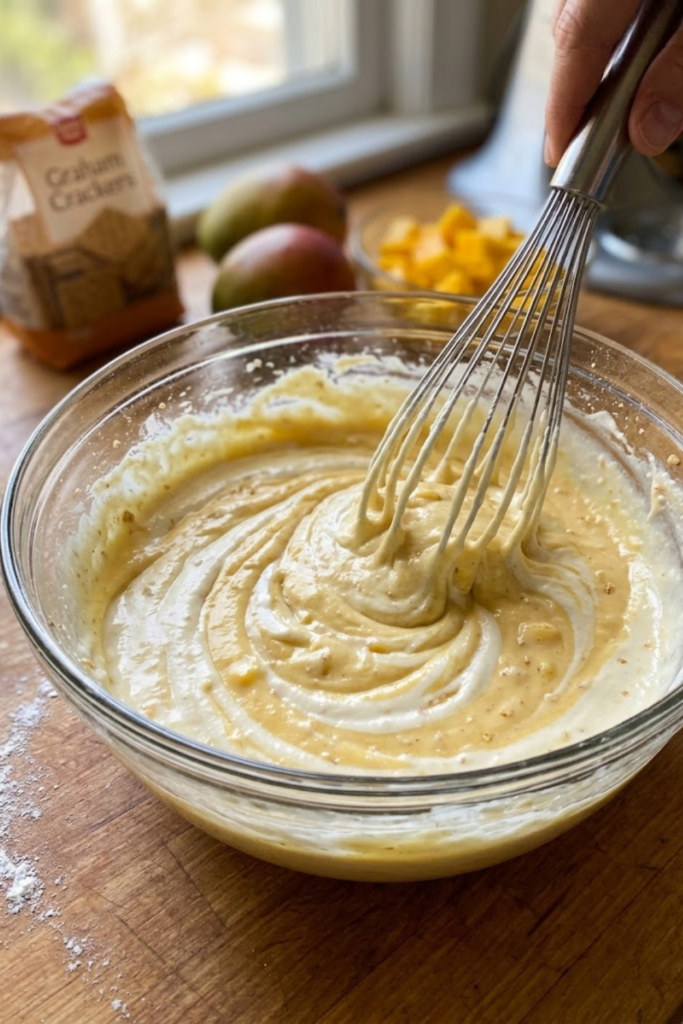
To get that fluffy feeling, you need to whip your heavy cream separately until it has stiff peaks. Then, you gently fold it into the mango and cheese mixture. Don’t use the electric mixer for this part! If you are too rough, you will knock all the air out, and your cake will be dense and flat. I use a big rubber spatula and just “cut” through the middle and flip the batter over. Also, if you want the cake to stand up tall when you cut it, this is the time to add your dissolved gelatin. Just make sure the gelatin isn’t boiling hot when it hits the cold cream, or it will turn into little rubbery bits. Take your time, and you’ll have a filling that looks like it came from a fancy magazine.
How to Make a Vibrant Mango Mirror Glaze
I really remember the first time I tried to make a “mirror glaze.” I saw it on a baking show and thought to myself, “I can totally do that!” Well, it turns out I couldn’t. My first try looked like orange soup and it just ran right off the sides of the cake and all over the floor. It was a total disaster! My kids were literally laughing at me while I was trying to scoop orange goo back into a bowl with a spoon. But after practicing a lot in my own kitchen, I figured out that it is all about the timing and how you treat the fruit. A good glaze shouldn’t just taste good; it needs to look like a piece of art that you can actually see your reflection in. It really makes the whole mango cheesecake look professional, like you spent hours in a fancy bakery.
Straining is the Most Important Step
One thing I tell all my students is that you can’t be lazy with your fruit puree. Even if you have the fanciest blender in your house, there will still be tiny bits of pulp. If you leave those in, your glaze will look bumpy and dull. I always use a very fine sieve and push the mango liquid through it twice. It feels like a lot of work for your arms, but it makes the final result look like shiny glass. If you see even one little bubble or lump, it’s going to show up on the cake and look messy. I once skipped this because I was tired, and the cake looked like it had a orange rash! Never again. You want that smooth surface that makes people go “wow” when you bring it out for dessert.
Watch Your Temperatures
This is the part where most people mess up, and it’s so easy to do. If your glaze is too hot, it will melt the top of your cheesecake and turn into a swirl of orange and white mush. But if it’s too cold, it will get thick and gloopy, and you won’t be able to spread it even. I usually let my glaze sit on the counter until it feels just slightly warm to the touch. While the glaze is cooling down, keep your cheesecake in the freezer so the top is nice and firm. This helps the glaze set almost instantly when it hits the surface. I’ve ruined a few cakes by being impatient, so take my advice and wait those extra ten minutes.
The Perfect Pour
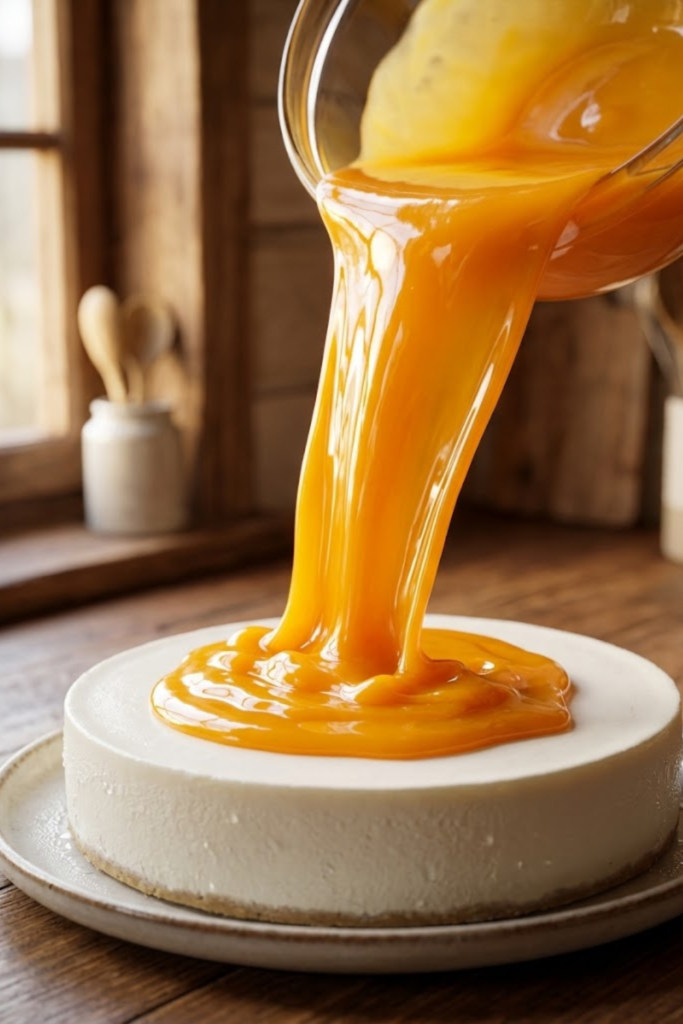
When you are finally ready to pour, start in the middle of the cake and work your way out to the edges. I don’t like using a spatula to spread it because that usually leaves marks in the shiny surface. Instead, I just tilt the pan gently to let the glaze run to the sides. It should move slowly like thick honey. If you see any tiny air bubbles, you can pop them with a toothpick really fast before the glaze sets. Once it’s covered, put it back in the fridge for at least four hours. It’s hard to wait, I know! I usually have to hide the cake in the back of the fridge so my husband doesn’t try to “test” a piece before it’s ready to be served.
Wrapping Up Your Mango Cheesecake Adventure
I can’t even tell you how many times I have stood in front of my refrigerator door, just staring at a cake and waiting for it to set. It is probably the hardest part of the whole process! I remember one time my daughter wanted to try a piece only two hours after I put the glaze on. I told her, “Honey, if we cut this now, it’s going to look like a yellow puddle on your plate.” We had to go for a long walk just to keep our hands off it! But when we finally sat down to eat it that evening, the look on her face made all that waiting worth it. There is just something about a homemade dessert that makes a house feel like a home.
Why Practice Makes Perfect
If your first cake doesn’t look like a photo in a magazine, please do not worry about it. I have been teaching for a long time, and I tell my students all the time that mistakes are just lessons in disguise. My first mango cheesecake was a total mess, but it still tasted like sunshine! Each time you make it, you’ll get a better feel for how the mangoes should smell or how thick the cream should be. You might even find a little trick of your own that works better in your specific kitchen. Cooking is a journey, and you are doing a great job just by trying something new.
A Quick Recap for Success
Just to make sure you have everything down, remember to pick those sweet, smellable mangoes and always strain your puree. That is the number one thing people skip, and it really makes a huge difference in how the cake feels in your mouth. Keep that crust tight and cold, and make sure your cream cheese is soft before you start mixing. If you follow those simple steps, you are going to have a dessert that people will be talking about for weeks. I usually make two of these at a time now because my neighbors always seem to “stop by” whenever they smell the mangoes in the air!
Share the Tropical Love
I really hope this guide helps you feel more confident in the kitchen. There is nothing better than seeing someone’s eyes light up when you put a beautiful slice of cake in front of them. If you enjoyed making this or if you just like looking at the photos, please share this recipe on Pinterest! It helps other people find these tips so they can avoid the same “stringy mango” disasters I had to go through. Plus, it’s a great way to save the recipe for the next time you have a summer party or a special birthday coming up. Happy baking, everyone!