Ever taken a bite of steak that felt more like chewing on an old leather boot? Yeah, I’ve been there too! It’s heartbreaking to watch a beautiful piece of beef go to waste. But here is the good news: London Broil doesn’t have to be tough. In fact, when you treat this lean cut with a little patience and the right technique, it transforms into something incredibly flavorful and melt-in-your-mouth delicious.
In this guide, we aren’t just grilling; we are mastering the art of the marinade and the science of the slice. I’ll walk you through everything you need to know to turn this budget-friendly cut into a steakhouse-quality meal that will impress your whole family. Let’s get cooking!
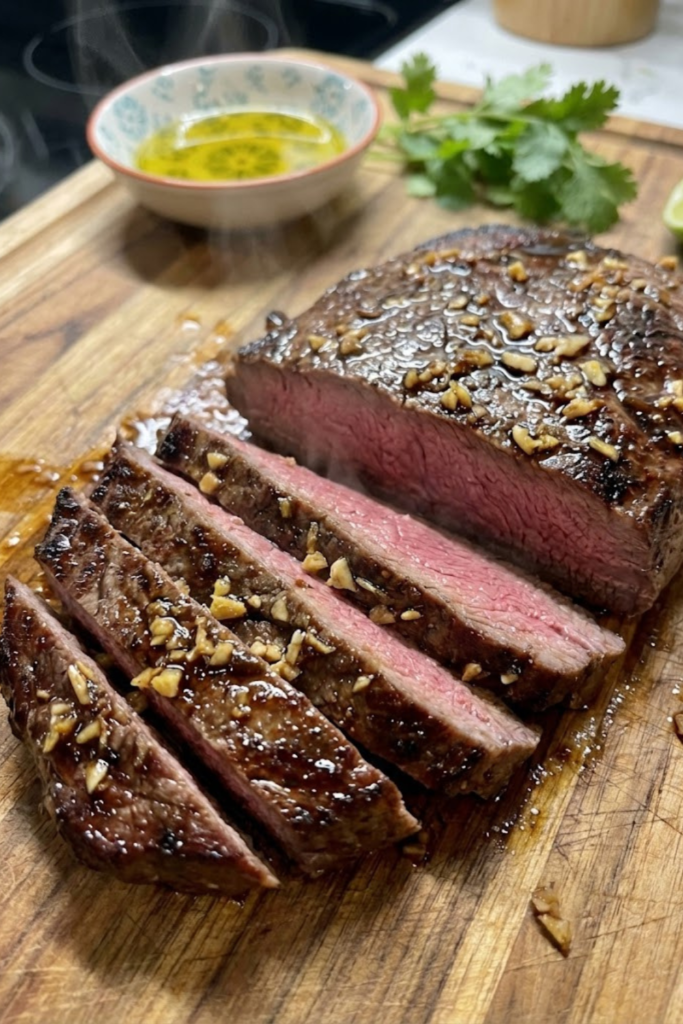
Unraveling the Mystery: What Exactly is London Broil?
I have a confession to make. For the longest time, I thought London Broil was a specific part of the cow, situated somewhere between the ribs and the rump. I’d march up to the butcher counter, confidently ask for a “London Broil,” and never question what I was actually getting. It wasn’t until I tried to impress a date (now my husband) with a fancy dinner that I realized my mistake. I treated it like a ribeye, threw it on high heat with zero prep, and served him a piece of meat that had the texture of a rainy day boot. It was humiliating!
That’s when I learned the truth: London Broil isn’t a cut of meat at all. It’s actually a cooking method that supermarkets have confusingly adopted as a label.
It’s a Method, Not a Cut
Here is the kicker that confuses almost everyone. When you see a package labeled “London Broil” at the grocery store, you are usually looking at a piece of Top Round steak or sometimes Flank steak. The term originally referred to the process of marinating lean beef and then broiling or grilling it to high heaven to make it edible.
But grocery stores realized that “London Broil” sounds way fancier than “large slab of lean round steak,” so they started slapping that label on everything. It is a marketing trick! Knowing this changed my entire game in the kitchen. When you buy this beef, you have to know you are dealing with a tough customer that needs some love and attention before it hits the heat.
The Lean Meat Struggle
The reason my disastrous date-night dinner was so chewy is simple: this meat is lean. Like, supermodel lean. Unlike a ribeye or a strip steak that has beautiful ribbons of white fat (marbling) running through it, the cuts used for London Broil are almost pure muscle.
- Top Round: Comes from the rear leg of the cow. It does a lot of work, so the muscle fibers are tight and tough.
- Flank: Comes from the belly muscles. Great flavor, but very fibrous.
Because there isn’t much fat to melt down and baste the meat from the inside, you can’t just throw it on a fire and hope for the best. If you do, the proteins seize up, and you are left with a jaw workout instead of a meal. I’ve been there, staring at a plate of grey, tough meat, wondering where I went wrong. It is frustrating, but fixing it is easier than you think.
Smart Shopping at the Butcher Counter
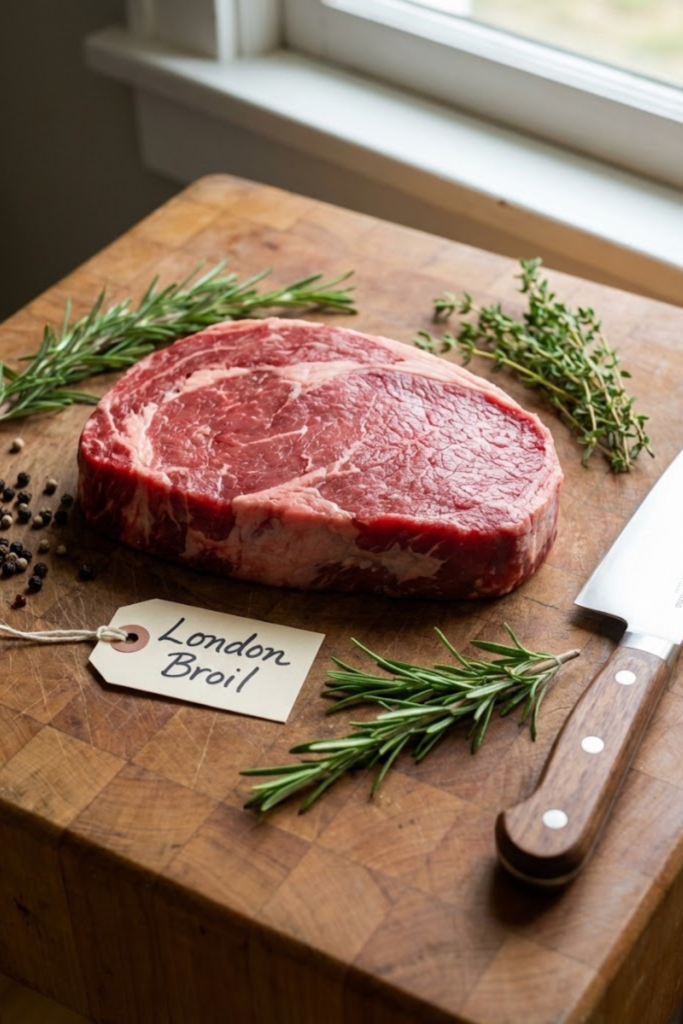
So, what should you actually look for? When I’m hunting for the perfect London Broil dinner, I usually look for a Top Round steak that’s at least an inch thick. You want that thickness so the inside stays juicy while the outside gets a nice char.
If you can’t find a package explicitly labeled “London Broil,” ask your butcher for a thick-cut Top Round or a Flank steak. Occasionally, you might see shoulder clod used, but I stick to the round. It’s reliable. Just make sure to check the color—you want a bright, vibrant red, not something looking dull or brown around the edges. Freshness is key when you don’t have fat to hide behind.
Ballin’ on a Budget
Let’s be real for a second—groceries are expensive right now. One of the main reasons I keep coming back to this recipe is the price tag. You can feed a family of four with a single large London Broil for a fraction of what it would cost to buy individual steaks.
It is the ultimate budget hack for meat lovers. You get that rich, beefy steakhouse flavor without draining your bank account. Sure, it takes a little more work than a filet mignon, but the payoff is huge. When you slice it thin and see those juices running, you feel like a genius for saving so much money. It’s a total triumph when you turn a cheap cut into a five-star meal.
The Magic Marinade: Ingredients for Maximum Tenderness
I used to be incredibly lazy with my grilling. Seriously, I’d just slap some salt and pepper on a flank steak, throw it on the heat, and wonder why it tasted like a salted shoe. I learned the hard way that when you are dealing with a tough cut like this, the marinade isn’t just about flavor—it is a survival tool.
If you skip this step, you are basically setting yourself up for failure. I’ve served enough chewy dinners to know that a good London broil marinade is the only thing standing between you and a jaw ache. It’s the secret weapon that breaks down those stubborn muscle fibers.
The Acid Component
Here is the thing I didn’t get for years: you need acid. I used to just drown meat in oil and herbs, but that doesn’t do anything for the texture. You need something to attack the meat structure.
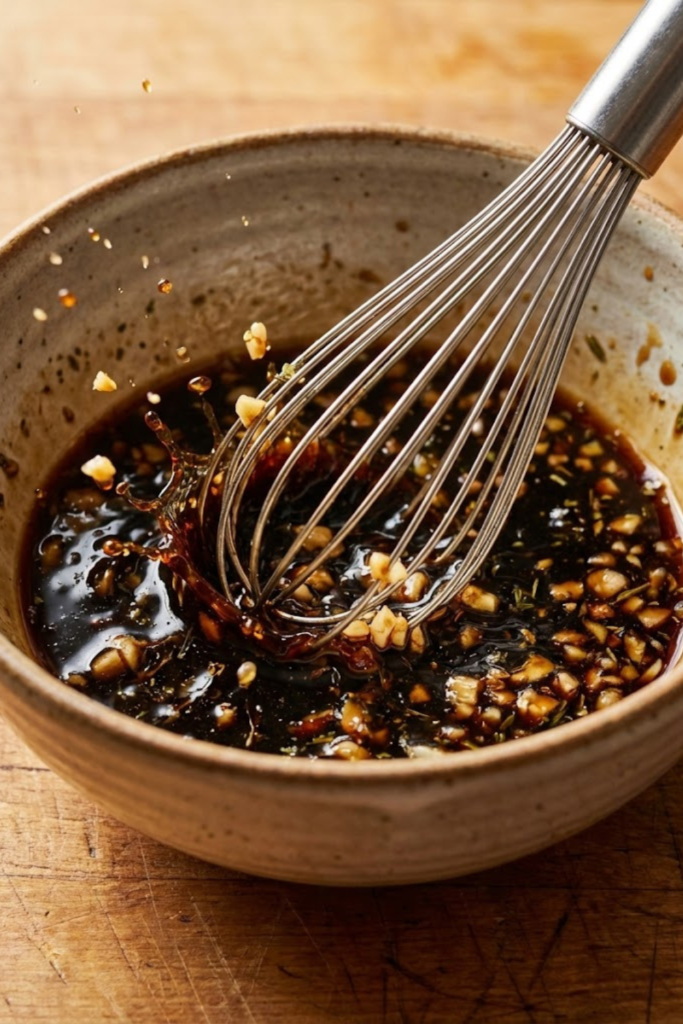
I always reach for balsamic vinegar or red wine. They add this deep, rich flavor that pairs perfectly with beef. Lemon juice works too, but it changes the flavor profile a lot. The acid chemically loosens the protein bonds. It’s like magic. But you have to be careful!
The Fat and Flavor Balance
You can’t just use straight vinegar, though. I did that once—marinated a steak in pure red wine vinegar thinking I was being smart. It was inedible. You need fat to balance it out.
Olive oil is my go-to here. It helps the balsamic vinegar marinade stick to the meat and keeps it moist while cooking. Then you hit it with the aromatics. I’m talking smashed garlic cloves (don’t even bother chopping them finely), fresh rosemary, and plenty of soy sauce.
Soy sauce is actually a double threat here. It adds salt, which penetrates the meat for deep seasoning, and it adds that savory umami punch. Just go easy on the added table salt if you are using a lot of soy.
Timing is Everything
Okay, listen to me closely because this is where I’ve messed up the most. Marinating times for beef are not a suggestion; they are a rule.
- Too Short: If you only do 30 minutes, don’t bother. The flavor won’t get past the surface. Aim for at least 4 hours.
- Too Long: This is the danger zone. I once left a steak marinating for two days because I forgot about it. The acid turned the outer layer of the meat into mush. It was gross.
Aim for about 6 to 24 hours. That is the sweet spot.
Also, a quick warning on enzymatic tenderizers like pineapple or papaya juice. I tried a pineapple marinade once for a Hawaiian vibe. Left it overnight. The enzymes digested the meat so much it had the texture of liver pâté. It was a texture nightmare I still have bad dreams about! Stick to vinegar or wine for long soaks.
Grilling vs. Oven Broiling: Best Cooking Methods Revealed
I used to be absolutely terrified of my oven’s broiler. To me, it was this unpredictable beast that either did nothing or incinerated my dinner in three seconds flat. So, for years, I only cooked steak outside. But then, a nasty winter storm hit right when I had a beautiful piece of beef marinating, and I was forced to figure out the oven broiling method.
It turns out, the broiler is basically just an upside-down grill. Once I realized that, my whole perspective changed. Whether you are using a cast iron skillet steak method or firing up the Weber, the goal is the same: high heat to get that crust, and careful timing to keep the inside juicy.
The Prep Work: Don’t Cook It Cold!
Before we even talk about fire, we have to talk about temperature. One of the biggest mistakes I made in my twenties was pulling the meat from the fridge and throwing it straight onto the heat. Big mistake.
If the center of the steak is 38°F and the outside hits a 500°F grill, the outside will burn before the inside is even warm. I learned this after serving a steak that was charred on the outside and ice-cold in the middle. Yuck.
Now, I always let a room temperature steak sit out for about 30 to 45 minutes before cooking. And here is a pro tip I swear by: patting meat dry with paper towels is non-negotiable. If the meat is wet from the marinade, it steams instead of sears. You want that Maillard reaction—that fancy term for the brown, flavorful crust—and moisture is the enemy of a good crust.
The Broiler: My Smoke Alarm’s Worst Enemy
If you are wondering how to cook london broil in oven, it is actually pretty simple, but it can get smoky. I’ve definitely set off my smoke detector more than once doing this!
I like to use a broiler pan or a baking sheet lined with foil. Position the top rack about 4 to 6 inches from the heating element. You want it close, but not touching. Preheat that broiler until it’s blazing hot.
Cook the steak for about 5-6 minutes per side. It happens fast. The heat is intense, and you have to keep an eye on it. It’s not a “set it and forget it” situation. I usually keep the oven door cracked open slightly just to keep the heating element engaged and to vent some smoke.
The Grill: Playing with Fire
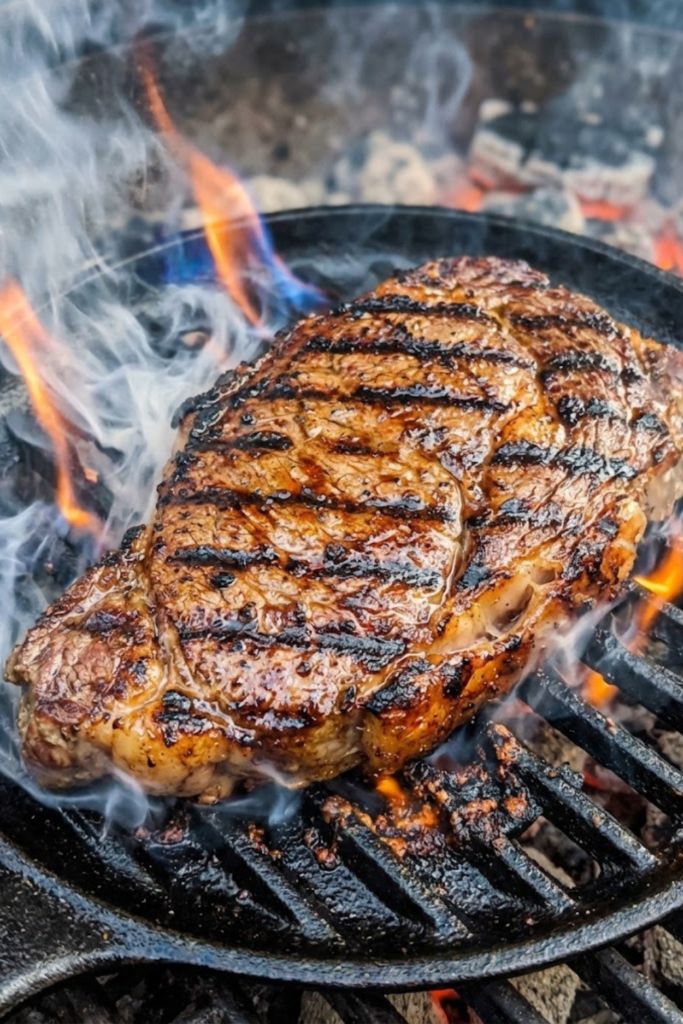
If the weather is nice, I’m outside. For charcoal grilling tips, I always say create a two-zone fire. Pile the coals on one side for searing and leave the other side empty. This gives you a safe zone if the dripping fat causes a flare-up.
If you are using gas grill steak settings, crank that baby up to high. You want the grates smoking hot. I sear the steak for 4-5 minutes on the first side to get those beautiful grill marks, then flip it. It’s satisfying to hear that sizzle.
The Thermometer is Your Best Friend
Here is where I get bossy. Please, for the love of good food, stop poking the meat with your finger to check if it’s done. I tried that “touch your nose then touch the steak” trick for years and it was never accurate.
Invest in an instant read thermometer. It is the only way to guarantee you don’t ruin the meat. You are looking for a medium rare internal temp of 125°F to 130°F. Remember, the temp will rise another 5 degrees while it rests (carryover cooking is real!).
If you pull it at 140°F, it’s going to be well-done by the time you cut it, and with a lean cut like this, well-done means tough. I’ve ruined perfectly good dinners by doubting my meat thermometer temp reading and leaving it on “just a minute longer.” Trust the numbers!
The Art of the Slice: Cutting Against the Grain
You can have the best marinade in the world and cook your beef to the perfect temperature, but if you mess up this last step, it’s game over. I learned this the hard way at a backyard barbecue a few years ago. I was so proud of myself. I had this gorgeous flank steak, charred perfectly on the grill. I took it off, slapped it on a board, and immediately started hacking away at it like a lumberjack.
I served it up, watched my friends take a bite, and saw that polite struggle—you know the one? Where they are chewing and chewing, trying to smile while their jaw gets a workout. I felt terrible! It turns out, how you slice the meat is just as important as how you cook it.
The Resting Phase is Non-Negotiable
Before you even touch that knife, you have to wait. I know, it smells amazing and you are starving. I’m the worst at being patient. But cutting into hot meat immediately is a rookie mistake.
Resting steak importance cannot be overstated. When the meat is hot, the juices are bunched up in the center. If you cut it right away, all that liquid gold pours out onto the cutting board instead of staying in your steak. Give it 10 minutes. Use that time to pour a glass of wine or yell at the kids to wash their hands. It makes a huge difference in keeping the meat juicy.
Finding the Roadmap
Okay, once it’s rested, look at the meat. Really look at it. You’ll see lines running across the surface. That is the “grain”—the direction the muscle fibers run.
On a tender flank steak or top round, these lines are super obvious. Think of them like a bundle of long rubber bands. If you cut with the grain (parallel to the lines), you are serving your guests long, intact rubber bands to chew on. That was my mistake at that barbecue. I left those fibers long and tough.
The Technique That Save Jawlines
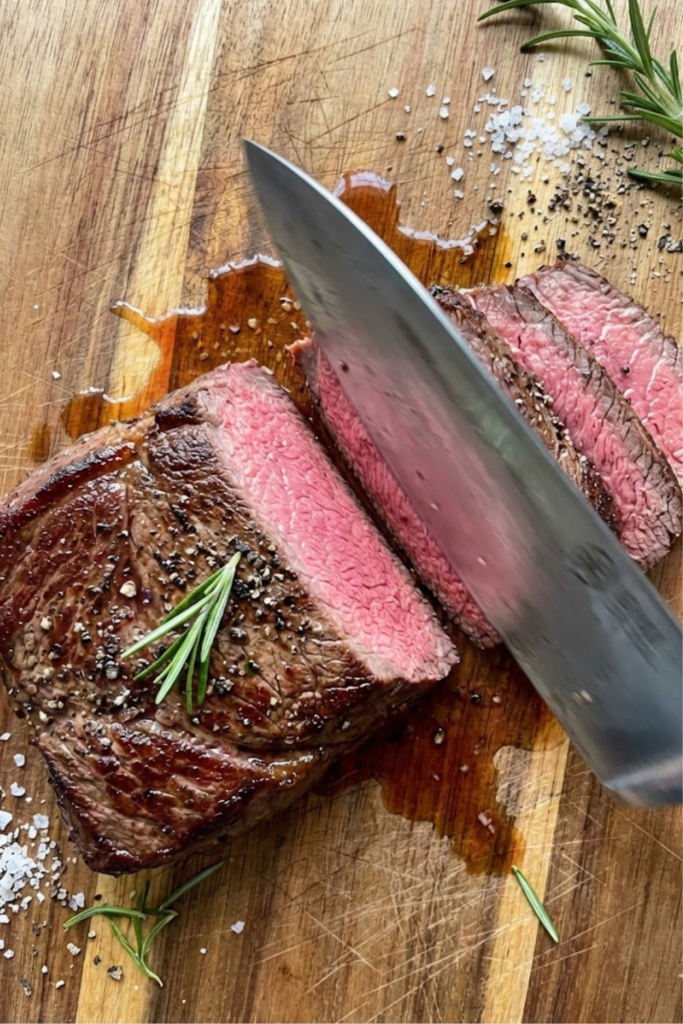
To fix this, you need to be cutting against the grain. You want to slice perpendicular to those lines. By doing this, you are snipping those long muscle fibers into tiny, short pieces.
Short fibers mean the meat falls apart in your mouth. Long fibers mean you chew until next Tuesday.
Here is exactly how I do it now:
- Spot the lines: I usually rotate the steak so the lines run left to right in front of me.
- Angle the knife: Don’t just cut straight down. Tilt your knife at a 45-degree angle (called a bias cut). This makes the slices look wider and fancier.
- Go thin: This is crucial. Slicing meat thin is the key to tenderness for these tougher cuts. I aim for slices that are about 1/4 inch thick or even thinner.
If you do it right, even a cheap cut feels like filet mignon. It’s a total magic trick.
Leftovers Are the Best Part
If you manage to not eat it all in one sitting (rare in my house), these thin slices are perfect for the next day. I love throwing cold slices onto a leftover steak salad with some blue cheese crumbles. Since you already did the hard work of slicing it properly, it’s ready to go right out of the fridge. Just don’t microwave it! That will just cook it all over again and make it tough.
Perfect Pairings: What to Serve with London Broil
I used to be so focused on not ruining the meat that I’d completely forget about the sides. I’d pull this beautiful steak out of the oven, look around the kitchen, and realize all I had was a bag of frozen peas and some instant rice. Talk about a letdown. A steak this good deserves a supporting cast that doesn’t just sit there—it needs to elevate the whole meal.
Over the years, I’ve found that because London Broil is so lean and beefy, it pairs best with sides that add a little richness or freshness. It’s all about balance.
The Starchy Comfort Food
Let’s be honest, Sunday night dinner ideas aren’t complete without some carbs. My family absolutely riots if I don’t serve potatoes with steak.
- Mashed Potatoes: I like to make mine with the skin on (mostly because I hate peeling). I mix in a garlic butter compound right at the end. The butter melts into the hot potatoes and creates this creamy, savory heaven that soaks up the steak juices perfectly.
- Roasted Sweet Potatoes: If I’m trying to be a bit healthier, I’ll cube sweet potatoes, toss them in olive oil and paprika, and roast them until they are crispy. The sweetness cuts through the salty soy marinade of the beef.
- Garlic Butter Noodles: Sometimes, if I’m really pressed for time, I just boil some egg noodles and toss them with parsley and garlic salt. It takes ten minutes and the kids devour it.
Going Green
You have to have something green on the plate to make it look like a balanced meal, right? But please, don’t just boil broccoli until it’s grey. I’ve done that, and nobody eats it.
I prefer grilled beef recipes to be paired with grilled veggies. Since the grill is already hot, I throw on some asparagus spears or zucchini slices. The char on the vegetables mimics the char on the steak, tying everything together. If I’m cooking inside, a fresh Caesar salad with homemade croutons is my go-to. The crisp romaine adds a nice crunch that contrasts with the tender meat.
The Sauce Situation
Okay, this is where I get a little fancy. A good London Broil is great on its own, but a sauce takes it to steakhouse style dinner levels.
For years, I was intimidated by making sauces. Then I discovered a Chimichurri sauce recipe. It sounds exotic, but it’s basically just parsley, garlic, vinegar, and oil thrown into a blender. It’s bright, acidic, and cuts right through the richness of the meat. It’s a total game changer.
If I’m feeling like a French chef, I might attempt a red wine reduction. I take the pan drippings (don’t throw those away!), add some red wine and butter, and simmer it down. It makes the house smell incredible.
A Little Treat for the Cook
Finally, let’s talk wine. I’m not a sommelier, but I know what I like. A bold Cabernet Sauvignon or a Malbec stands up really well to the strong flavors of the marinade. It’s my little reward for not burning dinner.
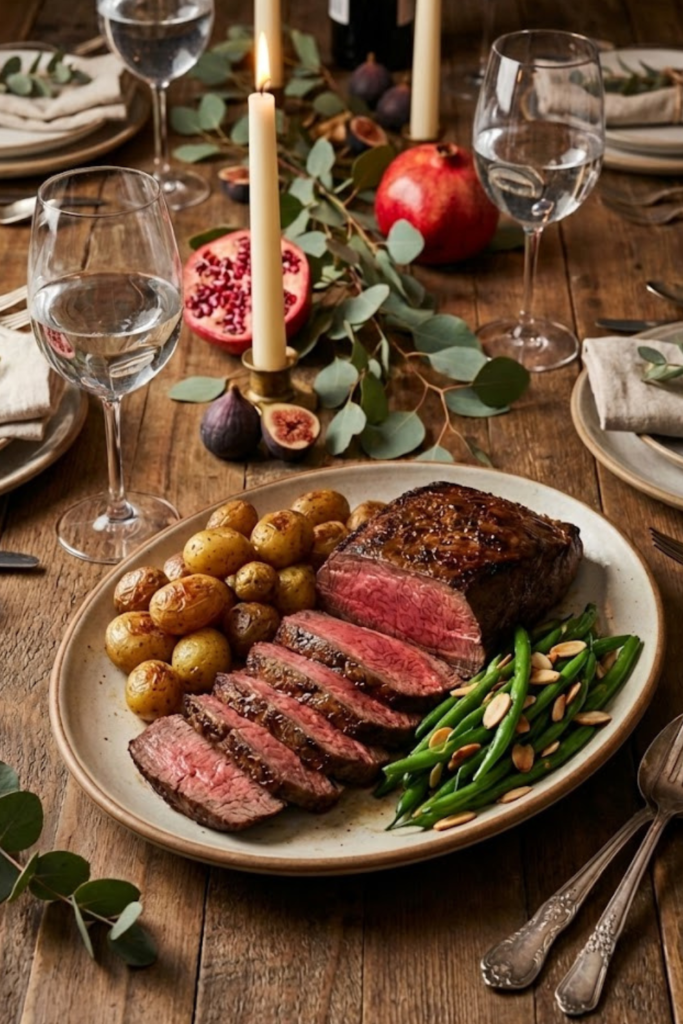
We’ve been on a bit of a journey here, haven’t we? From realizing that London Broil isn’t even a real cut of meat to mastering the cutting against the grain technique, you now have the toolkit to turn a budget slab of beef into a meal that tastes like a million bucks.
The biggest takeaway I want you to remember is patience. Patience with the marinade, patience to let the meat come to room temp, and patience to let it rest before slicing. I know it’s hard when your kitchen smells like a five-star restaurant, but that extra ten minutes makes the difference between a chewy disappointment and a melt-in-your-mouth masterpiece.
I hope you give this method a try. It’s become a staple in my rotation for family friendly beef recipes, and I have a feeling it might become one in yours too. Don’t be afraid to experiment with the herbs or try a different vinegar once you get the basics down. Cooking should be fun, even when we make a few mistakes along the way.
Don’t lose this recipe! Pin it to your Dinner Ideas board on Pinterest so you have it for later!