Did you know that “how to fix dry chicken” is one of the top cooking questions on the internet? I’ve been there. I’ve cooked chicken breasts that felt more like a piece of old shoe leather than a meal. It was frustrating! But then I started messing around with this lemon garlic herb chicken breast combo. My family actually asked for seconds last week. This recipe is all about getting that perfect golden crust while keeping the inside so soft it practically melts. Let’s get cooking because you deserve a dinner that doesn’t require a gallon of water to swallow!
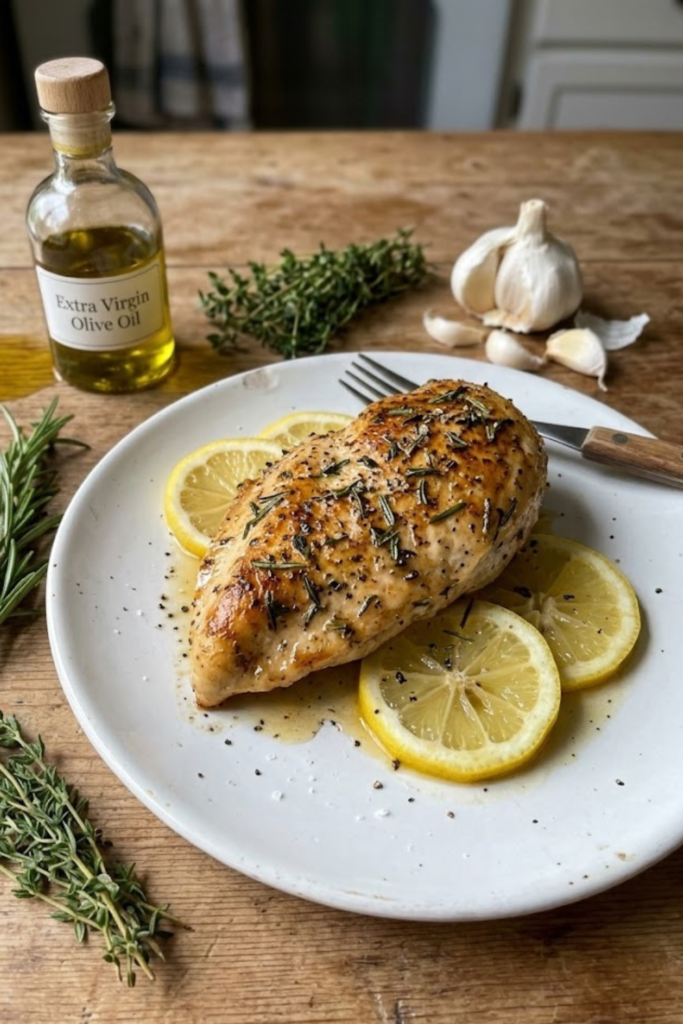
The Best Ingredients for Zesty Chicken
I used to think that chicken was just… well, chicken. It was that boring thing I cooked when I couldn’t think of anything else for dinner. But then I realized the problem wasn’t the bird; it was my grocery list. If you want that bright, mouth-watering lemon garlic herb chicken breast we all see in food magazines, you have to start with the right stuff. I’ve spent way too many nights eating bland, dry meat because I tried to take shortcuts. Trust me, spending an extra five minutes picking out good produce makes a world of difference. You don’t need a fancy chef degree to get this right, just a little bit of knowledge about what goes into your pan.
Why Fresh Lemons Win
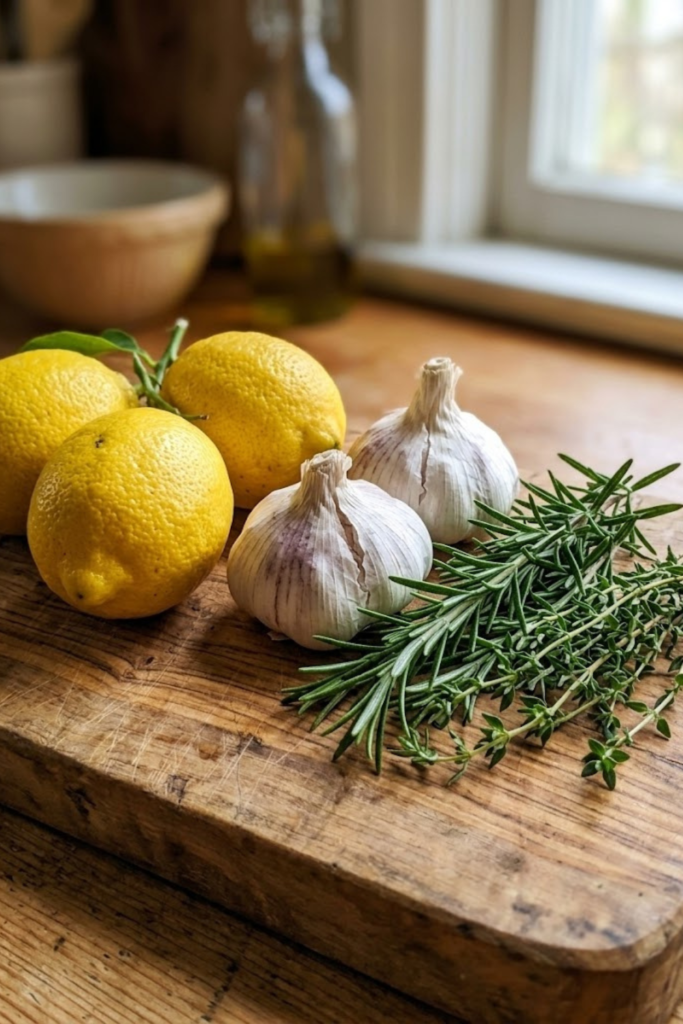
First thing’s first: let’s talk about lemons. Please, for the love of a good meal, stay away from those yellow plastic squeeze bottles. That juice has been sitting on a shelf for way too long and it tastes more like chemicals than fruit. For a really bright flavor, you need the real deal. When you’re at the store, look for lemons that feel heavy for their size. That usually means they are packed with juice. I always use the zest—that’s the yellow part of the skin—because it has all these special oils that smell incredible. It adds a punch of citrus that juice alone just can’t provide. I usually buy three or four lemons even if I only need one, just to make sure I have enough.
Garlic: The More the Merrier
Next up is the garlic. I’m a bit of a garlic fanatic, so I usually use double what the recipe says. But here is the trick: use fresh bulbs. Avoid the jars of pre-minced garlic if you can. It might save you some time, but it has a strange, bitter taste because of the stuff they use to keep it “fresh” in the jar. I like to crush the cloves with the flat side of my chef’s knife. It makes the skin pop right off, and it starts to let the juices out. If you want a really strong flavor, mince it up real small. If you want it a bit milder, just smash it and leave it in bigger chunks.
Fresh vs. Dried Herbs
Regarding the herbs, fresh is usually the way to go. Rosemary and thyme are my absolute favorites for this chicken. They have an earthy, woody smell that goes so well with the lemon. If you can’t find fresh, dried is fine, but keep in mind that dried herbs are much stronger. You only need about a teaspoon of dried herbs for every tablespoon of fresh. I also love to keep some flat-leaf parsley on hand. I don’t cook with it; I just sprinkle it on at the very end. It makes the dish look like a restaurant meal and adds a nice, clean finish to the plate.
The Importance of Good Fat
Finally, don’t forget the oil. A decent extra virgin olive oil is your best friend here. It helps the chicken get that nice brown crust and keeps it from sticking to the pan. More importantly, it acts like a bridge that carries all those garlic and herb flavors right into the meat. You want enough to coat the chicken well, but you don’t need to soak it. Just a good, even layer will do the job perfectly. Using a good oil makes the meat feel richer and keeps it from drying out while it’s cooking.
My Top Secrets for a Juicy Marinade
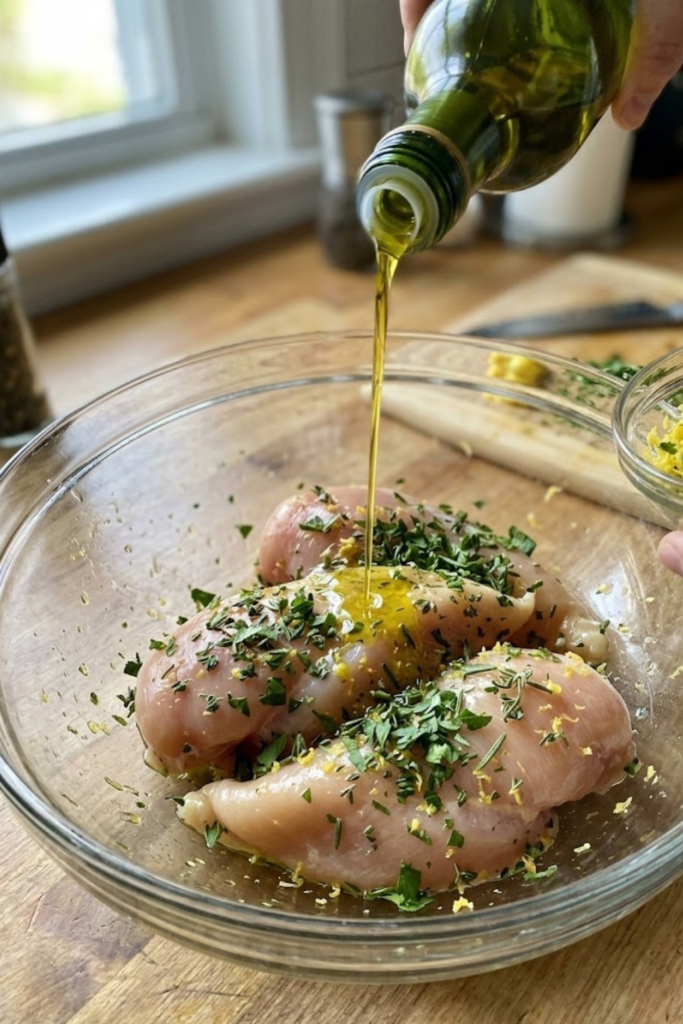
I’ve made the mistake of throwing chicken straight from the fridge into a hot pan with just a tiny sprinkle of salt. It never ends well. If you want a lemon garlic herb chicken breast that actually tastes like something, you have to give it some love before the heat hits it. A good marinade isn’t just about adding flavor; it’s about changing the texture of the meat so it stays moist. I used to think marinating took all day, but I’ve found that even 30 minutes can save a meal. Here are the things I do every single time to make sure my chicken doesn’t turn out like a piece of dry cardboard. You really don’t need to be a pro to get this right.
Don’t Skip the Salt
The most important part of any marinade is the salt. I like to use kosher salt because the grains are bigger and easier to see. Salt does something cool to the chicken—it breaks down the tough proteins. This helps the meat hold onto its juices while it cooks. If you skip the salt in the marinade, your chicken will just be salty on the outside and bland on the inside. I usually toss my chicken in a bowl with the salt and herbs first, almost like a dry rub, before I add the wet stuff. It really makes a big difference in how deep the flavor goes.
Watch the Lemon Juice
Since we are making a lemon garlic herb chicken breast, you obviously need lemon juice. But you have to be careful! Lemon juice is an acid. If you let your chicken sit in it for too long—like more than four hours—the acid actually starts to “cook” the meat. It turns the chicken white and makes the texture kind of mushy and weird. I usually aim for about 30 minutes to an hour. That’s enough time for the garlic and herbs to soak in without the lemon ruining the meat. If you’re in a big rush, even 15 minutes is better than nothing at all.
Get the Chill Out
This is a tip I tell everyone because it’s so easy. Take your chicken out of the fridge about 20 minutes before you plan to cook it. If the meat is ice-cold when it hits the pan, the outside will burn before the inside is done. Letting it sit on the counter for a bit helps it cook more evenly. While it’s sitting there, it can be soaking up all that garlic and herb goodness. It’s a simple step, but it’s one of the biggest reasons why restaurant chicken tastes better than home-cooked chicken. Just keep an eye on it and don’t leave it out too long for safety reasons!
Pan-Searing vs. Baking: Which Is Better?
I’ve tried cooking chicken every way possible, and I still get asked which way is the “right” way. For lemon garlic herb chicken breast, it really depends on how much time you have and if you feel like washing an extra pan. I used to be scared of the stove because I thought I’d burn the house down, but once I learned how to sear properly, my life changed. Baking is great too, but it’s a different vibe. It’s more of a set-it-and-forget-it thing. Let me tell you what I’ve learned from my many mistakes in the kitchen.
The Magic of the Pan
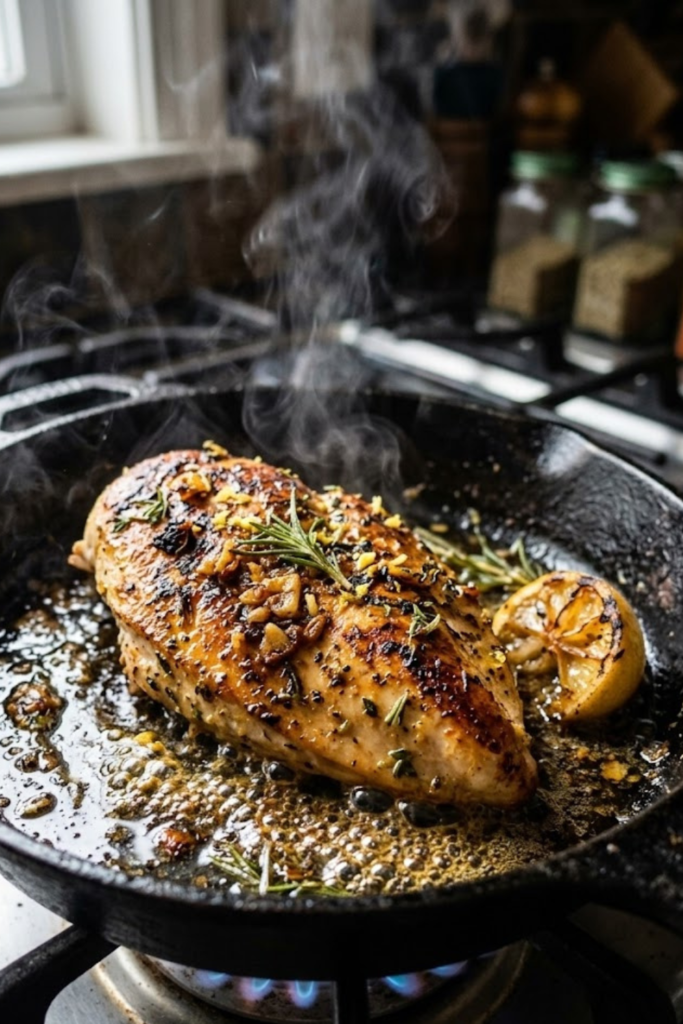
If you want that crispy, golden-brown skin, you gotta use a pan. I love my old cast-iron skillet for this. When the chicken hits the hot oil, it makes this loud sizzle. The garlic and herbs get all toasted and smell incredible. The trick is to leave it alone! I used to move the chicken around too much because I was nervous, but you have to let it sit for about 5 or 6 minutes to get that crust. If it sticks to the bottom, it’s not ready yet. This method is fast, but you have to stay right there and watch it so the garlic doesn’t burn and get bitter.
The Hands-Off Oven Method
Now, if I’m busy with the kids or chores, I usually go with the oven. Baking is much easier for a big group. You just put the lemon garlic herb chicken breast on a sheet pan and let the heat do the work. It’s harder to dry out the meat in the oven if you keep it at 400 degrees. The downside is you don’t get that same crunch on the outside. But hey, it’s way less messy than oil splashing on your stove. Just make sure to use a meat thermometer to check the middle. Once it hits 165 degrees, pull it out!
Why Not Try Both?
If I’m feeling fancy, I do both. Start in the pan for two minutes to get it brown, then slide the pan into the oven to finish. This is how restaurants do it. It keeps the inside soft while the outside stays crispy. Just make sure your pan is oven-safe! I once melted a handle and ruined dinner. If you use the pan, don’t throw away those brown bits at the bottom. Pour in a little broth or more lemon to scrape them up for a quick sauce. It tastes so good you’ll want to lick the plate.
Pro Tips to Avoid Overcooking
I’ve served my fair share of “chicken jerky” over the years. You know exactly what I’m talking about—that meat where you’re chewing for five minutes just to get one single bite down. It’s honestly embarrassing when you’ve worked hard on a meal and it comes out tough. But after a lot of trial and error with my lemon garlic herb chicken breast, I’ve learned a few tricks that totally changed my kitchen life. If you’ve ever felt like you were failing at cooking because your poultry came out dry, stop beating yourself up. It’s usually just a couple of small things that need fixing. Here is how I keep things juicy every single time I cook.
The Magic of Resting
This is probably the biggest mistake I see people make in their own kitchens. You’re hungry, the chicken looks amazing, and it smells like a dream, so you cut into it the second it leaves the pan. Please, stop doing that! When you cut it immediately, all those delicious juices run out onto the plate and leave the meat dry as a bone. I always let my chicken sit for at least five or ten minutes before I touch it with a knife. This lets the moisture move back into the middle of the meat. Think of it like a sponge that needs a second to soak everything up. I usually just throw a piece of foil over it loosely while I finish setting the table or tossing a salad.
The Hammer Trick
Another secret I swear by is making the chicken the same thickness. Most chicken breasts are fat at one end and very thin at the other. If you cook them exactly as they come out of the package, the thin part turns into a rock before the fat part is even safe to eat. I take a heavy pan or a meat mallet and give the thick part a few good whacks. I’m not trying to turn it into a pancake; I’m just trying to make it even from top to bottom. This makes sure every bite of your lemon garlic herb chicken breast is cooked exactly the same way.
Trust Your Tools
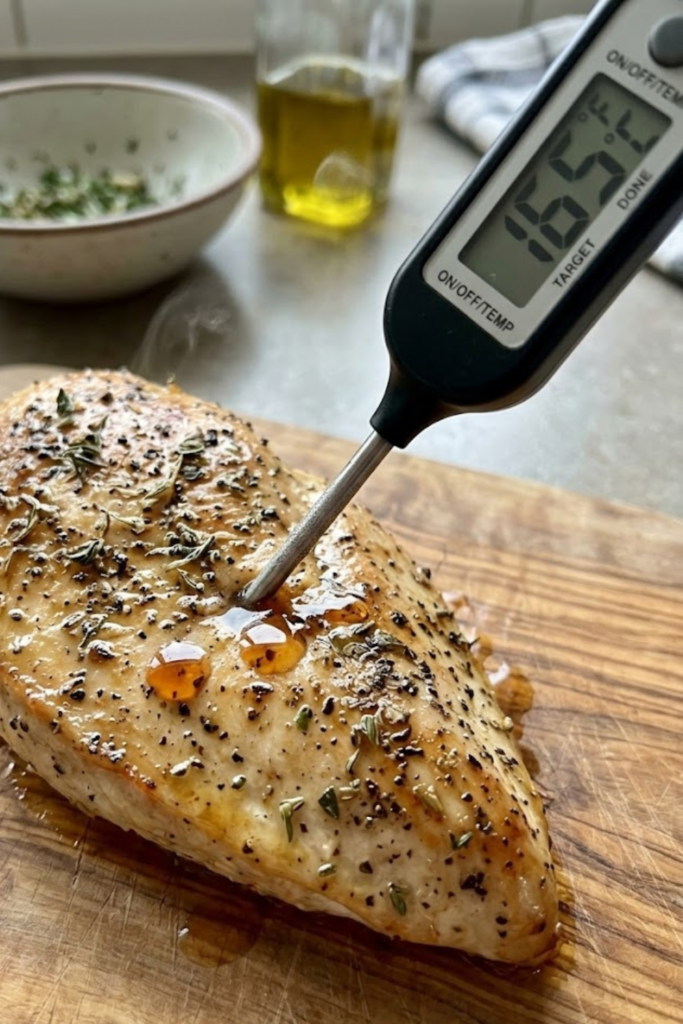
Stop guessing if the meat is done by looking at the color. I used to cut a little slit in the side to see if the juice was clear, but that just lets the flavor escape. Do yourself a favor and buy a cheap digital meat thermometer. It’s the best ten dollars you will ever spend. I pull my chicken off the heat when it hits 160 degrees. Because of something called “carryover cooking,” it will keep getting hotter while it rests, reaching that safe 165 mark on its own. This one tool took all the stress out of my weeknight dinners and saved my reputation as a cook!
How to Store and Reheat Leftovers
There’s nothing worse than cooking a big batch of lemon garlic herb chicken breast and then having it go to waste because it turned into a rubbery mess the next day. I used to be the queen of throwing away leftovers because I just couldn’t figure out how to make them taste good again. My kids would take one bite of microwaved chicken and make a face like I was feeding them cardboard. It took me a long time to realize that the way you put the food away is just as important as how you cook it in the first place. If you do it right, your lunch the next day might actually be better than the dinner was!
Keeping Your Chicken Fresh
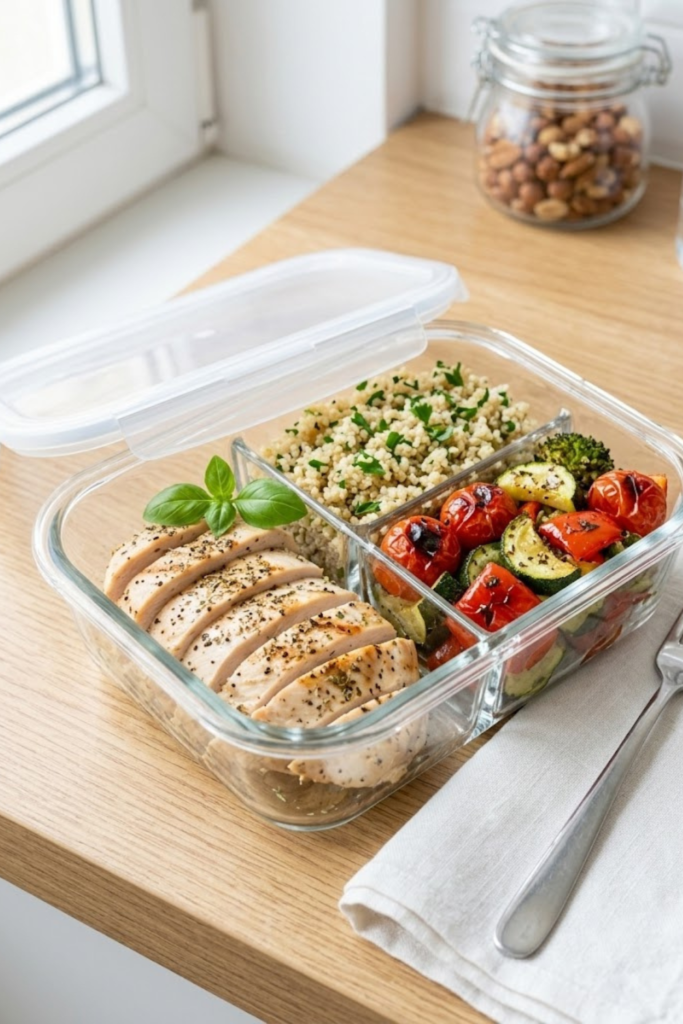
When you are done eating, don’t just leave the chicken sitting out on the counter while you watch TV. You want to get it into the fridge pretty fast. I always use glass containers with those snap-on lids because they keep the air out better than plastic wrap or foil. If air gets to your chicken, it’s going to dry out and start smelling like the rest of your fridge. I usually slice my chicken before I put it away. That way, it’s ready to go for a sandwich or a salad, and I don’t have to mess with a knife and fork later when I’m in a hurry to get to work. It stays good for about three or four days, but honestly, it never lasts that long in my house.
The Secret to Reheating
Now, here is the part where most people mess up. Please, try to avoid the microwave if you have a few extra minutes. Microwaves cook things from the inside out and they always make poultry feel like rubber. If I have to use it, I put a damp paper towel over the plate to keep some moisture in. But the real trick is using a skillet on the stove. I put a tiny bit of water or chicken broth in the pan, throw the chicken in, and cover it with a lid. This basically steams the meat back to life. It only takes about three minutes and it tastes almost like you just cooked it.
Getting Creative with Leftovers
If you don’t feel like eating the same meal twice, you can totally change it up. I love chopping up the cold lemon garlic herb chicken breast and tossing it into a big bowl of greens with some feta cheese and balsamic dressing. The lemon and garlic flavors are already there, so you don’t even need a fancy dressing. My husband likes to put the slices in a wrap with some avocado and bacon for a quick lunch. It’s a great way to save money and stay healthy during the week. Plus, it feels good knowing you aren’t wasting food!
Wrapping It All Up: Your New Favorite Dinner
So, there you have it! I really hope this helps you feel a bit more confident the next time you pull a package of poultry out of the fridge. Making a great lemon garlic herb chicken breast isn’t about having a kitchen full of expensive gadgets or spending hours over a hot stove. It’s really just about paying attention to the little things—like using a real lemon instead of that bottled stuff, or giving your meat a few minutes to rest before you go stabbing it with a fork. I know it seems like a lot to remember at first, but once you do it a couple of times, it just becomes second nature. You won’t even have to think about it anymore.
I remember the first time I actually got this right. I was so used to dry, flavorless food that when I bit into a piece that was actually juicy and full of garlic flavor, I almost didn’t believe I was the one who cooked it! My friends came over for dinner and they actually asked for the recipe. That was a huge win for me because I used to be the person who burnt toast. If I can learn how to do this, I promise you can too. It’s all about practice and not being afraid to make a mess. Kitchens are meant to be used, after all, and a little bit of spilled olive oil never hurt anyone.
Before you go and start preheating your oven, just remember the big points we talked about. Get those fresh herbs, don’t over-marinate with the lemon juice, and for heaven’s sake, use a thermometer! It takes all the guesswork out of the way so you can actually enjoy your evening instead of worrying if the middle is still pink. Cooking should be fun, not a giant stress-fest. When you see your family actually clearing their plates and asking for seconds, you’ll know all that effort was worth it.
I’d love to hear how your chicken turns out! If you found these tips helpful, please share this post on Pinterest so your friends can save their dinners from being dry and boring too. It really helps me out when you share, and I love seeing photos of what you all are cooking. Now, get in that kitchen and make something delicious!