I used to be totally terrified of making tarts because my first attempt had a bottom so soggy it basically needed a spoon. It was a mess, and I ended up eating the filling straight out of the pan while standing over the sink, wondering where I went wrong. But after plenty of trial and error (and a lot of wasted flour), I learned that a killer lemon blueberry tart is really just about patience and keeping things cold. You have to let that dough chill out before you even think about baking it. This recipe is the result of all my kitchen fails, giving you that bright, zesty flavor without the headache. It’s sweet, tangy, and totally worth the effort.
Mastering the Buttery Shortbread Crust
Look, I’ll be honest with you—my first few attempts at a tart crust were absolute disasters. I remember pulling one out of the oven that had shrunk so much it looked more like a flat cookie than a shell for holding filling. It was heartbreaking! I actually cried a little bit because I had spent so much money on ingredients. But after wrecking a few more batches, I finally figured out that the secret isn’t some fancy technique; it’s just paying attention to how the dough feels.
The Temperature Trap
A lot of recipes tell you to keep everything ice cold, but for a shortbread tart crust, slightly softened butter is actually your friend. If the butter is rock hard, it doesn’t blend with the sugar right, and you end up overworking the dough just to get it mixed. I learned this after fighting with a stand mixer for twenty minutes one afternoon. Now, I take my butter out about an hour before I start. You want it to yield when you press it, but not be greasy. It makes a huge difference in the texture.
Stop Rolling, Start Pressing
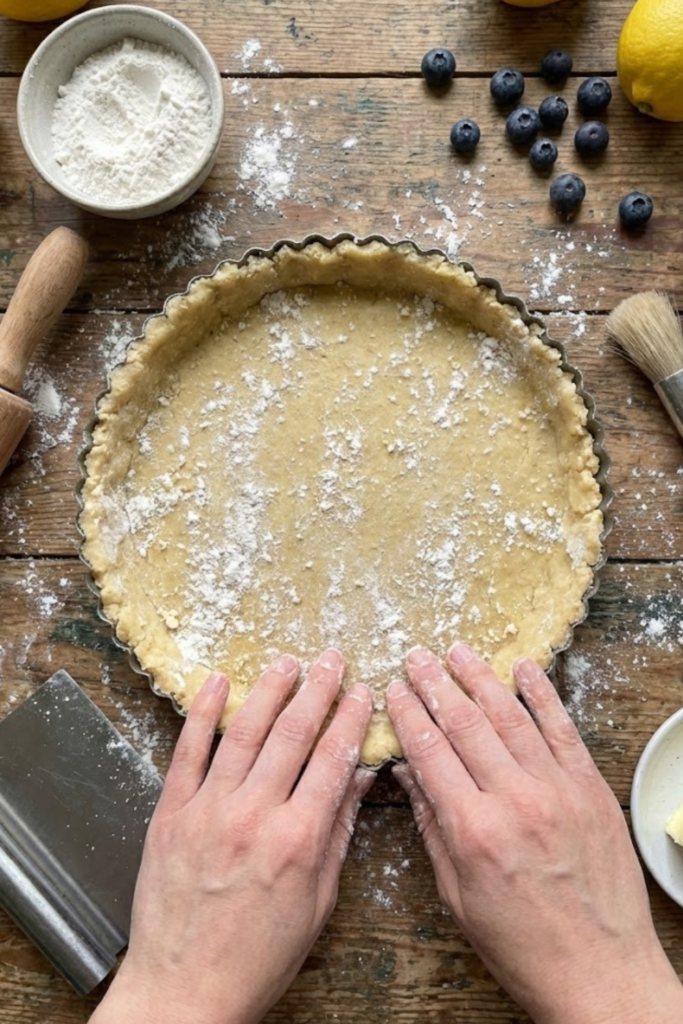
Here is a tip that saved my sanity: put the rolling pin away. This sweet pastry dough is pretty fragile, and trying to transfer a rolled sheet of it into a tart pan with removable bottom is a nightmare waiting to happen. It always cracks on me! Instead, I just crumble the dough directly into the pan.
I use the bottom of a measuring cup to press the crumbs down evenly. It’s actually kinda therapeutic. Start from the center and work your way out and up the sides. If you have a spot that looks thin, just patch it with more dough. No one will ever know, and it tastes exactly the same.
The Chill Factor
I used to rush this step because I’m impatient, but you really have to freeze the crust before it goes in the oven. I’m talking about putting the whole pan in the freezer for 15 to 20 minutes. If you skip this, the butter melts too fast in the heat, and the sides of your tart will slump down like a sad mudslide.
Blind Baking Without the Fuss
To get that crisp texture, you have to do blind baking crust. That just means baking it empty first. I scrunch up a piece of parchment paper (scrunching makes it fit the corners better!), toss it in, and fill it to the brim with pie weights for baking. If you don’t have weights, dried beans or rice work just fine. I’ve been using the same jar of “baking beans” for five years now.
Bake it until the edges are just starting to turn golden. Don’t be afraid of a little color! A pale crust often means a soggy bottom later, and nobody wants that. Once you nail this buttery crust recipe, you are halfway to dessert heaven.
Creating the Zesty Lemon Filling
You haven’t really lived the home baker life until you’ve accidentally made sweet lemon scrambled eggs. That was me, standing in my kitchen a few years back, staring at a bowl of lumpy yellow glop that was supposed to be a silky lemon curd filling. I was trying to rush the process, cranking up the heat because I wanted to get the tart done before guests arrived. Big mistake. The eggs cooked instantly upon hitting the hot pot, and I ended up straining out half the volume just to save face. It was tragic, honestly.
But through that disaster, I learned that patience is literally the only ingredient that matters here. Well, that and actual lemons.
Put the Plastic Bottle Down
Here is a hill I am willing to die on: do not use bottled lemon juice for this. I know, I know. Squeezing a dozen lemons is a pain in the neck, and your hands might sting if you have any paper cuts (learned that the hard way!). But the bottled stuff has this weird, metallic aftertaste that just ruins zesty lemon desserts. It’s too flat.
For this tart, you want that bright, acidic punch that hits you right in the jaw. Fresh juice brings the floral notes that balance out the sugar. If you try to swap it out, you’ll lose that vibrancy. Plus, you need the lemon zest anyway to get those essential oils into the sugar. I like to rub the zest into the sugar with my fingers before I even start cooking. It turns the sugar yellow and makes the whole kitchen smell like a citrus grove.
The Scary Part: Tempering Eggs
This is where I used to mess up constantly. You have your hot lemon-sugar mixture, and you have your cold eggs. If you just dump them together, the heat shocks the eggs, and boom—breakfast food. You have to temper them.
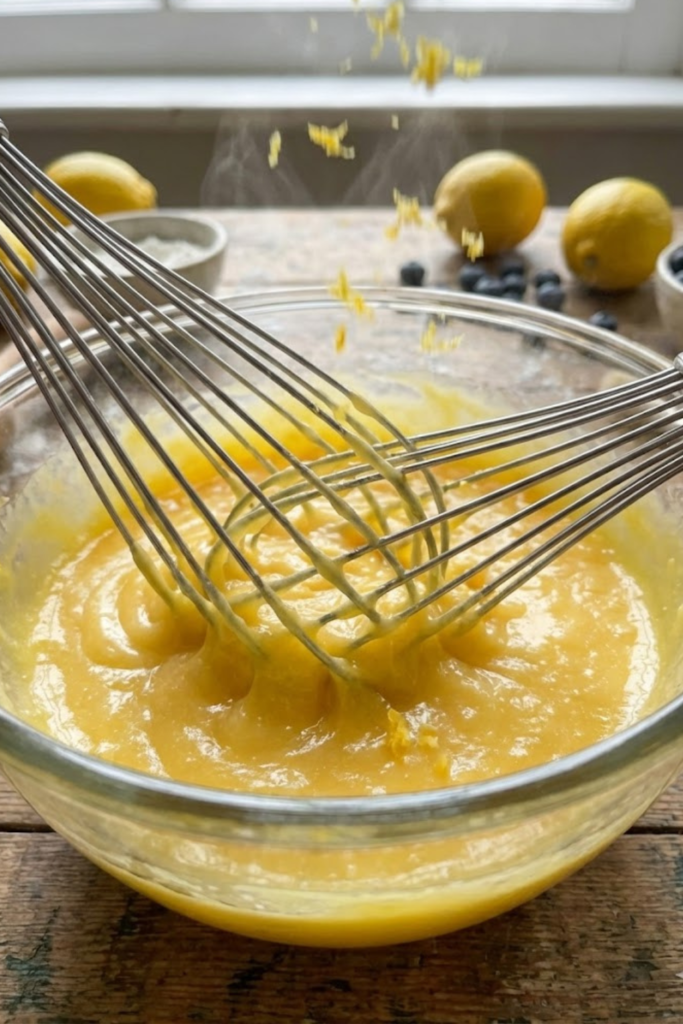
I usually whisk the eggs in a separate bowl and then slowly—I mean, ridiculously slowly—drizzle in about half of the hot liquid while whisking the eggs like my life depends on it. It’s an arm workout, for sure. By doing this, you gently bring the temperature of the egg yolk custard up without cooking the proteins too fast. Once the egg mixture is warm to the touch, you can pour it back into the pot. I held my breath the first time I did this successfully. It felt like defusing a bomb.
Straining is Non-Negotiable
Even if you are careful, you might get a few tiny bits of cooked egg white. It happens to the best of us. That is why I always pass the creamy lemon filling through a fine-mesh sieve before pouring it into the crust.
It catches the zest (which has done its job by now) and any little lumps. You want the final texture to be smooth like glass. I remember skipping this once because I didn’t want to wash another dish. The texture was gritty, and I regretted it immediately. Just wash the sieve. It takes two minutes, and it guarantees that professional, velvety mouthfeel we are all chasing.
Knowing When It’s Done
The trickiest part is knowing when to pull it off the heat. If you undercook it, the tart won’t set, and it’ll ooze everywhere when you slice it. If you overcook it, it can separate.
I look for the mixture to coat the back of a spoon. If I can run my finger through the coating and the line stays clean without dripping, it’s ready. It usually happens right when the first bubble pops on the surface. Don’t walk away to check your phone! It goes from liquid to thick very fast. Keep stirring, keep watching, and trust your gut.
Preparing the Blueberries
I still have nightmares about the “Purple Puddle Incident” of 2018. I had this beautiful lemon tart ready to go, and I decided to dump a bag of frozen blueberries right on top five minutes before serving. I thought I was being smart and saving time. By the time I brought it to the table, the berries had thawed and bled this dark, watery juice all over my perfect yellow custard. It looked like a crime scene, not a dessert. I was so embarrassed I wanted to hide under the table. That’s when I learned that baking with fresh fruit isn’t just a suggestion; it’s a requirement for this recipe.
Why Fresh beats Frozen
I usually love frozen fruit for smoothies or muffins, but for a fresh tart, they are a disaster. Frozen berries release way too much water as they thaw. This liquid seeps into your lemon curd filling and makes the top layer soup. It totally ruins that creamy texture you worked so hard for.
When you use fresh berries, they hold their shape and stay firm. They provide that nice “pop” when you bite into them, which contrasts so well with the soft filling. Plus, they don’t bleed color everywhere unless you smash them. If you are looking for fresh blueberry recipes that impress people, you have to commit to the fresh stuff here. It is a non-negotiable for me now.
The Water Trap
Here is a mistake I made more than once: washing the berries and throwing them straight onto the tart. Even a little bit of water on the skins can pool up and make the surface of your tart look messy.
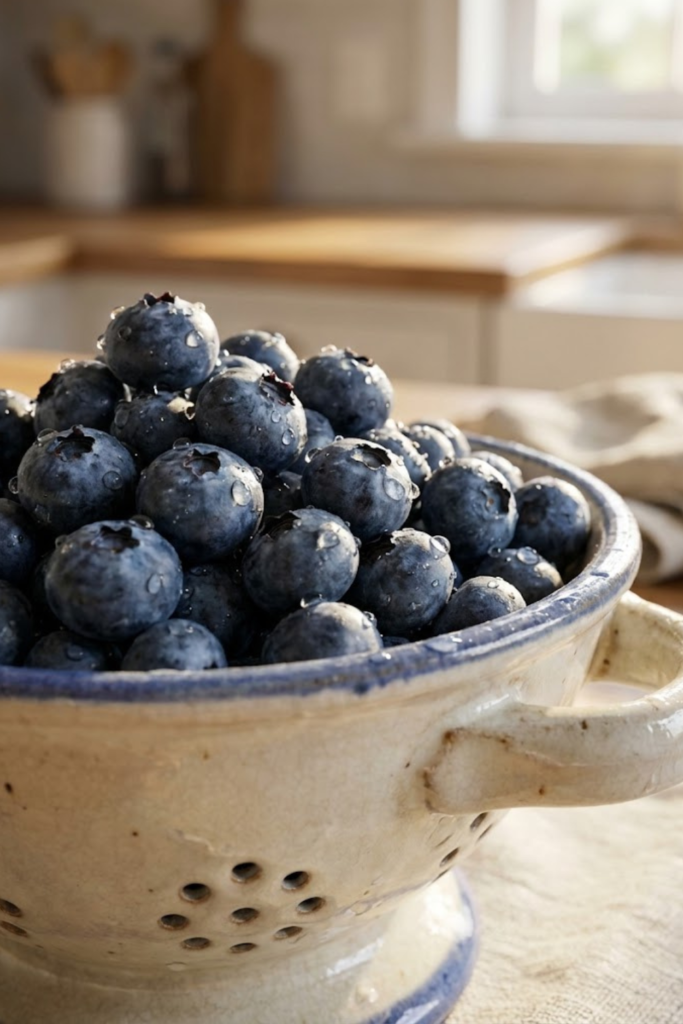
Now, I wash my berries in a colander and then dump them onto a layer of paper towels. I gently roll them around to get every single drop of water off. I’m pretty careful about this. If I’m feeling extra paranoid, I’ll even let them air dry on the counter for twenty minutes while I clean up the kitchen. You want them bone dry. It seems like a small thing, but moisture is the enemy of a crisp tart.
Picking the Right Berries
Not all blueberries are created equal. I used to just grab the cheapest container at the store, but I’ve learned to be picky. You want berries that are firm and plump. If they look shriveled or have soft spots, they are going to taste mushy.
I honestly prefer organic blueberries if they are on sale because they tend to be smaller and sweeter. The giant ones can sometimes be a little mealy inside. I usually taste a handful before I start decorating. If they are super sour, I might toss them in a tiny bit of sugar first. But usually, the tartness of the berry cuts through the sweet lemon perfectly.
The Art of Placement
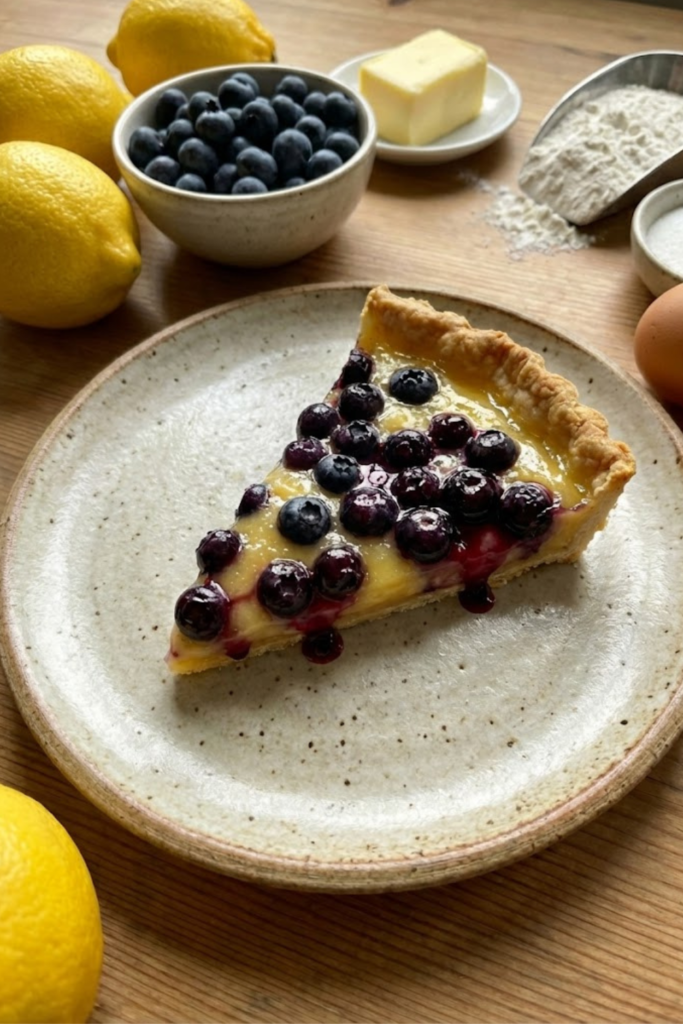
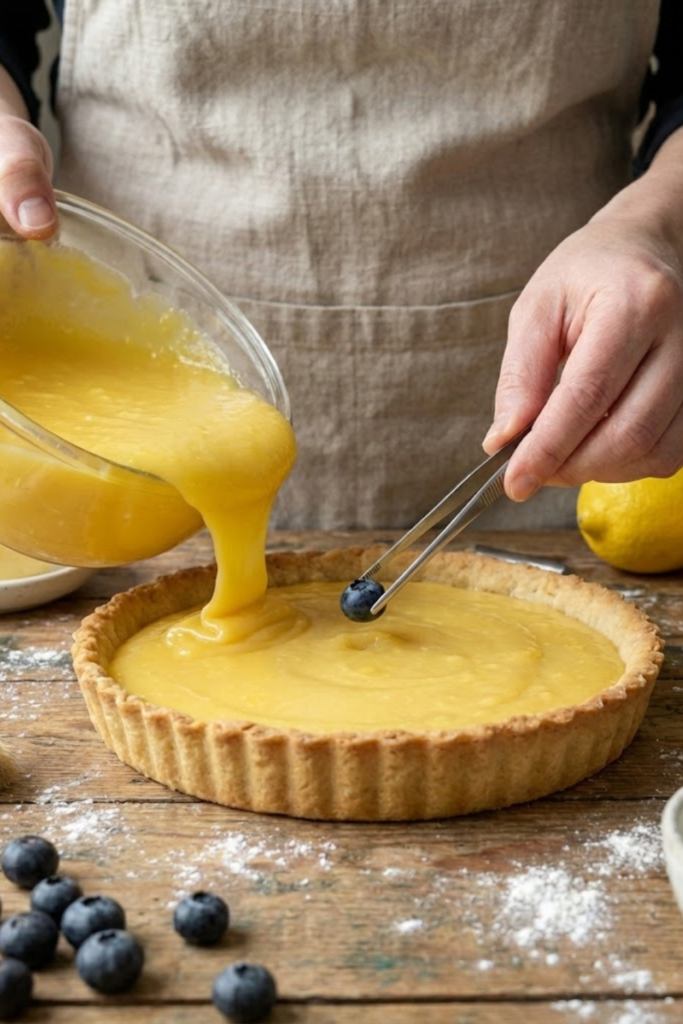
You can just dump them on there if you want a rustic look. I do that when I’m just making this for my family on a Tuesday. But if I’m feeling fancy, I start from the outside edge and place them in concentric circles.
It takes forever, and my hand usually cramps up halfway through. But the result looks like something from a bakery window. It is one of those blueberry dessert ideas that looks way harder than it actually is. Just put on a podcast and zone out while you do it. It’s actually kind of relaxing once you get into the rhythm.
Assembly and Baking Tips
I have a vivid memory of holding my breath for ten straight minutes while assembling my first tart. I was so terrified of spilling the filling that I looked like I was defusing a bomb. My hands were shaking, and I ended up splashing hot lemon mix onto the counter anyway. It was a sticky mess. But honestly, putting this lemon blueberry tart recipe together is the moment where you either win big or go home with a sad, soggy dessert. I’ve learned that confidence (and a steady hand) is key here.
Avoiding the Dreaded Soggy Bottom
If you watch any baking shows, you know the term “soggy bottom” is basically a curse word. There is nothing worse than cutting into a beautiful tart only to find raw, wet dough underneath. It’s gross. To avoid this, you absolutely have to master blind baking crust.
I used to skip this step because I thought it was unnecessary extra work. I was wrong. You need to bake the shell fully before the wet filling ever touches it. I line my chilled dough with parchment paper and fill it to the brim with pie weights for baking. If you don’t weigh it down, the bottom puffs up like a balloon and your sides shrink. I bake it until it’s a deep golden brown. If you think it’s done, give it another two minutes. A crunchy shell is the only thing standing between you and a structural collapse.
The Careful Pour
Once your shell is baked and cooled slightly, it’s time to fill. I always keep my tart pan with removable bottom on a baking sheet during this step. I made the mistake once of trying to move the filled tart by holding the bottom of the pan. The rim dropped, and my hot tart almost slid onto the floor. I caught it, but I nearly had a heart attack.
Pour the warm filling in slowly. You want it to come right up to the edge of the crust without spilling over. If it spills between the crust and the pan, the sugar will caramelize and glue the tart to the metal. Good luck getting it out after that! I usually fill it while the tray is already sitting on the oven rack so I don’t have to move it. It’s a game-changer for clumsy people like me.
The Wobble Test
Since we already cooked the curd on the stove, we are mostly just baking it to set the eggs firmly so it slices cleanly. This is where people freak out and overbake it. You do not want cracks on top!
I keep a close eye on the oven door, hovering like a nervous helicopter parent. You are looking for a slight wobble in the center. If you nudge the pan, the edges should be set, but the middle should jiggle like Jell-O. It usually takes about 10 to 15 minutes. It will firm up as it cools, I promise. If it’s solid in the oven, it’ll be rubbery on the plate. Trust the wobble. It’s one of the best summer baking ideas because it doesn’t require hours in a hot oven, keeping your kitchen somewhat cool.
Serving and Storage Suggestions
I am the most impatient person I know. Seriously, I have burned the roof of my mouth on pizza more times than I can count. So, when I made my first successful lemon tart, the hardest part wasn’t the baking—it was the waiting. I once tried to slice into one that had only been in the fridge for an hour. The lemon curd filling bulged out the sides like it was trying to escape, and the slice collapsed on the plate. It tasted good, but it looked like a train wreck. I learned that you have to let this thing chill.
The Waiting Game
You need to let this tart hang out in the fridge for at least four hours. Overnight is even better if you have that kind of self-control (I usually don’t). This makes it one of those perfect make ahead desserts for when you have people coming over and don’t want to be stuck in the kitchen.
The cold temperature solidifies the butter in the curd, giving you that clean, sharp slice that looks professional. If you cut it too soon, you lose that beautiful definition. I usually make it the day before and just try to forget it exists until dinner time. It’s torture, but it pays off when you see that perfect cross-section.
Dress It Up
When it comes to dessert presentation, I used to think more was better. I’d pile on everything I could find. But honestly, this tart is so pretty on its own that you don’t need much. A simple dollop of whipped cream topping cuts through the tartness perfectly.
I like to beat the cream until it’s barely holding soft peaks. If you overbeat it, it gets grainy and weird. Sometimes I’ll add a tiny sprig of fresh mint garnish just for the color contrast. It makes the yellow and blue pop. Just don’t put the herbs on until right before you serve, or they get wilted and sad in the fridge.
Leftovers? Yeah Right.
On the rare occasion that there are leftovers, you need to know some tart storage tips. This isn’t a cookie; you can’t just leave it on the counter. It has eggs and dairy, so it has to stay cold.
I cover it loosely with plastic wrap or put slices in an airtight container. It’s one of my favorite refrigerator desserts to sneak a bite of at midnight. However, the clock is ticking. The crust will stay crisp for about two days max. After that, the moisture from the filling starts to seep into the pastry, and it gets a little soft. It still tastes amazing, but you lose that crunch. So, my professional advice? Eat it quickly. It’s a hard job, but someone has to do it.
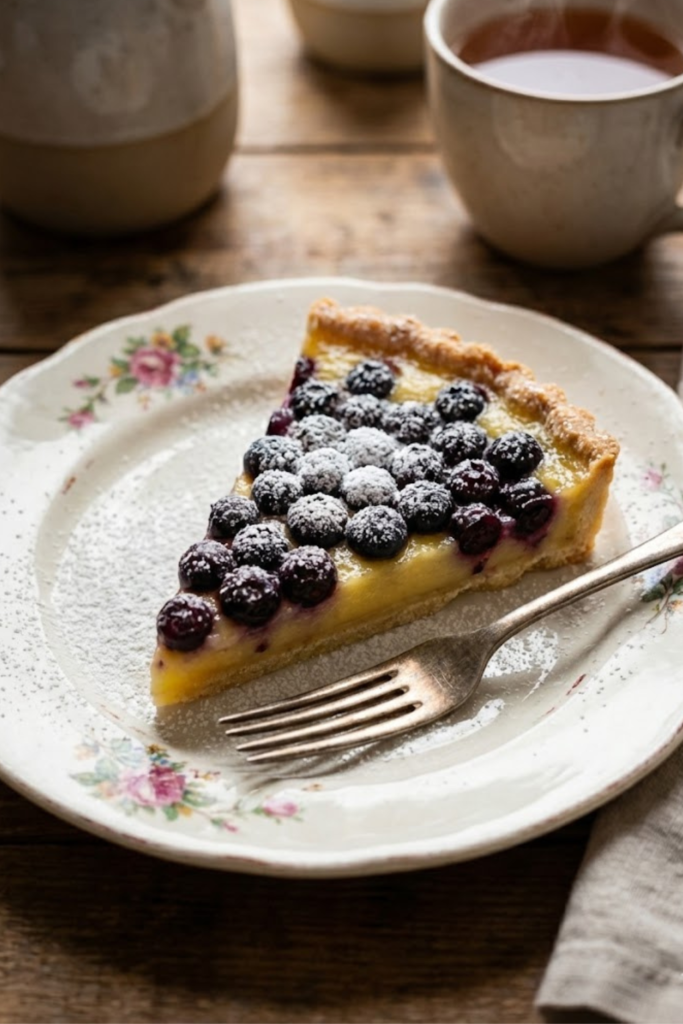
It is funny how a simple lemon blueberry tart can make you look like a trained pastry chef. I remember serving this at a dinner party last year—back when I finally stopped scorching the lemon curd filling—and the whole table went silent after the first bite. That is when you know it is good.
You don’t need to be an expert to pull this off. You just need to respect the temperature of your butter and have a little patience with the chilling times. My biggest advice? Don’t stress if it isn’t perfect. My favorite tart I ever made had a cracked edge because I dropped the pan on the counter, but it still tasted like a slice of heaven. This classic lemon tart is about flavor, not perfection. Whether you are making it for a fancy holiday meal or just because it’s Tuesday and you need a treat, it delivers every time.
Call to Action: Did this recipe make your mouth water? Snap a picture of your creation (I want to see those berries!) and save this pin to your “Best Summer Dessert Recipes” board on Pinterest so you can find it whenever you need a showstopper!.