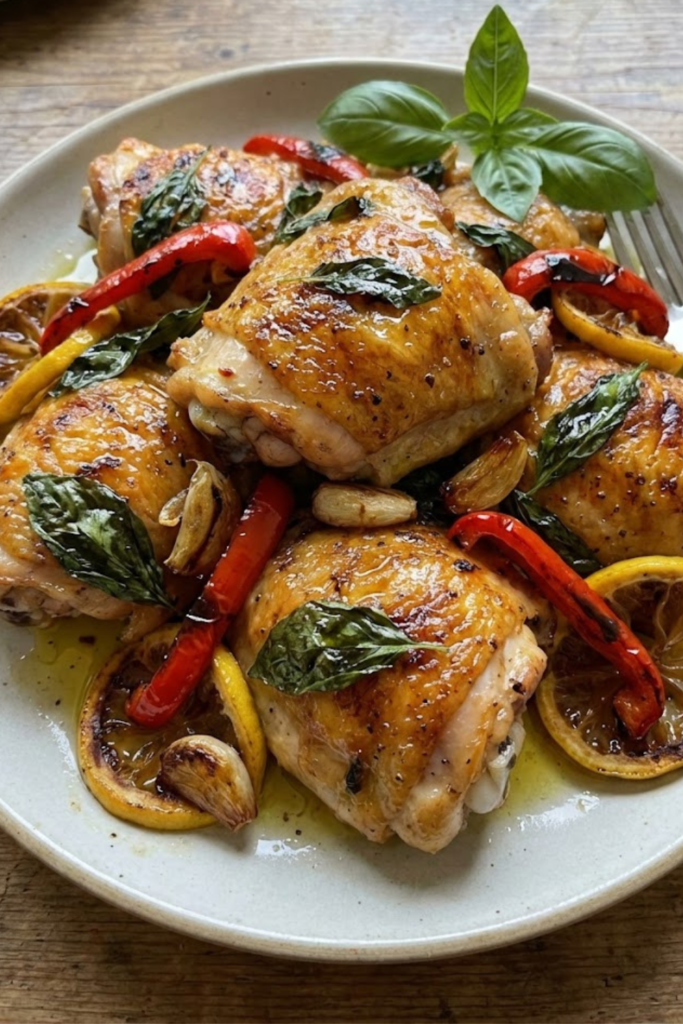
Have you ever stared at a package of chicken thighs at 5 PM, completely devoid of inspiration? I’ve been there—standing in the grocery aisle, desperate for something that doesn’t taste like cardboard! That’s exactly how I stumbled upon the magic of Lemon Basil Chicken with Roasted Red Peppers. “Did you know that combining Vitamin C-rich peppers with iron-rich chicken actually boosts nutrient absorption?” It’s true! But more importantly, it tastes incredible. This dish isn’t just a meal; it’s a vibrant escape from the mundane weeknight rotation. We are going to dive deep into how the zest of lemon cuts through the savory chicken fat, creating a balance that will have your family asking for seconds.
Selecting the Best Chicken Cuts for Flavor
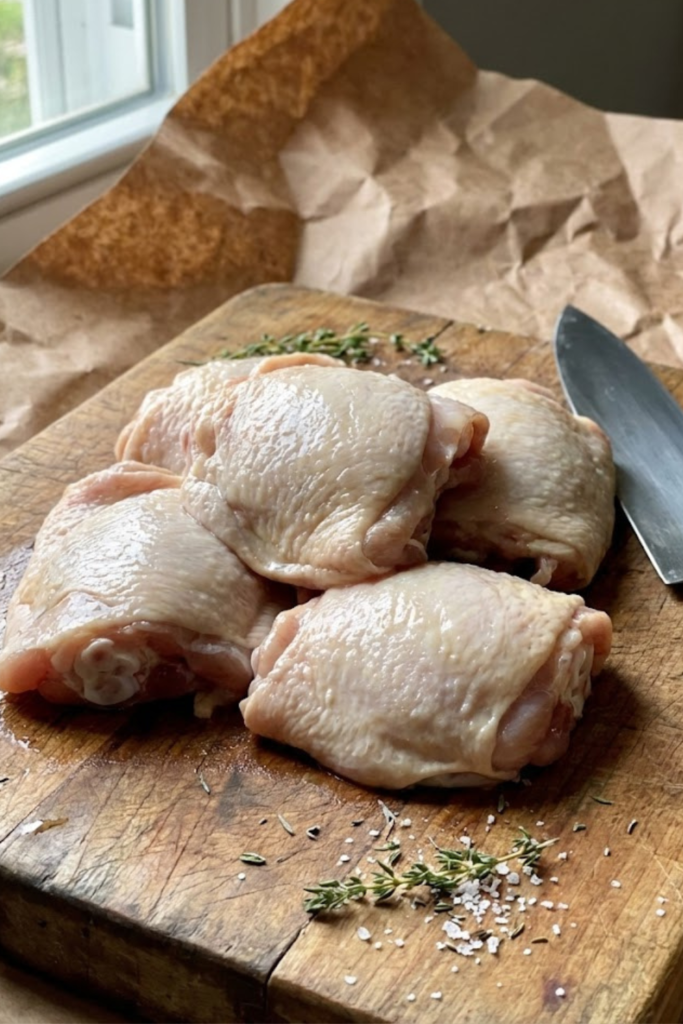
I have stood in front of that meat case at the grocery store for way too long, just staring. There are so many options, right? You got breasts, thighs, wings, whole birds. For this Lemon Basil Chicken, I strongly suggest you grab the chicken thighs.
Here is the thing: chicken breasts are okay, but they dry out so fast. You turn your back for one minute to yell at the kids to wash their hands, and boom—your dinner is dry. Thighs are dark meat. They have a bit more fat, which means they stay juicy even if you accidentally leave them in the pan a minute too long. It is a lot more forgiving for us home cooks.
Now, folks always ask me: Bone-in or Boneless?
- Bone-in: This is my favorite. The bone actually helps keep the meat moist and adds flavor while it cooks. Plus, they are usually cheaper per pound!
- Boneless: These are faster. If you are in a huge rush on a Tuesday, go for it. But you lose a little flavor.
Also, please keep the skin on. When you sear that skin in the pan, it gets golden and crispy. It also acts like a little jacket for the meat, keeping the juices inside where they belong. Nobody likes rubbery, pale chicken.
One last tip—try to look for “air-chilled” chicken if your store has it. A butcher told me once that regular chicken is cooled in water, so it soaks up that water like a sponge. Air-chilled is just meat, so it browns better and tastes more like… well, chicken. It costs a tiny bit more, but I think it makes a huge difference in how the final dish turns out.
Mastering Roasted Red Peppers at Home
I used to grab those expensive jars of roasted peppers off the shelf because I thought making them myself was too hard. Honest truth? The jarred ones are kind of slimy. They sit in that brine for who knows how long and lose their crunch. When you roast them fresh, they are sweet and smoky, and the difference is huge.
Fresh vs. Jarred
If you have five extra minutes, buy fresh red bell peppers. The flavor is just so much brighter. It makes the lemon in this dish really pop. The jarred ones are okay in a pinch, but they often taste a bit like vinegar, which throws off the taste of our marinade.
How to Roast Them
You don’t need fancy equipment to do this. I have done this in tiny apartments and big kitchens alike.
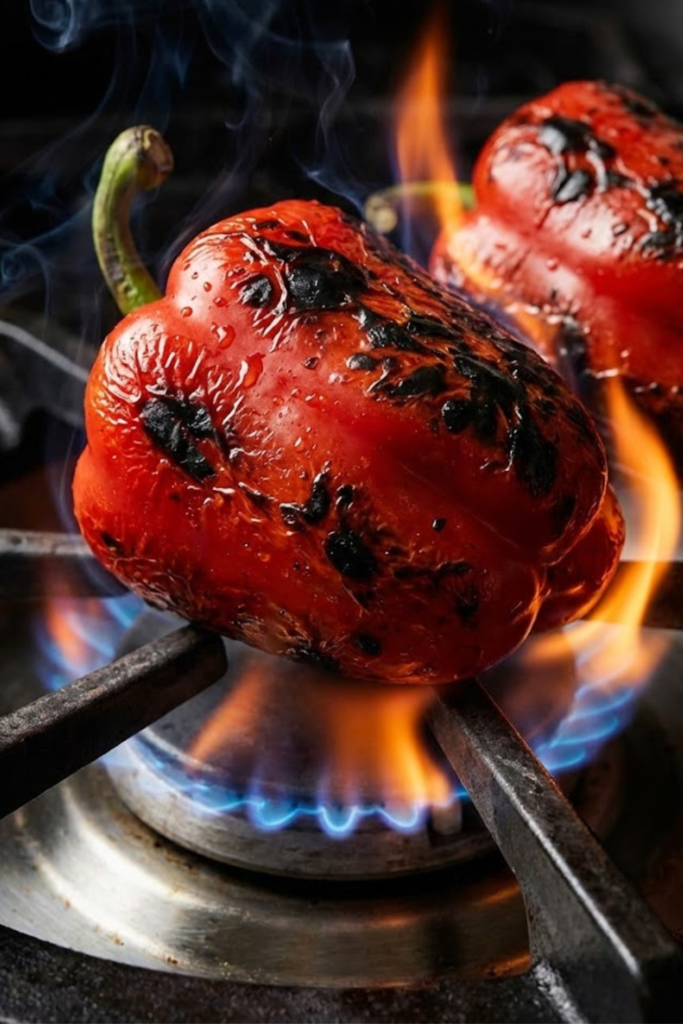
- Gas Stove: If you have a gas stove, you can put the whole pepper right on the metal grate over the flame. Turn it with tongs every minute or so until it looks black and charred all over. It looks scary, like you totally burned dinner, but keep going!
- Oven: No gas stove? No problem. Cut the peppers in half, take out the seeds, and put them skin-side up on a baking sheet. Put your oven on “Broil” (high heat) and let them cook until the skins bubble and turn black.
The “Steam Bowl” Trick
This is the part that saves you from picking at tiny pieces of skin for an hour. Once the peppers are charred, immediately throw them in a bowl and cover it tight with plastic wrap or a heavy plate. Let them sit for about 10 minutes.
The steam gets trapped inside and separates the skin from the meat. After that, you just rub the skin off with your fingers or a paper towel. It slips right off. Important: Don’t rinse them under the sink! If you wash them, you wash away all that nice smoky flavor we just worked for.
Flavor Profile
The natural sugar in the peppers caramelizes when you roast them. That sweetness balances out the sour lemon perfectly. It keeps the dish from being too sharp.
The Secret Lemon Basil Marinade
Look, I’ll be honest with you—I used to think a marinade was just tossing whatever liquid I had in the fridge into a bag and hoping for the best. Big mistake. I remember one time I left chicken in straight lemon juice for two days thinking it would make it “extra tender.” Spoiler alert: I basically cooked the meat in acid and it had the texture of a rubber boot. It was gross.
Through a lot of trial and error (and some very polite grimaces from my husband), I learned that a great marinade is all about balance. You need the acid from the lemon to break down fibers, but you need fat, like good olive oil, to protect the meat.
Here is the deal with the basil:
Please, I am begging you, put down the dried basil shaker. It has its place, but not here. You need fresh basil leaves. When you tear them or bruise them slightly before adding them to the mix, they release these incredible natural oils that dried herbs just can’t compete with. It’s a game-changer for the taste of the dish.
- Don’t overdo the time: You might think “longer is better,” but with lemon, that’s a trap. Aim for 30 minutes to 2 hours. If you go overnight, the lemon will start to turn the chicken mushy.
- Smash the garlic: Don’t just chop it. Smash the garlic cloves with the flat of your knife to really get those juices flowing into the oil. This gives you a deep, savory smell that fills the whole house.
- Taste your marinade: Before you put the raw chicken in (obviously), dip your finger in. Does it taste good? If it’s too sour, add a pinch of honey or more oil.
It’s frustrating when you buy expensive ingredients and the dish falls flat, right? This mix makes certain that the Lemon Basil Chicken carries that zesty kick all the way to the bone. It is not just coating the outside; it is soaking into the meat. Trust me, once you get this ratio right, you will never buy a bottle of pre-made marinade again. It’s easier, cheaper, and honestly, it just tastes like you really know your way around a kitchen!

Serving Suggestions and Pairings
You’ve done the hard part, and now your kitchen smells like a dream. But don’t just dump the chicken on a plate and call it a day! How you serve this makes a huge difference in how much your family enjoys it.
Choosing Your Carbs
You really want something on the plate that can soak up that liquid gold—the pan sauce.
- Rice or Quinoa: A simple fluffy white rice is my go-to. It acts like a sponge for the lemon and garlic juices.
- Crusty Bread: Sometimes I just buy a loaf of sourdough, toast it with a bit of butter, and use it to mop up the plate. It’s honestly the best part of the meal.
- Pasta: Tossing some angel hair pasta in the leftover sauce is a total pro move.
Side Vegetables
Since the chicken is savory and a bit heavy, I like to balance it with something green and crisp. Roasted asparagus or a quick broccoli stir-fry works great. If you want to keep it light, a simple green salad with a basic vinaigrette is perfect. The crunch of the lettuce really helps cut through the richness of the chicken skin.
The Perfect Drink
If you like a glass of wine with dinner, go for something “bright.” A Sauvignon Blanc or a Pinot Grigio is great because they have their own citrus notes that match the lemon in the chicken. If you don’t do wine, a sparkling water with a squeeze of lime is just as refreshing.
Plating Like a Pro
When you put the chicken on the plate, make sure to spoon those roasted red peppers right on top so they are visible. Garnish with a few whole basil leaves. It takes two seconds, but it makes the meal look like it came from a fancy restaurant instead of your own stove.
I’ve found that when I take that extra minute to make the plate look nice, everyone seems to enjoy the food more. It’s funny how that works, isn’t it? Just seeing the bright red peppers against the green basil makes you want to dive right in.
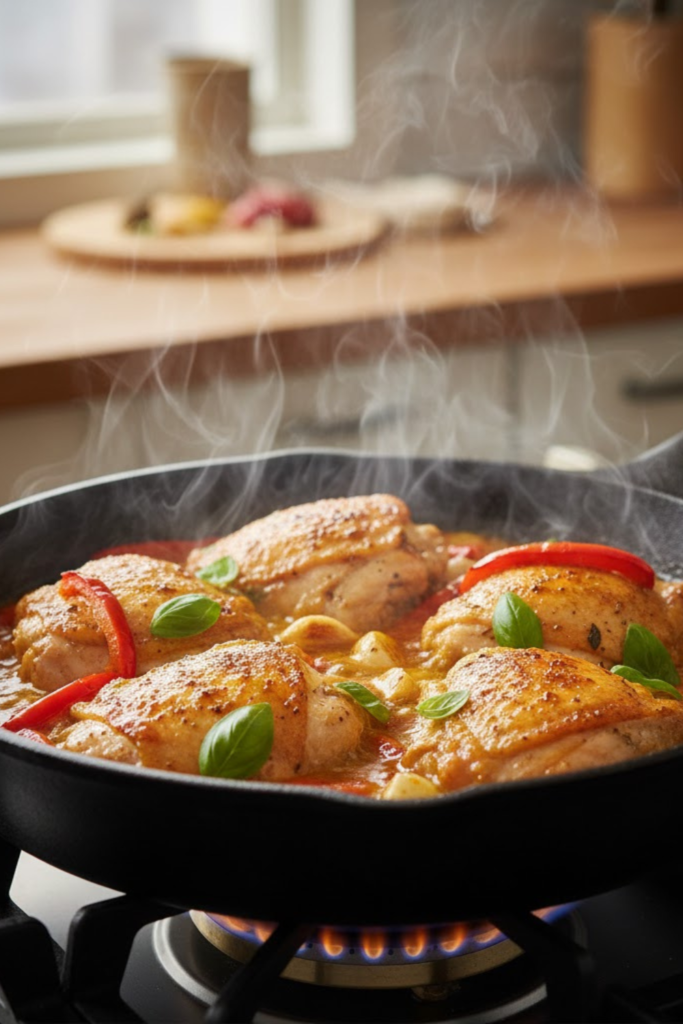
There you have it—a foolproof path to the most delicious Lemon Basil Chicken with Roasted Red Peppers you’ll make in 2026. This dish is a lifesaver for busy nights but fancy enough for company! Don’t let the simplicity fool you; the flavors are complex and satisfying.
I’ve learned the hard way that you don’t need a culinary degree to make food that people actually want to eat. You just need some fresh herbs, a good sear on your meat, and a bit of patience while those peppers steam. I’d love to see your version of this dish! If you run into any trouble with the marinade or the roasting, just leave a comment and I’ll try to help you out.
If you enjoyed this recipe and want to keep it handy for your next grocery trip, please save it and share it on Pinterest so you can find it whenever the craving strikes!