Look, I’ve been teaching folks how to cook for a long time, and if there is one thing I know, it’s that most people are accidentally making “chicken jerky.” Did you know that roughly 65% of home cooks admit to overcooking poultry just because they’re scared of undercooking it? That is a lot of dry sandwiches, friends! I used to be the same way, standing over the oven like a nervous wreck until the meat was as tough as a boot.
But honestly, making a juicy baked chicken breast with garlic herb seasoning recipe isn’t rocket science. It’s about the vibe and a few simple tricks I’ve picked up over the years. We are going to use fresh garlic, some earthy herbs, and a bit of kitchen magic to make sure your dinner is the star of the show. Let’s get into why your bird has been coming out dry and how we’re going to fix that right now!
Why Your Chicken Always Ends Up Dry (and How to Fix It)
I have been a teacher for over fifteen years, and if there is one thing I have learned, it is that most people are accidentally making “chicken jerky” for dinner. It is honestly heartbreaking! You go to the store, buy these nice pieces of meat, and then they come out of the oven tasting like a piece of dry wood. I used to be the exact same way. I once served a juicy baked chicken breast with garlic herb seasoning recipe to my in-laws that was so tough, my father-in-law had to hide a piece in his napkin! I felt so bad. But through a lot of trial and error in my own kitchen, I figured out exactly why it happens and how you can stop the cycle of dry dinners.
The Trouble with Uneven Shapes
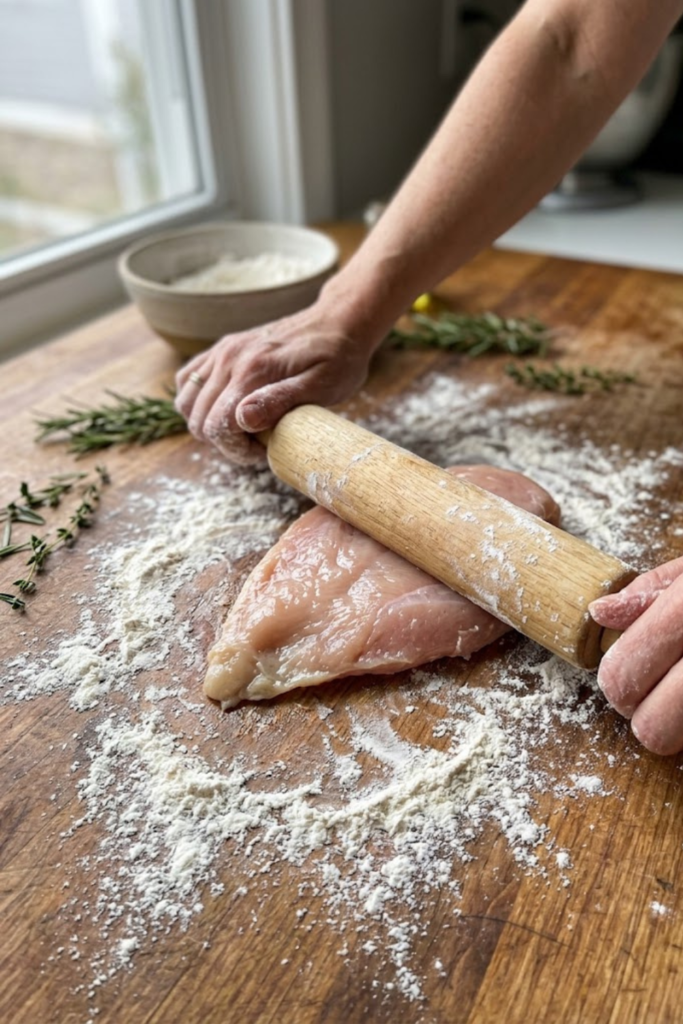
The biggest reason your chicken is dry is because of how it’s shaped. Think about it—a chicken breast is usually very fat on one side and then it gets real thin at the tail. If you just toss it in the oven like that, the thin part is going to be overcooked long before the thick part is even safe to eat. This is why you get those bites that are okay and then bites that feel like you’re chewing on a rubber band.
To fix this, I started using a heavy rolling pin. I just place the chicken under some plastic wrap and give the thick part a few good whacks. You want the whole piece to be about the same thickness all the way across. It’s a great way to get out some stress after a long day at school, and it makes the meat cook so much more evenly. If the meat is even, every single bite stays moist.
Stop the Fridge-to-Oven Shock
Another mistake I see all the time is taking the meat straight from the fridge and putting it right into a hot oven. It’s like jumping into a freezing cold lake—it shocks the meat! When the chicken is ice cold, the outside has to cook for a lot longer just to get the middle warm. By the time the middle is done, the outside is totally dried out.
Now, I always let my chicken sit on the kitchen counter for about 20 minutes before I even think about seasoning it. It lets the meat relax and get closer to room temperature. This small change helps the juicy baked chicken breast with garlic herb seasoning recipe stay tender because the heat can move through the meat much faster. It don’t take much effort, but the results are night and day.
Trusting Your Tools Over Your Eyes
Finally, you have to stop cutting into the chicken to see if it’s done. Every time you poke a hole in it with a knife, all the good juices run out onto the pan. I used to think I could just “tell” by looking at it, but I was wrong almost every time. Most of us are so scared of undercooked poultry that we cook it way past the point of no return.
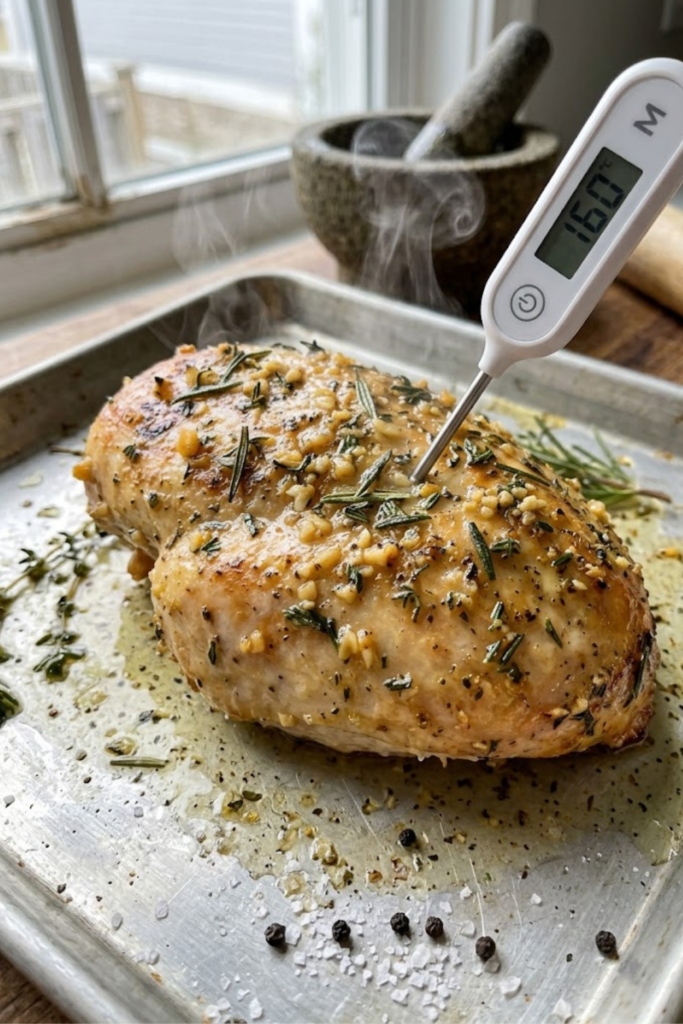
Instead, I bought a cheap digital meat thermometer. It was the best ten dollars I ever spent. I pull my chicken out as soon as it hits 160 degrees. Most people think you need 165, but the meat keeps cooking while it sits on the counter. If you wait until it’s 165 in the oven, it will be 170 by the time you eat it, and that’s when it gets dry. Trust the numbers and stop guessing!
The Secret Garlic Herb Seasoning Blend
When I first started cooking, I used to think “seasoning” just meant grabbing that one dusty plastic bottle from the back of the pantry. You know the one—it says “Poultry Seasoning” and probably expired ages ago. But once I got serious about my juicy baked chicken breast with garlic herb seasoning recipe, I realized that the magic is in the mix you make yourself. It’s like the difference between a store-bought card and one a student draws for you by hand. The extra effort just tastes better!
Why Fresh Garlic is a Must
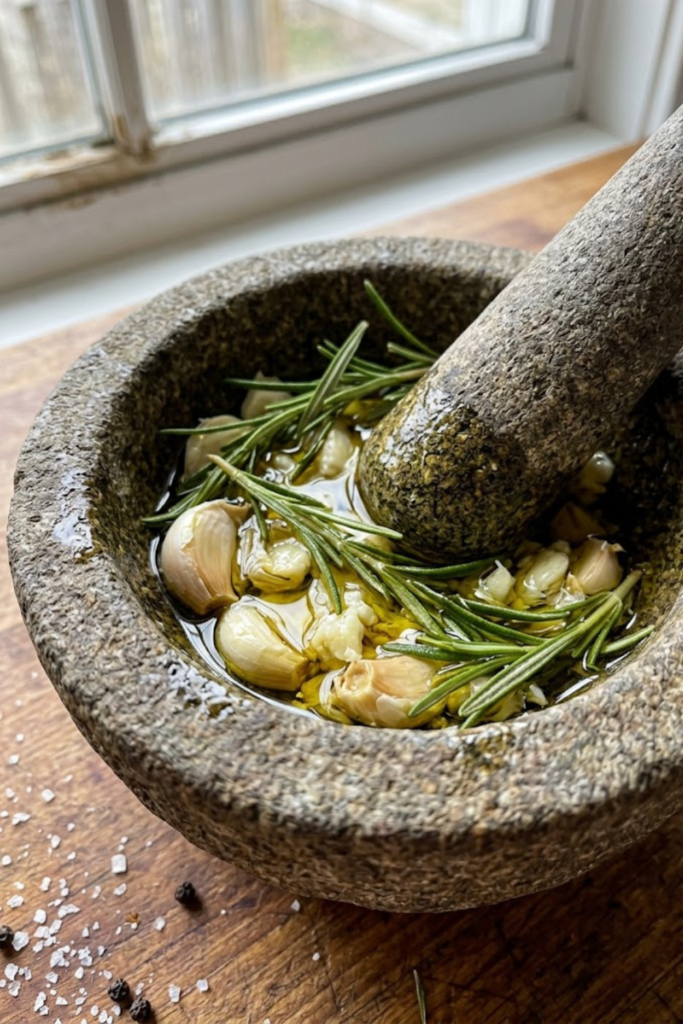
I know it’s tempting to buy that big jar of pre-minced garlic that sits in water. I used to do it too because, let’s be real, peeling garlic is a chore. But that jarred stuff tastes like vinegar compared to the real thing. For this recipe, I grab three or four big cloves and just smash them with the side of my knife. It’s sticky and your hands will smell like a kitchen for two days, but that’s the price of greatness.
The fresh garlic juices mix with the olive oil and create this incredible paste. When that hits the heat of the oven, the smell is amazing. I’ve tried using garlic powder, and while it’s okay in a pinch, it just doesn’t give you that punchy flavor that makes people ask for the recipe.
The “Green” Stuff: Mixing Your Herbs
Now, let’s talk about the herbs. I used to have a little herb garden on my windowsill, but I accidentally killed everything except the rosemary. Turns out, rosemary is tough! I like to use a mix of fresh rosemary and dried oregano. The fresh stuff gives it a bright, earthy smell, while the dried stuff has a deeper flavor that really sticks to the meat.
I also add a little bit of thyme. If you don’t have fresh thyme, the dried version is totally fine. Just rub it between your palms before you sprinkle it in. This “wakes up” the oils in the dried leaves. It’s a little trick I tell my students all the time—sometimes things just need a little nudge to show their best side.
The Secret Ingredient for Color
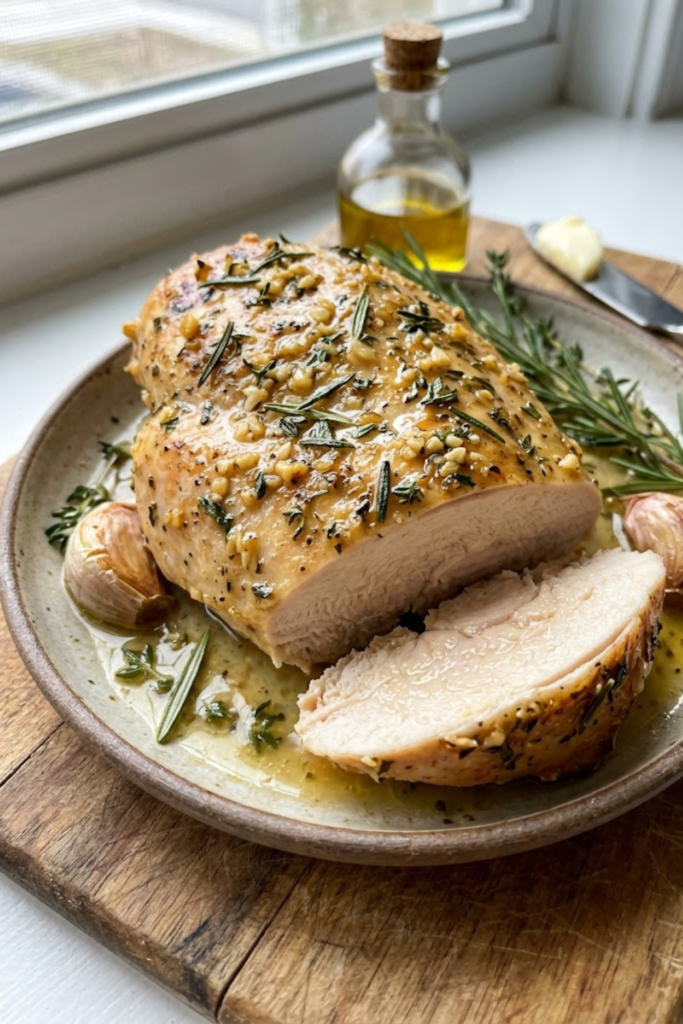
If your chicken comes out looking pale and sad, nobody is going to be excited to eat it. I always add a teaspoon of smoked paprika to my juicy baked chicken breast with garlic herb seasoning recipe. It doesn’t make it spicy, I promise. It just gives the chicken a beautiful golden-red glow and a tiny hint of smoky flavor.
Mix all these herbs and garlic with a good amount of olive oil and maybe a tablespoon of melted butter. The oil helps the heat get into the meat, and the butter makes it taste rich. I just get my hands in there and rub it all over. Don’t be shy! Every inch of that chicken needs to be covered in that green and gold goodness.
The Magic Temperature: Finding the Sweet Spot
In my classroom, I always tell my kids that having the right tools makes the work easier. The same is true for your kitchen. For the longest time, I tried to eyeball my chicken. I would cut it open, see a tiny bit of pink, and panic. Then I’d put it back in for another ten minutes. By the time I sat down to eat, I needed a gallon of water just to swallow a single bite. If you want to master this juicy baked chicken breast with garlic herb seasoning recipe, you have to stop guessing and start measuring.
Forget the “Poke Test”
I see a lot of people online saying you should just poke the meat and see if the juices are clear. Please, don’t do that. Every time you stab the meat, you are making a little exit ramp for all the moisture to escape. I used to be a chronic “poker,” and all it did was leave me with a dry dinner and a messy pan.
The only way to be 100% sure is with a digital meat thermometer. You can get a decent one for less than fifteen bucks. It’s the secret weapon for any home cook. I just slide the needle into the thickest part of the breast. When the number on the screen is right, I know I’m going to have a great meal. It takes all the stress out of the process.
Why 165 is Actually Too Late
Here is something that really blew my mind when I first learned it: carry-over cooking. The “official” safety rule is that chicken needs to reach 165 degrees Fahrenheit. However, if you wait until the thermometer says 165 before you pull it out of the oven, you’ve already lost. The chicken is still hot, and that heat keeps cooking the meat even while it’s sitting on your counter.
I always pull my tray out when the thermometer hits 160 degrees. By the time the meat sits for a few minutes, the temperature naturally climbs up those last five degrees. This little trick is how you get that perfect, soft texture instead of something that feels like a pencil eraser. It’s a small change, but it makes a massive difference for your juicy baked chicken breast with garlic herb seasoning recipe.
Crank Up the Heat
I used to cook my chicken at 350 degrees because I thought “low and slow” was the way to go. I was wrong! For lean meat like breast, you want a hot oven. I set mine to 425 degrees. This high heat cooks the outside quickly, which helps lock in all those garlicky juices before they have a chance to evaporate. It only takes about 18 to 22 minutes depending on how big the pieces are. It’s faster, easier, and tastes way better. Just make sure you keep an eye on it so it doesn’t burn!
Resting: The Most Ignored Step for Juicy Results
I am going to be totally honest with you—I am a very hungry person. When the timer finally goes off and that smell of roasted garlic and rosemary fills up my whole kitchen, the last thing I want to do is wait. I want to grab my fork and start eating immediately! But if you want a juicy baked chicken breast with garlic herb seasoning recipe that actually lives up to its name, you have to be patient. I learned this lesson the hard way one Sunday afternoon when I was starving after a long day at school. I pulled the tray out and sliced into the meat right away. A huge puddle of liquid ran all over my cutting board, and the chicken itself ended up feeling like dry string in my mouth. It was a total waste of a good bird!
The Hardest Part of Cooking
Waiting is actually the most important part of the whole process. Think of the chicken like a sponge that has been squeezed really tight by the high heat of the oven. While it’s cooking, all those delicious juices are being pushed toward the center of the meat. If you cut it open right then, they just leak out onto the plate because they have nowhere else to go. This is how you end up with meat that tastes like cardboard even if you seasoned it perfectly.
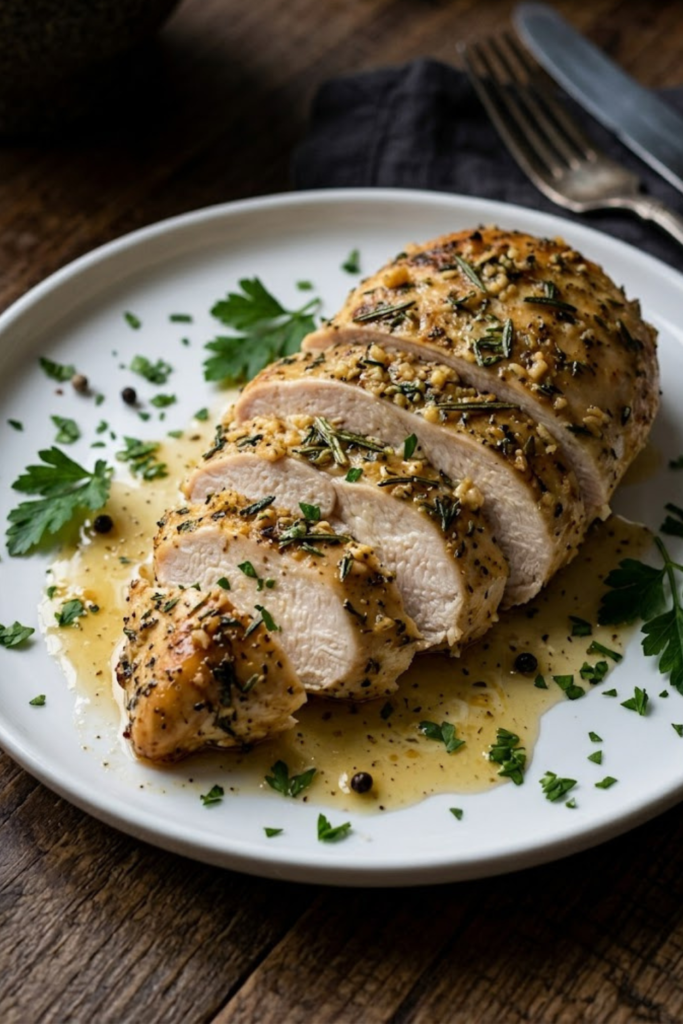
By letting the chicken sit on the counter for about five to ten minutes, you are giving those muscle fibers a chance to relax. As they cool down just a little bit, they start to soak all that moisture back up. It’s like the chicken is taking a deep breath after a long run. If you give it that time, the juice stays inside the meat where it belongs, which is what makes every bite so soft and flavorful. It’s a small change that makes a huge difference.
To Cover or Not to Cover?
A lot of people ask me if they should “tent” the chicken with aluminum foil while it rests. I used to do this all the time because I was worried the food would get cold before we sat down to eat. But I found out that if you wrap it too tight, the steam gets trapped and makes that beautiful herb crust we worked so hard on get all soggy and gross. Nobody likes mushy chicken skin or herbs!
Now, I usually just leave it sitting right on the baking sheet or move it over to a clean plate. If your kitchen is really drafty or cold, you can lay a piece of foil loosely over the top, but don’t seal the edges. You want the air to move a little bit. Most of the time, ten minutes isn’t enough to make the meat cold anyway. It actually stays quite hot inside! While you wait, the flavors in your juicy baked chicken breast with garlic herb seasoning recipe really settle in.
A Lesson in Patience
I tell my students all the time that good things come to those who wait, and that is definitely true for this meal. While you’re waiting, you can use that time to toss a quick salad or pour yourself a drink. By the time you finally take that first bite, you’ll see why those few extra minutes were worth it. The meat will be so tender you won’t even need a steak knife. Trust me, your patience will pay off and your family will think you’re a professional chef because the meat is so moist.
Time to Get Cooking!
Well, friends, we have reached the end of our little cooking lesson today. I really hope you feel a lot more confident about making this juicy baked chicken breast with garlic herb seasoning recipe. Like I always tell my students before a big test, you have all the tools you need to succeed. You just have to slow down and follow the steps. Cooking isn’t about being perfect; it’s about making something that tastes good and makes you feel happy. I used to be so scared of the oven, but now it’s my favorite place to experiment and try new things for my family.
A Quick Recap for the Road
Before you go and start preheating your oven, let’s just do a quick run-through of what we talked about today. First, don’t forget to give that chicken a little whack with your rolling pin. Getting it to an even thickness is the best way to make sure the thin parts don’t turn into cardboard while the middle is still cooking. Then, let it sit out for a bit so it isn’t freezing cold when it hits the heat. Rub those fresh garlic cloves and herbs all over—don’t be stingy with the olive oil! It acts like a little blanket that keeps the moisture inside. And please, use your thermometer! Pull it out at 160 degrees and let it rest for ten minutes. If you do those four things, you are going to be the hero of the dinner table tonight.
Don’t Be Afraid to Mess Up
I’ve had many nights where things didn’t go as planned. One time, I accidentally used way too much salt because the lid fell off the shaker! It was a disaster, but we laughed about it and ended up eating cereal for dinner. Even if your first try at this juicy baked chicken breast with garlic herb seasoning recipe isn’t 100% perfect, you are still learning. Every time you get in the kitchen, you get a little bit better at your craft. Your family will appreciate the effort, and honestly, even a “pretty good” chicken is better than a dry one. Keep practicing, keep tasting, and don’t take it too seriously. Cooking should be fun, not a chore that makes you feel stressed out.
Share Your Success!
If this guide helped you save your dinner and keep your chicken moist, I would love it if you could share it on Pinterest! It helps other home cooks find these tips and keeps me motivated to share more of my kitchen stories with you all. I love hearing about how your meals turned out, so if you try this out, let me know. Now, go grab your apron and get to work. You’ve got this, and I promise your taste buds are going to thank you for the effort. Happy cooking, and I’ll see you next time for our next tasty lesson!