I’ve spent way too many nights chewing on what felt like a literal eraser because I didn’t understand how heat works with poultry. It’s honestly a tragedy when a good piece of meat goes to waste just because the seasoning was an afterthought. You might think you’re a bad cook, but you probably just haven’t met the right bundle of rosemary yet!
I remember this one time I tried to “wing it” for a dinner party and the chicken was so tough my brother asked if I’d cooked a sneaker by mistake. We laughed, but I was low-key dying inside. Since then, I’ve made it my mission to master the perfect herb chicken so no one has to suffer through a “dry bird” ever again.
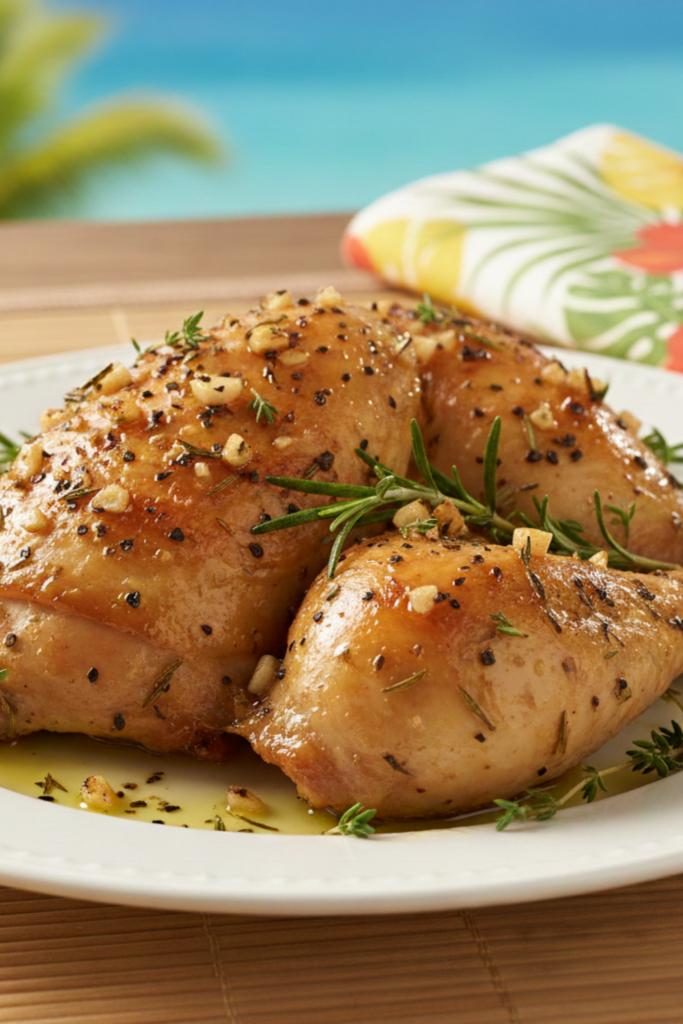
There is something so satisfying about hearing that skin crackle in the pan while the smell of thyme fills the air. It’s not just about eating; it’s about that feeling of triumph when your family actually asks for seconds before you’ve even sat down. Trust me, if a clumsy teacher like me can figure this out, you’re going to be a pro in no time.
Choosing the Right Fresh Herbs for Maximum Flavor
I’ll be the first to admit it: I used to be a total “shaker jar” cook. I thought those dusty green flakes in the pantry were the same as the real deal, but man, was I wrong! One time, I tried to make a “fancy” herb chicken for a date, and I dumped so much dried rosemary on the bird it tasted like I was eating a scented candle. It was super embarrassing and we ended up getting burgers instead.
Why Fresh is Best
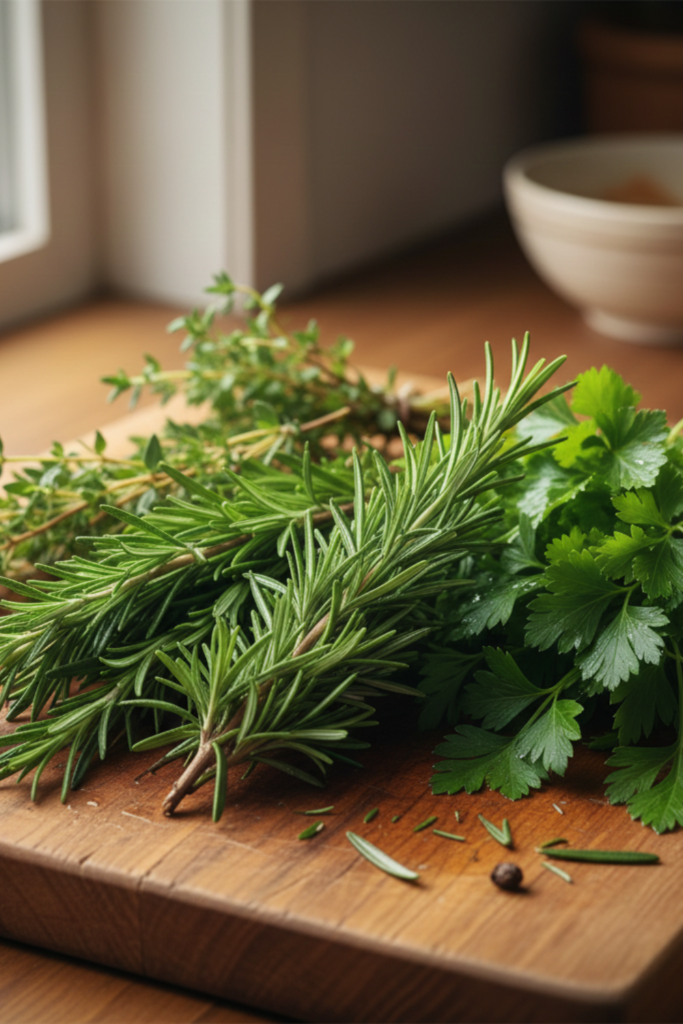
If you want that juicy, restaurant-style herb chicken, you’ve got to grab the fresh stuff from the produce aisle. Fresh herbs have these natural oils that just pop when they hit the heat. Dried herbs are okay for soups that simmer all day, but for a roast or a pan-sear, they can get woody and stuck in your teeth.
I usually go for a mix of rosemary, thyme, and parsley. Rosemary is the “loud” one in the group—it’s super aromatic but can easily take over the whole dish if you aren’t careful. Thyme is way more chill and plays nice with almost any protein.
The “Under the Skin” Trick
Here is a pro tip I learned after many failed attempts at getting flavor into the actual meat. Don’t just throw the herbs on top of the skin! The skin acts like a raincoat and keeps all that herb-y goodness from reaching the meat.
I now take a big glob of softened butter, mix it with minced garlic and my chopped herbs, and shove it right under the skin. It’s a little gross to get your hands in there, and I’ve definitely ripped the skin more than a few times when I was being too rough. But honestly, it’s the only way to ensure the herb chicken stays moist and seasoned all the way through.
Don’t Forget the “Finish”
One mistake I see a lot of folks make is only seasoning at the start. I like to keep a little bit of fresh, chopped parsley or chives to sprinkle on at the very end. It adds a hit of brightness that cuts right through the heavy savory flavors.
Just make sure you wash your herbs really well first; I once served a salad with a side of garden dirt because I was rushing. Lesson learned: grit is not a spice!
The Secret to a Perfect Herb Chicken Brine
I used to think brining was just for Thanksgiving turkeys, something way too “extra” for a Tuesday night herb chicken dinner. Boy, was I wrong! I remember this one time I invited my neighbor over for lunch and served chicken that was so dry, it practically whistled when she bit into it. It was super awkward, and I felt like a total failure as a cook.
Why Salt and Water are Your Best Friends
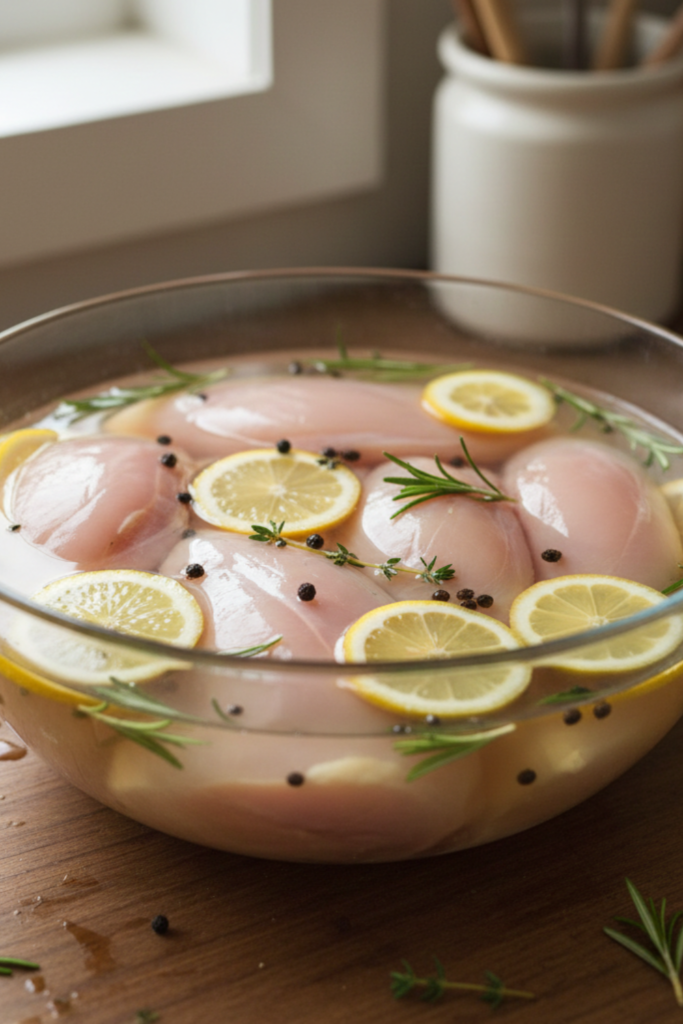
The science is actually pretty cool, though I’m no chemist. When you soak your meat in a saltwater bath, it actually changes the structure of the muscle fibers so they can hold onto more moisture. For a killer herb chicken, you don’t just want salt; you want to infuse that water with aromatics. I like to throw in smashed garlic, peppercorns, and big sprigs of thyme right into the pot.
I once made the mistake of leaving the chicken in the brine for two whole days because I got busy with work. Big mistake! The meat turned into this weird, spongy texture that was honestly kind of gross. Now, I stick to a strict 4 to 6-hour window for parts, or overnight for a whole bird.
My Go-To Brine Mix
Here is exactly what I do now to avoid that “cardboard” texture. I dissolve a half cup of kosher salt and a quarter cup of sugar in a quart of hot water. Once it’s dissolved, I add a ton of ice to cool it down—never put raw chicken in hot water unless you want a bacteria party!
Then, I toss in a handful of fresh sage and rosemary. This ensures every single bite of your herb chicken is seasoned from the inside out. It’s a total game-changer, and it makes the meat so forgiving if you accidentally leave it in the oven five minutes too long.
A Quick Word of Caution
Whatever you do, don’t use fine table salt in the same amount as kosher salt. I did that once and the chicken was so salty it was basically inedible—I think my blood pressure went up just looking at it! Always taste your brine before the chicken goes in; it should taste like the ocean, but not like a salt lick.
Pro Searing Techniques for Crispy Herb-Crusted Skin
I used to be so afraid of high heat. I thought if the pan was smoking, I was burning the house down! Because of that fear, I spent years eating herb chicken with skin that was rubbery and pale, which is honestly kind of depressing. One night, I finally got brave and let my cast iron skillet get screaming hot, and let me tell you—the sound of that first sear was like music to my ears.
The Cast Iron Secret
If you want that crunch that makes people stop talking and just chew happily, you need a heavy pan. I swear by my old cast iron skillet that I’ve probably dropped on my toe at least twice (ouch!). It holds heat better than those thin non-stick pans.
I start by patting the chicken completely dry with paper towels. If there is even a drop of moisture on that skin, it’s going to steam instead of crisp, and you’ll end up with a soggy mess. I learned that the hard way after a very “gray” dinner party back in the day.
Timing Your Herbs
Here is a mistake I see all the time: putting the fresh herbs in the pan right at the start. Fresh herbs are delicate! If they sit in a hot pan for ten minutes, they turn into bitter, black charcoal bits.
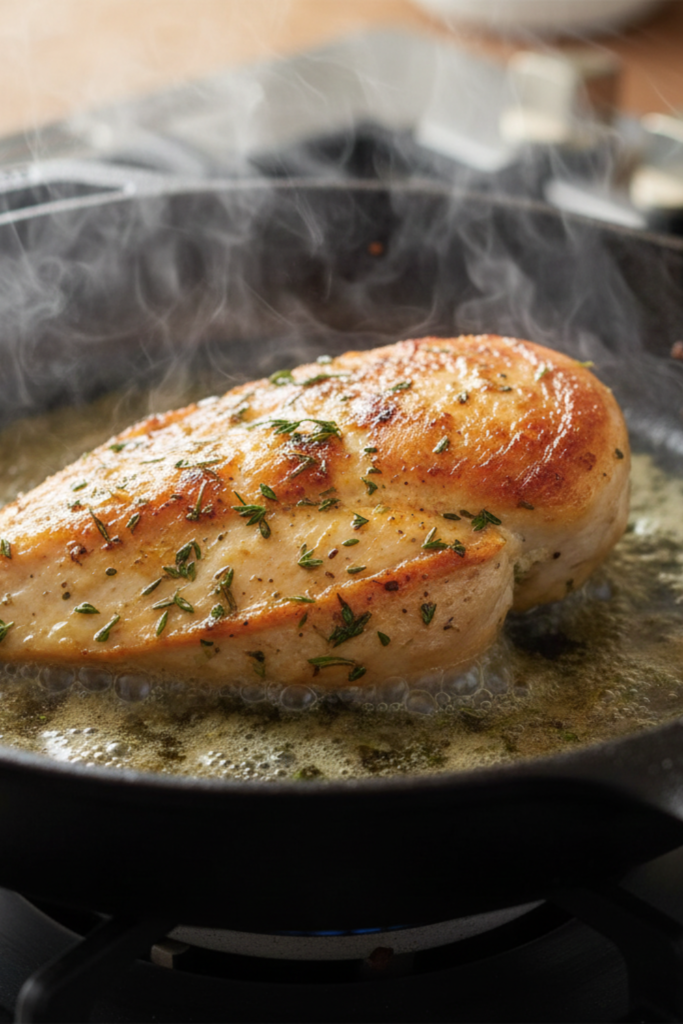
Instead, I sear the chicken skin-side down first to get that golden-brown color. Only when I flip the bird do I toss in a big knob of butter and my fresh rosemary and thyme. This is called “basting,” and it’s basically like giving your chicken a luxurious herbal spa treatment.
The Butter Baste
While the second side cooks, I tilt the pan and use a big spoon to pour that bubbling, herb-infused butter right over the crispy skin. It’s a bit messy, and I’ve definitely splashed my favorite apron more than once. But man, that final touch makes the herb chicken look like it belongs on a magazine cover.
Just keep an eye on the butter; if it starts to smell like it’s burning, pull the pan off the heat immediately!.
Wrapping It All Up: Your Best Herb Chicken Ever!
Wow, we’ve covered a lot today! From the magic of fresh rosemary to the “science” of a saltwater bath, I hope you feel ready to conquer the kitchen. Making the perfect herb chicken is really just about showing the ingredients a little love and not being afraid of a hot pan. I’ve definitely had my share of burnt butter and soggy skin, so don’t sweat it if your first try isn’t 100% perfect.
To recap, remember that fresh herbs beat dried ones every single time for that amazing aroma. Always dry your chicken skin thoroughly before it hits the skillet to ensure that crunch we all crave. And please, for the love of Sunday dinner, don’t skip the brine if you have the time! It’s the difference between a dry meal and one your family will actually ask for seconds of.
I’m so stoked for you to try this out in your own kitchen. Cooking should be fun, even when it’s a bit messy or things don’t go exactly as planned. Keep experimenting with different herb combos—maybe some tarragon or even a bit of lemon thyme next time!