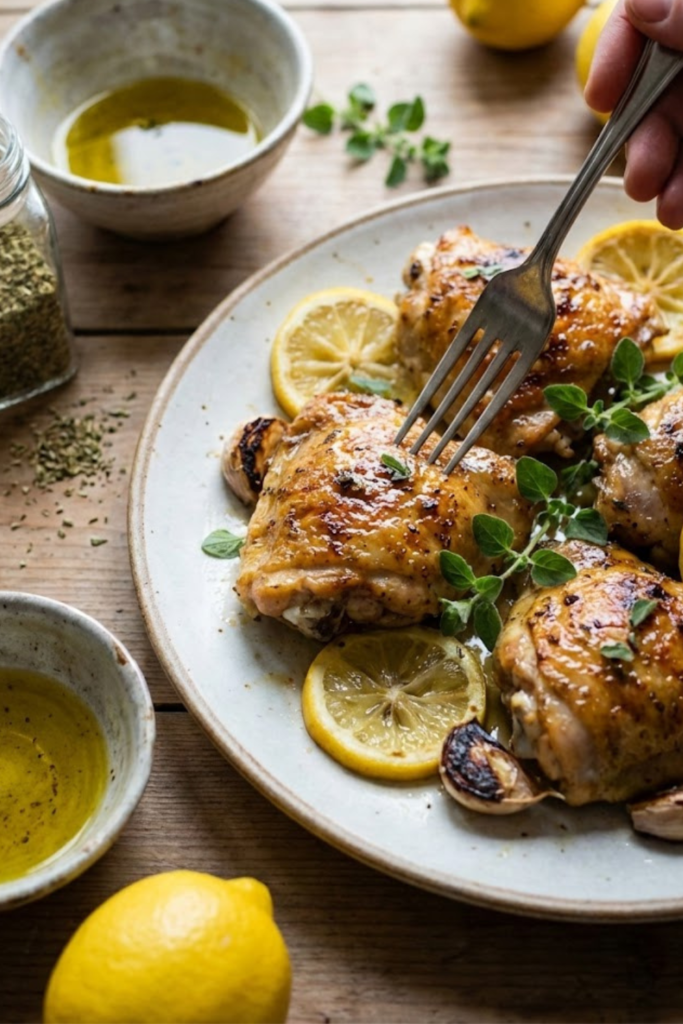
I still remember the first time I tried authentic Greek lemon chicken; the aroma of roasting garlic and oregano completely filled the kitchen, promising something spectacular! There is truly nothing quite like the combination of bright citrus and savory herbs to wake up your taste buds. Did you know that lemon juice doesn’t just add flavor, but actually acts as a tenderizer, breaking down the meat fibers for that melt-in-your-mouth texture? In this article, I’m going to walk you through exactly how to achieve that golden, crispy skin and succulent meat right in your own oven. We will dive deep into selecting the right cuts of poultry, the magic of Mediterranean spices, and the crucial roasting techniques that make this dish a staple. Get your roasting pan ready, because we are about to make some magic happen!
Essential Ingredients for Traditional Greek Flavors
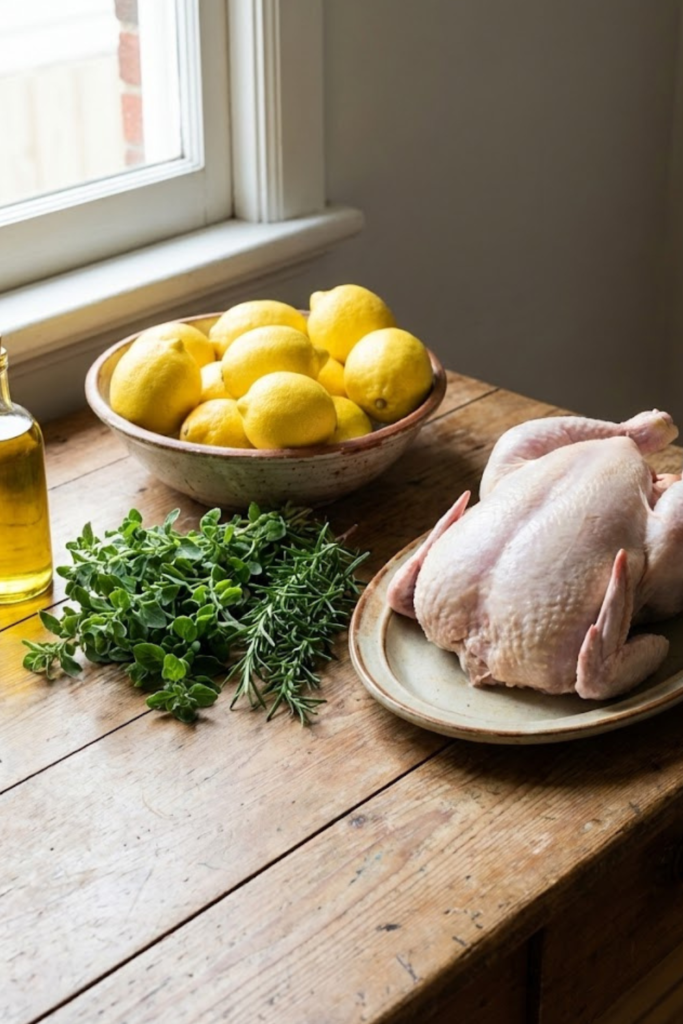
You know, I used to think I could just throw any old thing into a pan and call it Greek lemon chicken. Boy, was I wrong! I remember this one time, I tried using that cheap “cooking oil” blend and bottled lemon juice because I was too lazy to run to the store. The result? Let’s just say my family ordered pizza that night. It was barely edible. To get that real-deal flavor, you have to be picky with your groceries. It makes a huge difference.
The Liquid Gold: Olive Oil
If there is one hill I’m willing to die on, it’s this: use extra virgin olive oil. Don’t grab the light stuff. You want that deep, grassy flavor that coats your tongue. I usually look for a bottle that’s actually from Greece or Italy. I’ve ruined a perfectly good roast by using old oil that had been sitting in the back of my pantry for a year. It tasted rancid. Now, I always check the date. A good oil doesn’t just add fat; it carries all those herbs right into the meat.
Choosing Your Chicken
Okay, let’s talk poultry. I personally love a whole roasted chicken because it looks so impressive on the table. But here is the thing I learned the hard way. If you aren’t careful, the breast meat dries out while the legs are still cooking. It’s frustrating!
Lately, I’ve been leaning towards using chicken thighs or drumsticks. Dark meat is way more forgiving. It stays juicy even if you accidentally leave it in the oven five minutes too long (which I definitely do). If you do go with a whole bird, spatchcocking it—flattening it out—is a game changer. It cooks faster and more evenly.
The Lemon and Herb Situation
Please, I am begging you, put down the little plastic lemon. You need fresh lemon juice. The bottled stuff has this weird, metallic aftertaste that just doesn’t work here. You need the zest too! The oils in the skin are where the real aroma lives.
And then there’s the Greek oregano. I used to use regular oregano, and it was fine, I guess. But then a friend brought me some dried stuff from a trip to Crete. Whoa. The smell was intense! It was earthy and peppery. If you can find the wild stuff on the stem, get it. You’ll thank me later. Rub it between your palms to wake up the oils before sprinkling it on.
Don’t Forget the Spuds
Potatoes might just be the best part of this meal. They soak up all that lemony, chicken-fat goodness. But don’t use just any potato. I made the mistake of using russets once, and they just fell apart into a mushy mess.
You want waxy potatoes. Yukon Gold potatoes are my absolute favorite for this. They hold their shape but still get creamy on the inside. Cut them into big wedges so they don’t burn before the chicken is done. There is nothing sadder than a burnt potato wedge. Trust me, getting these few specific ingredients right is half the battle won.
Mastering the Lemon-Garlic Marinade
You know, for the longest time, I thought marinating just meant drowning the meat in a bowl of stuff and walking away. I’d toss some lemon juice and oil in a bag, throw the chicken in, and hope for the best. Usually, it came out okay, but sometimes? It was a disaster. I actually turned a batch of expensive chicken thighs into mush once because I didn’t understand the science behind it. It was practically ceviche before it even hit the oven!
The Golden Ratio
Here is the thing I learned after many ruined dinners: balance is everything. You can’t just dump fresh lemon juice on chicken and expect it to be perfect. The acid is powerful. If you use too much, it starts to “cook” the meat chemically, making it tough and stringy.
I stick to a strict rule now. I use about one part acid to three parts fat. So, for every half cup of lemon juice, I’m using a cup and a half of extra virgin olive oil. It sounds like a lot of oil, I know. But that oil is what carries the flavor and protects the meat from drying out in the heat.
Whisk It Like You Mean It
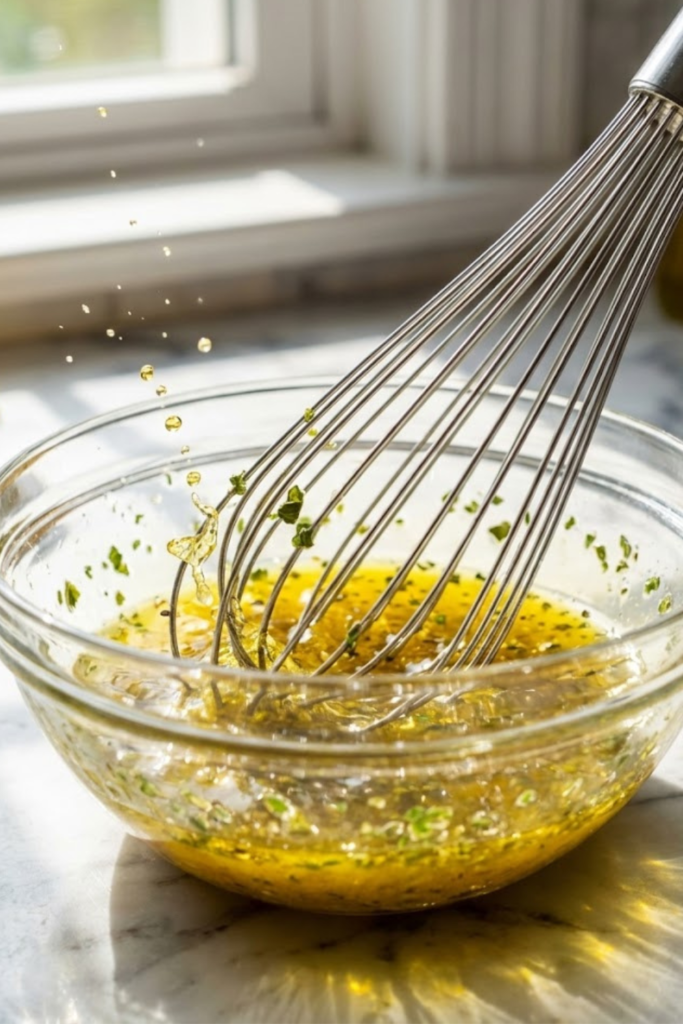
Another mistake I used to make was just pouring the ingredients directly onto the chicken in the pan. Big mistake. The oil and juice would just sit there, separated like a bad high school dance. You have to emulsify it first.
I grab my biggest bowl and a whisk, and I beat that mixture until it looks creamy and thick. It should look almost like a salad dressing. Sometimes, I’ll even throw in a teaspoon of Dijon mustard. Not for the mustard flavor, really, but because it helps keep the oil and lemon juice mixed together. It creates this coating that sticks to the chicken skin, which is exactly what we want.
The Timing Trap
How long do you let it sit? This is where people get into fights. I used to think “longer is better,” so I’d leave it overnight. But with a highly acidic marinade, that’s dangerous territory.
I found out that anything over four hours with this much lemon is risky. The texture gets weirdly mealy. Now, I usually aim for about 30 minutes on the counter while the oven preheats, or maybe two hours in the fridge if I’m organized. That is plenty of time for the garlic and oregano to penetrate without ruining the texture.
Garlic: The More, The Better
Speaking of garlic, don’t be shy. I used to mince it super fine, but it would burn in the oven and taste bitter. Yuck.
Now, I just smash the garlic cloves with the side of my knife and throw them in whole or roughly chopped. They roast slowly alongside the chicken and turn into these sweet, soft little nuggets of gold. Plus, smashing them releases enough flavor without the risk of burning.
It’s funny how these little tweaks changed everything for me. I went from making “okay” chicken to making “can I have the recipe?” chicken. Just remember to taste the marinade before the raw chicken touches it. If it tastes too sour, add more oil or a pinch of salt. If it tastes flat, it needs more lemon. Trust your tongue!
Roasting Techniques for Crispy Skin and Juicy Meat
You know what used to drive me crazy? I’d spend all this time prepping my chicken, smelling that amazing lemon and garlic, only to pull it out of the oven looking pale and sad. Or worse, the skin would be burnt to a crisp while the inside was still pink. I have definitely cried over undercooked poultry before. It’s a terrible feeling to have to throw a half-eaten meal back in the oven while everyone waits at the table. But over the years, I figured out that roasting is really just about managing heat and moisture.
The Temperature Two-Step
I used to just set the oven to 350°F and pray. That is the safe zone, right? Well, for crispy chicken skin, it’s actually the enemy. If the heat is too low, the skin just steams and gets rubbery. Nobody wants rubbery skin.
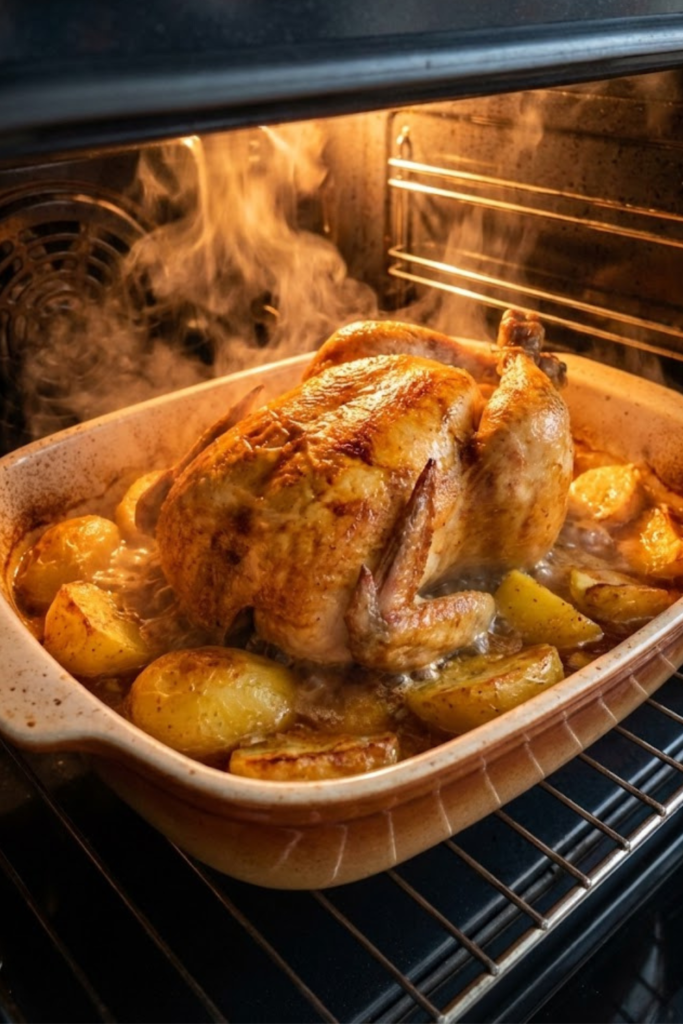
Now, I start with some serious heat. I preheat my oven to 425°F (220°C). I blast the chicken at this high heat cooking temperature for the first 20 minutes. You can hear it sizzling immediately. It jumpstarts the browning process. After that, I drop the temp down to 375°F to let the meat cook through without drying out. It was a game changer for me.
Stop Crowding the Pan
Here is a mistake I made a million times: trying to fit too much food into one baking dish. I’d jam the potatoes and chicken in there until they were touching. The problem is, when food is crowded, it steams instead of roasting.
You need air to circulate. If I’m making a big batch, I’ll split it between two pans or use a large baking sheet. I make sure the potatoes are in a single layer around the chicken, not piled on top of it. Give those spuds some personal space! This helps get you those nice, crunchy edges on your oven roasted vegetables.
The Basting Ritual
Okay, I’m not gonna lie, basting is a pain. You have to open the oven, letting the heat out, and reach into a hot box. But for this recipe? It is non-negotiable.
I grab my silicone basting brush (or just a big spoon) every 20 or 30 minutes. I scoop up those pan drippings—that liquid gold mixture of rendered fat and lemon juice—and brush it back over the bird. This does two things: it adds flavor back onto the skin, and it helps the skin brown evenly. If you skip this, the top of the chicken can look dry and dull. I learned that lesson when I served a very beige bird to my in-laws. Embarrassing.
The Broiler Finish
Finally, if the chicken is cooked—always check with a meat thermometer, look for 165°F—but the skin isn’t quite there yet, don’t panic. The broiler is your friend.
I switch the oven to broil for the last 2-3 minutes. But listen to me carefully: do not walk away. I walked away once to pour a drink and set off the smoke alarm. The line between “perfectly golden” and “charcoal” is about 30 seconds under a broiler. Stand there and watch it like a hawk. When it’s bubbly and brown, pull that roasting pan out immediately. The triumph of seeing that perfect color is worth the stress!
Serving Suggestions and Pairings
I used to think that once the chicken was out of the oven, my job was done. I’d slap a piece of meat on a plate and call it a day. But honestly? It felt incomplete. I remember serving this gorgeous roast to my neighbors once with just some plain boiled rice, and the meal felt kind of… heavy. The chicken is rich and oily (in a good way!), so you really need lighter, brighter sides to balance it out.
The Salad Debate
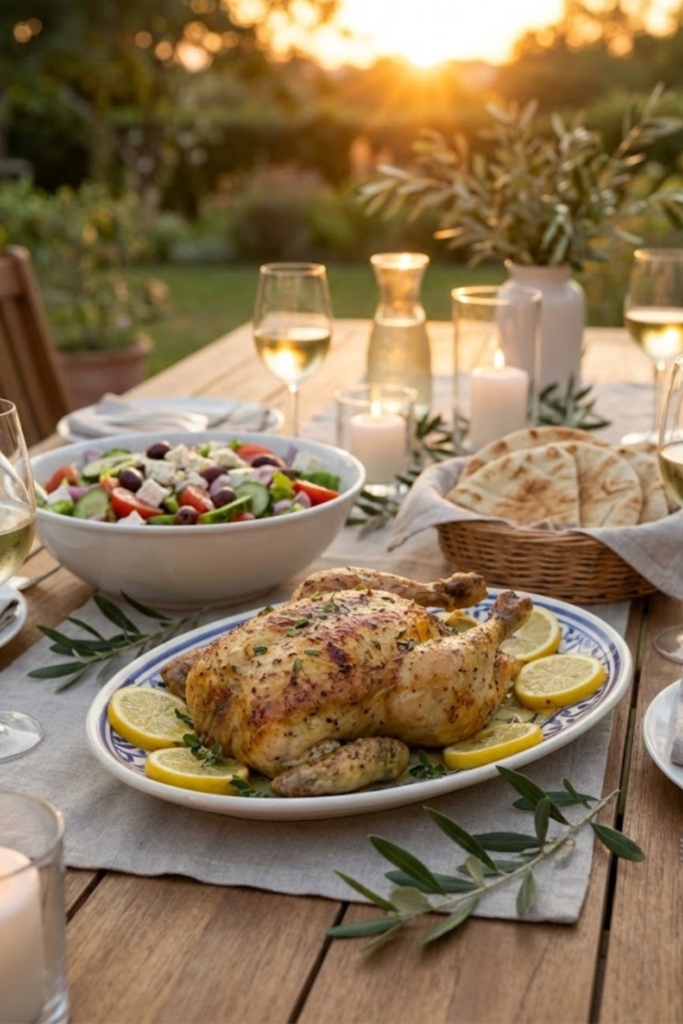
If you want to do this right, you gotta have a Greek salad side dish. But here is where I messed up for years: I was putting lettuce in it. Apparently, a traditional Horiatiki salad has zero lettuce!
Now, I chop up big chunks of cucumber, tomatoes, and red onion. I toss in a handful of Kalamata olives and a giant slab of Feta cheese right on top. The saltiness of the cheese cuts right through the richness of the chicken. It’s a total vibe shift for your palate. Plus, the bright colors make the table look like a magazine cover, which always impresses the in-laws.
The Dip Situation
You have all those amazing pan drippings at the bottom of your roasting pan. Do not—I repeat, do not—let those go to waste! You need a vehicle to get that liquid gold into your mouth.
I always warm up some pita bread in the oven for the last few minutes of cooking. If I’m feeling fancy, I’ll brush them with a little olive oil first. And you absolutely need Tzatziki sauce. I used to buy the pre-made stuff, but it was always too watery. Making it yourself with strained yogurt and grated cucumber takes five minutes. The cold, creamy yogurt against the hot, savory chicken is just… chef’s kiss.
What to Drink?
Now, I am definitely not a wine expert. I usually just buy whatever has a pretty label. But I learned from a friend that you want something with high acidity here.
A heavy red wine just clashes with the lemon. It tastes weird. I stick to a crisp white wine pairing, like a Sauvignon Blanc. If you can find a Greek Assyrtiko, grab it! It’s super dry and refreshing. It basically acts like a palate cleanser between bites of potatoes and meat.
The Final Flourish
Presentation isn’t my strong suit, I admit. I’m usually just trying to get food on the table before the kids start complaining. But a little green goes a long way.
I chop up a bunch of fresh parsley and scatter it over the whole tray right before serving. It adds a fresh, grassy pop that wakes everything up. And throw some extra fresh lemon wedges on the side! Some people (like me) love to squeeze even more juice on top. It’s those little details that turn a regular Tuesday night dinner into something that feels like a special occasion.
Storing and Reheating Leftovers
I used to be the kind of person who would just shove the whole roasting pan, covered in foil, into the fridge. Total lazy move. Then I’d wonder why my fridge smelled like garlic for a week and the chicken dried out by the next day. I’ve learned that how you store this food is almost as important as how you cook it. If you treat your leftovers right, Tuesday’s dinner can be just as good on Wednesday lunch. But if you get it wrong? You’re eating rubber.
The Fridge Situation
First off, you need to get the food out of that metal pan. The acid in the lemon reacts with the metal if it sits too long, and it gives the food a metallic taste. I did this once and had to throw it all away. It was heartbreaking.
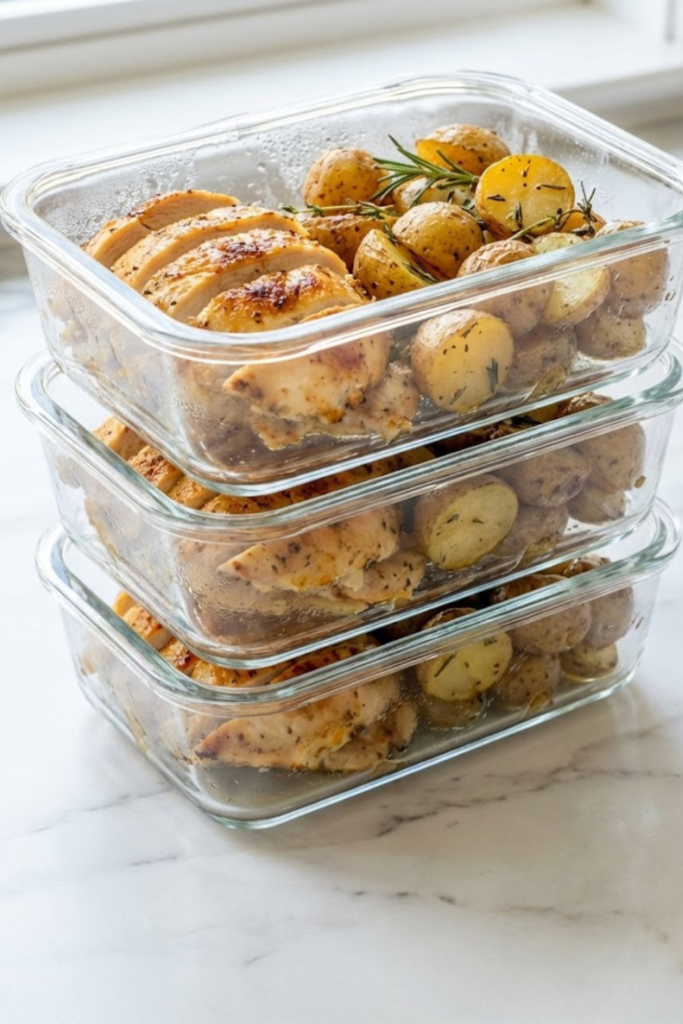
Now, I transfer everything into airtight glass meal prep containers. I separate the chicken from the potatoes if I can. Why? Because they reheat differently. The chicken will stay good in the fridge for about 3 to 4 days. After that, it starts to get a little sketchy, and I don’t mess around with food safety temperatures. If in doubt, toss it out.
Reheating: Step Away from the Microwave
Look, I love my microwave for popcorn, but it is the enemy of crispy chicken skin. I remember nuking a leftover thigh once. The skin turned into this flabby, wet mess, and the meat got tough as shoe leather. I was so mad at myself.
The trick is reheating in the oven. It takes longer, yeah, but it’s worth it. I throw the pieces on a baking sheet and add a splash of water or chicken broth. Cover it with foil to trap the steam. This keeps the juicy chicken meat moist while it warms up. Then, I take the foil off for the last 5 minutes to crisp up the skin again. It tastes almost fresh.
The Freezing Trap
Can you freeze it? Yes and no. The chicken freezes beautifully. I often shred the meat and freeze it for quick meal prep chicken later in the month. It’s a lifesaver on busy nights.
But the potatoes? Absolutely not. I tried freezing roasted potatoes once, thinking I was being so smart. When I thawed them, they were mealy and watery. It was like eating wet sand. Just eat the potatoes fresh or toss them; they don’t survive the freezer.
New Life for Old Bird
Honestly, sometimes I don’t even bother reheating the chicken. Cold lemon chicken is actually pretty amazing. I’ll shred it and toss it into a salad or a wrap.
My favorite thing to do is make a quick lemon-mayo and turn it into a sandwich. It’s one of the best leftover chicken recipes I’ve stumbled upon. It feels like a totally new meal, not just “last night’s dinner.” It feels good to stretch one meal into two or three, especially with how expensive groceries are these days!
Mastering this Greek lemon chicken recipe is about more than just following instructions; it’s about bringing the warmth and vibrancy of the Mediterranean right into your home. The combination of zesty lemon, aromatic oregano, and savory garlic creates a meal that is comforting yet sophisticated enough for guests. Whether you are cooking for a busy weeknight or a special Sunday dinner, this dish delivers every single time!
We’ve covered everything from picking the perfect waxy potatoes to nailing that crispy chicken skin under the broiler. Just remember, the secret really is in the patience—letting that marinade do its work and giving the bird time to rest before you carve it. If you loved this recipe, please pin it to your “Weeknight Dinners” board on Pinterest to save it for later and share the love with your foodie friends!