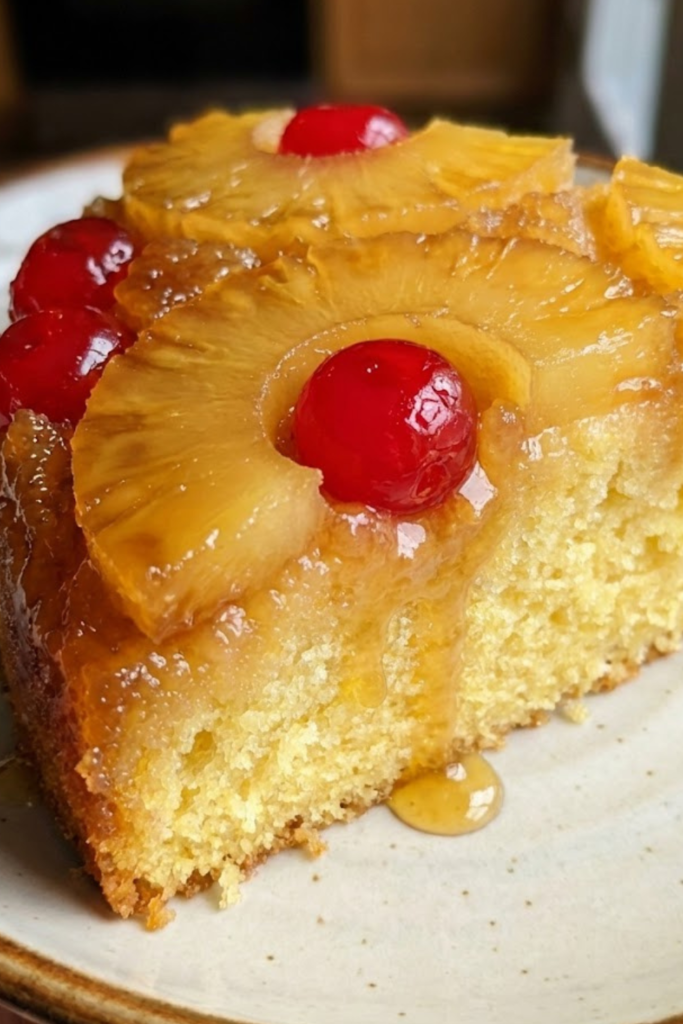
Do you remember that smell? You know the one—sweet caramelized sugar bubbling away at the bottom of a cast-iron skillet, mingling with the bright scent of warm fruit. There is absolutely nothing like a classic Fresh Pineapple Upside Down Cake with Maraschino Cherries to transport you straight back to a simpler time! While canned pineapple is the standard, we are breaking the mold in 2026. Using fresh pineapple changes everything; it’s tart, it’s vibrant, and it cuts through the sweetness of the brown sugar glaze like a dream.
“Baking is love made edible,” and this cake is the ultimate love letter to retro desserts! Whether you are a seasoned baker or just looking to impress at the next potluck, this guide will walk you through creating a masterpiece that looks as good as it tastes. Let’s get that oven preheated and dive into this juicy, golden delight!
Selecting the Perfect Fresh Pineapple for Baking
Honestly, picking out a pineapple can feel like a total guessing game sometimes. But for this cake, you really have to get it right. I used to just grab whatever was on sale, but I learned the hard way that a green, hard pineapple just doesn’t caramelize the same way. You want one that has a nice golden color starting at the bottom. Pick it up and give the base a sniff—it should smell sweet, like fresh juice. If it smells like vinegar or has soft mushy spots, it’s gone too far. If it smells like nothing, put it back.
Now, getting it ready. I know, canned rings are easier. I’ve used them plenty of times when I was in a rush or just didn’t feel like chopping. But trust me on this one, fresh fruit holds up so much better in the oven. Canned stuff tends to get really mushy because it’s been sitting in juice for months. Fresh pineapple keeps a bit of texture, which cuts through all that sugar in the glaze.
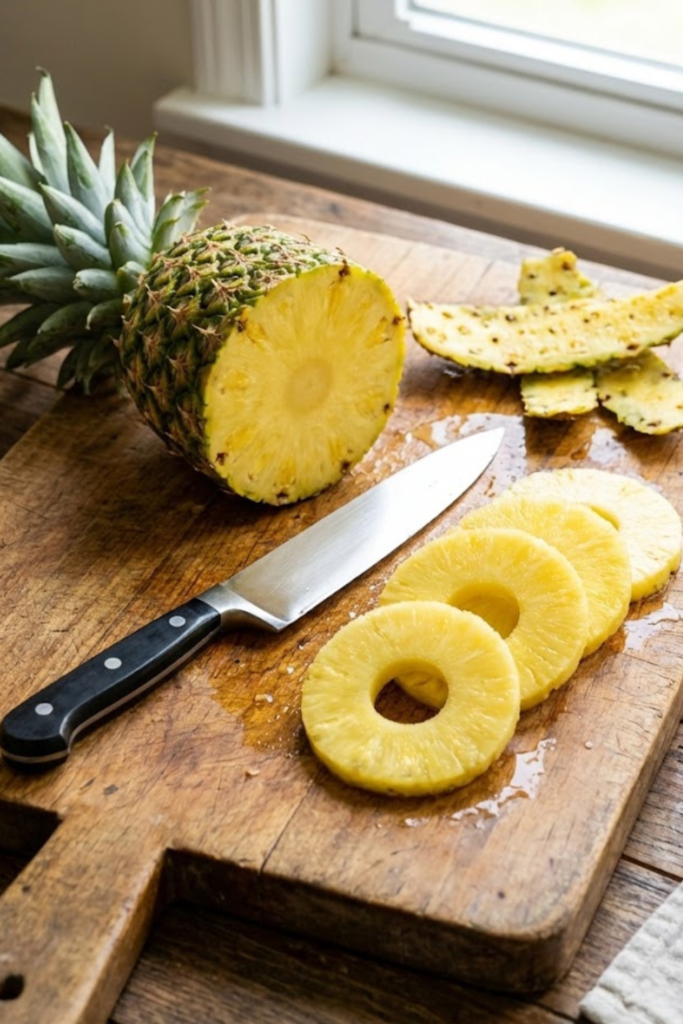
To peel it, chop off the top and bottom so it sits flat on your cutting board. Then take your sharpest knife and slice down the sides, following the curve of the fruit. Don’t worry if you miss some of those little brown eyes; you can go back and dig them out with a small paring knife or a spoon. It takes a few extra minutes, but the flavor difference is huge.
When you slice the rings, don’t go too thin. Aim for about half an inch thick. If they are too thin, they kinda disappear into the caramel and get lost. If they are too thick, they won’t cook all the way through and might make the batter around them soggy. Half an inch is just right to get that pretty look without ruining the cake’s structure.
Creating the Signature Caramel Glaze and Fruit Layer
This is my favorite part, but you have to pay attention here. First off, grab a 9-inch cast-iron skillet if you have one. It is the absolute best tool for this because it holds heat so well and caramelizes the sugar perfectly. If you don’t have one, a heavy-duty round cake pan works too, but please do not use a springform pan! The butter will leak out the bottom and smoke up your whole oven. I learned that lesson the hard way a few years ago.
For the glaze, you melt the butter right in the pan. I usually do this on the stovetop on low heat. Once the butter is melted, take it off the heat and sprinkle the brown sugar evenly over the bottom. You can stir it a little to mix it, but don’t overwork it. You want a nice, thick paste covering the bottom. This mixture is going to bubble up and turn into that sticky, golden sauce that soaks into the cake.
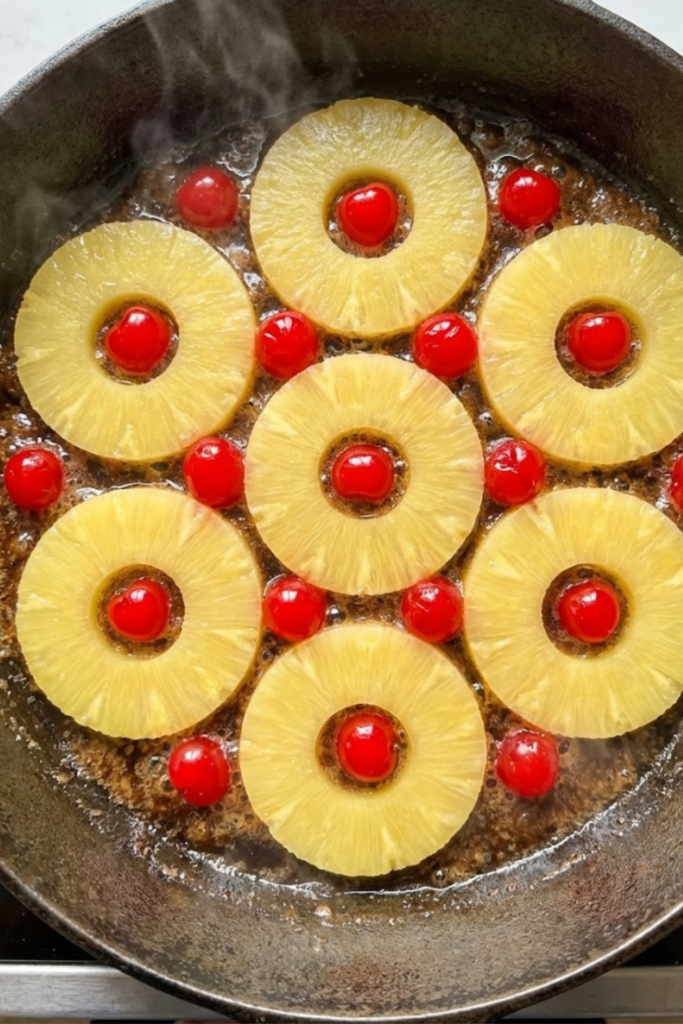
Now, be careful because that sugar mix is really hot. Lay your pineapple rings right on top of the sugar. I usually fit one ring in the very center and then circle the other six around it. It fits pretty snug. Then, take your maraschino cherries—make sure you dry them with a paper towel first so they don’t bleed red juice everywhere—and place one in the center of each ring. I also like to put cherries in the gaps between the rings. It looks so festive and retro when you flip it over later. Just press them down gently so they stick in the sugar.
Mixing the Moist Vanilla Cake Batter
Now we get to the actual cake part. I know it’s tempting to just throw everything in a bowl and mix it up, but trust me, the order matters if you want it fluffy. First things first: make sure your butter and eggs are at room temperature. I know, it’s a pain to remember to take them out of the fridge ahead of time. But if you use cold butter, it won’t mix right with the sugar, and you’ll end up with a dense cake. If I forget, I just put the eggs in a bowl of warm water for a few minutes—works like a charm.
You’re going to want to mix your dry ingredients—flour, baking powder, and salt—in a separate bowl. I like to sift them together. It gets rid of any lumps and adds some air to the flour, which helps the cake rise. It’s a small step, but it really does make the crumb lighter.
Then, in a big bowl, beat the softened butter and sugar together. You need to do this for a good 3 to 5 minutes until it looks pale and fluffy. This is called “creaming,” and it’s where all the air bubbles come from. Don’t rush this part! Once that’s done, beat in the eggs one at a time.
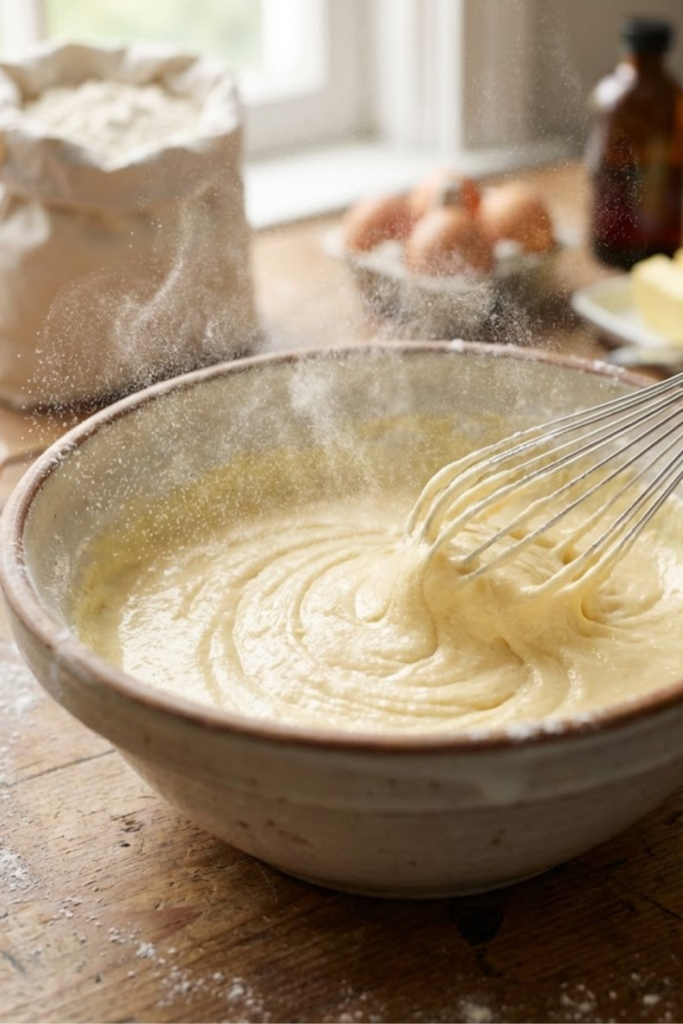
Finally, we alternate adding the flour mix and the liquids (milk and maybe a splash of pineapple juice). Add a little flour, mix it gently, then add the milk, mix that, and finish with the last of the flour. Stop mixing as soon as the white streaks disappear. If you mix it too much now, the gluten gets tough, and your cake will be rubbery. We want tender and soft, not chewy.
Baking and The High-Stakes Flip
Baking this thing takes a little patience. You gotta put the rack right in the middle of the oven. If it’s too high, the top gets dark before the inside is done. I usually start checking it at about 40 minutes. Stick a toothpick in the center—if it comes out with wet batter, it needs more time. If it has a few moist crumbs attached, you’re good to go. You can also press the top gently; if it springs back like a sponge, it is ready to come out.
Now, listen closely because this is the part that makes everyone nervous. The Flip. But first, you have to let it cool. Do not flip it right away! The cake structure is too soft when it is piping hot, and it will just slide apart. Let it sit in the pan for exactly 10 to 15 minutes. Set a timer. If you wait too long, the caramel hardens and the fruit sticks to the pan. If you flip too soon, it’s a disaster.
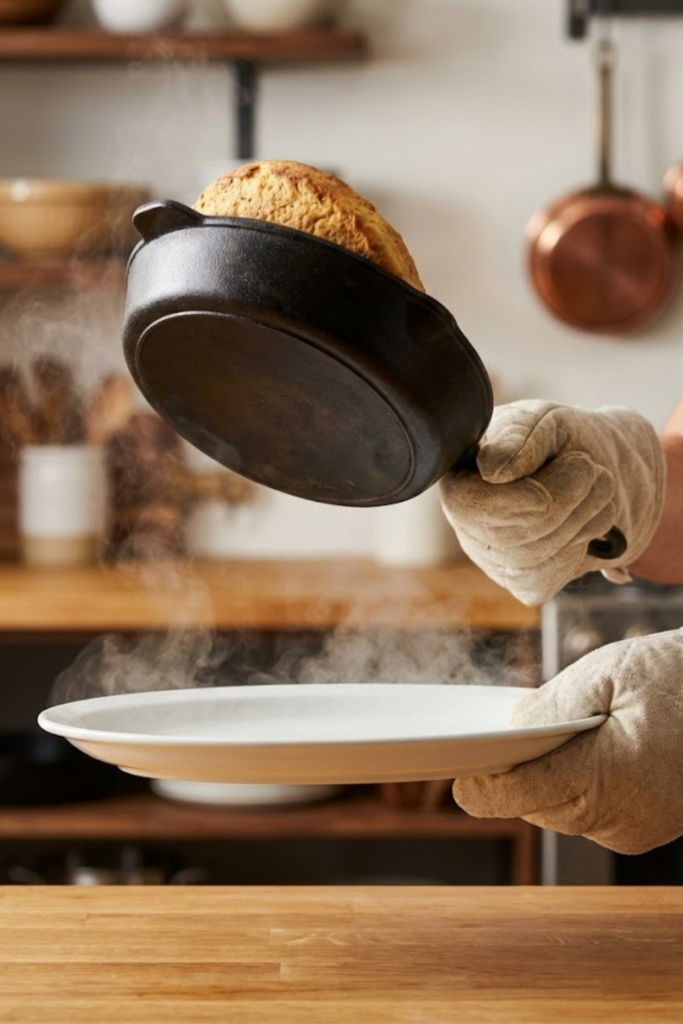
When the timer goes off, run a knife around the edge to loosen it. Put your serving plate upside down on top of the skillet. Grab your oven mitts—the pan is still hot! Hold the plate and pan together tight, take a deep breath, and flip it over quick. Give it a second, maybe tap the bottom of the pan, then lift the pan off slowly. If a pineapple ring sticks, just use a fork to put it back in place. No one will know the difference.
Serving Suggestions and Storage Tips
Now, you might want to dig in right away, and honestly, I don’t blame you. But hold your horses just a sec! This cake is definitely best served warm. The caramel is still gooey and soaks into the sponge, making every bite taste amazing. If you let it get stone cold, the topping gets a little chewy, which isn’t bad, but warm is just better.
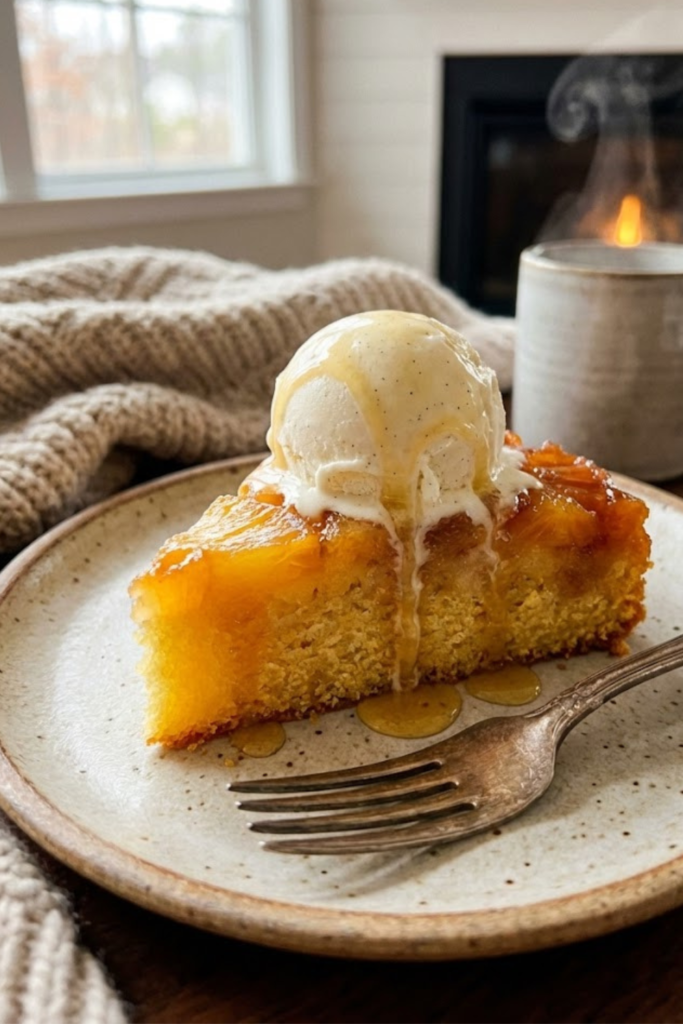
I almost always serve this with a big scoop of vanilla ice cream on the side. When the cold ice cream melts into the warm cake… oh man, it is the best thing ever. If ice cream isn’t your thing, freshly whipped cream is great too. It cuts the sweetness a bit.
If you actually have leftovers—which is rare in my house—you gotta store it right. Since it has fresh pineapple, I don’t like to leave it out on the counter for more than a day. It can spoil faster than regular cake. I put it in the fridge. Just make sure you cover it tight with plastic wrap or put it in a container with a good lid. You don’t want your cake tasting like leftover onions or whatever else is in your fridge.
To eat it later, please don’t eat it cold! Pop a slice in the microwave for like 15 or 20 seconds. It brings the softness back and makes the fruit juicy again. You can freeze it too if you want. I wrap individual slices in plastic wrap and then a layer of foil. It stays good for a month or two, perfect for when you need a quick sweet treat.
So, there you have it. Making a fresh pineapple upside down cake isn’t actually that hard, right? It just takes a little bit of practice to get that flip right. But honestly, even if it looks a little messy or a cherry falls out of place, it’s going to taste amazing. My family barely lets it cool down before they are asking for a slice.
I really hope you give this a try the next time you see a nice gold pineapple at the store. It is a total game changer compared to the canned stuff. Baking should be fun, so don’t stress if it’s not perfect. It’s homemade, and that’s what makes it special.
If you liked this recipe, please save it! Pin it to your “Best Cake Recipes” board on Pinterest so you can find it easily next time. Happy baking!