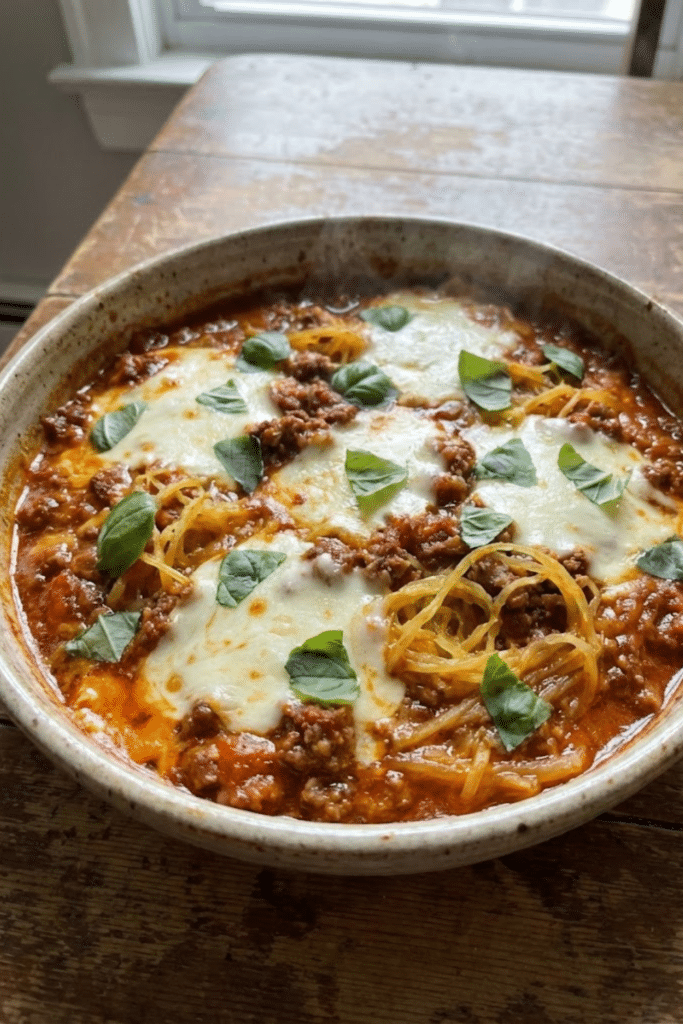
Did you know that the average slice of traditional lasagna can pack over 40 grams of carbs? That’s a nap waiting to happen! I used to avoid Italian night for that exact reason until I discovered the magic of swapping noodles for veggies. Welcome to my obsession: Crockpot Spaghetti Squash Lasagna Bolognese. This isn’t just “health food”; it’s a soul-warming hug in a bowl that actually fits your macros! We are going to layer savory, meaty bolognese with creamy ricotta and tender strands of squash, all slow-cooked to perfection. Let’s get cooking!
Why This Low-Carb Lasagna is a Game Changer
Look, I’ll be the first to admit it—I used to think “low carb pasta” was a lie. I mean, have you ever tried those rubbery shirataki noodles? Or worse, my disastrous attempt at zucchini lasagna back in 2018? I didn’t salt the zucchini enough, and the whole thing turned into a watery, sad vegetable soup in the oven. I was so mad I actually ordered a pizza right after.
But this Crockpot Spaghetti Squash Lasagna Bolognese? This is the real deal. It totally changed my mind about vegetable-based pasta alternatives. It’s not just about swapping ingredients; it’s about how the slow cooker transforms them.
It Actually Fits Your Macros
Let’s talk numbers for a second because they don’t lie. A regular slab of lasagna from your local Italian spot is easily hitting 40 or 50 grams of carbs. That is a straight-up nap waiting to happen. By using spaghetti squash, we are cutting those carbs drastically, making this a legit keto lasagna option.
You get all that cheesy, saucy goodness without the heavy, bloated feeling afterwards. I can actually eat a huge square of this and still have energy to walk the dog. Plus, you’re sneaking in a massive serving of veggies. It’s a win-win situation.
The Flavor Goes Deep
Here is the thing about baking lasagna in the oven: sometimes the edges get crispy (which is nice), but the middle flavors stay kinda separate. When you slow cook this recipe, something magical happens. The bolognese sauce has hours to marinate with the squash strands.
The squash absorbs that rich, meaty tomato flavor way better than a flour noodle ever could. It becomes tender but keeps a little bite, kind of like al dente pasta. It’s honestly the best low carb dinner idea I’ve found that doesn’t taste like “diet food.” My husband didn’t even realize it was squash until he saw the rind in the trash!
Lazy Cooking at Its Finest
I love cooking, but I hate standing over a stove for two hours on a Tuesday. The beauty of this Crockpot Spaghetti Squash Lasagna Bolognese is the convenience. You prep it, stack it, and walk away.
There is nothing better than coming home from work and getting hit with the smell of garlic and oregano as soon as you open the door. It feels like someone else cooked for you. You aren’t boiling water, you aren’t draining giant pots of heavy pasta, and you aren’t fighting with sticky noodle sheets. You just let the machine do the heavy lifting while you chill out.
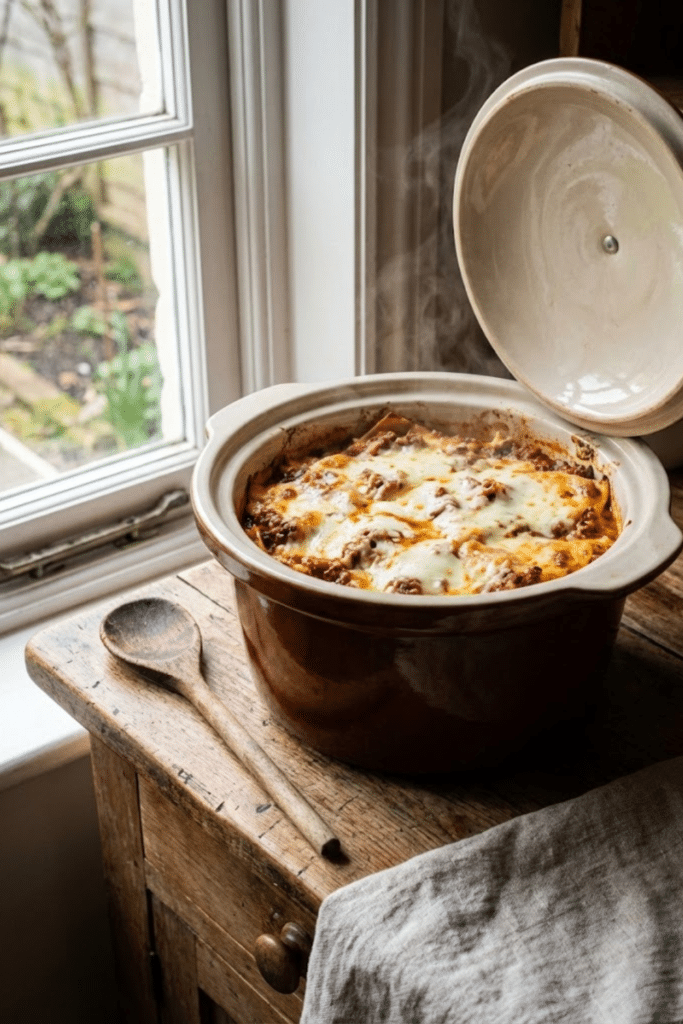
Essential Ingredients for a Rich Bolognese Sauce
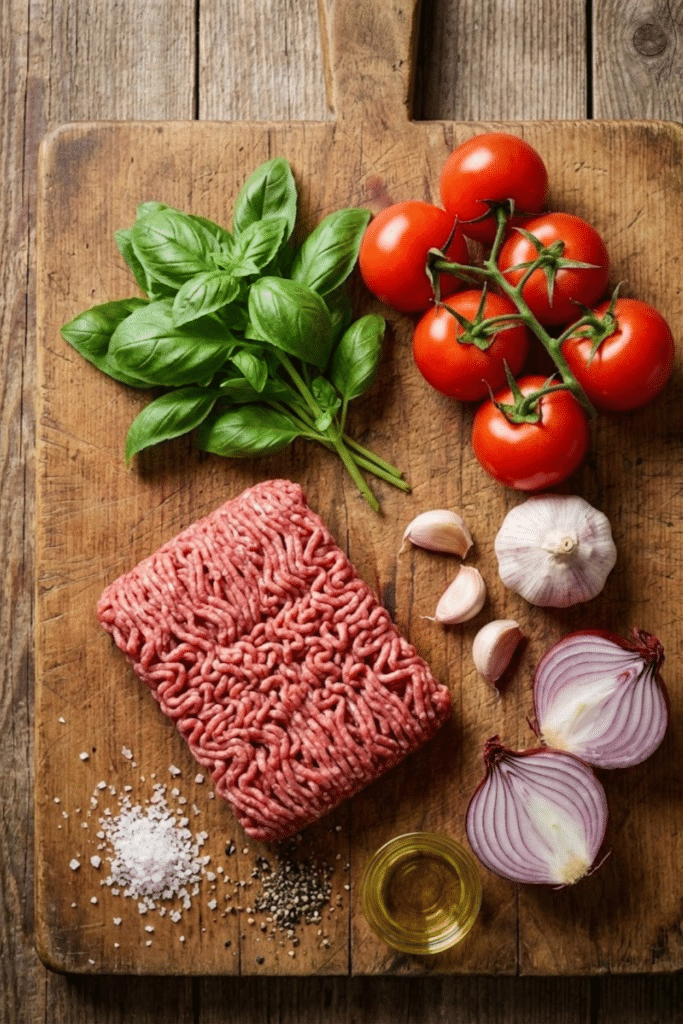
You can’t hide bad ingredients in a slow cooker. I learned this the hard way back in my early cooking days when I tried to make a “healthy” version of this using 99% lean turkey and a cheap can of generic tomato sauce. Let me tell you, it tasted like metallic cardboard. It was a disaster.
To get that restaurant-quality taste in your Crockpot Spaghetti Squash Lasagna Bolognese, you have to build layers of flavor. Since we aren’t baking this to crisp it up, the sauce has to do the heavy lifting. It needs to be bold.
The Meat Matters
Don’t just grab a pound of lean ground beef and call it a day. That’s a rookie mistake I made for years. The secret to a killer homemade meat sauce is the fat ratio. You need that fat to carry the flavor through the squash.
I always use a mix now. I go with half 80/20 ground beef and half sweet Italian sausage. The sausage brings all those fennel and garlic notes that you just can’t get from beef alone. If you like a little kick, swap the sweet sausage for spicy. I tried it once when my in-laws were visiting—they were sweating, but they loved it!
The Tomato Base
Please, for the love of food, put down the jar of Prego. It’s full of sugar anyway. For this recipe, you want high-quality crushed tomatoes. If you can splurge a couple of extra bucks for San Marzano tomatoes, do it. They are sweeter and less acidic.
And here is a tip I wish someone told me sooner: fry your tomato paste. Don’t just dump it in the liquid. When you are browning your onions and garlic, add the paste then. Cook it for a minute until it turns a dark, rust color. It deepens the flavor like crazy and gets rid of that raw tinny taste.
Herbs and The Secret Finish
Fresh herbs are non-negotiable here. Dried oregano is fine for the long cook, but you need fresh basil to finish it off. Dried basil just ends up tasting like dust after six hours in a crockpot.
Finally, the ingredient that makes people ask “why is this so good?”: heavy cream. Just a splash at the end. It cuts the acidity of the tomatoes and makes the bolognese sauce velvety. I forgot it once, and the sauce felt too sharp. Trust me, don’t skip the cream.
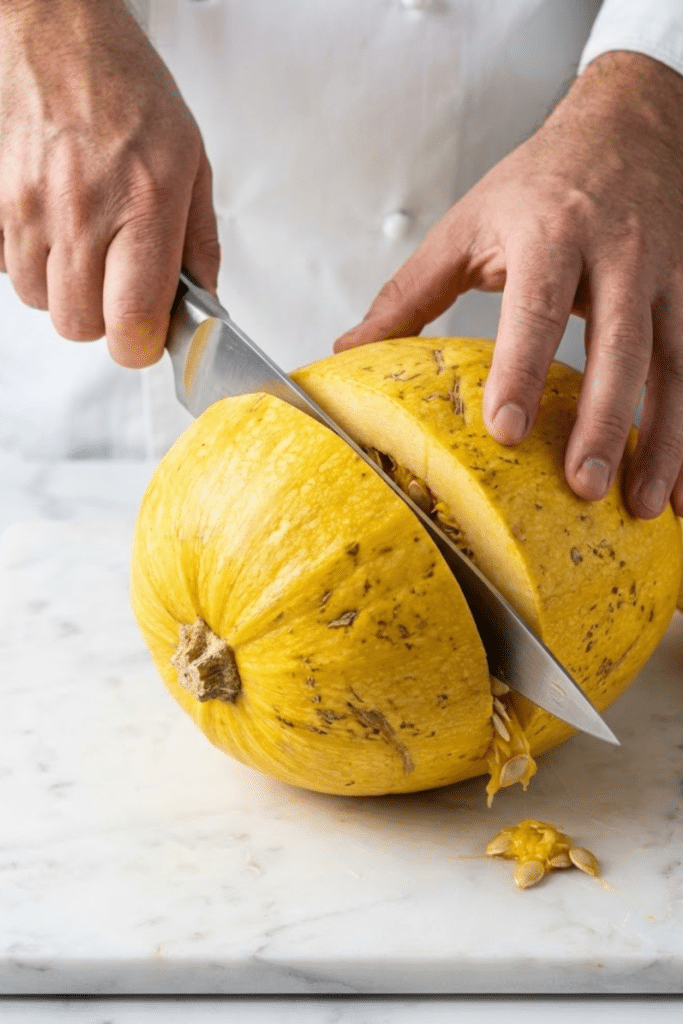
Preparing the Spaghetti Squash for the Slow Cooker
I have a confession to make. The first time I tried to cut a raw squash, I nearly ended up in the emergency room. I was sawing away at this rock-hard vegetable on a wobbly cutting board, the knife slipped, and well… let’s just say I got lucky. It was terrifying.
Preparing winter squash shouldn’t feel like a wrestling match. Over the years, I’ve figured out a few tricks to keep all my fingers intact while getting the prep done fast.
The Microwave Hack
Here is the lesson I learned that day: do not fight the squash. If you take one thing from this post, let it be this tip. You have to soften the rind before you even think about grabbing a knife.
I poke the squash all over with a fork (like you’re baking a potato) and pop the whole thing in the microwave for about 3 to 4 minutes. It doesn’t cook it, but it softens the skin just enough. The knife glides through like butter after that. It makes this the best spaghetti squash method for anyone who values their safety!
Scooping Without the Mess
Once you get it cut open, you have to deal with the seeds. It reminds me of carving pumpkins as a kid, which I hated because of the slime. But here, you want to be careful not to scrape away the actual meat of the squash.
Use a large metal spoon and scrape gently. You just want the goop and seeds gone. I used to dig too deep and ended up wasting half the squash. Just clear the cavity so it’s clean and ready for the sauce.
Why We Put It In Raw
This is where people get confused. Most spaghetti squash recipes tell you to roast the squash in the oven for an hour before doing anything else. Do not do that here!
If you cook the squash before putting it in the crockpot, you will open the lid four hours later to find a pile of mush. It’s gross. I made this mistake for a dinner party once and had to order takeout. The raw squash needs to cook slowly in the juices of the bolognese sauce. This keeps the strands firm enough to resemble pasta, rather than baby food.
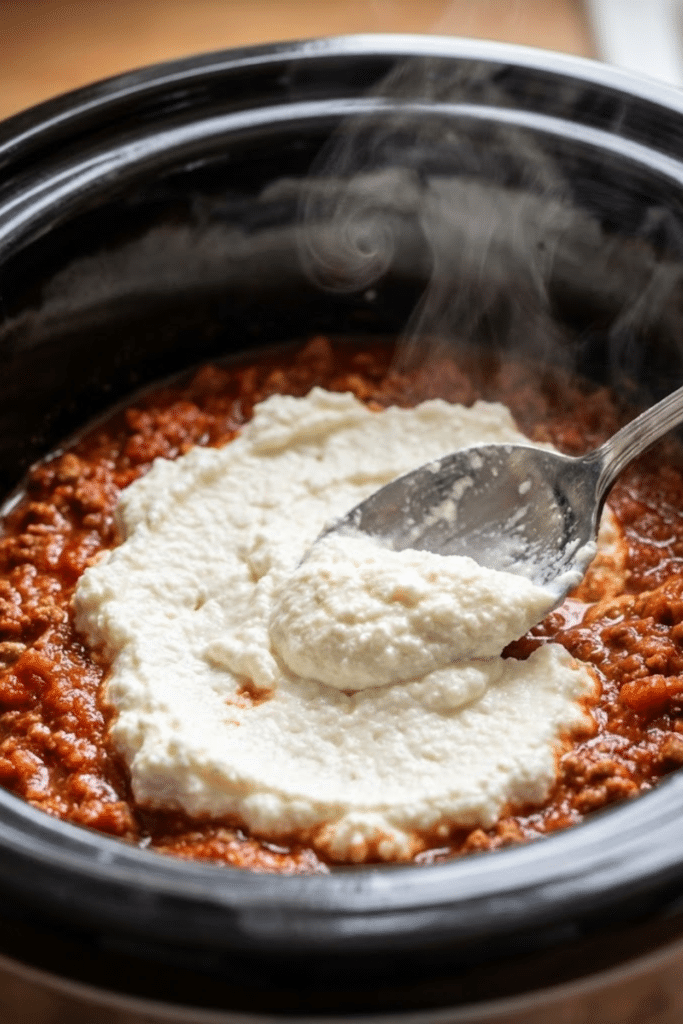
How to Layer Your Crockpot Lasagna Step-by-Step
Building this thing is actually kinda fun. It’s like adult Legos, but with cheese. I used to just throw everything into the slow cooker and pray, but that just gives you a messy casserole. If you want those distinct, pretty layers that actually look like lasagna when you scoop it out, you gotta have a strategy.
I messed this up big time at a potluck once. I didn’t layer it right, and the cheese fused to the ceramic pot. I spent three days soaking that thing. Don’t be like me. Follow this order, and you’ll be golden.
The Foundation (Don’t Skip This)
First rule of crockpot club: never put the veggies directly on the bottom. The heating element is hottest right there, and your squash will burn before the top is even warm.
Start with a solid ladle of your meat sauce. You want to coat the entire bottom of the insert. This creates a safety barrier. I learned this after serving a dinner where the bottom layer tasted like charred onions. Not my finest moment. This sauce layer protects everything else and starts bubbling up to steam the squash from below.
The “Noodle” Strategy
Okay, here is where people get tripped up. The outline mentioned putting halves in, but through my own trial and error, I found that slicing the raw squash into rings (or “steaks”) works best for a true lasagna feel. It mimics vegetable pasta alternative sheets way better than loose strands do.
Place your raw squash rings over the sauce. If you have gaps, just break some pieces to fit them in like a puzzle. It doesn’t have to be perfect; no one is going to see the inside. Just make sure you have a mostly even layer of squash covering the sauce.
The Cheesy Glue
Now comes the good stuff. You need your ricotta cheese mixture to act as the binder. If you just use plain ricotta, it gets grainy and weird.
I always mix my ricotta with an egg, some nutmeg, and plenty of parmesan. Dollop this right onto the raw squash rings. Don’t try to spread it perfectly smooth or you’ll mess up your squash layer. Just drop spoonfuls and gently flatten them. This creamy layer is what makes it feel like comfort food.
Repeat and Top
Repeat that process—sauce, squash, ricotta—until you run out of room. I usually get about three good layers in my 6-quart oval cooker.
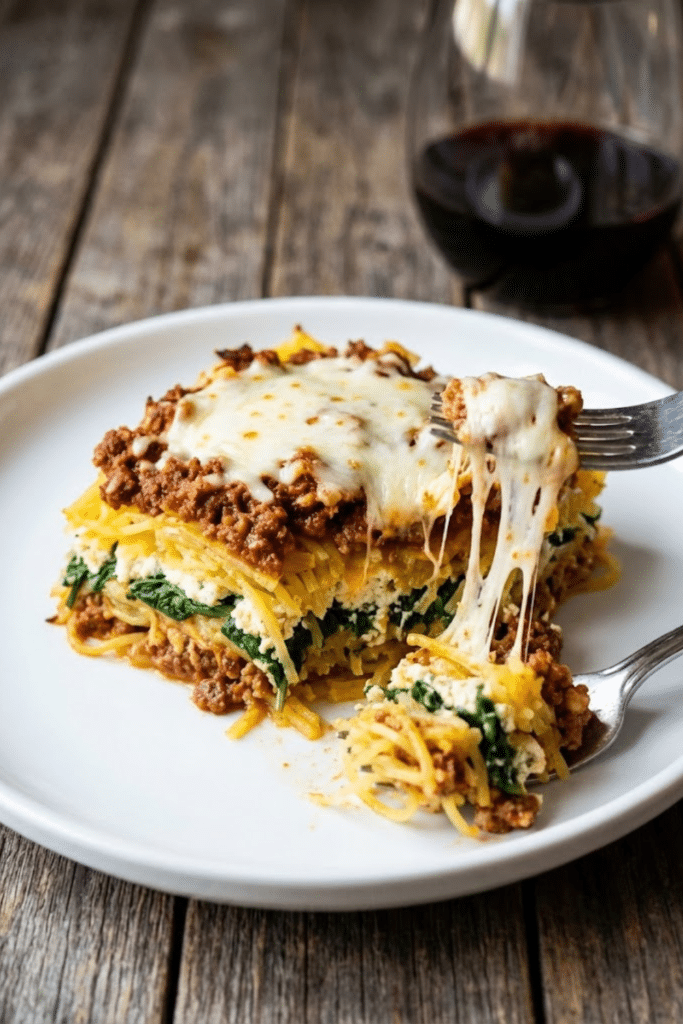
For the finale, you need a mountain of mozzarella cheese. And I mean a mountain. Don’t be shy. Cover the top completely, then hit it with some more parmesan for that salty kick. This creates a parmesan crusted lid that seals in the heat and moisture, helping that raw squash cook through perfectly.
Cooking Times and Tips for Avoiding Watery Squash
If there is one thing that ruins a good vegetable lasagna, it’s water. I still have nightmares about the first time I served this to my friends. I scooped out a serving and the plate was instantly flooded with orange liquid. It looked unappetizing, to say the least, and I was mortified.
Spaghetti squash is basically a sponge full of water, and when you cook it, that water has to go somewhere. Over time, I’ve figured out how to stop my dinner from turning into soup. It took a lot of soggy failures to get here, but these slow cooking tips actually work.
Low and Slow is the Way to Go
You might be tempted to crank the heat to “High” to get dinner on the table faster. Don’t do it. I tried rushing this once because I forgot to start it at lunch, and the texture was awful. The squash got mushy on the outside but stayed hard in the middle.
For the best texture, cook this on Low for 4 to 6 hours. This gentle heat allows the squash strands to tenderize evenly without turning into applesauce. It also gives the flavors in the sauce time to marry. If you absolutely have to use High, check it at 2.5 hours, but honestly, low heat is the secret to reducing moisture in squash effectively.
The Venting Trick
Here is a hack I learned from a random forum thread at 2 a.m. About an hour before the cooking time is up, prop the lid open slightly. I usually stick a wooden spoon handle between the pot and the lid.
This lets the steam escape instead of dripping back down into your lasagna. It seems like a small thing, but it makes a huge difference in the final consistency. You want that excess liquid to evaporate, not pool at the bottom.
The Magic of Almond Flour
This sounds weird, but hear me out. Since we aren’t using regular pasta sheets to soak up the sauce, we need something else to do that job. I started sprinkling a little bit of almond flour or extra parmesan cheese between the layers of raw squash.
It acts like a binder. The almond flour absorbs the juices released by the squash and thickens the sauce without adding carbs. It was a total game changer for my keto lasagna. Now, when I cut into it, the layers actually hold their shape.
Let It Rest (Seriously)
I know you are hungry. The house smells amazing, and you just want to dig in. But if you cut into this straight out of the crockpot, it will slide everywhere.
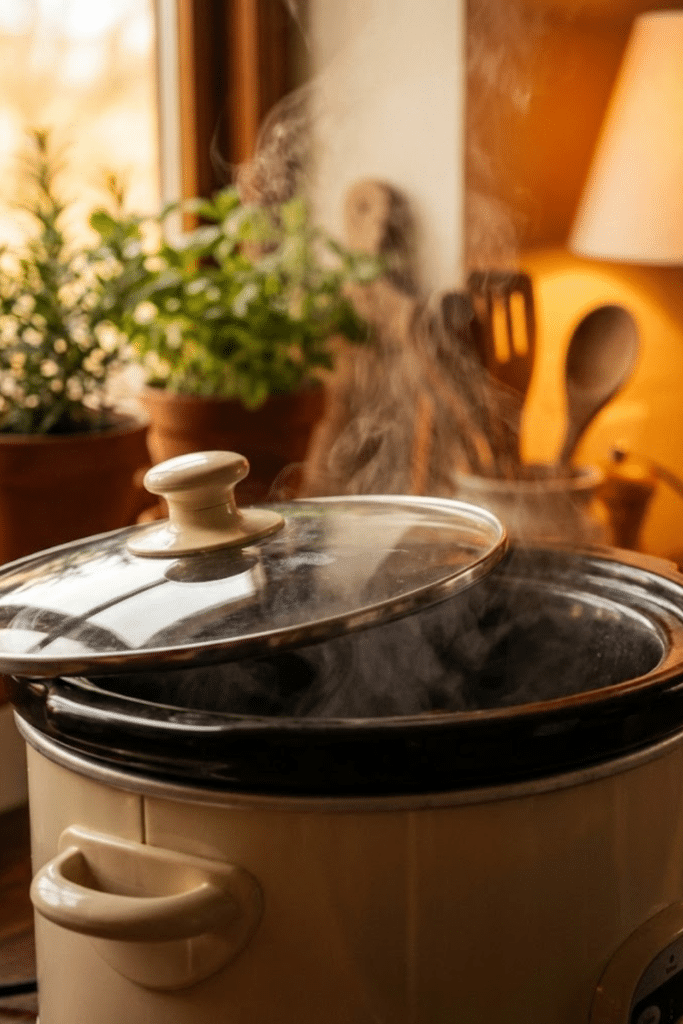
Turn the slow cooker off and take the ceramic insert out of the base. Let it sit on the counter for at least 20 to 30 minutes. This resting period allows the liquids to reabsorb and the cheese to set. It’s the difference between a messy pile and a beautiful, structured slice of healthy comfort food. Use that time to make a salad or pour a drink!
Serving and Storing Your Keto-Friendly Dinner
Okay, so you’ve successfully made the lasagna, and it smells incredible. Now comes the part where you actually have to get it out of the pot and onto a plate without making it look like a crime scene. I’ve definitely served up some “deconstructed” lasagna piles in my day that looked questionable but tasted amazing. But we eat with our eyes first, right?
Presentation matters, especially if you are trying to convince your skeptical family that low carb dinner ideas can actually be appetizing.
Garnishing Like a Pro
Let’s be real, brown meat and yellow cheese can look a little… monochromatic. The first time I made this, my husband asked if it was a casserole or a dip. Ouch. To make it pop, you need fresh greenery.
I always chop up some fresh parsley or basil. Don’t use the dried stuff here; it doesn’t have the same visual punch. Sprinkle it right on top before you bring the crockpot to the table. It adds a fresh bite that cuts through all that heavy cheese and meat. It makes the dish look finished, you know?
What to Serve With It
Since this dish is pretty rich, you don’t need a heavy side. I used to serve this with garlic bread because I missed carbs, but I realized it just made me feel sluggish afterwards.
Now, I keep it simple with a crisp green salad and a sharp vinaigrette. The acid in the dressing balances out the fat in the bolognese sauce. If you are really craving bread, I’ve found that making a quick keto garlic bread using almond flour works wonders. It gives you that vessel to scoop up the extra sauce without wrecking your macros.
The Leftover Situation
Here is the best news: this lasagna tastes better the next day. Seriously. The flavors sit and get to know each other in the fridge. It’s one of my favorite meal prep ideas for the week.
I store leftovers in glass containers. Do not use plastic tupperware! I learned that lesson the hard way. The tomato sauce will stain your plastic forever, and you will never get that orange tint out. Glass is easier to clean and reheats better. It will stay good in the fridge for about 4 days, though it rarely lasts that long in my house.
Freezing Without the Mush
Can you freeze it? Yes, but there is a trick. If you freeze the whole thing in one big block, thawing it is a nightmare. It takes forever and releases a ton of water.
I freeze individual slices. I wrap them in parchment paper and then foil, or put them in single-serving freezer bags. This makes them perfect freezer friendly meals for those nights when I’m too tired to cook. When you thaw it, let it thaw in the fridge overnight. Don’t try to microwave it from frozen, or you’ll end up with a watery pool at the bottom of your bowl.
Reheating 101
Speaking of microwaves, they can be the enemy of texture. If you zap this on high power, the oil separates from the cheese and it gets greasy.
I like to reheat my leftovers in the oven or toaster oven if I have time. 350 degrees for about 10 minutes does the trick. It crisps the cheese back up. If I’m at work and have to use the microwave, I do it at 50% power. It takes a little longer, but it keeps the ricotta cheese mixture creamy instead of rubbery. It’s worth the extra two minutes.
Conclusion
So, there you have it. We’ve successfully turned a hard, intimidating vegetable into a bubbling pot of Italian goodness. I honestly used to think that “healthy comfort food” was a total oxymoron, like “jumbo shrimp” or “quiet toddler.” But this recipe proved me wrong.
You don’t have to sacrifice flavor just to fit into your jeans. I remember dreading diet changes because I thought I’d be stuck eating plain grilled chicken and steamed broccoli forever. That kind of eating is miserable. This Crockpot Spaghetti Squash Lasagna Bolognese feels like cheating because it’s so rich and satisfying.
Give It a Shot
You don’t have to be a master chef to pull this off. As I’ve told you, I’ve made plenty of mistakes—burning sauces, flooding plates with squash water, and nearly losing a finger to a dull knife. Cooking is messy, and that is okay.
Even if your layers get a little wonky or you accidentally add way too much cheese (is that even possible?), it’s going to taste amazing. This dish is forgiving. It has saved my weeknight sanity more times than I can count, especially during those busy winter months when I just want something warm and hearty waiting for me.
Share the Love
If you enjoyed this recipe—or if you just enjoyed reading about my many kitchen disasters—I’d love for you to save it. It’s easy to lose good recipes in the black hole of the internet.
Do me a huge favor and pin this recipe to your Keto Dinner board on Pinterest! It helps other people find it, and it keeps it safe for when you’re staring at a squash in the grocery store wondering what to do with it. Let me know in the comments if you try the spicy sausage version—I want to hear all about it!