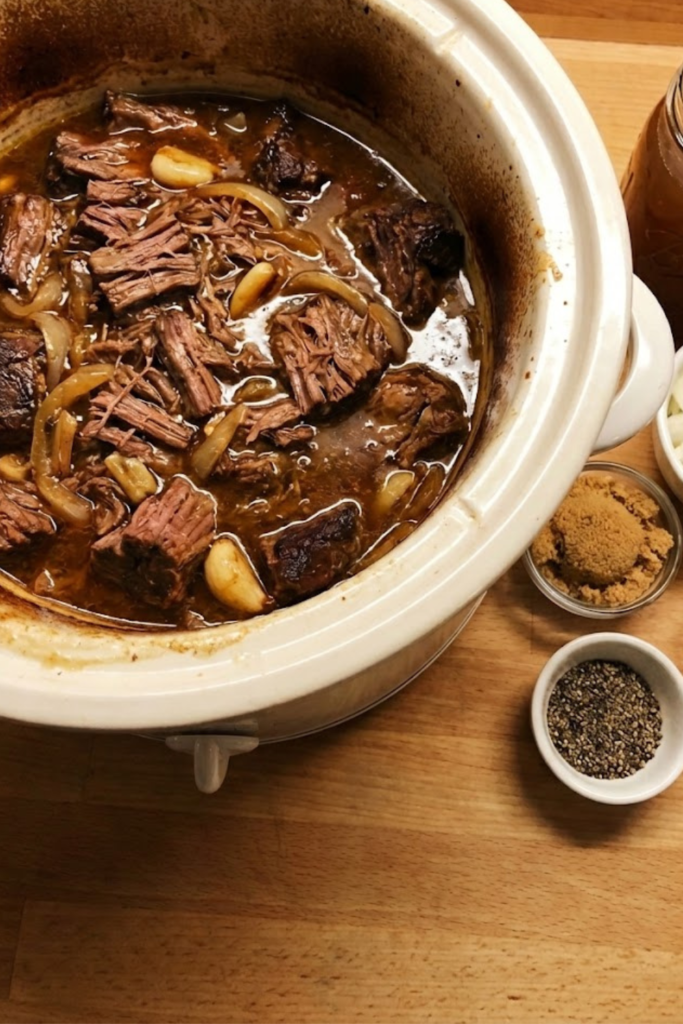
Good barbecue comes to those who wait.” I still remember the first time I tried to rush a brisket—it had the texture of a leather boot and the flavor of regret! But don’t worry, we aren’t making that mistake today. There is something truly magical about tossing a tough cut of meat into a slow cooker and coming back eight hours later to something that falls apart if you even look at it wrong. It’s the ultimate kitchen wizardry!
In this guide, I’m going to walk you through the surprisingly simple process of making the best crock pot brisket you’ve ever tasted. We are talking about savory, smoky, melt-in-your-mouth perfection that will have your family fighting for the last slice. Whether you are a total beginner or a seasoned home cook looking for a hands-off dinner win, you are in the right place. Let’s get slow cooking!
Choosing the Right Cut: Flat vs. Point
I used to dread standing at the meat counter. Seriously, I’d just stare at those massive, vacuum-sealed slabs of beef, totally overwhelmed by the choices. I remember grabbing a huge “packer brisket” once, thinking I was going to be the BBQ queen of the neighborhood. Spoiler alert: I had to saw the thing in half just to get the lid on my slow cooker, and it was a total disaster.
It took me a few ruined dinners to realize that not all brisket is created equal. Understanding what you are actually looking at is half the battle.
The Tale of Two Muscles
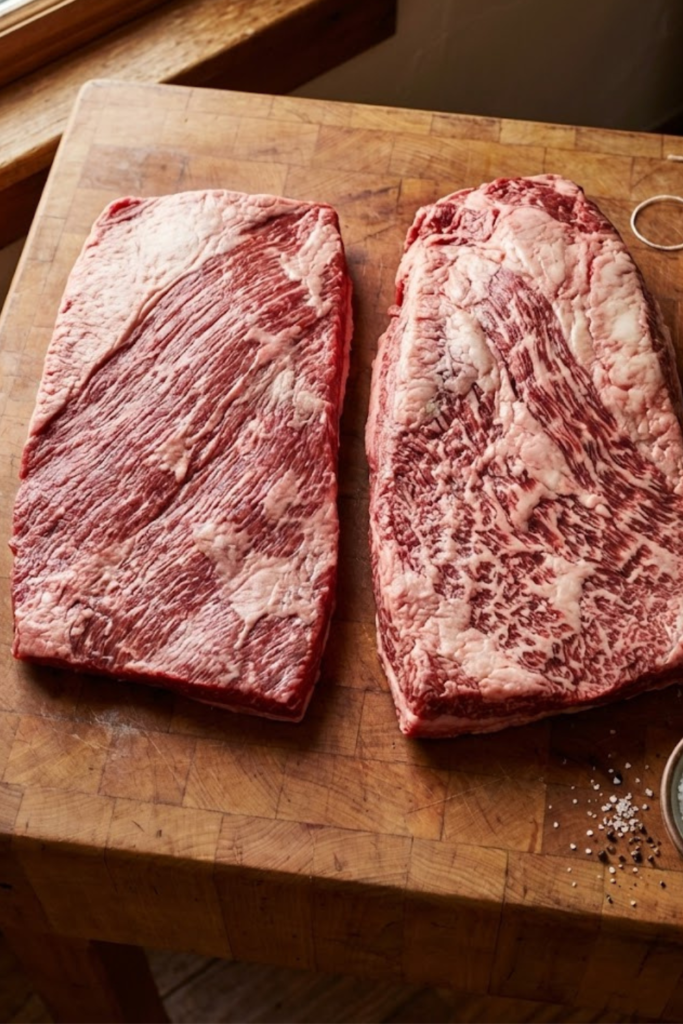
Basically, a whole brisket is made of two muscles that sit on top of each other: the flat and the point. They cook differently, and honestly, they taste different too.
The Flat Cut: This is what you probably picture when you think of brisket. It’s leaner, more uniform, and it’s the cut you want if you are looking for those perfect, Instagram-worthy slices. It’s easier to find at the grocery store, usually sold as a 3-5 pound rectangle. If you want neat slices for sandwiches or a traditional dinner plate, this is your guy.
The Point Cut: This is the fatty, irregular-shaped section that sits on top of the flat. It has way more marbling (that’s the white flecks of fat inside the meat). Because of all that extra fat and connective tissue, the point is incredibly juicy and flavorful, but it doesn’t slice well. It falls apart. If you want shredded beef or “burnt ends,” the point is hands down the winner.
Size Matters (A Lot)
Here is a mistake I see people make all the time. They get excited and buy a 12-pound whole packer brisket because it’s cheaper per pound. Please, don’t do this unless you have a massive smoker or an industrial-sized oval slow cooker.
For a standard 6-quart crock pot, you really need a 3 to 4-pound piece of meat. If you try to jam a massive roast in there, it cooks unevenly. You’ll end up with edges that are dry as a bone while the center is still tough. Stick to a manageable size that lays flat on the bottom of the pot.
Dealing with the Fat Cap
Okay, let’s talk about the fat cap—that thick layer of white fat on one side. I used to trim it all off because I was scared of greasy gravy. Bad move. You need some of that fat to baste the meat while it cooks.
My rule of thumb is to leave about 1/4 inch of fat on the meat. It keeps the brisket moist during that long, slow cook. You can always skim the grease off the sauce later, but you can’t put moisture back into dry beef! Just ask your butcher to trim it for you if you don’t have a sharp knife handy; they are usually happy to help.
The Secret Dry Rub for Maximum Flavor
I’m going to be real with you for a second. For years, I thought “seasoning” meant dumping a bottle of store-bought BBQ sauce over a piece of meat and walking away. I know, I know. It hurts just to type that. The problem with that method is that the flavor never actually penetrates the meat. You end up with a tasty surface and a whole lot of nothing in the middle.
It wasn’t until I started experimenting with a proper dry rub recipe that my brisket actually started tasting like something you’d pay for at a restaurant. A dry rub isn’t just about making things salty; it’s about creating a crust—what the pros call “bark”—that locks in the juices and creates amazing texture, even in a humid slow cooker environment.
The Holy Trinity of Seasoning
You don’t need a pantry full of fancy, expensive jars to make this work. The base of any solid brisket rub starts with three things: salt, pepper, and garlic. But here is the catch—the type of salt matters.
Do not use fine table salt. It dissolves too fast and makes the meat taste metallic. You want coarse salt, like kosher salt or sea salt. The larger grains take longer to break down, which helps draw moisture out of the surface to create that crust we are after. I usually go with a 50/50 mix of coarse salt and cracked black pepper, then hit it with a heavy hand of garlic powder.
Bringing the Sweet and Heat
Once you have your base, it’s time to play jazz. Brisket loves a little sweetness to balance out the savory richness of the beef. I always add brown sugar to my mix. The molasses in the sugar helps with caramelization, giving you that dark, sticky exterior even without a smoker.
For a little kick, I toss in some smoked paprika and a pinch of cayenne. The smoked paprika is key here—it mimics that wood-fired flavor that the crock pot obviously lacks. If you like it spicy, go heavier on the cayenne, but remember that the heat intensifies as it cooks down.
Rub It Like You Mean It
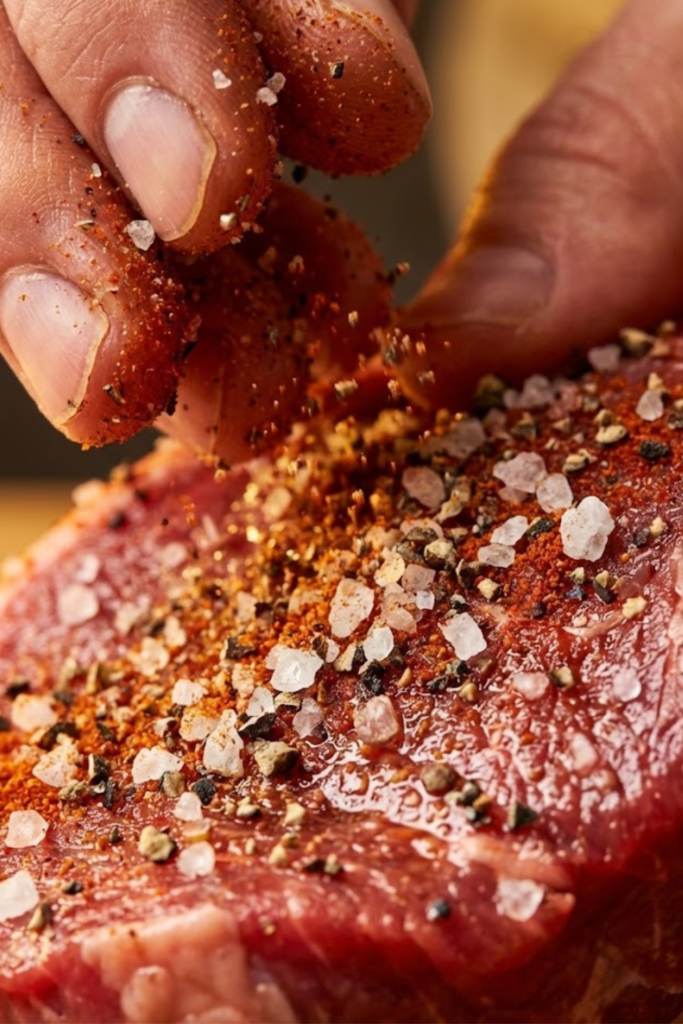
Here is where things get messy. You can’t just sprinkle this stuff on like fairy dust. You have to really work it in. I like to lay the brisket on a baking sheet, dump the rub over it, and massage it into every nook and cranny. Don’t forget the sides and the ends!
The most crucial step? Patience. Once the meat is coated, let it sit on the counter for about 20 to 30 minutes before you start cooking. This acts like a quick dry brine. The salt starts to pull proteins to the surface, which helps the rub stick and deepens the flavor profile. If you rush this part, a lot of that delicious seasoning will just wash off into the broth the second you add liquid. Trust me, waiting those extra few minutes makes a massive difference in the final result.
Searing: Is It Really Necessary?
Look, I get it. The whole appeal of a slow cooker is that you can dump everything in, press a button, and walk away to binge-watch your favorite show. The absolute last thing I want to do at 8:00 AM is dirty another pan. For the longest time, I was a staunch “dump and go” advocate. I thought searing was just something TV chefs did to show off.
Then I made a brisket without searing it.
It tasted fine, I guess. But it looked… well, it looked gray. It had the texture of boiled beef, which is exactly as appetizing as it sounds. That was the moment I realized that taking ten extra minutes to brown the meat isn’t just a suggestion; it’s kind of a dealbreaker if you want searing meat to actually taste like a roast.
The Science-ish Part (Keep With Me)
You don’t need a chemistry degree to understand why this matters, but there is a fancy term for it: the Maillard reaction. Basically, when high heat hits proteins and sugars, they caramelize. This creates that gorgeous, deep brown crust and a complexity of flavor that a slow cooker simply cannot replicate.
The slow cooker creates a humid environment. It steams the food. Steaming is great for broccoli, but it does zero favors for a slab of beef. By searing it first, you are locking in a layer of savory richness before the long bath begins.
My Smoke Alarm Experience
Now, I won’t lie to you. The first time I tried to get a good sear, I set off my smoke alarm and terrified the dog. I had the heat way too high and used olive oil, which smokes like crazy. Lesson learned.
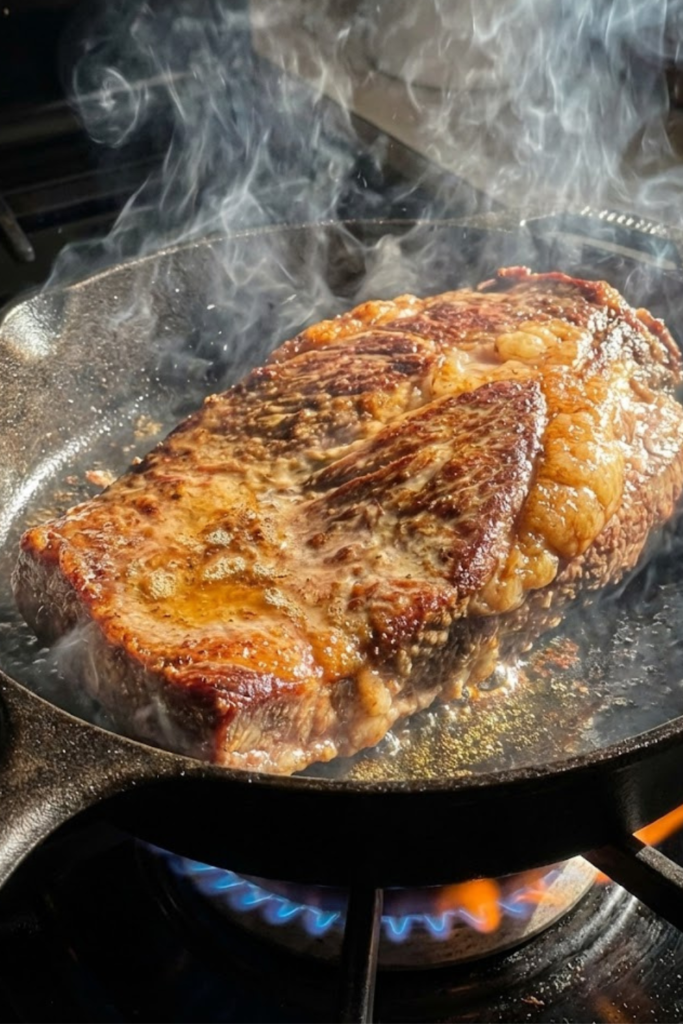
Grab your heaviest pan—a cast iron skillet is the absolute best for this because it holds heat like a champ. Add a high-heat oil (like avocado or vegetable oil), not butter or olive oil. Wait until the oil is shimmering and almost smoking. Then, carefully lay that brisket down.
Don’t touch it! Seriously, let it sit there for 3-4 minutes per side. You want a hard, dark crust. It might get a little smoky in the kitchen, but that smell is just the promise of a good dinner.
Don’t You Dare Wash That Pan
Once you move the meat to the crock pot, look at the pan. See those stuck-on brown bits at the bottom? That is pure flavor gold. Do not wash that down the sink!
Pour a little bit of your beef broth or even a splash of red wine into the hot skillet. It will hiss and bubble aggressively—this is called deglazing. Scrape up those bits with a wooden spoon and pour that dark, rich liquid right over the meat in the slow cooker. This little step adds a depth to your sauce that makes people ask, “What is your secret ingredient?”
If you are absolutely pressed for time and just cannot deal with the skillet, yes, you can skip this. You will still have edible food. But if you want that restaurant-quality, melt-in-your-mouth experience, don’t skip the sear. It’s worth the extra dish to wash.
The Braising Liquid and Aromatics
I need to confess something embarrassing. The first time I used a slow cooker, I treated it like a swimming pool. I thought that to keep the meat moist, I had to completely submerge it in liquid. I dumped in boxes of stock, water, you name it. When I opened the lid eight hours later, I didn’t have a roast; I had a weird, gray boiled beef soup. It was edible, sure, but it was definitely not barbecue.
Through a lot of trial and error (and some very watery dinners), I learned that the braising liquid is not a bath. It’s a steam room. You are building an environment for flavor, not trying to drown the cow.
Building a Flavor Foundation
Before the meat even touches the pot, you need a foundation. I used to just toss the slab of beef right onto the ceramic bottom. Big mistake. The bottom gets way too hot and can scorch the meat, leaving you with a burnt, bitter crust that sticks like glue.
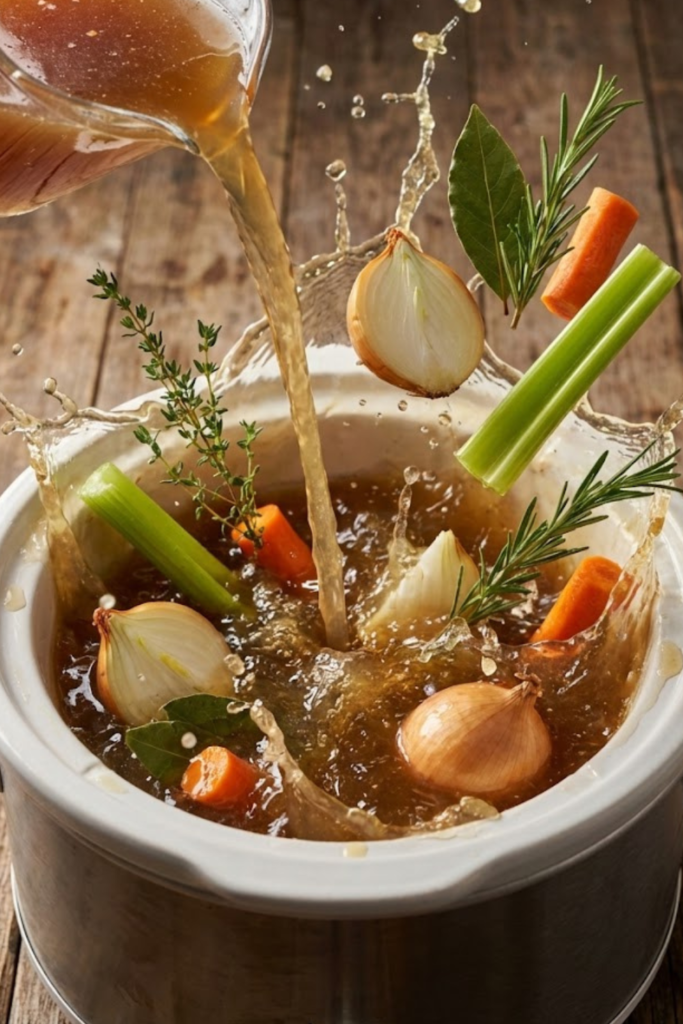
Now, I always make a vegetable bed. I roughly chop a couple of onions, some celery, and big chunks of carrots and throw them in first. This does two things. First, it acts like a natural roasting rack, lifting the brisket off the direct heat so air can circulate. Second, as those carrots and onions cook down, they release sweetness into the sauce that sugar just can’t mimic. Plus, you get a side of super tender veggies for dinner. It’s a win-win.
Faking the Smoker
Since we are cooking indoors, we are missing that signature smoky flavor that you get from a real wood fire. This is where I cheat a little, and I’m not ashamed to admit it. Liquid smoke is my secret weapon.
Some people turn their noses up at it, thinking it’s fake chemicals. But good quality liquid smoke is just smoke condensation. A little goes a long way, though! I usually mix about a teaspoon into my beef broth. If you use too much, your food will taste like an ashtray, so be careful.
To deepen the flavor even more, I add a splash of Worcestershire sauce and—stick with me here—a little soy sauce. I know, soy sauce sounds weird for BBQ. But it adds that savory “umami” punch that makes the beef taste beefier. It cuts through the richness of the fat and balances out the brown sugar rub we talked about earlier.
The Less Is More Rule
Here is the most important part: stop pouring! You only need about a cup, maybe a cup and a half, of liquid total. That’s it.
It feels wrong when you are doing it. You’ll look at that massive pot and think, “That’s not enough!” But remember, a brisket is a big muscle full of water and fat. As it cooks, it’s going to release its own juices. If you start with the pot half full, you will end up with an overflowing mess by hour six.
The liquid should only come up about an inch or so up the side of the meat. You want the top of the brisket exposed to the moist heat, not swimming in broth. This allows the rub to set into a nice bark instead of washing away. Trust the process and put the measuring cup down. Your slow cooking tips for the day: trust the meat to do its job.
Low and Slow: Cooking Times and Temperatures
I am the world’s most impatient cook. If a recipe says “chill for four hours,” I usually give it twenty minutes and hope for the best. But when I first started making brisket, my impatience was my downfall. I used to crank my slow cooker to “High” because I wanted dinner on the table faster.
The result? A piece of meat that was tough, chewy, and honestly, a workout for my jaw. I learned the hard way that you cannot rush greatness. When it comes to slow cooker recipes, especially for a tough cut like brisket, patience isn’t just a virtue; it’s an ingredient.
The Magic of the Low Setting
There is a scientific reason why “Low” is the only way to go here. Brisket is full of tough connective tissue called collagen. If you blast it with high heat, that tissue tightens up like a rubber band. It squeezes all the moisture out, leaving you with dry beef. +2
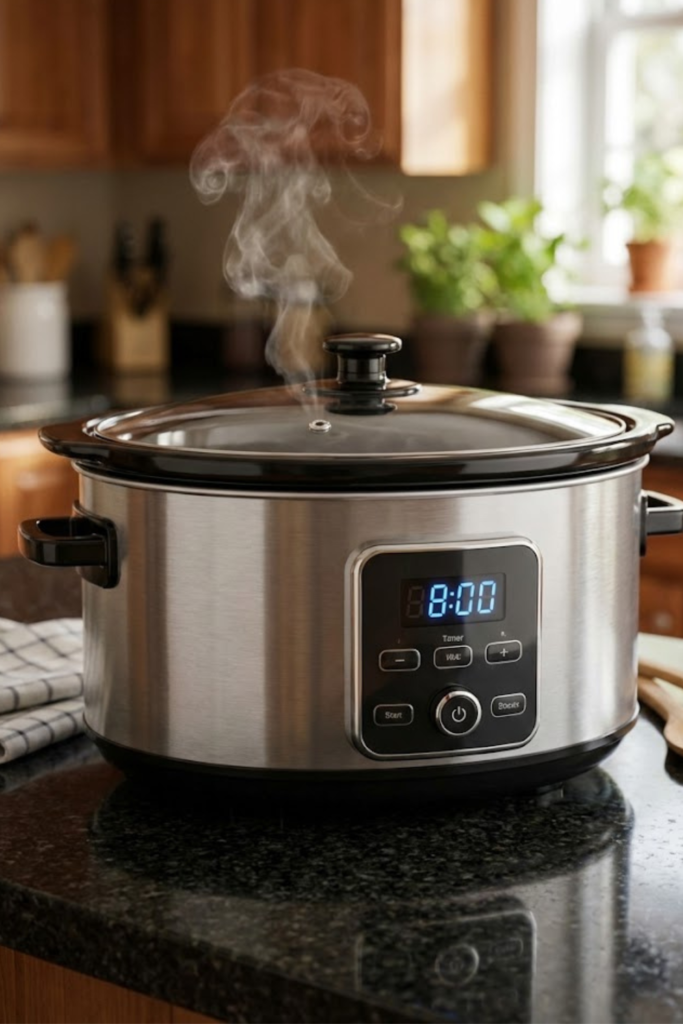
But when you cook it on “Low” for 8 to 10 hours, magic happens. That tough collagen slowly melts into gelatin. This process, known as collagen breakdown, is what gives the meat that silky, rich texture that melts in your mouth. You simply cannot get that on the “High” setting. It takes time and gentle heat to coax that toughness into tenderness. +1
Don’t Panic at “The Stall”
Here is a moment that freaked me out the first time I used a meat thermometer to track my cook. The temperature was rising steadily, and then suddenly, it just stopped. It stayed at the same temperature for what felt like hours.
I thought my crock pot was broken. I almost threw the whole thing out! But this is normal. It’s called “the stall.” It happens when the meat is sweating off moisture, which cools it down. Just ride it out. Don’t open the lid to check, or you will let all the heat out and make it take even longer. Trust the low and slow cooking process. +2
The Fork Test
So, how do you know when it’s actually done? You might think a timer is enough, but every cow is different. A cooking time calculator can give you an estimate, but the meat tells you when it’s ready.
I use the “fork-tender” test. Open the lid and stick a fork into the thickest part of the meat. If you can twist the fork with absolutely zero resistance—like you are twisting it into a stick of softened butter—it is done. If there is any pull or tightness, put the lid back on and give it another 30 minutes. +2
Aim for the Right Number
If you are a data nerd like me, you want a specific number. You are looking for an internal temperature between 190°F and 205°F. It sounds high for beef, I know. We usually pull steaks at 135°F!
But remember, we aren’t cooking a steak. We are breaking down a muscle. At 190°F, that connective tissue has dissolved, but the meat is still holding its shape for slicing. If you want shredded beef, let it go closer to 205°F. Just don’t pull it out early, or you will be chewing on that dinner for a week.
Finishing Touches: Slicing and Serving
I have a confession to make. The first time I successfully cooked a brisket that didn’t resemble a shoe, I ruined it in the last five minutes. I was starving, the house smelled amazing, and my family was hovering around the kitchen like vultures. I pulled that roast out of the slow cooker and immediately started hacking away at it.
By the time we sat down to eat, my cutting board was covered in a pool of delicious juice, and the meat on my plate was dry as dust. I was devastated. I learned the hard way that how you finish the job is just as important as how you start it. You’ve waited ten hours; don’t fumble the ball on the one-yard line!
The Hardest Part: Waiting
This is going to test your willpower, but you have to trust me. When you take the meat out of the pot, you must let it sit. I usually tent it loosely with aluminum foil and set a timer for at least 20 minutes. This is non-negotiable.
During cooking, the juices in the meat get excited and run to the center of the roast to hide from the heat. Resting meat allows those juices to relax and redistribute back through the muscle fibers. If you slice it the second it comes out, all that moisture runs out onto the counter. You want that liquid in your mouth, not on your table.
The Grain Game
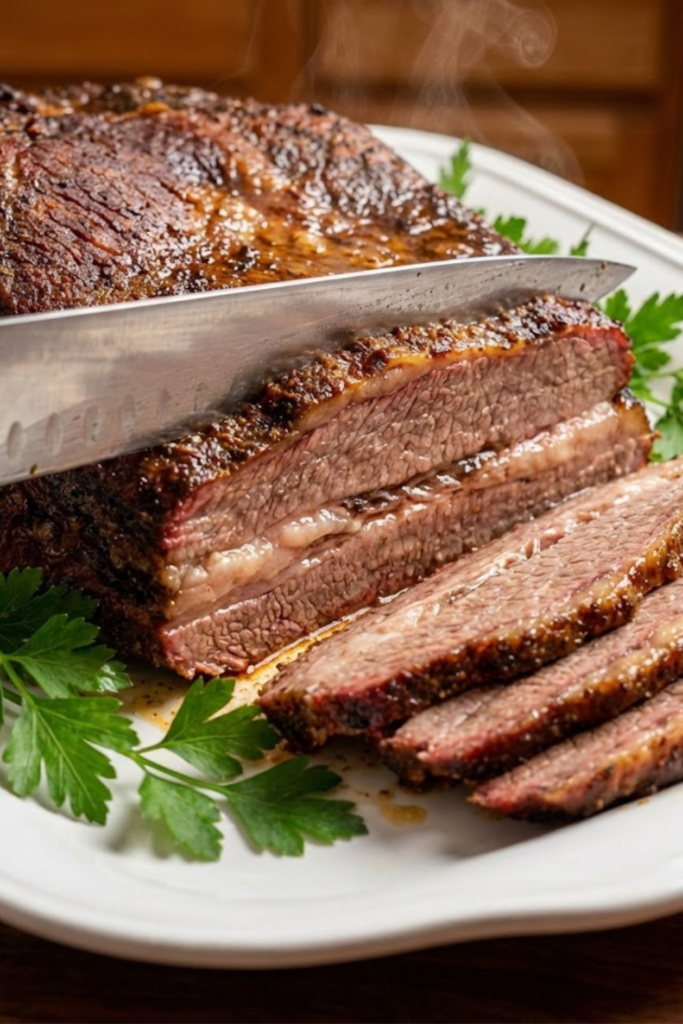
If you take nothing else away from this, please listen to this part. You can cook the most perfect piece of beef in history, but if you slice it wrong, it will be chewy. You have to be slicing against the grain.
Look closely at the meat. You will see lines of muscle fibers running in one direction—that’s the “grain.” If you cut parallel to those lines, you end up with long, stringy fibers that get stuck in your teeth. You want to turn your knife so you are cutting perpendicular to those lines. This shortens the fibers, making every bite tender. It’s the difference between a melt-in-your-mouth experience and a jaw workout.
Liquid Gold Gravy
Now, look at that pot of dark, rich liquid left behind. Do not pour that down the sink! That stuff is liquid gold. It’s full of beef drippings, dissolved spices, and flavor from the veggies. Making a homemade gravy is easier than you think and takes the meal to a whole new level.
I usually strain the liquid into a saucepan to get the onion and carrot chunks out. Then, I mix a tablespoon of cornstarch with a splash of cold water to make a cornstarch slurry. Whisk that into the simmering liquid, and boom—you have a thick, glossy sauce to pour over everything.
Dinner and Beyond
We usually serve this with creamy mashed potatoes to soak up that gravy, but honestly, the leftovers are the real MVP here. Brisket sandwiches on soft brioche buns are my husband’s favorite lunch for the rest of the week.
If you somehow have anything left over after day two, this meat is perfect for tacos or even tossed into a quick pasta. Leftover brisket recipes are a lifesaver for family meal prep when you just don’t have the energy to cook again. It’s the gift that keeps on giving. Just remember: rest it, slice it right, and save that sauce!
It is funny how a simple pot roast used to intimidate me. I really thought beef brisket was reserved for pro pitmasters with fancy smokers. But honestly, once you realize your slow cooker does the heavy lifting, it changes your whole family meal prep game. You don’t need to be a chef to pull off this comfort food; you just need a little patience.
We covered a lot today, from that crucial sear to the specific rub recipe. But if I had to pick one hill to die on, it is this: let the meat rest! Cutting into it too early is the easiest way to turn a masterpiece into a dry disaster. Just give it those twenty minutes. Your tastebuds will thank you.+1
I hope this guide helps you get a delicious, hearty beef dinner on the table without the stress. It’s perfect for a lazy Sunday roast or even busy weeknights. Give it a try this weekend!
Pin this recipe to your “Slow Cooker Favorites” board on Pinterest so you don’t lose it!