I used to think making risotto was super hard, like you needed some magic touch to get it right. Honestly, I burned my share of pans before I figured out that the real trick is just patience and keeping your broth hot. This creamy pea and mint risotto with parmesan is my favorite way to bring a little bit of spring onto the dinner table, even if it’s raining outside. It’s rich and cheesy without being too heavy, and the mint really wakes everything up. You don’t need to be an expert to make this, just grab a wooden spoon and get ready to stir a little bit, its totally worth the effort.
Choosing the Right Ingredients for the Perfect Risotto
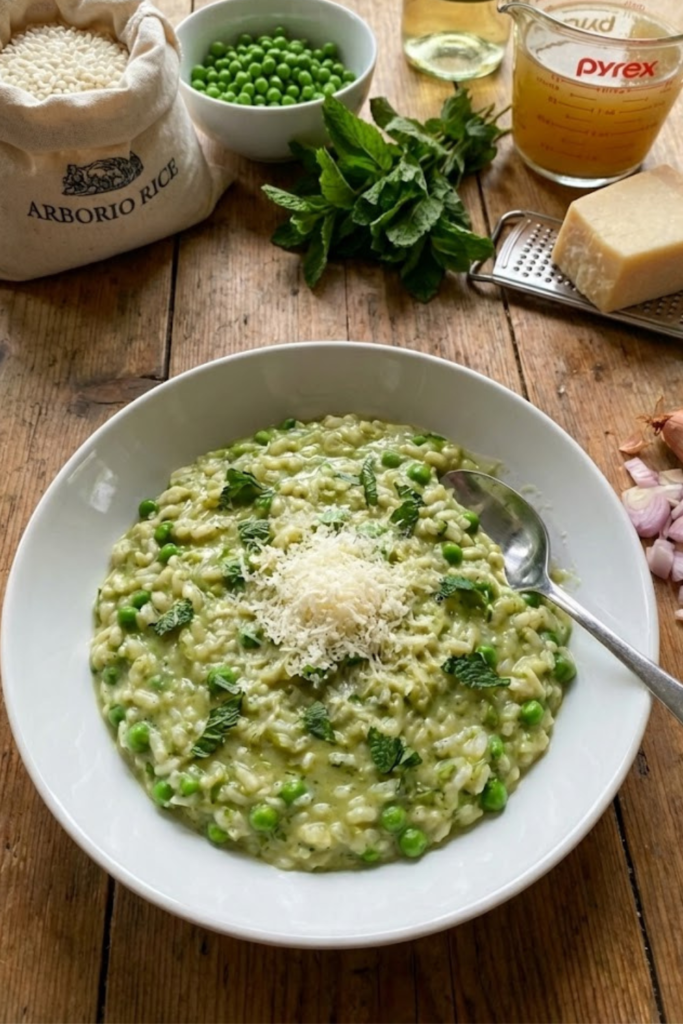
You can’t just grab any bag of rice from the pantry for this. If you use the long-grain kind you eat with stir-fry, it just won’t get creamy. The whole point of risotto is getting the rice to let go of its starch.
Here is what I look for when I’m at the store:
- The Rice: Most people buy Arborio rice because it is in every supermarket. It works great and gets super creamy. But if you can find Carnaroli rice, buy that instead. It’s a little more forgiving, meaning it keeps a nice chew even if you cook it a minute too long. I used to turn my Arborio into mush all the time before I switched.
- The Broth: Since the rice drinks up all the liquid, your dish is gonna taste exactly like your broth. If you use a cheap bouillon cube, it might taste salty and fake. I usually grab a box of low-sodium vegetable broth. I like low-sodium so I can control how salty it gets at the end with the cheese.
- Fresh vs. Frozen Peas: Honestly, don’t stress about shelling fresh peas unless you really want to. I almost always use frozen petite peas. They are frozen right when they are picked, so they are actually sweeter than the fresh ones that sat on a truck for a week. Just make sure they are the “petite” or “baby” ones; the big ones can be kind of mealy.
- The Cheese: This is the one rule I don’t break. You have to buy a wedge of Parmesan and grate it yourself. The bags of pre-shredded cheese have this weird potato starch coating to keep it from clumping in the bag. That coating stops the cheese from melting properly, and your risotto will end up gritty. It takes two minutes to grate it, and it makes a huge difference.
Mastering the Soffritto and Toasting the Rice
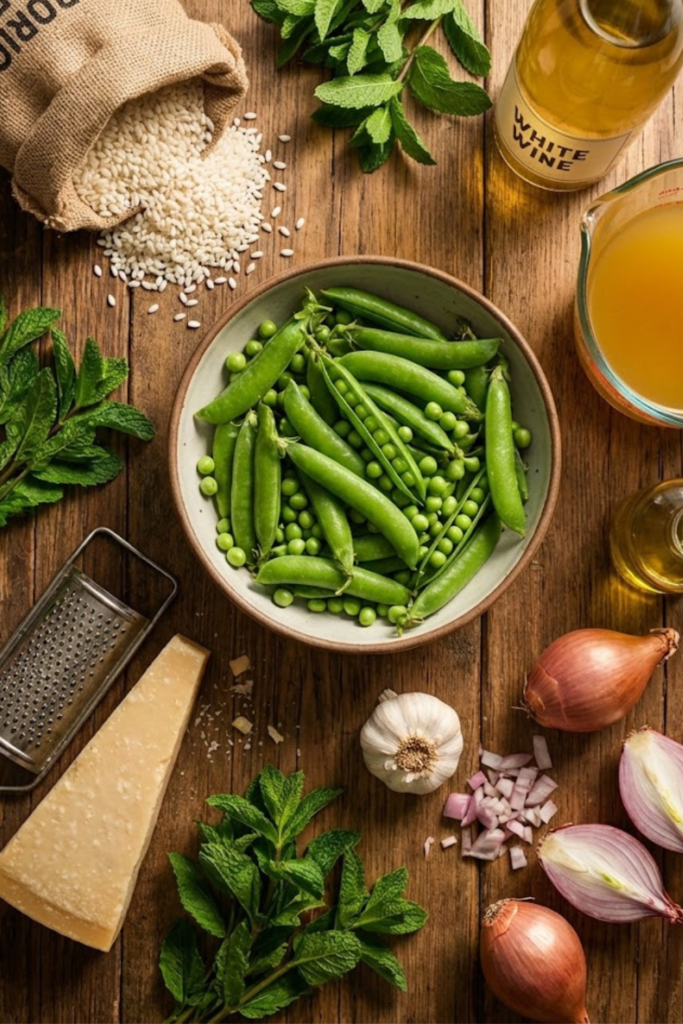
Okay, this part is where you build the flavor foundation. In Italy they call it soffritto, which sounds super fancy, but it’s really just gently frying your onions.
I like to use shallots because they are sweeter than regular yellow onions, but use whatever you have. The main thing is to chop them super small. You don’t want big chunks of onion in your finished dish. You want them to basically melt away so you taste them but don’t see them. Cook them in butter or oil on medium heat until they are soft and clear, not brown. If they brown, the taste gets a bit bitter.
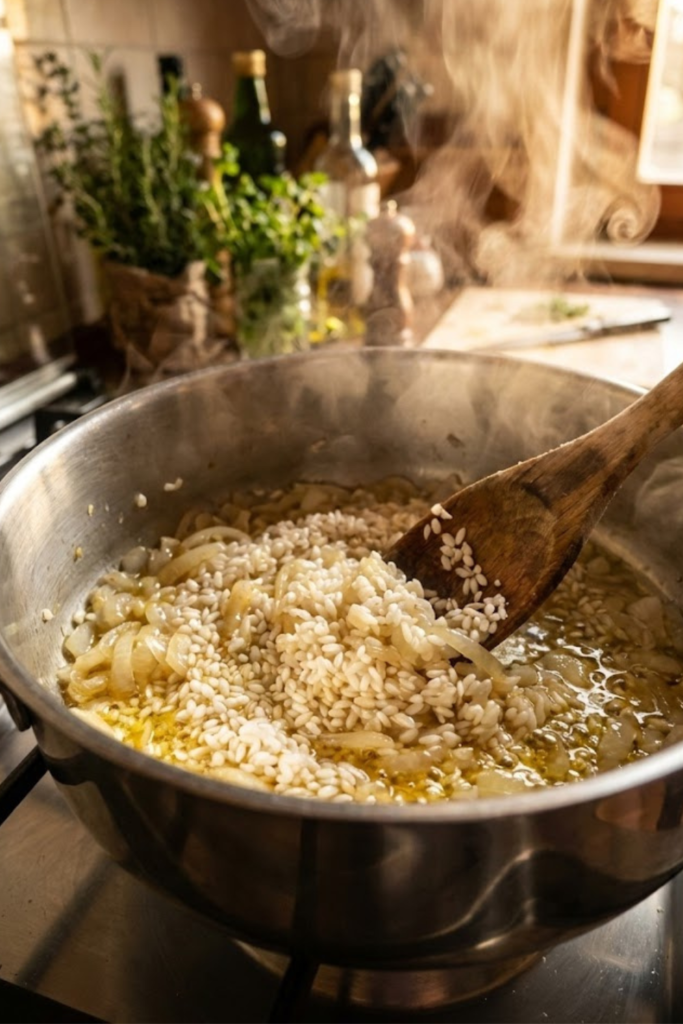
Now, add the rice to the pot. Do not add the liquid yet! This step is called tostatura (toasting). You want to stir the dry rice with the onions and oil for about two minutes. You are coating every grain in fat. This helps the rice keep its shape so it doesn’t turn into mush later. You’ll know it’s ready when the edges of the rice look clear or translucent, and it starts to smell a little bit like popcorn.
Once the rice is toasted, pour in your white wine. I usually use a Pinot Grigio or Sauvignon Blanc—something dry that I’d actually drink. It will hiss and steam a lot, which is exactly what you want. Scrape the bottom of the pan with your spoon to get any tasty bits up. Cook this until the wine is almost completely gone and the smell of alcohol has cooked off. Now we are ready for the broth.
The Ladle Method: Cooking Risotto Step-by-Step
This is the part that scares people, but honestly, it’s just repetitive. You get into a rhythm after a few minutes.
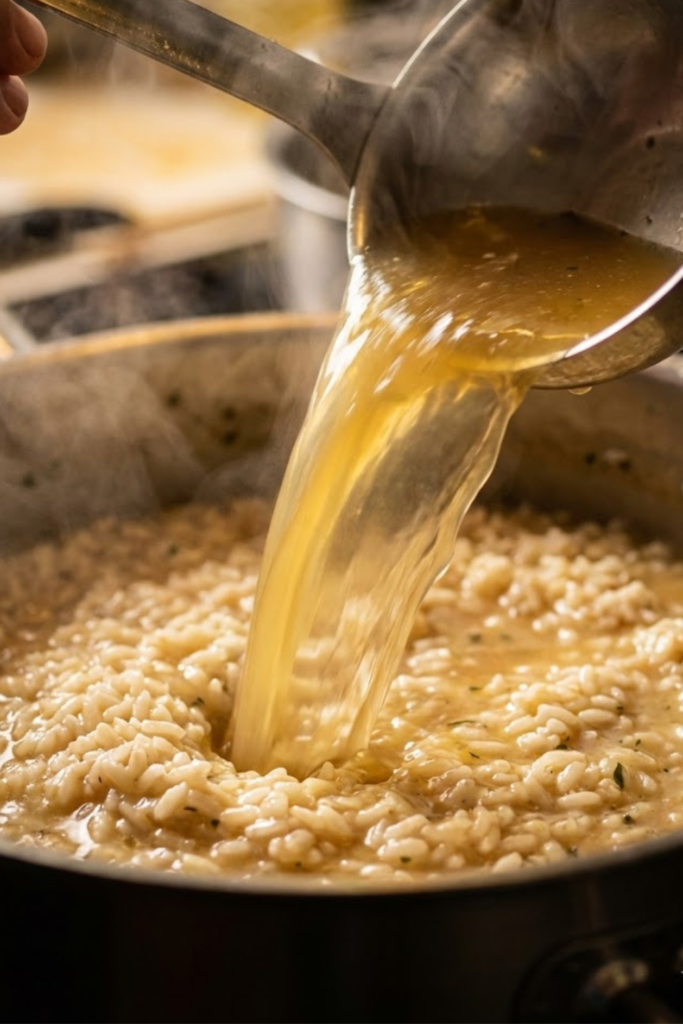
First things first: keep your broth hot. I always have a second pot on the burner next to my rice with the stock simmering. If you pour cold broth into the hot rice, everything stops cooking for a minute until it heats back up. You want to keep that gentle boil going the whole time so the rice cooks evenly.
Start by adding just one ladle of the hot broth to the rice. It will bubble up. Now, stir. You don’t have to stir like a crazy person the entire time, but you do need to stir a lot. As you move the spoon, the rice grains rub against each other. This friction rubs off the starch, and that starch mixes with the broth to make that creamy sauce. If you just let it sit there, you’ll basically get boiled rice, not risotto.
When the liquid is almost gone and you can see the bottom of the pot when you drag your spoon through, add another ladle. Then stir again. You just keep doing this—add liquid, stir, wait for it to disappear, repeat.
It usually takes about 20 minutes, but don’t stare at the clock. Taste it. Around the 18-minute mark, grab a grain and bite it. You want it to be soft but still have a tiny bit of chew in the center. If it’s crunchy, keep going. If it’s mushy, well, you went too far, but it will still taste good!
Infusing Freshness: When to Add Peas and Mint
I used to make the mistake of dumping my peas in way too early. By the time the rice was done, the peas were these sad, gray little mush balls. It looked like cafeteria food. Now, I learned you gotta wait.
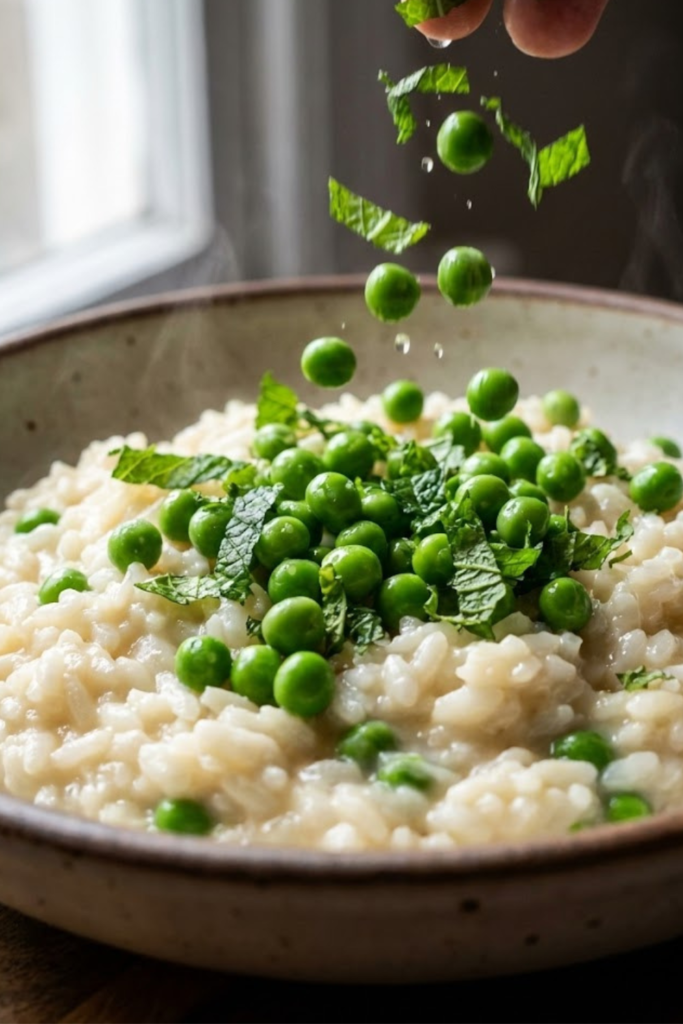
If you are using frozen peas like I usually do, you literally just toss them in for the last 2 minutes of cooking. The heat of the rice is enough to warm them up without cooking the life out of them. They stay bright green and pop when you bite them. If you want it really fancy, sometimes I take half the peas and mash them up with a fork before adding them. It turns the whole risotto this cool light green color.
The mint is even more delicate. If you chop mint and let it sit on the cutting board, the edges turn black and it looks gross. And if you cook it too long, the flavor disappears. So, I wait until the pot is completely off the stove. I chop the mint right then and there and stir it in at the very last second. That way, you get that fresh smell right when you put the bowl on the table. It cuts through all that heavy cheese and butter perfectly.
Mantecatura: The Final Step for Creamy Risotto
This is the magic moment. Italians actually have a special word for it called mantecatura. It basically means whipping air and fat into the rice to make it creamy. If you skip this, your risotto will just be wet rice, and we don’t want that.
First, take the pot completely off the burner. You have to let it rest for a minute. If you add the cheese while it is still boiling hot, the fat separates and it gets greasy. So let it cool down for just a second.
Now, dump in your cold cubes of butter and that big pile of grated Parmesan. Stir it fast! You want to whip it with your spoon. The cold butter mixes with the warm starch and creates a sauce that is thick and glossy.
Finally, shake the pot back and forth. The rice should move like a wave in the ocean. They call this all’onda. If it stays stiff in a pile like mashed potatoes, it’s too dry. Don’t panic! Just stir in a tiny splash of hot broth to loosen it up until it ripples when you shake the pan.
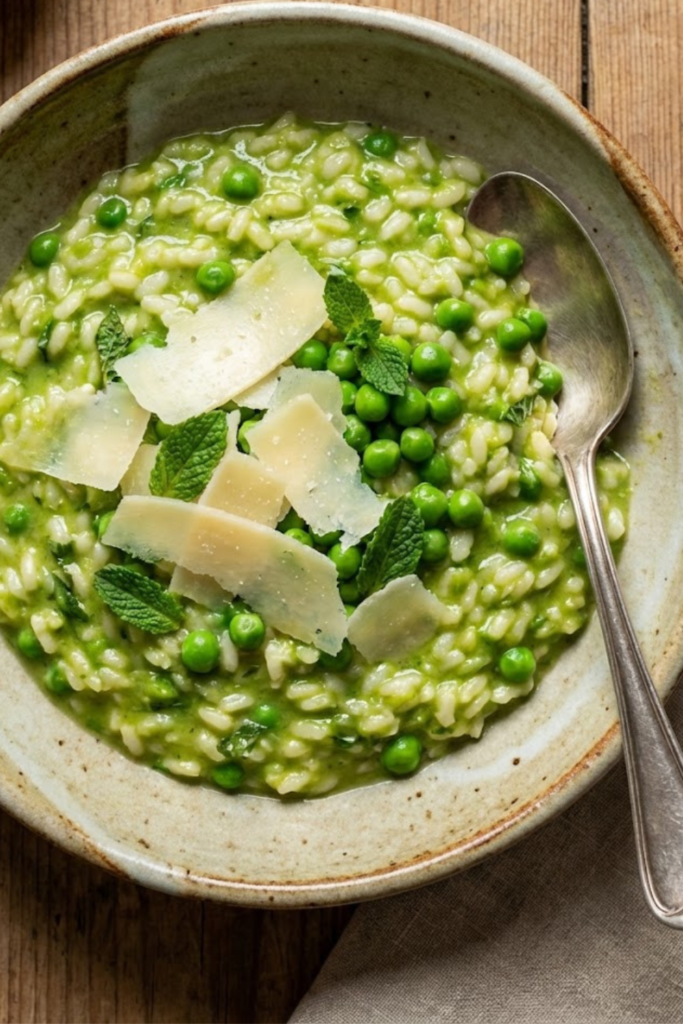
We made it to the end! I know it seems like a lot of steps just for rice, but once you taste that first bite, you will get it. We talked about why finding that Carnaroli rice helps, why you can’t rush adding the broth, and how that final whip with the butter makes it perfect. This Creamy Pea and Mint Risotto isn’t just a recipe I keep for special days; it’s honestly one of my favorite ways to unwind after a long week of teaching.
I really hope you give this a try in your own kitchen. It might take a little practice to get that “wave” texture just right, but even the practice rounds taste amazing. If you liked this recipe or want to save it for a rainy day, please Pin this to your Dinner Ideas board on Pinterest! It helps me out a ton, and I’d love to see your photos if you tag me. Happy cooking!