Ever had one of those days where you just need a hug in the form of food? I have. We all have! Honestly, nothing beats the smell of garlic and citrus hitting a hot pan. Did you know that the scent of lemon is actually scientifically proven to be a mood booster? It’s true! This Creamy Parmesan Lemon Chicken is my go-to “save me” meal. It’s lush. It’s tangy. It’s ready in under 30 minutes, which is a total lifesaver when the kids are screaming or work ran late. Let’s dive into this pan-seared perfection and make your kitchen smell like an Italian bistro!

Gathering Your Ingredients for Zesty Chicken Success
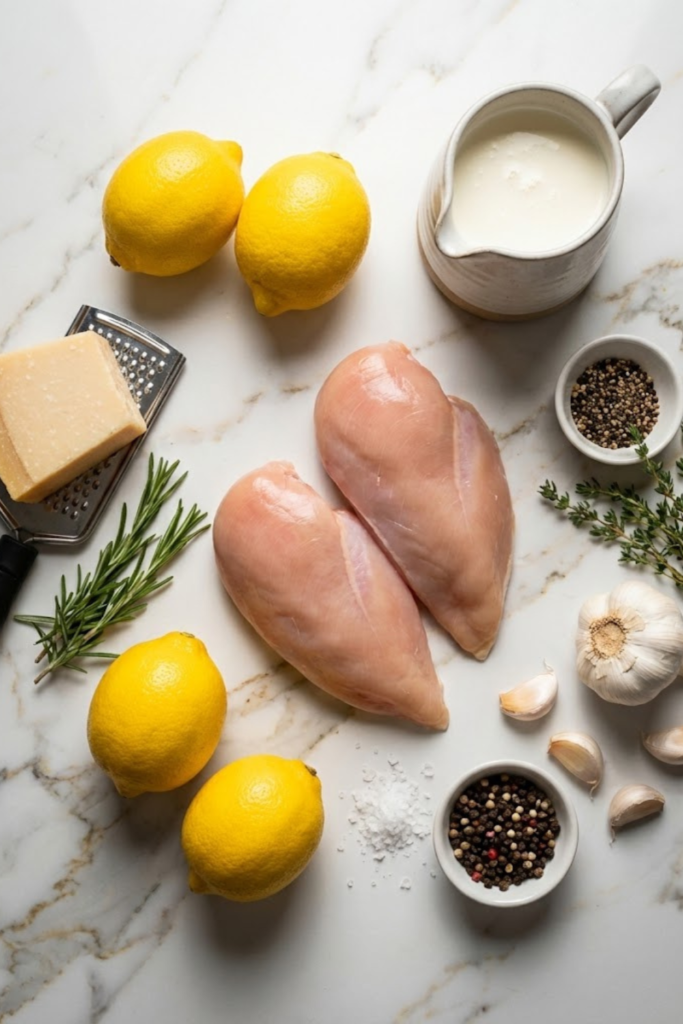
Look, I’ve been there. You’re rushing through the grocery store, grabbing whatever looks vaguely right, and hoping for the best. But for this specific creamy parmesan lemon chicken, the magic is really in the details. I once tried to make a version of this dish using that plastic lemon-shaped bottle of juice because I was feeling lazy. Yikes.
It honestly tasted like furniture polish! I ended up ordering pizza and throwing the whole pan out. So, let’s walk through what you actually need to grab so you don’t end up frustrated like I was.
Choosing Your Meat Wisely
Most people instinctively grab the thickest chicken breasts they can find. Big mistake. Huge! Those monster breasts take forever to cook through, and by the time the middle is safe to eat, the outside is dry as cardboard.
I usually go for boneless skinless chicken breasts that are on the smaller side. If you can only find the big ones, you gotta pound them thin. Seriously, get a meat mallet and whack them until they are even.
It’s great therapy after a long day, honestly. If you prefer dark meat, boneless skinless chicken thighs are totally fine too. They stay juicier and are way harder to mess up if you get distracted by the kids or the dog.
The Cheese Situation
Okay, we need to have a serious talk about cheese. Put down the green shaker can. Step away from the bag of pre-shredded stuff! Pre-shredded cheese is coated in stuff like potato starch or cellulose to keep it from clumping in the bag.
Do you know what happens when you try to melt that into a sauce? It turns into a grainy, gloopy mess. It is heartbreaking to watch your beautiful sauce turn into slime.
For a silky texture, you have to buy a block of Parmigiano Reggiano and grate it yourself. It takes literally two minutes and makes a world of difference.
Freshness Factors
Aside from the cheese, the lemon is the absolute star here. You need actual, fresh lemons. We are using both the juice and the zest to get that bright pop of flavor. Bottled juice just flat out lacks the zing we need for this sauce to cut through the heavy cream.
Speaking of cream, stick to heavy whipping cream. I’ve tried subbing milk or half-and-half to save a few calories in the past, but the sauce split on me. It looked curdled. Not appetizing at all. If you want that restaurant quality dinner, you have to embrace the fat.
Don’t Forget the Aromatics
Finally, don’t skimp on the garlic. Fresh garlic cloves minced by hand release way more flavor than the jarred stuff in oil. And for herbs, fresh parsley adds a nice color contrast at the end so it doesn’t look just beige.
Dried Italian seasoning works great for the flour dredge on the chicken, though! Just make sure your spices aren’t from 2015. Old spices lose all their punch.
Searing the Chicken Breasts to Golden Perfection
You know that feeling when you bite into a piece of chicken and it’s like chewing on a rubber tire? Yeah, I hate that. I used to be terrible at cooking chicken on the stove. I’d either burn it to a crisp or be terrified it was raw in the middle, so I’d boil it to death in the pan.
It took me a few years (and a lot of dry dinners) to figure out the sweet spot. Getting that perfect pan seared chicken isn’t actually hard, but you have to stop rushing the process. Trust me, patience pays off here.
The Prep Step You Can’t Skip
Here is where I messed up for years. I would just take the chicken out of the package and throw it in the pan. Big mistake. Chicken breasts are naturally uneven—fat on one end, skinny on the other.
If you cook them like that, the skinny end dries out before the fat end is safe to eat. You gotta pound them out. Place the chicken between two pieces of plastic wrap and whack it with a rolling pin or meat mallet until it’s even thickness. It’s also a great way to get some aggression out, just saying.
The Flour Dredge Trick
Once your chicken is pounded, don’t just throw it in naked. We want a golden brown crust. I like to create a simple flour dredge mixed with salt, pepper, and garlic powder.
Dredging does two things. First, it gives the chicken a nice texture. Second, those little bits of flour left in the pan will help thicken our creamy sauce later. It’s a win-win. Just shake off the excess flour; we want a light coating, not a winter coat.
Managing the Heat
Okay, grab your best cast iron skillet or stainless steel pan. Non-stick is okay, but you won’t get those yummy brown bits (we call that fond) that make the sauce taste amazing.
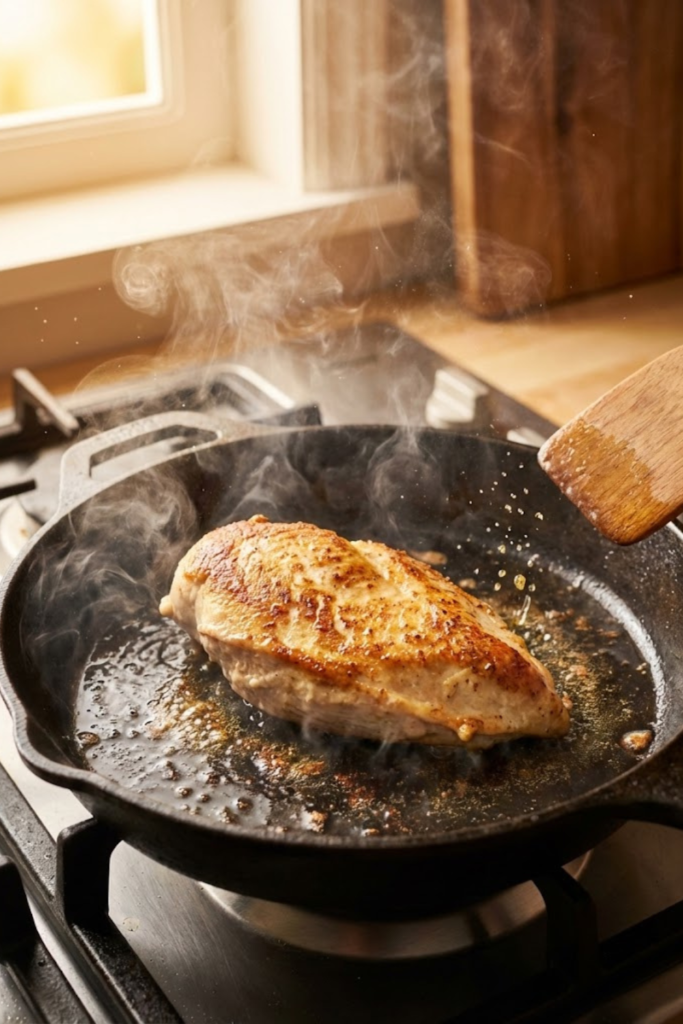
Heat your olive oil over medium-high heat. You need to wait until the oil is shimmering. If you throw the chicken in and it doesn’t sizzle immediately, take it out! You are steaming it, not searing it.
Patience with the Sear
Lay the chicken away from you so you don’t get splashed with hot oil. Now, here is the hard part: Do not touch it. I know you want to peek. Don’t do it!
Let it cook undisturbed for about 5-6 minutes per side. If you try to flip it and it sticks to the pan, it’s telling you it’s not ready. It will release naturally when that crust is formed.
Use a meat thermometer to check the internal temperature. You want it to hit 165°F. Once it’s there, remove it from the pan immediately and set it aside on a plate. It needs to rest so the juices redistribute. If you cut it now, all that flavor runs out onto the cutting board.
Crafting the Luscious Creamy Lemon Garlic Sauce
Okay, look at your pan. You see those brown, sticky bits stuck to the bottom where the chicken was? Do not, under any circumstances, take that to the sink and wash it! That stuff is called “fond,” and honestly, it is the most important part of this whole recipe.
I remember when I first started cooking, I was obsessed with having a clean pan for every step. I’d wash it out between the chicken and the sauce. My sauce always tasted bland, like warm milk. I couldn’t figure out why until I watched a cooking show and realized I was washing away all the flavor!
The Art of Deglazing
So, keep that heat on medium. We are going to deglaze. This is just a fancy chef word for pouring liquid into a hot pan to lift those brown bits.
I love using a dry white wine for cooking, like a Pinot Grigio or Sauvignon Blanc. It adds this acidity that cuts through the cream later. If you don’t do alcohol, chicken broth works perfectly fine too. Pour about half a cup in. It’s gonna hiss and steam—that’s good!
Grab your wooden spoon and scrape the bottom of the pan like you mean it. You want all those crispy chicken bits floating in the liquid.
Garlic: The Ticking Time Bomb
Now, toss in your minced garlic. Here is where I have messed up a million times. Garlic burns fast. Like, really fast.
I used to throw the garlic in and then walk away to check my phone or yell at the kids to wash up. By the time I turned around, the garlic was black, and the whole kitchen smelled bitter. Burnt garlic ruins the entire dish; you can’t save it.
You only need to sauté it for about 30 seconds to a minute. As soon as you smell that amazing garlic smell, you are done. Move on to the next step immediately.
Building the Creamy Base
Pour in your heavy cream. This is where the magic happens. We want to bring this to a gentle simmer. Do not boil it violently!
If you boil cream too hard, it can curdle, and nobody wants chunky sauce. Just let it bubble softly around the edges. You’ll see it start to thicken up after a few minutes. I usually let it go for about 3-4 minutes, whisking occasionally.
The Cheese Melt Rule
This is the most critical advice I can give you for this creamy parmesan lemon chicken. Turn the heat off. Yes, all the way off. Remove the pan from the burner if you have an electric stove that stays hot.
We are about to add the parmesan cheese. If you add cheese to boiling liquid, the proteins seize up, and the oil separates. You end up with a greasy, grainy mess instead of a smooth sauce. I learned this the hard way when trying to impress a date years ago. It was humiliating.
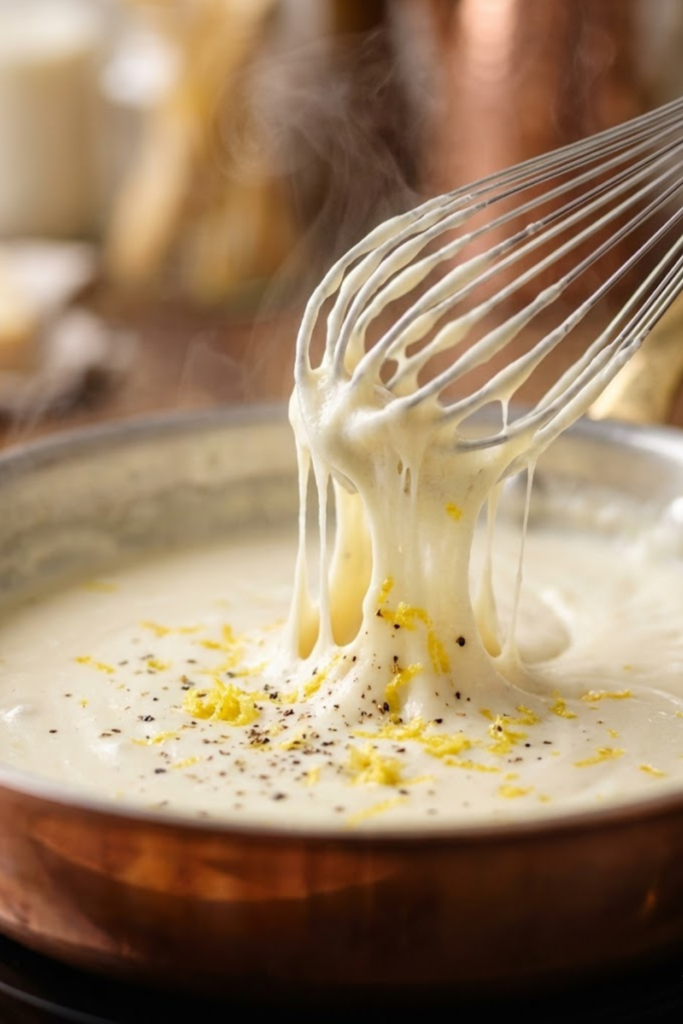
Sprinkle the grated parmesan in a little at a time, whisking constantly. Since the pan is off the heat, the cheese melts gently into the cream, creating that velvety, luscious creamy lemon garlic sauce we are dreaming of.
The Final Zesty Kick
Finally, stir in your fresh lemon juice and parsley. We add the lemon at the very end because if you cook lemon juice for too long, it loses that fresh “zing” and can sometimes make the cream curdle if it’s too hot.
Taste it. Does it need more salt? pepper? You’re the boss. Pour that liquid gold over your chicken and just try not to eat it all with a spoon before you serve dinner.
Pairing Side Dishes to Complete Your Italian Dinner
You know, I used to be the kind of cook who thought “more is better.” I once served this rich creamy parmesan lemon chicken alongside a heavy potato gratin. It was delicious, sure, but we were all in a food coma on the couch by 7 PM. I learned the hard way that when your main dish is this decadent, you need sides that either soak up that glory or cut through the richness.
Balance is everything. If you don’t think about the whole plate, you end up with a meal that feels like a brick in your stomach. Let’s talk about how to round this out so you actually have energy to do the dishes later.
The Perfect Pasta Vehicles
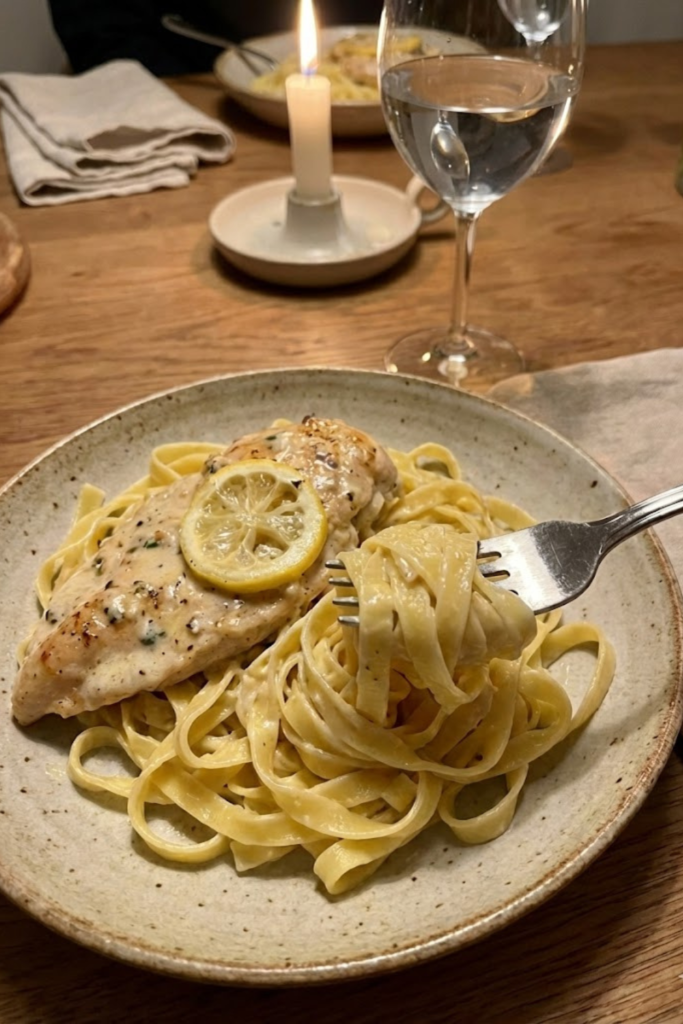
If you are not watching your carbs, pasta is the obvious choice here. I mean, we basically made a killer pasta sauce recipe right in the skillet. My personal favorite is angel hair pasta.
It cooks in like three minutes, which matches the speed of this dish perfectly. Plus, the delicate strands get coated beautifully without overwhelming the chicken. Fettuccine or penne pasta are also solid choices if you want something with more bite. Just don’t forget to salt your pasta water like the ocean!
keeping It Low Carb
I went through a phase where I cut out white flour (it was a long, sad month). During that time, I discovered that zucchini noodles—or “zoodles”—actually work surprisingly well here. The trick is not to overcook them.
If you boil zoodles, they turn into mushy water strings. Gross. I just toss them raw into the hot sauce right before serving, or give them a quick sauté for a minute. Cauliflower rice is another option, though honestly, I prefer roasted asparagus or green beans. The bitterness of the greens really helps balance the creamy sauce.
The Essential Sauce Mop
Okay, let’s be real. The best part of this meal is the sauce. It is liquid gold. It would be a crime to leave any of it on the plate.
You need some crusty bread. I usually grab a loaf of French bread or make some quick garlic bread in the oven. There is something so satisfying about ripping off a piece of bread and mopping up the last streaks of lemon garlic cream.
If you are feeling fancy, focaccia is amazing too. Just make sure you have something starch-based to catch every drop. My kids practically fight over who gets to lick the spoon, but decent table manners suggest using bread is the polite way to go.
Storing Leftovers and Reheating for Next-Day Flavor
I have a confession to make. I am a total leftover hoarder. I hate throwing food away. But I have to be honest with you—creamy sauces are high-maintenance divas. They are not like chili or lasagna that get better after sitting in the fridge for a day.
If you treat this creamy parmesan lemon chicken poorly the next day, it will punish you. I once took leftovers to work, nuked them for two minutes, and opened the container to find a pool of oil and rubbery chicken. It was a sad desk lunch. Let me save you from that fate.
The Fridge Situation
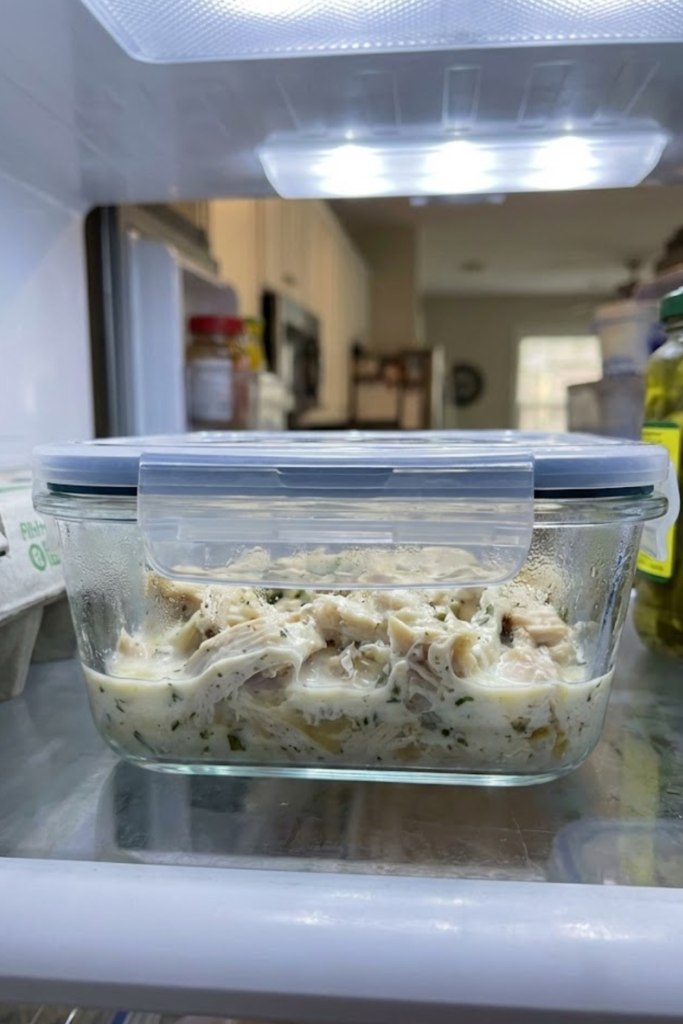
First things first, get that chicken into an airtight container. Don’t just throw foil over the plate and shove it in the fridge. Air is the enemy here.
You want to store it within two hours of cooking. I know, sometimes we get chatting at the dinner table and forget. But if you leave cream sauce out too long, bacteria have a party. Once it’s in the fridge, it is good for about 3 to 4 days. After that, honestly, it starts to get a little funky. If you are into meal prep chicken, just keep that 4-day window in mind.
The Reheating Struggle is Real
Here is the secret I learned after ruining many meals: You cannot just blast heat at a cream sauce. If you do, the emulsion breaks. That’s fancy talk for “the oil separates from the cream,” and you end up with a greasy, curdled mess.
The best way to reheat this is on the stove. Low and slow. Put the chicken and sauce in a skillet over low heat.
Now, here is the pro tip: Add a splash of water or chicken broth. The sauce thickens up in the fridge like pudding. You need to loosen it back up. Stir it gently until it’s warm. It takes about 5-10 minutes, but it tastes almost as good as fresh.
Microwave at Your Own Risk
Look, I get it. Sometimes you don’t have time for the stove. If you must use the microwave, please be gentle.
Don’t hit the “30 seconds” button five times and walk away. Use 50% power. Heat it in short bursts—like 30 seconds at a time. Stir in between.
If you don’t stir, the edges boil while the middle is cold, and your sauce will split. It’s annoying, but stirring saves the texture. And cover it! Chicken loves to explode in the microwave. Nobody wants to clean that up.
To Freeze or Not to Freeze?
I get asked this a lot: “Can I freeze this for later?” My honest answer? I wouldn’t.
Cream-based sauces just don’t freeze well. When you thaw them, the texture changes. It becomes grainy and watery. The flavor might still be okay, but the texture is just… wrong.
If you really need to freeze it, freeze the cooked chicken separately without the sauce. You can whip up a fresh batch of lemon garlic sauce in 5 minutes when you are ready to eat. It’s worth the extra effort to avoid eating grainy sauce.
So, there you have it. You now have a quick dinner idea that tastes like you spent hours in the kitchen, but really, you were in and out in under 30 minutes. Honestly, recipes like this are the only reason my family eats well during the busy school week.
It’s kind of amazing how just a few simple ingredients—lemon, garlic, and cheese—can transform boring chicken breasts into real comfort food. I know it can be intimidating to try new sauces, especially with dairy involved, but if you follow those heat tips we talked about, you are going to nail it.
Next time you are staring at the fridge wondering what on earth to cook, pull this easy weeknight dinner out of your back pocket. Your future self (and your hungry family) will thank you.
Oh, and before you run off to start cooking—do me a huge favor? If this recipe looks like something you’d love, pin this to your “Weeknight Dinners” board on Pinterest! It helps other home cooks find these recipes, and it saves it for you when you need it most. Happy cooking, friends!.