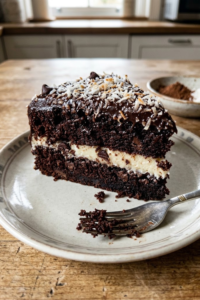
Do you ever have those days where only chocolate and peanut butter will fix it? I certainly do! There is something magical about the combination of tangy cream cheese, rich chocolate, and salty peanut butter that just screams comfort. I remember bringing a batch of these to a potluck last year, and they vanished before I even got to grab a second one myself—poof, gone! In this article, I’m going to walk you through exactly how to make these decadent bars so you can be the hero of your next gathering. We are going to dive deep into that creamy texture and that perfect crust crunch.
Choosing the Right Ingredients for Creamy Cheesecake Bars
Look, I’ve ruined my fair share of desserts. There was this one time I tried to make these bars for a neighbor’s welcome party, and I thought I could cut corners. I grabbed the “light” cream cheese and some generic chocolate chips that had been sitting in my pantry since who knows when. Let’s just say the “bars” were served in bowls with spoons because they refused to set. It was humiliating!
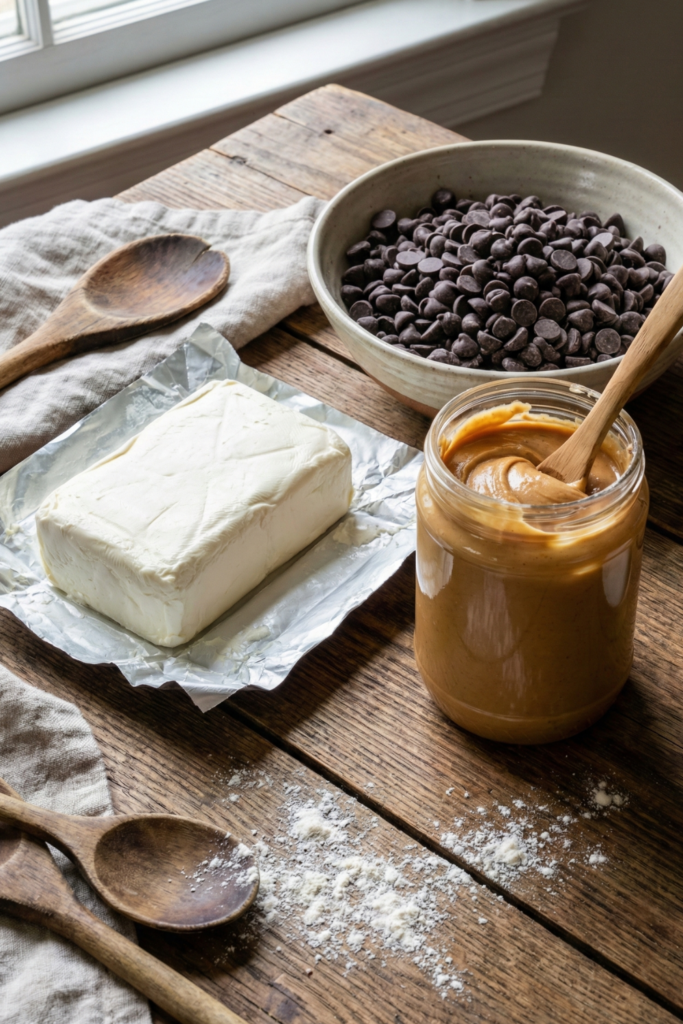
But you live and you learn, right? If you want those chocolate peanut butter cheesecake bars to actually hold their shape and taste amazing, you can’t just throw whatever into the mixer. The ingredients are the foundation. If the foundation is weak, the whole house—or in this case, the cheesecake—crumbles.
The Cream Cheese Debate
Here is the hill I will die on: buy the full-fat stuff. I know, we all want to be healthy, but dessert isn’t the place for it. When I used the low-fat version that one time, the texture was rubbery and weird. It just wasn’t right.
Also, do not buy the stuff in the tub that’s meant for spreading on bagels. That stuff is whipped and has too much air in it. You need the solid bricks. I usually grab the store-brand bricks to save a few pennies, and they work just fine, but they have to be the bricks. The fat content is what gives you that silky, creamy mouthfeel we are chasing.
Pick the Right Peanut Butter
I love natural peanut butter on my toast. You know, the kind where the oil sits on top and you have to stir it for ten minutes? It tastes great, but it is a nightmare for baking.
I tried using natural peanut butter in a cheesecake batter once. The oil separated during baking, and I ended up with a greasy mess pooling on top of the bars. It was gross. For this recipe, you really need the processed, creamy stuff like Jif or Skippy. The stabilizers in those jars keep the texture smooth and consistent, so your chocolate peanut butter cheesecake bars don’t turn into an oil slick.
Temperature Matters (Seriously)
This is the part where I usually get impatient. I used to pull the cream cheese out of the fridge right when I wanted to start baking. Big mistake.
If your ingredients are cold, they won’t mix properly. You’ll end up with little white lumps of cream cheese floating in your batter, and no amount of mixing will get them out. I’ve tried microwaving the cream cheese to “cheat,” but then it gets too melty and cooks the eggs later. Just set the cream cheese, butter, and eggs on the counter about an hour before you start. Go watch an episode of your favorite show and come back. Trust me, it makes the batter so much smoother.
Chocolate Choices
Finally, let’s talk about the chocolate. Since the cheesecake part is pretty sweet, I prefer using semi-sweet chocolate. Milk chocolate makes the whole thing a bit of a sugar bomb. Semi-sweet adds a nice depth that cuts through the sugar and pairs perfectly with the salty peanut butter.
Preparing the Perfect Cookie Crust
I used to treat the crust as an afterthought. It was just the plate that held the good stuff, right? Wrong. I learned this the hard way when I brought a tray of chocolate peanut butter cheesecake bars to a family picnic a few years back. The filling was delicious, but the crust completely fell apart the moment anyone tried to pick it up. It was a crumbly mess, and my aunt Brenda definitely gave me that “bless your heart” look.
Since then, I’ve realized the crust is the unsung hero of this recipe. It adds that necessary crunch to balance the creamy filling. If you get it right, it elevates the whole dessert. If you get it wrong, well, you’re eating cheesecake with a spoon off your lap.
The Great Cookie Debate
You have two main paths here: the classic graham cracker crust or the decadent chocolate sandwich cookie route (yeah, I’m talking about Oreos).
Personally, I think the chocolate cookie crust wins hands down for this recipe. You are already making chocolate peanut butter cheesecake bars, so why not go all in on the chocolate? It pairs so well with the peanut butter filling. However, if you want to cut the sweetness a bit, graham crackers add a nice salty-sweet contrast that feels a bit more old-school. Just don’t buy the pre-crushed stuff if you can help it; crushing them yourself leaves slightly bigger chunks that add better texture.
Getting the Butter Ratio Right
Here is where I messed up before. I used to eyeball the butter. Don’t do that.
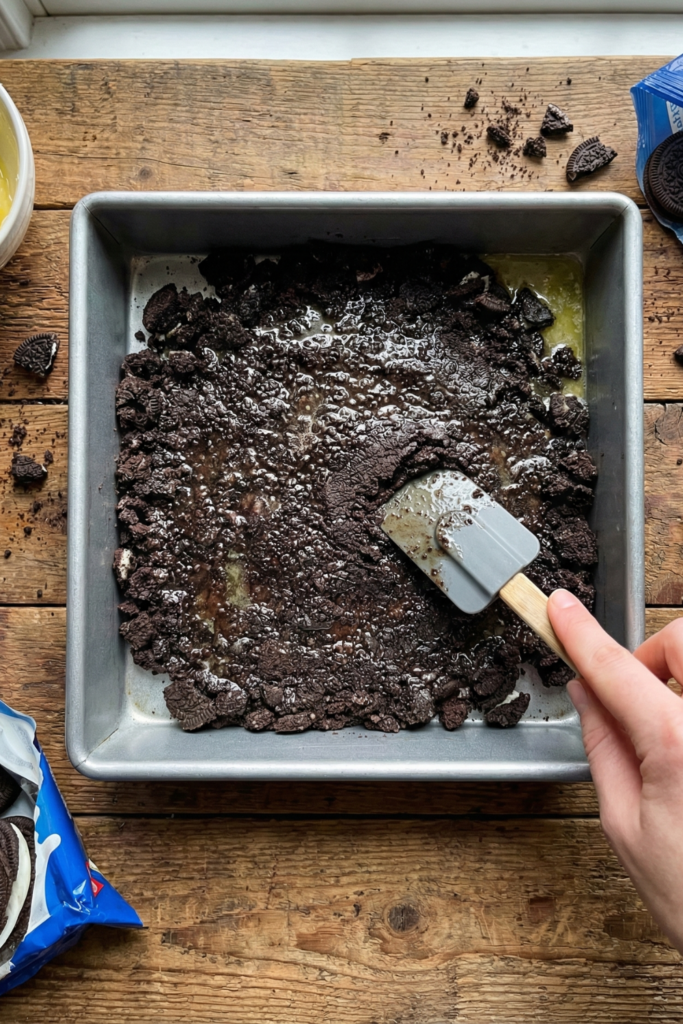
If you use too little butter, you get the Aunt Brenda crumbly disaster. If you use too much, the crust gets greasy and hard as a rock once it chills. You are looking for the texture of wet sand. When you mix the crumbs and melted butter, grab a handful and squeeze it. If it holds its shape but breaks apart easily when you poke it, you’re golden.
Press It Like You Mean It
One mistake I see people make with square baking pan recipes is using their fingers to press the crust down. Your fingers leave dents and uneven spots.
Instead, dump your sandy mixture into the pan. Then, take a flat-bottomed measuring cup or a glass and use that to press the crumbs down firmly. Really lean into it. This packs the crust tight so it stays solid when you cut those beautiful squares later. Make sure you get into the corners, too—nobody wants a corner piece with no crust!
The Pre-Bake Step
I used to skip this because I was lazy and wanted to get the filling in there fast. But pre-baking the crust for about 8 to 10 minutes makes a huge difference.
It sets the crust and prevents it from getting soggy once you pour that heavy peanut butter batter on top. It basically seals the deal. Just let it cool a little bit while you make the filling. It adds a few minutes to the process, but honestly, it saves you a lot of headache later when you’re trying to serve neat slices.
Making the Peanut Butter Cheesecake Filling
I’ll be honest with you—I have cried over a cheesecake before. It sounds dramatic, but there is nothing worse than pulling a beautiful pan out of the oven, only to watch a giant crack form right down the middle as it cools. It looked like the Grand Canyon running through my dessert. I was devastated because I wanted these chocolate peanut butter cheesecake bars to look perfect for a bake sale.
I eventually learned that the problem wasn’t my oven; it was my impatience. I treated the batter like a smoothie, blasting it on high speed. That is a huge no-no. If you want that silky, dense texture, you have to slow down.
Beat the Cheese, Not the Eggs
The biggest secret I’ve learned is that you can beat the cream cheese and sugar as much as you want before the eggs are added. In fact, you should. I usually let my mixer run on medium-high for a good 2-3 minutes here.
This is your only chance to get the lumps out. Once the eggs go in, the heavy mixing has to stop. So, scrape down the bowl—and I mean really scrape the bottom—to make sure every bit of cheese is smooth. If you skip this, you’ll find little white specks in your creamy peanut butter filling, and nobody wants that.
The Peanut Butter Factor
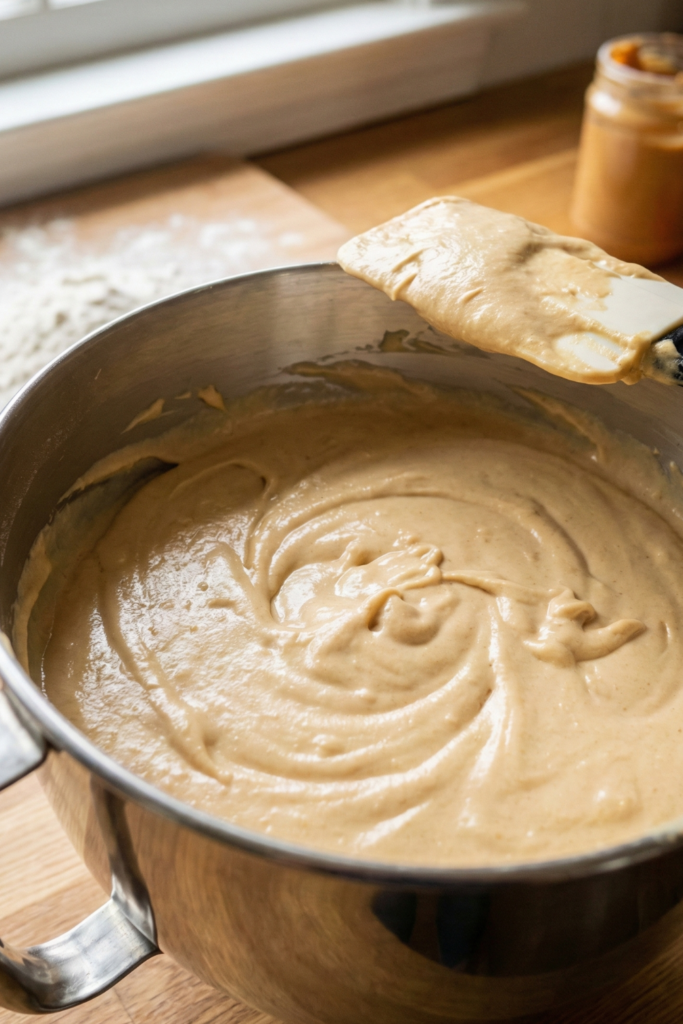
When it’s time to add the peanut butter, make sure you aren’t using the dry stuff at the bottom of the jar. You want the smooth, oily stuff from the top or middle.
I usually mix the peanut butter in just until it’s combined. The batter will start to look golden and smell absolutely dangerous. Seriously, try not to eat it all right now. I have definitely “taste tested” a little too much and ended up with slightly shorter bars than intended. It happens to the best of us!
The Egg Rule: Low and Slow
Here is where I messed up for years. Once you crack those eggs in, turn your mixer down to the lowest speed.
Add them one at a time. Mix just until the yellow disappears, then stop. If you overmix the eggs, you whip air into the batter. That air expands in the oven and then collapses when it cools, causing those dreaded cracks. Preventing cheesecake cracks is mostly about being gentle at this stage. I sometimes even switch to a hand spatula for the last few stirs just to be safe. It’s a bit of an arm workout, but it saves the dessert.
Sweetness Check
Before you pour anything, give it a tiny taste (if you eat raw eggs; if not, skip this). Depending on your peanut butter brand, it might be salty. You might want to add a splash more vanilla or a pinch of sugar. It’s easier to fix it now than after it’s baked!
Creating the Chocolate Swirl Effect
The first time I tried to marble a cheesecake, I got way too excited. I thought, “If a little swirling is good, a lot of swirling must be better!” I was wrong. I kept dragging my knife through the batter until the beautiful contrast disappeared. Instead of cool, artistic spirals, I ended up with this weird, muddy brown color. It still tasted fine, but it looked like a science experiment gone wrong.
Creating that bakery-style chocolate swirl cheesecake look is actually way easier than it seems, but you have to know when to stop. It’s one of those “less is more” situations that I struggle with.
Don’t Burn the Chocolate
First off, you need to melt your chocolate to mix with a portion of the batter. I usually just use the microwave because who has time for a double boiler? But be careful.
I’ve definitely nuked chocolate for too long and ended up with a seized, gritty clump that refused to smooth out. It was a waste of good chocolate! Heat it in 20-second bursts and stir in between. Even if it looks solid, stir it. The residual heat usually melts the rest. Once it’s smooth, mix it into about a cup of your plain peanut butter batter.
The Dollop Method
Now comes the fun part. You should have your crust prepped and the main peanut butter batter poured in (save that cup for the chocolate mix!).
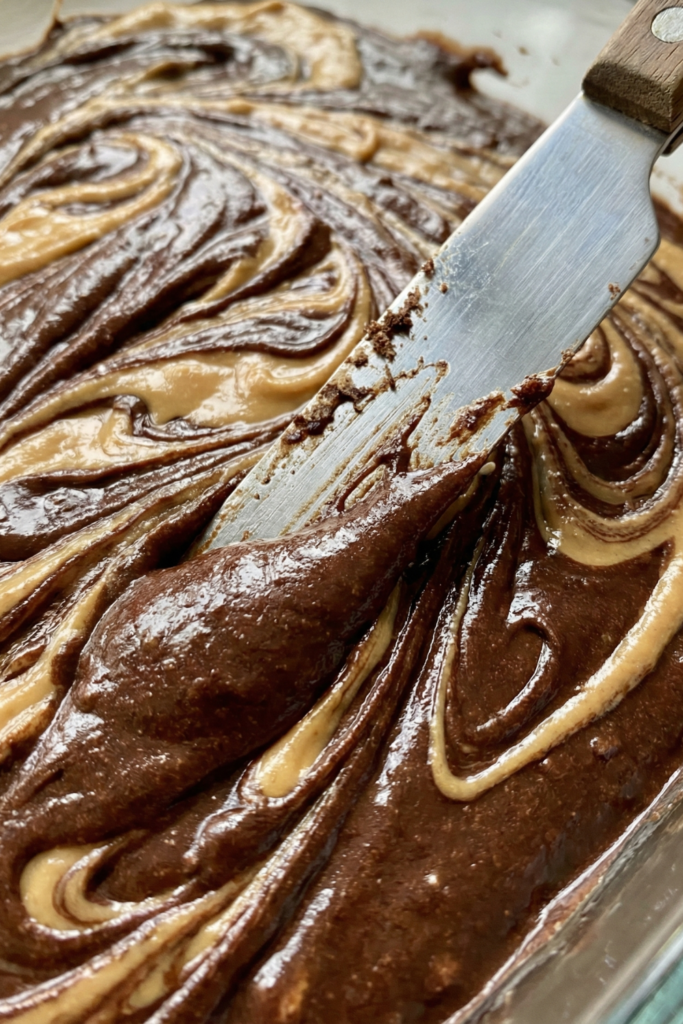
Take your chocolate batter and drop big spoonfuls right on top of the peanut butter layer. Don’t try to spread it out. Just plop it down randomly. It’s going to look messy, like a dalmatian pattern. Then, take whatever plain batter you have left and drop spoonfuls of that into the gaps. You want distinct blobs of color here. This is the secret to getting those distinct lines in your marbled cheesecake bars.
The Swirl Technique
Grab a butter knife or a wooden skewer. I prefer a knife because the blade is wider and drags more batter.
Gently drag the knife through the blobs in a figure-eight pattern. Go horizontal, then maybe a few vertical passes. Watch the magic happen. You’ll see the chocolate swirl cheesecake pattern emerge instantly. But seriously, do not overdo it.
Once you see nice swirls, put the knife down. Step away from the pan. If you keep going, the colors will bleed together, and you’ll lose that fancy-pants definition. It should look abstract and artistic, not perfectly blended.
Baking and Cooling for the Best Texture
I used to think baking was just “put it in, take it out, eat it.” Man, was I wrong. I remember the first time I made these chocolate peanut butter cheesecake bars, I treated them like brownies. I baked them until they were stiff as a board and then shoved the hot pan directly into the fridge because I was impatient.
The result? The texture was grainy, the top was cracked like a sidewalk, and the bottom was soggy from condensation. It was a disaster. I learned that with cheesecake, patience isn’t just a virtue; it’s an ingredient. You have to treat it gently if you want that creamy, dreamy consistency.
Low and Slow is the Way
First off, check your oven temp. Most recipes bake at 350°F, but for cheesecake, that’s usually too hot. I like to drop it down to 325°F.
If the oven is too hot, the eggs scramble, and the edges burn before the middle is done. Lower heat cooks it evenly. Baking tips for cheesecake often ignore this, but it makes a huge difference. I’ve even bought a cheap oven thermometer because my oven lies to me about the temperature. It says 325°F, but it’s actually 350°F. If your edges are puffing up fast, turn that dial down!
The Jiggle Test
Knowing when to take it out is terrifying. You don’t want raw eggs, but you don’t want a rubber brick.
The secret is the jiggle. When you gently nudge the pan, the edges should be set and firm. The center, however, should wobble a bit like Jell-O. It shouldn’t look like liquid soup (that’s undercooked), but it definitely shouldn’t be stiff. It will firm up as it cools. If you bake it until it doesn’t move at all, it’s already overdone. I’ve made that mistake plenty of times, and the texture ends up dry and chalky.
The Cooling Ritual
This is the part that tests my willpower. Do not—I repeat, do not—take the pan out of the oven immediately.
Sudden temperature changes cause cracks. Preventing cheesecake cracks is all about cooling it gradually. Once the timer goes off, I turn the oven off and crack the door open about an inch. I stick a wooden spoon in the door to hold it. Let the bars sit in there for about an hour. It lets the cheesecake finish cooking gently and cool down slowly.
The Long Wait
After the oven nap, let it sit on the counter until it’s room temperature. Then, wrap it up and put it in the fridge.
This is the hardest part: you need to chill it for at least 4 hours, preferably overnight. I know, it’s torture. But if you cut into it warm, it falls apart. The cold is what sets the fats in the cream cheese and peanut butter, giving you that perfect, sliceable bar. Trust me, the wait is worth it.
Serving and Storage Suggestions
I used to ruin the entire presentation of my desserts in the last five minutes. Seriously, I’d spend hours baking, cooling, and chilling, only to hack at the pan with a dull butter knife like I was chopping wood. I once brought a tray of chocolate peanut butter cheesecake bars to a bridal shower, and while they tasted great, they looked like they had been through a blender. The edges were jagged, the layers were smeared together, and honestly, I was embarrassed to put them on the dessert table.
Presentation matters, people! You eat with your eyes first. Over the years, I’ve picked up a few tricks that make these bars look like they came from a fancy bakery, even if my kitchen currently looks like a disaster zone.
The Hot Knife Trick
If you take nothing else away from this, please listen to this tip: use a hot knife. It is a game-changer for slicing cheesecake bars.
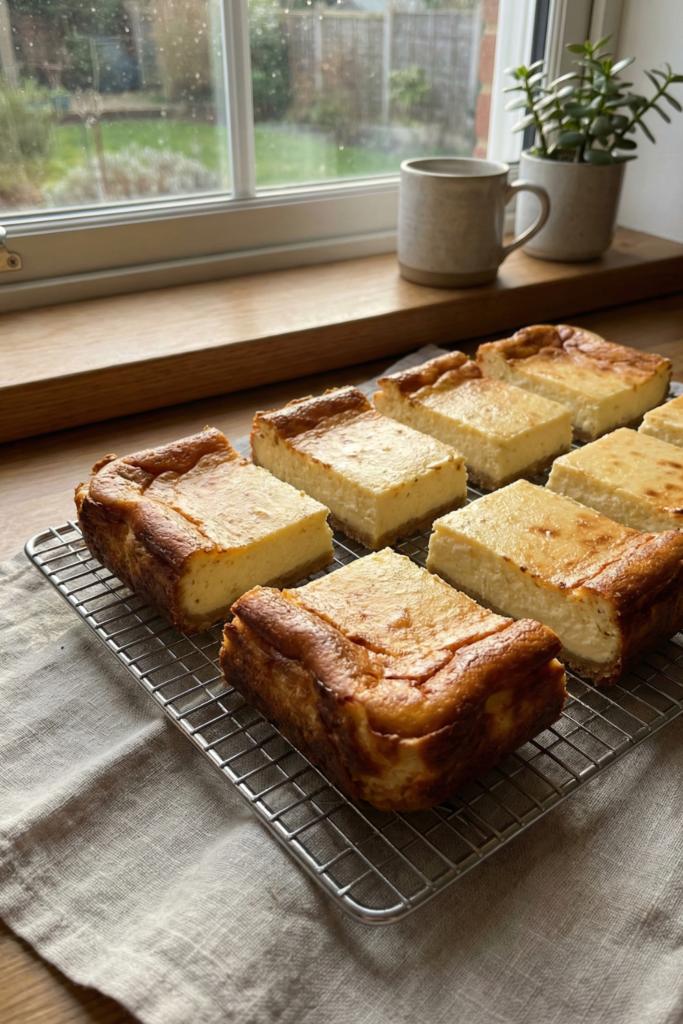
Here is what I do: fill a tall glass with very hot tap water. Dip your sharpest chef’s knife into the water for a few seconds to heat up the metal. Then, wipe it dry with a paper towel and make your first cut. The hot metal melts through the cold chocolate and cream cheese like butter. You get those super sharp, clean edges that show off the layers perfectly.
And here is the kicker—you have to wipe the knife clean after every single cut. I know, it’s annoying. I usually groan about it halfway through. But if you don’t, you’ll drag chocolate smears across the peanut butter layer, and it just looks messy. Do it for the ‘gram, or at least for your own satisfaction.
Topping It Off
Honestly, these bars are rich enough on their own. But sometimes I like to be a little extra.
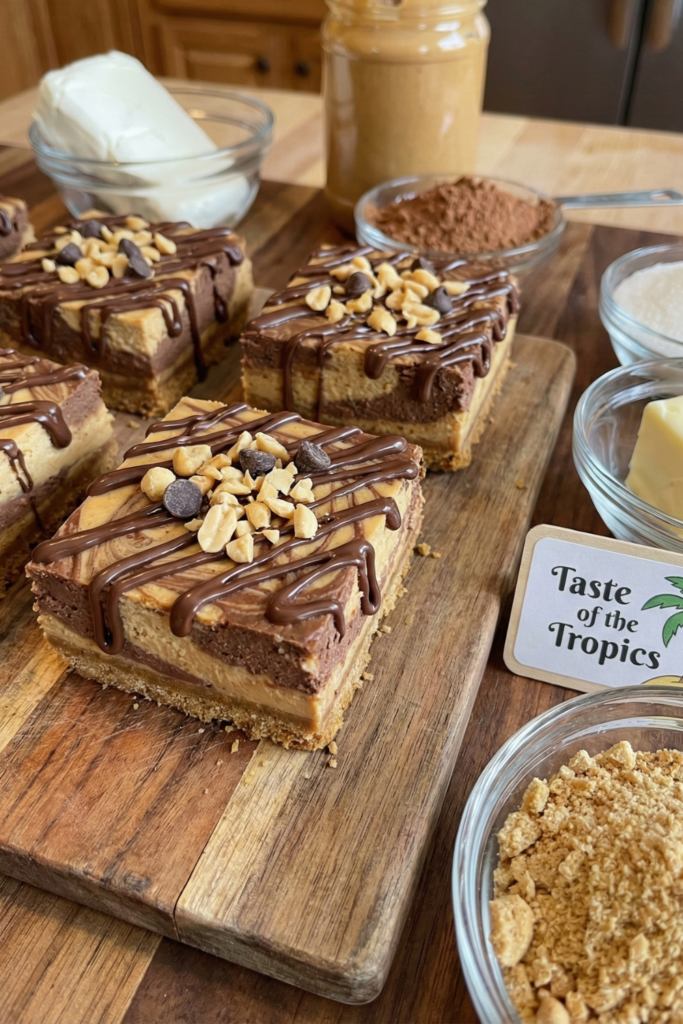
If I’m feeling fancy, I’ll melt a little more chocolate and do a zigzag drizzle over the top before cutting. It hides any imperfections on the surface (a great cheat if your marbling got muddy!). Another favorite of mine is sprinkling some chopped roasted peanuts on top. It adds a nice salty crunch that breaks up the soft texture. Just don’t go overboard; you don’t want to bury the chocolate peanut butter cheesecake bars under a mountain of candy.
Keeping Them Fresh
If you have leftovers (which is rare in my house), you need to store them right. I used to just throw some foil over the pan and shove it in the fridge.
Bad move. Cheesecake acts like a sponge for smells. By the next day, my delicious dessert tasted like the leftover lasagna sitting on the shelf above it. Gross. You need an airtight container. I usually cut all the bars up and stack them in a plastic tub with wax paper between the layers so they don’t stick. They stay fresh for about 5 days this way, though the crust might get a little softer over time.
Freezing for Later
Did you know you can freeze these? I didn’t until recently. Freezing cheesecake tips usually say to freeze the whole cake, but I like freezing individual slices.
I wrap each bar tightly in plastic wrap, then a layer of foil. I stash them in the back of the freezer for when I have a desperate late-night craving. They keep for like 3 months! You can just pull one out, let it sit on the counter for 20 minutes, and it tastes just as good as the day you made it. It’s actually dangerous knowledge because now I always have a stash of cheesecake ready to go.
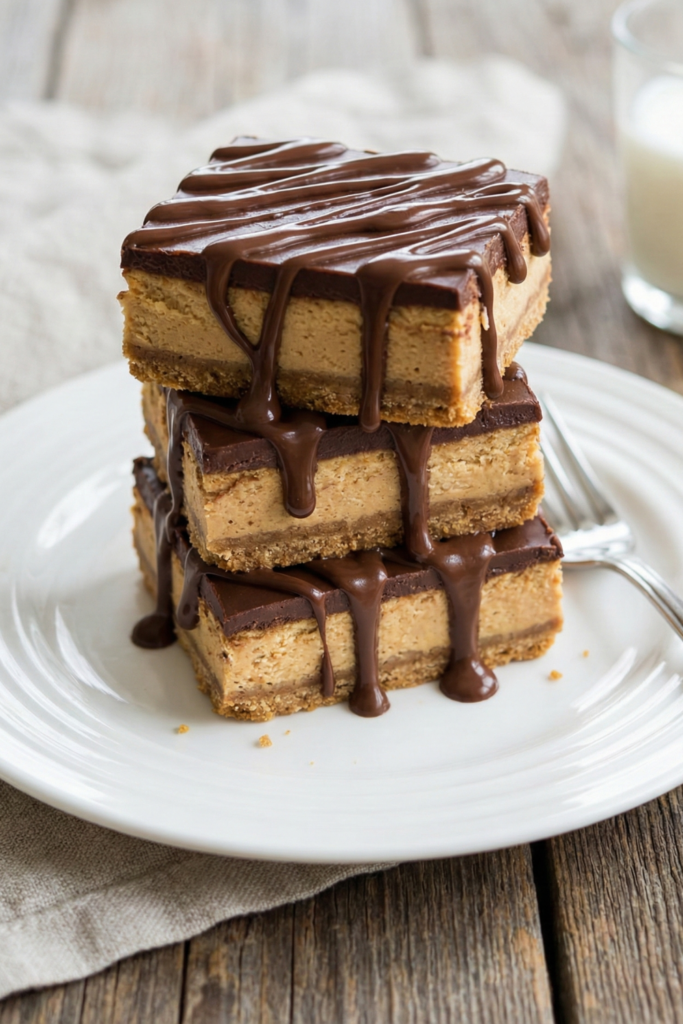
Making these chocolate peanut butter cheesecake bars is a bit of a journey, isn’t it? But when you take that first bite—creamy, salty, sweet—it all makes sense. It’s one of those weekend baking projects that makes you feel like a total kitchen pro, even if you are just in your pajamas.
Just remember the big lessons we talked about. Keep those ingredients at room temperature so you don’t get lumps. And for the love of baking, do not rush the cooling process! I know it’s hard to wait, but patience is the absolute secret to that perfect, silky texture.
These really are one of the best dessert recipes 2026 has to offer in my book. Whether it’s for a potluck or just because you survived a long Monday, they deliver every time. I usually hide a piece for myself in the back of the fridge because they tend to disappear suspiciously fast when my family is around.
If you enjoyed this recipe and found my mistakes helpful, I’d love for you to share the love. Pin this recipe to your Dessert board on Pinterest so you can save it for your next craving and share it with your friends! Happy baking, and try not to eat all the batter!