Did you know that over 65% of home cooks in 2026 are now prioritizing one-pot plant-based meals? I’m totally part of that group! I remember the first time I tried making a chickpea vegetable tagine. It was a total disaster because I thought I could just throw everything in a pot and hope for the best.
My kitchen ended up smelling like burnt cinnamon for a week! But honestly, failing is just part of the flavor journey, right? This recipe is my pride and joy because it brings those deep, North African vibes right to your table without the stress. We’re talking about a stew that is thick, fragrant, and honestly, a bit of a show-off.
The Secret is in the Spice Blend
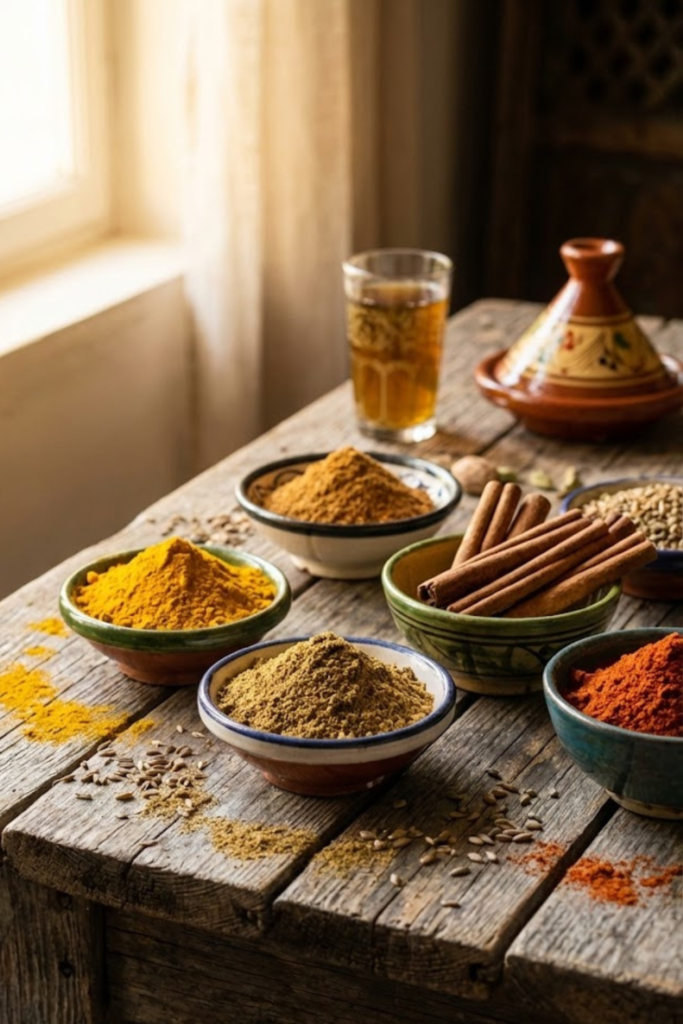
Spices are the soul of a good chickpea vegetable tagine. When I first started cooking this, I thought I could just use a dash of salt and some black pepper. Boy, was I wrong! If you want that deep, earthy flavor that makes your mouth water, you have to get your spices right. It isn’t just about heat; it’s about warmth and balance. I’ve spent years trying different combos in my kitchen, and I finally found the mix that works every single time.
The King of Spices: Ras el Hanout
You really need to find some Ras el Hanout. This is a mix of like, 10 to 30 different spices. In Morocco, every shop has their own special blend. I usually look for one that has cumin, ginger, and cinnamon. Sometimes there is even dried rose petals in there! I remember one time I tried to make my own mix from scratch because I couldn’t find it at the store. I ended up putting way too much clove in it. The whole stew tasted like a giant piece of clove-flavored gum! It was pretty bad, but my husband still ate it to be nice. Now, I just buy a high-quality jar to keep things simple and save my family from my “experiments.”
Why Toasting Your Spices Matters
Here is a big tip I learned from a cooking class. Don’t just dump the powder into the water. You should put your spices in the pot with a little oil before you add the broth. Let them cook for about 30 or 60 seconds until you can really smell them. This wakes up the oils in the spices. I used to skip this step because I was in a rush to get dinner on the table. But once I started doing it, the flavor of my chickpea vegetable tagine got so much better. Just be careful not to burn them! If they turn black, they get bitter and you have to start over.
The Balance of Sweet and Heat
A lot of people think Moroccan food is just spicy hot. It’s actually more about the mix of sweet and savory. I like to add a pinch of cinnamon and maybe a tiny bit of honey or a few chopped dates. This balances out the smoky cumin and the spicy Harissa. If you like it hot, you can add more pepper, but go slow. I once put a whole tablespoon of chili paste in and my kids were drinking gallons of milk for an hour!
Make sure your spices aren’t five years old, too. I checked my cabinet last spring and found some cumin from when we moved into our house! Spices lose their punch over time. If it doesn’t smell like anything when you open the jar, it won’t taste like anything in your food. Freshness really is the key to a meal that tastes like it came from a restaurant.
Choosing Your Veggies for the Perfect Texture
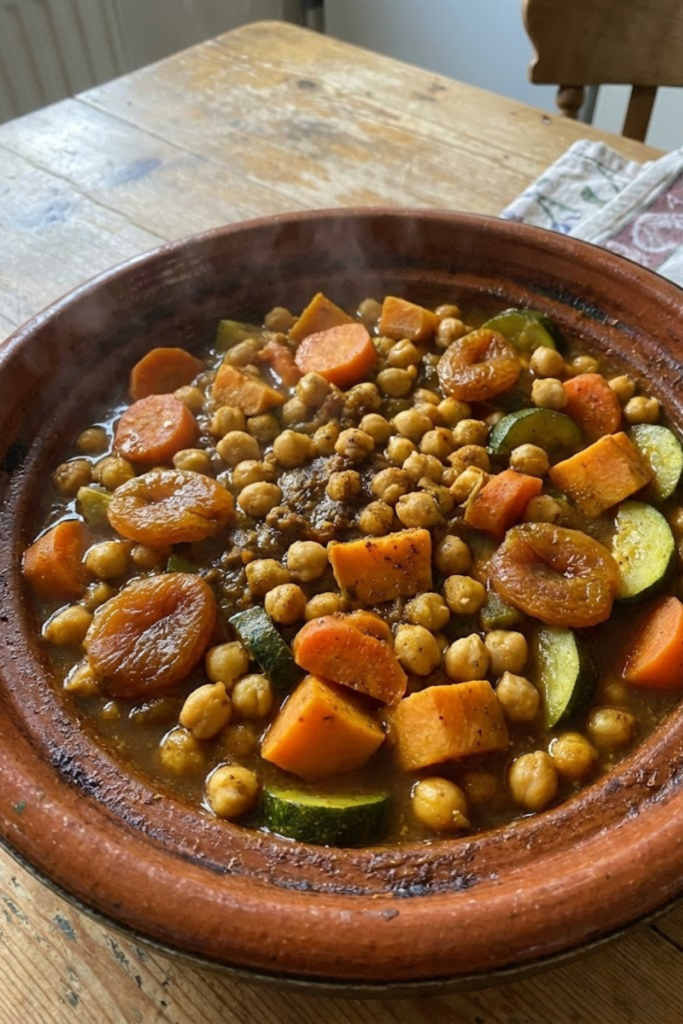
Choosing the right vegetables for your chickpea vegetable tagine is really important if you don’t want a pot of mush. I’ve made that mistake more times than I’d like to admit! You want a mix of textures so every bite feels a little bit different. If everything is the same soft texture, it gets boring to eat after a while. I like to think of the vegetables in two groups: the “hard” ones that take a long time to cook and the “soft” ones that go in later.
Go Big with Root Vegetables
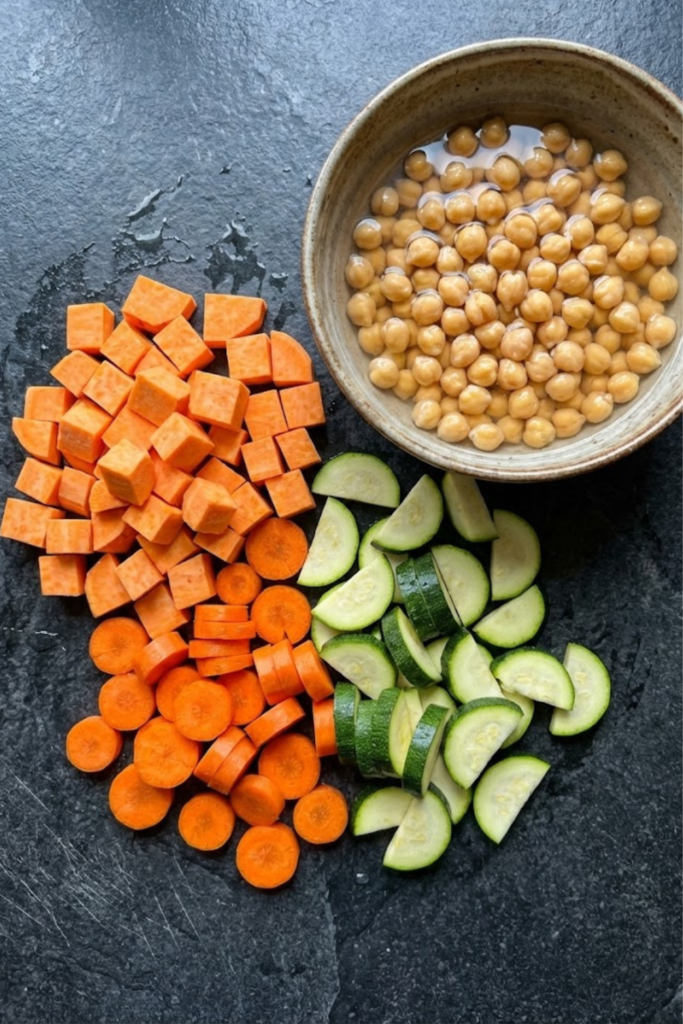
I always start with sweet potatoes and carrots. They are the backbone of this dish. One thing I learned the hard way is to chop them into big, chunky pieces. I used to think smaller was better because they would cook faster. But in a chickpea vegetable tagine, small pieces just melt away. One time, I cut my sweet potatoes so small they basically turned into a thick orange sauce. It tasted okay, but it didn’t look like a real stew anymore. Now, I make sure my carrot rounds are at least half an inch thick. This way, they stay firm but get really tender on the inside while they simmer. It makes the meal feel much more filling too.
Don’t Let the Zucchini Disappear
Zucchini is a classic in this recipe, but it’s tricky. It has so much water in it. If you put it in at the very start, it will be gone by the time you sit down to eat. I usually wait until the last fifteen or twenty minutes to toss my zucchini in. I also leave the skin on. The skin helps hold the piece together so it doesn’t just fall apart in the broth. I tell my students all the time that cooking is all about timing, and this is a great example of that. If you use butternut squash instead, treat it more like a sweet potato and put it in earlier because it’s much tougher.
Adding a Little Surprise with Dried Fruit
Now, I know it sounds a bit strange to put dried fruit in a dinner stew. I was skeptical too! But adding some dried apricots or raisins makes the chickpea vegetable tagine taste so much better. The sweetness cuts through the salty broth and the earthy spices. I like to slice my apricots in half so you get a little burst of sugar every now and then. It’s a trick I picked up from an old cookbook, and now I can’t imagine making the recipe without it. Just don’t go overboard, or it will start to taste like a dessert instead of a healthy dinner! I usually use about half a cup for a big pot.
Simmering to Perfection: The Slow Cook Method
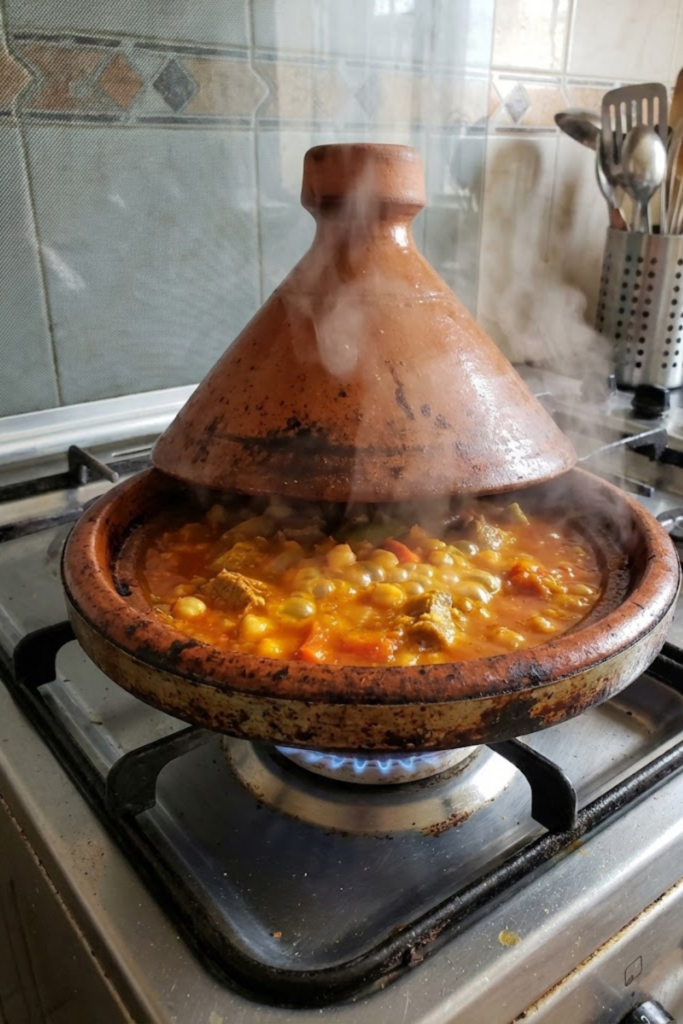
Cooking a chickpea vegetable tagine isn’t something you can just rush through during a commercial break. Believe me, I’ve tried! This part of the process is where all those spices and veggies actually start talking to each other. When you let it simmer on the stove, your whole house starts to smell like a market in Morocco. It’s a warm, cozy scent that makes my kids actually come out of their rooms without me having to yell that dinner is ready. The way the steam carries the scent of cinnamon and cumin is just the best thing after a long day at school.
Making the Liquid Gold Base
To get the sauce right, you need more than just tap water. I always use a good vegetable broth and some tomato purée. This creates what I call “liquid gold.” It’s thick, rich, and full of flavor. If you use just water, the stew feels a bit thin and sad. I remember one time I ran out of broth and thought, “Eh, water will be fine.” It wasn’t fine! It tasted like watered-down spice tea. Now, I always keep an extra carton of broth in the back of my pantry just in case. You want enough liquid to cover the veggies, but not so much that they are swimming in a lake. If it looks too dry while it’s cooking, just add a splash more broth. It’s better to add a little at a time than to make it too runny at the start.
Why the Patience Game is Hard
I’m a teacher, so you’d think I have a lot of patience, right? Well, when I’m hungry at 6:00 PM, my patience is pretty thin! But for a chickpea vegetable tagine, you really have to wait. You need at least 45 minutes on low heat. If you turn the heat up too high, the outside of the carrots gets soft but the middle stays hard as a rock. Plus, the chickpeas need time to soak up all that yummy sauce. I usually set a timer and go grade some papers or fold some laundry so I don’t keep lifting the lid. Every time you lift the lid, the heat escapes and it takes longer to cook. Just leave it alone and let the bubbles do their job!
The Very Important Finish
Right before you serve it, you have to do the “taste test.” This is my favorite part because I get to eat before everyone else. Sometimes it needs a little more salt or a tiny bit more pepper. But the real secret is adding fresh cilantro and a big squeeze of lime juice right at the end. That hit of acid from the lime really wakes up all the heavy, earthy spices. I once forgot the lime and the dish felt a bit heavy and “flat.” Now, I make sure I have a fresh lime on the counter before I even start chopping my onions. If you don’t like cilantro, you can use parsley, but don’t skip the greens! They make the plate look pretty and add a fresh crunch that balances the soft stew. It’s the perfect way to finish your masterpiece before you bring it to the table.
Share the Moroccan Magic!
I really hope you feel ready to tackle this chickpea vegetable tagine now! It’s funny how a few simple ingredients and some good spices can turn a boring Tuesday night into something that feels like a real party. I remember the first time I brought this to a potluck at school. I was so nervous because most of the other teachers brought store-bought salads or cold chicken wings. I walked in with this big pot, and the smell just took over the whole staff room in seconds. Everyone kept asking, “What is that?” and by the end of lunch, the pot was scraped totally clean. It made me feel so good to share something healthy and delicious with my friends. That’s really what cooking is all about, isn’t it? It’s about feeding the people you care about and trying something new together.
Reviewing the Main Tips
When you make this at home, don’t forget the main things we talked about today. First, get those spices nice and toasted in the oil so they really pop. Second, make sure your sweet potatoes and carrots are cut into big enough chunks that they don’t turn into a smoothie in the pot. And please, please don’t rush the simmering process! I know it’s hard when you’re hungry after work, but that 45 minutes of waiting is what makes the magic happen. If you find that your family really likes the flavor, you can even try adding different things next time. Maybe some salty olives or a different kind of winter squash? There are no real rules once you get the basics down. I’ve even thrown in some leftover spinach at the very end before, and it was great.
Join the Cooking Club on Pinterest
If you found these tips helpful, I would be so happy if you shared this post on Pinterest! It helps other home cooks find these easy recipes, and it helps me keep sharing my kitchen stories with you. I love seeing when people pin my recipes because it feels like we are all part of one big cooking club. Just hit that save button on the image at the top of the page! Also, if you have any questions or if your first batch turns out a little weird (like my burnt cinnamon disaster I told you about), don’t worry. We all start somewhere, and even a “failed” tagine usually tastes pretty good if you have some warm bread to dip in the sauce. Thanks for spending some time in my kitchen today, and I hope your dinner is absolutely wonderful tonight!