I’ll never forget the first time I tried to make authentic teriyaki at home; let’s just say the smoke alarm was the only thing “singing” that night! But after years of tweaking ratios and testing temperatures, I’ve finally cracked the code. Did you know that “Teriyaki” actually describes the cooking method—teri (shine) and yaki (broil/grill)? That glossy shine is exactly what we are chasing today!
Whether you are firing up the BBQ for that summer vibe or looking for a cozy sheet-pan dinner, mastering chicken teriyaki grilled baked styles will revolutionize your weeknight rotation. We aren’t just tossing sauce on meat here; we are building layers of umami, sweetness, and that irresistible sticky finish. Get your aprons ready, because we are about to make the best chicken you’ve ever tasted in 2026!
Essential Ingredients for the Perfect Sticky Glaze
Listen, I’ve ruined more batches of sauce than I care to admit. The first time I tried to whip up a glaze for a chicken teriyaki grilled baked dinner, I just dumped regular soy sauce and white sugar into a pan and hoped for the best. It was salty, incredibly thin, and honestly? Pretty gross. I learned the hard way that you can’t just throw things together and expect magic.
Making that glossy, restaurant-quality sauce is actually about balance. It’s gotta be sweet, salty, and have that deep umami kick all at once. Over the years, I figured out that if you want the sauce to cling to the meat, specific ingredients are non-negotiable.
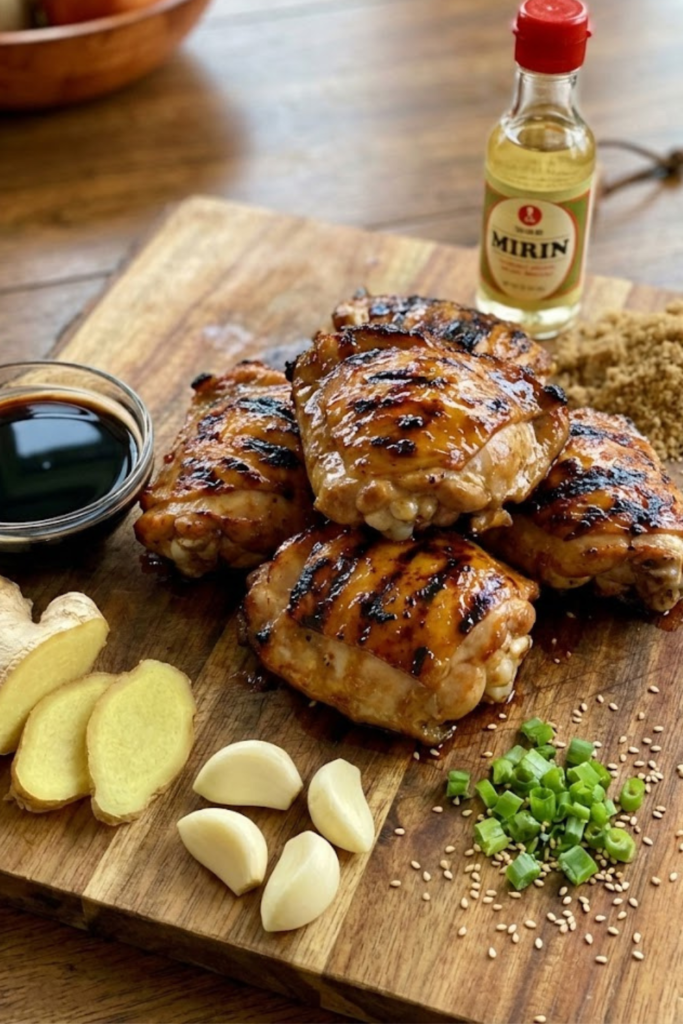
The Holy Trinity of Flavor
You might have heard chefs talk about the “holy trinity” of cooking. In the world of teriyaki, that trinity is Soy Sauce, Mirin, and Sake.
- Soy Sauce: Use regular Japanese soy sauce. I once used dark soy sauce by mistake, and the whole dish tasted like burnt toast. If you are watching your salt, low-sodium works, but you might need to adjust the seasoning later.
- Mirin: This is a sweet rice wine. It gives the sauce that nice shine. If you can’t find it, a mix of white wine and sugar is an okay substitute, but it won’t be exactly the same.
- Sake: This adds a sharpness that cuts through the sugar. Don’t use the expensive stuff you’d drink; cooking sake is fine.
Sweeteners: Brown Sugar vs. Honey
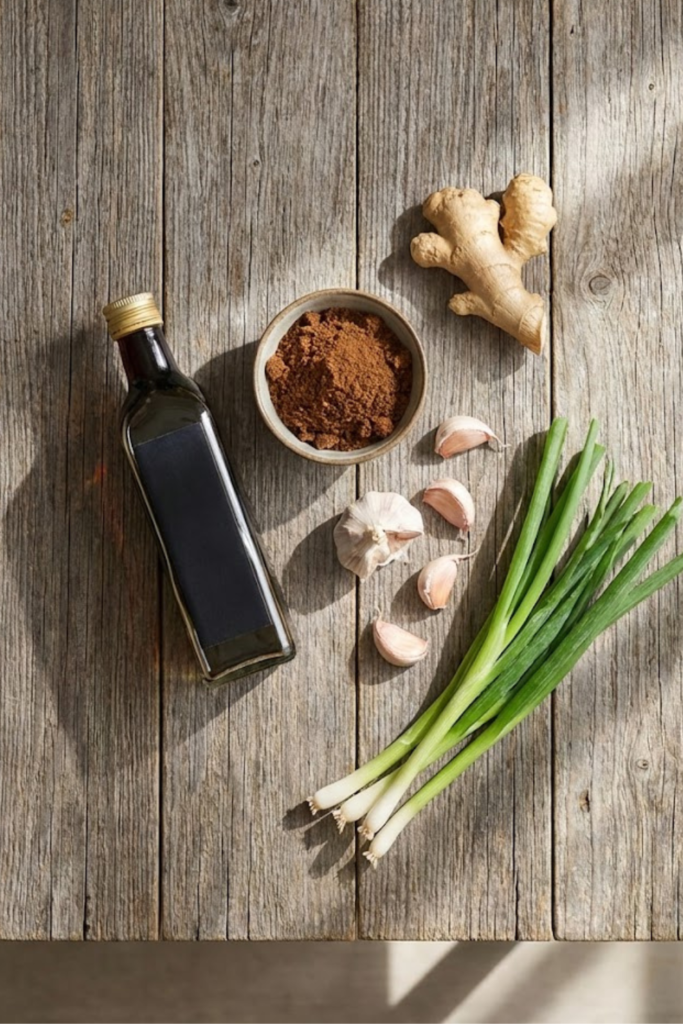
I used to use white sugar, but it just tasted… flat. Switching to brown sugar was a total game-changer for me. It has molasses in it, which helps the sauce caramelize beautifully whether you are grilling or baking.
Some people swear by honey. I’ve tried it, and while it’s tasty, it burns way faster. If you are doing a high-heat chicken teriyaki grilled baked recipe, stick to brown sugar to avoid that acrid burnt taste. Trust me, scraping burnt honey off a grill grate is a nightmare I don’t wish on anyone.
The Aromatics
Don’t use the powdered stuff. Just don’t. I know it’s easier to shake a jar of garlic powder, but the flavor just isn’t there. You need fresh ginger root and garlic cloves.
Grate the ginger so it melts into the sauce. If you chop it too big, biting into a raw chunk of ginger is a quick way to ruin a bite. I usually use about an inch of ginger and two big cloves of garlic. It adds that zesty kick that makes your mouth water.
Thickening It Up
Traditionally, you reduce the sauce by boiling it until it gets thick. But who has time for that on a Tuesday? I sure don’t.
I cheat a little bit using a cornstarch slurry. Mix a teaspoon of cornstarch with a splash of cold water before adding it to your simmering sauce. It thickens up in seconds. Just be careful not to add too much, or you’ll end up with gloopy jelly instead of a silky glaze. You want it to coat the back of a spoon, not bounce off it!
Preparing Your Chicken: Thighs vs. Breasts
I used to be a “white meat only” kind of cook. I thought boneless skinless chicken breasts were the healthy holy grail, and I avoided thighs because I thought they were too greasy. Big mistake. I remember serving a dinner party years ago where the chicken was so dry, my guests were chugging water after every bite. It was embarrassing!
When it comes to mastering chicken teriyaki grilled baked recipes, the cut of meat you choose actually matters more than the sauce. You need meat that can stand up to the heat without turning into cardboard.
Why Thighs Rule the Roost
For teriyaki, chicken thighs are arguably the best option. They have a higher fat content, which means they stay juicy even if you accidentally leave them on the grill a minute too long. I’ve scorched thighs on the BBQ before, scraped off the burnt bits, and the inside was still tender.
Boneless, skinless chicken thighs are my go-to. They absorb that marinade like a sponge. Plus, they have a richer flavor that pairs perfectly with the sweet and salty glaze. If you are grilling, they get those nice charred edges without drying out.
Sticking with Breasts? Do This.
If you strictly prefer chicken breasts, I get it. They are leaner. But you have to treat them differently. A whole chicken breast is usually thick in the middle and thin at the ends, so it cooks unevenly.
Here is a trick I learned: pound them flat. Put the breast between two pieces of plastic wrap and whack it with a meat mallet or a heavy pan until it’s an even thickness. This helps it cook faster so it doesn’t dry out. Also, don’t overcook them! Pull them off the heat the second they hit 165°F.
To Skin or Not to Skin?
This depends on your cooking method.
- For Grilling: Skin-on can be amazing because the fat renders down and gets crispy. But, sugary teriyaki sauce burns fast. If you leave the skin on, you might end up with burnt skin before the meat is done. I usually go skinless for teriyaki to save myself the headache.
- For Baking: If you bake skin-on chicken in a sauce, the skin often gets flabby and rubbery. Nobody wants that. If you are making chicken teriyaki grilled baked in the oven, remove the skin or sear it in a pan first.
The Knife Work
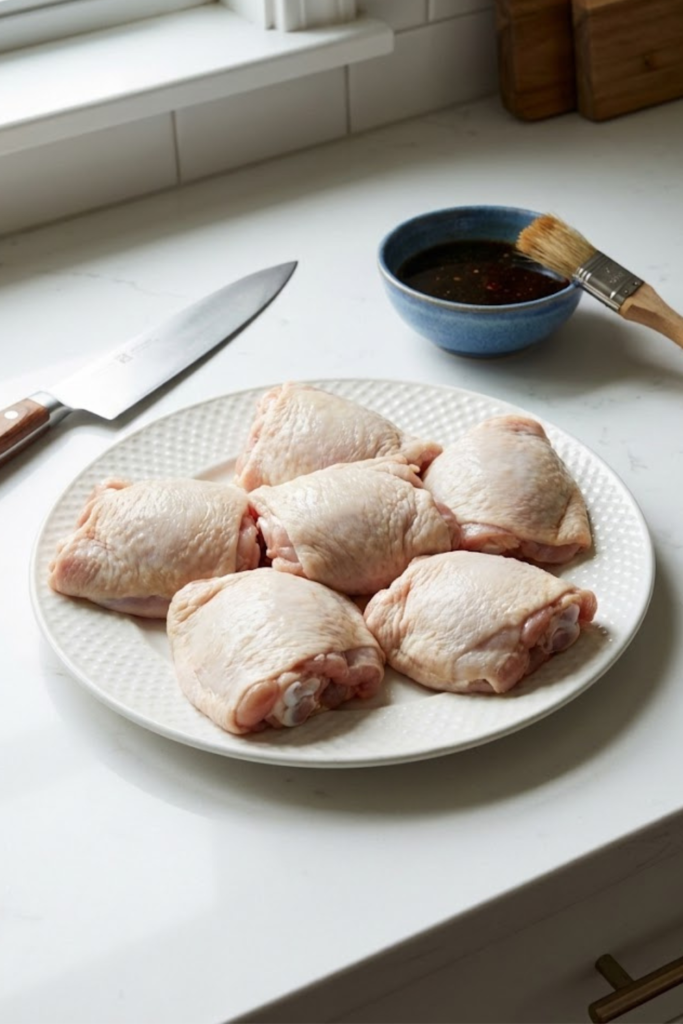
Before you start cooking, grab your sharpest knife. You want to trim off any big hanging pieces of fat or loose skin.
If you are planning to serve the chicken sliced (like in a bento box or bowl), cook the meat whole first and slice it after it rests. If you slice it raw and then cook it, you lose a lot of juice. Just let it rest for 5 minutes after cooking, then slice against the grain. It makes every bite melt in your mouth.
How to Make Grilled Chicken Teriyaki
Okay, let’s talk about fire. Grilling teriyaki is hands down my favorite way to eat it because you get that smokiness that an oven just can’t replicate. But, I have to be real with you—it’s also the easiest way to ruin dinner.
I remember one 4th of July, I threw marinated thighs onto a scorching hot grill and walked away to grab a cold drink. Big mistake. The sugar in the marinade flared up, and I came back to chicken that looked like charcoal briquettes. It was a disaster. I learned that managing heat is everything when you are dealing with sticky, sugary sauces.
The Marinade Timer
First things first, get that chicken in the bath. You want to marinate your chicken for at least 30 minutes, but honestly, if you can leave it for 2 to 4 hours, the flavor difference is huge.
Don’t go overnight, though. I did that once with a recipe that had a lot of vinegar, and the meat texture got weird and mushy. It was pretty gross. Just give it a few hours to soak up that soy and ginger goodness.
Setting Up the Grill
Whether you are using a gas grill or a charcoal grill, you need to set up two zones. One side should be hot (direct heat) and the other side should be cooler (indirect heat).
This setup saved my life. You sear the chicken on the hot side to get those nice grill marks—just for a minute or two per side. Then, you move it over to the cool side to finish cooking. This way, the inside cooks through without the outside turning into a burnt crisp.
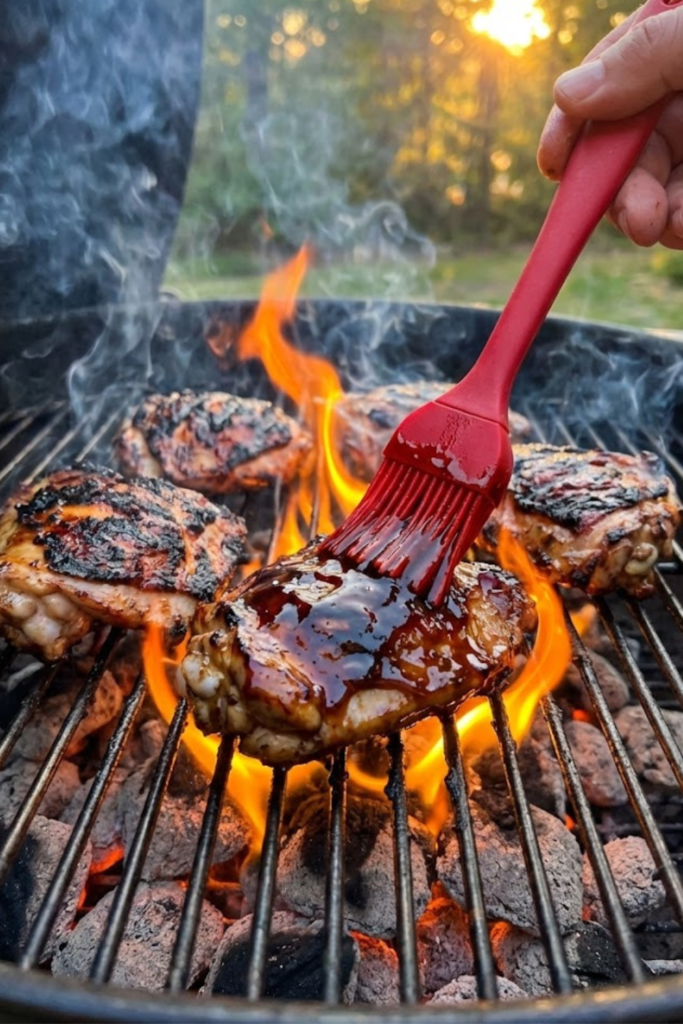
The Basting Technique (Don’t Rush It!)
Here is the secret to that restaurant-style chicken teriyaki grilled baked look: do not baste too early!
If you brush that sugary glaze on while the chicken is still raw, it will burn before the meat is safe to eat. I learned this the hard way, scraping black sludge off my drumsticks. Wait until the chicken is almost done—like the last 5 minutes of cooking. That is when you start brushing on the sauce. Layer it on, flip it, and layer it again. It becomes tacky and delicious without scorching.
Checking for Doneness
Please, stop cutting into the chicken to check if it’s done. You let all the juices run out!
Invest in a cheap meat thermometer. It’s the only tool that doesn’t lie. You are looking for an internal temperature of 165°F (74°C). Once it hits that number, pull it off immediately. Let it rest for 5 to 10 minutes. I know it’s hard to wait when it smells that good, but resting lets the juices redistribute so they don’t spill out on your cutting board.
The Best Baked Chicken Teriyaki Method
Look, I love the smell of charcoal as much as the next person, but let’s be real. Sometimes it is raining sideways, or it is Tuesday night and I just do not have the energy to uncover the grill. That is when the oven becomes my best friend.
For the longest time, I thought baked chicken was boring. It always came out pale and sad looking. I tried to make chicken teriyaki grilled baked inside, and it looked more like boiled chicken in brown soup. Not appetizing. But after wrecking a few dinners, I figured out that the oven can actually mimic that sticky, glazed goodness if you treat it right.
Cranking Up the Heat
The biggest mistake I made starting out was baking at 350°F. It is just too low. The chicken steams instead of roasting, and the sauce gets watery.
You need to set your oven to 400°F (200°C). This high heat is crucial. It helps the sugars in the marinade caramelize rather than just melt. You want the edges of the chicken to get a little crispy while the inside stays moist. If your oven has a convection setting, use it! It moves the hot air around and helps get that roasted texture faster.
Save Your Pans (and Your Sanity)
I have thrown away perfectly good baking sheets because of teriyaki sauce. Once that sugar burns onto the metal, it is like cement. I scrubbed for an hour once and just gave up.
Now, I line my sheet pan with foil, and then I put a piece of parchment paper on top of the foil. It sounds like overkill, but trust me. The parchment prevents the chicken from sticking, and the foil catches any spills that bubble over. When dinner is done, you just wad up the paper and throw it away. No scrubbing required.
The Double-Dip Baking Process
Here is the trick to getting that thick layer of sauce in the oven. Do not just dump all the sauce on raw chicken and shove it in.
I bake the chicken for about 15 to 20 minutes first, just with the marinade it was sitting in. Then, I pull the pan out. There will be liquid in the pan—juices from the chicken mixed with the sauce. I carefully pour that excess liquid out (or into a pot to boil down if I am feeling fancy).
Then, I brush on a fresh, thick layer of the glaze we made earlier. Pop it back in for another 10 minutes. This layering creates that sticky coating that clings to the meat instead of sliding off.
The Broil Finish: The “Fake Grill” Hack
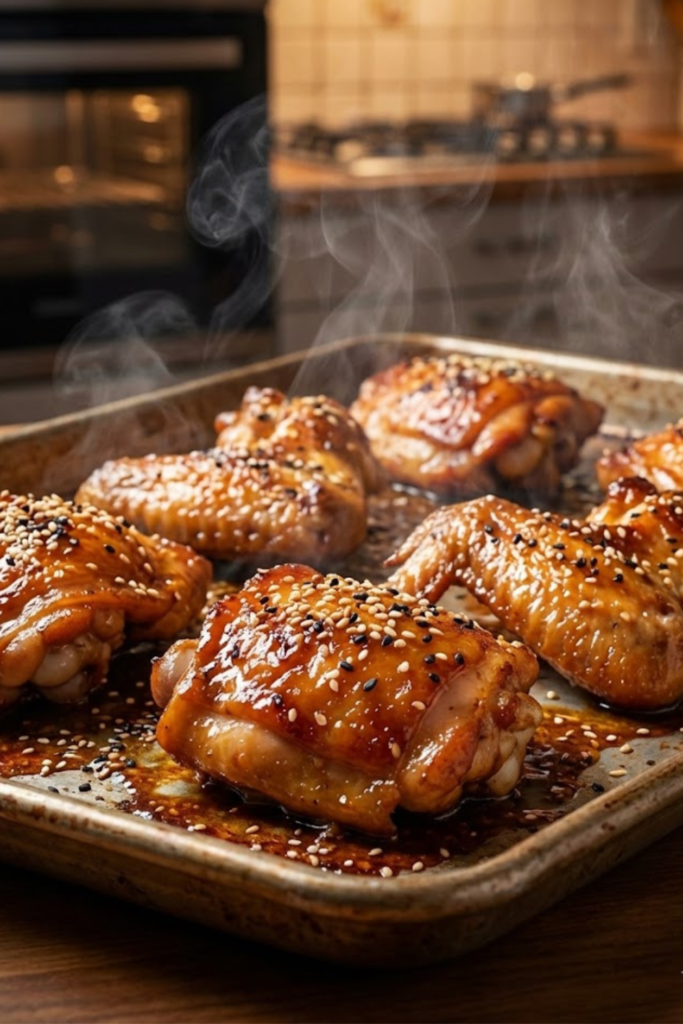
This is the most important step for that chicken teriyaki grilled baked style. When the chicken is fully cooked (checking with that meat thermometer again!), do not take it out yet.
Switch your oven to “Broil.” Move the rack up to the top third of the oven. Watch it like a hawk. Seriously, do not walk away to check Instagram.
Let it broil for 2 to 3 minutes. The intense heat from the top element will bubble the sauce and char the edges just like a grill would. It gives you those little dark, caramelized spots that taste amazing. As soon as you see it bubbling and getting dark brown spots, pull it out. It goes from perfect to burnt in about thirty seconds, so be careful!
Grilled vs. Baked: Which Style Wins?
I have this debate with myself almost every week. Half the time, I want that authentic, smoky char that makes me feel like I’m at a street food stall. The other half of the time? I just want to put dinner in the oven and collapse on the couch.
When you are trying to decide between chicken teriyaki grilled baked methods, it usually comes down to two things: how much time you have and how much you hate doing dishes. I’ve had triumphs and disasters with both, so let’s break down the real differences I’ve noticed over the years.
The Texture Battle
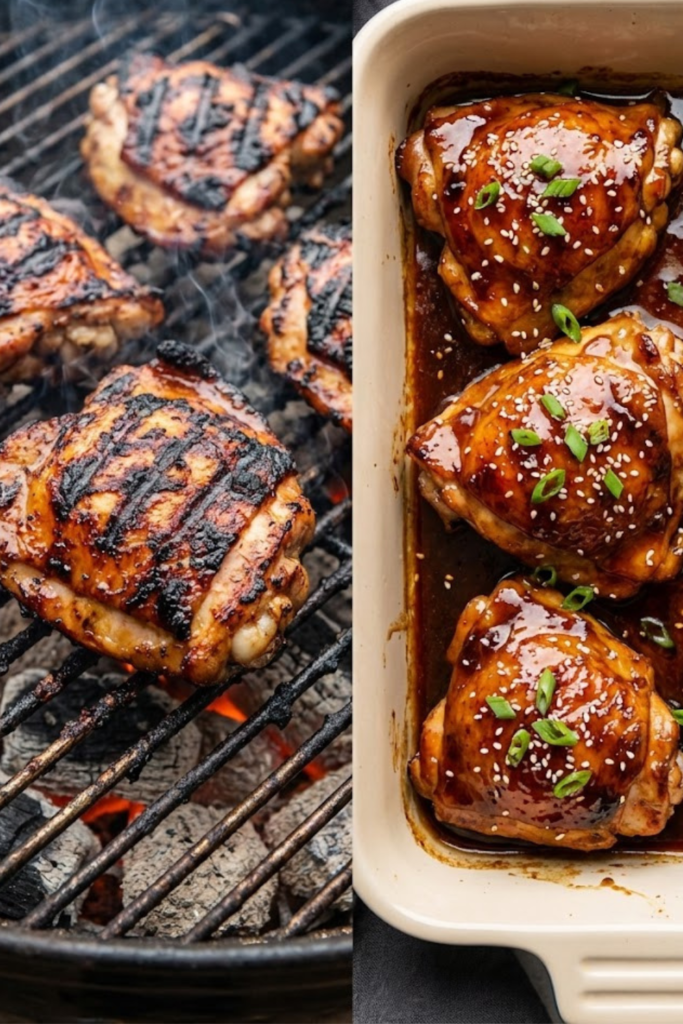
If you are a texture person, this matters. Grilling gives you that distinct, slightly crispy edge. There is nothing quite like biting into a piece of chicken that has that little bit of resistance from the fire before you hit the juicy meat. It’s that classic BBQ feel.
Baking, on the other hand, yields a much softer result. The chicken tends to braise a little bit in its own juices and the sauce. It is incredibly tender. If I’m making this for my kids, they usually prefer the baked version because it’s easier to chew. But if I’m trying to impress guests? The grill marks win every time.
The Lazy Factor (Convenience)
Let’s be real for a second. Grilling requires effort. You have to uncover the BBQ, scrape the grate (which I detest), check the propane, and stand outside. If it is raining or cold, forget it. I am not standing in a puddle just for dinner.
Baking is the ultimate lazy hack. You line a pan, toss the chicken in, and walk away. The cleanup is basically zero if you use parchment paper. I once made a huge batch of chicken teriyaki grilled baked in the oven for meal prep on a Sunday, and I was done cleaning up before the timer even went off. It felt like a victory.
Flavor Depth
This is where the grill usually takes the trophy. You just cannot fake that smoky flavor. The dripping fat hits the coals, flares up, and flavors the meat. It adds a complexity that the oven can’t touch.
However, baked teriyaki has its own perk: the sauce. When you bake, the chicken sits in the sauce the whole time. The flavor penetrates deeper into the meat. On the grill, the sauce sits on top. So, baked chicken often tastes more “teriyaki-ish” all the way through, while grilled chicken is more about the surface glaze and the smoke.
My Final Verdict
So, who wins? Honestly, it depends on the calendar.
If it is a Saturday in July and I have a cold drink in my hand, grilling is the only option. It’s an experience. But for a hectic Tuesday night in November? The oven wins, hands down. Don’t let anyone tell you baking isn’t “authentic” enough. If it tastes good and gets food on the table, it’s a win in my book.
Serving Suggestions and Sides
You know the feeling when you spend an hour cooking the main dish, look at the stove, and realize you forgot about everything else? I have been there too many times. I used to just plop a piece of chicken teriyaki grilled baked on a plate by itself and call it a day. My family would look at me like, “Where is the rest of it?”
Serving this chicken without the right partners is a crime. The sauce is so bold and salty that you need something plain or crunchy to balance it out. Over the years, I’ve found a few sides that turn this from “just chicken” into a proper feast.
Rice is Non-Negotiable
If you are eating teriyaki without rice, are you even doing it right? I am a huge fan of steamed Jasmine or sticky rice. The rice acts like a sponge.
I love scooping a big spoonful of white rice that has soaked up that extra sticky glaze from the bottom of the plate. It is arguably better than the chicken itself. If you want to be a little healthier, brown rice works too, but it doesn’t soak up the sauce quite as well. Just don’t use instant rice if you can help it; the texture is just too mushy next to the tender meat.
Add Some Crunch (Eat Your Veggies!)
Since the chicken is soft and tender, you need a side dish with some snap to it. My go-to is stir-fried broccoli.
I used to steam my broccoli until it was grey and limp. Gross. Now, I just flash fry it in a hot pan with a little oil and garlic for like three minutes. You want it bright green and crunchy. Bok choy or snap peas are awesome too. The fresh, grassy flavor of the veggies cuts right through the heavy sugar and soy of the teriyaki. It cleans your palate so you are ready for the next bite.
The “Fancy Pants” Garnishes
Presentation matters, even if it is just a Tuesday night with the kids. A naked piece of brown chicken doesn’t look that appetizing on its own.
Sprinkle some toasted sesame seeds and sliced green onions (scallions) on top right before you serve it. It takes two seconds. Suddenly, your homemade dinner looks like takeout from a high-end spot. The onions add a nice sharp bite that balances the sweetness, too.
Leftover Magic
If you are lucky enough to have leftovers (we rarely do), this chicken is a meal prep superstar. Cold teriyaki chicken is actually really good.
I like to chop it up the next day for teriyaki chicken bowls or toss it into a salad with ginger dressing. I’ve even put it in tacos with a little slaw, which sounds weird but is surprisingly delicious. The flavor actually gets better after sitting in the fridge overnight, so make a double batch if you have the space!
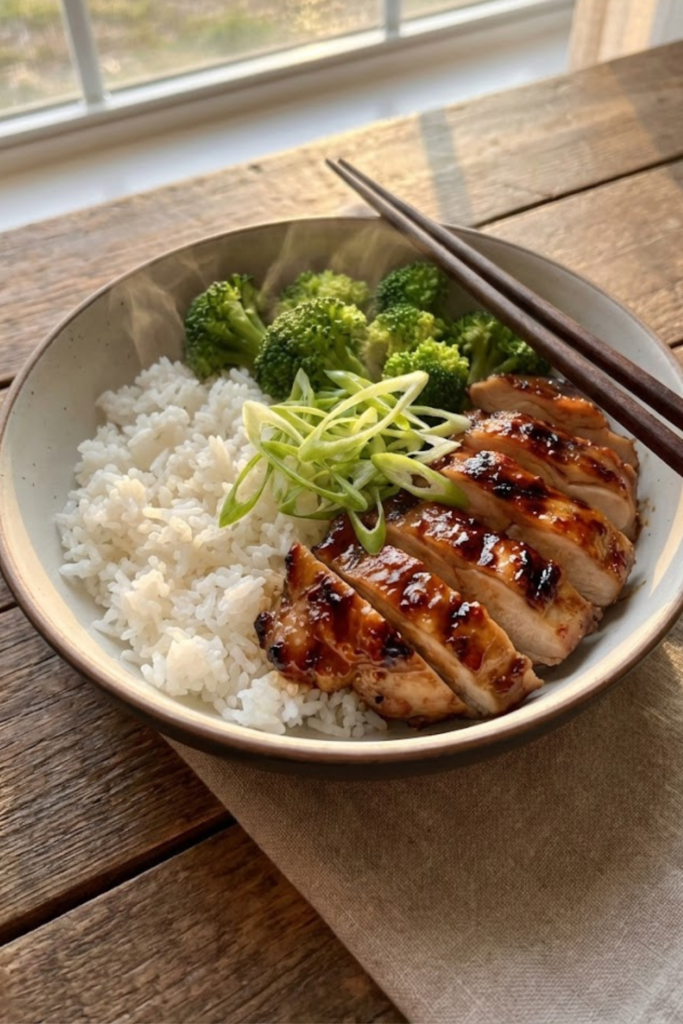
Honestly, making perfect chicken teriyaki grilled baked at home isn’t about having a fancy culinary degree. It’s about patience (especially with that marinade!) and watching your heat. I can’t tell you how many times I’ve settled for mediocre takeout, only to realize I could have made something ten times better in my own kitchen with just a few basic ingredients.
Whether you decided to brave the smoke of the grill or stuck to the safety of your oven, the real victory is in that first bite—juicy meat, crispy edges, and that sticky, sweet-salty glaze coating your lips. It’s comfort food at its absolute best.
Don’t beat yourself up if your first batch gets a little too charred or the sauce is a bit thin. I’ve been there, scraping burnt sugar off my favorite pan and swearing I’d never cook again. But once you nail that balance of soy, ginger, and heat, you are going to be a legend at your dinner table.
So, grab those thighs, whisk up that sauce, and give it a shot. And hey, if you loved these tips and don’t want to lose the recipe in the abyss of the internet, please pin this guide to your Dinner Ideas board on Pinterest! It helps me out huge, and it saves you from “what’s for dinner?” panic later.