You know, the first time I tried to make chicken in white wine sauce, I completely ruined it by grabbing a bottle of sweet Moscato instead of a dry Pinot Grigio—seriously, it tasted like dessert chicken, and not in a good way! That kitchen disaster taught me that picking the right bottle is half the battle, and honestly, this dish is mostly just my excuse to open a nice Sauvignon Blanc on a Tuesday night. Over the years, I’ve tweaked this recipe to get that sauce perfectly creamy without it separating, which used to drive me absolutely crazy. If you’re looking for a dinner that feels fancy but actually takes less than 30 minutes, you’re in the right place, because I’m going to walk you through exactly how to nail this savory classic without the stress.
Choosing the Best Wine for Cooking Chicken
Look, I used to be that person who grabbed the bottle labeled “Cooking Wine” from the vinegar aisle at the grocery store. I didn’t know any better! I thought, “Hey, I’m cooking, so I should buy cooking wine, right?” Wrong. That was a massive mistake. Those bottles are loaded with salt and preservatives that make your chicken in white wine sauce taste like a science experiment gone wrong.
I remember standing over the stove one Tuesday, confused why my sauce tasted like salty syrup. It was heartbreaking to dump that skillet in the trash. Since then, I’ve learned a few hard rules about picking the right bottle. It doesn’t have to be complicated, but it does matter.
The “Drinkability” Rule
Here is the golden rule I live by: if you wouldn’t drink a glass of it while you cook, do not put it in your pan. This doesn’t mean you need to drop $40 on a bottle. I usually stick to the $10 to $15 range.
When wine cooks down, the flavors concentrate. If the wine tastes sour or cheap in the glass, it’s going to taste ten times worse in your sauce. I usually buy a decent bottle, pour a glass for myself (chef’s treat!), and use the rest for the chicken in white wine sauce. It makes the cooking process way more fun, trust me.
Go for Dry and Crisp
You want to look for a dry white wine with high acidity. My go-to is almost always a Sauvignon Blanc. It has this crisp, herbal quality that cuts right through the heavy cream we are going to add later.
Pinot Grigio is another safe bet. It is neutral and won’t overpower the herbs. Once, I tried using a sweet Riesling because it was the only thing in my fridge. Total disaster. The sugar in the wine caramelized and made the savory chicken taste like candy. My kids liked it, but I was horrified. Stick to the dry stuff.
Beware of the Oak
This is where things get tricky. A lot of people grab Chardonnay because it’s popular, but you have to be careful here. Many Chardonnays are aged in oak barrels.
When you cook an oaky wine, it can turn bitter and give your sauce a weird, woody aftertaste. Unless you find an “unoaked” Chardonnay, it is safer to stick with the Sauvignon Blanc. I learned this after serving a bitter dinner to my in-laws. It was embarrassing, and I vowed never to make that mistake again.
Why Acidity Matters
The science behind this is actually pretty cool. The acid in the wine acts like a tenderizer for the meat. Plus, we are using heavy cream and butter in this recipe.
Without that punch of acid from the wine to balance it out, the dish can feel too heavy or greasy. The wine lifts everything up. It is the secret weapon that makes people wonder why your home cooking tastes like a restaurant meal. Just don’t skip it!

Essential Ingredients for a Rich Sauce
I used to think I could just throw whatever was in my fridge into a pan and call it a sauce. Spoiler alert: that is how you end up with a watery, sad mess. Over the years, I’ve realized that for a really good chicken in white wine sauce, you can’t skimp on the basics. It’s not about buying the most expensive stuff, but it is about buying the right stuff.
I remember trying to make this with skim milk once because I was “watching my calories.” It was tragic. The sauce split, looked like curdled soup, and my husband just stared at it politely before ordering pizza. Don’t be like me.
The Aromatics: Shallots vs. Onions
For a long time, I just used yellow onions for everything. I didn’t get the hype around shallots in cooking. Then I actually tried them.
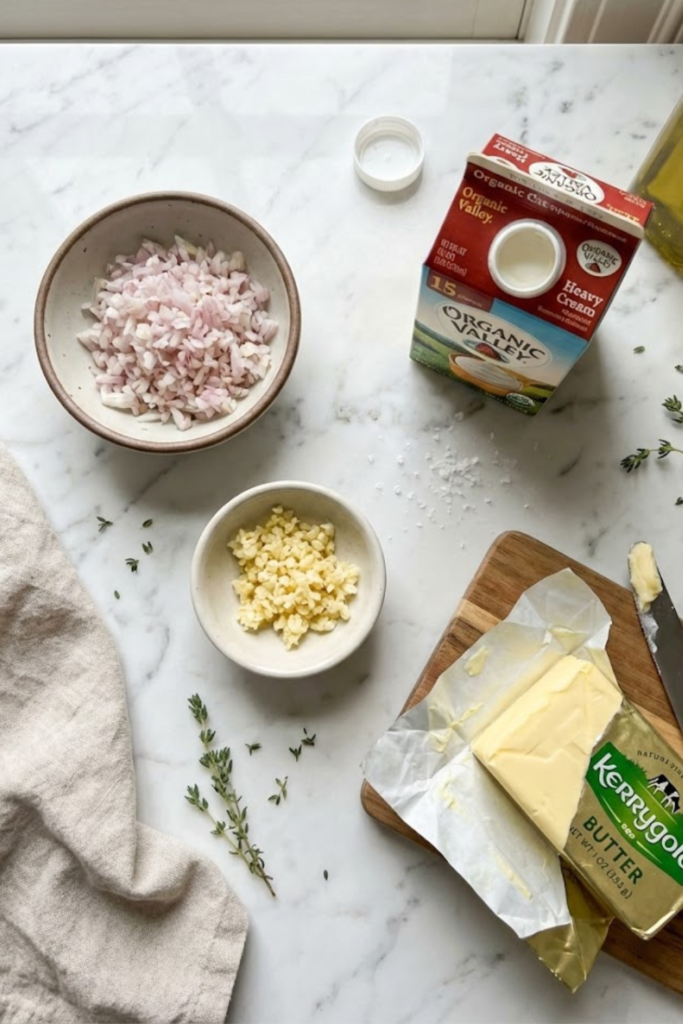
Shallots are milder and sweeter than regular onions. They melt into the sauce so you don’t get big, crunchy chunks of onion interfering with the creamy texture. If you can’t find them, use a red onion, but chop it super fine. Also, fresh garlic is non-negotiable here. I’ve used the jarred stuff when I was lazy, and it just tastes metallic. Take the extra two minutes to mince the real cloves; your kitchen will smell heavenly.
The Cream Factor
Okay, listen to me closely on this one. You need heavy cream. Not half-and-half, and definitely not milk.
Heavy cream has a high fat content that stabilizes the sauce when it hits the hot wine and broth. When I used milk that one time, the acid in the wine made the milk curdle instantly. It was gross. Heavy cream recipes are indulgent for a reason. You need that fat to create the velvety texture that coats the back of a spoon. If you are going to eat this, just commit to the calories and enjoy it.
Fresh Herbs Bring It to Life
I used to be the queen of dried herbs. They are convenient, sure. But for this dish, fresh thyme makes a massive difference.
I usually throw in whole sprigs while the sauce simmers and then fish the stems out later. It infuses this subtle, earthy flavor that dried herbs just can’t replicate. If you only have dried, use way less of it, because it is more potent. But honestly, buying a small pack of fresh thyme chicken herbs is worth the $2 investment.
The Broth Backbone
Finally, let’s talk about the broth. I always buy low-sodium chicken broth.
If you use regular broth, by the time you reduce the sauce down, it becomes a salt lick. I learned this the hard way after serving a dinner that made everyone reach for their water glasses every two bites. You can always add salt later, but you can’t take it out. Good quality stock adds depth without overpowering the delicate wine flavor.
Preparing and Searing the Chicken
I have a confession to make: for years, my chicken was rubbery. I couldn’t figure out why my “gourmet” dinners always had the texture of a shoe. It turns out, I was skipping all the prep work because I was impatient. When making chicken in white wine sauce, how you treat the meat before it even hits the pan is everything.
You can’t just toss cold, wet chicken into a skillet and expect magic. I tried that once when I was rushing to get dinner on the table before my favorite show started. The chicken steamed instead of searing, and it was pale and sad. It looked like hospital food.
The Great Debate: Breasts or Thighs?
I usually reach for a boneless skinless chicken breast for this recipe because it looks nicer on the plate. However, breasts dry out faster than you can say “dinner’s ready.”
If you are worried about overcooking it, swap them out for thighs. They are more forgiving and have a bit more flavor. But whichever cut you choose, here is a tip I learned from a cooking show: pat the chicken dry with paper towels first. If the surface is wet, it won’t brown. It will just sizzle and steam, and you’ll miss out on all that flavor.
The Flour Dredge Trick
I used to skip the flour because I thought it was unnecessary carbs. Big mistake.
Dredging the chicken in seasoned flour isn’t just about the crust; it actually helps thicken your sauce later on. I use a shallow bowl with flour, salt, and pepper. Just give it a light dusting—you don’t want it caked on like fried chicken. Shake off the excess. If you leave too much flour, it burns in the pan and tastes bitter. I ruined a perfectly good batch of pan seared chicken that way last year.
Get That Pan Hot
This is the part where I always used to mess up. I would get impatient and throw the chicken in before the oil was shimmering.
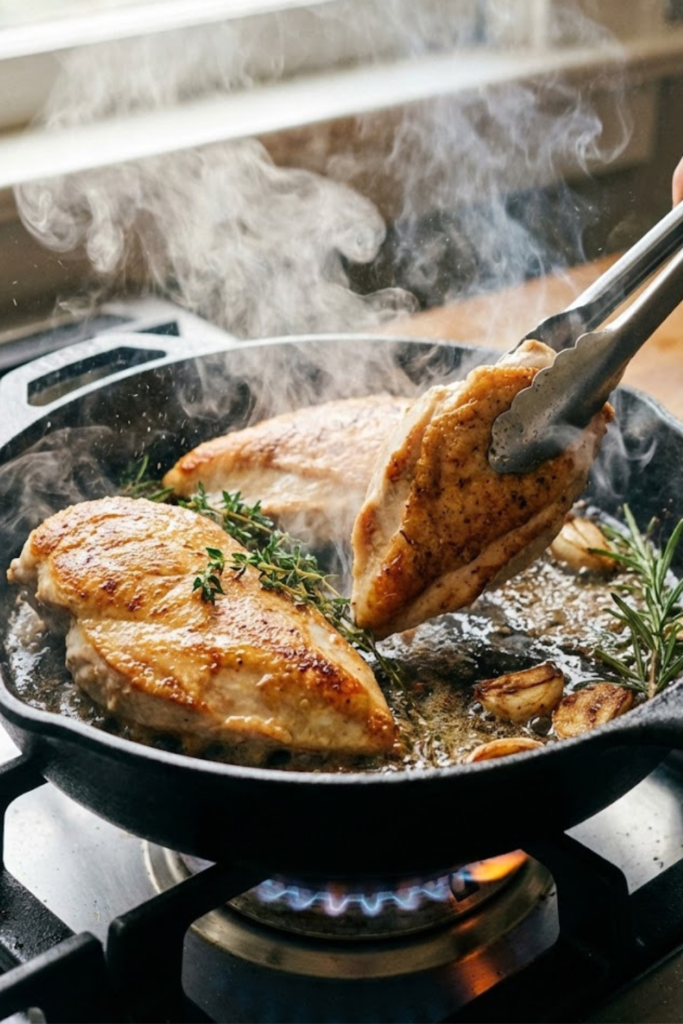
You need a mix of butter and olive oil. The oil stops the butter from burning, and the butter gives it that rich flavor. wait until the butter foams and subsides. If the pan isn’t hot enough, the chicken sticks, and you tear it apart trying to flip it. It is so frustrating when that happens!
Don’t Crowd the Pan
I know you want to cook it all at once to save time. I have been there, trying to shove four giant breasts into one 10-inch skillet.
Don’t do it. When you crowd the pan, the temperature drops, and the moisture gets trapped. You end up boiling the meat in its own juices. Cook in batches if you have to. You want a golden-brown crust, not a gray, soggy exterior. That color is what we call “flavor” in the chef world (or at least in my kitchen).
Once you put the chicken down, do not touch it for at least 4 minutes. Let it do its thing. If you keep moving it, you’ll never get that nice sear.
Mastering the Pan Sauce Method
When I first started cooking, I saw the brown stuff stuck to the bottom of the skillet and thought, “Great, I burned it again.” I literally used to take the pan to the sink and scrub it clean before making the sauce. I look back now and want to scream at my younger self. That sticky brown residue is culinary gold, and washing it away is a crime against flavor.
Making the sauce in the same pan is the whole point of this recipe. It builds layers of flavor that you just can’t get if you use a clean pot.
The Magic of Deglazing
Once you take the chicken out, the pan looks messy. This is where the magic happens. You pour in your wine, and it hisses loudly—that’s the sound of deglazing a pan.
I use a wooden spoon to scrape up all those browned bits, which chefs call the “fond.” The fond cooking technique is critical here because it dissolves into the wine and gives the sauce a deep, savory color. If you skip this or use a non-stick pan where nothing sticks, your sauce will be pale and lack punch. I learned that after wondering why my sauce looked like plain milk.
Patience is Key for Reduction
Here is where I usually get impatient. You have to let the wine simmer down. I used to pour the cream in immediately after the wine because I was hungry and wanted to eat now.
That was a huge mistake. If you don’t let the wine reduce by half, the sauce will taste harsh and boozy. You want the alcohol to cook off, leaving just the essence of the grape. It should take about 3 to 5 minutes. Watch it closely; if the pan is too dry, you’ve gone too far.
The Cream and Cheese Finale
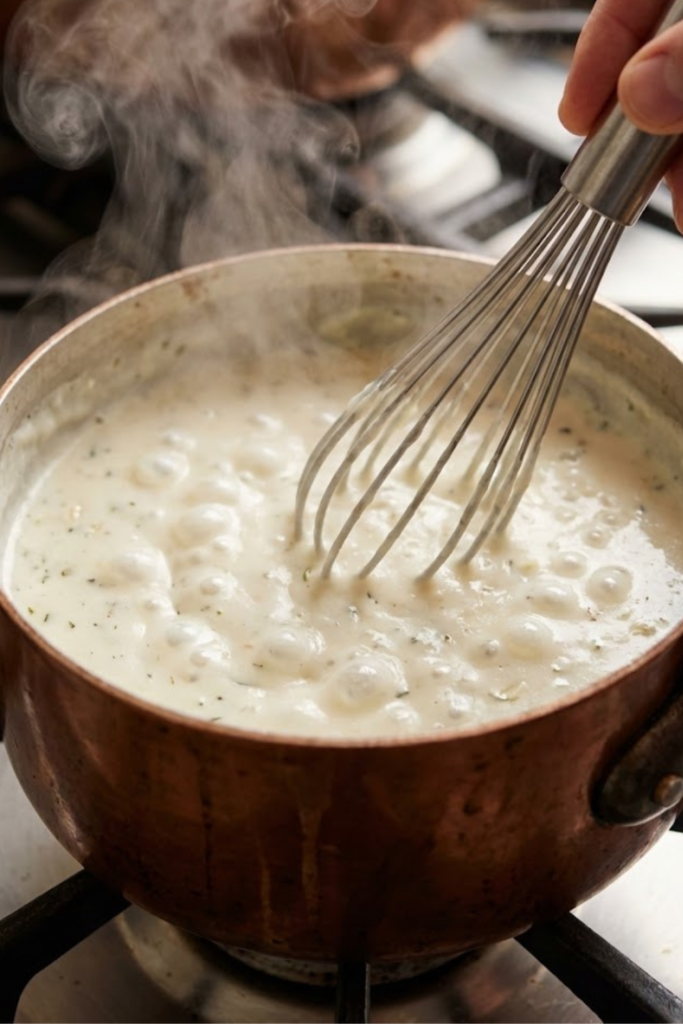
Once the wine is reduced, turn the heat down to low. This is super important. If the pan is blazing hot when you add the dairy, the sauce can break and look oily.
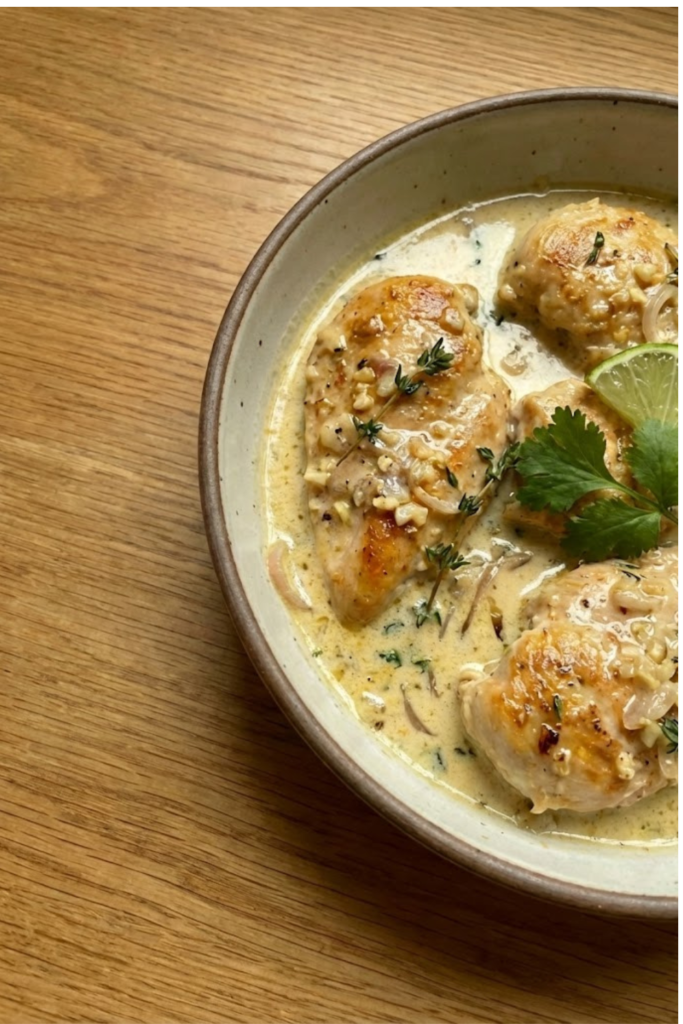
I slowly whisk in the heavy cream. Then comes the cheese. I’m a sucker for a good parmesan cream sauce, so I add a handful of freshly grated parmesan. Do not use the stuff in the green shaker can; it has anti-caking agents that make the sauce gritty. I ruined a perfectly good date night dinner with gritty sauce once—never again.
Bringing it Together
Finally, return the chicken (and any juices that collected on the plate) back into the pan. This is called simmering techniques 101.
Let the chicken warm through in the bubbling sauce for a minute or two. This coats the meat and ensures everything is the same temperature. It’s a moment of triumph when you see that glossy, thick sauce clinging to the chicken. It looks like something from a high-end bistro, but you made it in your pajamas.
Serving Suggestions and Pairings
I remember the first time I made this dish, I served it on a plate by itself because I was trying to be “low carb.” I sat there watching my husband try to scoop up that liquid gold sauce with a fork, and it was painful to watch. You spend twenty minutes making the most delicious sauce of your life, and then have no vehicle to get it into your mouth? That is a rookie mistake I will never make again.
This dish isn’t just about the protein; it’s about the entire experience on the plate. If you don’t plan your sides right, you end up with a disjointed meal.
The Potato vs. Pasta Debate
Honestly, if you are strictly counting calories, you might want to save this recipe for a cheat day. This dish literally begs for carbohydrates. My absolute favorite way to serve this is over a big scoop of creamy mashed potatoes.
The way the chicken and potatoes mix with that wine sauce is life-changing. You want the potatoes to be smooth, not chunky, so they absorb the liquid like a sponge. If I am feeling lazy (which is often), I will boil some angel hair pasta instead. The thin noodles get coated perfectly, turning the whole thing into a rich creamy pasta sauce situation. I once tried it with brown rice to be “healthy,” and the texture was all wrong—it felt grainy and sad. Stick to the white stuff here; comfort food requires commitment.
Adding Some Green and Crunch
Since the sauce is essentially butter, cream, and happiness, you need something fresh to cut through all that richness. I usually go for roasted asparagus or garlicky green beans.
You want a vegetable that has a bit of snap to it. I made the mistake of serving this with creamed corn once. It was cream on top of cream, and my stomach absolutely hated me for it later. A simple side salad with a sharp vinaigrette works wonders, too. It cleanses the palate so you can go back for another bite of that savory chicken sauce without feeling weighed down. Just don’t overcook the veggies; mushy broccoli is nobody’s friend.
The Wine Rule
This one is easy, but people always overthink it. You should drink exactly what you put in the pan.
If you bought a nice Sauvignon Blanc to cook the chicken in white wine sauce, pour yourself a glass of that same bottle. It bridges the flavors perfectly. I used to try and get fancy by pairing a Chardonnay with a Sauvignon Blanc sauce, and the flavors just clashed. Keep it simple. It makes the meal feel cohesive, like a real romantic dinner recipe you would get at a fancy restaurant. Plus, it means you don’t have to open a second bottle, unless you want to.
Don’t Forget the Crusty Bread
Finally, do not forget the bread. I am serious about this.
You will have leftover sauce on your plate, and licking the plate is generally frowned upon (though I have definitely done it when no one was looking). A warm, crusty baguette is essential for mopping up every last drop. It is the best part of the meal, hands down. If you serve this without bread, you are leaving the best part of the flavor in the sink when you wash the dishes.
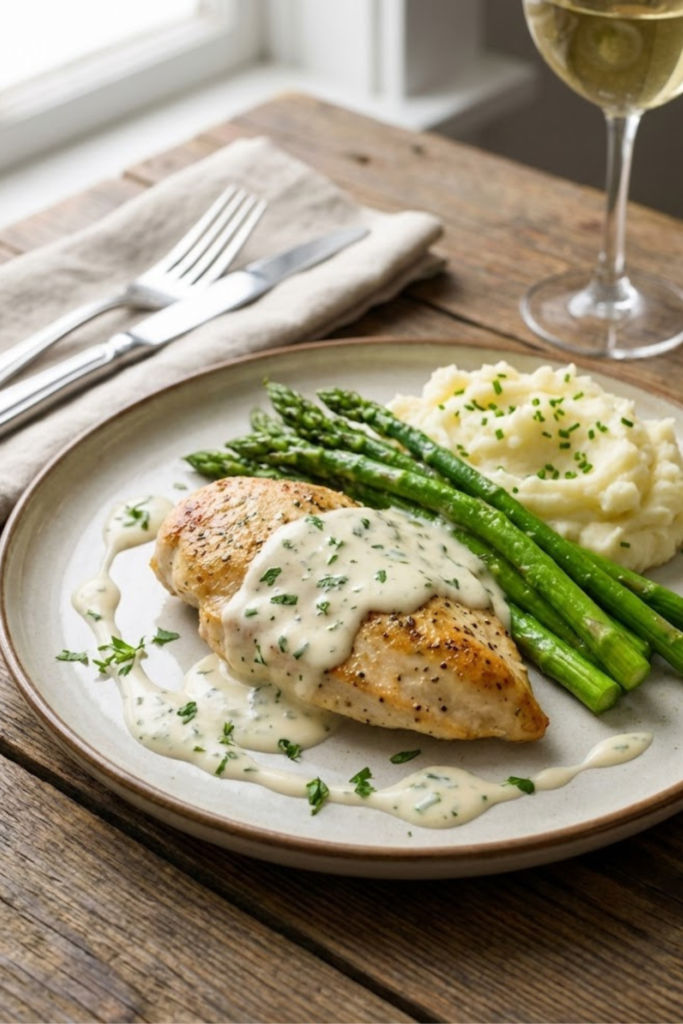
There you have it, a chicken in white wine sauce that tastes like it came from a French bistro but was made in your pajamas! I honestly can’t tell you how many times this recipe has saved me when I completely forgot to plan dinner until 5 PM; it is one of those rare meals that feels fancy enough for company but is easy enough to make when you are exhausted. I used to think that cooking something “gourmet” meant hours of chopping and a sink full of dirty dishes, but this one-pan wonder proved me wrong—just remember to use a wine you actually like to drink, because that simple switch took my cooking from just “edible” to “incredible.” Now it is your turn to grab a bottle of crisp Sauvignon Blanc, fire up the stove, and treat yourself to a meal that tastes this good, and if this recipe made you drool, please Pin this to your Dinner Ideas board on Pinterest so you never lose it!