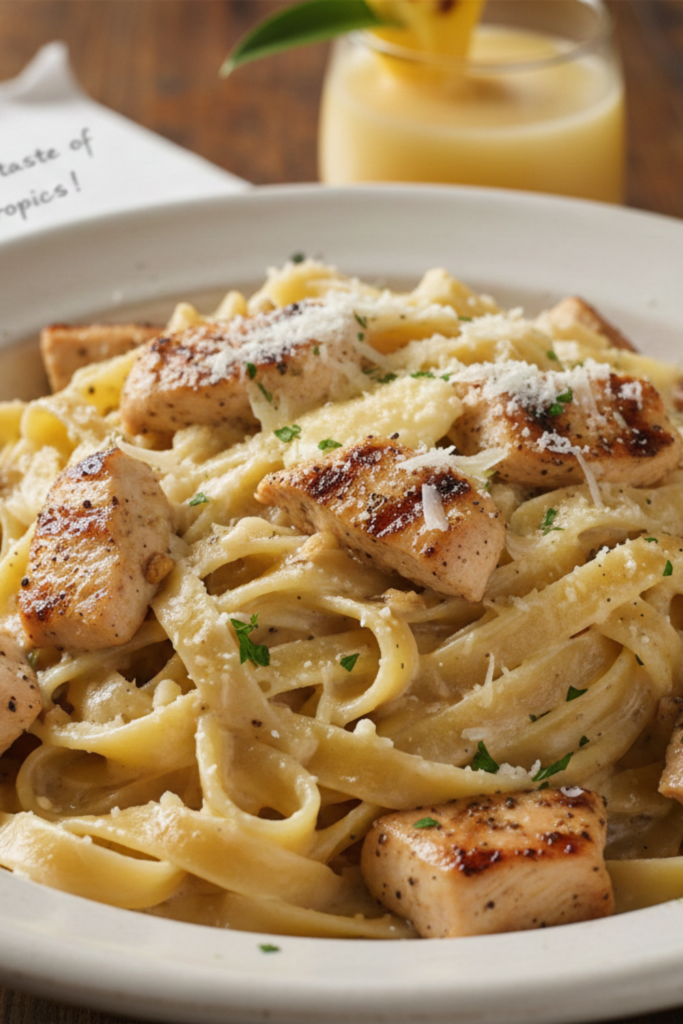
Did you know that the original Fettuccine Alfredo, invented in Rome, only had three ingredients: pasta, butter, and Parmesan cheese?! That’s right! But let’s be real—when most of us crave that ultimate comfort food, we’re talking about the rich, creamy, and satisfying version loaded with tender chicken. I know I am! I’ve been perfecting my Chicken Fettuccine Alfredo recipe for years, and I am so excited to share all my secrets for achieving that velvety smooth sauce that clings perfectly to the fettuccine noodles. Forget those bland, watery versions; we are aiming for pure pasta paradise! In this guide, we’ll dive deep into the best techniques, from properly seasoning your chicken breast to getting that essential emulsion for a truly authentic Alfredo sauce. Get ready to elevate your dinner game!
Mastering the Silky Alfredo Sauce: Creaminess is Key
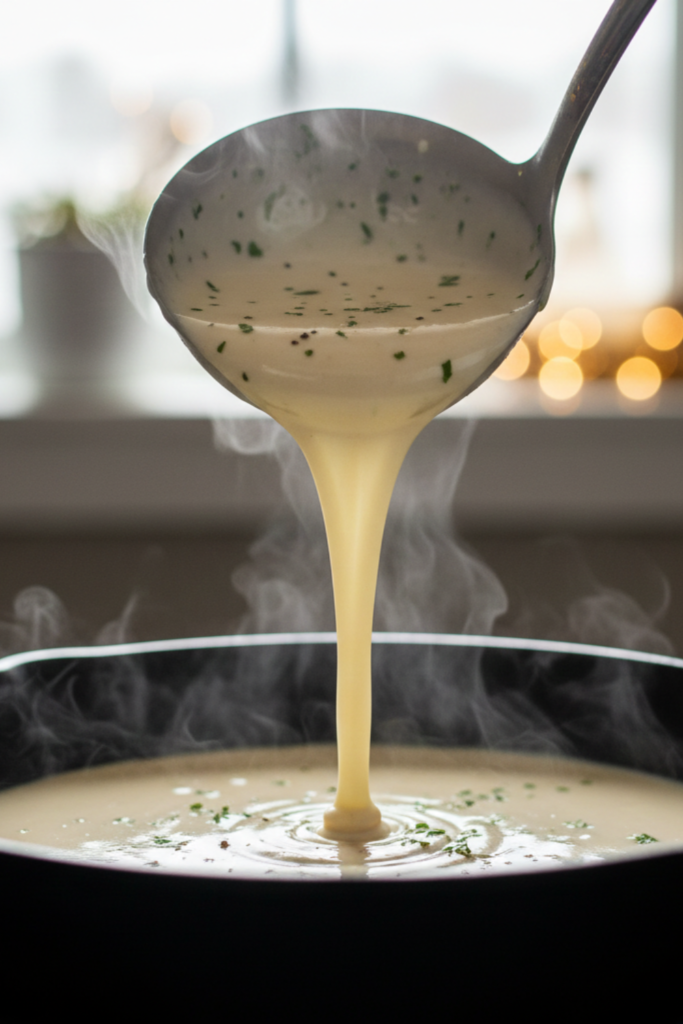
Okay, let’s talk about the sauce, because this is where most people get tripped up with Chicken Fettuccine Alfredo. I’m gonna be honest, the first few times I tried to make it at home, my Alfredo sauce was a disaster. It was either too thin and watery, or it looked like cottage cheese because the cream completely separated. Ugh, the frustration was real! I almost gave up on making homemade Alfredo, but thank goodness I stuck with it.
The Butter-Cream-Cheese Trifecta
The absolute biggest mistake I made early on was the ratio of ingredients. You can’t just eyeball it; that’s what I learned the hard way. For that perfect, clingy texture—the one that really grabs onto those fettuccine noodles—you need the right proportion of butter, heavy cream, and Parmesan cheese. I’m talking about a gentle dance, not a chaotic mess!
My tried-and-true tip, the one that guarantees a beautiful, emulsified sauce, is to start the process with good quality butter. Melt it low and slow. Then, when you add your heavy cream, you gotta heat it up gently. Do not let that cream boil, or you’ll risk that dreaded break, and trust me, fixing a broken sauce is a total pain in the neck. You want it warmed through, slightly simmering, but not violently bubbling.
Grate Your Own, Folks. Seriously.
I’m telling you, this is the secret weapon for killer Alfredo sauce. Forget that stuff in the green shaker can or even the pre-shredded stuff in a bag! You simply must grate your own Parmigiano-Reggiano. I’m talking about the real deal, aged stuff.
Why? Well, that pre-grated cheese is coated in an anti-caking agent, usually cellulose. That agent prevents the cheese from melting properly, and it can make your sauce gritty or just plain weird. A truly creamy, velvety sauce comes from the natural oils in freshly grated cheese mixing perfectly with the melted butter and heavy cream. I can remember thinking, “What a waste of money” when I first bought a block of good Parmesan, but man, was it worth it! The difference in flavor and texture is just night and day.
The Magic of Pasta Water
Here’s a pro-tip that’ll make you feel like a legit Italian nonna: save that starchy pasta water! When you’re draining your fettuccine pasta, don’t dump it all out. That cloudy water is liquid gold, full of starch that acts as a natural thickener. This is how you achieve a truly rich and cohesive sauce without adding any flour or cornstarch, which, let’s face it, is cheating.
My favorite technique is to add the cooked fettuccine noodles right to the sauce pan with my Alfredo sauce. Then, I slowly ladle in a bit of that starchy pasta water until the sauce coats the noodles perfectly. Start with about a quarter cup and just keep tossing. It emulsifies everything so beautifully and helps that creamy goodness cling to every single noodle—which is what you want in a top-tier Chicken Fettuccine Alfredo. If the sauce is a little too thick after the cheese is stirred in, just a splash more starchy water fixes it right up. It’s like magic, I tell ya!
You can also throw in a pinch of fresh garlic to the melted butter before you add the cream; that’ll just elevate the flavor profile, giving you a slightly richer, more complex garlic alfredo. Just be sure to cook the garlic until fragrant, maybe 30 seconds, so it doesn’t burn and turn bitter. You don’t want your beautiful creamy pasta sauce ruined by bitter garlic!
I remember once I added the cheese too quickly when the cream was too hot, and boom—it curdled. I was so mad! But I learned my lesson: low heat, fresh cheese, and that precious pasta water is the way to go. You want a smooth, silky finish that whispers, “This is the best Chicken Fettuccine Alfredo you’ve ever had”.
Perfectly Tender Chicken Every Time: Prep and Seasoning Secrets
When you’re making Chicken Fettuccine Alfredo, the chicken can’t just be okay—it has to be juicy, tender, and super flavorful. Honestly, a dry, rubbery piece of chicken can ruin even the best batch of creamy Alfredo sauce. I know because I’ve done it! I used to just throw the chicken in the pan straight from the package, barely seasoned, and then wonder why it tasted so boring. What a mistake! 1
The Debate: Breast or Thighs?
Most classic Chicken Fettuccine Alfredo recipes call for chicken breast, and that’s usually what I stick with because it cooks quickly and slices up beautifully. But let me tell you, if you want something even more forgiving and rich, use boneless, skinless chicken thighs. They have more fat, so they stay moister, even if you accidentally cook them a tiny bit too long. I’ve found that using thighs really boosts the overall richness of the dish, which works great with the creamy pasta sauce.
If you’re using breasts (which is fine, most of the time!), you’ve got to ensure they are evenly thick. If they’re huge, I recommend slicing them horizontally to create two thinner cutlets, or you can use a meat mallet to pound them to about a three-quarter inch thickness. This helps everything cook at the same rate, preventing those thin edges from drying out while the center tries to catch up. That simple step was a real game-changer for me! 2
My Go-To Seasoning Method
You need flavor on the chicken, not just in the sauce. Don’t be shy with the seasoning! My secret is a generous rub that includes salt, black pepper, a little smoked paprika for color, and a touch of dried Italian herbs. I usually mix everything in a small bowl, coat the chicken liberally, and then let it sit for about 10 minutes while I prep everything else. That little bit of rest time lets the seasoning penetrate the surface, giving the final dish a much more robust flavor. 3
I remember once I was rushing and skipped the resting step, and the seasoning just kind of fell off into the pan. Rookie mistake! Take the extra few minutes; it’s worth it for a top-tier chicken breast flavor.
Searing for Success
Now for the actual cooking. You need your pan hot—medium-high heat, not screaming hot, though. I use a mix of olive oil and a little bit of butter. The oil raises the smoking point, and the butter adds flavor and helps with that beautiful, golden-brown crust we’re chasing. 4
Place your seasoned chicken breast in the hot pan and do not move it for about 4-5 minutes. Seriously, resist the urge to peek or flip! This is how you achieve that lovely sear. Once you see that golden crust on the edges, flip it and cook the other side until it’s done—usually another 3-4 minutes. You’re looking for an internal temperature of $165^\circ\text{F}$. 5
A word of warning: I once decided to put the whole batch of chicken in a too-small pan. The pan cooled down, the chicken started to steam instead of sear, and I was left with pale, sad-looking protein. Yuck! Cook in batches, if you have to, to keep that pan temperature up!
The Essential Rest
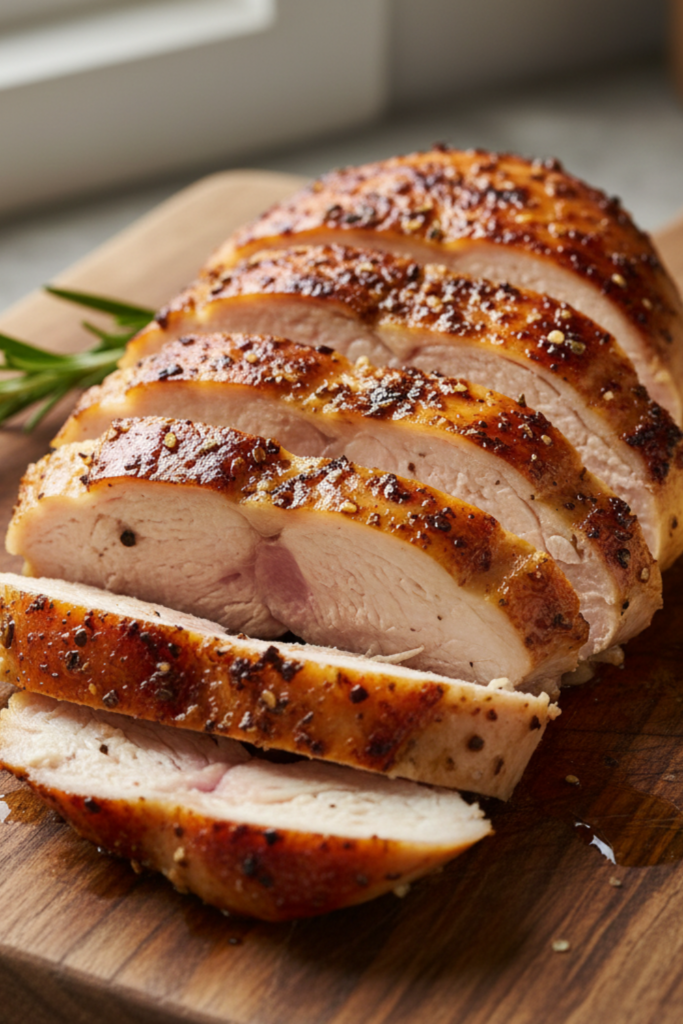
After the chicken is cooked through, you’re not done! This step is critical, and it’s something I always try to tell people when they are making any kind of chicken pasta recipe. Take the chicken out of the pan and let it rest on a cutting board for at least 5 to 10 minutes. This allows the juices inside the muscle fibers to redistribute. If you cut it immediately, all that precious moisture leaks out, and you end up with dry meat. When you make your perfect Chicken Fettuccine Alfredo, you want every single bite to be tender and juicy. After resting, slice it thinly against the grain. The contrast of the tender chicken with the rich, homemade alfredo is just divine!
The Art of Al Dente Fettuccine Noodles
You know, sometimes we get so obsessed with the Alfredo sauce and the chicken that we forget the foundation of this amazing dish: the pasta. Seriously, if your fettuccine noodles are mushy, the whole plate of Chicken Fettuccine Alfredo just falls apart. It’s gotta have that little bite, that resistance—that “al dente” magic. I’ve made the mistake of overcooking pasta more times than I care to admit, especially in my early days of cooking. It’s a bummer when you spend so much time perfecting the creamy pasta sauce only to have it served over sad, soft noodles.
Salty Like the Sea
The first major tip I learned—and this is super crucial—is to properly salt your water. When I say salt it, I mean it needs to be “salty like the sea”. Don’t be timid! The pasta absorbs this salt as it cooks, and that’s really your only chance to season the fettuccine pasta itself. I’m not gonna give you an exact measurement because it depends on the size of your pot, but toss in a generous handful of coarse salt once the water is boiling. You want the water to taste noticeably salty. It makes a massive difference in the final flavor profile of your overall pasta dish.
I remember one time my mom commented that my pasta was bland. Ouch! That was the moment I realized I wasn’t using enough salt. Ever since then, I go big or go home with the water salt.
Timing is Everything
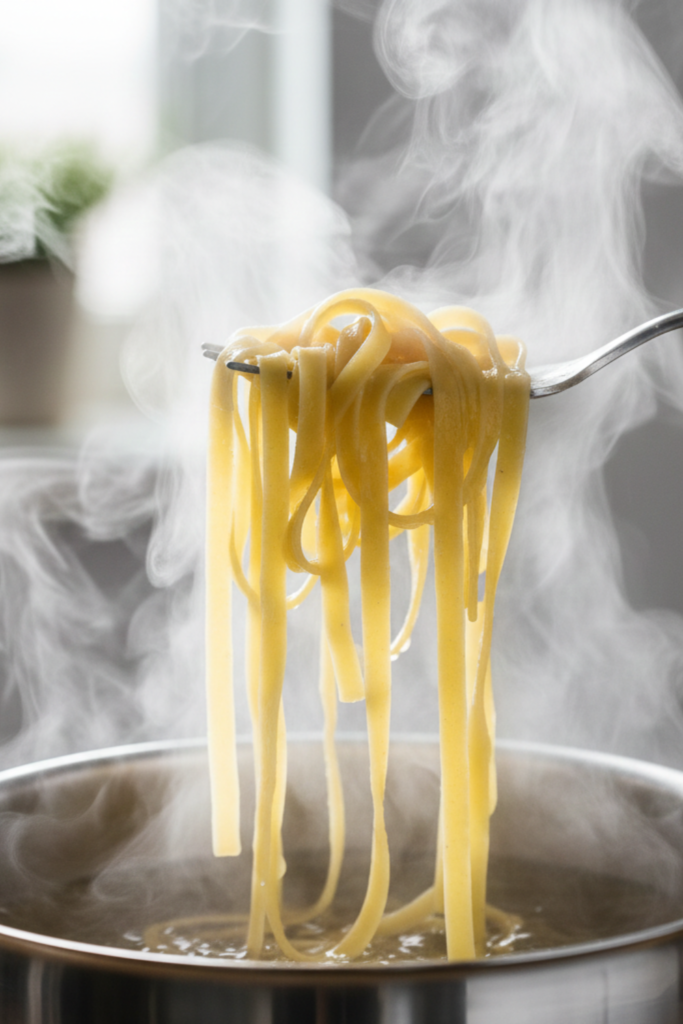
When you’re aiming for al dente, timing is absolutely everything. My best advice is to follow the package directions for cooking your fettuccine noodles but set your timer for two minutes less than the suggested time. This is your safety net.
When that timer goes off, you need to pull a strand out, let it cool for a second—seriously, don’t burn your tongue!—and take a bite. Al dente means “to the tooth”. You should see a tiny, almost imperceptible white dot in the very center of the noodle. That’s perfection! If it tastes totally soft, you’ve gone too far. Because the pasta is going to cook a little bit more when you toss it with the hot homemade alfredo, undercooking it slightly is the smart move.
The Final, Crucial Toss
As soon as your pasta hits that perfect spot, use tongs or a spider to transfer the fettuccine noodles directly into your Alfredo sauce pan. I mentioned this before, but it bears repeating: never rinse your pasta! Rinsing washes away all that amazing pasta water starch that we need to help thicken and emulsify the creamy pasta sauce. We want those starches!
Once the noodles are in the sauce, toss them gently and continuously for about a minute. This lets the noodles absorb the sauce and finish cooking in the sauce, ensuring maximum flavor coverage. If things look too dry, this is when you ladle in a tablespoon or two of that reserved starchy cooking water. The goal is to get that perfect, glossy finish where the Alfredo sauce coats every single noodle, ready to be topped with that delicious, pre-sliced chicken breast. It makes all the difference when you finally plate up your gorgeous Chicken Fettuccine Alfredo.
Expert Variations and Flavor Boosters
Once you’ve nailed the basics—the creamy, luscious Alfredo sauce and the tender chicken breast—you can start playing around with extra flavors and making this Chicken Fettuccine Alfredo truly customized. I’ve been cooking this dish for years, and trust me, adding just one or two small things can take it from fantastic to unforgettable.
Garlic and Nutmeg: Your Best Friends
You might have noticed that some truly authentic, rich Alfredo sauce recipes call for a tiny pinch of nutmeg. And I mean tiny! When I first saw that, I thought, “Nutmeg? In pasta? That’s just weird!” But friends, it works wonders. It doesn’t make your sauce taste like a holiday cookie; it just deepens the flavor of the heavy cream and Parmesan cheese, giving the sauce a subtle complexity you can’t quite place. Try adding just a whisper of freshly grated nutmeg right at the end, as you’re stirring in the cheese. You won’t regret it.
Another crucial flavor boost, one I always include, is garlic. While classic Roman Alfredo doesn’t use it, the modern, American-favorite Chicken Fettuccine Alfredo absolutely demands some garlic alfredo flavor. Sautéing a couple of minced cloves of garlic in the butter before adding the cream is essential. Just be vigilant so you don’t burn it—it only needs about 30 seconds until fragrant. Burnt garlic will absolutely wreck the delicate balance of your creamy pasta sauce!
To Veg or Not to Veg?
Sometimes, I feel guilty eating something so decadent, so I toss in some vegetables. It’s an easy way to feel slightly healthier, and it adds color and texture! My favorites are blanched broccoli florets or fresh spinach.
If you opt for broccoli, add it to your pasta water during the last three minutes of the fettuccine noodles cooking time. This quickly cooks it and prevents you from having to dirty another pan. If you use spinach, just toss a couple of handfuls right into the Alfredo sauce when the heat is off. The residual heat will wilt it perfectly. I prefer spinach; it wilts right down and blends seamlessly into the pasta dish.
Making Leftovers Delicious
The unfortunate truth about Chicken Fettuccine Alfredo is that it doesn’t reheat well. The starch from the fettuccine pasta absorbs all the moisture from the sauce, and the dish turns into a solid, dry mass—it’s a massive bummer! I have tried everything over the years to fix this, and I finally landed on a simple trick.
When reheating, don’t use the microwave unless you absolutely have to. Instead, transfer your leftovers to a non-stick skillet over low heat. As the dish warms up, pour in a splash of milk or, even better, a little extra heavy cream and maybe a spoon of water. Stir it gently until the sauce smooths out again. You might even want to throw in a tiny pinch of fresh Parmesan cheese. This reintroduces the moisture the pasta stole, and suddenly, your leftovers taste almost as good as the day you made your homemade alfredo!
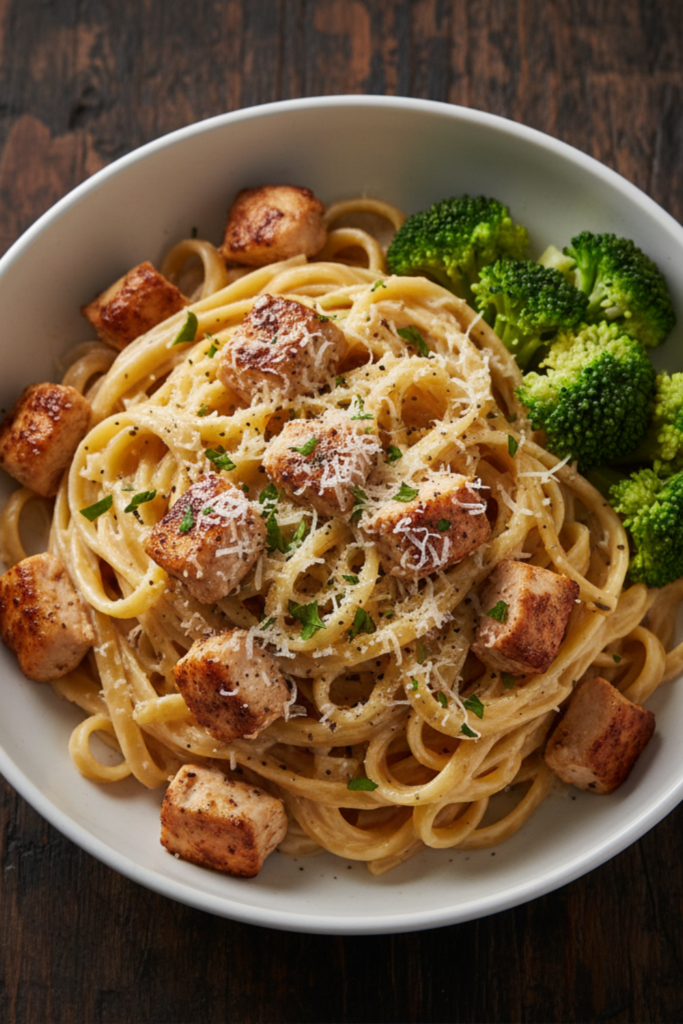
Wow, we’ve covered a lot of ground, haven’t we
? From selecting the best chicken breast to mastering the perfect Alfredo sauce emulsion with rich heavy cream and fresh Parmesan cheese
, you now have all the tools to create a truly unforgettable meal. Remember, the secret to the best Chicken Fettuccine Alfredo isn’t just following the steps; it’s using high-quality ingredients and getting the technique right—especially that crucial pasta water! Stop settling for mediocre takeout and start making this authentic pasta dish
tonight
. You deserve this comfort food! If this guide helped you create your own creamy masterpiece, please snap a photo and share it on Pinterest
! It helps me out a ton!