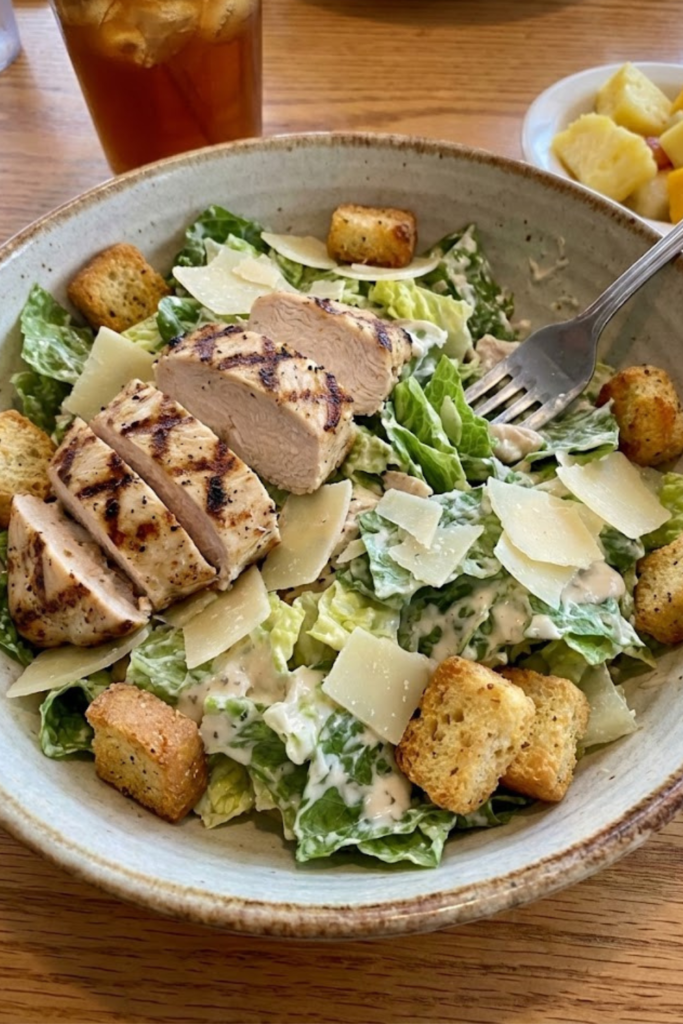
Raise your hand if you thought the Chicken Caesar Salad was named after a Roman emperor—I definitely did until I learned it was actually invented by Caesar Cardini in Mexico!
Knowing the history won’t fix a soggy salad, though, and I learned that the hard way when I served a disaster of a meal with dry meat and bottled dressing that tasted like chemicals. That embarrassment sent me on a mission to ditch the bagged stuff and master the basics, because a real Caesar is all about respect for fresh ingredients like crisp Romaine lettuce hearts and savory homemade Caesar dressing.
Today, I’m going to walk you through exactly how to avoid my mistakes by grilling juicy chicken breast, whisking up a dressing you’ll want to drink, and baking sourdough croutons that don’t break your teeth, so let’s get messy and make something restaurant-quality!
Choosing the Freshest Ingredients for Your Salad
I used to think a salad was just a salad. I mean, how hard can it be? You throw some green stuff in a bowl and call it a day. But I remember one specific dinner party where I served a “Caesar” using wilting iceberg lettuce and that powdery cheese from the green shaker can. It was… memorable, but for all the wrong reasons. My guests were polite, but I saw them pushing the soggy leaves around their plates.
That night taught me a hard lesson: your cooking is only as good as what you put into it. If you start with mediocrity, you end with mediocrity.
When it comes to Chicken Caesar Salad, there is nowhere to hide. You have very few components, so each one has to pull its own weight. Let’s talk about what you actually need to buy so you don’t waste your money on stuff that tastes like cardboard.
Romaine Hearts vs. The Bagged Stuff
Please, for the love of food, put the bag of pre-cut lettuce down. I know it’s convenient. I have been there, staring at it after a long day of work, thinking, “It’s easier.” But that bagged stuff is often washed in chlorine solutions and holds way too much moisture.
Moisture is the enemy of a good Caesar dressing.
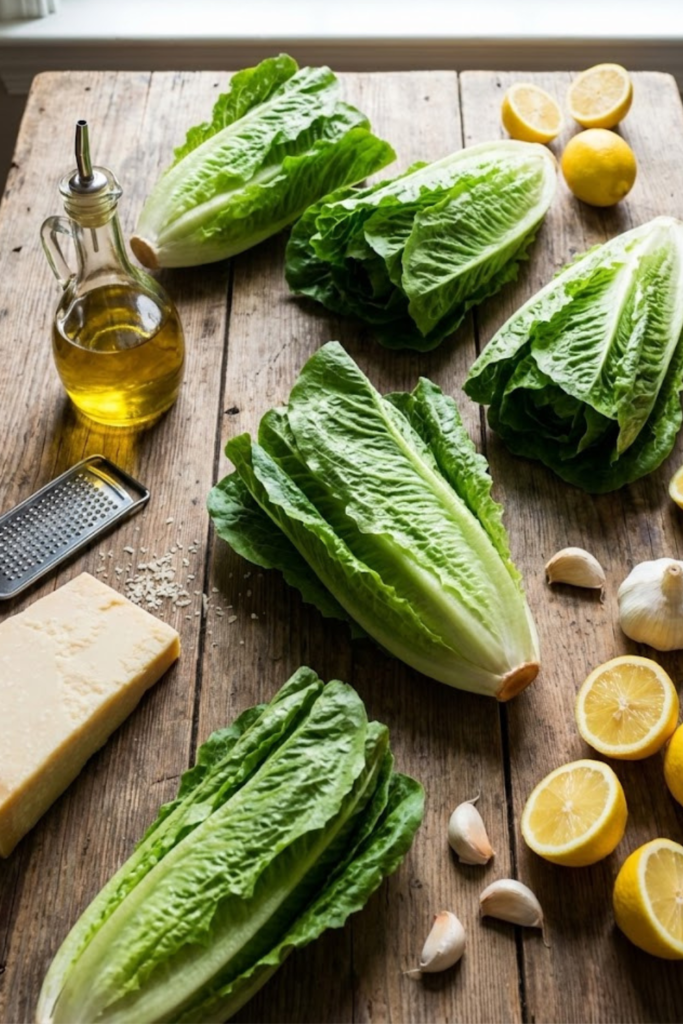
You want to buy whole heads of Romaine lettuce hearts. They are the inner, crunchier leaves of the lettuce. They hold their shape when tossed and give you that satisfying snap when you bite into them. Look for heads that are tight and heavy for their size, with no browning on the tips.
The Cheese Situation
Here is where I made my biggest mistakes for years. I refused to buy the real stuff because of the price tag. But listen, that pre-shredded cheese in the plastic bag? It is coated in cellulose (basically wood pulp) to keep it from clumping. That stuff doesn’t melt in your mouth; it just sits there.
You need to buy a wedge of Parmigiano-Reggiano cheese. Yes, the one with the stamped rind.
It has a nutty, salty crystal texture that you just can’t fake. You don’t need a lot of it, so one block lasts forever. Grab a vegetable peeler and shave big, beautiful ribbons of cheese right over the bowl. It looks fancy and tastes a thousand times better.
Don’t Fear the Anchovy
Okay, let’s address the elephant in the room. Or the fish in the room. Anchovies freak people out. My husband used to swear he hated them. But here is a secret: if you want that deep, savory restaurant flavor, you need them. It provides umami flavor, which is that savory richness that makes you want another bite.
If the idea of touching tiny, oily fish grosses you out (I get it, they are slimy), buy a tube of anchovy paste. It’s basically “flavor toothpaste.” You squeeze a little bit into the dressing, and it dissolves completely. No bones, no staring into fish eyes. It just adds a salty kick that salt alone can’t provide.
The Liquid Gold
Since the dressing is mostly oil, the oil you pick matters. Don’t use that neutral vegetable oil you use for brownies. You want a decent Extra Virgin Olive Oil. It doesn’t have to be the $40 bottle, but it should smell like olives and grass, not old grease.
Grilling the Perfect Juicy Chicken Breast
I have a confession to make. For the first ten years of my adult life, I served chicken that had the texture of an old tire. I was so terrified of undercooking poultry that I would nuke it on the grill until it was basically a hockey puck. My poor husband would chew quietly, pretending it was delicious, but I knew. It was dry, stringy, and frankly, a chore to eat.
I used to think that “healthy” chicken just had to taste like that. I was wrong.
Making grilled chicken breast that is actually juicy is not luck; it is science. And honestly, it’s easier than I was making it out to be. You don’t need a fancy culinary degree, you just need to stop torturing the meat.
The Marinade Magic
First off, never throw a naked breast on the fire. That is a recipe for disaster. You need a simple chicken marinade to tenderize the meat. I learned this after watching a cooking show where the host explained that acid breaks down the tough fibers.
I keep it super simple now. I grab a Ziploc bag and toss in:
- Olive oil
- Lots of fresh lemon juice
- Smashed garlic cloves
- A hefty pinch of dried oregano
Let that sit for at least 30 minutes. If you can leave it for a few hours, even better. The oil keeps it moist, and that acid does the heavy lifting for you.
The Heat Check
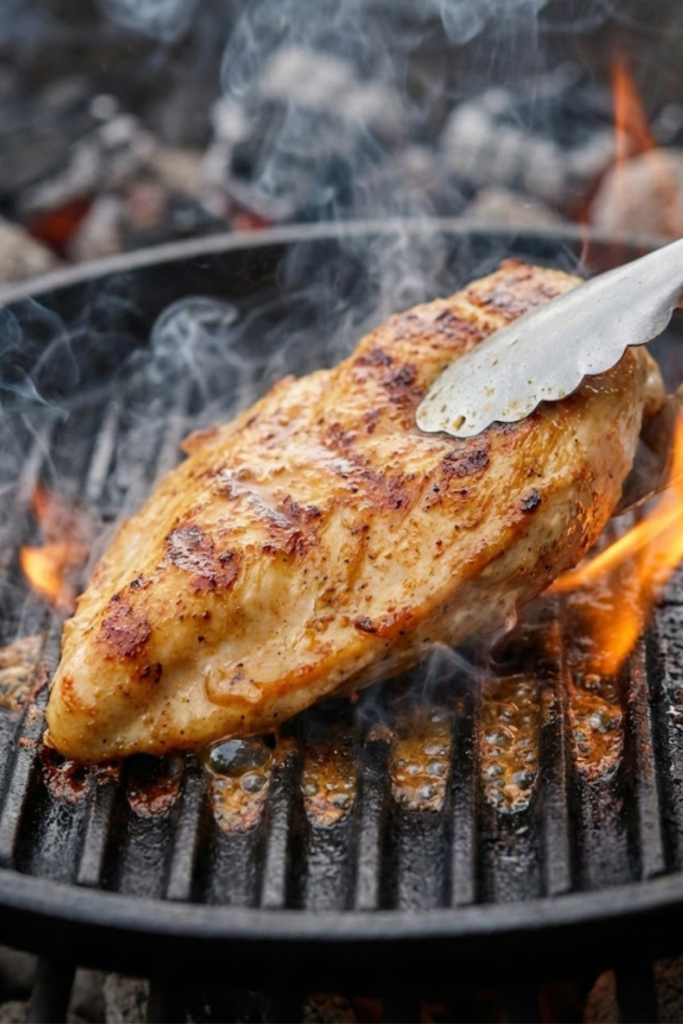
Whether you are using an outdoor grill or pan-searing on the stove, you need high heat. You want that sizzle immediately. If the pan isn’t hot enough, the chicken just steams in its own juices and turns gray. Nobody wants gray chicken.
Here is a mistake I used to make constantly: I would flip the meat every 30 seconds. Stop doing that! Put it down and leave it alone. Let it get those beautiful char marks. If you try to lift it and it sticks to the grates, it is telling you it’s not ready yet.
The Hardest Part: Waiting
This is the most important tip I can give you, and it is the one I ignored for years. When you take the chicken off the heat, resting the meat is mandatory.
I know, you are hungry. You want to slice into it right away. But if you cut it the second it comes off the grill, all those delicious juices will run out onto your cutting board. Then you are left with dry meat again.
Cover it with a piece of foil and let it sit for 5 to 10 minutes. It lets the juices redistribute inside the breast. Trust me on this. When you finally slice it, it will be moist and tender. It makes the difference between a sad desk lunch and a meal you actually want to eat.
Whisking Up an Authentic Caesar Dressing
I used to be terrified of making my own dressing. I mean, legitimate fear. I remember the first time I tried to make a classic vinaigrette; I just dumped the oil and vinegar together and shook it. Five seconds later, it was separated again, looking like a lava lamp gone wrong. It was so frustrating!
I thought you needed some kind of industrial machine to get that creamy, smooth texture. But it turns out, all you really need is a bowl, a whisk, and a little bit of patience.
Making homemade Caesar dressing is actually kind of therapeutic once you get the hang of it. But let me tell you, I have broken plenty of sauces in my day. That is when the oil and the liquid refuse to mix, and you are left with a greasy, curdled mess. I have poured more than one batch down the sink while cursing under my breath.
The Secret is in the Drizzle
Here is the trick I learned after many failures: you cannot rush the oil.
If you are going the traditional route using raw egg yolks, you have to add the extra virgin olive oil drop by drop at first. I am not exaggerating. If you pour it in too fast, the yolks freak out and can’t hold onto the oil.
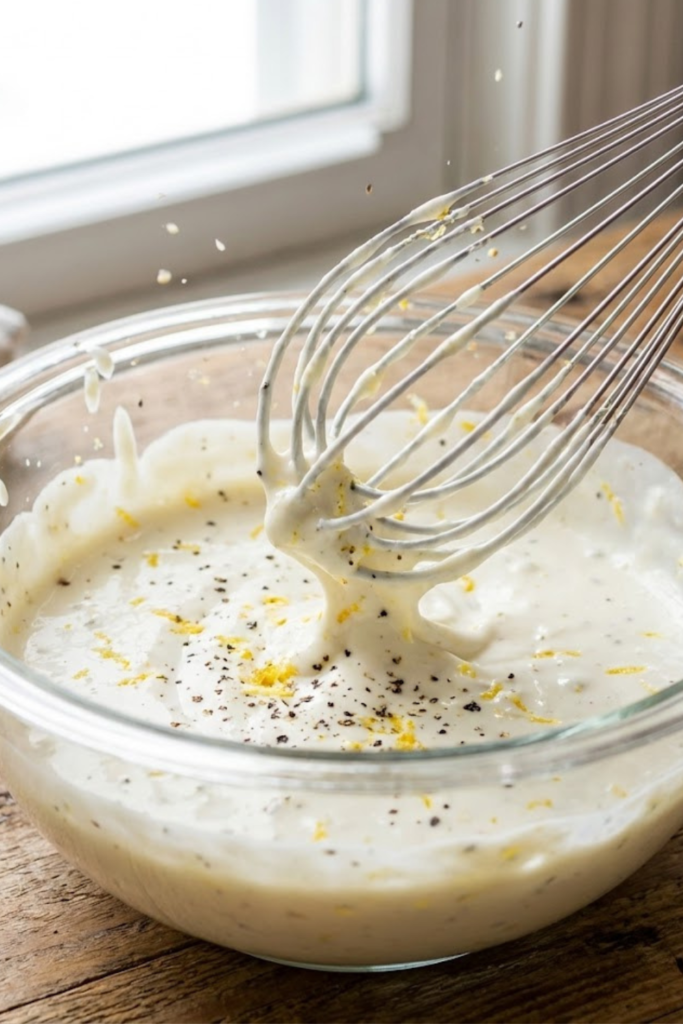
You need to whisk constantly while you drizzle. It’s a workout! My arm usually burns by the end of it, but that is how I justify eating the extra cheese later. Once the mixture starts to thicken up and look like a creamy dressing, you can start pouring the oil a little faster.
The “I’m Scared of Raw Eggs” Method
Listen, I get it. The idea of raw eggs skeeves some people out. I have a friend who won’t touch them with a ten-foot pole.
If you are worried about food safety, or you just don’t want the hassle, you can cheat. I do this on busy weeknights, and honestly, nobody knows the difference. Just swap the egg yolks and oil for a good quality mayonnaise. Mayonnaise is already an emulsified dressing, so the hard work is done for you. It’s a foolproof base that never separates.
Getting the Punch Right
A good Caesar needs to smack you in the face a little bit. It shouldn’t be polite. You need that sharp, tangy kick to cut through the heavy cheese and chicken.
I always use way more fresh lemon juice than the recipes call for. And don’t skimp on the Dijon mustard; it helps hold the dressing together and adds that spicy depth.
Here is a tip regarding the garlic cloves: don’t just chop them. If you leave big chunks, someone is going to bite into a piece of raw garlic and have dragon breath for days. I like to smash the garlic with a pinch of salt on my cutting board, using the side of my knife to grind it into a paste. It melts right into the dressing so you get the flavor in every single bite without the spicy chunks.
Finally, a few dashes of Worcestershire sauce rounds it all out. Taste it as you go! If it’s too thick, splash in a little water. If it’s too sour, add a pinch more cheese. You are the boss of the bowl.
Baking Homemade Sourdough Croutons
I have a bone to pick with store-bought croutons. Seriously, why are they hard as rocks? I remember biting into a salad at a chain restaurant a few years back and actually thinking I had chipped a molar. It was like eating seasoned gravel. My poor gums were sore for days!
That was the moment I swore off the boxed stuff forever.
Making homemade sourdough croutons is one of those things that seems extra, but once you do it, you realize it is the only way to live. They are crispy on the outside but still have a tiny bit of chew in the middle. Plus, they don’t taste like stale cardboard and preservatives.
The Bread Selection
The first time I tried to make these, I used fresh white sandwich bread. Big mistake. It just soaked up the oil like a sponge and turned into a greasy, soggy mess in the oven. It was gross.
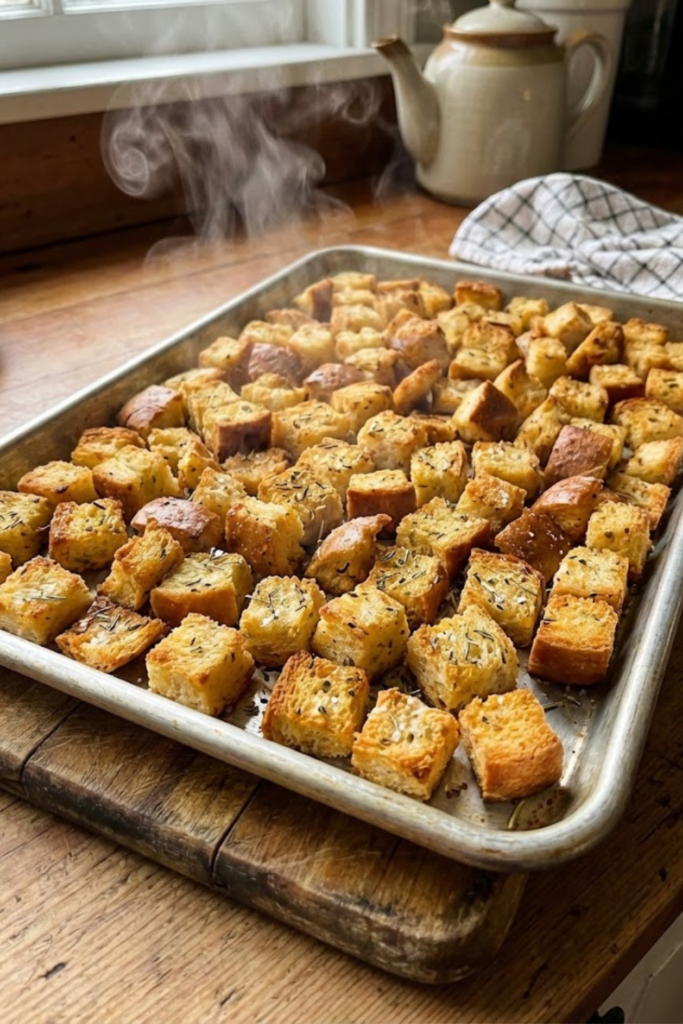
You need bread that has a little bit of fight in it. I always use a loaf of sourdough that’s a day or two old. You know, when it starts to get a little stiff and you are thinking about throwing it away? Don’t toss it! That stale texture is actually perfect because it crisps up without needing to be dried out for hours.
Cut the bread into big, uneven chunks. I like them rustic. If they are too perfect and square, it looks like a machine made them. We want people to know these were made with love (and a bread knife).
Seasoning the Cubes
Here is where you can get creative, but I stick to the classics for a Caesar. You want to toss those bread cubes in a big bowl with plenty of extra virgin olive oil. Don’t be stingy here. If the bread is too dry, it will burn. If it’s coated well, it fries in the oven.
I sprinkle on a heavy hand of garlic powder (fresh garlic burns too fast in the oven) and some Italian herbs. And salt. Always salt.
I used to just drizzle the oil on the baking sheet to save dishes, but that doesn’t work. You have to use a bowl and use your hands to toss them. Yes, your hands will get oily. It’s worth it to make sure every single nook and cranny gets covered in that garlicky goodness.
The Oven Watch
I can’t tell you how many batches of croutons I have burned. It happens in the blink of an eye. You put them in at 375°F (190°C), walk away to check your email, and suddenly the smoke alarm is screaming at you.
It’s embarrassing, but it happens to the best of us.
You really have to babysit them. They usually only need about 10 to 15 minutes. I like to take the pan out halfway through and give them a shake so they brown evenly. You are looking for a deep golden brown color.
Once they cool down, they get even crunchier. Sometimes I make a double batch just to snack on them while I’m finishing the rest of the dinner. They are basically garlic bread chips, and they are addictive!
Assembling and Tossing for Maximum Crunch
I used to think that once all the ingredients were prepped, the hard work was done. I would just dump everything into a cereal bowl, squirt some dressing on top, and call it dinner. But have you ever eaten a salad where one bite is dry lettuce and the next is a glob of mayonnaise? It’s awful.
Or worse, I used to mix it so aggressively that I bruised the leaves. By the time I sat down to eat, my beautiful greens looked like cooked spinach. It was a tragedy.
Assembling a Chicken Caesar Salad properly is actually the most important step. It is the difference between a “meh” meal and one that makes you close your eyes and say “Mmm.”
The Bowl Matters
First things first, get yourself a big bowl. I mean, comically big. If you try to mix a salad in a bowl that is too small, you are going to end up with lettuce all over your counter. I have done it a million times.
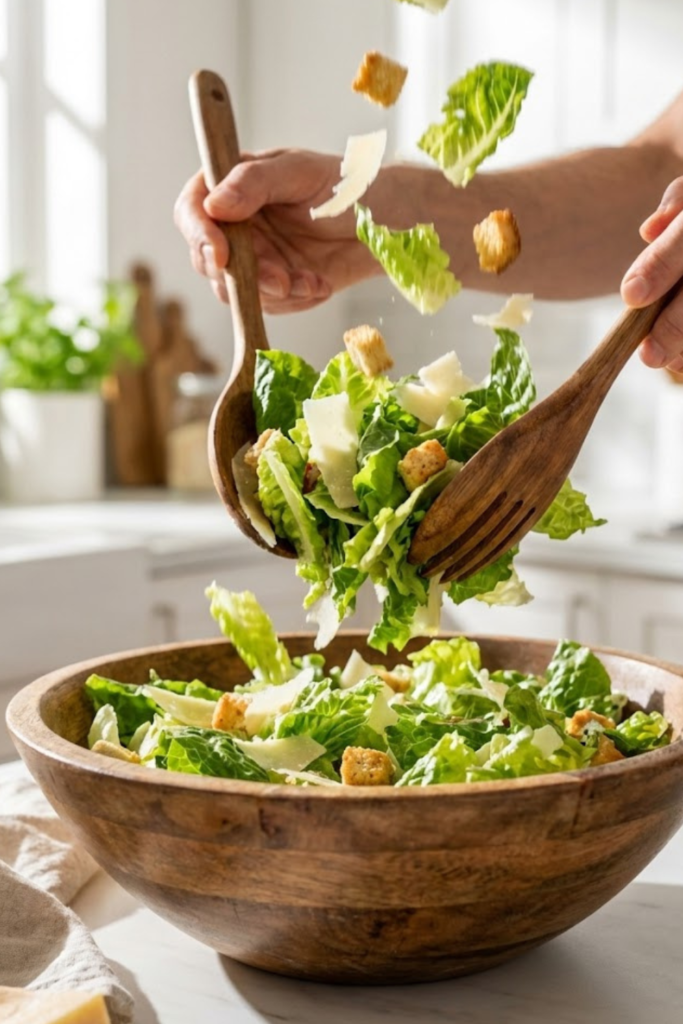
I prefer using a large wooden salad bowl. There is something about the wood that grips the dressing slightly better than glass or metal. Plus, it just looks nice, like you are at a fancy bistro.
The Art of the Toss
Here is the biggest mistake people make: drowning the salad. You have spent all this time making crispy Romaine lettuce hearts; don’t ruin them with a tidal wave of dressing.
Put your greens in the bowl first. Now, do not dump the creamy dressing right in the center. It weighs down the leaves in the middle and makes them soggy instantly. Instead, drizzle the dressing down the sides of the bowl.
Use your hands or some salad serving tongs to gently fold the lettuce into the dressing on the sides. You want to coat every single leaf lightly, not smother it. It should glisten, not drip.
I learned this the hard way after serving a dinner party where the salad was basically soup. You can always add more dressing, but you can never take it out!
Strategic Layering
Once your greens are dressed, that is when you add the heavy stuff.
If you toss the heavy grilled chicken breast and the sourdough croutons at the same time as the lettuce, they will sink to the bottom. Or worse, the hot chicken will wilt the lettuce if you toss it too vigorously.
I like to plate the greens first, then nestle the sliced chicken on top. It keeps the salad looking high and fluffy. Then I scatter the croutons so they stay crunchy until the very last bite.
The Final Flourish
We aren’t done yet. A Caesar isn’t a Caesar without that final shower of cheese.
Don’t mix all the cheese in! Save a good chunk of that Parmigiano-Reggiano cheese to shave right over the top at the end. It looks beautiful and hits your tongue first when you take a bite.
And finally, grab your pepper grinder. Fresh cracked black pepper is non-negotiable here. Give it a few good cranks over the whole dish. The spice wakes everything up. Now, look at that masterpiece. You made that!
So, there you have it. We survived the grilling, the whisking, and the fear of anchovies.
I know it seems like a lot of steps for “just a salad.” I used to think the same thing. I would look at recipes like this and think, “Who has time for that?” and then I would go back to my sad bag of lettuce. But honestly, once you taste the difference, you can’t go back.
This isn’t just a bowl of leaves anymore; it’s a restaurant style recipe that you made in your own kitchen.
The first time I nailed this recipe, my husband actually asked if I had ordered takeout. I took it as a compliment! It feels good to put a healthy lunch idea on the table that doesn’t taste like “diet food.” It’s rich, it’s crunchy, and it’s satisfying.
If you made this, I want to hear about it! Did you cheat and use mayo? (I won’t tell). Did you burn the croutons the first time like I did? Let me know in the comments.
And hey, if this recipe saved you from another boring dinner, do me a huge favor. Pin this to your “Quick Weeknight Dinner” board on Pinterest! It helps other people find the recipe and save them from soggy salads, too.
Now, go eat. You earned it!