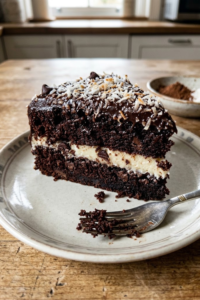
“Nine out of ten people like chocolate. The tenth person always lies.” This old quote hits home every time I preheat my oven! Honestly, there is something so magical about a caramel chocolate tart that just brings people together.
I’ve spent years in my kitchen trying to get that perfect “snap” in the crust and the right “pull” in the caramel. It’s a journey of flour, sugar, and a few burnt pans along the way! Today, I’m sharing my secrets so you can make this showstopper at home. You don’t need to be a pro chef to nail this. Just grab your apron and let’s get baking!
The Secret to a Perfect Shortcrust Pastry Shell
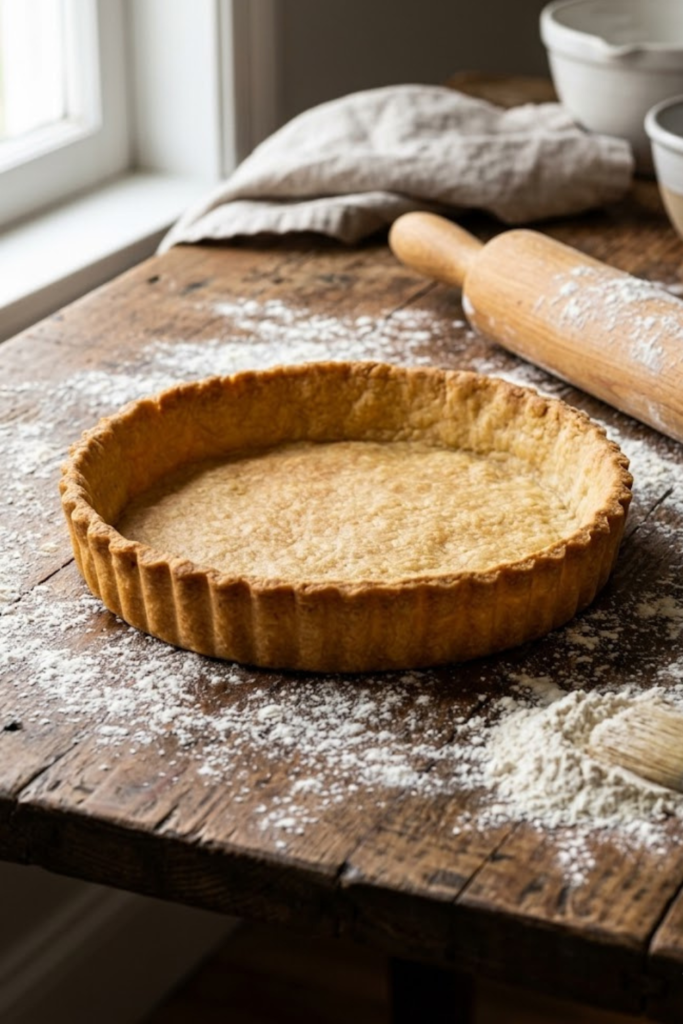
Making a tart is like building a house; if your foundation is shaky, the whole thing falls down. I can’t tell you how many times I ended up with a crust that tasted like cardboard or just crumbled into dust the moment I touched it. It took me a long time to figure out that the pastry shell isn’t just a container for the chocolate. It is also a huge part of the flavor. You want that buttery, slightly salty crunch to balance out the sweet caramel we’re going to add later. If the crust is bad, the whole caramel chocolate tart feels like a waste of time. Trust me, I have eaten enough “okay” tarts to know that the shell is where the real work happens.
Keep Your Ingredients Cold
The biggest mistake I made for years was letting my butter get too warm. I used to leave it on the counter while I looked for my measuring cups. That was a big mistake. You need cold, hard butter to get the right texture. I actually cut mine into small cubes and put them back in the freezer for about fifteen minutes before I start mixing. When those little cold bits of fat hit the hot oven, they create steam. That steam is what makes the crust flaky instead of tough. If the butter melts while you’re mixing, you’ll end up with a greasy mess that shrinks in the pan. Use ice water, too, if your recipe calls for liquid.
Stop Overworking the Dough
Another thing I learned as a teacher is that sometimes, less is more. When you add your water or egg yolk, just mix it until it barely comes together. I used to knead it like bread dough because I thought it needed to be smooth. I was wrong. If you see little streaks of butter in the dough, that is actually a good sign! Overworking the dough develops gluten. Too much gluten makes the crust chewy like a bagel, and that is not what we want. We want a “short” crust. This means it should snap easily when you take a bite.
The Magic of Chilling and Blind Baking
Once you have got your dough pressed into the pan, do not rush into the oven. You have to let it rest. I put mine in the freezer for about fifteen minutes. This stops the sides from sliding down while it bakes. For the actual baking, I use parchment paper and some old dried beans to keep the bottom flat. This is called blind baking. It makes sure the crust is fully cooked before the wet fillings go in. Bake it until it is a dark golden color. Nobody likes a raw, doughy bottom on their tart!
Making Homemade Caramel Without the Stress
Caramel is the part of the caramel chocolate tart that scares people the most. I totally get it. The first time I tried to make it, I ended up with a pan that looked like it had been in a house fire. I spent three hours scrubbing black carbon off my favorite pot. It was a total mess! But once you understand how sugar behaves, it is actually pretty fun. It’s like a little science experiment in your kitchen, and the reward is way better than a grade on a test. You just need to be patient and keep your eyes on the stove.
Watch the Color Like a Hawk
You want to start with a heavy-bottomed saucepan. This is really important because thin pans have “hot spots” that will burn your sugar in one corner while the rest is still white. I just pour my sugar in and turn the heat to medium. I don’t even add water anymore; I find the “dry method” is much faster once you get the hang of it. You just have to stand there. Do not walk away to check your phone or answer the door!
As the sugar melts, it will turn from white to a pale yellow, then to a light gold. You want it to reach a deep amber color, almost like the color of an old penny. If it stays too light, it won’t have that rich, toasted flavor. If it goes too dark, it gets bitter and smells like smoke. I usually give the pan a little swirl every minute or so just to make sure everything is melting at the same speed.
The “Volcano” Moment
When the sugar is the right color, you have to add your heavy cream. This is the part that makes most people jump. The mixture is going to bubble up really high and release a lot of steam. I always tell my students to wear an oven mitt on the hand they are using to stir. It protects you from the hot steam and any little splashes.
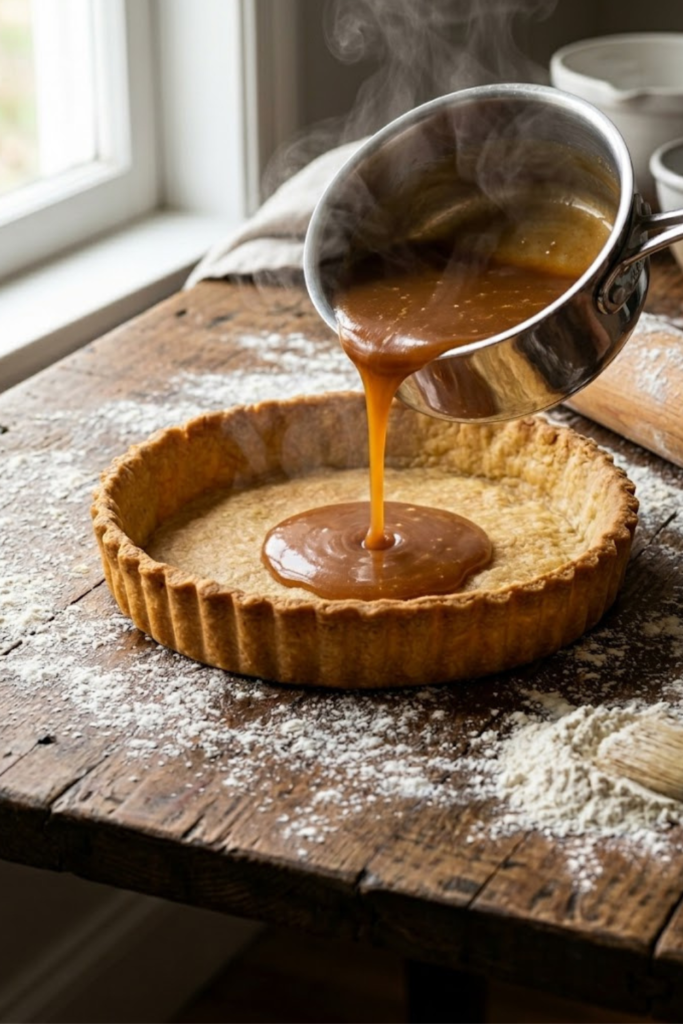
Pour the cream in slowly while whisking constantly. It might look like the sugar is turning into hard rocks at first, but don’t panic! Just keep stirring over low heat. It will eventually melt back down into a smooth, dreamy sauce. I like to add a big pinch of sea salt right at the end. It makes the flavor pop and keeps the whole dessert from being way too sugary.
Letting the Layers Set
Once your caramel is smooth and shiny, pour it into that beautiful crust you made earlier. Don’t fill it all the way to the top! You need to leave plenty of room for the chocolate layer. Let it sit on the counter for a bit to cool down, then put it in the fridge. It needs to be firm before we even think about adding the ganache. If the caramel is still runny, the layers will just mix together into a brown puddle, and we want those nice, clean lines when we cut it.
Crafting the Silky Smooth Chocolate Ganache Layer
Now we are getting to the best part of the whole caramel chocolate tart process. The ganache is like the shiny coat of paint on a classic car. If the caramel is the heart of the dessert, the chocolate is definitely the soul. I remember the first time I made a ganache; I thought I could just throw chocolate chips in a bowl and microwave them until they melted. Well, I ended up with a grainy, oily mess that looked more like mud than a gourmet dessert! It took me a few tries to realize that chocolate is actually pretty sensitive to heat. You have to treat it with a little bit of respect, or it will just quit on you.
Pick the Good Stuff
Don’t use those cheap chocolate chips you find in the baking aisle for cookies. They have stabilizers in them that keep them from melting smoothly. For a really great caramel chocolate tart, you want to buy high-quality baking bars. I usually go for something around 60% or 70% cocoa. If you go too dark, it might be too bitter for the kids, but if you go too light, it will be too sweet with that caramel layer. Chop it up into tiny, tiny pieces. The smaller the pieces, the faster they melt when the hot cream hits them. This prevents those annoying little lumps that ruin the look of your tart.
The Gentle Melt
Heat your heavy cream in a small pot until it just starts to bubble around the edges. You don’t want it at a full rolling boil because that can scorch the chocolate. Pour that hot cream right over your bowl of chopped chocolate and just walk away for five minutes. This was the hardest lesson for me to learn! I always wanted to start stirring right away. But if you wait, the heat softens everything evenly. When you finally start to stir, do it slowly in small circles in the middle of the bowl. Suddenly, it will turn into this dark, glossy liquid that looks like a mirror. It is honestly one of the most satisfying things to see in the kitchen.
Pouring and Waiting
Pour that liquid gold right over your chilled caramel layer. I like to use a small spatula to push it to the edges, but be careful not to press too hard or you might disturb the caramel underneath. Give the tart pan a gentle tap on the counter to get rid of any air bubbles. Now, here is the catch: you have to wait again. I usually put mine in the fridge for at least four hours. I know, it’s a long time to wait when you just want to eat it, but the texture is so much better when it is fully set. It makes the caramel chocolate tart feel like something you’d buy at a fancy bakery.
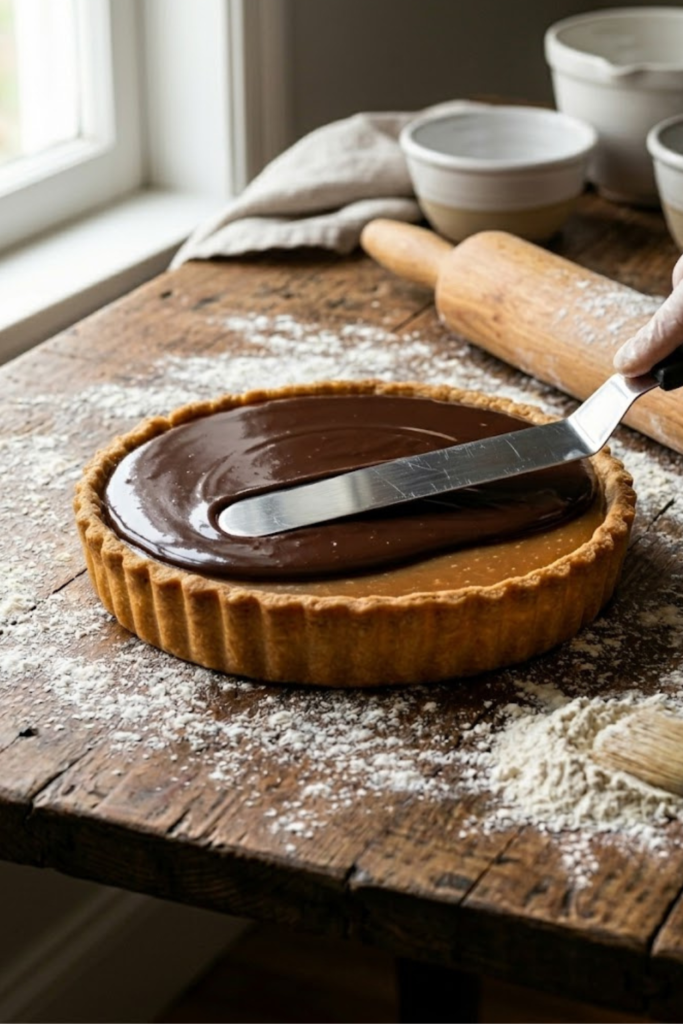
Assembly and That Essential Sprinkle of Sea Salt
The waiting game is really the part that kills me. You have this beautiful caramel chocolate tart sitting in your fridge, and every time you open the door for a snack, it’s just staring at you. I’ve definitely been guilty of poking the chocolate with my finger just to see if it’s hard yet. Don’t do that! It leaves a permanent fingerprint that everyone will see. I learned that lesson the hard way when I made one for a school bake sale and had to hide the smudge with an extra big pile of sea salt. It worked, but I knew the truth was hiding under there!
Let It Set Properly
You really need to give this thing time to rest. If you try to cut it too soon, the caramel will just ooze out like a slow-moving river. It still tastes good, but it looks like a disaster on the plate. I usually tell people to let it sit for at least four hours, but honestly, overnight is the way to go. The flavors have time to mingle, and the crust stays nice and snappy. I’ve found that if I make it the day before a party, I’m much less stressed out. Plus, it’s one less thing to do while you’re trying to clean the house and get ready for guests.
The Magic of Flaky Salt
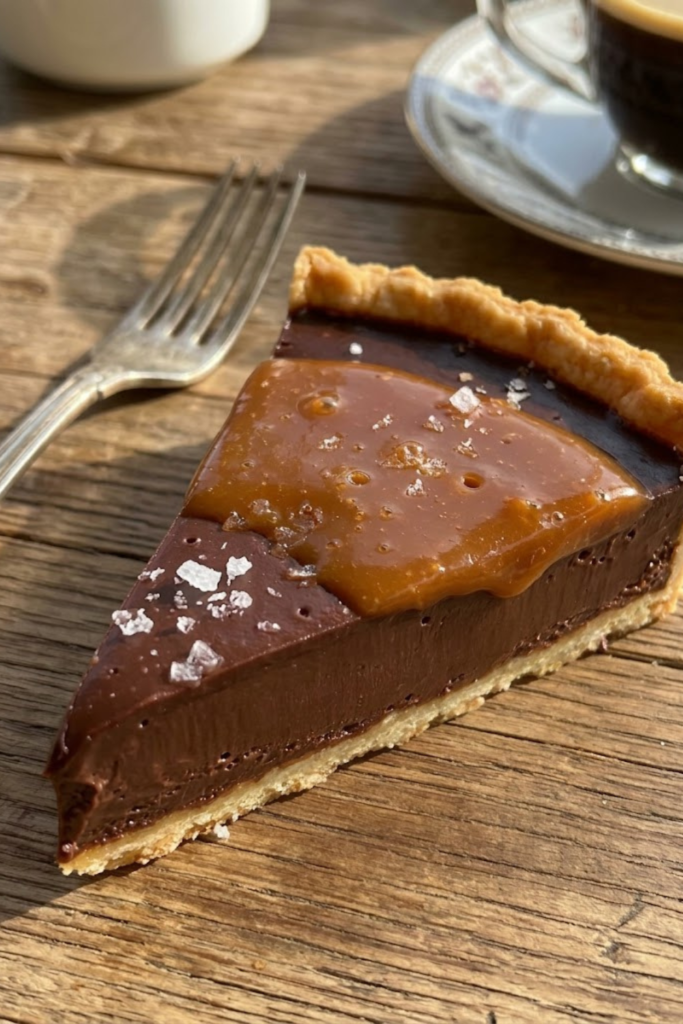
Before you serve it, you have to add the salt. This is what turns a basic dessert into a professional caramel chocolate tart. I like using Maldon sea salt or fleur de sel. These are big, crunchy flakes that don’t just melt away into the chocolate. The salt does something crazy to the flavors; it makes the chocolate taste richer and the caramel taste less sugary. Without it, the tart can feel a little one-note and heavy. Just a little sprinkle is all you need. Don’t go overboard or it’ll taste like you dropped it in the ocean! I usually do the sprinkling right before I bring it to the table so the salt stays crunchy and looks pretty.
Getting That Perfect Slice
I used to be so frustrated when my first slice would fall apart and look messy. Then an old friend told me the secret: use a hot knife. I keep a tall glass of hot water nearby while I’m cutting. I dip the knife in, wipe it dry with a clean towel, and then make one clean cut. Then I dip it again for the next cut. It sounds like a lot of work, but those sharp, clean edges make you look like a total pro. It shows off the layers of the caramel chocolate tart perfectly. If you just hack away at it with a cold knife, the chocolate will crack and the caramel will smudge everywhere.
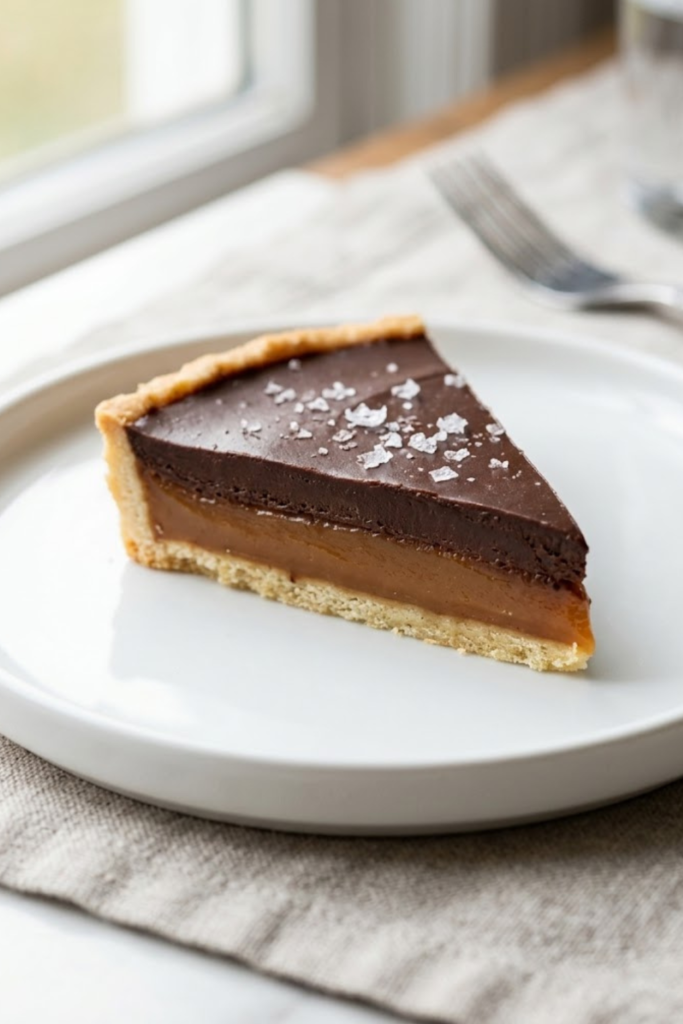
This caramel chocolate tart is truly a labor of love, but it’s so worth it. We’ve talked about the flaky crust, the gooey caramel, and that silky ganache. Making this for your friends or family is a guaranteed win! I hope you feel ready to tackle this in your own kitchen. Don’t worry if it isn’t perfect the first time; every “mistake” is just a tasty snack for the baker! If you loved this recipe, please share it on Pinterest so others can enjoy it too!