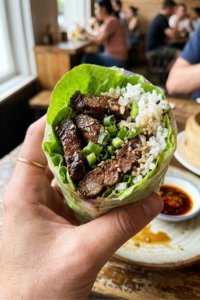
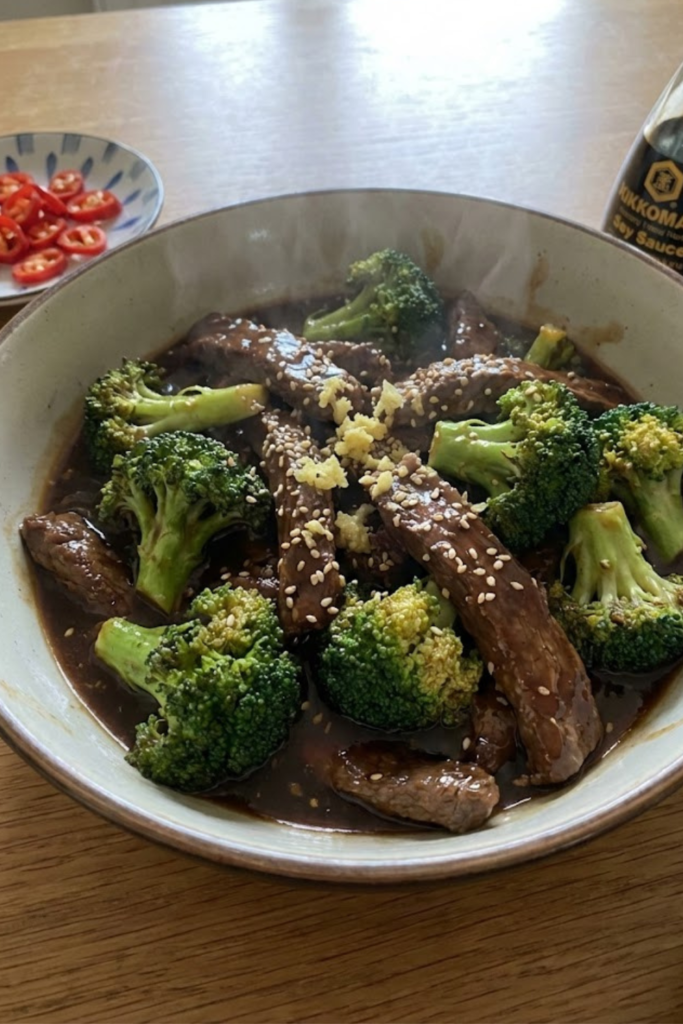
Did you know that a standard serving of takeout broccoli beef can contain over 1,500mg of sodium? That’s nearly your whole day’s limit in one bowl! I remember the first time I tried to make this dish at home; I ended up with chewy, gray meat and soggy vegetables. It was a disaster. But after years of testing (and a lot of burnt garlic), I’ve finally cracked the code. This broccoli beef is savory, sweet, and incredibly satisfying. Get your wok ready, because we are about to make magic happen in your kitchen!
Choosing the Best Beef for Stir-Fry
I’ve got to be honest with you—I used to be terrible at picking meat for beef stir fry. I’d just grab whatever package was on sale, toss it in the pan, and hope for the best.
More often than not, it was a total disaster. I remember making this dish for a dinner party once using stew meat because I thought “beef is beef,” right? Wrong. It was so chewy my guests looked like they were chewing on rubber bands. I wanted to crawl under the table.
But after years of trial and error (and plenty of takeout pizza when I messed up), I learned that the cut of beef matters more than anything else.
Why Flank Steak is King
If you want that restaurant-quality texture, flank steak is your best friend. It’s got a loose grain structure that soaks up the marinade like a sponge.
Plus, it’s got a beefy flavor that doesn’t get lost in the sauce. It is widely considered the gold standard for stir-fries.
However, it’s not the cheapest cut anymore. If flank steak is hurting your wallet, you can absolutely use skirt steak or even sirloin. I’ve used top sirloin many times when I needed to save a few bucks, and it works great if you don’t overcook it. Just steer clear of chuck roast unless you want a jaw workout.
The “Freezer Trick” You Need to Know
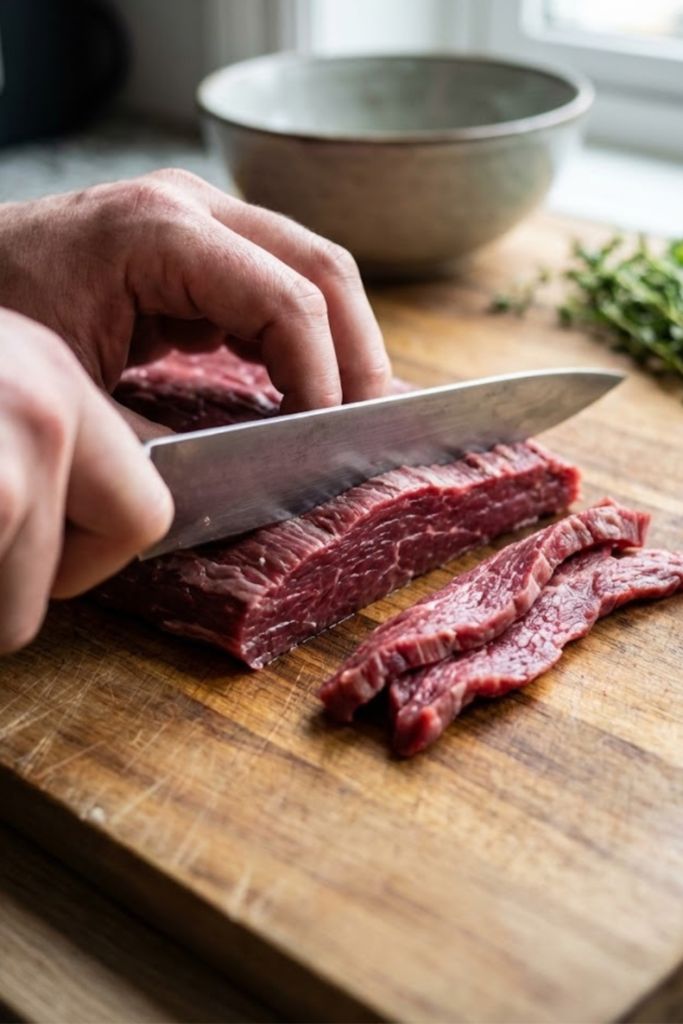
Here is a secret that changed my life in the kitchen. Slicing raw meat into thin, even strips is a nightmare because it wiggles around under your knife.
I used to get so frustrated that I’d end up with chunky, uneven pieces that cooked unevenly.
So, here is the fix: put your beef in the freezer for about 20 to 30 minutes before you start prepping. You want it firm to the touch but not rock solid. This stiffens the fat and makes it incredibly easy to get those paper-thin slices we are looking for.
Slicing Against the Grain
This is the most critical step, so don’t skip this part! You have to slice against the grain.
When you look at the meat, you will see lines running across it—those are the muscle fibers. If you cut parallel to them, you keep those long, tough fibers intact.
But if you cut perpendicular to them (across the lines), you shorten those fibers. This makes the meat tender and easier to chew. I learned this the hard way, but now I check the grain direction three times before I make a single cut. It makes all the difference in the world.
The Secret to Velveting Beef
I have to confess something embarrassing. For the longest time, I thought the reason my homemade stir-fry tasted “off” was because I wasn’t buying expensive enough meat. I legitimately thought my local takeout spot was using premium filet mignon or something.
Boy, was I wrong. It turns out, they were using the same cheap cuts I was, but they knew a trick I didn’t.
It’s called velveting beef, and once I learned it, I literally did a happy dance in my kitchen. No joke.
What is Velveting?
If you have ever bitten into a piece of beef in a Chinese dish and wondered how it was so silky and soft—that’s velveting. It is basically a method of marinating meat in a cornstarch and egg white (or oil/water) mixture before cooking.
But there is a specific chemical reaction we need to trigger first to get that texture.
I remember trying to make this without velveting once. The sauce slid right off the meat, and the beef was dry and stringy. It was edible, sure, but it wasn’t good. We want good.
The Baking Soda Method
This is the game changer. It sounds weird to put baking soda on your steak, right? I thought so too.
The first time I tried this, I messed up big time. I used way too much baking soda and didn’t rinse it well. The beef tasted metallic and soapy. It was awful; I had to throw the whole batch in the trash.
Here is the trick I learned from that disaster: you only need a tiny amount. For a pound of flank steak, I sprinkle about a 3/4 teaspoon of baking soda over the sliced meat.
Massage it in and let it sit. The baking soda alkalizes the meat, which prevents the proteins from tightening up when they hit the hot pan. It physically changes the structure of the meat to make it tender.
The Cornstarch Slurry Shield
After the baking soda has done its work (usually about 15 to 20 minutes), you have to build the shield. This is where the cornstarch comes in.
You mix soy sauce, a little rice wine (or water), and cornstarch into the beef. The cornstarch creates a gelatinous coating around every single strip of beef.
Why does this matter? Because when you throw that beef into a scorching hot wok, the cornstarch barrier protects the juices inside the meat from evaporating instantly.
I used to skip this because I was lazy. “It’s just one extra step,” I told myself. Big mistake. Without that coating, your beef will steam in its own juices and turn gray.
With the coating, you get that glossy, beautiful finish that makes the sauce stick like glue.
Marinating Time Matters
Don’t rush this. I know, when you are hungry, 20 minutes feels like an eternity. I’ve been there, staring at the bowl of raw meat, debating if 5 minutes is “close enough.”
It’s not.
If you don’t give the marinade time to penetrate the fibers, the flavor just sits on the surface. Aim for at least 15 minutes, but 30 is the sweet spot. Use that time to chop your broccoli or scroll through Pinterest (shameless plug!).
Trust me, the patience pays off when you take that first bite of melt-in-your-mouth tender beef. It’s better than delivery, and you get the bragging rights.
Prepping Broccoli for the Perfect Crunch
Is there anything sadder than soggy vegetables? I don’t think so.
I remember when I first started cooking, I would just throw raw broccoli florets straight into the wok with the beef. I thought I was saving time.
Instead, I ended up with two terrible outcomes: either the broccoli was rock hard and inedible, or I cooked it so long to soften it that the beef turned into leather. It was a lose-lose situation.
I actually stopped making stir-fry for a while because I couldn’t get the veggies right. It was frustrating to spend money on ingredients only to make a meal that looked like school cafeteria mush.
But then I learned about blanching, and it totally saved my dinner game.
Blanching vs. Steaming
You might think steaming is the healthy way to go, and sure, it is fine. But for a stir-fry, blanching is superior.
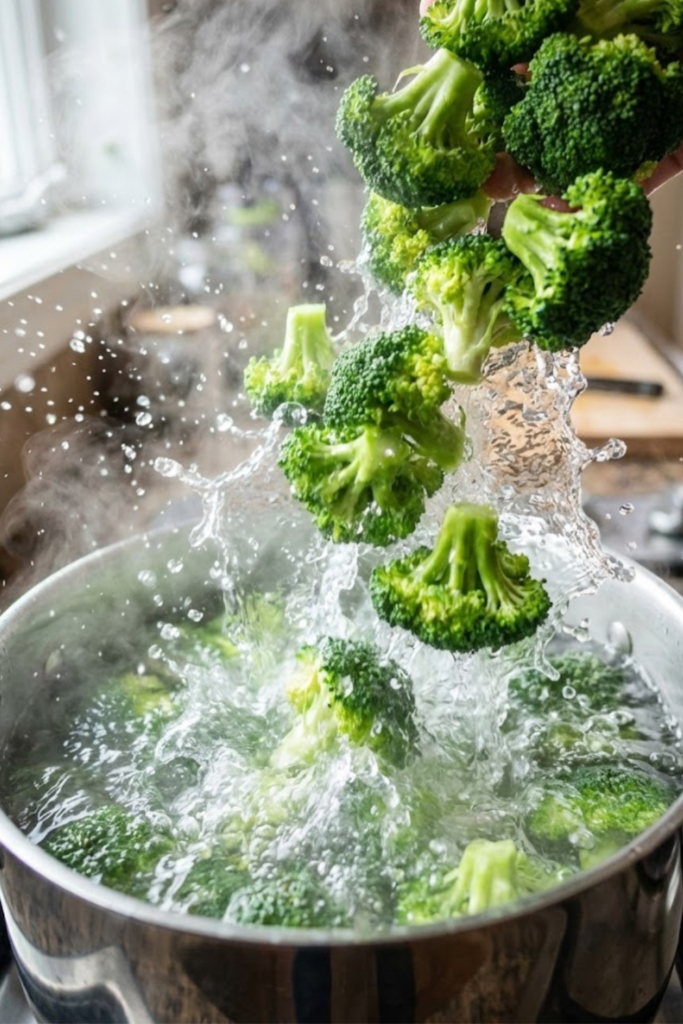
Blanching just means dropping the vegetables into boiling water for a very short time. We are talking quick—like 30 to 60 seconds max.
This does two things. First, it partially cooks the broccoli so it doesn’t need forever in the wok. Second, it locks in that vibrant, bright green color.
If you have ever had broccoli beef where the veggies looked dull and olive-green, they were probably overcooked or steamed too long. We want that pop of color that makes the dish look appetizing.
Cutting Florets Uniformly
Here is a mistake I made constantly: I used to chop the broccoli without paying attention to size. I’d have massive chunks next to tiny pieces.
The tiny pieces would turn to mush before the big chunks were even warm.
Take the extra minute to cut your broccoli florets into even, bite-sized pieces. If the stems are thick, slice them in half.
I know it feels tedious when you are rushing to get dinner on the table. But having every piece cook at the same rate is the difference between a “meh” meal and a great one.
The Ice Water Shock
This step is non-negotiable. As soon as that timer hits 60 seconds, you need to get that broccoli out of the boiling water and into a bowl of ice water.
Chefs call this “shocking” the vegetables. It stops the cooking process instantly.
If you just drain them and leave them in a colander, the residual heat keeps cooking them. Ten minutes later, your crisp broccoli is soft and limp.
I once skipped the ice bath because I didn’t have ice trays filled. I regretted it immediately when I served the food.
Drying is the Key to Good Sauce
Okay, listen closely because this is the specific detail that ruins most home stir-fries. You have to dry the broccoli completely after the ice bath.
Water is the enemy of your stir-fry sauce.
If you throw wet broccoli into the pan, that water steams off and dilutes your beautiful, savory sauce. Instead of a thick, glossy glaze, you get a watery soup at the bottom of the plate.
I usually dump the cooled broccoli onto a clean kitchen towel and pat it dry. It takes two seconds, but it guarantees that the sauce clings to the veggies instead of sliding off.
It is these little details that make the dish taste like you ordered it from a restaurant.
Mastering the Savory Stir-Fry Sauce
Let’s be real for a second. You can cook the beef perfectly and blanch the broccoli until it glows, but if the sauce sucks, the whole meal is a wash.
I remember my early days of cooking when I relied heavily on those pre-made bottled sauces. You know the ones—they taste mostly like salt and preservatives. I would dump a bottle into the pan, feeling like a chef, only to be disappointed when it tasted nothing like my favorite takeout spot.
It was frustrating. I just couldn’t figure out why my homemade recipe lacked that depth of flavor. I tried adding more salt. I tried adding more sugar. Nothing worked.
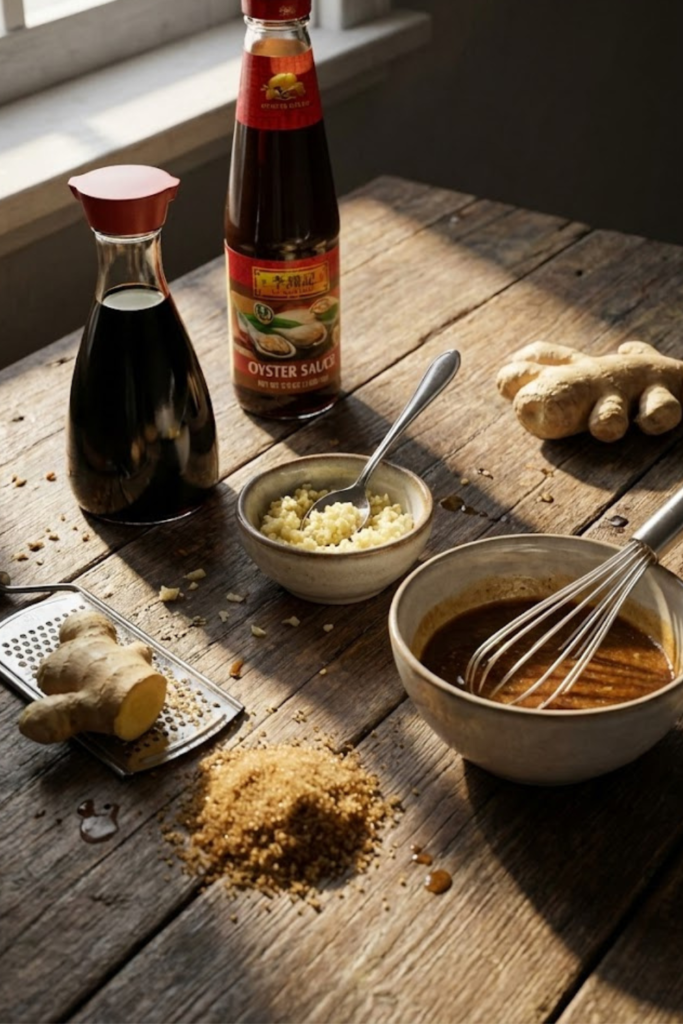
Then I finally looked at the ingredients label on a bottle of oyster sauce, and the lightbulb went on.
The Trinity of Aromatics
Great sauce doesn’t start with liquids; it starts with aromatics. I used to use garlic powder because I hated peeling fresh garlic. That was a huge mistake.
The difference between powder and fresh ginger or minced garlic is night and day.
I learned that you have to fry these aromatics in the oil for just a few seconds before adding anything else. It releases the oils and makes the whole kitchen smell amazing. But be careful! I’ve burned garlic more times than I can count. It turns bitter instantly, and you have to start all over.
Balancing the Flavors
Getting the ratio right took me years. I went through a phase where I made the sauce way too sweet, and my husband politely asked if we were having dessert for dinner.
The secret is finding the balance between the salty soy sauce, the savory oyster sauce, and the sweet brown sugar.
Oyster sauce is the heavy lifter here. It provides that umami punch that you just can’t replicate with anything else. If you are worried about it tasting fishy, don’t be. It cooks down into a rich, savory flavor that ties everything together.
I usually do a mix of regular soy sauce for flavor and a splash of dark soy sauce if I have it, just for that deep, restaurant-style color.
The Thickening Agent
Here is where things usually go wrong for beginners. You pour the sauce in, and it stays watery. It doesn’t coat the tender beef; it just pools at the bottom.
I used to panic and just keep boiling it, thinking it would reduce. Instead, I just overcooked the vegetables.
The fix is a cornstarch slurry—but you have to mix it cold. I once tried to dump cornstarch directly into the hot pan. It immediately turned into slimy little dumplings that wouldn’t dissolve. I spent twenty minutes trying to fish them out.
Mix your cornstarch with the liquids before it hits the heat. When it bubbles, it will thicken into a glossy glaze in seconds.
Optional Heat and Depth
To finish it off, I always add a drizzle of sesame oil. But here is a lesson I learned the hard way: sesame oil is strong.
I once treated it like vegetable oil and poured a huge glug in. The whole dish tasted like I was licking a sesame seed. It was overpowering.
Treat it like a perfume—a little goes a long way. Just a teaspoon at the end gives it that nutty aroma that makes you want to dive right in.
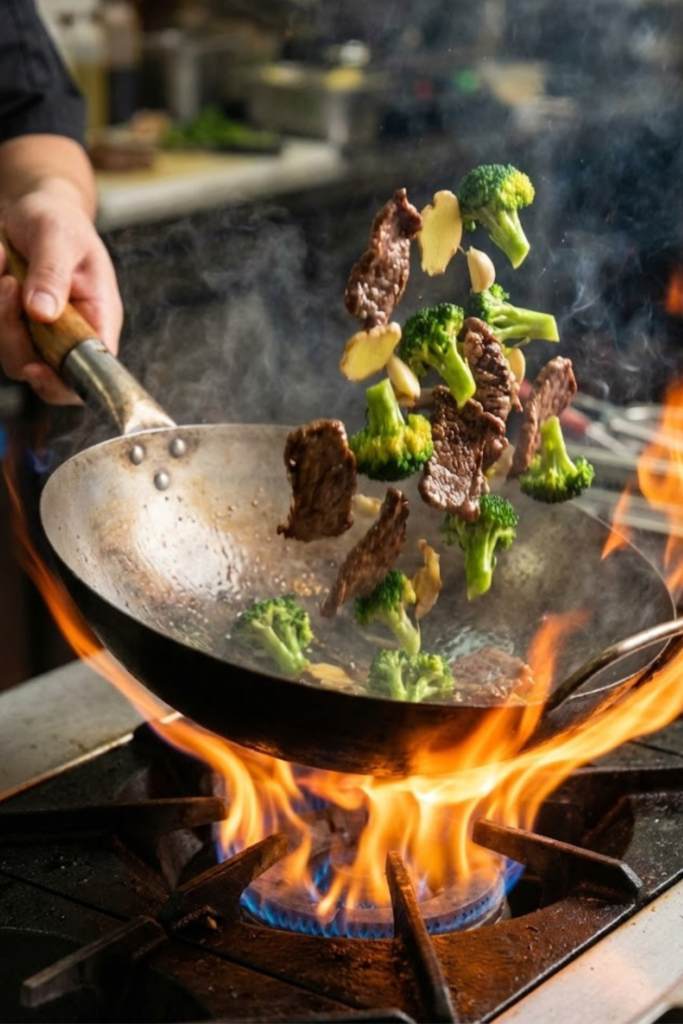
And there you have it. You are now officially ready to tackle broccoli beef like a pro.
Making this dish at home doesn’t have to be a mystery. Once you master the art of velveting and get that stir fry sauce balanced just right, you will wonder why you ever ordered takeout. It is faster, healthier, and honestly, it just tastes better when you make it yourself.
Remember, the secret is in the prep. Don’t skip the baking soda trick, and definitely don’t rush the sear. It might take a try or two to get the timing perfect, but that’s the fun of cooking. Even my mistakes usually tasted pretty good!
If you found this guide helpful, do me a huge favor and pin this recipe to your dinner board on Pinterest! It helps me out a ton, and I promise your future self will thank you when the craving hits again.