I still remember the first time I tried to bake scones; they were hard as hockey pucks! But after years of experimenting (and eating way too many crumbs), I finally cracked the code. There is nothing—and I mean nothing—quite like the smell of fresh lemon and sweet blueberries wafting through the kitchen on a lazy Sunday morning. In this guide, I’m going to show you exactly how to make Blueberry Lemon Scones with Vanilla Drizzle that are tender, buttery, and absolutely to die for! We aren’t just making breakfast here; we are making memories. Ready to get baking?

Gathering the Essential Ingredients for Fluffy Scones
I still remember the absolute disaster that was my first batch of scones. I tried to swap out heavy cream for skim milk because I was trying to be “healthy,” and I used margarine instead of real butter. Let me tell you, those things were better suited for doorstops than breakfast! It took me a long time to realize that when you make blueberry lemon scones, you can’t cheat the ingredients.
If you want that coffee-shop quality at home, you have to respect the chemistry. Baking is just science for hungry people, right?
Getting the Dry Stuff Right
First off, let’s talk flour. I usually just grab the All-Purpose flour sitting in the pantry. You don’t need fancy pastry flour for this, which is great because who has space for five different bags of white powder? But here is a tip I learned after a lot of flat scones: check your baking powder.
If that little orange can has been sitting in your cupboard since 2018, throw it out. Seriously. Fresh baking powder is the only thing giving these guys a lift. I use a tablespoon, which seems like a lot, but we want these to rise high.
The Butter Secret
Here is where I messed up for years. I used to use soft butter because it was easier to mix. Big mistake. The secret to those flaky layers in blueberry lemon scones is cold butter. Actually, frozen butter is even better.
I put my stick of butter in the freezer the night before. Then, I use a cheese grater to shred it right into the flour. It sounds weird, I know. But doing this creates little pockets of steam when they bake. That steam pushes the layers apart.
If your butter melts before it hits the oven, you get a greasy, flat cookie. Nobody wants that.
The Great Blueberry Debate
Should you use fresh or frozen? I have used both, and they act differently.
- Fresh Blueberries: These are my favorite when they are in season. They don’t bleed as much color into the dough.
- Frozen Blueberries: These are super convenient, but they will turn your dough gray or purple if you aren’t careful. Do not thaw them! Put them in frozen.
I once thawed my berries first and the whole batch of scones looked like Smurfs. It tasted fine, but it looked scary.
The Liquid Gold
Finally, the liquid. I know I said I used skim milk before, but please don’t do that. You need fat to make the scone tender. Heavy cream is the best choice here.
It adds a richness that milk just can’t touch. The thick cream interacts with the flour to create a crumb that is soft, not tough. If you really want to make the best blueberry lemon scones, splurge on the heavy cream. It’s worth the calories, I promise.

Step-by-Step: Mixing and Shaping Your Dough
Okay, class is in session! Just kidding. But seriously, this is the part where things usually go wrong for people. I can’t tell you how many times I overworked the dough and ended up with tough rocks. My husband tried to be nice about it, saying they were “great for dipping in coffee,” but I knew they were dry.
So, grab a big bowl. We are going to do this by hand. Put that electric mixer away; you don’t need it.
The Crumble Stage
First, toss your flour, sugar, baking powder, and salt into the bowl. Oh, and here is a little trick I learned from a cooking show years ago: before you add the sugar, rub the lemon zest into it with your fingers. It makes the sugar turn yellow and smell incredible. It releases the oils better than just dumping it in.
Now, take that frozen grated butter we talked about and toss it in. Use a pastry cutter or two forks to cut it in. You want it to look like coarse crumbs. Some pieces should be the size of peas. If it looks like sand, you went too far. Stop!
The “Don’t Crush the Berries” Dance
This is the tricky part. Pour in your heavy cream mixture. Stir it with a spatula or a wooden spoon just a few times. It’s gonna look like a shaggy mess. It won’t look like smooth dough yet. That is normal.
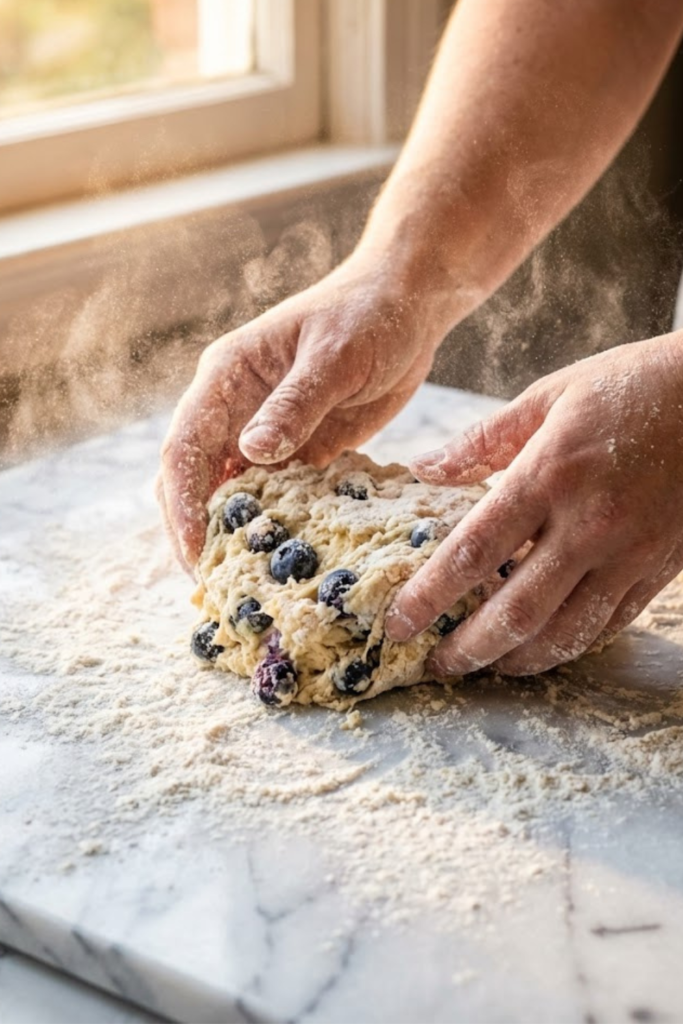
Now, gently fold in the blueberries. If you stir too hard, you’ll pop them, and like I said before, you’ll have purple scones. I usually abandon the spoon here and use my hands. It’s messy, but you can feel the dough better.
Shaping the Disc
Dump the whole crumbly mess onto your counter. It might look like it’s not holding together. Don’t panic. Just use your hands to press it together. Pat it down into a circle, about an inch thick.
Please, I’m begging you, do not use a rolling pin. You’ll squash all those nice butter layers we just made. Just pat it like you’re patting a dog. Gentle.
Take a sharp knife or a bench scraper (I use a pizza cutter sometimes, don’t judge) and cut the circle into 8 wedges, just like a pizza.
The Chill Factor
Here is the step I used to skip because I was impatient. I wanted to eat right away! But you have to wait.
Put the wedges on a plate and stick them in the fridge for at least 15 to 20 minutes. If the butter got warm while you were mixing with your hands, this hardens it back up. If you skip this, the scones will spread out all over the pan instead of rising up tall. We want tall scones, not flat pancakes.
Baking to Perfection: Temperature and Timing
Now that your scones have chilled out in the fridge, it is time to bake. This is the moment of truth!
Crank Up the Heat
Scones need a hot shock to rise properly. I preheat my oven to 400°F (200°C). I know it sounds high, but trust me on this. If the oven is too cool, the butter will just melt and pool out onto the tray before the dough has a chance to set. You’ll end up with a greasy mess instead of a fluffy pastry.
Make sure your oven is actually at that temperature before you put the tray in. My oven beeps when it’s ready, but I usually give it another 10 minutes just to be safe.
Give Them Some Space
Line a large baking sheet with parchment paper. If you don’t have parchment paper, stop what you are doing and go buy some. It saves so much cleanup time!
Place your cold wedges on the sheet. Give them room to grow. I leave about 2 inches between each scone. They are going to puff up and spread a little bit, and you don’t want them sticking together into one giant mega-scone (although, that does sound kind of delicious).
Watch for the Golden Glow
Pop them in the center rack. They usually take about 18 to 22 minutes. But here is the thing: every oven is different. My old apartment oven ran hot, and things burned fast. My current one is a bit slow.
So, at the 15-minute mark, take a peek. You are looking for the edges to be a nice golden brown. The tops should look dry and slightly golden too. If they look pale and doughy, leave them in. If they are getting too dark too fast, you can tent a piece of foil over them loosely.
The Waiting Game
When they are done, take them out and put the baking sheet on a wire rack. Let them sit on the hot pan for about 5 minutes, then move them directly to the rack.
Now, this is the hardest part. You have to let them cool down. If you try to put the drizzle on a hot scone, the icing will just melt and disappear. It will soak right in. It tastes good, but it won’t look pretty. Wait until they are barely warm to the touch.

Whisking Up the Sweet Vanilla Drizzle
While the scones are cooling, let’s make the icing. This is what takes these from “good breakfast” to “fancy bakery treat.”
Simple Ingredients
You don’t need much here. Just powdered sugar (confectioners’ sugar), a little splash of heavy cream or milk, and vanilla.
If you can find vanilla bean paste, buy it! It comes in a jar and is thick like syrup. It has all those little black seeds in it that make the glaze look professional. If you don’t have it, regular vanilla extract works fine too.
getting the Texture Right
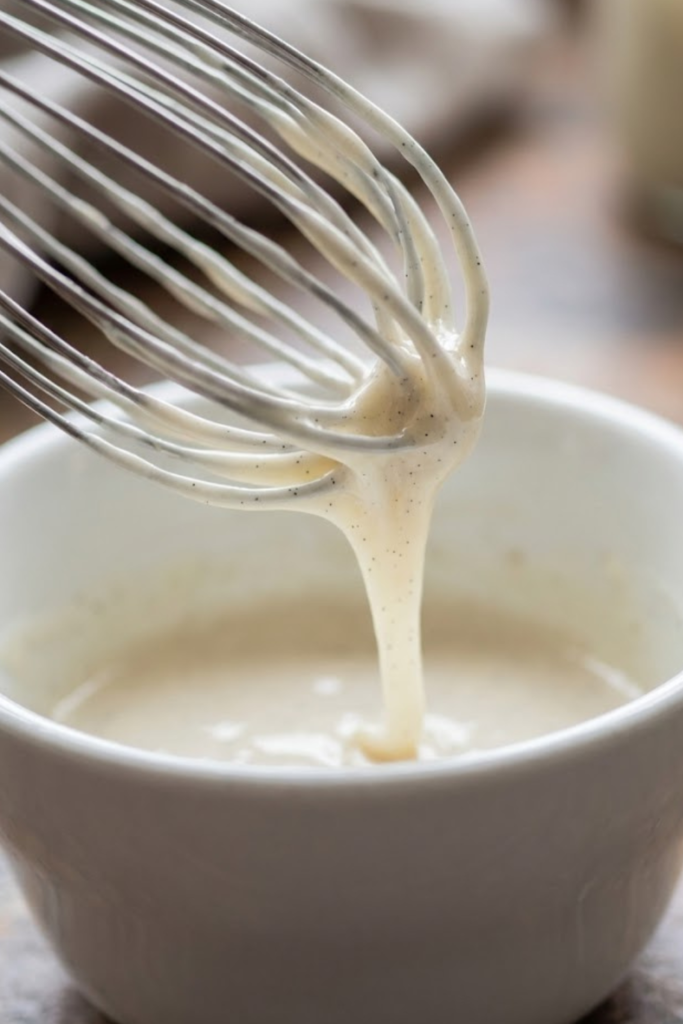
Put about a cup of powdered sugar in a small bowl. Add a teaspoon of vanilla. Then, add the cream slowly. Start with one tablespoon. Whisk it with a fork. It will look dry at first. Add another tablespoon.
You want the consistency to be like thick honey or glue. If it runs off the fork like water, it’s too thin—add more sugar. If you can’t stir it, it’s too thick—add a tiny drop of milk.
The Drizzle Technique
Once the scones are cool, dip a fork into the glaze and wave it back and forth over the scones. You can go as messy or as neat as you want. I usually just go crazy with it. Let the glaze set for about 10 minutes until it hardens a little. Then, finally, you can eat!
Expert Tips for Storage and Freezing
So, you made a whole batch and can’t eat them all? That happens to me sometimes (rarely, but it happens). If you leave these sitting out on the counter uncovered, they will turn into rocks by the next day. Nobody wants to break a tooth on breakfast. Here is how I keep mine tasting fresh.
Keeping Them on the Counter
If you plan to eat them within a day or two, just put them in a plastic container with a lid. A ziplock bag works too, just squeeze the air out. They stay soft for about 48 hours. After that, they start to get a bit stale and crumbly.
The Freezer is Your Best Friend
Here is my favorite trick. Sometimes I don’t want to bake 8 scones at once. I just want one fresh one for myself!
Freezing the Dough:
You can freeze the unbaked wedges. After you cut the circle into triangles, put them on a plate in the freezer for an hour until they are hard. Then throw them in a big freezer bag.
When you want a hot scone, just grab a frozen one and pop it straight in the oven. You don’t even have to thaw it! Just add maybe 2 or 3 extra minutes to the baking time. It is a lifesaver for busy mornings.
Freezing Baked Scones:
If you already baked them, let them cool all the way down. Wrap each one tight in plastic wrap and then put them all in a bag. They last for a couple of months this way.
How to Reheat (Do Not Microwave!)
Please, I’m begging you, do not put your scone in the microwave. It turns the crust soft and rubbery. It ruins the texture we worked so hard to get.
To revive a scone, put it back in the oven (or a toaster oven) at 350°F for about 5 to 8 minutes. It warms it up and crisps the edges back up. It tastes almost like it was just baked.

Well, that is pretty much it. Making blueberry lemon scones isn’t rocket science. It just takes a little practice, some cold ingredients, and a gentle hand. I really hope you give this recipe a try. There is something really special about pulling a hot tray out of the oven on a quiet weekend morning. It makes the whole house smell amazing and feel cozy.
Don’t let the steps scare you. Even if they aren’t perfect triangles the first time, they are still going to taste delicious. Once you take that first bite of warm, buttery goodness with the sweet vanilla drizzle, you’ll see why it’s worth the effort.
Don’t forget to save this recipe! Pin it to your Breakfast or Baking board on Pinterest so you can find it later!