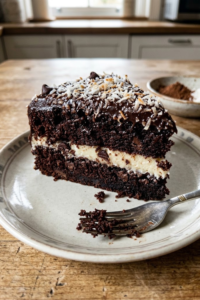
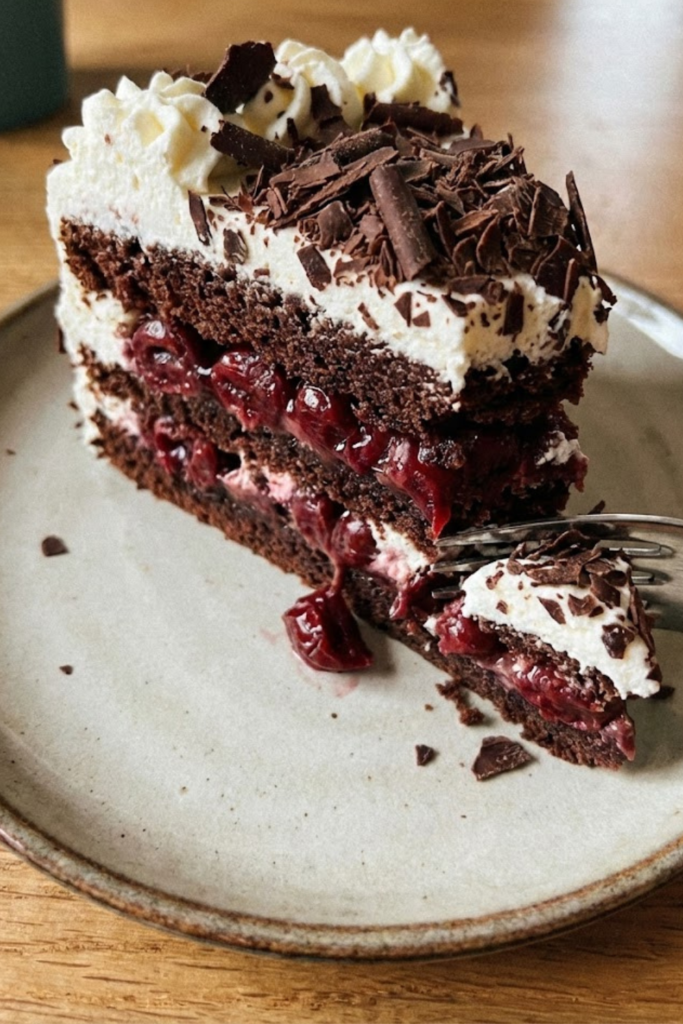
I’ll never forget the first time I took a bite of a real Schwarzwälder Kirschtorte in a tiny cafe in Munich! It wasn’t just cake; it was a life-changing experience of chocolate and cherries. Many home bakers get intimidated by the fancy layers and the whipped cream, but trust me, it’s actually quite forgiving. We are going to make a Black Forest Cake that is moist, boozy, and absolutely show-stopping! Forget the dry grocery store versions; this is the real deal. Get your Kirschwasser ready, because this is going to be epic!
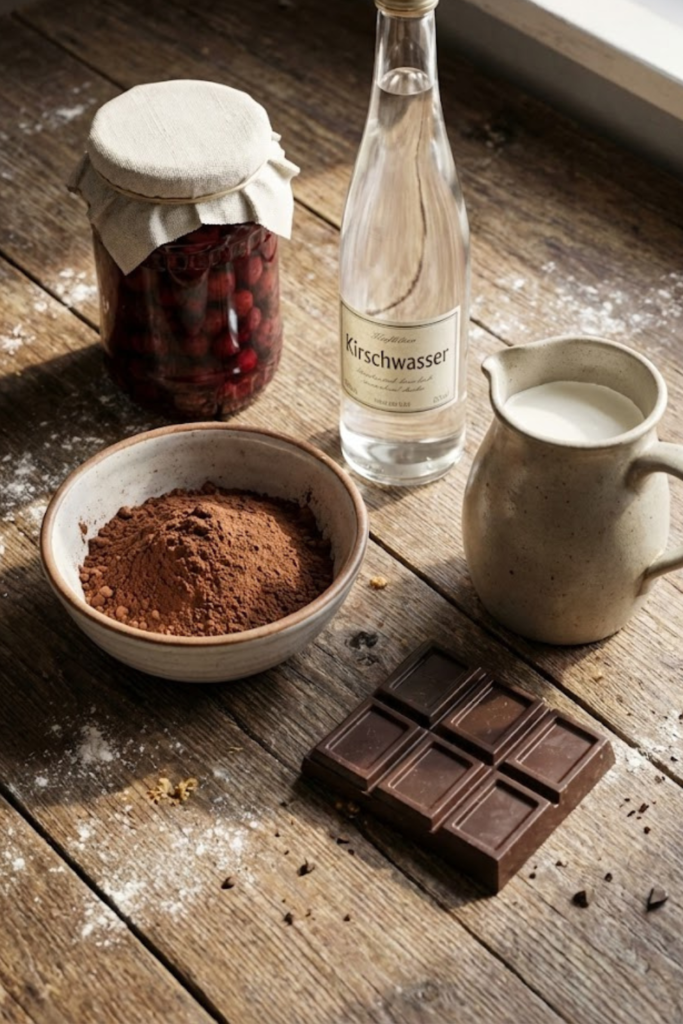
Gathering the Essential Ingredients for Authentic Flavor
Look, I’m gonna be honest with you. The first time I tried to make a Black Forest Cake, it was a total disaster. I thought I could just grab whatever was on the sale rack at the grocery store. Big mistake. I ended up with a cake that tasted like a cheap sundae rather than a German masterpiece. If you want that authentic flavor, you can’t fake the ingredients. I learned this the hard way so you don’t have to.
The Cherry Dilemma
Here is where 90% of people mess up. Do not, and I repeat, do not use those neon red maraschino cherries. You know the ones I mean? The ones that go in cocktails. I used those once because I couldn’t find fresh ones, and the cake tasted like pure sugar and chemicals. It was embarrassing.
For the real deal, you need sour cherries, specifically Morello cherries. Unless you live near a cherry orchard in July, your best bet is the jarred kind in light syrup. They have that tartness that cuts through the rich chocolate and cream. It’s a balance thing. If you use sweet cherries, the whole cake just becomes a sugar bomb.
The Boozy Truth: Kirschwasser
I’ve had people ask me, “Can I skip the alcohol?” I mean, technically yes, but then it’s just a chocolate cherry cake. It’s not a Black Forest Cake. The soul of this recipe is Kirschwasser, a clear cherry brandy. It’s not sweet like a liqueur; it’s got a burn to it.
I usually grab a mid-range bottle. You don’t need the most expensive one, but don’t buy the cheapest rotgut either. If you absolutely can’t do alcohol, use the juice from the jarred cherries, but just know the flavor won’t be quite the same. It’s the kick that makes it special.
Chocolate and Cream
For the sponge, you want a deep, dark color. I always reach for Dutch-processed cocoa powder. It’s less acidic and gives you that Oreo-like darkness. And for the decoration? Please don’t buy those pre-made chocolate sprinkles. They taste like wax. Buy a block of good semi-sweet or dark chocolate (at least 60%) and shave it yourself. Yeah, it makes a mess on the counter, but the texture is miles better.
Finally, the heavy whipping cream. In the US, look for something with at least 36% milk fat. I once tried using a “whipping cream” blend that was lower fat, and my cake layers started sliding apart an hour later. It was a tragedy. You need that high fat content so the frosting stays stiff and holds up those heavy layers.
Baking the Perfect Chocolate Genoise Sponge
I used to be terrified of the word “Genoise.” It sounds so fancy and French, doesn’t it? The first time I tried to bake one, I treated it like a regular birthday cake mix. I dumped everything in a bowl and turned the mixer on high. The result? A dense, rubbery chocolate frisbee that I actually apologized to my guests for. It was a humble moment, for sure.
The thing about a Genoise sponge is that it doesn’t rely on baking powder to rise. It relies on air. And it is your job to put that air there.
It’s All About the Whipping
You have to beat the eggs and sugar until they are incredibly pale and thick. I’m talking about beating them for good 7 to 10 minutes on high speed. It feels like an eternity. I used to stop after 3 minutes thinking, “That looks good enough.” It wasn’t.
You are looking for the ribbon stage. When you lift the whisk, the batter should fall back into the bowl and sit on top of the surface for a few seconds before sinking. It should look like a ribbon being folded. If it sinks immediately, keep whipping. You really can’t over-whip the eggs at this stage, so don’t stress about that.
The Art of the Fold
This is the part where things can go wrong fast. Once you have that beautiful, fluffy egg mixture, you have to add the flour and cocoa powder. If you just stir it in with a spoon, you will knock all the air out. I’ve done it, and it’s heartbreaking to watch your batter deflate like a popped balloon.
Sift the dry ingredients over the bowl in two or three batches. Use a large rubber spatula. Cut down the middle of the batter, scrape the bottom, and fold it over the top. Be gentle but deliberate. You want to mix it just until the flour streaks disappear. It takes a little practice to get the feel of it.
Heat and Timing
Preheat your oven to 350°F (175°C). Don’t trust the dial; get an oven thermometer if you can. My oven runs hot, and I burned the bottom of a sponge last month because I didn’t check.
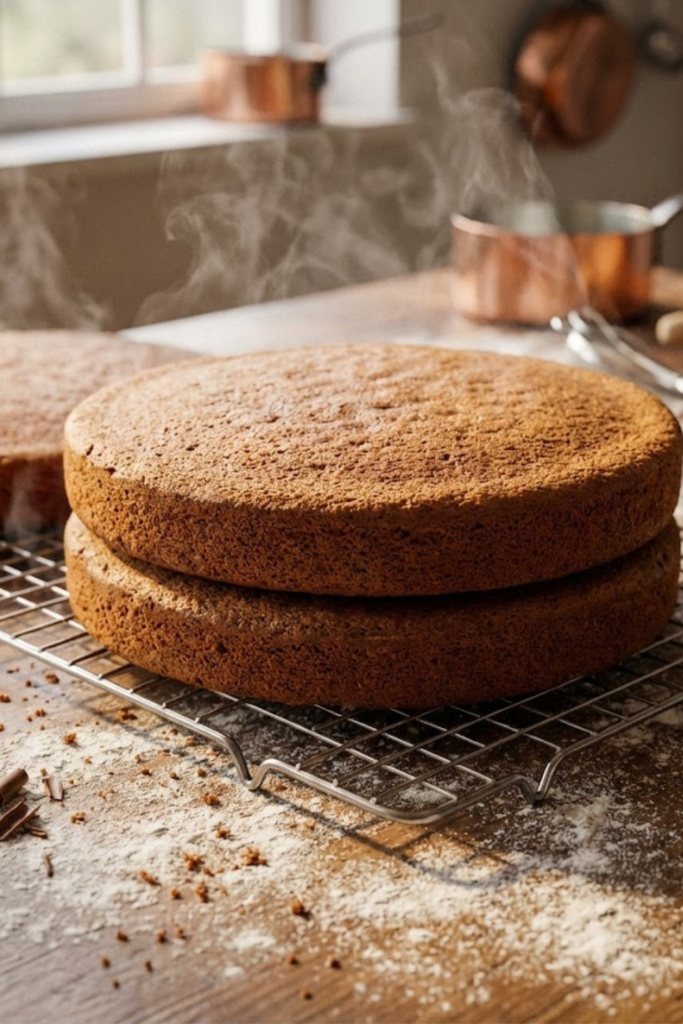
Bake it for about 25 to 30 minutes. The cake is done when it pulls away slightly from the sides of the pan and springs back when you touch the top. If you leave a fingerprint, it needs a few more minutes. Once it’s out, let it cool in the pan for a bit, then flip it onto a wire rack. Cooling completely is non-negotiable before you even think about grabbing a knife to slice those layers. Warm cake tears and crumbles, and we want clean layers for that professional look.
Preparing the Cherry Filling and Syrup
I used to think that a moist cake came solely from the batter. I was wrong. The secret weapon of a true Black Forest Cake is the syrup. I remember serving a cake years ago that was drier than the Sahara desert because I was too scared to soak it. I thought it would turn into mush.
It turns out, you have to be pretty aggressive with the liquid.
The Magic Potion: Cherry Syrup
We need to talk about the soak. You are going to make a simple syrup, which is just sugar and water boiled together, but then we spike it. Once the sugar water cools down, I pour in a generous amount of Kirschwasser.
Don’t hold back here. I usually use about a half cup of the liqueur. It feels like a lot, but the sponge cake drinks it up like a thirsty traveler. I use a pastry brush to dab it onto the cake layers, but honestly? Sometimes I just poke holes in the cake with a skewer and spoon it over to make sure it gets deep inside. If you don’t hear a squishy sound when you press the sponge later, you didn’t use enough.
Thickening the Fruit
Now, for the cherries. If you just dump the cherries from the jar onto the cake, you are asking for a landslide. The juice will leak out and stain your beautiful white cream pink. It looks messy, and not in a chic way.
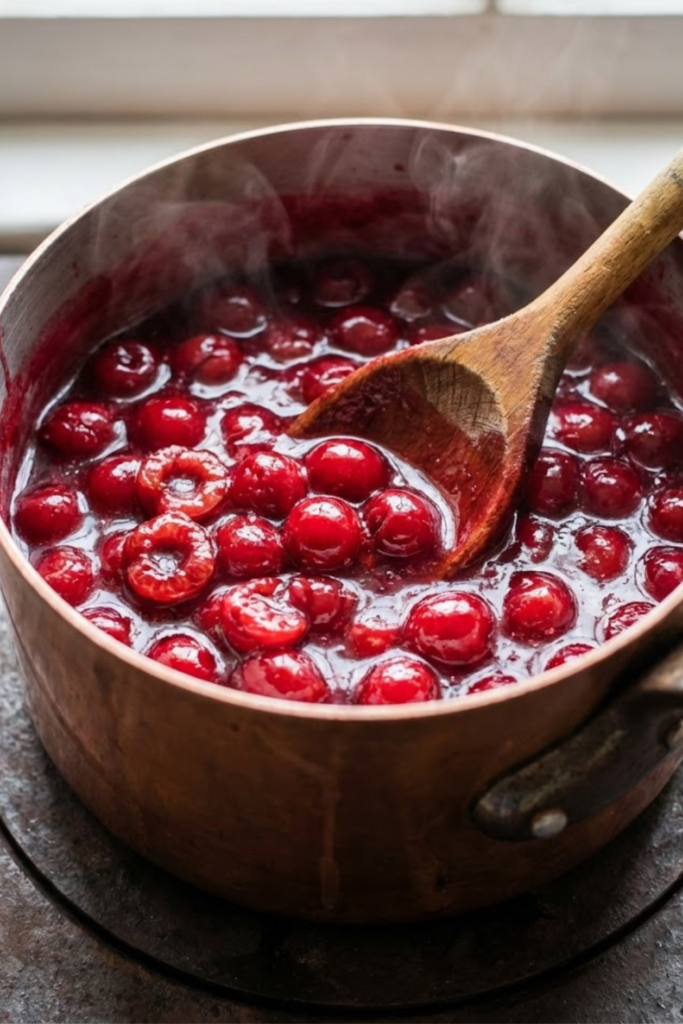
I take the juice from the jar (or can) and whisk it with cornstarch and a little sugar in a saucepan. You have to cook it until it bubbles and turns clear and thick, almost like a pie filling. Then, I toss the cherries back in. This creates a cohesive cherry filling that actually stays where you put it. I learned this trick after my filling oozed out the sides during a dinner party. It was tasty, but it looked like a crime scene.
The Waiting Game
Here is the part where I always struggle: patience. You absolutely cannot put hot cherry filling on whipped cream. It will melt the fat instantly. I did this once when I was rushing to finish a birthday cake, and the cream turned into a soup.
You have to let the cherry mixture cool completely to room temperature. I usually make the filling first, put it in a shallow bowl, and stick it in the fridge while I whip the cream. It needs to be cold enough that it holds its shape but isn’t a solid block of jelly. It’s a fine line, but getting the temperature right is half the battle in cake assembly.
Stabilizing Whipped Cream for Sturdy Layers
I have a confession to make. I once brought a Black Forest Cake to a summer potluck, and by the time I took it out of the car, it looked more like the Leaning Tower of Pisa than a cake. It was sliding sideways, weeping liquid onto the platter, and frankly, it was a sad puddle of expensive ingredients. I was mortified.
That was the day I learned that plain whipped cream just isn’t strong enough to hold up four heavy layers of soaked sponge and cherries. It needs help. It needs structural support.
Why Your Cream Needs a Gym Membership
The problem with regular whipped cream is that it relies on air bubbles. Over time, or with heat, those bubbles pop and the structure collapses. When you are stacking a heavy cake, gravity is your enemy. You need stabilized whipped cream.
In Germany, home bakers swear by little packets called “Sahnesteif” (whip stiffener). It’s amazing stuff. If you can find it at an international market or online, buy a box. It’s basically modified food starch that keeps the cream tight for days. But if you can’t find it, don’t panic. I usually use plain unflavored gelatin or even a tablespoon of instant vanilla pudding mix. It changes the flavor slightly, but it works in a pinch.
The Gelatin Trick
If you are using gelatin, you have to be careful. I’ve messed this up plenty of times. You have to “bloom” the gelatin in a little cold water first, then melt it gently. Here is the trick: do not dump hot gelatin into cold cream! You will get weird, rubbery stringy bits in your frosting. It’s gross.
You have to temper it. Take a spoonful of your whipped cream and mix it into the warm gelatin first to cool it down, then pour that mixture back into the main bowl while the mixer is running. It sounds complicated, but it’s the only way to get a smooth texture.
The Whip and The Chill
Temperature is everything here. Before I even start, I throw my metal mixing bowl and whisk attachment into the freezer for 10 minutes. Cold fat whips better. It just does.
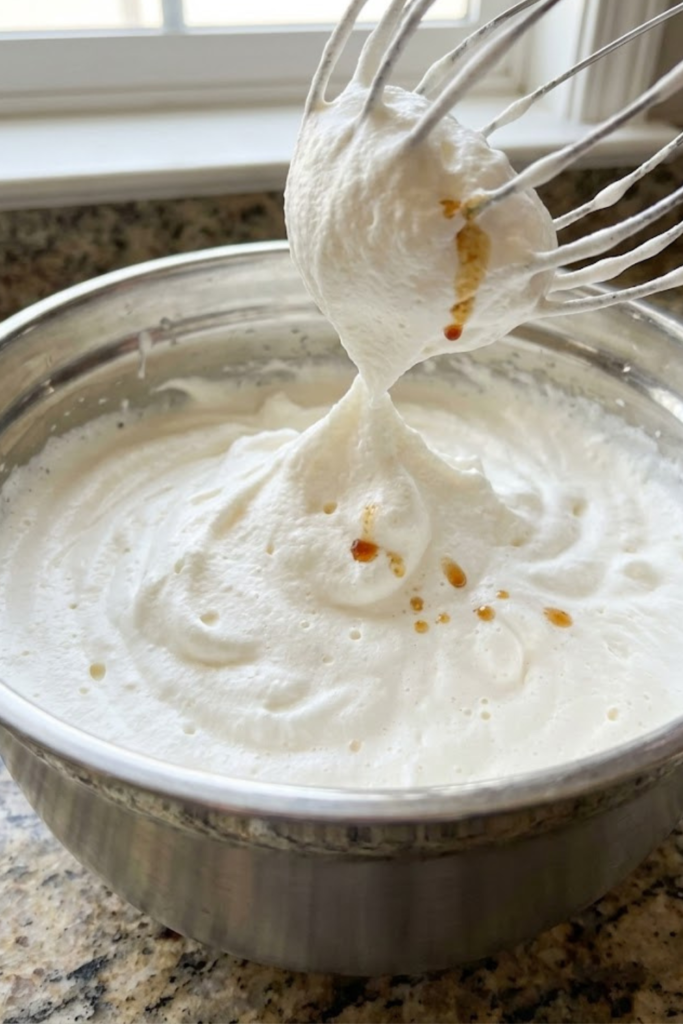
Pour in your cold heavy cream, powdered sugar, and your stabilizer. Start slow so you don’t paint your kitchen walls with dairy, then crank it up. You are watching for stiff peaks. This means when you pull the whisk out, the cream stands straight up like a mountain peak and doesn’t flop over.
But be warned: the second you hit stiff peaks, STOP. I once walked away to answer the phone while the mixer was running, and I came back to a bowl of sweet, grainy butter and buttermilk. There is no saving that. You just have to put it on toast and start over.
Flavoring the Cloud
Since the cream makes up about half the volume of this cake, it needs to taste good. Plain cream is boring. I always add a generous splash of vanilla extract. And since we are already committed to the theme, I add a tablespoon of Kirsch to the cream too. It reinforces that cherry flavor without making the frosting runny.
Just fold the alcohol in gently at the end with a spatula. You want it to be light, airy, and strong enough to support all those cherries we prepared earlier. Trust me, taking the extra step to stabilize means you can slice this beauty tomorrow, and it will still look perfect.
Assembling Your Black Forest Masterpiece
I used to think that assembling a cake was just slapping stuff together and hoping for the best. Boy, was I wrong. My first few attempts at a layer cake looked more like a delicious landslide than a dessert. I remember bringing one to a family dinner, and my uncle actually asked if I had dropped it on the way over. It was humiliating, but hey, it still tasted good.
If you want your Black Forest Cake to look like it belongs in a bakery window, you have to be strategic.
The Soak Strategy
First things first: the syrup. I know I mentioned this before, but it bears repeating because I’ve messed it up so many times. You place your first layer of chocolate sponge on the cake board or stand. Then, you grab your pastry brush and go to town with the cherry syrup.
Don’t be shy here. I used to lightly dab it, scared the cake would dissolve. Nope. This sponge is thirsty. If you don’t soak it enough, you’ll end up with a dry cake that feels cheap in your mouth. You want every bite to have that boozy, cherry kick. The sponge should look dark and wet, but not so soaked that liquid is pooling at the bottom. It’s a gut feeling you develop after ruining a couple of cakes.
Building the Dam
Here is the trick that changed my life: the dam. If you just spread whipped cream and dump the cherries on top, they will squish out the sides when you put the next layer on. It’s a mess.
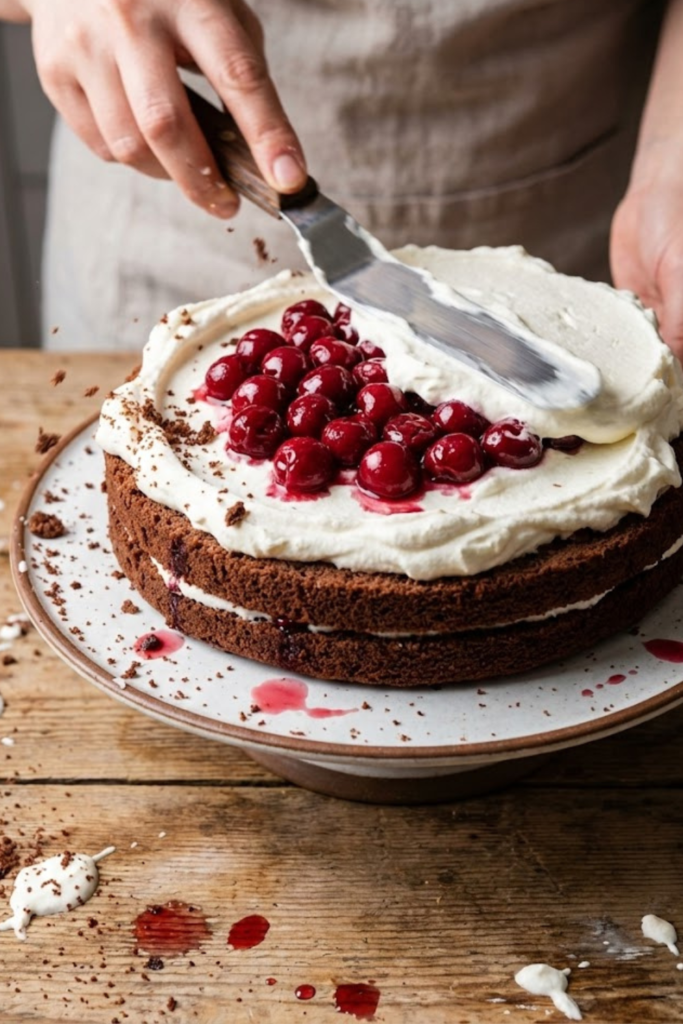
I fill a piping bag with my stabilized whipped cream and pipe a thick ring around the very edge of the cake layer. This creates a little wall. Then, I spoon the cherry filling into the center of that ring. The dam holds everything in place so your filling doesn’t leak out and ruin your frosting later. It makes the cake assembly so much cleaner.
Stacking the Layers
Once the cherries are in, I spread a layer of cream over them to seal them in. Then comes the next sponge layer. Repeat the process: soak, dam, fill, cream.
When you place the layers, step back and look at the cake from eye level. I used to just look from the top, and I’d end up with a leaning tower. Give it a gentle spin on your turntable if you have one. If it looks crooked, nudge it now before the cream sets. It’s frustrating when you realize it’s crooked after you’ve already frosted the whole thing.
The Crumb Coat Saver
Finally, the crumb coat. This is the thin, ugly layer of frosting you put on the outside to trap all the crumbs. I used to skip this because I was lazy. Big mistake.
If you try to do the final layer of frosting right away, you will drag dark chocolate crumbs into your white cream. It looks speckled and dirty. Apply a thin layer of cream all over the top and sides with an offset spatula. It doesn’t have to be pretty. Then, stick the whole thing in the fridge for 20 minutes. This locks the crumbs down so your final coat is pristine and white. It adds time, but it saves your sanity.
Decorating with Chocolate Shavings and Rosettes
I used to be intimidated by the final look of a Black Forest Cake. In my head, I thought those beautiful chocolate curls were made by some expensive machine in a factory. I was convinced that if I tried it, my cake would look like a toddler attacked it.
But here is the truth: the messy look is actually the point. This isn’t a wedding cake with smooth fondant. It’s supposed to look rustic and like it came from a snowy forest. Once I realized that imperfections are part of the charm, I actually started having fun with it.
The Vegetable Peeler Hack
You don’t need fancy pastry tools to get those authentic dark chocolate shavings. I use a simple $5 vegetable peeler. Seriously, that’s it.
I buy a big block of semi-sweet or dark chocolate. Don’t use milk chocolate; it’s too soft and won’t curl right. I hold the block over a plate (or a baking sheet) and run the peeler down the side. If the chocolate is too cold, it will just splinter into dust. If it’s too warm, it turns to mush.
I usually let the chocolate sit at room temperature for about 20 minutes before I start. When you get the temperature right, you get these beautiful, long chocolate curls that look professional. I’ve spent way too much time just peeling chocolate because it’s oddly satisfying.
The Sticky Situation
Now, getting those shavings onto the side of the cake is a different story. This is where things get messy. The first time I did this, I used my bare hands. Bad idea. The heat from my fingers melted the chocolate instantly, and I ended up with brown smears all over my white whipped cream frosting.
Here is my tip: use a spoon or a bench scraper to scoop up the shavings. Gently press them into the cream on the sides of the cake. If you have to use your hands, work fast. Like, really fast. I usually wear food-safe gloves now because they provide a little insulation. Don’t worry if it’s not perfectly even. You want the sides to look fully covered, like bark on a tree.
The Crown of Cream
Once the sides are covered, it’s time for the top. This is the classic Schwarzwälder Kirschtorte look. You need a piping bag fitted with a large open star tip.
I’m not a professional decorator, so I stick to simple rosettes. You just hold the bag straight up, squeeze to make a mound, and stop squeezing as you lift up. That’s it. I pipe about 12 or 16 of them around the edge, depending on how big I plan to cut the slices. It guides you later when you are serving it so everyone gets a decoration.
The Cherry on Top
Finally, placing the cherries. Make sure you pat the cherries dry with a paper towel first. If they are wet, the red juice will bleed into your white cream rosettes within minutes. I learned that the hard way when my beautiful white swirls turned pink and runny before guests arrived.
Place one whole cherry on top of each rosette. For the center, I usually pile on more chocolate shavings. And for the final wintery touch? I put a little powdered sugar in a sieve and dust it over the whole thing. It looks like fresh snow on the Black Forest. It covers up any little mistakes you might have made with the frosting, too. It’s the best cake decorating tip I know.
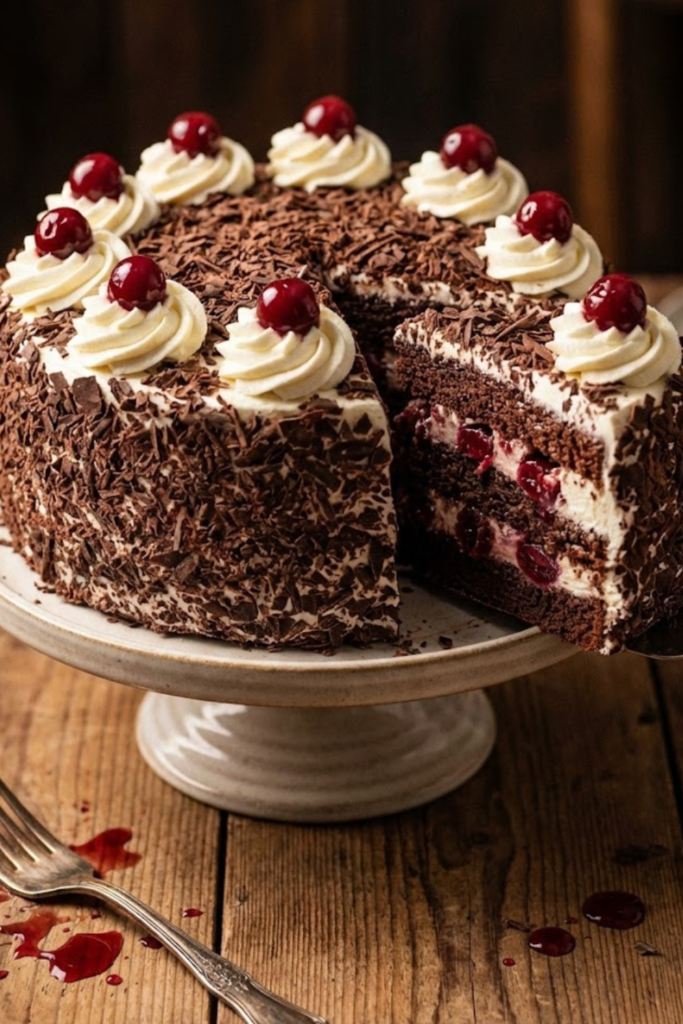
Look, I know your kitchen probably looks like a disaster zone right now with chocolate shavings everywhere, but trust me, this Black Forest Cake is worth every single dirty dish. It’s a labor of love that demands a little patience—honestly, it tastes ten times better if you let it sit in the fridge overnight so those boozy cherry flavors really soak into the chocolate sponge cake—but the result is a showstopper that will have your guests closing their eyes in pure bliss. Don’t stress if your whipped cream isn’t perfect or your decoration is a bit rustic; that’s the charm of authentic baking. Slice yourself a generous piece, enjoy this decadent sweet treat, and if you managed to pull this off without eating all the cherries first, do me a favor and pin this recipe on Pinterest to save it for your next celebration!