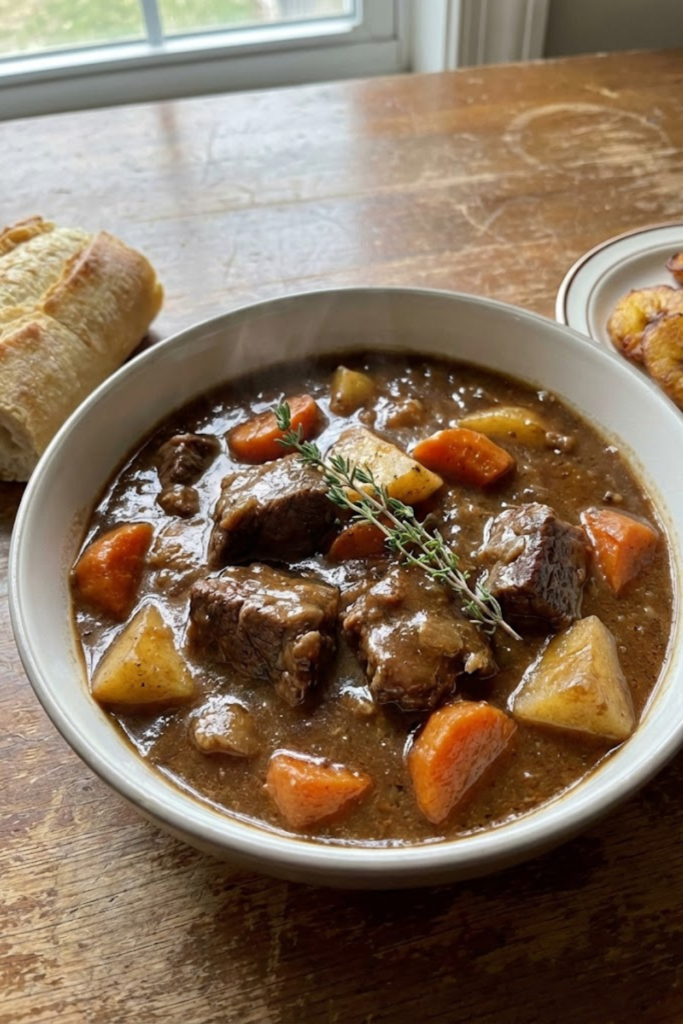
“A good stew heals the soul.” My grandmother used to say that, and honestly? She wasn’t wrong! There is absolutely nothing—and I mean nothing—that beats walking into a house filled with the aroma of simmering beef, red wine, and thyme.
It’s warmth in a bowl. But let’s be real for a second. We’ve all had that one stew. You know the one. Chewy meat. Watery broth. Bland vegetables. It’s a tragedy! In this guide, I’m going to show you exactly how to avoid those pitfalls and create a beef stew so tender you could eat it with a spoon. We are going to cover everything from selecting the right chuck roast to the science of searing. Get your Dutch oven ready, because we are cooking up a storm!
Choosing the Best Cuts of Beef for Stewing
I have a confession to make. When I first started cooking, I thought I was being fancy by buying expensive, lean sirloin for my beef stew. I figured, “Hey, better quality meat means better stew, right?”
Wrong. So wrong.
It was a total disaster. The meat came out dry, chewy, and tough as shoe leather. I was so frustrated I almost threw the whole pot out. I couldn’t understand why my expensive ingredients resulted in such a sad dinner. Mistakes were made, folks. But that’s how we learn! Through a lot of trial and error (and some very chewy dinners), I finally cracked the code on selecting the best cuts of beef for stewing.
Why Chuck Roast is the Real MVP
Here is the thing about stew: you actually want the cheap, tough cuts. It sounds backward, I know. But the absolute king of the stew pot is the chuck roast.
This cut comes from the shoulder of the cow, which does a lot of work. Because the muscle is exercised constantly, it’s loaded with tough connective tissue and collagen. If you grill a chuck steak quickly, it’s going to be tough. But when you cook it low and slow? That collagen breaks down into gelatin. That gelatin is what gives you that melt-in-your-mouth texture and makes the broth rich and velvety.
Don’t be tempted by the lean round steak or sirloin. They lack that connective tissue. When you cook lean meat for a long time, it just dries out. Stick with the chuck. It’s cheaper and tastes way better in a slow cook.
Beware the “Stew Meat” Packages
You know those packages at the grocery store labeled “stew meat”? The ones that are already cut up into cubes? I usually avoid those like the plague.
Here’s the tea: you don’t really know what cuts are in there. It’s often a mix of scraps from different parts of the cow. Some might be chuck, but some might be round or sirloin. This means you’ll end up with a pot where some bites are tender and others are dry. Plus, they usually charge you more for the labor of cutting it!
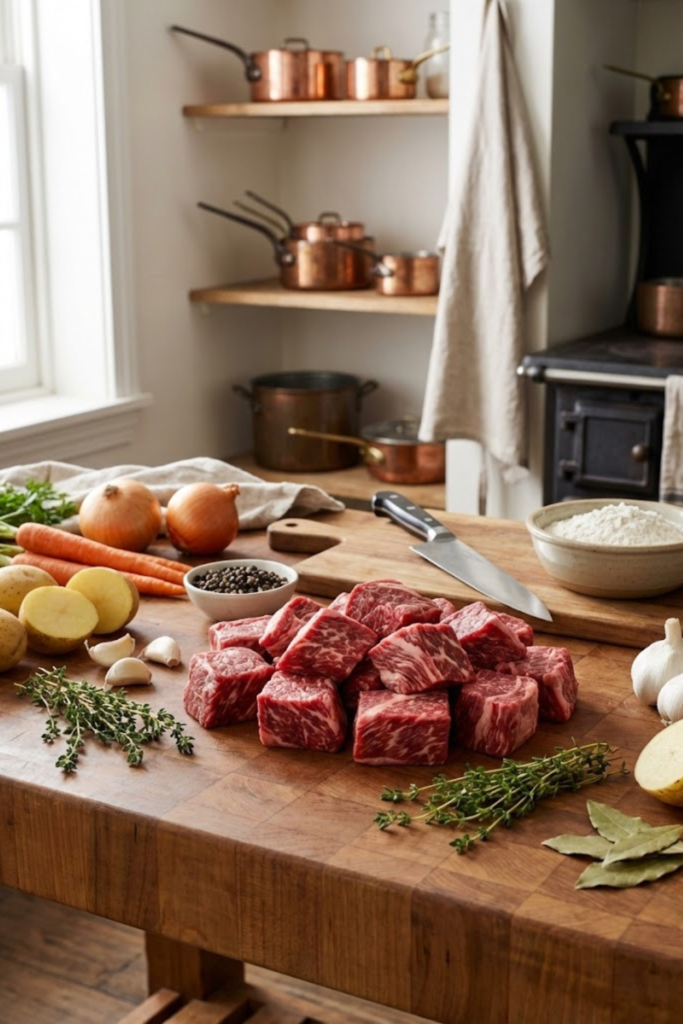
Save your money. Buy a whole boneless chuck roast and cut it yourself. It takes five minutes, and you have total control over the size and quality.
Size Matters (And Fat Does Too)
When you are cutting up your roast, don’t be afraid of the fat. That white marbling running through the meat? That is flavor. It’s going to render down and make your stew incredible. I trim off the big, hard chunks of outer fat (gristle), but I leave the rest.
Also, cut your chunks bigger than you think you need to. Meat shrinks when it cooks—sometimes by like 30% or more. I aim for chunks that are about 1.5 to 2 inches. If you cut them too small, they turn into mush by the time the potatoes are done. And nobody wants meat mush.
Trust me on this one. Grab a big, well-marbled chuck roast, sharpen your knife, and get ready for the best meal of your life. Your family is gonna thank you.
The Secret to a Rich, Thick Flavorful Broth
Is there anything worse than a thin, watery stew? I remember serving a bowl to my family years ago, and it looked more like dirty dishwater than a hearty meal. I was mortified. The flavor was weak, and the liquid just ran right off the spoon. It was a total flop.
I spent years thinking the secret was just adding more beef bouillon cubes. Spoiler alert: it’s not. It’s actually about technique and a little bit of kitchen chemistry.
The Power of the Sear (Don’t Skip This!)
If you just throw raw meat into a pot of liquid, you are basically boiling it. Boiled meat is gray and sad. We don’t want sad meat. We want the Maillard reaction.
That’s the fancy term for browning your meat. You need to sear those chunks of chuck roast in hot oil until they have a deep, dark brown crust. This isn’t just for looks; it creates complex flavors that permeate the whole stew.
Here is where I messed up for years: I was lazy and dumped all the meat in at once. Do not crowd the pan. If the meat touches, it steams instead of sears. You have to do it in batches. It’s a pain in the butt, I know. But it makes a huge difference. Patience is key here.
Deglazing: The Flavor Gold Mine
After you sear the meat, look at the bottom of your pot. See those brown, stuck-on bits? That is called “fond,” and it is pure flavor gold. Do not scrub it off in the sink!
Pour in a cup of red wine or beef stock while the pan is still hot. It’ll hiss and steam—that’s the sound of flavor happening. Use a wooden spoon to scrape up all those bits so they dissolve into the liquid. This process, called deglazing the pan, is what gives your beef broth that deep, restaurant-quality richness.
Thickening Strategies
Now, let’s talk about texture. A good beef stew recipe should coat the back of a spoon.
My favorite method is dusting the raw beef cubes in flour before searing them. The flour cooks with the beef fat and naturally thickens the stew as it simmers. It’s easy and creates a silky texture.
But hey, sometimes we forget. If your stew is looking thin near the end, don’t panic. Mix a tablespoon of cornstarch with a splash of cold water (a cornstarch slurry) and stir it in. Let it bubble for a minute. Boom. Thick gravy.
Umami Boosters
Finally, your broth needs a kick. If it tastes “flat,” it’s missing umami.
I always add a tablespoon of tomato paste during the sauté step. It adds depth. And here is my secret weapon: Worcestershire sauce or even a splash of soy sauce. It sounds weird in a French-style stew, but it wakes up the beef flavor like nothing else.
Don’t settle for bland broth. layer these flavors, and you’ll have a stew that sticks to your ribs.

Essential Vegetables and Timing the Additions
I used to have a bad habit of dumping everything into the pot at the exact same time. Meat, broth, carrots, potatoes—everyone went into the pool together. I thought I was being efficient.
But let me tell you, that efficiency cost me. By the time the meat was finally tender three hours later, my potatoes had completely disintegrated. They vanished. My carrots were mush. The whole thing had the texture of baby food. It was edible, sure, but it wasn’t good. I remember staring at that pot of brown sludge and feeling so defeated.
Timing is everything in a beef stew recipe. You can’t treat every vegetable the same because they don’t cook the same.
Start with the Aromatics
The base of flavor starts with the “Holy Trinity,” or mirepoix if you want to be fancy. This is your onions, celery, and carrots.
I like to cut my carrots into big, chunky rounds. If you slice them too thin, they get lost. I throw the onions and celery in right after I brown the meat, letting them soften in that leftover beef fat. This builds a flavor foundation that you just can’t get if you boil them raw.
The Potato Dilemma: Russet vs. Yukon Gold
Here is where I made my biggest mistakes. I used to use Russet potatoes for everything. The problem? Russets are high in starch. When you simmer them for a long time, they fall apart.
For a stew that looks as good as it tastes, switch to Yukon Gold potatoes. They are waxier and hold their shape way better during a long cook. You still get that buttery, creamy bite, but they don’t turn into soup.
And for the love of food, do not add them at the beginning! Wait until the meat is about 45 minutes to an hour away from being done. That way, the potatoes are tender but still intact when you serve it.
Fresh vs. Frozen: The Final Pop
I love adding peas to my stew. It adds a pop of sweetness that cuts through the rich, salty fat. But have you ever eaten a gray, overcooked pea? It’s gross.
If you are using frozen peas or corn, wait until the very last second. I mean, literally right before you take the pot off the heat. The residual heat of the stew will cook them in about two minutes. This keeps them bright green and snappy.
Don’t Forget the Herbs
Finally, toss in your herbs. I used to rely on dried stuff that had been in my pantry since 2015. Fresh makes a huge difference. Tie a bundle of fresh thyme and rosemary together with kitchen twine and toss it in. Fish it out before serving. It adds an earthy freshness that dried herbs just can’t match.
Treat your veggies with respect, and your stew will go from “meh” to magnificent.

Cooking Methods: Stovetop vs. Oven vs. Slow Cooker
I have burned more pots than I care to admit. There was this one time I tried to simmer a stew on the stovetop while binge-watching a show in the other room. I completely forgot about it until I smelled burning. The bottom was a blackened crust of what used to be dinner. It took me three days to scrub that pot clean.
That’s the trouble with the stovetop. It requires babysitting. You have to be there, stirring it, making sure the flame isn’t too high. But don’t worry, over the years I’ve figured out which methods actually work for my sanity—and which ones produce the best braising beef.
Dutch Oven Magic (The Gold Standard)
If you have a heavy cast-iron pot, use it. This is hands down my favorite way to cook. Once you get everything boiling on the stove, you pop the lid on and shove the whole thing into a 325°F (163°C) oven.
Why? Because the heat surrounds the pot. It cooks the meat gently from all sides, not just the bottom. This consistent ambient heat is the secret to simmering meat perfectly without scorching it. Plus, you don’t have to stir it once! You can actually walk away and do laundry (or watch TV) without destroying dinner.
The Slow Cooker Trap
I know, I know. We all love our Crockpots. Slow cooking is a lifesaver on workdays. But I used to make a huge mistake here: I would use the exact same recipe for the slow cooker as I did for the stove.
Big mistake.
Slow cookers don’t let evaporation happen. If you add 4 cups of broth, you end up with 4.5 cups of liquid at the end because of the juices from the meat and veg. You end up with beef soup, not stew.
If you are adapting this for Crockpot recipes, cut the liquid by at least a third. And please, for the love of flavor, sear your meat in a pan before you dump it in the slow cooker. If you skip the sear, the flavor will be flat.
Instant Pot for the Impatient
Sometimes you just don’t have three hours. I get it. The Instant Pot beef stew method is a miracle for busy nights. You can get tender meat in about 35 minutes under high pressure.
However, I gotta be real with you—the texture isn’t quite the same. The sauce doesn’t get as thick and glossy naturally. If you go this route, you almost always need to use a cornstarch slurry at the end on the “Sauté” function to thicken it up. It’s a trade-off, but sometimes speed wins.
Choose your weapon wisely, but if you have the time, trust the oven method. It’s foolproof.

Look, I’m not gonna lie to you. Making a real, scratch-made beef stew recipe takes time. It’s not something you whip up in 15 minutes between work and soccer practice. It’s a labor of love.
But that moment when you pull the heavy pot out of the oven? And the steam hits your face smelling like wine, thyme, and roasted meat? It is worth every single second of chopping and searing. It’s the kind of hearty dinner that fixes a bad day.
I used to rush the process, trying to get dinner on the table by 6 PM sharp. I’d skip the sear or turn up the heat too high. And the food was… fine. But it wasn’t magic. Once I slowed down and let the homemade stew do its thing, everything changed.
A quick final tip from me to you: this stew actually tastes better the next day. Seriously. The flavors sit and mingle in the fridge overnight. So, if you can, make it on a Sunday and eat it on a Monday. It’s the ultimate meal prep hack.
I hope you give this a try. Don’t be afraid to mess it up a little; cooking is forgiving. Just keep tasting as you go. Grab a loaf of crusty bread, slather it with butter, and enjoy. You earned it!
Don’t lose this recipe! Pin this mouthwatering Beef Stew to your “Comfort Food” or “Dinner Ideas” board on Pinterest to save it for a rainy day!