I remember the first time I tried making a beef gyro wrap in my own kitchen. It was a total mess! The meat was dry, and the pita felt like a piece of cardboard. I almost gave up on Greek food forever. But after years of trial and error, I finally cracked the code to that rotisserie-style flavor without needing a giant vertical spit. Did you know that over 65% of home cooks now prefer “fakeaway” recipes over actual takeout?. People want that savory, garlicky goodness right at home. This 2026 recipe is going to change your lunch game forever! It’s fast, it’s fresh, and it’s packed with Mediterranean spices that will make your taste buds dance.
Selecting and Seasoning the Perfect Beef
I’ve gotta tell you, I used to be so bad at picking out meat for my gyros. I’d just grab whatever was on sale, like a chuck roast, and then I’d wonder why I was chewing on a rubber band for twenty minutes. It was super frustrating! Finally, a buddy of mine who actually knows his way around a kitchen told me to stick with sirloin or flank steak. These cuts are lean but they stay pretty tender if you treat them right. You don’t want something with a ton of connective tissue because we aren’t slow-cooking this for eight hours. We need something that cooks fast and stays juicy.
Which Cut of Beef Should You Buy?
When you are at the grocery store, look for a top sirloin or a flank steak. If you can find a piece with a little bit of marbling—that’s the white flecks of fat—go for that one. That fat is going to melt and make the meat taste way better. I usually buy about a pound for my family. Stay away from the pre-packaged “stew meat” because those pieces come from all different parts of the cow, and some will be soft while others are like rocks. It’s better to buy one solid steak and cut it up yourself so you have total control over the quality.
My Favorite Gyro Seasoning Mix
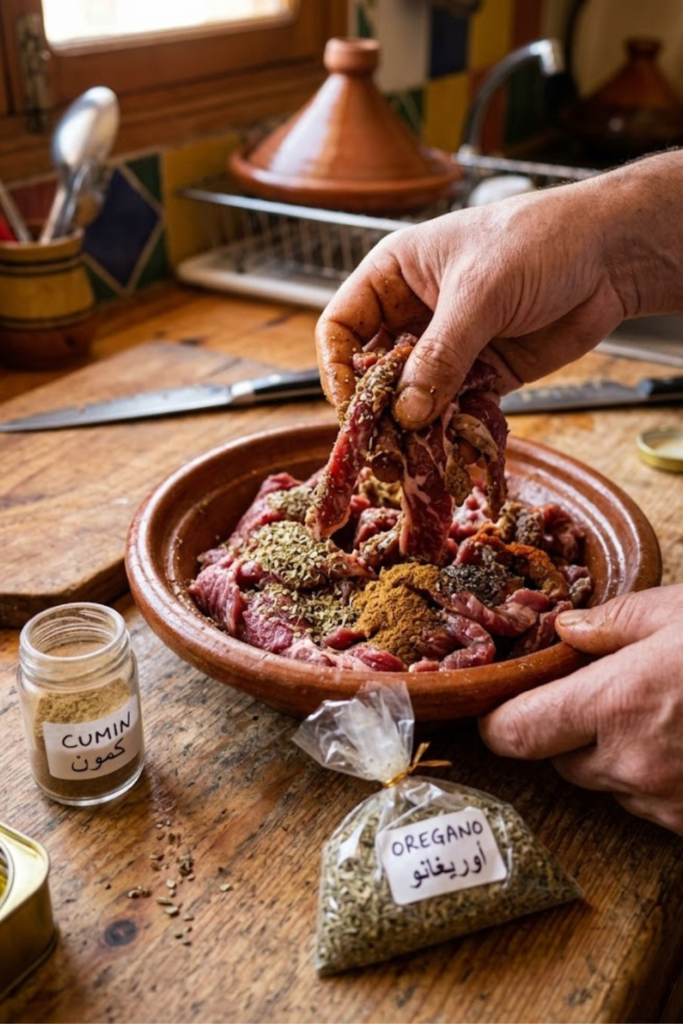
The seasoning is where the real magic happens. You can’t just throw salt on it and call it a day. I make a big batch of my own seasoning with plenty of dried oregano, cumin, and a little garlic powder. I like to use about two tablespoons of spices for every pound of beef. Don’t be shy with it! Make sure every little piece of beef is covered in that brown, aromatic goodness. I also add a little pinch of cinnamon. I know that sounds weird, but it gives it that authentic Greek smell that makes your neighbors jealous.
The Secret to Thin Slices
Here is a pro tip I learned the hard way: it is almost impossible to slice raw beef thin when it is room temperature. It just slides around under the knife. Put your steak in the freezer for about 20 minutes before you start. It won’t be frozen solid, but it will be firm enough that you can cut paper-thin strips. Slice across the grain, which looks like the lines on a piece of wood. If you cut with the grain, the meat will be tough. Cut against it, and it will pull apart easily when you take a bite of your wrap. Let the meat sit with the spices for at least half an hour so the flavor gets deep inside. This wait makes a huge difference in how the final meal tastes.
Whipping Up Authentic Homemade Tzatziki Sauce
I used to think that the white sauce on gyros was just regular sour cream or something. Boy, was I wrong! The first time I tried to make it, it looked like a bowl of milky water. It was super embarrassing because I served it to my neighbors and they had to use a spoon just to keep it from running off their plates. After that disaster, I spent a whole weekend trying different ways to get that thick, creamy texture you get at the good Greek restaurants. It turns out, there are a few simple tricks that make all the difference, and they don’t take much time at all. You just need to be patient with the veggies.
The Cucumber Trick for Success
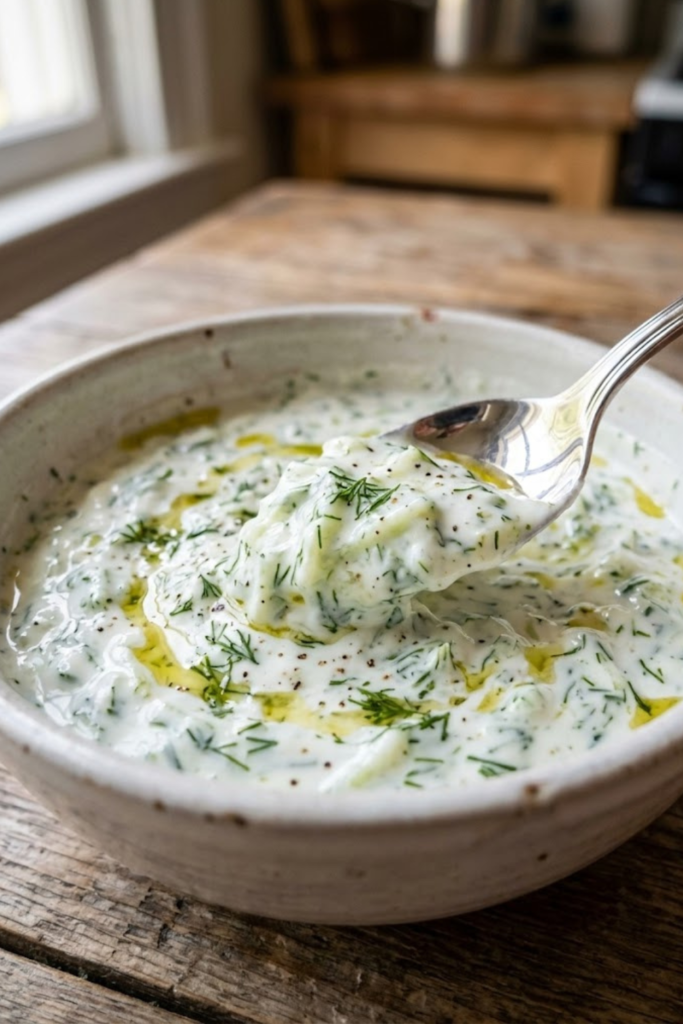
The biggest mistake people make—and I made it for years—is just tossing the chopped cucumber right into the bowl. Cucumbers are basically just water in a green skin. If you don’t get that juice out, your sauce will be a soggy mess in five minutes. What I do now is grate the cucumber using the big holes on a cheese grater. Then, I put the shreds into a clean kitchen towel and squeeze it as hard as I can. You would not believe how much water comes out! It’s actually kind of gross but also satisfying. Keep squeezing until no more drops fall out. This is the only way to make sure your tzatziki stays thick and scoopable throughout the whole meal.
Choosing Your Yogurt Wisely
Don’t even bother with the thin, runny yogurt you find in those little snack cups. You need real, full-fat Greek yogurt. I usually look for the 5% fat version because it’s much creamier and tastes way better than the fat-free stuff. If you use the low-fat version, the sauce lacks that rich feeling on your tongue. If you can only find regular yogurt, you can strain it through a coffee filter for an hour to thicken it up, but buying the thick Greek kind saves you a lot of trouble. I like the Fage brand, but any store brand works as long as it’s thick enough that a spoon can stand up in it.
Finishing the Flavor Profile
Once you have your dry cucumbers and your thick yogurt, it’s time for the aromatics. I use a lot of fresh dill. Don’t use the dried stuff from a jar; it tastes like hay. Get a bunch of fresh dill and chop it fine. Add a splash of fresh lemon juice—not the stuff from a plastic lemon—and plenty of minced garlic. I usually use two or three cloves because I love garlic, but you can use less if you have a date later! Give it a good stir and let it sit in the fridge. The longer it sits, the better it tastes. I try to make mine at least two hours before we eat so the garlic has time to really wake up. This sauce is so good, you might find yourself dipping chips or carrots in it before the beef is even done cooking!
Toasting the Pita for That Golden Crunch
I used to just pull the pita bread straight out of the plastic bag and throw it on the plate. I thought that was how you were supposed to do it! But man, was I wrong. Cold pita bread is basically like eating a piece of dry construction paper. It’s stiff, it cracks when you try to fold it, and it just tastes… well, it tastes like nothing. One time I tried to make gyros for a big family dinner and the bread was so dry that everyone’s wrap just fell apart in their hands. It was a total mess and I felt so bad. Since then, I’ve learned that the pita is just as important as the beef. You have to give it a little bit of love if you want that restaurant-quality feel.
Picking the Right Kind of Bread
When you go to the store, you’ll see two main kinds of pita. One has a “pocket” inside and the other is thick and flat. For a real beef gyro wrap, you want the thick, Greek-style pita that doesn’t have a pocket. The pocket ones are great for tuna salad, but they are way too thin for heavy beef and sauce. They just rip open and get soggy. I always look for the ones that feel soft and pillowy through the bag. If they feel hard or stiff already, leave them on the shelf because they are probably old. A fresh, thick pita is the secret foundation of the whole meal.
The Skillet and Oil Method
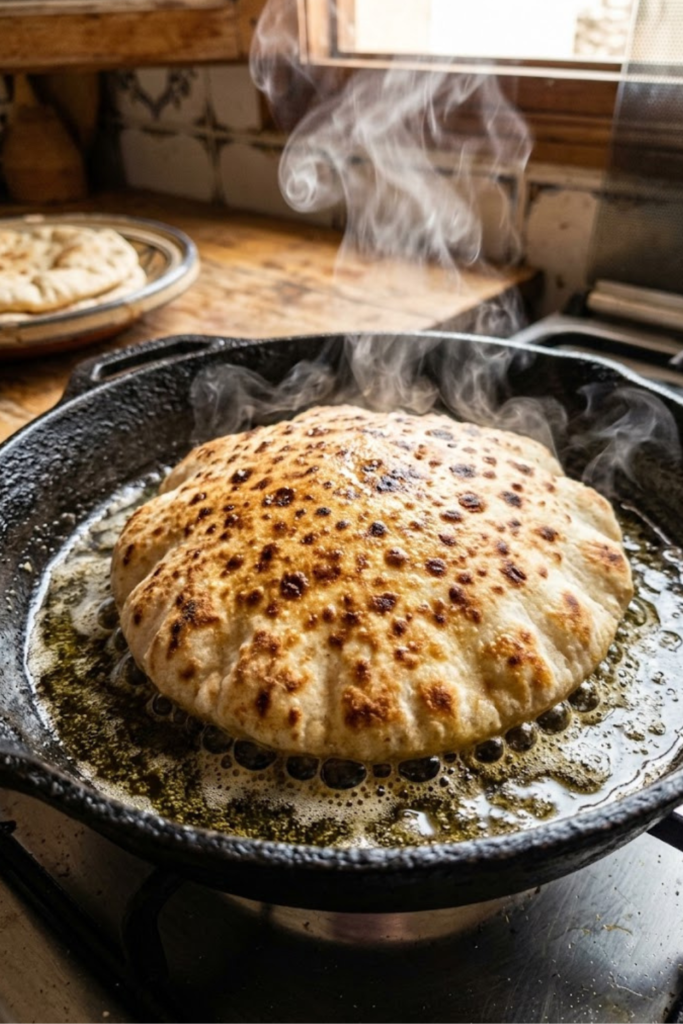
The best way to heat these up isn’t the microwave. Seriously, stay away from the microwave! It makes the bread soft for ten seconds and then it turns into a rock. Instead, get a cast iron skillet or a flat griddle nice and hot over medium heat. I put just a tiny drizzle of olive oil in the pan—maybe a teaspoon. Lay the pita in there and let it sizzle for about thirty seconds. You want to see those beautiful little golden-brown spots start to form. Flip it over and do the same thing on the other side. This makes the bread flexible so it won’t break, and it adds a toasted flavor that is just incredible.
Keeping Them Soft While You Prep
Since you are probably cooking several pitas, you need a way to keep the first one warm while you finish the rest. I use a clean kitchen towel or even a piece of aluminum foil. As soon as a pita comes out of the pan, I slide it into the towel and fold it over. This traps the steam inside, which keeps the bread soft and warm. If you just leave them sitting on a plate, they will get cold and tough before you even finish the meat. This little trick is what makes the difference between a “okay” lunch and a meal that feels like you’re sitting at a cafe in Athens. Don’t skip the toast; it really is the best part!
Assembling Your Beef Gyro Wrap Like a Pro
I used to think that putting a gyro together was the easy part. I figured you just throw everything in a pile on the bread and start eating, right? Well, I was wrong again. My first few attempts looked like a total car accident on a plate. The meat would slide out the back, the tomatoes would fall on my shoes, and I’d end up with a face full of sauce. It was really frustrating because the food tasted great, but it was a nightmare to actually eat. I finally figured out that the order you put things in actually matters a lot if you want it to stay together. It’s actually kind of an art form to get that tight wrap that stays together while you’re busy talking or watching TV.
Layering for Maximum Flavor
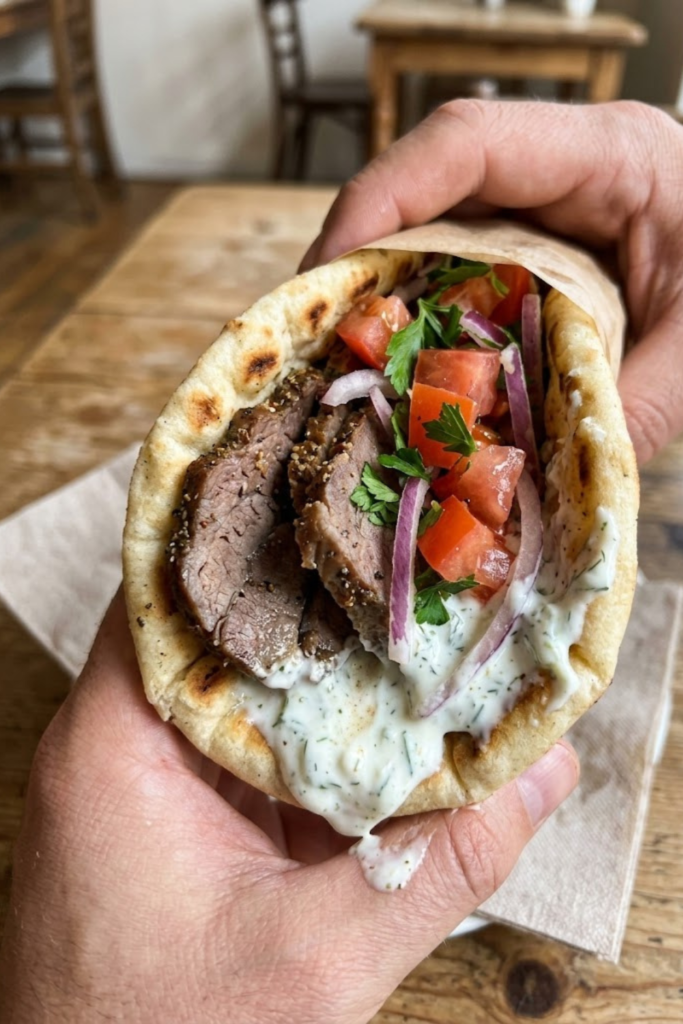
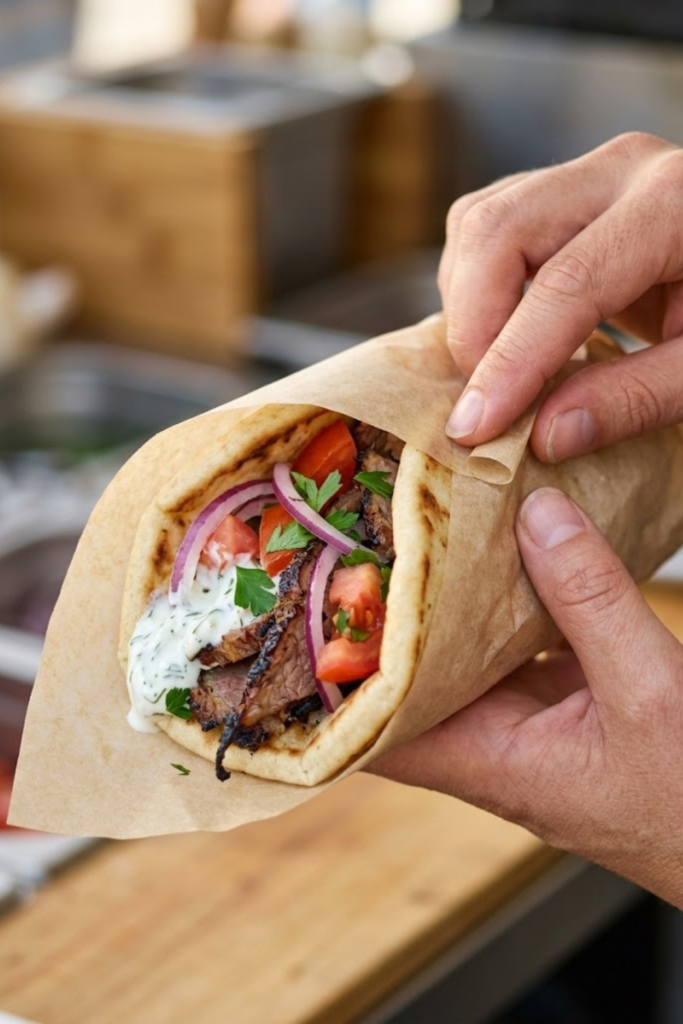
You want to start by putting a nice thick layer of that homemade tzatziki sauce right down the middle of your warm pita. I like to spread it out like I am painting a fence, but I always leave a little bit of room at the very edges so it doesn’t squish out immediately. Next, lay down your seasoned beef strips right on top of the sauce. I usually put about five or six good pieces in there. After the meat, I add the cold stuff. I always go with very thin red onions and some chopped Roma tomatoes. If you like a little extra salty kick, you can crumble some feta cheese on top right now. Some people like to put french fries inside their gyros—that’s a real Greek street food move—but I usually skip that part to save some calories. The big secret is to not overstuff the bread. If you put too much inside, the pita will just rip and you will be eating your dinner with a fork off the table.
The Famous Parchment Paper Tuck
This is the one trick that really changed my life. You know how when you buy a gyro at a food truck, it always comes wrapped in that white paper? There is a huge reason for that! It holds everything tight so you can actually hold it with one hand. I always cut a square of parchment paper and lay the pita on top of it before I even start building the wrap. Once the food is loaded inside, I fold the sides of the bread in as tight as I can. Then, I roll the paper around the bottom half of the gyro. I twist the bottom of the paper like a piece of candy. This creates a little “pocket” that catches all the juices and extra sauce that try to escape. It makes the whole experience way less messy, and you won’t end up with a big grease stain on your shirt.
Finding the Sauce Balance
Before you close it up for good, I like to add one last tiny squeeze of fresh lemon or maybe a tiny sprinkle of fresh parsley on the very top. It just makes everything taste a bit brighter. If you are making these for a group of friends, I find it’s best to let everyone build their own, but I always stand nearby to show them how to do the paper tuck. It’s pretty funny seeing people try to wrap theirs without the paper; they always end up with a pile of beef on their lap. Once it is wrapped up tight, give the whole thing a little squeeze to settle the ingredients. Now you are ready to eat like a pro!
Bringing the Greek Feast Home
I really hope you guys feel ready to tackle this beef gyro wrap now. Looking back, I remember how intimidated I was by Greek food when I first started cooking. I used to think you needed a big vertical rotisserie or some special professional training to get that flavor right. But honestly, it’s all about the small details we talked about today. Once you get the hang of seasoning that beef and toasting the pita just right, you’ll never want to go back to the greasy stuff from the mall food court. It feels good to know exactly what is going into your meal, and your family is going to think you’re a total pro.
Why Homemade is Always Better
The best part about making these at home is that you can make them exactly how you like. If you want extra beef, you can put it in there! If you want a mountain of feta cheese, go for it. Plus, you are saving a ton of money. A family of four can eat like kings for the price of just one or two wraps at a fancy restaurant. I’ve found that my kids actually eat more vegetables when they are tucked inside a warm, toasted pita with that creamy sauce. It is a sneaky way to get some good nutrition in them while they think they are eating a special treat.
Tips for a Stress-Free Dinner
If you are worried about the timing, just remember to prep the sauce and the meat ahead of time. I usually do the tzatziki in the morning while I’m drinking my coffee. It only takes five minutes, and then it is ready and waiting in the fridge. That way, when dinner time rolls around, all I have to do is cook the beef and toast the bread. It makes the whole evening feel way less chaotic, especially on a school night when things are already busy with homework and chores.
Share the Gyro Love!
I really want to see how yours turn out! If this guide helped you make a killer dinner, please save it and share it on Pinterest so other people can find it too. It helps me out a lot, and it lets more families enjoy a great home-cooked meal. There is nothing better than a good “fakeaway” recipe that actually works. So, grab your skillet, get that beef sizzling, and enjoy your homemade Greek feast! Thanks for hanging out and reading along with me today.