“I once heard someone say that eggplant is just a sponge for oil, and honestly, I used to agree!” But after years of trial and error in my own kitchen, I’ve found that baked eggplant with tomato basil can be a total game-changer if you treat it right. Did you know that eggplant is technically a berry? It’s true! This vibrant dish brings together the earthy richness of nightshades with the bright, peppery kick of fresh herbs. Whether you’re looking for a meatless Monday star or a side that steals the show, I’m here to help you nail that perfect, non-mushy texture!
Choosing the Best Eggplant for Baking
I’ve spent plenty of Saturday mornings standing in the produce aisle, staring at a pile of purple eggplants and wondering which one won’t taste like a bitter mess. It’s a bit of a gamble if you don’t know what to look for. I used to think the biggest one was the best value, but boy, was I wrong. Those giant ones are usually full of seeds and have a real tough skin that stays chewy even after baking. If you want your baked eggplant with tomato basil to turn out great, you gotta start with the right fruit. Yes, it’s technically a fruit, which always surprises my students! After years of cooking for my family, I’ve figured out that the secret is all in the selection.
Look for a Mirror Finish
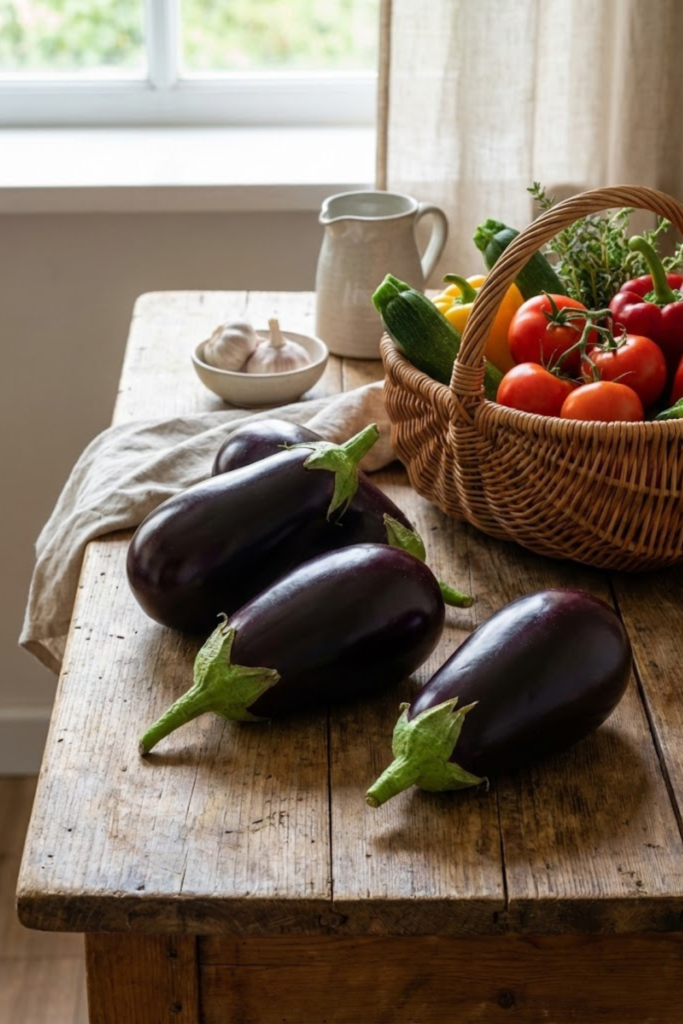
The first thing I tell people is to look at the skin. It should be so shiny you can almost see your reflection in it. If the skin looks dull or a bit dusty, it’s probably been sitting on the shelf way too long. That dullness means the eggplant is starting to dry out inside. You want something that looks vibrant and smooth. Avoid any that have soft spots, bruises, or wrinkles. A wrinkle on an eggplant is a sign that it is getting older and losing its moisture. For baking, we want the young, fresh ones that look like they just came off the vine.
Give it a Gentle Squeeze
You also need to use your hands. Pick it up and give it a little press with your thumb. It should feel firm but have just a tiny bit of give, kind of like a ripe tomato but a bit harder. If your thumb leaves a dent that stays there, put it back. That eggplant is overripe and will likely be very bitter. If it feels like a rock, it might not be ripe enough yet. I always look for one that feels heavy for its size. That weight tells me it is fresh and won’t turn into a piece of leather in the oven.
Check the Green Hat
Last, look at the green cap on top, which I like to call the hat. It should be a bright, healthy green. If it’s turning brown or looks like it’s shriveling up, the eggplant is past its prime. I’ve found that the Italian variety, which is a bit smaller and skinnier than the big Globe ones, usually works better for this recipe. They have thinner skin and fewer seeds, which makes for a much better bite when you sit down to eat. Smaller eggplants are just easier to handle and taste sweeter.
Prepping Your Eggplant: The Secret to No Mush
I’ll be the first to admit it: my early attempts at baked eggplant with tomato basil were a disaster. I once served a tray of what looked like purple slime to my book club, and the silence at the table was deafening! One friend politely asked if I had made a “vegetable smoothie” instead of a roast. It was a total face-palm moment that taught me a hard lesson. You can’t just slice an eggplant and chuck it in the oven if you want that meaty, satisfying bite.
The Magic of the Salt Sweat
The biggest mistake I made for years was skipping the salt. I thought it was just an old wives’ tale, but boy, was I wrong! Eggplants are like little sponges filled with bitter water. If you don’t draw that moisture out, it just boils the vegetable from the inside while it bakes.
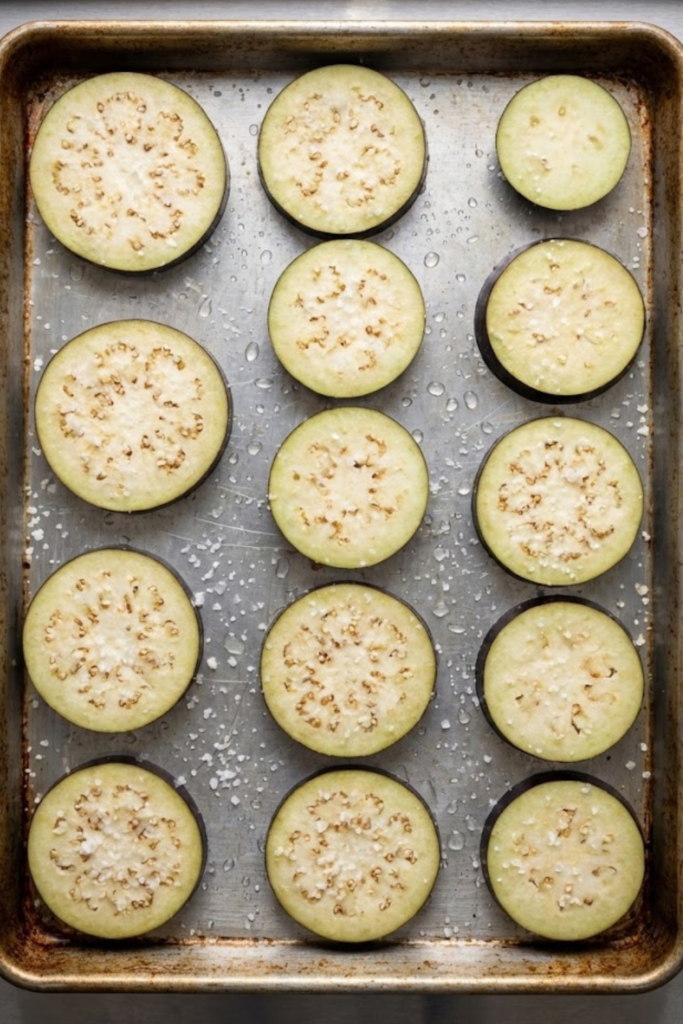
Now, I lay my slices out on a thick layer of paper towels and sprinkle them generously with coarse sea salt. You have to let them sit for at least 30 minutes. You’ll actually see little beads of “sweat” forming on the surface. It’s kind of gross but also super satisfying to watch. After 30 minutes, I rinse them off and—this is the crucial part—pat them bone-dry. If they stay wet, they’ll steam, and we’re back to mushy territory.
Get the Slicing Right
Another thing I learned the hard way is that thickness matters. I used to just hack away at the poor vegetable, but uneven slices mean some pieces burn while others stay raw. I aim for about half an inch thick. Any thinner and they disappear into the sauce; any thicker and the middle stays spongy.
I actually bought a cheap mandoline slicer once to help, but I nearly took my finger off within five minutes. Now, I just stick to a sharp chef’s knife and take my time. If you’re worried about the skin being tough, you can peel “stripes” off the eggplant so it looks like a zebra. This leaves enough skin to hold the shape but makes it easier to cut with a fork later on.
The Pre-Baking Trick
Don’t you dare put the tomato sauce on raw eggplant! I tried that once and ended up with a soggy, bland mess. You have to give the slices a “head start” in the oven. I brush mine lightly with some extra virgin olive oil—don’t soak them, or they’ll get greasy—and roast them at $400^{\circ}F$ ($200^{\circ}C$) for about 15 minutes.
This step creates a “seal” on the outside of the eggplant. It makes the edges a little crispy and develops those deep, roasted flavors that pair so well with fresh basil. Once they look golden and feel tender, then you can start layering your toppings. Trust me, this extra ten minutes in the kitchen saves the whole meal. My family actually asks for seconds now, which is the ultimate triumph for any teacher-turned-home-cook!
Crafting the Perfect Tomato Basil Topping
If the eggplant is the body of this dish, then the tomato basil topping is definitely the soul. I remember one time I tried to cheat and just dumped a jar of cheap spaghetti sauce over my roasted slices. It was so sugary and thin that it completely drowned out the flavor of the vegetable. My husband, who is usually a very good sport about my kitchen experiments, asked if I was making “pizza soup.” That was a real wake-up call! To get that authentic, bright taste, you really need to put a little bit of love into the topping. It’s not hard at all, but there are a few things I’ve learned as a home cook that make a huge difference in the final result.
Picking the Meatiest Tomatoes
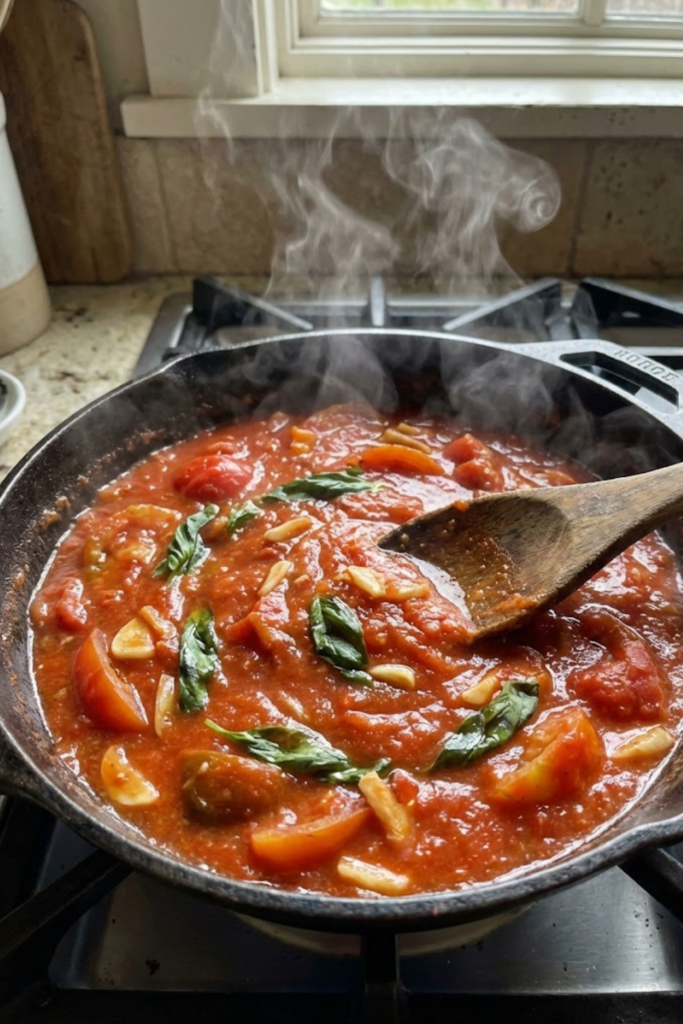
When you’re at the store, don’t just grab the first red thing you see. For a topping like this, you want tomatoes that have more “meat” and less juice. I always go for Roma or San Marzano tomatoes. They have a thicker wall and fewer seeds, which means your sauce won’t turn into a watery puddle in the oven. If you use those big, juicy beefsteak tomatoes, they’ll just leak water everywhere and make your eggplant soggy again. I like to dice them up small so they cook down into a chunky, jam-like consistency that stays right on top of the eggplant slices where it belongs.
The Garlic and Oil Base
Before I even touch the tomatoes, I get my skillet ready with some high-quality olive oil. You don’t need a ton, just enough to coat the bottom. I throw in about three or four cloves of minced garlic. Here is a big tip: don’t let the garlic turn brown! If it gets too dark, it tastes bitter and ruins the whole vibe. Just sauté it until you can smell it—usually about thirty seconds. If you like a little kick, this is the perfect time to toss in some red pepper flakes. It gives the sauce a nice warmth without making it too spicy for the kids.
Adding the Fresh Basil
The basil is the star of the show here, but you have to be careful with it. If you cook basil for too long, it turns black and loses that peppery, sweet smell. I like to stir in half of my chopped basil right at the end of making the sauce, and save the other half for after the dish comes out of the oven. This way, you get that deep flavor cooked in, but you also get that bright, fresh pop of green on top. It makes the whole house smell like an Italian garden, which is honestly the best part of cooking this meal!
Step-by-Step Baking and Assembly
Alright, now we’re at the part where everything starts to smell amazing in the kitchen. My kids usually start wandering in around this time, asking when dinner is gonna be ready because the garlic and basil are doing their thing. Assembling the baked eggplant with tomato basil is actually my favorite part because you can see the whole meal finally coming together. After you’ve got your eggplant slices pre-roasted and your sauce smelling like an Italian dream, it’s time to build your masterpiece. I usually grab my favorite rectangular ceramic baking dish—the one with the chipped handle that I’ve had for a decade—and lightly grease it with just a tiny bit of oil so nothing sticks.
Layering Your Masterpiece
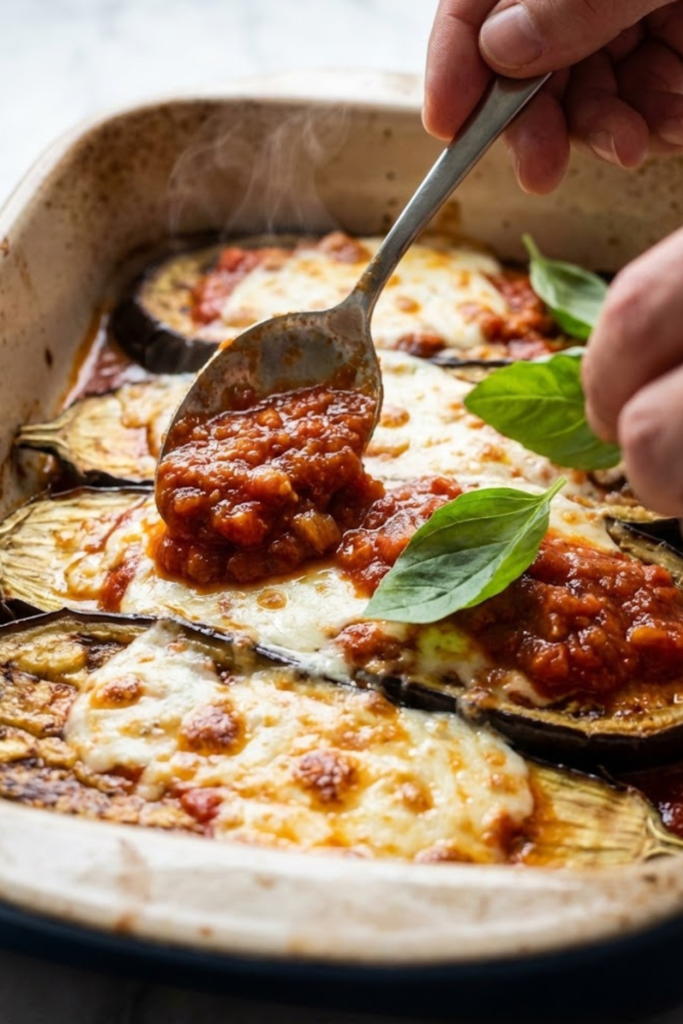
Start by laying out your eggplant slices in the bottom of the dish. I like to overlap them just a little bit, like scales on a fish. This makes sure that every single bite you take later has plenty of eggplant. Then, take a big spoon and dollop that tomato basil mixture right onto each slice. You don’t want to drown them, but you want enough so the flavors can sink in while they bake. If you have extra sauce, just spread it around the edges. I’ve found that being generous here helps keep everything moist. It’s much better than having dry edges that get tough in the heat.
The Cheese Factor
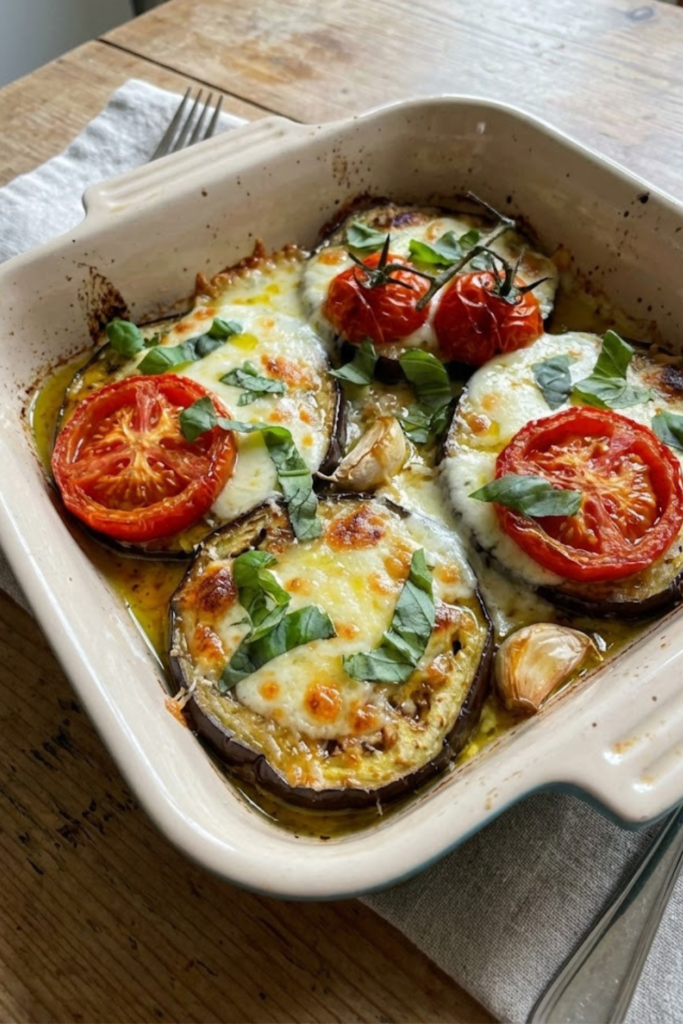
Now, we talk about the cheese. I’m a big fan of using a mix of mozzarella and parmesan. The mozzarella gives you that stretchy, gooey pull that everyone loves, and the parmesan adds a salty punch that really wakes up the eggplant. Sprinkle it over the top until you can barely see the red sauce anymore. Don’t be shy! If you’re doing a vegan version, there are some pretty good almond-based cheeses out there now that melt surprisingly well. Pop the whole dish into the oven at about 375 degrees. You want to bake it for about twenty minutes until the sauce is bubbling and the cheese is starting to look happy.
The Golden Finish
The last little trick I use is turning on the broiler for just the last two minutes. You have to watch it like a hawk, though! If you walk away for even a second, you’ll end up with a blackened mess. But if you stay right there, you’ll see the cheese start to get those beautiful little brown spots. That toasted cheese flavor is what makes this dish feel like something from a fancy restaurant. Once it’s out, let it sit for five minutes. I know it’s hard to wait, but it helps the layers set so it doesn’t just slide all over the plate when you serve it.
I really hope you give this baked eggplant with tomato basil recipe a try soon. It’s funny how a vegetable that used to scare me so much has become one of my absolute favorite things to pull out of the oven on a busy Tuesday night. I remember being so worried about the texture and the bitterness, but once you get the hang of that salting trick and the pre-roasting, it’s actually pretty hard to mess up. It feels good to put something on the table that is packed with vitamins but also tastes like a big, warm hug. My kids don’t even complain about the “purple stuff” anymore, which is a huge win in my book! I honestly think that getting the kids involved in the kitchen helps, too. Sometimes I let them sprinkle the cheese or tear up the basil leaves, and they seem way more likely to eat it if they helped build it.
Teaching my students about healthy eating is one thing, but actually making it happen in my own kitchen is where the real work is. This dish is great because it doesn’t feel like “diet food.” It’s rich and savory, and that fresh basil really brings a bit of summer into the house, even if it’s cold outside. If you have leftovers, they actually taste even better the next day after the flavors have had a chance to sit together. I usually just heat them up in a small pan with a tiny splash of water to keep things moist, and they’re perfect for a quick lunch between classes.
Cooking should be fun, not a chore that makes you feel stressed out or overwhelmed. I’ve had plenty of burnt edges and soggy bottoms in my time, so don’t be too hard on yourself if your first try isn’t perfect. That’s just part of learning! The more you do it, the more you’ll start to “feel” when the eggplant is just right. You’ll start to recognize that perfect golden color and that specific smell of the garlic hitting the oil. It’s those little moments that make home cooking so rewarding for me.
Before you go and start preheating your oven, do me a huge favor. If you liked these tips or if your family ended up loving the meal, please save this recipe to your boards and share it on Pinterest! It really helps me out and lets other home cooks find these easy tricks for making eggplant actually taste good. I’d love to see how yours turns out, so feel free to let me know if you made any fun changes to the sauce or the cheese. Happy baking, everyone!