Let’s be honest, there is nothing quite like the smell of savory chicken roasting in the oven to make a house feel like a home! I remember the first time I tried to make this dish; I ended up with mushy rice and burnt skin—it was a total disaster. But after years of tweaking and testing, I’ve finally cracked the code. Did you know that chicken and rice dishes are a staple in almost every culture around the world? It’s true! This guide is going to walk you through exactly how to get that juicy meat and perfectly cooked rice every single time. Get your Dutch oven ready, because we are about to make some magic happen in the kitchen!
Essential Ingredients for Flavorful Poultry and Grains
Look, I’ve ruined enough dinners to know that ingredients matter more than technique sometimes. When I first started trying to make baked chicken and rice, I grabbed whatever was on sale. I once used boneless, skinless breasts and instant rice because I was in a rush.
It was a disaster. The meat was like shoe leather, and the rice turned into a weird, gluey paste. I was so frustrated I ended up ordering pizza. But hey, we live and we learn, right? Over the years, I’ve figured out exactly what you need to keep this dish from flopping.
Why Thighs Save Lives
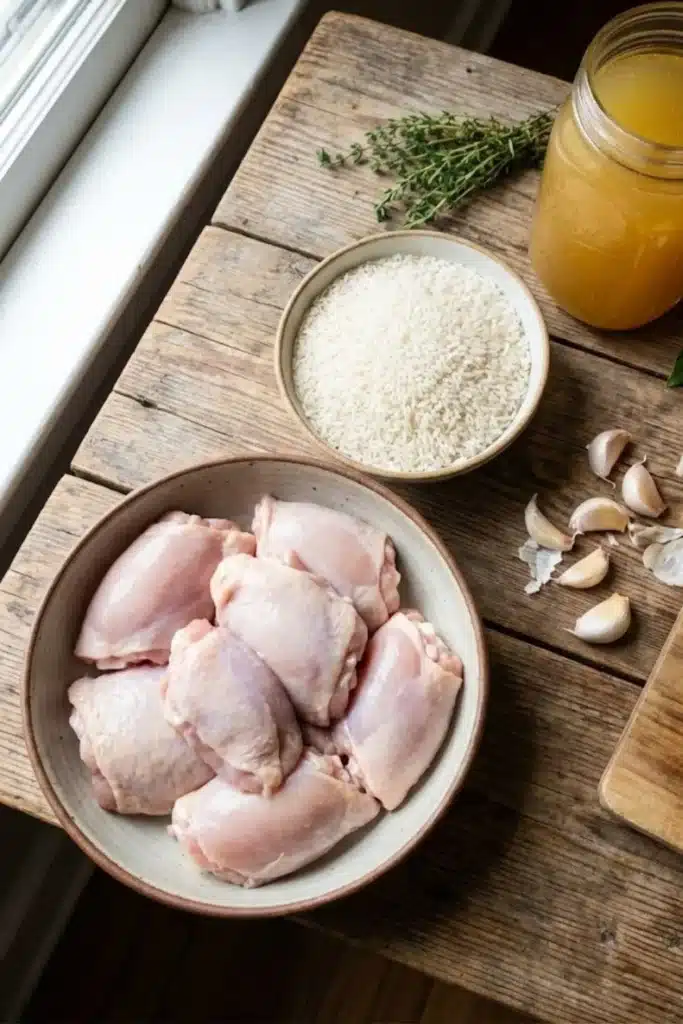
You really gotta use bone-in chicken thighs for this. I know, I know, white meat is leaner. But in the oven, breast meat dries out way before the rice is done. It just can’t handle the heat for that long.
Thighs are forgiving. They have enough fat to self-baste while they bake, keeping the meat juicy and tender. Plus, keeping the skin on protects the meat and adds that rich flavor we all want. If you try this with breasts, don’t say I didn’t warn you when it comes out dry!
Respect the Grain
Rice can smell fear. Seriously. For a one-pot meal like this, you need long-grain white rice, like Basmati or Jasmine. These varieties hold their shape better and don’t turn into mush as easily as short-grain rice.
Avoid brown rice for this specific recipe. Brown rice takes like 45 minutes to cook, and by then, your chicken will be totally overcooked. Stick to the white stuff here. I’ve tried swapping them without adjusting liquids, and let’s just say crunchy rice is not a vibe.
The Liquid Factor
Here is a hill I am willing to die on: do not use plain water. Just don’t. You are missing out on so much free flavor! Use a good quality chicken stock or bone broth.
The rice absorbs whatever liquid it cooks in. If you use water, you get bland rice. If you use broth, you get savory, rich grains that taste amazing on their own. I usually go for low-sodium broth so I can control the saltiness myself. It makes a huge difference in the final taste.
The Flavor Base
You need aromatics. We are talking about onions and garlic mostly. Sometimes I throw in carrots if I have them. Don’t just throw them in raw, though.
I learned that sautéing them in the rendered chicken fat first is the secret. It releases their sugars and builds a deep flavor base. It takes five extra minutes, but it makes the house smell incredible. It builds layers of flavor that you just can’t get by dumping everything in cold.
tep-by-Step Guide to Oven-Baked Chicken
Okay, I have a confession. The first few times I tried to make oven-baked chicken and rice, I was lazy. I just threw raw chicken thighs on top of the rice and water and shoved it in the oven.
The result? The chicken looked gray and sad. It tasted boiled, not roasted. I was so disappointed I almost scraped the whole dinner into the trash. It turns out, you can’t rush the process if you want food that actually tastes good. I learned the hard way that building flavor happens before the pot ever hits the oven rack.
Don’t Skip the Sear
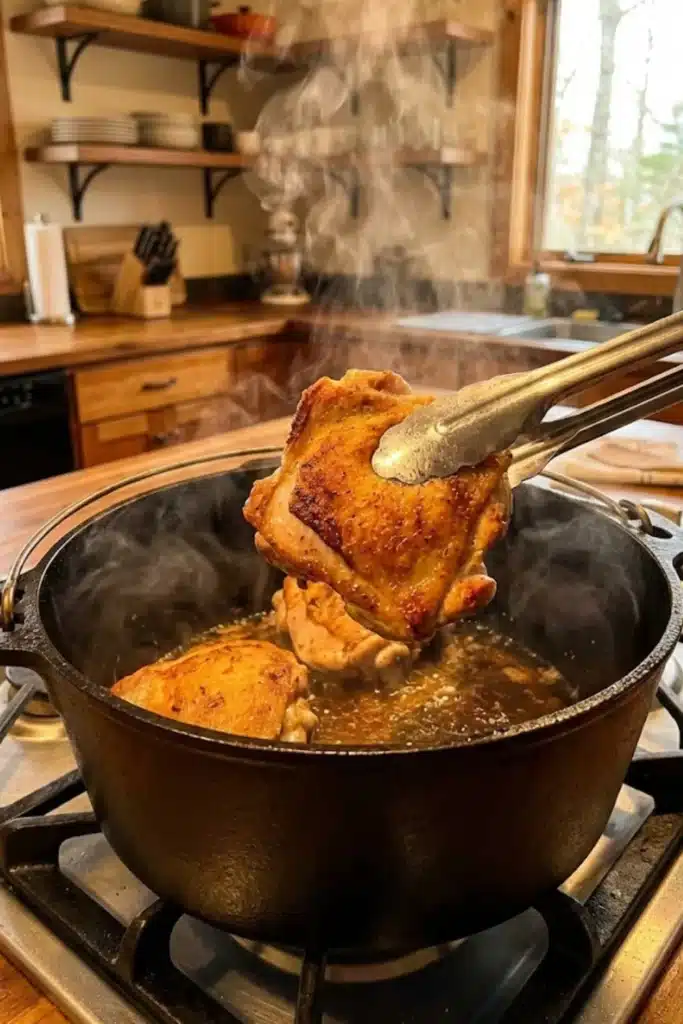
This is the step that separates the okay dinners from the amazing ones. You have to sear the meat first! I grab my heavy Dutch oven and get it nice and hot on the stove with a little oil.
Place the chicken thighs skin-side down and let them sizzle. Do not touch them! I usually let them go for about 5 to 6 minutes until the skin is a deep golden brown. If you try to flip it and it sticks, it’s not ready. This renders out the fat, which we need for the next step.
The Flavor Foundation
Once the chicken is seared (it won’t be cooked through, and that’s fine), set it aside on a plate. Now, look at that pot. See all that liquid gold at the bottom? That is rendered chicken fat, and it is liquid gold.
Don’t wash the pot! Throw your diced onions and garlic right into that hot fat. I made the mistake of draining this once, and the rice ended up tasting like cardboard. Sauté the veggies for a few minutes until they are soft. This infuses the fat with aromatics that will season every single grain of rice later.
The Art of the Scrape
Now comes the fancy-sounding part: deglazing the pan. You’ll see brown bits stuck to the bottom of the pot. Chefs call this “fond,” but I just call it a flavor bomb.
Pour in a little splash of your broth or even a bit of white wine if you’re feeling fancy. Use a wooden spoon to scrape up those brown bits so they mix into the liquid. If you leave them stuck there, they might burn in the oven and ruin the dish. Plus, mixing them in makes the rice taste savory and rich.
The Final Layer
Finally, it’s time to assemble. Pour in your rice and the rest of the broth, and give it a quick stir. Then, nestle the chicken thighs back into the pot, skin-side up.
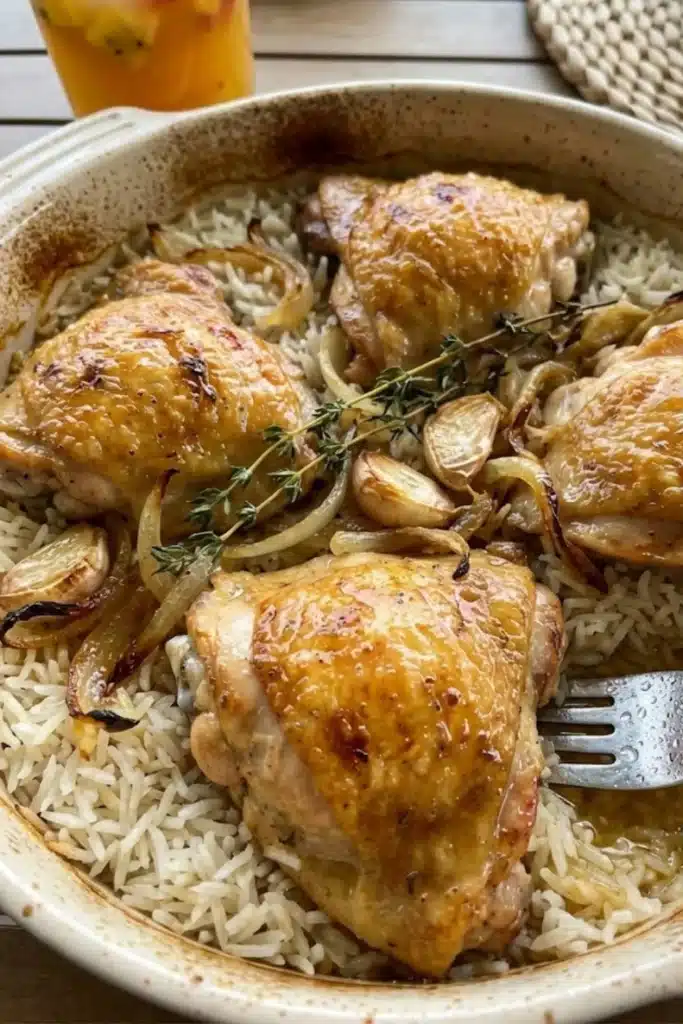
Here is the most important tip I can give you: keep the skin above the liquid line. If the skin is submerged, it will get soggy. You want it sitting on top of the rice so the oven heat can crisp it up while the rice steams below. It’s a delicate balance, but it works every time.
Secrets to Perfectly Fluffy Rice and Crispy Skin
You know what is worse than dry chicken? Soggy rice. There is nothing sadder than lifting the heavy lid of your Dutch oven, expecting a masterpiece, and seeing a pot of gummy mush.
I have been there more times than I care to admit. I once served a casserole to my in-laws where the rice was somehow burnt on the bottom and raw in the middle. It was humiliating! But after a lot of trial and error (and a lot of takeout pizza backups), I figured out the science behind it.
The Magic Numbers
You cannot eyeball this. I used to just pour broth in until it “looked right,” and that was my downfall. For the oven, you need a precise liquid-to-rice ratio.
If you have too much liquid, you get soup. Too little, and you break a tooth. I’ve found that for long-grain white rice baked in a sealed pot, you need exactly 1.5 cups of boiling liquid for every 1 cup of rice. This ratio seems to be the sweet spot where the grains fluff up perfectly without turning into a paste.
Finding the Sweet Spot
Temperature is everything. If the oven is too low, the chicken steams instead of roasts, and you get rubbery skin. If it’s too high, the rice dries out before the meat is safe to eat.
I stick to an oven temperature of 400°F (200°C). It’s hot enough to render the fat in the chicken skin, making it crispy, but not so aggressive that it burns the garlic. At this temp, the rice usually absorbs the liquid in about 30 to 35 minutes. Don’t open the lid to check! You let all the steam out.
The Hardest Part: Waiting
This is where I usually mess up because I’m impatient/hungry. Once you pull the pot out of the oven, you have to let it sit. Leave the lid on and do not touch it for at least 5 to 10 minutes.
This resting time allows the moisture to redistribute. If you dig in right away, the bottom layer will be wet and the top will be dry. Letting it sit ensures that every forkful of fluffy rice is consistent. It’s annoying to wait when it smells so good, but it makes a huge difference.
The Broiler Finish
Okay, if you are a texture freak like me, you want that skin to shatter when you tap it. Sometimes, the steam from the rice softens the skin a little bit.
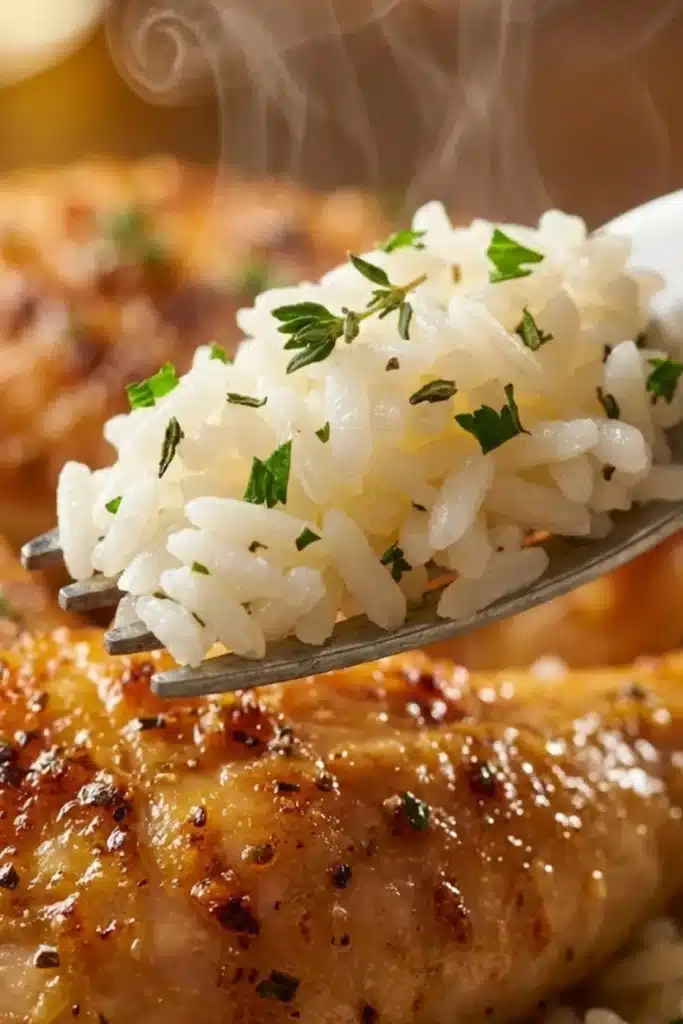
Here is my secret weapon: take the lid off and pop the pot under the broiler for 2 to 3 minutes. Watch it like a hawk! I walked away to grab a drink once and came back to charcoal. But if you catch it right, you get that irresistible crispy chicken skin that everyone fights over.
Customizing Your Casserole: Seasonings and Variations
One of the reasons I make this dish almost every week is because it is a total chameleon. If I made the exact same plain chicken and rice every Tuesday, my family would probably revolt. I used to be scared to mess with the recipe, thinking I’d ruin the chemistry of the rice cooking.
But once I got comfortable with the basics, I started experimenting. Some attempts were questionable (lemon and cinnamon was… a choice), but others were total home runs. You really can’t go wrong if you stick to flavor profiles you already know you love.
Herb Your Enthusiasm
The easiest way to switch things up is with herb blends. I used to be guilty of using that dusty jar of dried parsley that had been in my cupboard since 2015. Please, do yourself a favor and toss that out.
Fresh herbs are where it’s at. I love tying a bundle of fresh thyme or rosemary together with kitchen twine and throwing it right on top of the rice before baking. It steams the scent right into the grains. If you only have dried stuff, use dried oregano or Italian seasoning, but rub it between your palms first to wake up the oils. It makes the kitchen smell like a pizzeria.
Timing Your Veggies
Adding vegetables is a great way to make this a true one-pot meal, but you have to be careful with timing. I learned this the hard way when I threw broccoli florets in at the beginning. They came out looking like olive-green mush.
For soft vegetable add-ins like frozen peas or spinach, wait until the dish is completely done baking. Stir them in during that 10-minute resting period; the residual heat cooks them perfectly without ruining their color. If you want to use mushrooms or peppers, sauté them with the onions at the start so they don’t release too much water later and make your rice soggy.
Getting Creamy
Sometimes you just need comfort food that sticks to your ribs. On cold rainy days, I like to turn this into a creamy chicken and rice casserole. It reminds me of the stuff my grandma used to make, but better.
You can swap about half a cup of the broth for heavy cream if you’re feeling indulgent. Or, if you want to go old school, stir in a can of cream of mushroom soup before adding the rice. It makes the dish super rich and velvety. Just be warned: it is very filling, so you might need a nap afterwards.
A Spicy Kick
I have a bottle of hot sauce in my bag at all times, so naturally, I like to add some heat. If the standard garlic and herb combo feels too boring, give it a spicy kick.
I like to coat the chicken thighs in Cajun seasoning or smoked paprika before searing them. It gives the skin a beautiful red color and a nice hum of heat. You can even chop up a jalapeño and sauté it with your onions. It cuts through the richness of the chicken fat and wakes up your taste buds.

Mastering this baked chicken and rice recipe is honestly going to change your weeknight dinner game forever. I remember staring at that empty Dutch oven after my first successful attempt, amazed that something so simple could taste like a meal from a fancy bistro. You get all the comfort of a home-cooked meal with minimal cleanup, and the results are restaurant-quality every time.
Just remember the golden rules we talked about: keep an eye on your liquid levels so the rice doesn’t get mushy, and please, do not skip the searing step—it makes all the difference for that flavor. Give this recipe a try this week and let me know how it goes in the comments! If you loved this easy dinner idea, please pin this recipe to your “Weeknight Favorites” board on Pinterest so you can find it later