I used to believe that a decent steak required a hot grill and a lot of patience. Boy, was I wrong! Let me introduce you to your new weeknight hero: the air fryer steak. It sounds almost too good to be true, but cooking steak in an air fryer locks in the juices like magic while giving you that savory crust we all crave! Did you know that using an air fryer can actually retain more nutrients in the meat compared to deep frying? It’s time to ditch the smoke-filled kitchen and embrace the future of cooking. I’m going to walk you through exactly how to get that melt-in-your-mouth texture every single time!
Choosing the Best Cut for Air Frying
Look, I’m gonna be real with you. The first time I tried to make a steak in my air fryer, it was a total disaster. I bought these cheap, thin little steaks from the grocery store because they were on sale, thinking I scored a deal. I threw them in the basket, cranked up the heat, and waited for magic to happen. Spoiler alert: there was no magic. When I pulled them out, they looked like gray shoe leather. My kids took one look and asked if we could order pizza instead. It was frustrating, and honestly, I felt like I’d wasted good money.
But I’m stubborn, so I kept trying. And here is what I learned the hard way: not all steaks are created equal, especially when it comes to the air fryer.
The Thickness Trap
This is the biggest mistake people make. You absolutely cannot use a thin steak here. Because the air fryer circulates hot air so efficiently, a thin steak will cook all the way through before you even get a decent crust on the outside. You end up with a piece of meat that is well-done and tough.
You need to look for a cut that is at least 1 inch thick. Ideally, go for 1.5 inches if you can find it. This thickness gives you a buffer. It allows the outside to get that nice sear while the inside stays juicy and pink. When I finally switched to thick-cut steaks, the difference was night and day. It actually tasted like food you’d pay for at a restaurant.
Ribeye vs. Sirloin
Now, let’s talk about the specific cut. You generally have two main options at the supermarket: Ribeye or Sirloin.
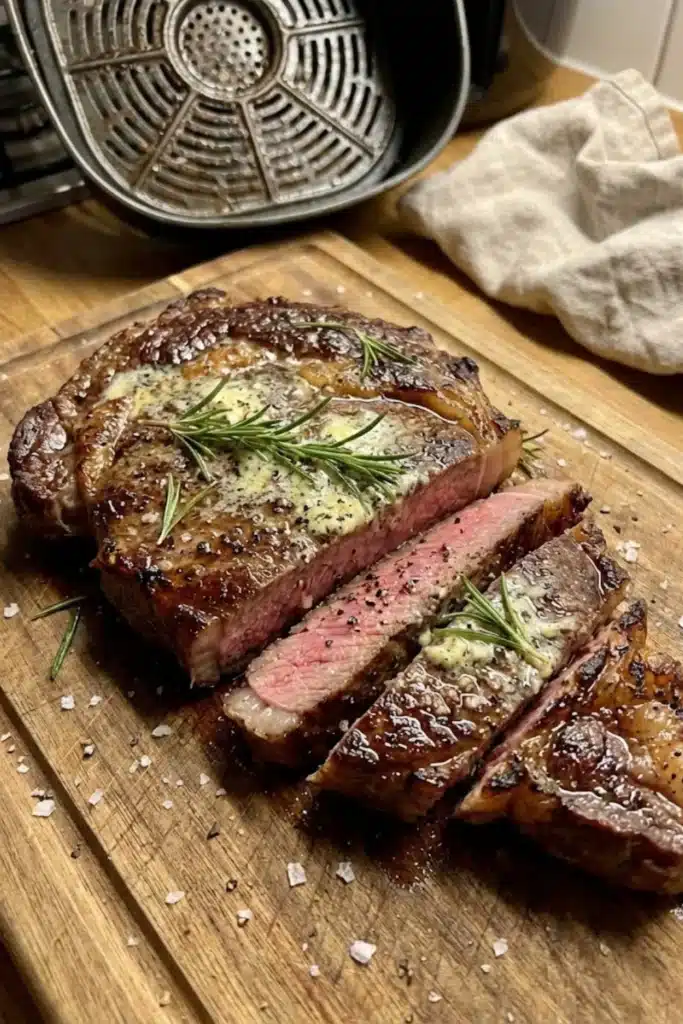
I love a good Ribeye. It’s my go-to for air fryer steak because it has a lot of fat content. That fat renders down when the hot air hits it, essentially basting the meat from the inside out. It keeps everything incredibly moist. If you want flavor and don’t mind a bit of fat, Ribeye is your best friend.
On the other hand, Sirloin is much leaner. It’s a healthier option if you are watching your calories, but it can dry out faster if you aren’t careful. If I cook Sirloin, I usually have to keep a closer eye on the time. It’s still delicious, but it’s less forgiving than the Ribeye.
Check for Marbling
When you are standing at the meat counter, don’t just grab the first package you see. Take a second to look at the meat. You want to see white flecks of fat scattered throughout the red muscle. This is called marbling.
Think of marbling as built-in flavor pockets. As the steak cooks, those little white specks melt and make the meat tender. If the steak is solid red with no white specks, it’s gonna be tough, and no amount of seasoning will fix that.
The Temperature Mistake
Here is one last tip that changed the game for me. Do not cook a cold steak. I used to take the meat straight from the fridge to the fryer because I was in a rush. Big mistake. A cold steak cooks unevenly.
Take your steak out of the fridge about 30 minutes before you plan to cook it. Let it come up to room temperature. It seems like a small thing, but it helps the air fryer steak cook evenly from edge to center. Trust me, your patience will pay off when you take that first bite.

Prep and Seasoning for the Perfect Crust
I can’t tell you how many times I’ve set off my smoke alarm trying to get a good sear on a steak indoors. My dog goes crazy, the kids start fanning the detector with a magazine, and I’m just standing there sweating over a skillet. It’s chaotic. That’s why I was skeptical that an air fryer could actually pull this off without the drama. But it can, provided you don’t skip the prep work.
If you just toss a wet piece of meat into the basket, you are basically steaming it. And nobody wants a steamed steak. Trust me, I’ve eaten one, and it was rubbery and sad.
The Dry Pat Technique
This is the step I used to ignore because I was lazy. Don’t be like me. Before you add a single grain of salt, you need to get that meat dry.
Grab a handful of paper towels and pat the steak down on all sides. You want to remove as much surface moisture as humanly possible. Moisture is the enemy of the crust. If the surface is wet, the heat has to burn off the water before it can start browning the meat. By drying it first, you help the air fryer steak start searing the second it hits the heat. It’s a messy step, but it makes a huge difference.
Picking the Right Oil
Now, you need a binder for your spices, but not just any oil will do. I learned this the hard way when I used extra virgin olive oil and filled my kitchen with smoke. Olive oil has a low smoke point, meaning it burns easily at high temperatures.
Since we are blasting this thing with heat, you need an oil that can take a beating. Avocado oil is my absolute favorite for this because it has a super high smoke point. Light olive oil or canola oil works too. You don’t need to drown it; just rub a little bit all over the meat to help the seasoning stick.
Seasoning: Simple vs. Complex
I used to think I had to use twenty different spices to make food taste good. I’d raid the cabinet and throw everything from cumin to oregano on there. It was a mess.
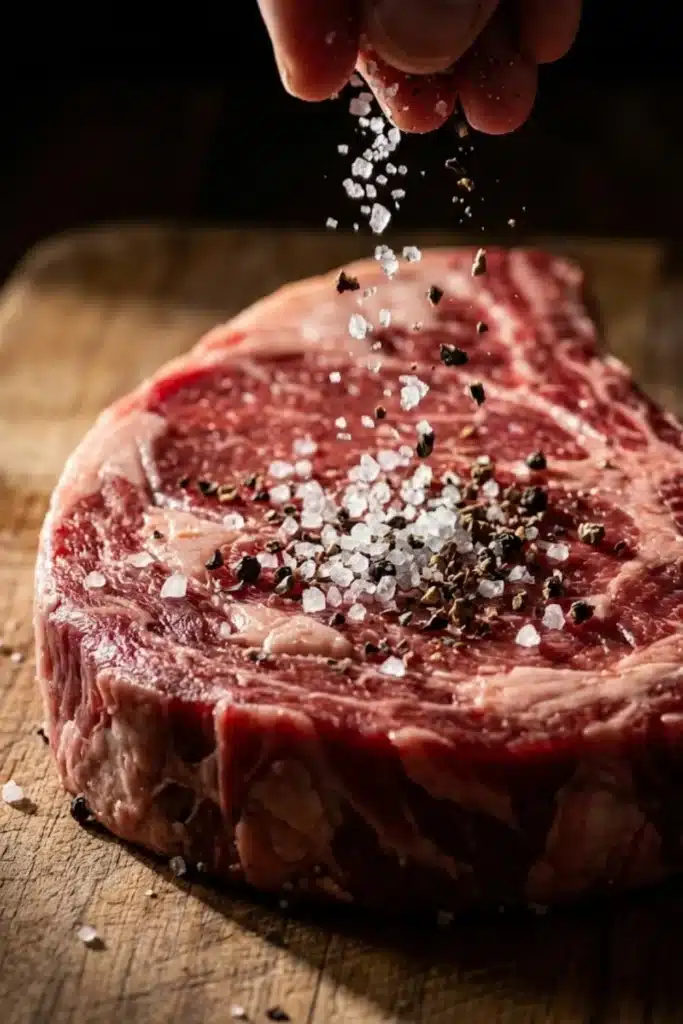
The truth is, a good cut of beef doesn’t need much. I usually stick to a generous amount of coarse Kosher salt and freshly cracked black pepper. The coarse salt adds a nice texture to the crust. If I’m feeling fancy, I might add a little garlic powder or onion powder, but that’s it. If you use a store-bought steak rub, just check the sugar content. Sugar burns fast in the air fryer, and you don’t want a charred, bitter crust.
Don’t Skip Preheating
I know, I know. The box says “no preheat needed.” Ignore that.
If you want that steakhouse-style sear, your air fryer needs to be screaming hot before the meat goes in. I always set mine to 400°F (or 200°C) and let it run empty for about 5 minutes. You want the basket to be hot enough that you hear a sizzle when you drop the steak in. That initial blast of heat is what locks in the flavor and starts the browning process immediately. It’s a small step that separates a decent air fryer steak from a great one.
Air Fryer Steak Temperature and Timing Chart
Okay, this is the part where everyone gets nervous. I used to be terrified of ruining a perfectly good piece of beef. There is nothing worse than cutting into a steak expecting pink perfection and seeing gray, dry meat. It’s heartbreaking. I used to try that “finger test” method where you poke the meat and compare it to your hand, but honestly? My hands are not calibrated instruments. I messed it up every single time.
Cooking air fryer steak is actually easier than using a grill because the heat is contained and consistent. But you still can’t just guess. You need a game plan.
The Doneness Guide
First off, keep in mind that every machine is a little different. My air fryer runs hot, like a jet engine, so I always check a minute early. But generally, if you are cooking a 1-inch thick steak at 400°F, here is the breakdown I swear by:
- Rare: 6 to 8 minutes total.
- Medium-Rare: 8 to 10 minutes total.
- Medium: 10 to 12 minutes total.
- Well Done: 12 to 14 minutes. (But please, don’t do this to a nice Ribeye!)
If you like your steak rare, you really have to be quick. It goes from “perfect” to “overcooked” in the blink of an eye.
Trust the Thermometer, Not the Clock
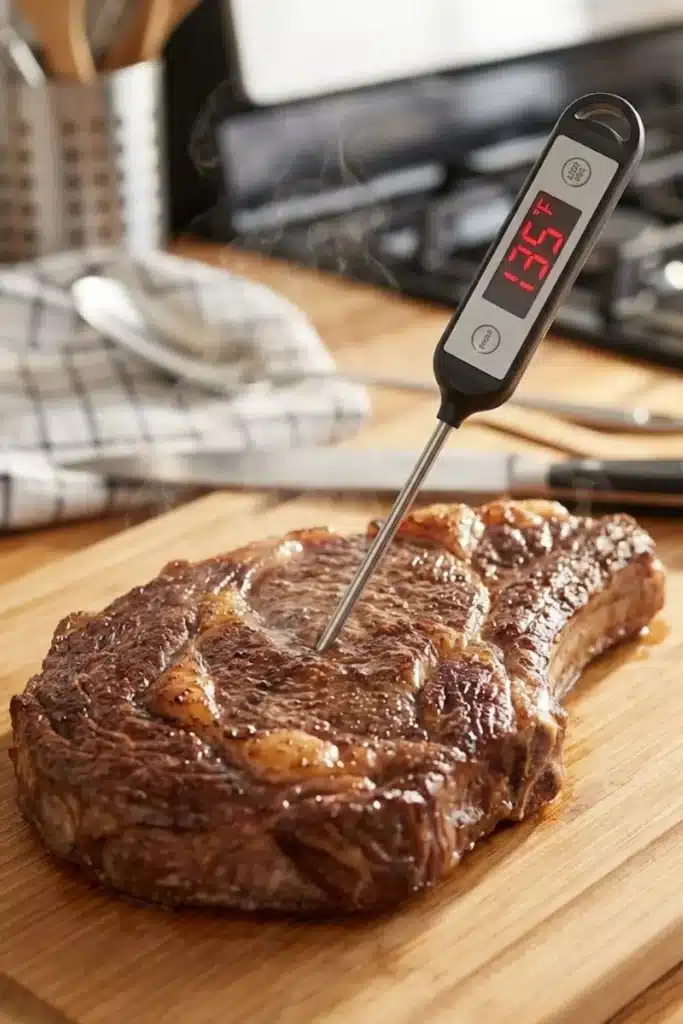
Here is the best advice I can give you: buy a digital meat thermometer. Seriously, do it today. The times above are just guidelines, but a thermometer is the truth.
I spent years resisting this purchase, thinking I was a “natural” cook. I wasn’t. Once I started using one, my success rate went to 100%. You want to pull the meat out when it hits these internal temperatures:
- Rare: 125°F
- Medium-Rare: 135°F (This is the sweet spot for me!)
- Medium: 145°F
Remember, the temperature will continue to rise a few degrees after you take it out of the basket. So, if you aim for exactly 135°F, pull it at 130°F.
The Flip
About halfway through the cooking time, you need to open the basket and flip that steak. I usually do this around the 4 or 5-minute mark.
Since the heating element is usually at the top of the air fryer, the top side gets seared beautifully while the bottom just gets hot. Flipping it makes sure you get that nice color on both sides. Plus, it helps the air fryer steak cook more evenly. I’ve forgotten to flip it before, and while it was still edible, one side looked sad and pale.
The Hardest Part: Resting
This is going to test your patience. When that timer goes off and the kitchen smells amazing, you are going to want to eat immediately. Don’t do it!
If you cut into the meat right away, all those delicious juices will run out onto the plate, leaving your steak dry. I learned this lesson the hard way after ruining a gorgeous sirloin because I was too hungry to wait.
Take the steak out, put it on a plate (preferably a warm one), and let it sit for 5 to 10 minutes. Just leave it alone. This allows the juices to redistribute throughout the meat. It makes the difference between a good dinner and a “wow” dinner.
Compound Butter and Serving Suggestions
Okay, so you have cooked the meat perfectly. It’s resting on the plate. You might be tempted to just dig in right there, and I wouldn’t blame you. But if you want to take this meal from “good” to “holy cow, did I make this?”, you need one final touch. I used to think those little pats of flavored butter at restaurants were some complex chef secret. Turns out, it is laughably easy to make at home.
I remember serving a plain steak to my in-laws once. It was fine, but it was missing that “wow” factor. The next time, I added a slice of homemade garlic butter, and they acted like I had attended culinary school. It’s a total cheat code.
Garlic Herb Butter
You don’t need any fancy equipment for this. Just take a stick of salted butter and let it soften on the counter. Once it’s squishy, mash it up in a bowl with a fork. I like to throw in two cloves of minced garlic and a handful of chopped fresh parsley.
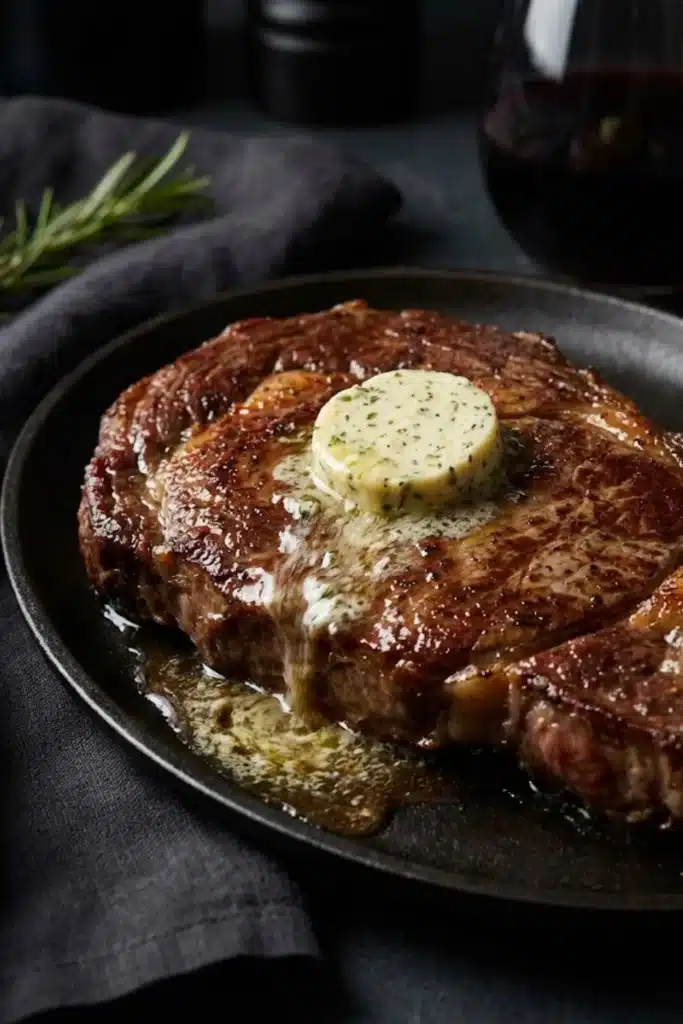
If I am feeling adventurous, I’ll add a squeeze of lemon juice. Mix it all up. You can roll it into a log using plastic wrap and chill it, but honestly? I usually just spoon a dollop right onto the hot air fryer steak. Watching it melt and run down the sides of the meat is the best part. It creates this rich, instant sauce that mixes with the meat juices. It is ridiculously good.
What to Serve on the Side
Since your air fryer is already hot, you might as well use it for the sides. However, here is the tricky part: space. Unless you have a massive dual-basket fryer, you probably can’t cook the steak and the sides at the exact same time.
I usually cook my sides first. Roasted broccoli or asparagus are my go-to options for a Keto meal or low-carb dinner. They get super crispy in the fryer. I cook them, take them out, and cover them with foil to keep warm while the steak cooks. If you are a traditional “meat and potatoes” person, baked potatoes are great, but they take forever. I prefer cutting potatoes into wedges and making quick fries. They cook faster and everyone loves fries.
The Art of Plating
There is one last mistake that can ruin everything. I’ve seen people take a beautiful, tender steak and hack it into pieces that end up being chewy. It’s not the meat’s fault; it’s the slicing.
You have to slice against the grain. Look at the meat and see which way the muscle fibers run. You want to cut perpendicular to those lines. By shortening the fibers, you make each bite incredibly tender. I used to ignore this rule and wonder why my jaw hurt after dinner. Now, I slice it thin, fan it out on the plate, and top it with that garlic butter. It looks professional, tastes amazing, and honestly, nobody needs to know it only took you 15 minutes.
Conclusion
I’ll be honest, if you had told me five years ago that I’d be cooking my Saturday night steak in a plastic basket on my countertop, I would have laughed in your face. I was a grill purist. But after seeing how easy this is, and how much cleaner my kitchen stays, I’m fully converted. The days of scrubbing grease off my backsplash are over, and I am not mad about it.
It really comes down to trusting the process. I know it feels weird to not see the fire, but that hot air does the job if you let it. Remember the big lessons we talked about? Don’t cheap out on the thin steaks; they will just turn into leather. Grab that thick Ribeye steak or Sirloin. And please, for the love of good food, use that meat thermometer. It’s the only way to guarantee you aren’t eating a hockey puck.
I’ve had nights where I rushed it, skipped the resting period, and ruined perfectly good meat. It happens. But when you nail it—when you get that crusty, salty outside and that pink, juicy inside—it feels like a massive victory. It’s a restaurant-quality meal you made in your pajamas.
So, go give this a shot tonight. Don’t stress if it’s not perfect the first time; you’ll get the hang of your machine’s timing. Once you do, you are going to wonder why you ever cooked steak any other way. And hey, if you loved this recipe (or if I saved you from ordering pizza again), do me a favor and pin this to your dinner board on Pinterest. It helps me out a ton!.