Rose tteokbokki recipe is a beloved Korean street food featuring chewy rice cakes coated in a vibrant, sweet, and spicy gochujang sauce that has become a global favorite. This rose tteokbokki recipe combines the signature sticky rice cakes with a rich sauce made from gochujang, garlic, and a touch of honey, creating a dish that’s both comforting and addictive. The rose tteokbokki recipe is perfect for weeknight dinners, party appetizers, or satisfying those late-night cravings, offering an authentic taste of Korea’s bustling street food culture. Home cooks love this rose tteokbokki recipe because it’s surprisingly simple to prepare, requiring minimal ingredients and just one skillet to create restaurant-quality results.
| Prep Time | Cook Time | Total Time | Servings | Difficulty | Cuisine |
|---|---|---|---|---|---|
| 10 minutes | 15 minutes | 25 minutes | 4 servings | Easy | Korean |
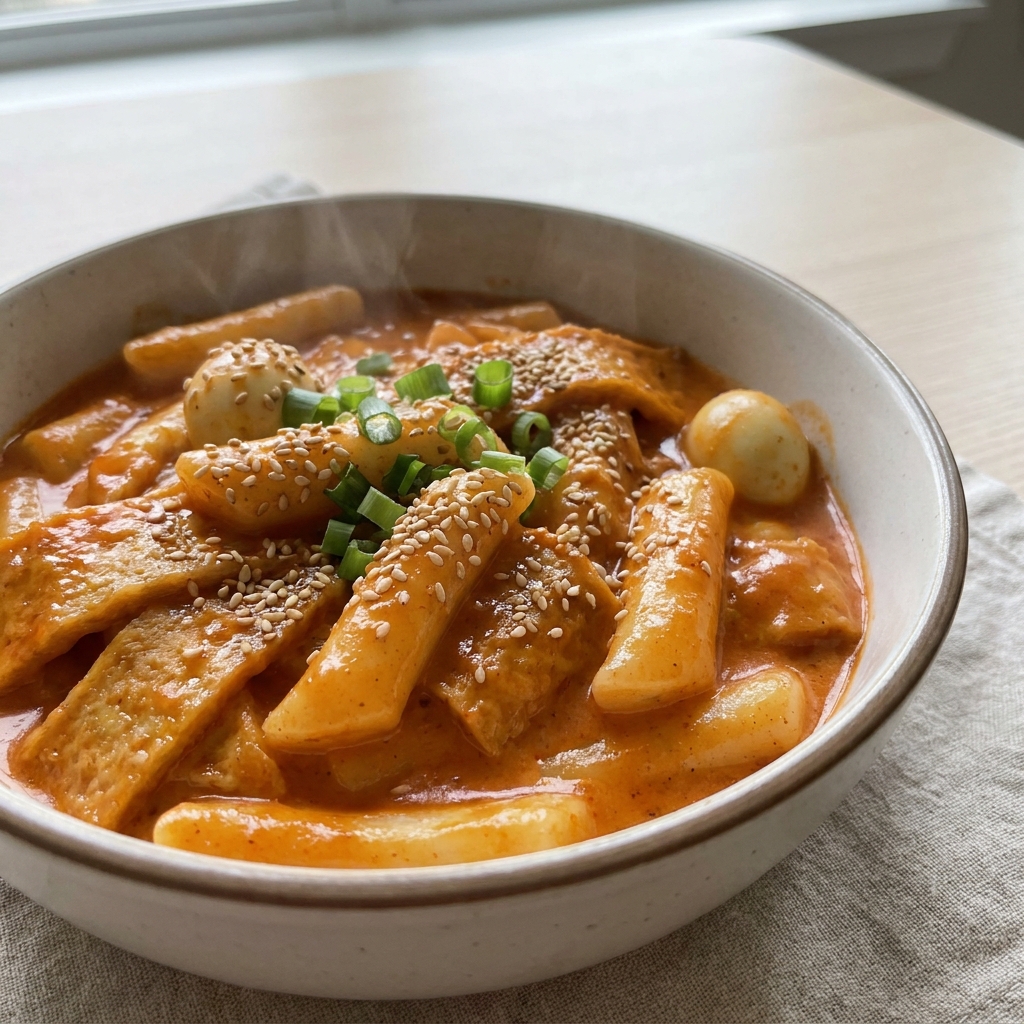
Table of Contents
Table of Contents
Why This Rose Tteokbokki Recipe Works
This rose tteokbokki recipe succeeds because it balances three essential flavor profiles that make Korean cuisine so captivating: sweetness, spice, and umami depth. The gochujang creates a naturally sweet foundation, while the garlic and sesame oil provide aromatic complexity that elevates the entire dish. I’ve found that this rose tteokbokki recipe delivers consistent results because the sauce clings beautifully to the rice cakes, ensuring every bite tastes absolutely delicious.
The texture is what makes this rose tteokbokki recipe truly special. The rice cakes soften just enough to become chewy and tender without losing their structural integrity, creating that signature bite home cooks crave. This rose tteokbokki recipe finishes in under thirty minutes, making it perfect for busy weeknights when you want something impressive but manageable.
What I love most about this rose tteokbokki recipe is its versatility. You can customize it with your favorite vegetables, proteins, and heat levels while maintaining the authentic Korean flavor profile. The beauty of this rose tteokbokki recipe lies in its simplicity; a handful of pantry staples transform into something that tastes like you spent hours at the stove.
This rose tteokbokki recipe also appeals to both adventurous cooks exploring Korean cuisine and experienced home cooks seeking reliable weeknight solutions. The visual appeal of the vibrant red sauce makes this rose tteokbokki recipe Instagram-worthy, and the actual taste lives up to the gorgeous presentation every single time.
Rose Tteokbokki Recipe Ingredients
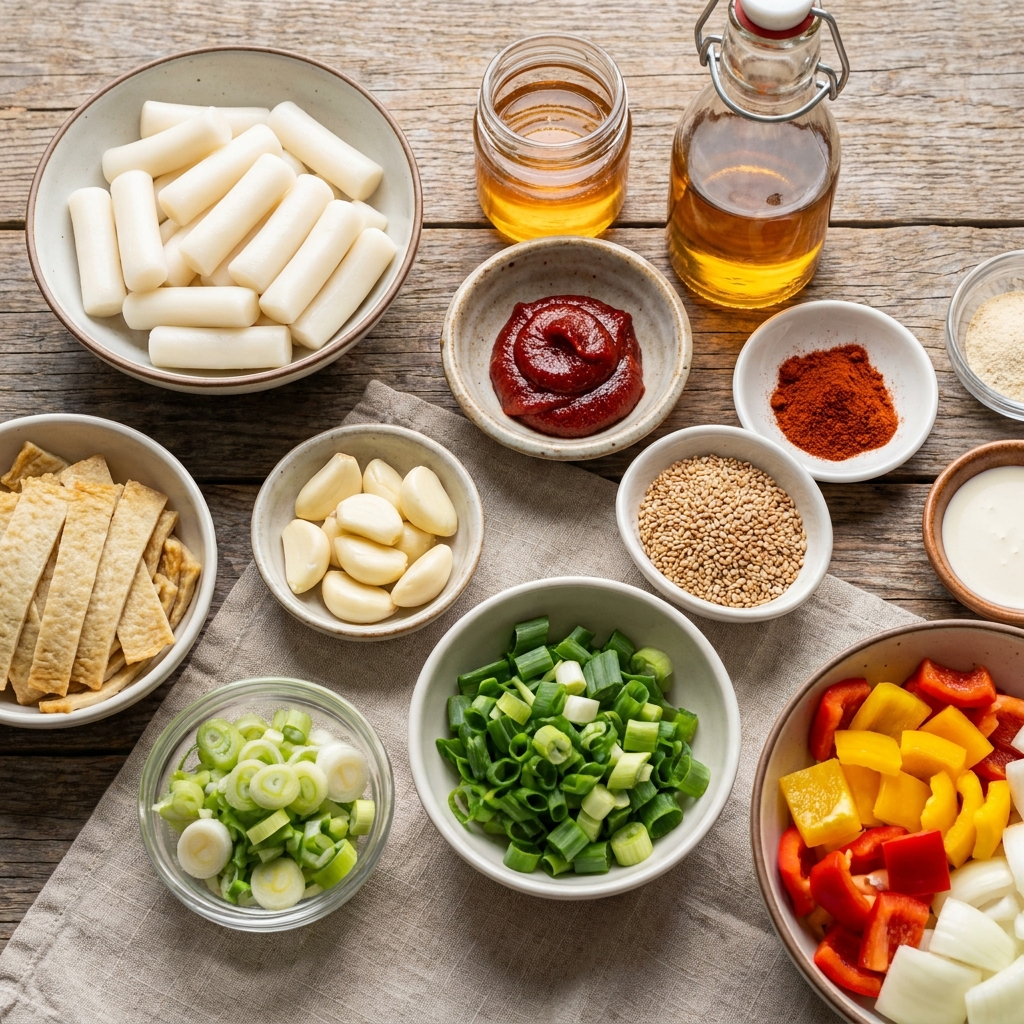
This rose tteokbokki recipe requires fresh or frozen rice cakes, quality gochujang, and a few additional pantry staples that you may already have at home.
| Ingredient | Quantity | Notes with Alternatives |
|---|---|---|
| Tteokbokki rice cakes | 1 pound (450g) | Use fresh refrigerated cakes for best texture, or thaw frozen cakes completely before cooking |
| Gochujang (Korean red chili paste) | 4 tablespoons | Essential for authentic flavor; no direct substitute, though Sriracha can be used for mild heat |
| Water or broth | 1 cup | Vegetable broth adds more depth than plain water for this rose tteokbokki recipe |
| Honey or brown sugar | 2 tablespoons | Honey adds subtle sweetness; brown sugar provides deeper molasses notes |
| Garlic cloves, minced | 4 cloves | Fresh garlic is non-negotiable for authentic taste in this rose tteokbokki recipe |
| Sesame oil | 1 tablespoon | Toasted sesame oil delivers the signature nutty aroma essential to this rose tteokbokki recipe |
| Soy sauce | 1 tablespoon | Provides umami and saltiness; use low-sodium if you prefer less salt |
| Fish cake, sliced | 1 piece (3 ounces) | Omit for vegetarian version or substitute with mushrooms for this rose tteokbokki recipe |
| Scallions, chopped | 3 scallions | Use green parts for garnish; adds fresh brightness to this rose tteokbokki recipe |
| Sesame seeds | 2 teaspoons | White or black sesame seeds work; adds toasted nuttiness to finish this rose tteokbokki recipe |
Each ingredient in this rose tteokbokki recipe serves a specific purpose, so quality matters for achieving authentic Korean street food results. The gochujang forms the backbone of this rose tteokbokki recipe’s flavor, while honey balances the heat perfectly.
How to Make Rose Tteokbokki Recipe
This rose tteokbokki recipe comes together in straightforward steps that anyone can follow, even without advanced cooking experience. The key is maintaining medium-high heat and stirring frequently to ensure the sauce coats the rice cakes evenly throughout.
Prepare Your Ingredients
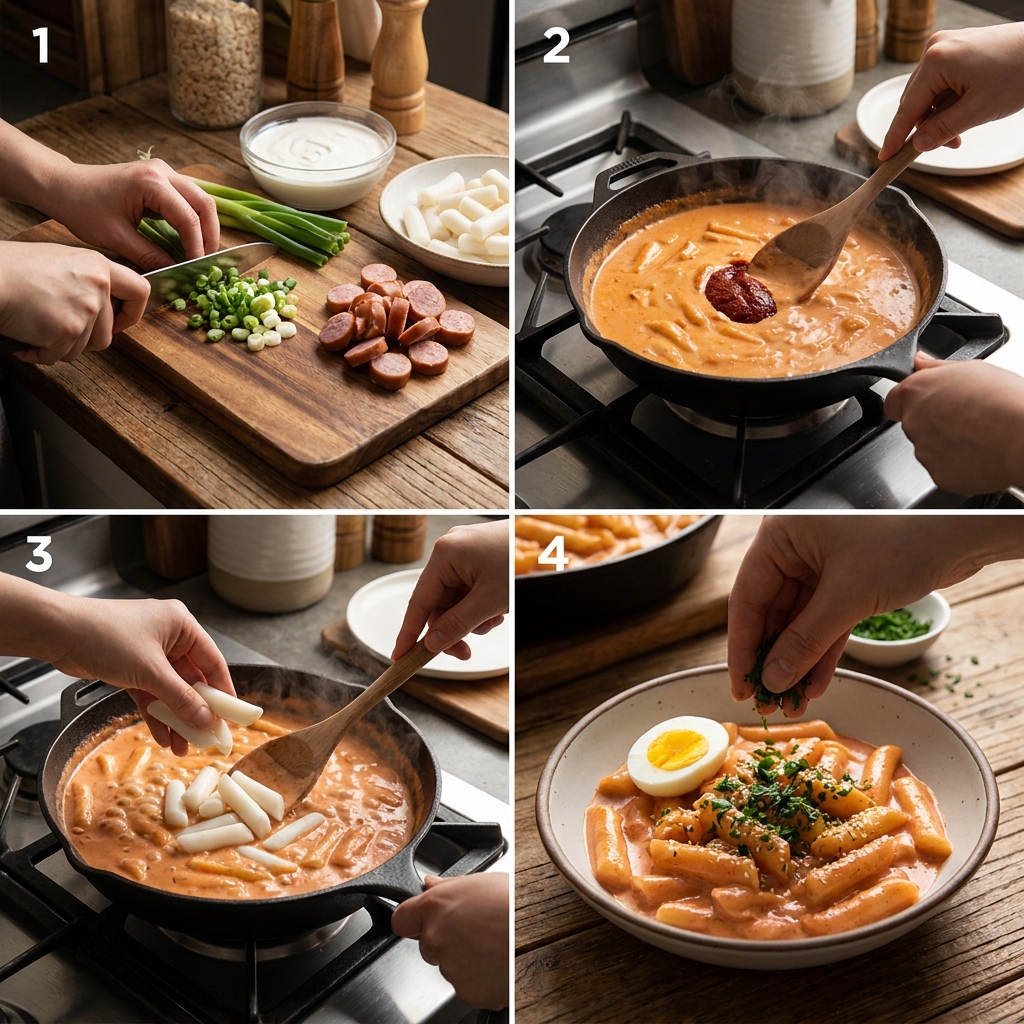
- Thaw frozen rice cakes completely by soaking them in warm water for five minutes, then drain well before cooking this rose tteokbokki recipe.
- Mince four garlic cloves finely so they distribute evenly throughout the sauce in your rose tteokbokki recipe.
- Slice the fish cake into quarter-inch thick pieces for this rose tteokbokki recipe.
- Chop scallions into one-inch pieces, separating white parts from green parts for this rose tteokbokki recipe.
Build the Sauce Base
- Heat one tablespoon of sesame oil in a large skillet over medium-high heat for this rose tteokbokki recipe.
- Add minced garlic and stir constantly for thirty seconds until fragrant, releasing the garlic’s natural oils throughout this rose tteokbokki recipe.
- Add four tablespoons of gochujang and stir continuously for one minute, allowing the paste to fully dissolve into the oil base for this rose tteokbokki recipe.
- Pour in one cup of water or broth slowly while stirring constantly to create a smooth sauce for this rose tteokbokki recipe.
Combine and Cook
- Add two tablespoons of honey and one tablespoon of soy sauce to the sauce, stirring until both dissolve completely in this rose tteokbokki recipe.
- Bring the sauce to a gentle simmer, watching for small bubbles that break the surface of this rose tteokbokki recipe.
- Add the drained rice cakes and fish cake slices to the simmering sauce for this rose tteokbokki recipe.
- Stir the mixture gently but frequently for eight to ten minutes, ensuring every rice cake gets coated with the glossy sauce in this rose tteokbokki recipe.
Finish and Serve
- Cook until the sauce thickens slightly and coats the back of a spoon in this rose tteokbokki recipe.
- Stir in the white parts of the scallions during the final minute of cooking this rose tteokbokki recipe.
- Transfer to serving bowls and garnish with sesame seeds and green scallion pieces to complete this rose tteokbokki recipe.
Chef Tips for Perfect Rose Tteokbokki Recipe
These professional insights transform your rose tteokbokki recipe from good to extraordinary, ensuring you achieve that restaurant-quality result every time you cook.
- Toast your sesame oil first: Pour the sesame oil into your skillet and let it warm for fifteen seconds before adding garlic; this amplifies the nutty aroma that defines exceptional rose tteokbokki recipe.
- Don’t skip the garlic bloom: Cooking garlic alone in oil for thirty seconds before adding the gochujang creates deeper flavor complexity that elevates this rose tteokbokki recipe significantly.
- Whisk gochujang smoothly: Break apart gochujang lumps completely by stirring for a full minute; lumpy gochujang creates uneven flavor distribution in your rose tteokbokki recipe.
- Use medium-high heat consistently: Maintain steady heat throughout cooking this rose tteokbokki recipe; too low heat makes the sauce thin, while too high heat causes burning on the skillet bottom.
- Stir frequently but gently: Stir this rose tteokbokki recipe every thirty seconds to ensure even coating without breaking the delicate rice cakes apart.
- Test for doneness at eight minutes: The rice cakes in your rose tteokbokki recipe should be tender but still chewy; sample one to confirm before serving.
Common Rose Tteokbokki Recipe Mistakes to Avoid
Understanding what typically goes wrong helps you sidestep problems and create consistently excellent rose tteokbokki recipe results every single time you cook.
Mistake 1: Using Lumpy Gochujang This happens when cooks add gochujang to cold ingredients without a proper oil base to help dissolve it. To fix this, always heat sesame oil first, cook garlic until fragrant, then gradually stir the gochujang into this warm, welcoming environment. This technique guarantees smooth sauce for your rose tteokbokki recipe.
Mistake 2: Overcooking Rice Cakes Rice cakes in your rose tteokbokki recipe can turn mushy if cooked beyond eight to ten minutes, losing their signature chewy texture. Test rice cakes at the eight-minute mark by biting one; they should feel tender yet slightly resistant. This prevents mushy results and maintains the authentic mouthfeel of excellent rose tteokbokki recipe.
Mistake 3: Insufficient Sauce Coating Stir this rose tteokbokki recipe frequently throughout cooking so sauce clings evenly to every rice cake. Infrequent stirring leaves some rice cakes dry while others become oversauced. Regular gentle stirring ensures beautiful, consistent rose tteokbokki recipe results.
Mistake 4: Using Frozen Rice Cakes While Still Icy Adding frozen rice cakes directly to sauce dramatically lowers the temperature, making this rose tteokbokki recipe take twice as long to cook properly. Always thaw rice cakes completely and drain excess water before adding them to your rose tteokbokki recipe.
Mistake 5: Skipping the Fish Cake Fish cake adds essential umami and textural variety that makes this rose tteokbokki recipe feel complete and restaurant-authentic. Omitting fish cake weakens the overall flavor profile of your rose tteokbokki recipe, even if you’re cooking vegetarian versions.
Best Rose Tteokbokki Recipe Variations and Substitutions
Creative modifications transform this rose tteokbokki recipe to match your preferences, dietary needs, and ingredient availability while preserving its authentic Korean character.
| Ingredient | Substitution | Impact on Flavor |
|---|---|---|
| Fish cake | King oyster mushroom slices or tofu cubes | Creates vegetarian rose tteokbokki recipe; mushrooms add earthiness while maintaining chewy texture |
| Honey | Brown sugar or maple syrup | Brown sugar adds molasses notes; maple syrup introduces subtle caramel undertones to rose tteokbokki recipe |
| Gochujang | Gochugaru mixed with tomato paste (for milder rose tteokbokki recipe) | Creates less intense heat; tomato paste adds slight acidity balancing this rose tteokbokki recipe’s sweetness |
| Water | Vegetable or chicken broth | Adds savory depth and umami richness elevating this rose tteokbokki recipe significantly |
| Scallions | Fresh cilantro or Thai basil | Introduces herbal freshness with slight peppery notes; creates fusion variation of rose tteokbokki recipe |
| Regular rice cakes | Sweet potato rice cakes or buckwheat noodles | Adds subtle sweetness or nutty flavor; creates textural variation in this rose tteokbokki recipe |
| Sesame oil | Toasted peanut oil or truffle oil | Peanut oil maintains nutty profile; truffle oil creates luxurious rose tteokbokki recipe |
| Fish cake and vegetables | Shrimp or clams for seafood rose tteokbokki recipe | Adds brininess and protein richness; creates upscale version of classic rose tteokbokki recipe |
Experimenting with these substitutions keeps this rose tteokbokki recipe exciting while you discover personal flavor preferences. Each variation maintains the essential structure of this rose tteokbokki recipe while allowing creative expression.
The vegetarian version of this rose tteokbokki recipe works beautifully with mushrooms, which develop savory umami compounds that compensate for the absent fish cake. This rose tteokbokki recipe adapts wonderfully to dietary restrictions without sacrificing satisfaction.
Serving Suggestions for Rose Tteokbokki Recipe
Transform this rose tteokbokki recipe into complete meals by pairing it with complementary dishes that round out the flavor experience and satisfy different appetites.
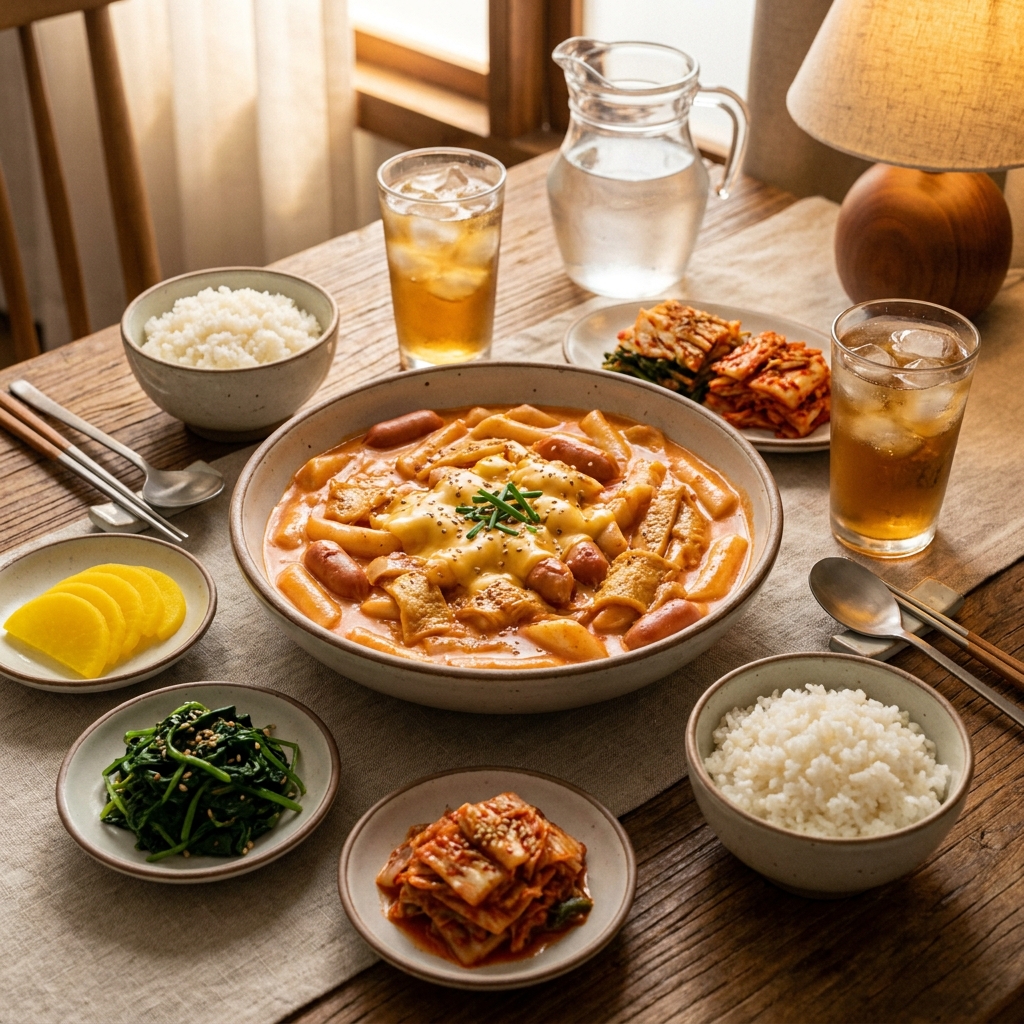
Quick Weeknight Dinner: Serve this rose tteokbokki recipe with steamed white rice or Korean barley rice, a simple spinach side dish, and pickled radish for brightness. This combination creates a balanced meal where the rice absorbs excess sauce from your rose tteokbokki recipe.
Party Appetizer Spread: Arrange small portions of this rose tteokbokki recipe in bowls as appetizers alongside Korean fried chicken recipes and vegetable tempura. Guests love grazing on rose tteokbokki recipe servings throughout parties.
Late-Night Casual Meal: This rose tteokbokki recipe pairs perfectly with Korean corn cheese, kimbap rolls, and cold ramune or ginger ale for authentic street food vibes. The casual presentation and comforting flavors make this rose tteokbokki recipe ideal for informal gatherings.
Comfort Food Dinner: Pair this rose tteokbokki recipe with a warm bowl of egg drop soup, fresh vegetable banchan (side dishes), and steamed bok choy. The gentle soup balances the spice in your rose tteokbokki recipe beautifully.
Celebration Meal: Upgrade this rose tteokbokki recipe by adding premium ingredients like shrimp, squid, or short rib slices for special occasions. Serve alongside Korean bibimbap recipes and fresh fruit desserts for impressive entertaining.
The flexible nature of this rose tteokbokki recipe makes it perfect for any dining occasion, formal or casual. The vibrant color and irresistible aroma of this rose tteokbokki recipe instantly signals something exciting is happening in your kitchen.
Storage and Reheating for Rose Tteokbokki Recipe
Proper storage ensures your rose tteokbokki recipe maintains quality and safety while remaining convenient for future meals and unexpected cravings.
| Method | Duration | Instructions |
|---|---|---|
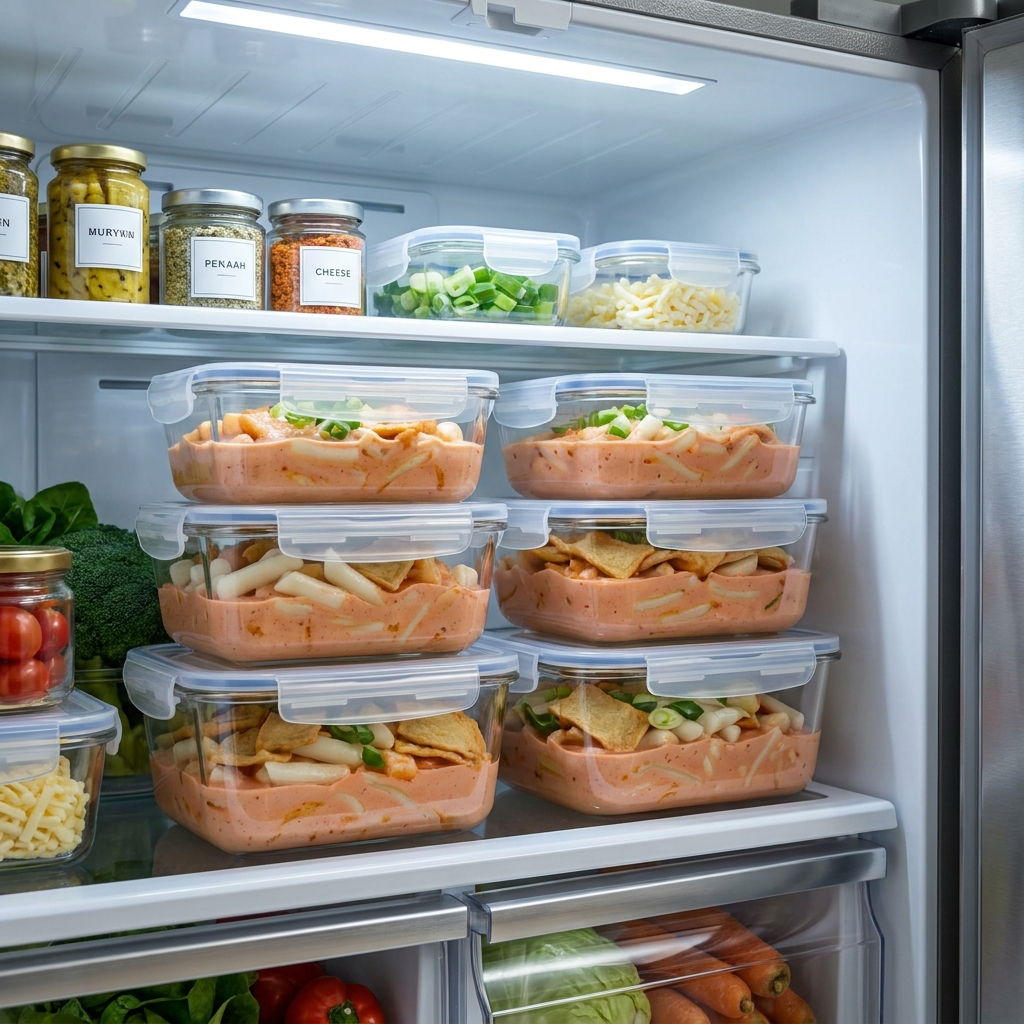
| Refrigerator Storage | 3-4 days | Transfer cooled rose tteokbokki recipe to airtight container; sauce will thicken significantly as it cools, which is normal |
| Freezer Storage | Up to 1 month | Freeze rose tteokbokki recipe in airtight freezer containers; separate sauce slightly from rice cakes to prevent sticking |
| Refrigerator Reheating | 5 minutes | Warm rose tteokbokki recipe in skillet over medium heat, adding one tablespoon water to loosen thick sauce |
| Microwave Reheating | 2-3 minutes | Transfer rose tteokbokki recipe to microwave-safe bowl, add two tablespoons water, cover loosely, heat at 50% power |
| Make-Ahead Preparation | Up to 8 hours ahead | Prepare sauce for rose tteokbokki recipe and store separately from rice cakes; combine only when ready to cook |
| Food Safety | Always follows time/temperature guidelines | Keep rose tteokbokki recipe above 140°F after cooking; discard leftovers exceeding four days refrigeration |
This rose tteokbokki recipe reheats beautifully without losing its essential character, making it excellent for meal prep planning. The sauce thickens as it cools, which you can easily remedy by adding small amounts of water during reheating this rose tteokbokki recipe.
Freezing this rose tteokbokki recipe works well when you allow proper thawing before reheating. Never reheat frozen rose tteokbokki recipe directly from the freezer; thaw overnight in the refrigerator first for best results.
The versatility of this rose tteokbokki recipe makes it perfect for batch cooking during weekends to grab quick meals throughout busy weeks. Store-bought containers keep this rose tteokbokki recipe fresher longer than open storage.
Nutritional Information for Rose Tteokbokki Recipe
Understanding the nutritional profile helps you balance this rose tteokbokki recipe within your overall diet and make informed serving decisions.
| Nutrient | Amount per Serving |
|---|---|
| Calories | 280-320 |
| Protein | 8-10g |
| Fat | 7-9g |
| Carbohydrates | 42-48g |
| Fiber | 2-3g |
| Sugar | 6-8g |
| Sodium | 650-750mg |
Approximate values based on serving four people with standard ingredients; this rose tteokbokki recipe’s nutrition varies slightly depending on specific brand choices and preparation methods. Adding extra vegetables to this rose tteokbokki recipe increases fiber content while reducing overall calorie density.
The carbohydrates in this rose tteokbokki recipe come primarily from the rice cakes, providing sustained energy throughout your day. Protein from the fish cake makes this rose tteokbokki recipe more satisfying while supporting muscle function.
Frequently Asked Questions About Rose Tteokbokki Recipe
Can I Make Rose Tteokbokki Recipe Vegetarian?
Yes, this rose tteokbokki recipe becomes vegetarian when you substitute fish cake with king oyster mushroom slices or extra firm tofu cubes. The mushrooms develop wonderful umami flavors that compensate beautifully for the removed fish cake in your rose tteokbokki recipe. Add mushrooms at the same cooking stage as you would the fish cake.
How Do I Know When Rose Tteokbokki Recipe Rice Cakes Are Done?
Rice cakes in this rose tteokbokki recipe are done when they feel tender but still slightly chewy when you bite into one; they should not become mushy or fall apart. Test at the eight-minute mark by removing one rice cake with a spoon and tasting it carefully. Cook for up to two additional minutes if rice cakes still feel too firm for your rose tteokbokki recipe.
Why Is My Rose Tteokbokki Recipe Sauce Too Thin?
Thin sauce in this rose tteokbokki recipe typically results from too much liquid or insufficient cooking time. Cook this rose tteokbokki recipe uncovered for one to two additional minutes over medium-high heat until the sauce reduces and thickens noticeably. You can also make a small slurry by mixing one tablespoon cornstarch with two tablespoons water and stir it into your rose tteokbokki recipe sauce.
Can I Prepare Rose Tteokbokki Recipe Sauce in Advance?
Absolutely, you can prepare the sauce for this rose tteokbokki recipe up to eight hours ahead and store it in a sealed container in the refrigerator. Keep the rice cakes separate until cooking time, then combine the sauce and rice cakes when you’re ready to eat your rose tteokbokki recipe. This strategy makes weeknight cooking significantly faster.
What Should I Serve With Rose Tteokbokki Recipe?
Serve this rose tteokbokki recipe with steamed rice, pickled radish, fresh vegetables, and cold beverages for an authentic Korean meal experience. Smaller appetizer portions of this rose tteokbokki recipe pair nicely with Korean fried chicken, vegetable tempura, and kimbap rolls at parties. The versatile nature of this rose tteokbokki recipe makes it work with many complementary dishes.
How Long Does Rose Tteokbokki Recipe Keep in the Refrigerator?
This rose tteokbokki recipe maintains excellent quality for three to four days when stored in an airtight container in the refrigerator. The sauce thickens considerably as it cools, which is completely normal for this rose tteokbokki recipe. Always discard any portions of this rose tteokbokki recipe exceeding four days old for safety.
Can I Freeze Rose Tteokbokki Recipe?
Yes, this rose tteokbokki recipe freezes well for up to one month in airtight freezer containers; slightly separate the rice cakes from the sauce to prevent sticking together in your rose tteokbokki recipe. Thaw this rose tteokbokki recipe completely in the refrigerator overnight before reheating over medium heat with a splash of water added to loosen the sauce.
Why Does My Rose Tteokbokki Recipe Taste Bitter?
Bitter flavors in this rose tteokbokki recipe usually indicate the gochujang was burned during initial cooking, which happens when heat is too high or garlic is added after the gochujang without sufficient oil. Prevent this by always cooking garlic first in oil until fragrant, then gradually stirring in gochujang at medium-high heat for only one minute in your rose tteokbokki recipe. Lower the heat immediately if you notice the sauce darkening.
Can I Add Other Vegetables to Rose Tteokbokki Recipe?
Absolutely, this rose tteokbokki recipe welcomes additions like carrots, onions, bell peppers, broccoli, or spinach without disrupting the dish. Add firmer vegetables like carrots and onions during the initial sauce-building stage so they have time to soften in this rose tteokbokki recipe. Add delicate vegetables like spinach during the final minute of cooking your rose tteokbokki recipe.
What If I Cannot Find Tteokbokki Rice Cakes?
Substitute tteokbokki rice cakes with Korean glutinous rice cakes, mochi, or even fresh udon noodles to create variations of this rose tteokbokki recipe. Each substitution creates slightly different textures while maintaining the essential spicy-sweet character of your rose tteokbokki recipe. Adjust cooking time based on your substitute’s thickness and density.
How Do I Adjust Spice Level in Rose Tteokbokki Recipe?
Reduce spice in this rose tteokbokki recipe by decreasing gochujang to three tablespoons and adding one tablespoon tomato paste instead for this rose tteokbokki recipe. Increase spice by adding one tablespoon gochugaru (Korean chili flakes) or a dash of hot sauce to your rose tteokbokki recipe. Always adjust gradually, tasting as you modify this rose tteokbokki recipe.
Conclusion
This rose tteokbokki recipe transforms simple pantry ingredients into an authentic Korean street food experience that rivals restaurant versions and impresses dinner guests consistently. The combination of chewy rice cakes, vibrant red sauce, and perfectly balanced flavors makes this rose tteokbokki recipe an absolute must-try for anyone exploring Korean cuisine or seeking quick, satisfying weeknight meals. Home cooks appreciate this rose tteokbokki recipe because it delivers impressive results with minimal effort and skill level. The glossy, ruby-red sauce coating each tender rice cake creates that irresistible sweet-spicy umami profile that keeps people coming back for more. Try this rose tteokbokki recipe this week and discover why it’s become a beloved staple across Korean kitchens and beyond. You’ll find yourself making this rose tteokbokki recipe again and again, experimenting with variations and sharing it with family and friends who’ll be amazed you created such restaurant-quality food at home.
Protein Dill Pickle Dip
Savory Greek yogurt dip
Hot honey cottage cheese sweet potato beef bowl
Addictive cabbage recipe
Chili crisp carrot ribbon salad recipe
baking soda weight loss recipe
Eggplant parmesan soup recipe
Expert Resources and Food Safety
For comprehensive information about Korean ingredients and authentic cooking techniques, consult Serious Eats’ Korean cuisine guide and Maangchi’s authentic Korean cooking tutorials. These trusted sources provide expert validation and additional recipe inspiration for your rose tteokbokki recipe explorations.
Print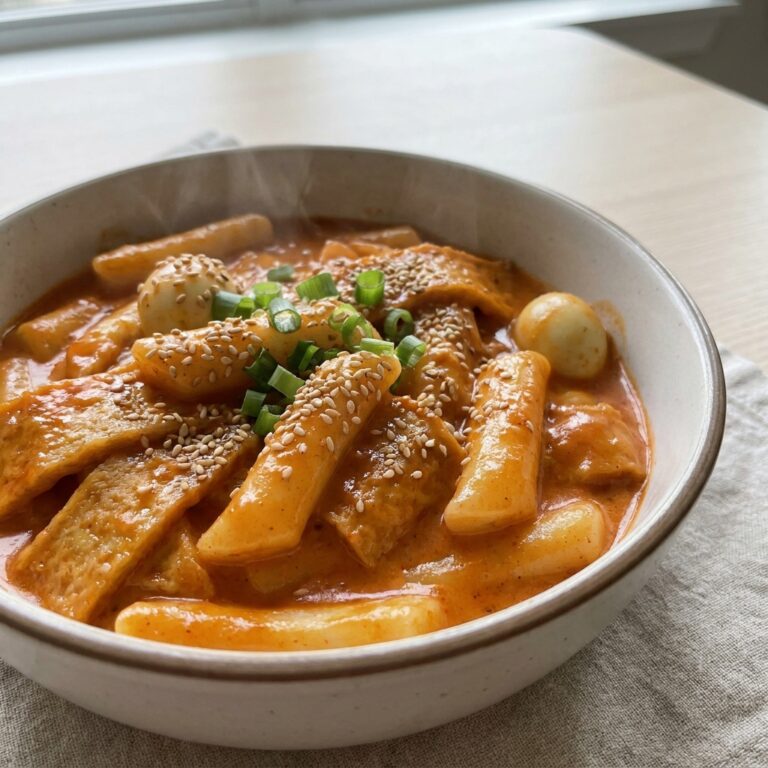
Rose Tteokbokki Recipe 2026
Rose tteokbokki recipe is a popular Korean street food made with chewy rice cakes coated in a rich, sweet, and spicy gochujang sauce that delivers authentic Korean comfort food flavor.
- Total Time: 25 minutes
- Yield: 4 servings 1x
Ingredients
- 1 pound tteokbokki rice cakes
- 4 tablespoons gochujang
- 1 cup water or broth
- 2 tablespoons honey or brown sugar
- 4 garlic cloves, minced
- 1 tablespoon sesame oil
- 1 tablespoon soy sauce
- 1 fish cake, sliced
- 3 scallions, chopped
- 2 teaspoons sesame seeds
Instructions
- Thaw frozen rice cakes completely and drain well.
- Mince the garlic cloves finely.
- Slice the fish cake into thin pieces.
- Chop the scallions and separate the white and green parts.
- Heat sesame oil in a large skillet over medium-high heat.
- Add minced garlic and cook for 30 seconds until fragrant.
- Stir in gochujang and cook for 1 minute.
- Slowly pour in water or broth while stirring continuously.
- Add honey and soy sauce, mixing until smooth.
- Bring the sauce to a gentle simmer.
- Add rice cakes and fish cake slices.
- Cook for 8 to 10 minutes, stirring frequently until the sauce thickens.
- Stir in the white parts of the scallions during the final minute.
- Transfer to serving bowls and garnish with sesame seeds and green scallions.
Notes
Use fresh rice cakes whenever possible for the best chewy texture. Stir frequently to prevent sticking and avoid overcooking the rice cakes so they stay tender and chewy.
- Prep Time: 10 minutes
- Cook Time: 15 minutes
- Category: Main Course
- Method: Stovetop
- Cuisine: Korean
Nutrition
- Serving Size: 1 serving
- Calories: 320
- Sugar: 8g
- Sodium: 750mg
- Fat: 9g
- Saturated Fat: 1g
- Unsaturated Fat: 7g
- Trans Fat: 0g
- Carbohydrates: 48g
- Fiber: 3g
- Protein: 10g
- Cholesterol: 10mg