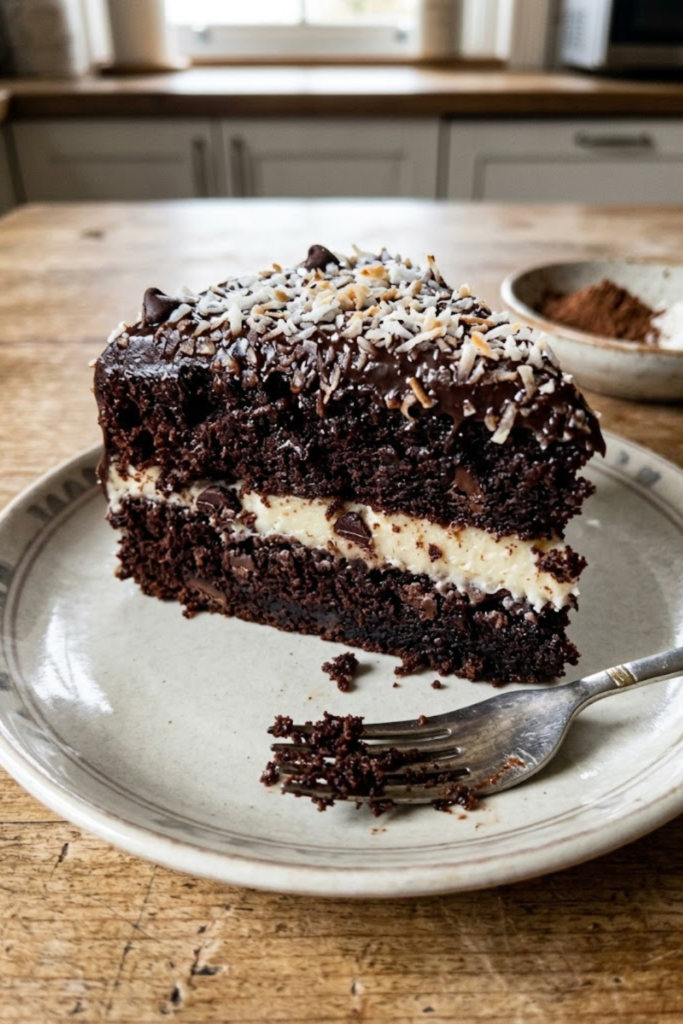
I’ve always said that a bad day can be fixed with a big slice of cake, and let’s be honest, 2026 has been a wild ride so far! Did you know that chocolate and coconut is consistently ranked as one of the top three flavor pairings for tropical desserts? I’ve spent years in my kitchen trying to get this coconut chocolate cake just right because I wanted that perfect, fudgy crumb that doesn’t fall apart.
Choosing the Best Ingredients for Your Coconut Chocolate Cake
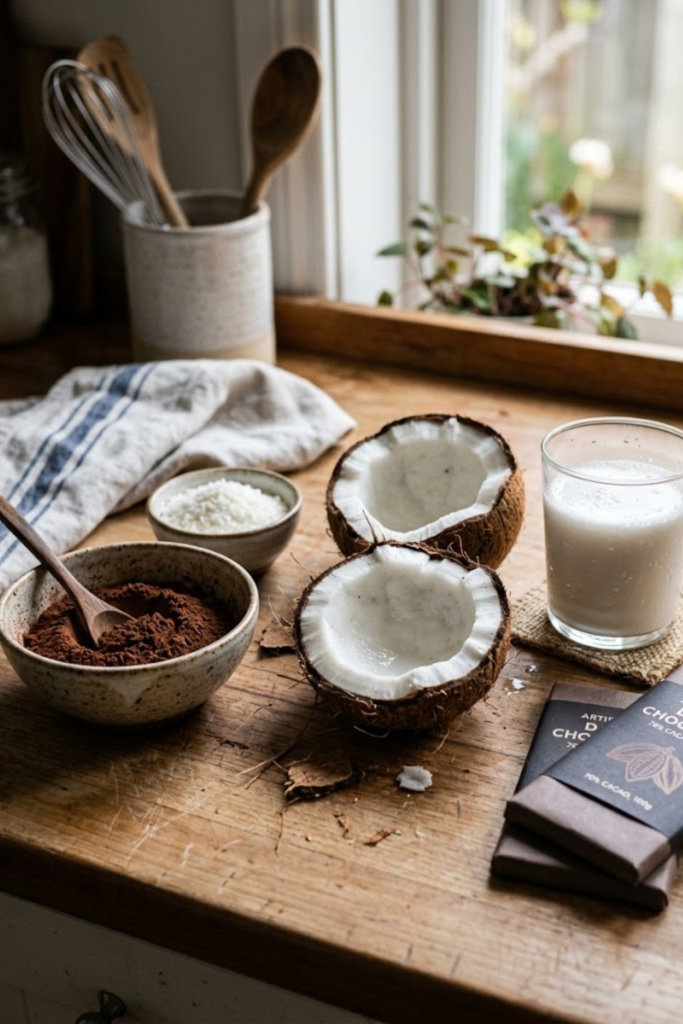
I’ve spent a lot of time in my kitchen over the last twenty years, and I can tell you that the stuff you put in your bowl makes all the difference. If you want a coconut chocolate cake that people actually want to eat, you can’t just grab the cheapest thing on the shelf. I used to think all cocoa was the same until I made a cake that looked like grey cardboard for a school bake sale. It was so embarrassing! You really have to be picky if you want that deep flavor. Most people don’t realize that the science of baking starts at the grocery store. If your ingredients are old or the wrong kind, your cake is going to be a total bummer.
Why Dutch-Processed Cocoa is a Must
Most folks just grab the first brown tub they see in the baking aisle. But for this specific recipe, you really want Dutch-processed cocoa powder. This kind of cocoa has been treated with an alkali to get rid of the extra acid. It makes the chocolate taste way smoother and darker. If you use the regular natural stuff, your cake might taste a bit zingy or sharp. That sharp taste ruins the calm vibe of the sweet coconut. I always look for “processed with alkali” on the back of the label. It’s a small detail, but it makes your cake look like it came from a fancy bakery instead of just my little kitchen.
Don’t Fall for the Carton Trap
This is where I see my students mess up the most. They go to the dairy section and buy that coconut milk you drink with cereal. Please, don’t do that! That stuff is mostly water and won’t give you the rich fat you need for a moist cake crumb. You need to go to the international food aisle and find the canned coconut milk. Look for the full-fat version. When you open the can, there should be a thick layer of white cream at the top. I usually use a spoon to stir it all together before I dump it in the batter. That fat is what gives the cake its “fudgy” feel that everyone loves.
Choosing Your Coconut Shreds
Lastly, let’s talk about the flakes. I prefer unsweetened shredded coconut. The sweetened kind has a weird sticky coating on it that makes the cake way too sugary. I like to control the sugar myself so it isn’t overwhelming. Also, make sure the shreds are small. If they are too big, the texture gets a bit stringy. Nobody wants to feel like they are chewing on grass while they are trying to enjoy a dessert. Grab a bag that feels soft, not crunchy, to make sure it is fresh. If you follow these steps, your base will be perfect every single time.It’s a total game-changer for your weekend baking.
The Secret to a Moist and Fudgy Cake Crumb
There is nothing worse than spending an hour in the kitchen just to pull a dry, crumbly mess out of the oven. I’ve done it more times than I care to admit! For years, I couldn’t figure out why my chocolate cakes felt like dry sponges instead of the rich fudge I was seeing in magazines. I finally realized that it’s all about the moisture balance and how you treat the cocoa powder. If you want that heavy, rich feel in your coconut chocolate cake, you have to be careful with the batter. It’s not just about dumping things in a bowl and whisking away like a madman. You have to understand how the liquids and fats work together to make that perfect bite.
Blooming Your Cocoa with Boiling Water
This is probably the biggest “aha!” moment I ever had in baking. Most people just mix their cocoa powder in with the flour and hope for the best. Instead, you should try “blooming” it. I take my measured cocoa powder and pour a cup of very hot, boiling water right over it. I stir it until it looks like a thick, shiny chocolate soup. What this does is dissolve the tiny lumps and release all the hidden flavor inside the bean. It makes the chocolate taste way more intense. Plus, adding that extra hot liquid to the batter helps break down the flour’s gluten, which keeps the cake from getting tough. Just make sure the water is actually boiling, or it won’t work as well.
The Power of Room Temperature Eggs
I used to be so impatient and just grab eggs straight from the fridge. That was a big mistake. Cold eggs don’t mix well with the fats in your cake, like the coconut oil or butter. If you use cold eggs, the batter can look curdled or bumpy. I always tell my students to put their eggs in a bowl of warm water for about five or ten minutes before starting. This helps the eggs build a better structure. When the eggs are at the right temperature, they trap more air, which gives you that light but moist crumb. It’s a simple trick that helps make sure the cake doesn’t turn into a heavy brick.
Folding in the Coconut Gently
Once your batter is ready, you have to add the shredded coconut. This is where you need to put the whisk down and grab a spatula. I see people stirring the coconut in so hard that they pop all the little air bubbles they worked so hard to create. You want to “fold” it in. This means you go around the outside of the bowl and cut through the middle, gently turning the batter over itself. Stop the second you don’t see any more big clumps of coconut. Over-mixing is the fastest way to ruin a good cake. If you are gentle, the coconut will stay suspended in the middle of the cake instead of all sinking to the bottom.
Tropical Frosting and Decorating Tips
I’ll be honest, the frosting part is where I usually get the most nervous. There was this one summer where I tried to make a coconut chocolate cake for a family reunion, and the frosting just melted into a puddle because it was so hot outside. It looked like the cake was crying! It’s really hard to get that perfect balance where it’s sweet but also stays put on the layers. Over the years, I’ve figured out that you can’t just rush it. You need to let the cake cool down all the way, or you’re just asking for trouble. Decorating is the fun part, though, because it’s where you can hide any little cracks or bumps that happened while baking. I always feel like a bit of an artist when I get to this stage, even if my kitchen is a mess.
Making a Stable Coconut Cream Cheese Frosting
A lot of people think they have to use pure coconut butter to get that flavor, but that stuff is really finicky to work with. I prefer using a mix of cream cheese and regular butter. The tang from the cream cheese is really important because it cuts through all that heavy chocolate flavor. To get the coconut taste in there, I use a tiny bit of coconut extract. You have to be careful with that stuff, though! If you put too much in, it starts to taste like sunblock or soap. I usually add a tablespoon of that thick coconut cream from the can we talked about earlier. It makes the frosting super silky and easy to spread. If it feels too soft, just put it in the fridge for twenty minutes before you try to put it on the cake.
Toasting Coconut Flakes for a Professional Finish
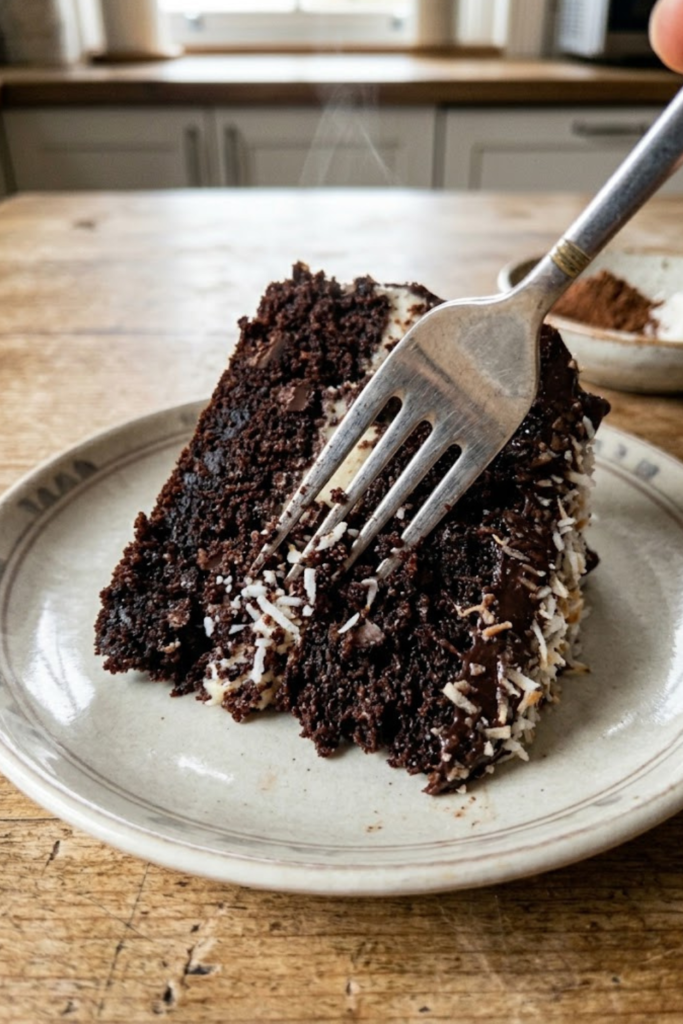
If you really want to impress your friends, you have to toast your coconut. Raw white coconut is fine, but toasted coconut has this nutty, crunchy vibe that is just incredible. I just throw a handful of shredded coconut into a dry pan over medium heat. You have to stay right there and watch it, though! It goes from white to burnt in about five seconds. I usually shake the pan constantly until it smells like a tropical vacation. Once it’s a nice golden brown, I take it off the heat immediately so it doesn’t keep cooking. I like to press these toasted flakes into the sides of the cake. It hides any messy frosting jobs and makes the whole thing look like it came from a fancy bakery.
Storage Tips to Keep Your Cake Fresh
Since this cake has cream cheese in the frosting, you really shouldn’t leave it out on the counter for more than a few hours. I always keep mine in the fridge in a big plastic container to keep the air out. The cool thing about this cake is that it actually tastes better the next day because the coconut moisture seeps into the chocolate layers even more. It gets even fudgier! Just make sure to take it out of the fridge about thirty minutes before you want to eat it. If you eat it cold, the butter in the frosting stays too hard and you lose some of the flavor. If you have leftovers, you can even freeze individual slices in plastic wrap. They make for a great treat when you’ve had a long day at work.
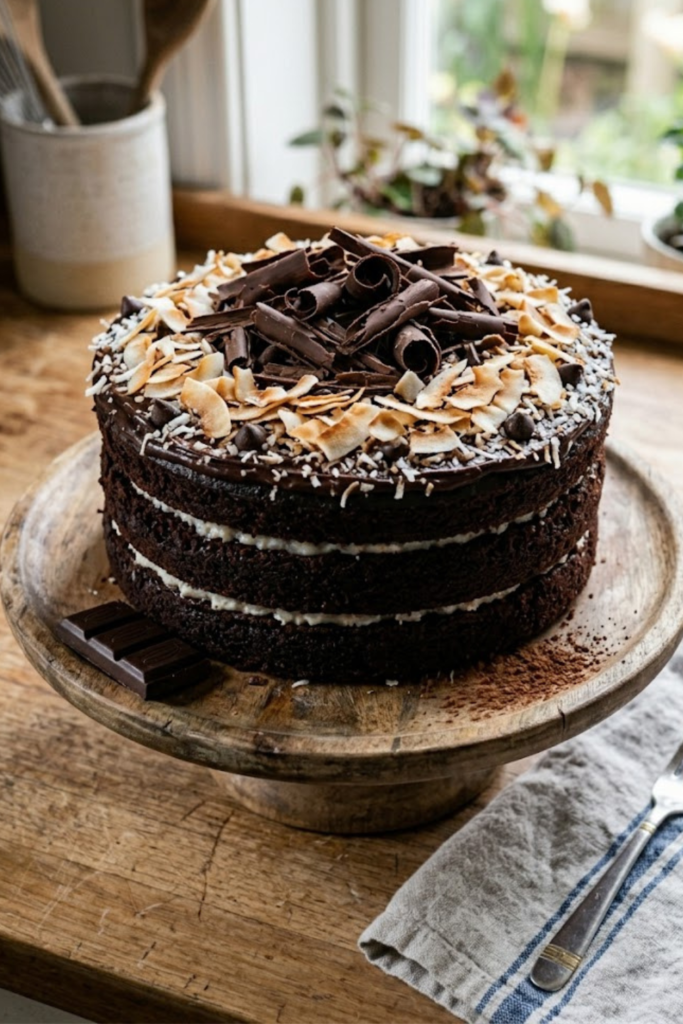
So, there you have it. That is pretty much my whole life story with this coconut chocolate cake. It took me a long time to get here, through all the oily messes and those dry sponges I mentioned earlier. But honestly, that’s just how life goes sometimes, right? You have to make a few bad cakes to finally get to the one that everyone asks for at the neighborhood party. I really hope you give this a try in your own kitchen soon. Don’t be scared if it doesn’t look like a perfect magazine photo the first time you try it. The taste is what really matters at the end of the day, and let me tell you, this one tastes like a total dream.
I remember my grandmother used to say that the secret ingredient was always love, but I think the secret ingredient is actually that thick canned coconut milk I told you about! But really, baking is about more than just the food. It’s about that feeling you get when you see your kids or your friends take a big bite and their eyes light up. That’s why I keep doing this even when my oven acts up or I run out of sugar at the last minute. It makes the whole house smell like a tropical vacation and it gives everyone a reason to sit down at the kitchen table together for a few minutes. In 2026, I think we all need a little more of that “sit down together” time, don’t we?
If you do end up making this coconut chocolate cake, please let me know how it went for you! I love hearing about other people’s baking wins and even the fails too, because they usually make for the best stories later on. If your frosting is a bit wonky or you accidentally burnt the coconut flakes because you got distracted by your phone, don’t sweat it. Just laugh it off and try again next time. That’s the only real way to get better at anything in life.
Before you go and start preheating your oven, I have one little favor to ask. If you found these tips helpful and you think your friends might like this recipe too, please save this and share it on Pinterest! It really helps me out a lot and it makes sure other people can find this delicious treat. I’ve put a lot of heart into this post, and seeing it shared makes all those hours of testing worth it. Now, go get your apron on and start baking. You’ve got this, and I know your cake is going to be amazing!