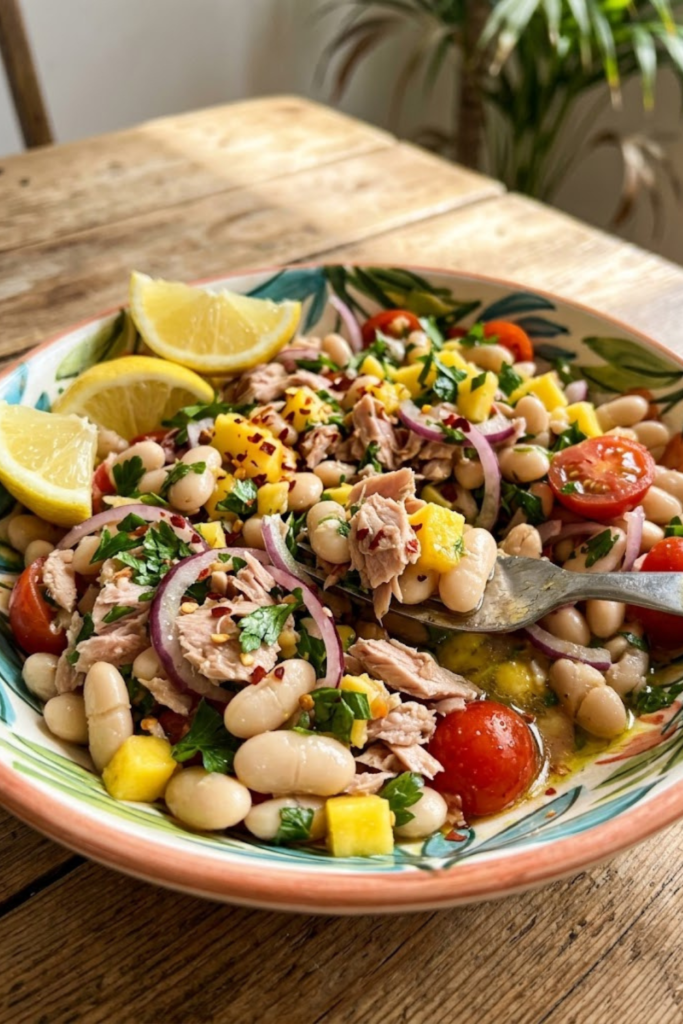
I’ve spent way too many lunch breaks just staring at the fridge feeling totally stuck. Between grading papers and running errands, I usually need a meal that takes five minutes. That’s exactly why this tuna bean salad became my favorite go-to lunch lately. It uses simple pantry stuff like canned fish and white beans to make something that feels kinda fancy. You get a massive amount of protein and fiber without ever having to turn on the stove or anything. I honestly think it is the best way to stay full when you have zero time to spare.
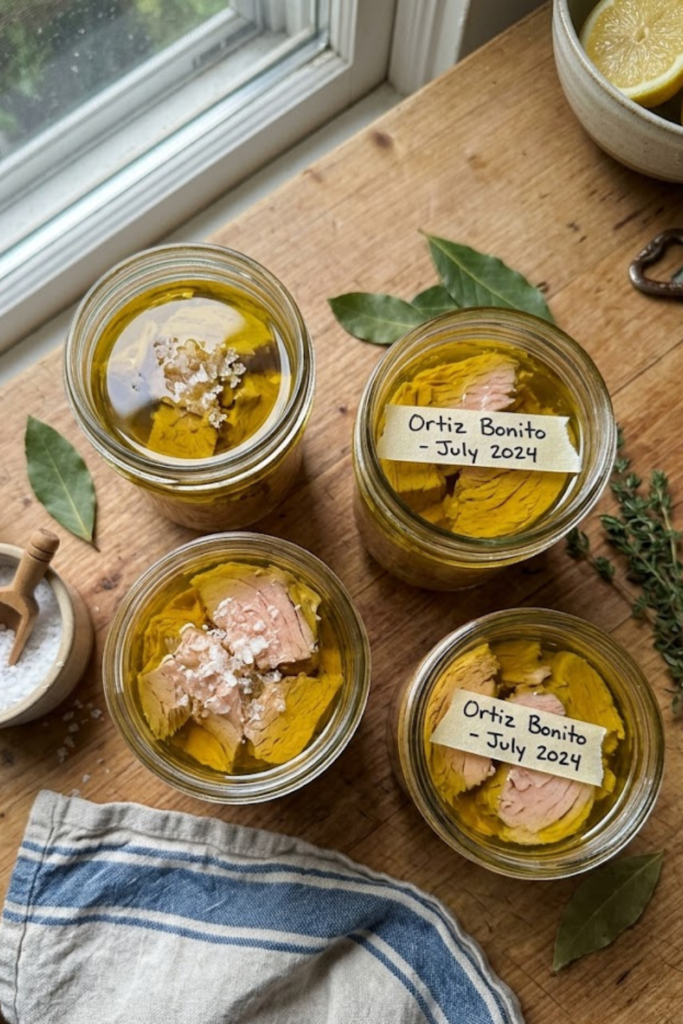
Choosing the Right Canned Tuna for Maximum Flavor
I used to think that tuna was just tuna, you know? Back when I was starting out in my own kitchen, I’d just look for the brightest yellow “on sale” sticker at the grocery store. I ended up with a lot of those tiny cans of tuna in water. But when I tried to make my first tuna bean salad, it was a total disaster. The fish was so dry and chalky that it just crumbled into little bits of nothing. It didn’t have any flavor, and the beans felt way too heavy. I learned pretty fast that if you want a lunch that actually tastes good, you have to start with the right fish.
Why I Switched to Oil-Packed Tuna
The biggest change I made was switching from water-packed to olive oil-packed tuna. Some people worry about the extra calories, but honestly, the taste is worth it. When the fish sits in oil, it stays moist and keeps its shape much better. In a tuna bean salad, you want those big, chunky pieces of fish. If you use the water kind, the lemon juice just makes it even drier. Plus, the oil from the can actually mixes with the beans to make everything taste richer. I usually drain most of it, but I leave just a tiny bit in there for the extra flavor. It makes the whole meal feel like something you’d get at a nice cafe instead of something you threw together.
Look for the Sustainable Labels
As a teacher, I like to do a little homework before I buy things. I started looking at the labels on the back of the cans. It’s actually pretty important to find tuna that is “Pole and Line Caught.” This means they aren’t using big nets that catch everything else in the ocean by mistake. I feel a lot better eating my lunch knowing it was caught the right way. Also, try to find “Wild Caught” on the label. The flavor is usually much cleaner and less “fishy” in a bad way. It might cost fifty cents more, but for a meal this simple, the quality of the fish is everything.
Solid White vs. Chunk Light
If you are thinking about the type of tuna, you have two main choices. “Solid White” is usually Albacore. It has a mild flavor and stays in big fillets. “Chunk Light” is usually Skipjack or Yellowfin. It’s a bit stronger in taste and comes in smaller pieces. For this tuna bean salad, I usually go with the solid white Albacore. It looks prettier on the plate and has a nice, firm bite that goes great with the soft texture of the white beans. If you like a bolder fish taste, go for the light tuna, but just know it might break apart more when you stir it all together.
A Quick Draining Tip
I once made a huge mess trying to drain the oil directly into the sink and ended up clogging the drain. Don’t do that! Now, I press the lid down into the can over a small bowl to catch the oil. I save a spoonful of that flavored oil to whisk into my dressing later. It’s a small step, but it adds so much depth to the final dish. Making these small choices about your ingredients really makes a difference in how the salad turns out.
The Best Beans to Mix into Your Salad
Beans are really the backbone of any good tuna bean salad. I remember the first time I tried to make this for a quick lunch between my morning classes. I just grabbed a random can of kidney beans from the back of my pantry because I didn’t want to go to the store. Let me tell you, it was a mistake. The dark red color bled into the fish and made the whole thing look kind of muddy and unappealing. It still tasted okay, I guess, but nobody else in the teacher’s lounge wanted to try any. That was the day I realized that the type of bean you pick really changes the whole vibe of the meal.
My Go-To: Cannellini Beans
If you want the best results, I always suggest using Cannellini beans. They are often called white kidney beans at the store. I love them because they have a super creamy texture and a very thin skin. When you mix them with the tuna and the lemon juice, they almost melt in your mouth. They soak up the dressing much better than other types of beans do. I’ve found that using these makes the salad feel fancy, like something you’d buy at a nice deli. They are also full of fiber, which helps me stay full all the way until dinner time without needing a sugary snack in the afternoon.
Chickpeas and Great Northern Options
Sometimes I want a bit more of a “bite” or a crunch in my lunch, so I use chickpeas instead. These are great because they hold their shape really well, even if you keep the salad in the fridge for two or three days. They don’t get mushy at all. Another good choice is the Great Northern bean. These are a bit smaller and firmer than Cannellini beans. I usually tell my students that cooking is like a science experiment—you should try different ones to see what you like best. But if you are just starting out, stick with the white ones for a cleaner look.
The Importance of a Good Rinse
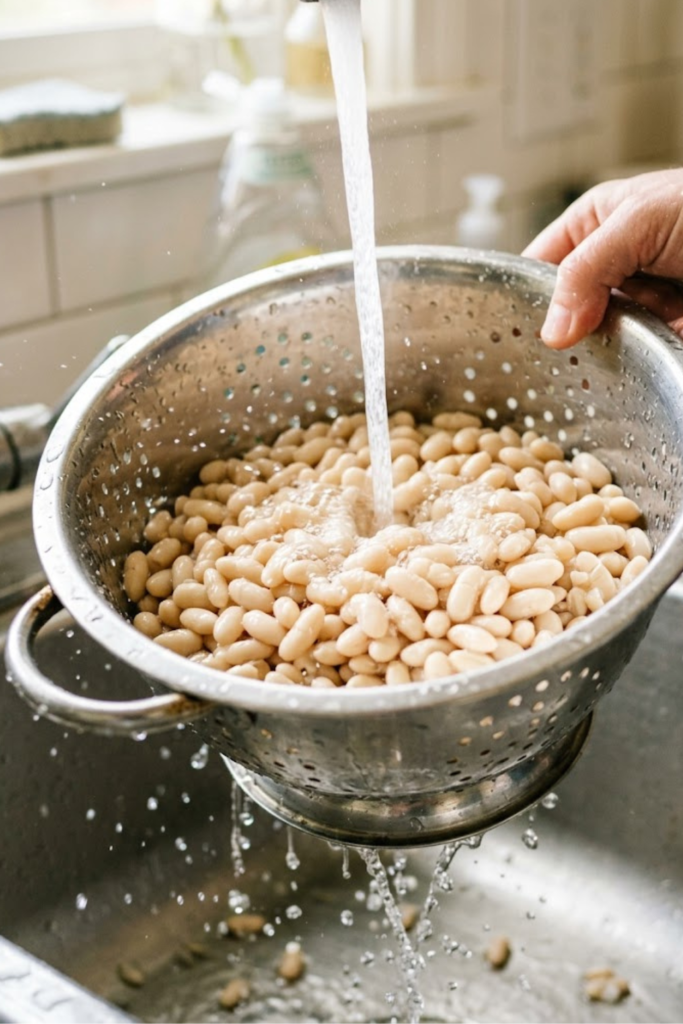
This is the most helpful tip I can give you for a better tuna bean salad. When you open that can, there is always that thick, salty liquid inside. You absolutely have to get rid of that. I always dump my beans into a mesh strainer and run cold water over them until all the bubbles are gone and the water runs totally clear. If you leave that liquid on the beans, your salad will have a weird metallic taste that comes from the can. I also let them sit in the sink for a few minutes to dry off. If they are too wet, the dressing won’t stick to them and you’ll end up with a watery mess at the bottom of your bowl. It only takes an extra minute, but it makes the food taste much fresher.
Finding the Right Balance
I usually stick to a simple ratio. One 15-ounce can of beans is perfect for two small cans of tuna. This gives you a good mix where you get a little bit of everything in every forkful. If you add too many beans, it starts to feel a bit heavy and you lose the flavor of the fish. I like to keep it balanced so I get plenty of protein. It is a cheap way to make a healthy meal that actually tastes like you put a lot of effort into it, even though it only took you a few minutes to throw together.
Creating a Zesty Lemon Vinaigrette That Pops
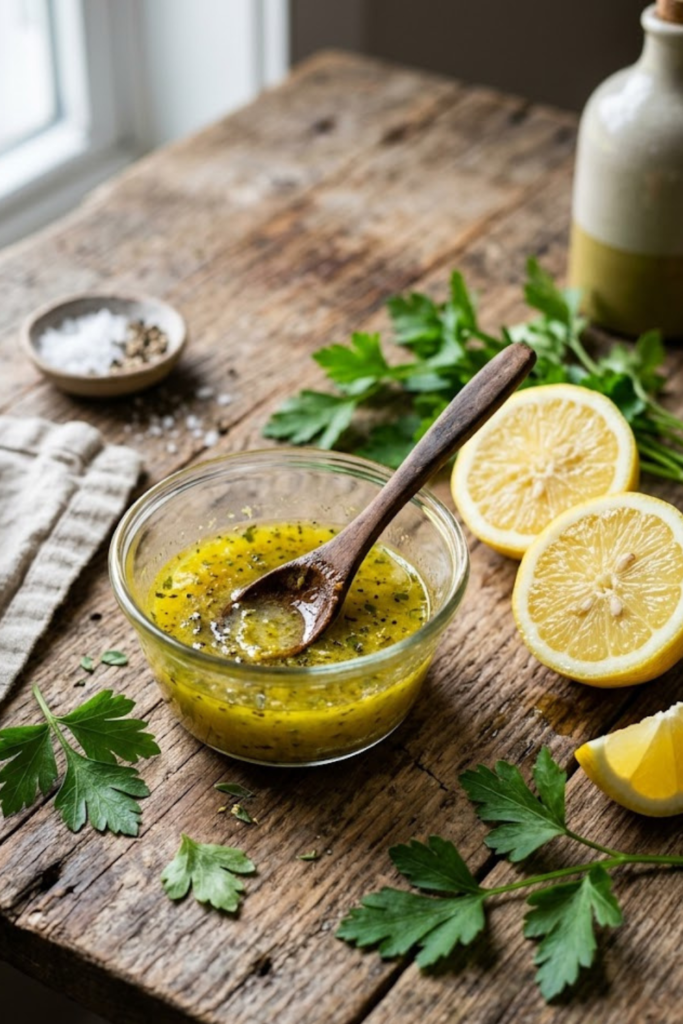
I really think the dressing is what makes or breaks a tuna bean salad. For a long time, I was one of those people who kept six different bottles of salad dressing in the fridge door at all times. I had ranch, creamy Italian, and some weird honey mustard that had probably been there since last Thanksgiving. When I first started making this salad for my school lunches, I just poured that bottled Italian dressing over it and thought it was fine. But honestly? It was way too salty and had a strange chemical aftertaste that really clashed with the fish. One day, I ran out of the bottled stuff and had to make my own using just a lemon and some oil. I never went back to the store-bought stuff again because the difference was huge.
Fresh Lemon vs. The Little Plastic Bird
One big lesson I learned is that you have to use real lemons. I used to keep one of those little plastic yellow squeeze bottles in the fridge because it was easier. I thought it tasted the same, but it really doesn’t. That bottled juice has preservatives that make it taste kind of bitter and metallic. Now, I always grab a couple of fresh lemons at the store. I use the juice of about half a lemon for my tuna bean salad. It provides a bright, clean flavor that actually cuts through the richness of the tuna. Plus, you can use the zest! I take a small grater and rub just a little of the yellow skin into the bowl. It makes the whole kitchen smell like a garden and adds a ton of flavor without adding any extra salt.
The Golden Ratio for My Dressing
People often ask me how much oil to use. I usually go with a “two to one” ratio. That means I use two tablespoons of extra virgin olive oil for every one tablespoon of lemon juice. If you use too much oil, the salad feels greasy and heavy. If you use too much lemon, it will make you pucker your lips! I mix it in a small jelly jar and shake it up really hard. You want the oil and juice to blend together so they don’t separate on the beans. I once forgot to mix it and just poured them in separately. The oil sat on top of the beans and the juice went straight to the bottom. It was a mess!
Why I Always Use Dijon Mustard
This is my favorite teacher hack for a better dressing. I add about a teaspoon of Dijon mustard to the jar before I shake it. The mustard acts like a glue that holds the oil and lemon juice together. It makes the dressing look creamy and thick instead of watery. It also gives the tuna bean salad a tiny bit of a spicy tang that goes so well with the white beans. If you don’t have Dijon, you can use regular yellow mustard, but it won’t be quite as fancy. I also toss in a pinch of sea salt and a lot of cracked black pepper.
Adding a Little Extra Kick
If I am feeling like I need a bit more energy, I’ll throw in some red pepper flakes. Just a tiny pinch is enough to give it a “kick” without making it too hot to eat. I find that the heat from the pepper flakes works really well with the cool, crisp red onions I usually add later. It’s funny how a few simple things from the pantry can turn a boring can of fish into a meal that I actually look forward to eating at my desk. Just make sure you don’t get any lemon seeds in the bowl—biting into one of those is definitely not a good surprise!
Meal Prep Secrets: Keeping Your Salad Fresh All Week
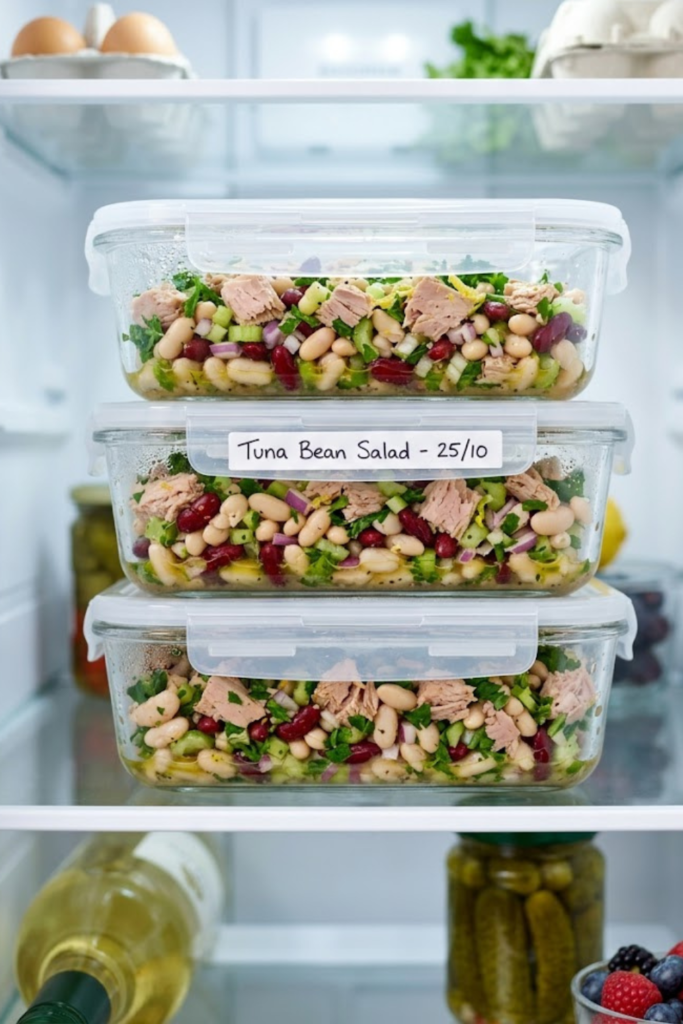
I’ve spent way too many Sunday evenings trying to get ahead of my week. Being a teacher means my lunch break is usually just twenty minutes of peace if I’m lucky. If I haven’t prepped ahead of time, I’m in big trouble and usually end up eating a stale granola bar. This tuna bean salad is my secret weapon because it actually holds up really well in the fridge. Unlike a leafy green salad that turns into a pile of slime after just a couple of hours, this one gets better as it sits. But, you have to follow a few simple rules so you don’t end up with a soggy bowl of disappointment by the time Thursday rolls around. I’ve made plenty of mistakes, so you don’t have to!
Why Glass Containers are a Total Game-Changer
When I first started meal prepping my lunches, I used those cheap plastic containers I got at the grocery store. Big mistake! After a couple of days, the plastic started to soak up the smell of the tuna and the red onions. Even after I ran them through the dishwasher twice, they still smelled a bit funky. Plus, plastic doesn’t keep the food quite as cold as glass does. Now, I only use glass jars or those heavy-duty glass bowls with the snap-on lids. It keeps the tuna bean salad super crisp and cold. And the best part? It doesn’t leave any weird smells in the staff room fridge. My coworkers definitely appreciate that I’m not the “smelly lunch” person anymore.
Picking the Best “Crunch” for Your Salad
You have to be careful about what vegetables you add if you’re planning to eat this over three or four days. I absolutely love avocado, but don’t you dare put it in the main bowl! It will turn brown and mushy in about an hour and ruin the whole look. Instead, I stick to things like red onions, celery, and chopped bell peppers. These veggies stay crunchy even when they are sitting in the lemon dressing. I also like to add some English cucumber because the skin is thinner and less bitter. If you use a regular cucumber, just make sure to scrape out the seeds with a spoon first. Those seeds are full of water and will make your salad way too runny by day two.
The Secret to the “Marinating” Phase
One thing I noticed is that this salad actually tastes better on the second day. When the beans and the tuna have time to sit in that lemon vinaigrette, they soak up all the flavor. It’s like the ingredients finally start talking to each other and getting along. I usually make a big bowl on Sunday night and give it a good stir. By Monday lunch, it’s perfect. If you find it looks a little bit dry by Wednesday, just add a tiny squeeze of fresh lemon right before you eat it. It wakes the whole dish up and makes it feel like you just made it fresh five minutes ago.
How Long Does It Really Last?
People always ask me if fish stays good in the fridge for very long. In my experience, this tuna bean salad is great for about three to four days if you keep it cold. I wouldn’t push it much past that, though. I usually aim to finish my batch by Thursday. If you have leftovers on Friday, give it a quick sniff test—but usually, the lemon juice and salt act as a bit of a natural preservative to keep it fresh. It’s such a relief knowing I have a healthy, high-protein meal waiting for me every single day. It saves me so much stress and money during the busy school year!
Why This Tuna Bean Salad is a Total Workday Win
Honestly, I can’t even imagine what my work week would look like without this tuna bean salad anymore. As a teacher, my days are usually measured by the sound of the school bell, and by the time my lunch period rolls around, I am usually starving and a little bit tired. It is one of those rare recipes that actually checks all the boxes for me. It’s healthy, it’s really cheap to make, and it doesn’t leave me feeling like I need a nap at 2:00 PM when I’m trying to explain a difficult math chapter to a room full of eighth graders.
We’ve covered a lot of ground today, but the main thing to remember is that you don’t need to be a professional chef to make a great lunch. Picking out a good quality, oil-packed tuna and taking the time to rinse your cannellini beans really makes a huge difference. And please, please don’t skip making that fresh lemon dressing! It really is the secret to making this taste like real, fresh food instead of something you just pulled out of a survival kit in the back of your pantry. I’ve learned the hard way that the small details, like using fresh lemon instead of the bottled stuff, are what keep me from getting bored with my meal prep.
I also want to encourage you to make this recipe your own. Cooking should be a little bit of an adventure, even when you are just making a quick salad. Sometimes I throw in some chopped celery for an extra crunch, or I’ll add a few halved cherry tomatoes if they are sitting in the fridge. I’ve even tried it with a little bit of feta cheese on top, and it was delicious. The beauty of the tuna bean salad is how flexible it is. If you don’t like parsley, use dill. If you want it spicy, add more pepper flakes. It’s your lunch, so you should make it exactly how you like it.
I know how busy life can get, and I know how easy it is to just grab a bag of chips or skip lunch entirely when you are stressed. But taking ten minutes to put this together is a small way to take care of yourself during a crazy week. It has saved me so much money and kept me feeling so much better than when I was buying takeout every day. If you decided to give this a try, I’d really love it if you could share this on Pinterest! Saving it to your boards helps other busy people find easy, healthy meal ideas that actually work for a real-life schedule. Anyway, the bell is about to ring for my next class, so I’ve gotta go—happy eating!