I’ve spent way too many afternoons in my kitchen covered in flour and sticky sugar trying to get this recipe just right! Did you know that vanilla remains the world’s most popular dessert flavor, appearing in over 60% of pastry recipes?. It’s true! A vanilla custard tart is basically a warm hug in a buttery pastry shell. I remember my first attempt—it looked more like a soup bowl because I forgot to blind bake the crust. Total disaster! But now, I’m here to make sure your kitchen smells like a French bakery without the stress.
The Ingredients You’ll Need for Success
I used to think that all ingredients were pretty much the same. I’d just grab the cheapest bag of flour and whatever butter was on sale at the grocery store. Boy, was I wrong! I remember making a tart for a neighbor’s potluck once, and I used some old vanilla extract that had been sitting in the back of my cabinet for years. The tart tasted like… well, it didn’t taste like vanilla. It tasted like nothing. It was such a letdown after all that work. Now, I’m much more careful about what I put in my shopping cart. You don’t need a huge list of fancy things, but the few things you do need should be the best you can find.
The Foundations of the Crust
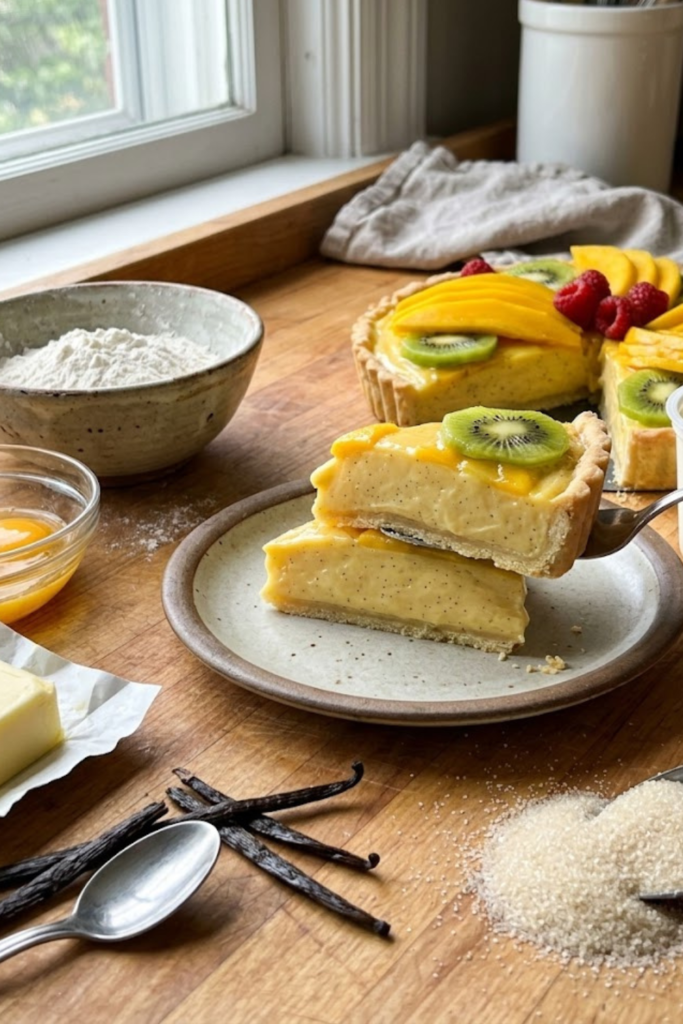
For the pastry shell, you’re going to need all-purpose flour, unsalted butter, a little bit of granulated sugar, and a pinch of salt. I always tell my students to use unsalted butter because different brands put different amounts of salt in their sticks. If you use salted butter, you can’t control the flavor, and your crust might end up tasting like a pretzel! You also need one large egg yolk and just a tiny bit of ice-cold water. That egg yolk is what gives the crust its beautiful golden color and makes it rich. If you just use water, it’s more like a pie crust, but the egg makes it a real French tart.
The Stars of the Filling
Now, for that creamy filling, you need heavy cream and whole milk. Don’t try to use skim milk here; it won’t set right and it’ll taste watery. You want that full fat because that’s where the flavor lives! Then you’ve got your egg yolks—usually about five or six of them. This is what makes the custard thick and yellow. You’ll also need more granulated sugar and some cornstarch to help it thicken up so it doesn’t run everywhere. And of course, the vanilla. Like I said before, try to get a real vanilla bean pod if you can. If not, get a really good vanilla paste or extract.
Don’t Forget the Details
I always keep a little extra flour on the side for dusting my counter so the dough doesn’t stick. There’s nothing worse than rolling out a perfect circle and then having it rip because it stuck to the wood! Also, make sure your eggs are at room temperature before you start the custard. It helps everything mix together much better. It’s funny how these small things make such a big difference in the final result. I promise, if you get these basics right, you are already halfway to a perfect dessert.
Mastering the Buttery Shortcrust Pastry Shell
I’ve taught enough home ec classes to know that the crust is where most people get scared. Honestly, it used to scare me too. My first few tries were pretty bad. One time, I forgot to chill the dough and the whole thing melted into a puddle of grease at the bottom of the oven. My kitchen smelled like burnt butter for a week! But once you get the hang of it, a good shortcrust pastry—or pate sablee if you want to sound fancy—is actually pretty simple. You just need to follow a few rules that I learned the hard way so you don’t have to. It’s all about how you handle the ingredients before they even get near the heat.
Keep Everything Cold
This is the most important part of the whole process. If your butter gets warm, you’re in trouble. I like to cut my butter into small cubes and then stick them in the freezer for about ten or fifteen minutes before I even touch the flour. You want the butter to stay in solid little chunks. When those chunks hit the hot oven, they melt and create steam. That steam is what makes the crust flaky and light. If the butter is already soft when you mix it, it just blends into the flour too much. You end up with a tough, cookie-like crust instead of something that melts in your mouth.
To Process or Not to Process?
A lot of people love using a food processor because it’s fast. I get it. We’re all busy and don’t want to spend all day in the kitchen. But I actually prefer using my hands or a simple pastry blender. Why? Because you can actually feel the dough changing. In a machine, it’s way too easy to overmix it. If you see the dough forming a big ball in the processor, you’ve probably gone way too far. You want it to look like coarse breadcrumbs or little peas. When I do it by hand, I can make sure I’m not overworking the gluten. Overworked gluten makes the pastry shrink and get chewy, which is definitely not what we want for a tart.
The Power of the Fridge
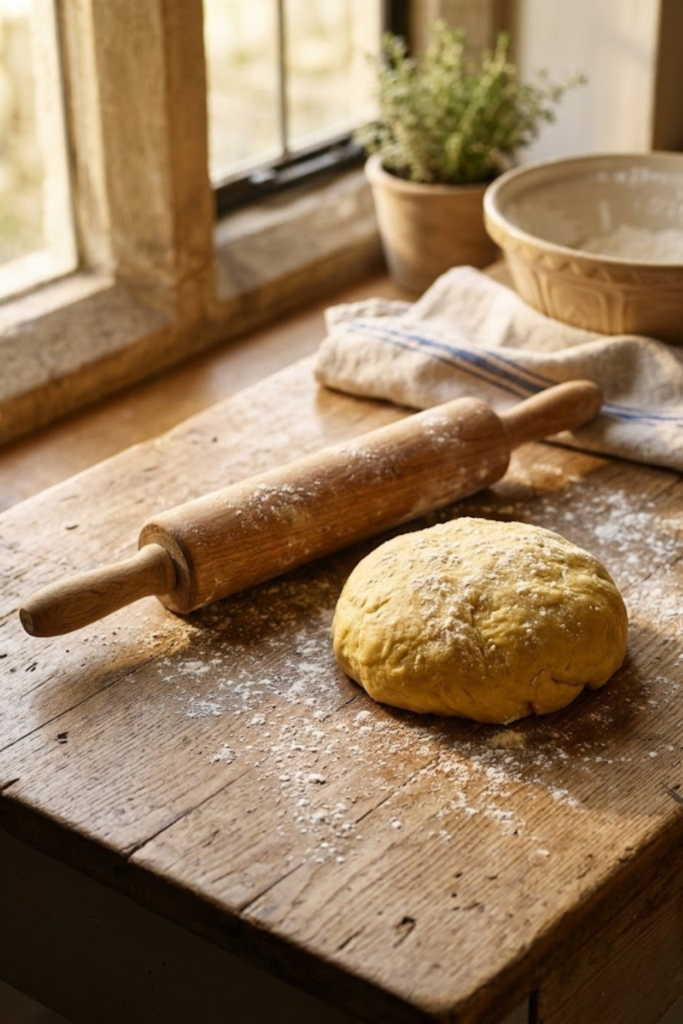
After you mix your dough and it just barely comes together, don’t just start rolling it out. It needs a nap. Wrap it in plastic and put it in the fridge for at least an hour. This lets the gluten relax. If you skip this, your tart shell will pull away from the edges of the pan while it bakes. It’s so frustrating to see your beautiful crust turn into a tiny circle! Let it rest, then roll it out gently on a floured surface. It makes the dough much easier to handle and stops it from sticking to your rolling pin.
Creating the Silkiest Vanilla Custard Filling
Now that we have the crust ready, it’s time for the real star of the show: the custard. This is the part where the magic happens, but it’s also where things can go wrong pretty fast if you aren’t paying attention. I’ve made some big messes with custard in my time. One time I tried to make it while my kids were running around the kitchen, and I ended up with a lumpy, weird mess that looked like school glue. Not good! The key to a great filling is to be patient and keep things moving. You want a texture that is creamy and thick, but not heavy like a brick.
The Vanilla Bean Debate
Let’s talk about vanilla for a second. If you want those pretty little black dots in your tart, you really need to use a real vanilla bean. I know they cost a lot of money, but for a special dessert, it makes a huge difference. You just split the bean down the middle with a small knife and scrape the seeds out. If you can’t find beans or don’t want to spend the cash, a good quality extract is okay too. Just stay away from the fake stuff that comes in a cheap plastic bottle. It tastes like chemicals and it’ll ruin all your hard work. You want that deep, floral taste that only comes from the real plant.
The Tempering Dance
This part is what usually scares my students the most. Tempering eggs sounds like something a scientist would do in a lab, but it’s just a fancy word for warming them up slowly. You heat your milk and cream on the stove until it’s hot but not boiling over. Then, you take a little bit of that hot milk and slowly whisk it into your egg yolks and sugar. If you dump all the hot milk in at once, you’ll cook the eggs instantly. I’ve done that before, and trust me, vanilla-flavored scrambled eggs are a terrible dessert. Go slow, keep whisking like your life depends on it, and your custard will stay smooth.
Straining for Success
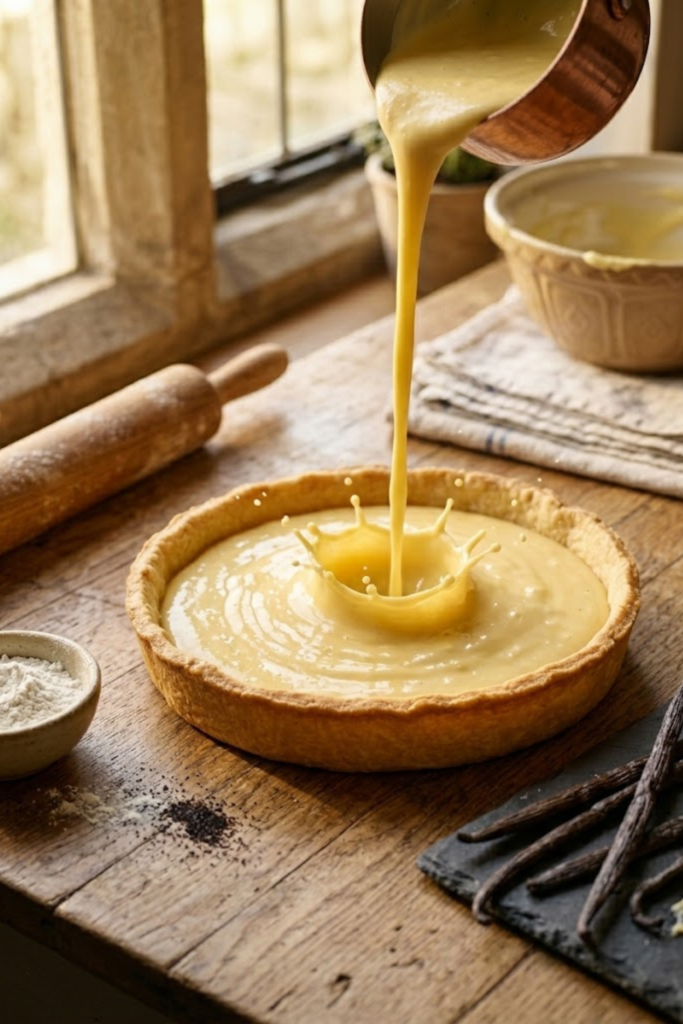
Even if you think your custard looks perfect, I always tell people to pour it through a fine-mesh sieve. This is my secret weapon for a professional look. Sometimes tiny bits of egg cook too fast or a piece of the vanilla pod gets in the mix. Straining it makes sure the final tart feels like velvet on your tongue. It’s an extra step, and I know it means you have more dishes to wash, but it’s totally worth it. Once it’s strained, you just pour it into your baked shell and get it back into the oven. Just don’t overbake it, or it will crack and lose that beautiful wobble!
Serving and Storing Your Vanilla Custard Tart
I’ve seen so many of my students work hard for hours, only to ruin the whole thing right at the end because they were in a rush to eat. I totally get it! You’ve got this beautiful, creamy tart sitting there, and it smells like heaven. But how you serve it is just as important as how you bake it. I remember one time at a family dinner where I tried to cut the tart while it was still a bit too warm. It was a disaster! The custard just oozed everywhere and the crust crumbled into a million pieces. It still tasted good, but it looked like a mess on the plate. If you want to impress people, you have to be patient.
The Secret to Clean Slices
If you want those sharp, clean edges like you see in a fancy bakery, you need a sharp knife and a tall glass of hot water. Dip your knife in the hot water, wipe it dry with a clean towel, and then make one quick, confident cut. Wipe the blade clean after every single slice. This stops the custard from sticking to the metal and dragging across the next piece. It takes a few extra minutes, but it makes a huge difference in how the tart looks. People will think you bought it from a professional shop! I always tell my classes that the first slice is the hardest to get out, so don’t worry if it’s not perfect. The rest will be much easier.
Making it Look Pretty
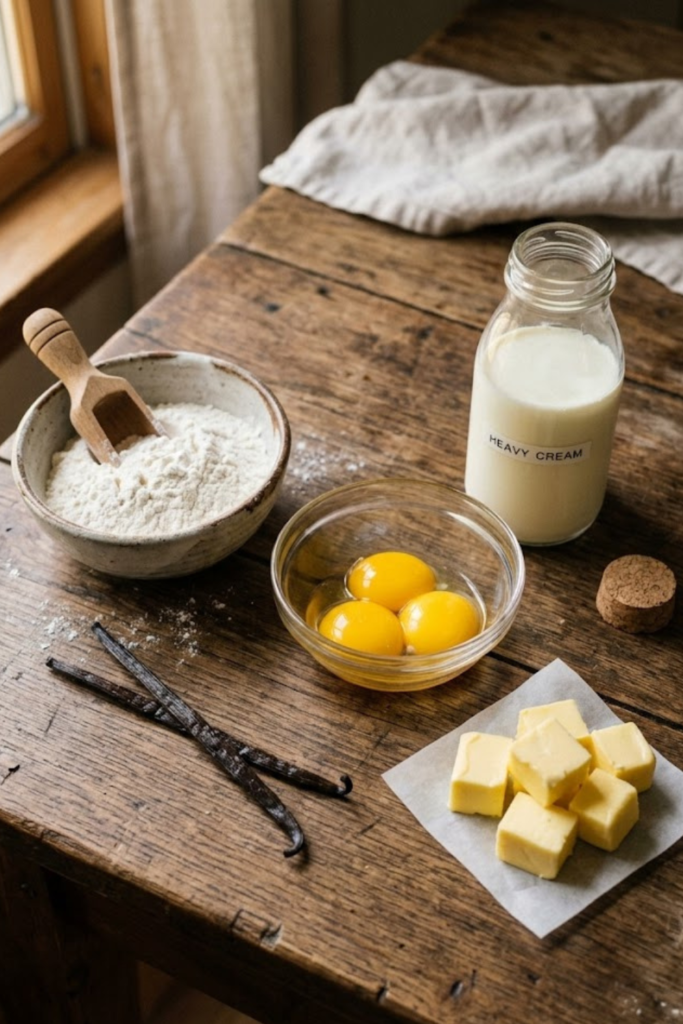
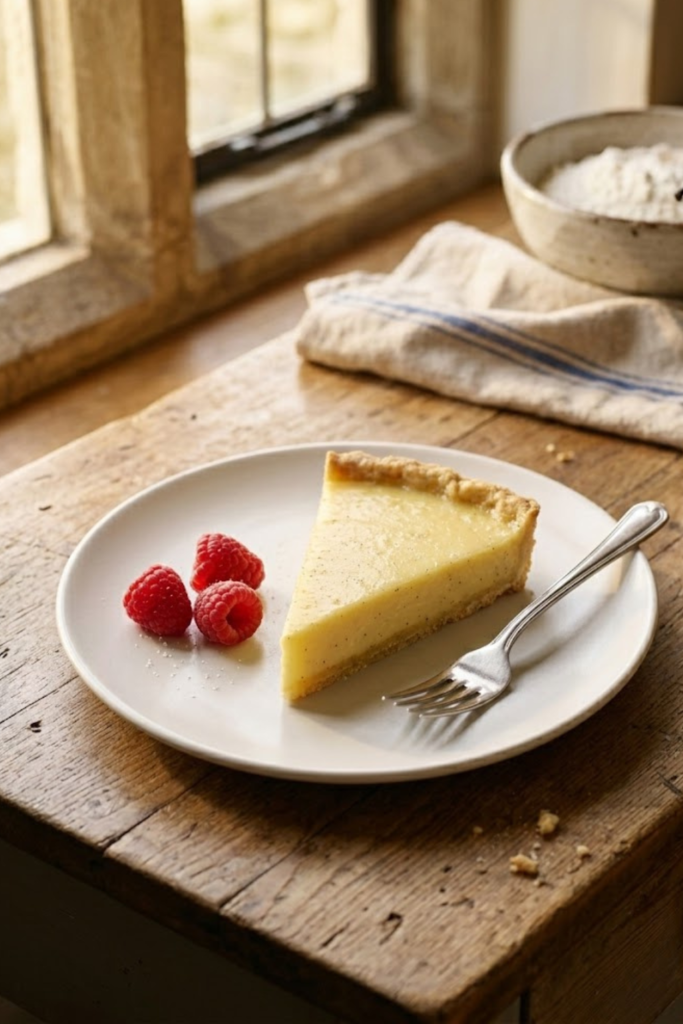
I usually serve this tart pretty plain because the vanilla flavor is so good on its own. But sometimes, if I have guests over, I’ll add some fresh fruit. Raspberries or strawberries are my favorite because the tartness of the berries cuts through the richness of the eggs and cream. You could also do a very light dusting of powdered sugar. Just don’t put the fruit on too early! If you put wet berries on the custard and leave it in the fridge, the juices will run and make the top look messy. Put them on right before you bring it to the table so everything stays fresh and bright.
Storage and Leftovers
If you actually have leftovers—which doesn’t happen often at my house—you have to keep this tart in the fridge. Because it’s full of eggs and cream, it can’t sit out on the counter for long. Put it in an airtight container or cover it loosely with some plastic wrap. It will stay good for about three days, but I think it tastes best on the second day when the flavors have had more time to mingle. Don’t freeze it, though! The custard texture gets really weird and watery once it thaws out. Keep it cold, keep it covered, and enjoy every last bite.
Bringing it All Together
Pulling a fresh vanilla custard tart out of the oven is honestly one of the best feelings in the world. I still remember the first time I got that perfect “wobble” right in the center. I felt like I had finally won a gold medal in the kitchen Olympics! Your kitchen is going to smell like a dream—a mix of warm butter, toasted sugar, and that deep, floral vanilla scent. It’s the kind of smell that makes everyone in the house suddenly appear in the kitchen asking, “Is it done yet?” But here is the part where you have to be strong. You have to wait.
The biggest mistake I see people make is trying to cut into the tart while it’s still warm. I get it, I really do. You’ve worked hard on this, and it looks amazing. But if you cut it too soon, the custard won’t be set, and it will just run all over the plate. It’ll taste good, but it won’t look like that beautiful dessert you see in the bakeries. You need to let it cool down on the counter first, and then put it in the fridge for a few hours. This gives the eggs and starch time to firm up so you get those nice, clean slices. I usually make mine the day before I need it just so I’m not tempted to ruin it.
When you are finally ready to serve it, you can keep it simple or dress it up a bit. Sometimes I just do a little dusting of powdered sugar over the top. If I’m feeling fancy, I’ll pile some fresh raspberries or sliced strawberries on top. The tartness of the berries goes so well with the sweet, creamy filling. I’ve even served it with a little dollop of whipped cream on the side because, well, you can never have too much cream, right?
Don’t worry if your crust isn’t perfectly straight or if there’s a tiny crack in the custard. It happens to the best of us! Baking is a journey, and every time you do it, you get a little bit better. The most important thing is that you made something from scratch with your own two hands. That’s a huge win in my book. If you enjoyed making this recipe and want to show off your hard work, please share it on Pinterest so your friends can try it out too! I can’t wait to hear how yours turned out. Happy baking!