Did you know that over 60% of people say a warm, pressed sandwich is significantly more “soul-satisfying” than a cold one? I totally agree! There is just something about a veggie grilled panini that hits different when the bread is crackling-crisp and the cheese is oozing out the sides. Last Tuesday, I was staring at a fridge full of random peppers and a lonely zucchini, and I thought, “Hey, let’s squish this!” It turned out so good I almost ate the crumbs off the floor. We are going to dive into how to make these at home without making a huge mess, using fresh herbs and seasonal produce.
Choosing the Best Bread for a Sturdy Sandwich
I have made a lot of sandwiches in my life, and if there is one thing I have learned, it is that the bread makes or breaks the whole experience. I remember this one time I tried to make a veggie grilled panini using just regular white sandwich bread from a plastic bag. It was a total disaster. The second the heat hit it and the press came down, the whole thing turned into a flat, wet pancake. My kids looked at me like I had lost my mind, and honestly, I felt pretty silly. If you want a sandwich that actually holds together and stays crispy, you have to pick a foundation that can stand up to the pressure.
Go for Crusty and Tough Loaves
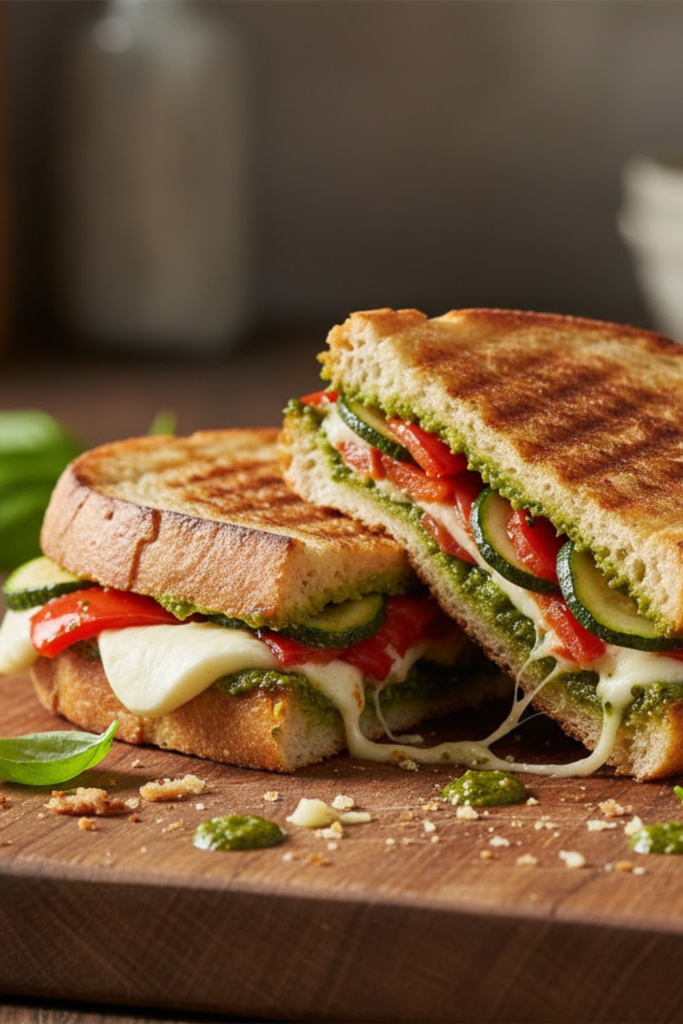
When you are picking bread at the store, give it a little squeeze. You want something that actually fights back a bit. I always reach for a sourdough or a nice, heavy loaf of ciabatta. These types of bread have a thick, chewy crust that acts like a shield for your fillings. Think about it: you are putting wet stuff like roasted peppers and juicy zucchini inside. If the bread is weak, that moisture is going to soak right through and make everything a mushy mess. Sourdough is great because it has those big air pockets that trap the melted cheese, but the crust stays crunchy enough to handle the heat. It is basically like a built-in handle for your lunch.
Why Thickness Really Matters
I used to think thinner slices were better so I could eat more of them, but I was wrong about that. You want your slices to be about three-quarters of an inch thick. If they are too thin, the panini press will just crush them into nothing. If they are too thick, the heat won’t reach the middle of the sandwich, and you’ll end up with toasted bread but cold, sad cheese. Nobody wants cold cheese in their panini. I usually buy a whole loaf and cut it myself so I can get the size just right. It makes a big difference in how the sandwich feels when you finally take that first bite.
The Secret Coating for the Outside
Now, here is a little trick a friend showed me years ago that I still use every single time. Don’t put the butter on the inside of the bread. Instead, smear a thin layer of softened butter or even mayo on the very outside of the bread. This is what gives you that beautiful gold color and that satisfying “crack” sound when you bite into it. I know using mayo sounds a bit weird to some people, but it spreads easier and doesn’t burn as fast as butter does. It is a total game changer for getting that restaurant look at home without much effort.
Layering Your Vegetables for Maximum Flavor
Okay, let’s talk about the inside of the sandwich. This is where most people make their biggest mistake. I see it all the time in my cooking classes—students just pile a bunch of raw veggies between two slices of bread and hope for the best. What happens? Five minutes later, they have a puddle on their plate and a sandwich that tastes like plain water. If you want a veggie grilled panini that actually tastes like something, you have to think about how you put those ingredients together. It’s a lot like building a wall; if the foundation is shaky, the whole thing is going to fall over when you try to eat it.
Pre-Cook the Watery Stuff
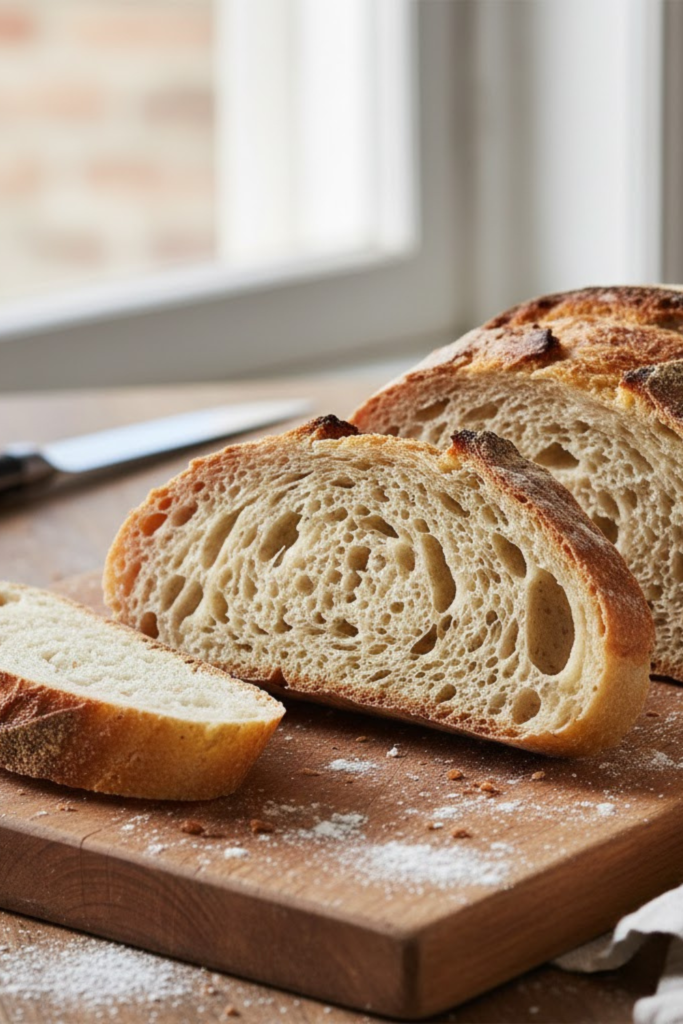
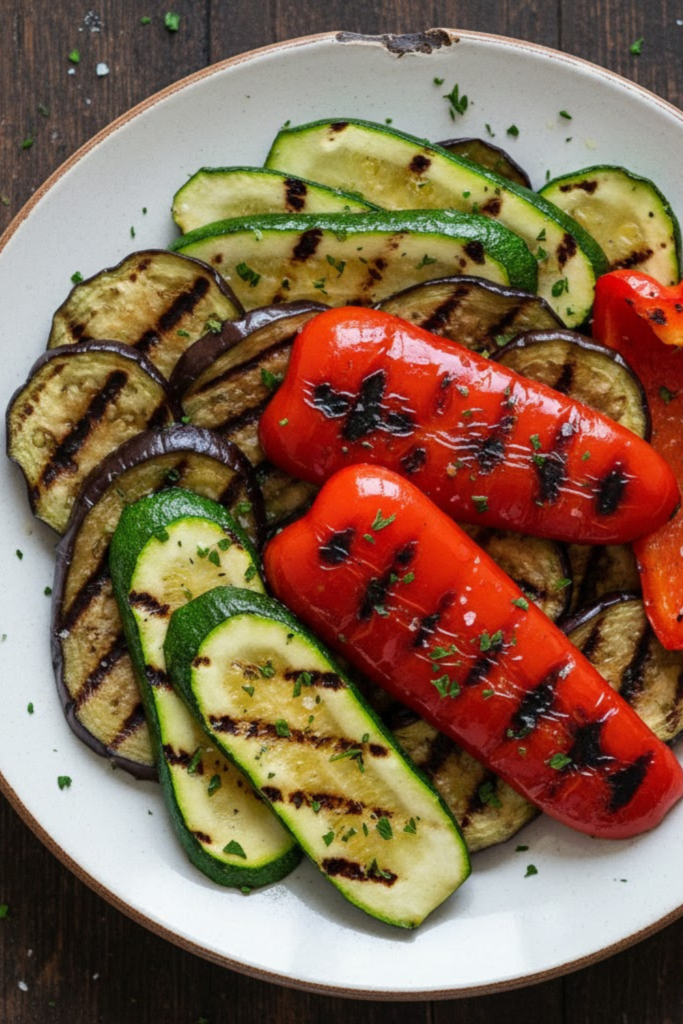
One big tip I always give is to cook your veggies before they even touch the bread. Vegetables like zucchini, mushrooms, and even spinach are mostly made of water. If you put them in raw, that water has nowhere to go but straight into your crusty bread. I like to throw my sliced zucchini on a hot pan for a few minutes first. You get those nice brown marks and, more importantly, you get rid of the extra moisture. It makes the flavors much more intense. I once forgot to do this with some portobello mushrooms, and the bread basically turned into a sponge. It was a soggy mess that I ended up eating with a fork, which really defeats the purpose of a sandwich.
Use Cheese as Your Glue
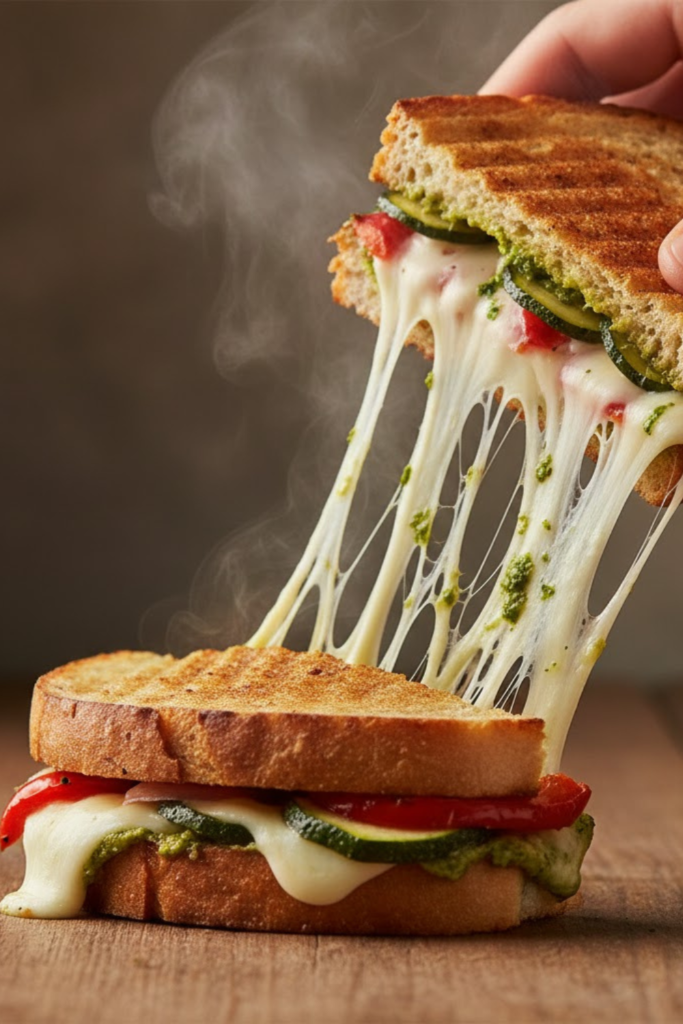
Now, here is the real secret to a sturdy panini: the cheese glue. You want to put a layer of cheese on the bottom piece of bread AND the top piece of bread. The vegetables should be tucked right in the middle of those cheese layers. Why? Because when the cheese melts, it acts like a sticky cement that holds everything together. If you just put cheese on one side, your peppers and onions are going to slide right out the back the moment you take a bite. It is a bit messy to put together, but it saves you from a “sandwich landslide” later on. I prefer using mozzarella because it’s so stretchy, but a good provolone works wonders too.
The Shortcut with Jarred Peppers
If you are in a rush—and believe me, as a teacher, I am always in a rush—don’t feel bad about using jarred roasted red peppers. They are already soft and have this great smoky taste that is hard to get at home without a lot of extra work. Just make sure you pat them dry with a paper towel first so they don’t leak. Adding a bit of fresh basil or a smear of pesto right on top of the peppers adds a punch of flavor that makes the whole thing feel expensive. It is a simple way to make a basic lunch feel like something you bought at a fancy cafe down the street.
The Best Cheeses for a Melty Veggie Grilled Panini
I’ve spent a lot of time in my kitchen trying to find the perfect cheese for a veggie grilled panini. I think cheese is the most important part because if it doesn’t melt right, the whole sandwich feels like a chore to eat. I remember one time I tried to use a very old, hard Parmesan because it was all I had left in the fridge. Big mistake. It just sat there like little salty rocks while the bread burned to a crisp. It was such a bummer! Since then, I’ve learned that you really need a cheese that knows how to go with the flow and get gooey. You want something that acts as a blanket for your vegetables.
The Best Melters: Mozzarella and Provolone
For most of my sandwiches, I stick with the basics. Mozzarella is basically the king of the panini world because it has that amazing stretch everyone loves. It doesn’t have a super strong taste, which is actually good because it lets the roasted peppers and pesto shine. If I want a little more “zing,” I usually mix in some provolone. Provolone has a bit of a smoky or sharp kick depending on which one you buy at the deli. When you combine them, you get the perfect mix of a great melt and a nice flavor. I usually tell my friends to get the deli slices instead of the blocks because they are thinner and melt way more evenly when you are in a hurry to get lunch on the table.
Adding Tangy Flavors with Goat Cheese
Sometimes a veggie grilled panini needs something a bit different to wake up your taste buds. This is where goat cheese comes in. It doesn’t melt in the same way as mozzarella—it gets more creamy than stretchy. I love smearing a bit of goat cheese on one side of the bread and then putting the mozzarella on the other. The creaminess goes so well with sweet things like balsamic glaze or sun-dried tomatoes. If you aren’t a fan of goat cheese, feta is another cool option, though it stays a bit chunky. It gives you those little pops of saltiness that make a veggie sandwich feel much more fancy than it actually is. It really changes the whole vibe of the meal.
Keep the Cheese at Room Temp
Here is a quick tip I picked up from a local chef. If you take your cheese straight from the cold fridge and put it on the bread, the bread might burn before the middle is hot. I try to take my cheese out about ten or fifteen minutes before I start cooking. It sounds like a small thing, but it helps the cheese reach that perfect “ooze” stage much faster. You want to make sure the heat gets all the way through so every bite is warm. There is nothing worse than biting into a hot sandwich and hitting a cold piece of cheese in the center. Taking this extra step makes the process much smoother.
Grilling Without a Panini Press: Pro Tips
I remember when I first started getting into making these sandwiches, I didn’t actually own a panini press. I was a teacher living in a tiny apartment, and my kitchen counter was about the size of a postage stamp. I really wanted that restaurant-style veggie grilled panini, but I wasn’t about to go out and spend fifty bucks on a machine that only does one thing. It felt like a waste of space. So, I had to get a little creative with what I already had in my cupboards. It turns out, you don’t need fancy gadgets to get that perfect crunch. You just need a bit of gravity and some patience.
The Two-Pan Trick
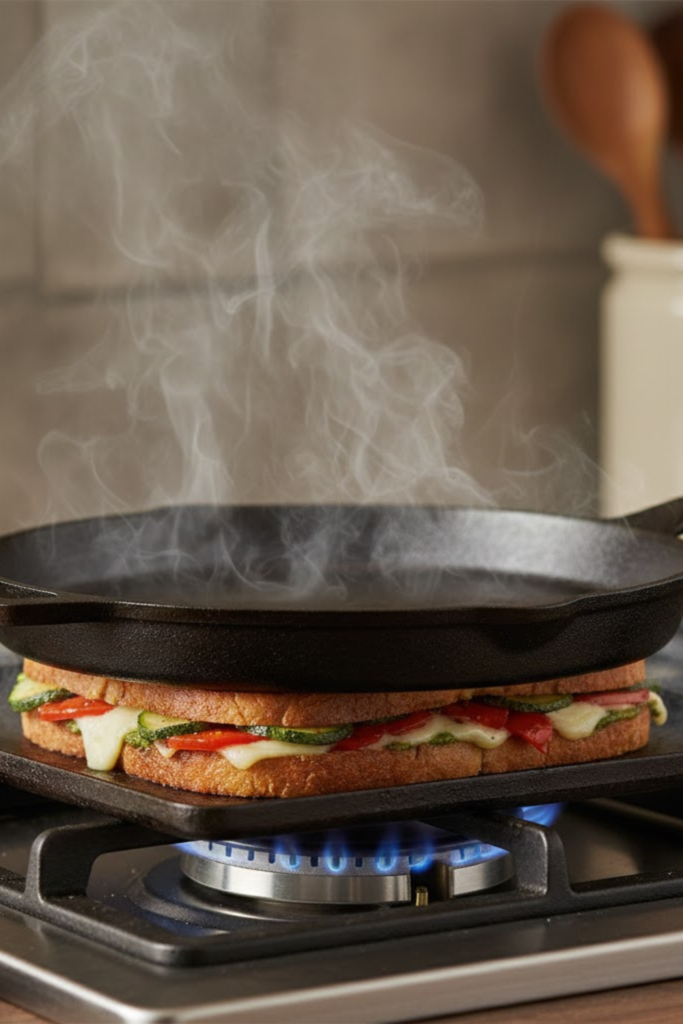
The easiest way to do this at home is what I call the “pan-on-pan” method. I take my heaviest cast-iron skillet and get it nice and hot on the stove with a tiny bit of oil. Once I put the sandwich in, I take another heavy pan—like a smaller pot or a second frying pan—and set it right on top of the sandwich. To make it even heavier, I sometimes put a couple of big cans of soup inside that top pan. This mimics the weight of a real press and forces the bread to make contact with the heat. It makes the cheese melt so much better because everything is squished together. Just be careful not to push too hard, or you might squeeze all your tasty fillings right out the sides!
Managing the Heat for the Perfect Crunch
One thing I learned the hard way is that you can’t rush a good panini. In my early days, I would crank the burner up to high because I was hungry and wanted to eat right then. All that did was burn the outside of the bread while the inside stayed cold. It was a total letdown. Now, I keep the stove on medium-low. It takes a few extra minutes, but it gives the heat enough time to travel through the thick bread and melt that mozzarella glue we talked about earlier. You want to hear a gentle sizzle, not a loud popping sound. If it starts smoking, turn it down! Slow and steady really does win the race for getting that golden-brown crust.
Getting Those Professional Grill Marks
If you really miss those pretty lines that a press makes, you can use a grill pan instead of a flat skillet. It has those raised ridges that give you the classic look. I love using one because it makes the sandwich look like it came from a professional deli. If you don’t have one, don’t sweat it. A flat pan works just as well for the taste. The most important part is that you flip the sandwich halfway through. Since there’s no heater on the top, you have to do the work yourself. I usually wait about three or four minutes per side. When you flip it, you’ll see that toasted color, and that’s when you know you’re doing it right.
Bringing it All Together for the Best Lunch Ever
So, there you have it. We have walked through every single step of making a killer veggie grilled panini that won’t fall apart or taste like a wet rag. I really hope you feel a bit more confident about getting in your kitchen and trying this out. I know I used to be pretty scared of making a mess or wasting food, but once you get the hang of picking the right bread and layering things properly, it becomes second nature. It is such a great feeling to sit down with a sandwich that looks like it cost fifteen bucks at a cafe but only took you ten minutes to put together at home. I often make these for my fellow teachers during our short lunch breaks, and they always ask how I get the bread so perfectly crispy.
To wrap things up, just remember the big three rules we talked about today. First, get that sturdy bread like sourdough or ciabatta. It is the backbone of your whole sandwich and keeps everything from getting soggy. Second, don’t be lazy with your veggies—cook them a bit first to get the water out. And third, use that “cheese glue” method on both sides of the bread so your fillings don’t go flying across the room when you take a bite. If you keep those things in mind, you are going to have a great meal every single time. It is all about the small details that make a big difference in the end result.
I really think that cooking for yourself is one of the best things you can do for your health and your wallet. Plus, a veggie grilled panini is a great way to use up whatever leftovers you have sitting in the back of your fridge. You don’t need to be a professional chef to make something that tastes amazing. Just be patient with the heat, use plenty of cheese, and don’t forget to butter the outside of that bread. I’ve seen many people skip that step and wonder why their sandwich is pale and soft. Don’t let that be you!
If you enjoyed this guide and found it helpful for your next lunch, please do me a huge favor. Go ahead and save one of the photos from this post and share it on Pinterest! It really helps more people find my recipes and helps me keep sharing these tips with all of you. I’d love to see photos of your own creations too, so if you make one, let me know how it turned out. Happy grilling!