Hey there! I’m so glad you’re here in my kitchen today. If you’re anything like me, you’ve probably had a few “oops” moments with baking. I remember back in my early days, I tried to make a green cake for a bake sale. I didn’t use real nuts—just a ton of cheap food coloring. It looked like a swamp monster! Everyone was too polite to say anything, but I learned my lesson. Real flavor comes from real ingredients.
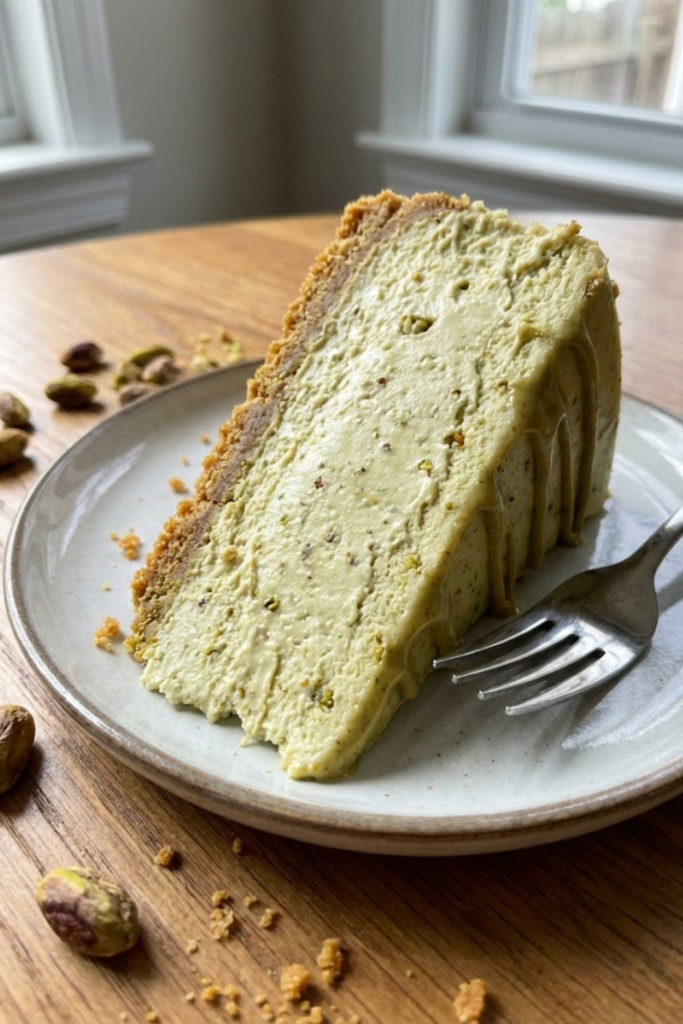
Did you know that pistachio popularity has skyrocketed by nearly 20% in the last few years? People are finally realizing that these little green nuts are the gold standard for treats. This Pistachio Cheesecake is my absolute pride and joy. It is thick. It is creamy. And honestly, it’s easier than it looks if you don’t overthink it!
I’ve spent years teaching folks how to get that perfect, silky texture without the top cracking like a dry sidewalk. You don’t need fancy tools. Just some patience and a lot of love. I’m going to walk you through exactly how I do it. We are going to use real pistachio paste—not that fake syrup stuff. Trust me, your taste buds will thank you later. Let’s get our hands a little messy and make something beautiful together!
Choosing the Right Pistachios for Your Crust
Let me tell you a secret: the crust is actually the best part of a pistachio cheesecake. I know, I know, everyone loves the creamy middle, but if the bottom is soggy or bland, the whole experience is ruined. I’ve seen plenty of folks try to shortcut this part. I remember one time I was in a big rush and I used some old nuts I found in the back of my pantry. They tasted like cardboard! It was so embarrassing when I served it to my neighbors at the block party. Since then, I’ve become very careful about what goes into my crust. You want that perfect crunch that stands up to the soft filling.
Why Roasted Salted Pistachios Are My Top Choice
A lot of people ask me if they should buy the raw, bright green nuts or the roasted ones. Here is the deal: raw nuts look prettier, but they don’t have much flavor. When you roast a nut, the oils come to the surface and everything smells amazing. I always buy the roasted, salted ones. Why? Because that little bit of salt is what makes the sugar in the cake really pop. It’s like putting salt on a watermelon; it just works. If you only have unsalted ones, just add a tiny pinch of sea salt to your crumbs. Also, please buy them already shelled. I spent an hour peeling nuts once and my fingernails didn’t forgive me for a week! It’s a lot of work for no reason.
Getting the Perfect Crumble Texture
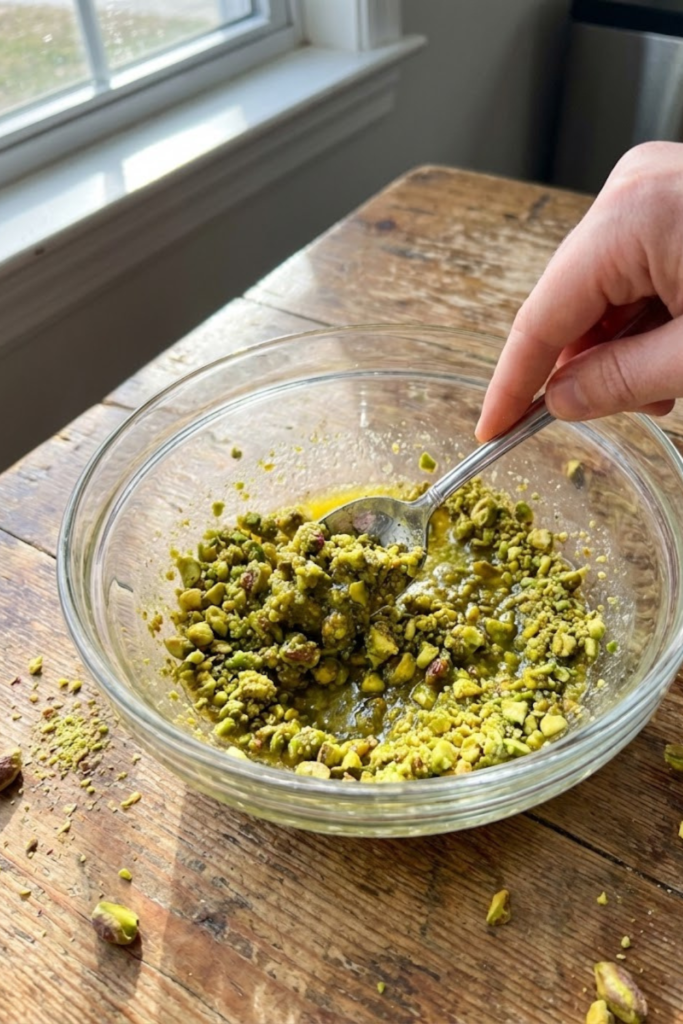
When you are ready to break those nuts down, don’t just turn the blender on and walk away. You want to pulse it. If you grind them too long, the friction heats up the oils and you end up with pistachio butter. While that’s tasty on toast, it makes a terrible crust. You want a mix of fine crumbs and maybe a few tiny pieces about the size of a grain of rice. This gives the pistachio cheesecake a bit of “bite” that feels really professional. I usually use a food processor, but a rolling pin and a plastic bag work great too if you need to blow off some steam.
The Wet Sand Butter Rule
Mixing in the butter is where most people mess up. I usually start with about five tablespoons of melted butter for every two cups of crumbs. Give it a good stir with a fork. You are looking for a texture that feels like wet sand at the beach. If you squeeze it in your hand, it should hold its shape. If it falls apart, add a teaspoon more butter. If it’s dripping oil, you went too far and might need more crumbs. This makes sure your base stays firm under the weight of all that cheese. It’s the simple things that make the biggest difference.
The Secret to a Silky Filling
Now we get to the heart of the matter—the part that makes or breaks your pistachio cheesecake. I remember my first few tries at making cheesecake back in the day. I was always so impatient. I’d pull the cream cheese right out of the fridge and start mixing it immediately. Big mistake! The filling always looked like cottage cheese because of all those tiny white lumps that wouldn’t go away. It didn’t taste bad, but the texture was just all wrong. To get that silky, velvet feel that everyone loves, you really have to follow a few simple rules.
Start With Room Temp Everything
This is probably the most important tip I can give you as a teacher. You need your cream cheese, eggs, and sour cream to be at room temperature before you even think about turning on the mixer. I usually set mine out on the kitchen counter about two or three hours before I start baking. If you’re in a big hurry, you can put the eggs in a bowl of warm water for a bit, but please don’t try to microwave the cheese! It changes the texture. When everything is the same temperature, the ingredients blend together perfectly. This makes the filling for your pistachio cheesecake super smooth without you having to beat it for a long time.
How to Mix the Pistachio Paste
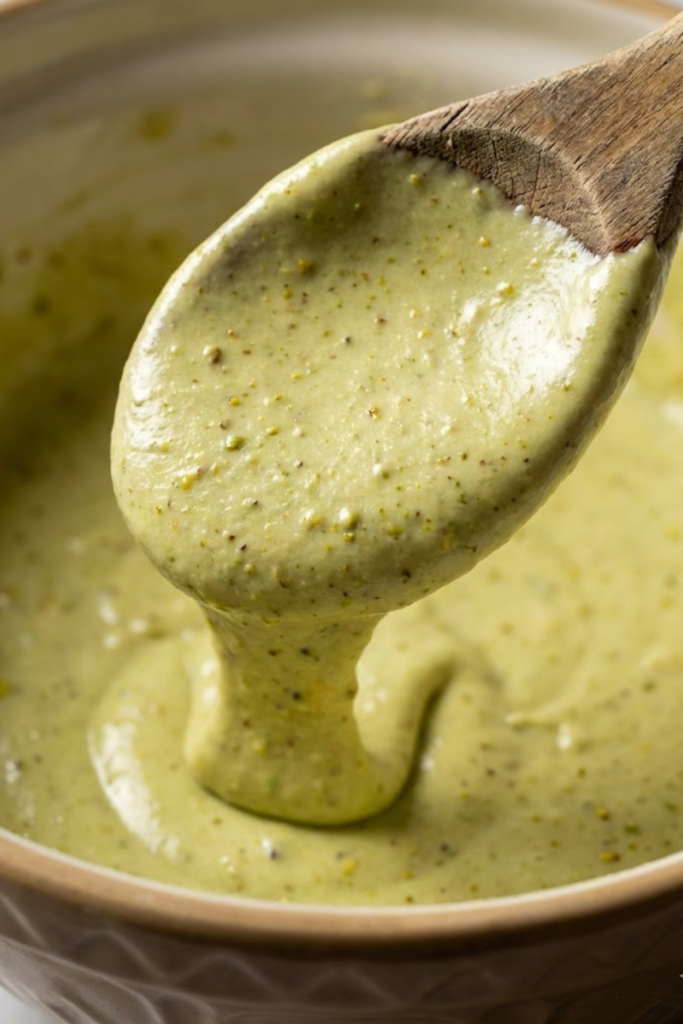
Real pistachio paste is what gives this cake that deep, nutty flavor and that pretty green color. It can be a bit thick and sticky, though. I like to mix my cream cheese and sugar together first until they look nice and fluffy. After that, I add the paste. If you wait until the very end to add it, it might not mix in all the way. You don’t want big green streaks; you want one solid, beautiful color. I always use the paddle attachment on my stand mixer for this, not the whisk. The whisk adds way too much air, and air is exactly what makes your cake puff up in the oven and then sink or crack later.
Keep the Mixer Speed Low
When you are mixing, keep the speed on low or medium. You aren’t trying to make whipped cream here! You just want to combine the ingredients until they are “just” mixed. Once you add the eggs, stop the mixer as soon as they disappear into the batter. Over-mixing at this stage is a trap that a lot of beginners fall into. If you see a few tiny specks of nut in the batter, don’t worry about it. That just shows people you used real nuts! Just take your time, keep the speed slow, and you’ll have a filling that is absolutely dreamy.
Avoiding the Dreaded Cheesecake Cracks
Nothing hurts a baker’s heart more than opening the oven and seeing a giant canyon running through the middle of their pistachio cheesecake. I’ve been there many times, believe me. I remember making this for my sister’s birthday years ago. It looked perfect, but as it cooled, a huge crack opened up right across the top. I felt like I failed! But over time, I learned that cracks aren’t really about bad luck; they’re about moisture. You can avoid them if you follow a couple of tricks I’ve picked up over the years.
The Magic of the Water Bath
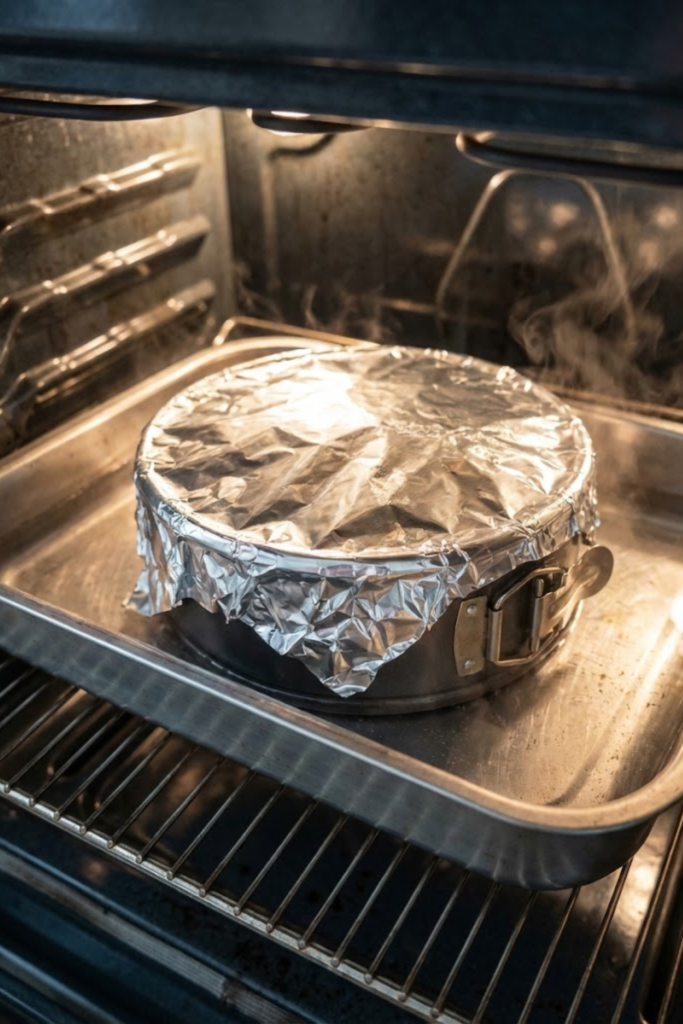
The best way to keep your pistachio cheesecake from cracking is to use a water bath. This sounds fancy, but it’s really just a big pan of water. The steam keeps the air in the oven moist so the top of the cake doesn’t dry out and split. I usually wrap the bottom of my springform pan in three layers of heavy-duty foil. You want to be very careful here because if water leaks in, your crust will get soggy. I then place the cake inside a roasting pan and fill the roasting pan with hot water until it reaches halfway up the side of the cake. It acts like a cozy blanket for your dessert, keeping the heat steady.
The “Slow and Easy” Cooling Method
Most cracks happen while the cake is cooling down. If the temperature drops too fast, the cake shrinks and pulls away from the edges, causing a big split. Here is what I do: when the timer goes off, I turn the oven off but I don’t take the cake out. I crack the oven door open just a tiny bit and let it sit there for a whole hour. This lets the pistachio cheesecake come down to room temperature slowly. It’s hard to wait because it smells so good, but patience is your best friend here.
What to Do If It Cracks Anyway
Listen, if your cake cracks, don’t throw it away! It’s going to taste just as good. Even after years of teaching, I still get a crack once in a while. If it happens, just hide it! I like to whip up some extra heavy cream or use a thick layer of crushed nuts to cover the top. Nobody will ever know there’s a gap underneath. Plus, more toppings mean more flavor, so it’s a win. Just relax and remember that baking is supposed to be fun, not a test.
Garnishing for That Professional Look
I love the part where I get to make the cake look pretty. For a long time, I just served things plain. I thought, “if it tastes good, who cares what it looks like?” But then I saw how people reacted when I started adding little extras. It makes them feel special and lets them know you put in that extra effort. I remember my nephew’s face when I brought out this pistachio cheesecake with the white chocolate. He actually thought I bought it from a fancy bakery! That made me feel so good. You don’t have to be an artist to make this look great. Just follow a few simple steps and people will be asking for your recipe before they even take a bite.
The White Chocolate Drizzle
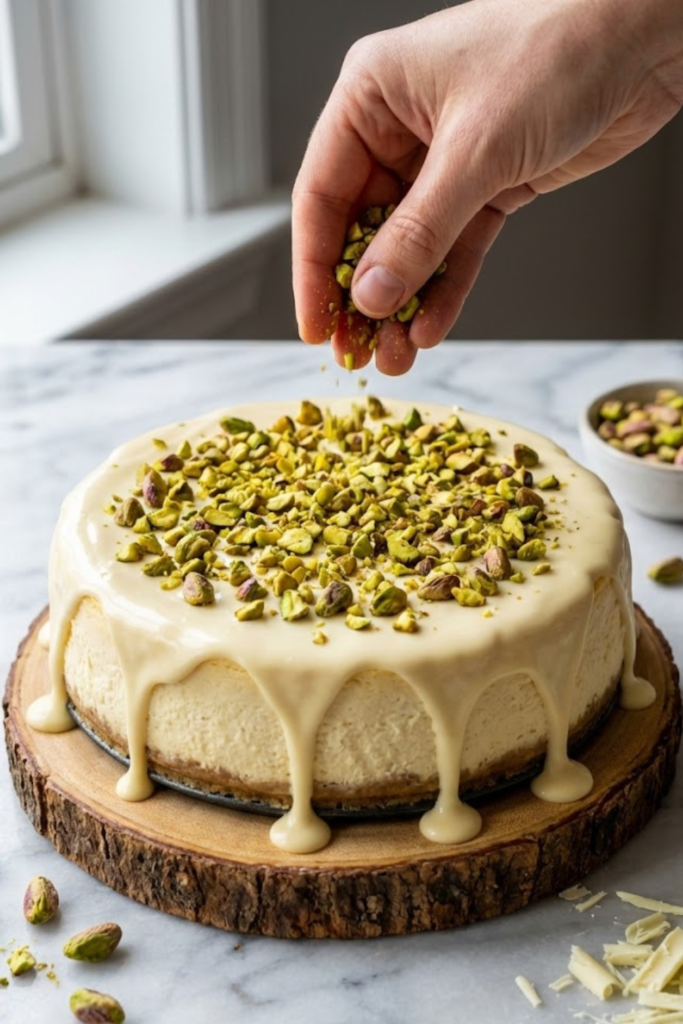
White chocolate is the perfect partner for pistachios. It’s sweet and creamy, which helps balance out the saltiness of the nuts. I usually melt about a half-cup of white chocolate chips with a tiny bit of heavy cream. Be careful with the heat, though. Don’t use a microwave for too long or the chocolate turns into a dry, grainy clump. Trust me, I’ve ruined many bowls of chocolate trying to go too fast. I suggest doing it in ten-second bursts and stirring in between. Once it is nice and smooth, just use a spoon to zigzag it across the top. It doesn’t have to be perfect or even. The messy look actually looks quite fancy and “artistic” anyway. I’ve taught a lot of classes on this, and the one thing I tell everyone is: don’t overthink the drizzle. Just let it flow naturally.
Adding the Final Crunch
After the drizzle, I go back to the nuts. I save about a handful of the brightest green pistachios from the bag. I chop them up by hand using a sharp knife so they stay in bigger pieces. If you use the food processor, they often turn into green dust. You want real chunks! Sprinkle them right on top of the wet chocolate so they stick. It creates a beautiful contrast against the pale green of the filling. People love seeing what’s inside the cake on the outside. It’s a great visual cue that tells your guests exactly what they are about to eat.
Plating for Your Big Event
When you’re finally ready to serve, use a hot knife. I dip my knife in a tall glass of hot water and wipe it dry between every single slice. This keeps the edges clean and makes the pistachio cheesecake look like it was cut by a professional. I like to serve a slice with a little bit of extra whipped cream on the side. If you want to be real fancy, you can add a single mint leaf or even a fresh raspberry on the plate. It’s a small thing, but it makes the plate look amazing. Just remember to have fun with it. Your guests are going to love it no matter what. Baking is about sharing joy, so don’t sweat the small stuff too much!
Share the Nutty Love!
So, there you have it! We have gone through every step of making this amazing pistachio cheesecake. I really hope you feel ready to get into the kitchen and start baking. I know it can feel like a lot of steps, but once you take that first bite, everything else just fades away. I remember the very first time I got this recipe exactly right. I sat down at my small kitchen table with a big glass of milk and a huge slice. The way the creamy filling melted with the salty crunch of the crust… well, I almost cried! It was that good. Since then, I’ve shared this with my students and my family, and it’s always the first thing to disappear at any party.
Making Memories in the Kitchen
Baking is about more than just food. For me, it’s about the people I’m with and the memories we make. My kids usually help me crush the nuts for the crust, and even though they make a giant mess on the floor, those are the moments I’ll always keep in my heart. Don’t get too stressed out if your kitchen looks like a green explosion happened. You can always clean up the flour and the shells later. The important thing is that you made something from scratch with your own two hands. That is a pretty cool feeling, isn’t it? Even if you’re a beginner, this pistachio cheesecake is something you can be proud of.
A Quick Final Tip for Success
If I have to leave you with one last bit of advice, it’s this: don’t rush the chilling process. I know I said it before, but it’s worth repeating. A cheesecake that hasn’t sat in the fridge overnight just isn’t the same. It needs that time for the flavors to really get to know each other and for the texture to set up properly. If you try to cut it too early, it might be a bit too soft. Trust me, the wait makes the reward so much better. I usually make mine the day before I need it so I don’t even have the temptation to peek at it.
I would love to hear how your baking adventure went! Did you add extra chocolate? Did you find a great brand of nuts? Every time I hear from someone who tried one of my recipes, it totally makes my day. This community of bakers is so special to me. If you enjoyed this recipe and want to help others find it, please pin this to your favorite dessert board on Pinterest! It helps me out a lot and lets more people join in on the fun. Happy baking, everyone, and enjoy every single bite of your pistachio cheesecake!