Do you want to know a secret? I used to be terrified of cooking lamb! It felt so high-stakes, you know? But this Herb Roasted Rack of Lamb with Mint Sauce completely changed the game for me. It is elegant, impressive, and shockingly easy to get right. In fact, statistics show that lamb consumption is rising as home cooks realize how versatile it is—so why not join the trend?
We are going to walk through everything from the butcher counter to the dinner table. Whether you are cooking for a holiday feast or a romantic date night, this recipe delivers that “wow” factor without the stress! Get your apron on, because we are about to make something truly delicious.
Selecting the Perfect Rack of Lamb at the Butcher
You know that feeling when you walk up to the meat counter and suddenly feel like you don’t belong there? That was me for years. I’d stand there staring at the glass case, terrified to ask questions because I didn’t want to sound clueless. I once bought a rack of lamb that wasn’t prepared properly, thinking I could fix it at home. Big mistake. I ended up butchering the poor thing—pun intended—and it looked like a science experiment gone wrong.
Getting the right cut is actually half the battle when making Herb Roasted Rack of Lamb with Mint Sauce. You can’t fix bad meat with good herbs. So, let’s talk about what you actually need to say to the guy in the white apron so you walk away with the good stuff.
What in the World is “Frenched”?
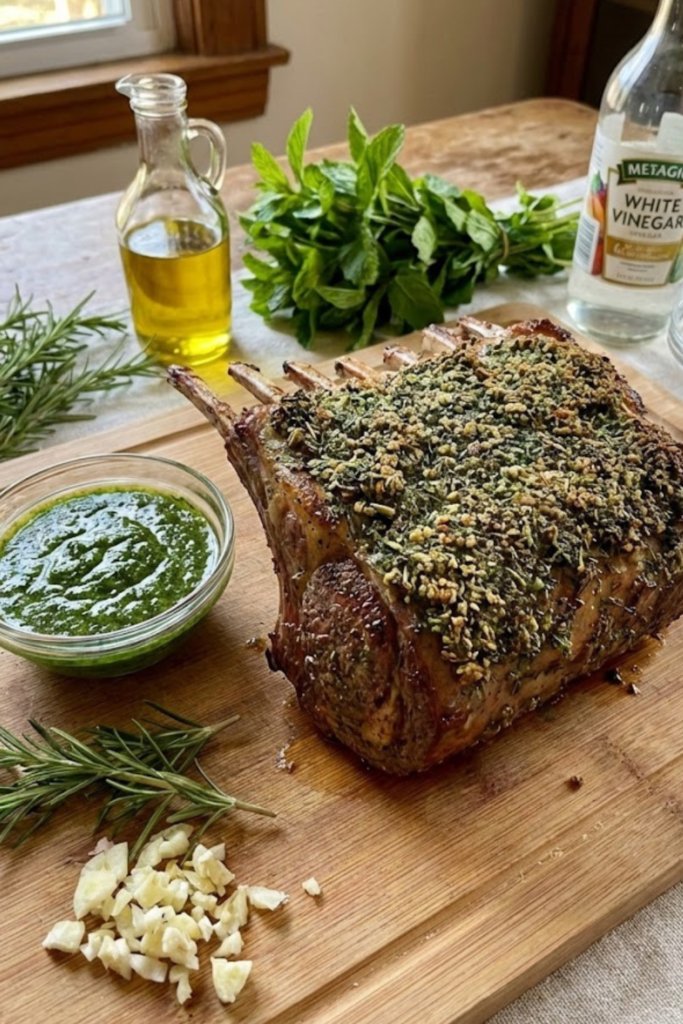
If there is one thing you take away from this, let it be this: buy it “Frenched.” This isn’t just a fancy term chefs use to sound important. It means the butcher has scraped the meat and fat off the ends of the rib bones.
Why does this matter? Well, if you don’t get it frenched, that extra fatty meat on the bone tips burns in the oven. It smells bad and looks messy. I tried doing this myself once with a paring knife. It took me an hour and I cut my thumb. Never again. Just ask the butcher to “French the bones” for you. They have the right tools and can do it in two minutes. It makes the final dish look like it came out of a professional kitchen.
The Grass-Fed vs. Grain-Fed Debate
This is where people get hung up. I used to think lamb was just lamb, but the diet of the animal changes the flavor completely.
- Grass-Fed: This is usually from New Zealand or Australia. It’s smaller and has a stronger, “gamier” flavor. It tastes earthy.
- Grain-Fed: American lamb is often grain-finished. It’s bigger, milder, and tastes more like beef.
If you are cooking for people who say they “don’t like lamb,” go with the American grain-fed. It’s a safer bet. But if you want that classic, robust flavor to stand up to the mint sauce, grass-fed is the way to go. I personally prefer the grass-fed because I like my food to have a bit of punch to it.
Don’t Fear the Fat Cap
When you pick up your package, look at the fat. You want a nice, thick layer of white fat on top of the meat. A lot of people try to trim this all off because they want it lean. Don’t do that!
The fat cap melts while roasting and bastes the meat for you. That’s how you get a juicy rack of lamb. If you cut it all off, the meat dries out. It’s simple science. Look for a cap that is about 1/8 to 1/4 inch thick. If it’s thicker than that, you can trim it down a bit, but leave enough to keep things moist.
How Much Should You Buy?
I have learned the hard way that running out of food is worse than having leftovers. A standard full rack of lamb usually has 8 ribs.
For a main course, you should plan on 3 to 4 ribs per person. So, one full rack usually feeds two people comfortably. If you have big eaters or teenagers in the house, you might even need a rack and a half per couple. It is not a cheap cut of meat, I know. But it is better to have an extra chop for lunch the next day than to watch your guests eye the last piece on the platter.
Start with good ingredients, and the cooking part gets a whole lot easier. Next, we are going to get into making that crunchy herb crust that makes this dish famous.
Creating the Aromatic Garlic and Herb Crust
I have a confession to make. The first time I tried to make a crust for lamb, I used dried herbs from a jar that had been sitting in my cupboard since 2018. It was a disaster. The crust tasted like dusty hay, and it fell right off the meat as soon as I sliced it.
Since then, I’ve learned that the crust is the most important part of this dish. It adds texture and flavor that transforms a plain piece of meat into something special. Here is how to build it so it actually stays on the lamb and tastes amazing.
Fresh Herbs are Non-Negotiable
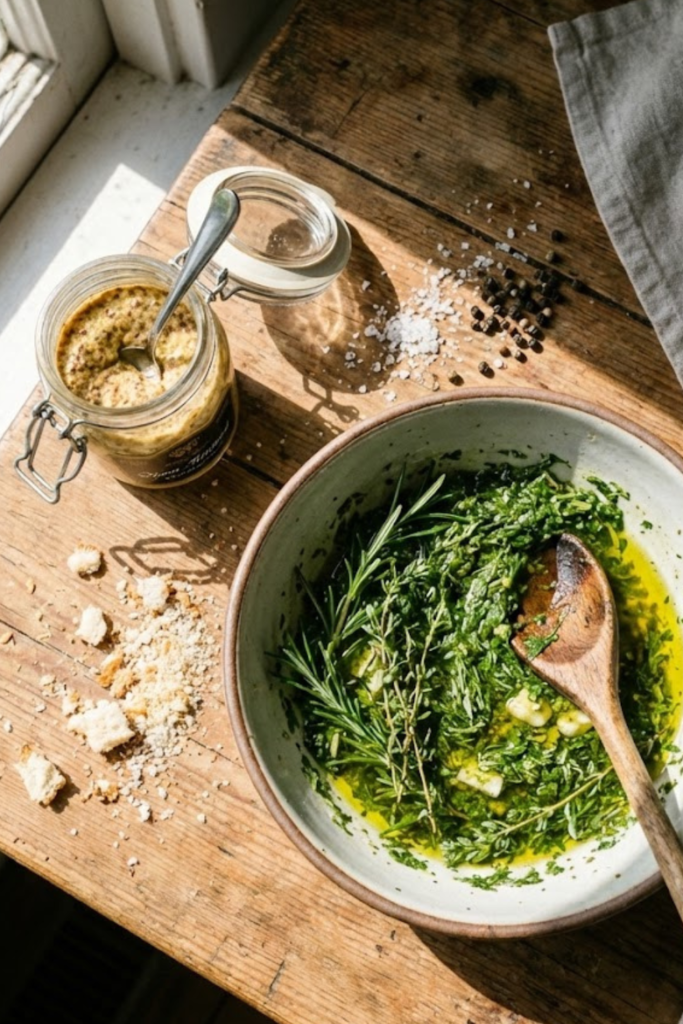
Please, do not use dried herbs for this. I know it’s easier to just shake a jar, but the flavor isn’t the same. You need the oils from fresh rosemary and thyme to seep into the fat.
Go to the produce section and buy those little plastic containers of fresh herbs. When you chop fresh rosemary, your whole kitchen smells like a holiday dinner. It’s worth the extra couple of dollars. Strip the leaves off the woody stems—nobody wants to chew on a stick—and chop them as fine as you can.
The Secret “Glue”: Dijon Mustard
How do you get breadcrumbs to stick to a slippery piece of meat? You need a binder. Some people use egg wash, but for lamb, Dijon mustard is the best choice.
After you sear the meat (we will get to that in the next section), you are going to paint the lamb with a thick layer of Dijon mustard. I use a pastry brush, but the back of a spoon works too. It does two things:
- It acts like glue for the herbs and breadcrumbs.
- The vinegar in the mustard cuts through the rich fat of the lamb.
Don’t be shy with it. If you use regular yellow mustard, it will be too sweet and runny. Stick with Dijon.
Panko for the Crunch
You can use regular breadcrumbs, but I swear by Panko. These are Japanese-style breadcrumbs that are lighter and flakier than the sandy stuff in the cardboard can.
When Panko toasts in the oven, it gets super crispy. I like to mix my chopped herbs, a little splash of olive oil, and the Panko together in a small bowl before I press it onto the mustard. The oil helps the breadcrumbs brown evenly so you don’t get burnt spots.
The Garlic Paste Trick
I love garlic, but there is nothing worse than biting into a raw chunk of it. Or worse, having the garlic burn and turn bitter before the meat is done.
To fix this, don’t just chop the garlic. Smash it. I put the garlic cloves on a cutting board, sprinkle a little coarse salt on them, and use the flat side of my knife to smash and scrape it until it turns into a paste. This way, the garlic flavor melts into the crust mixture perfectly. If that sounds too hard, just use a garlic press.
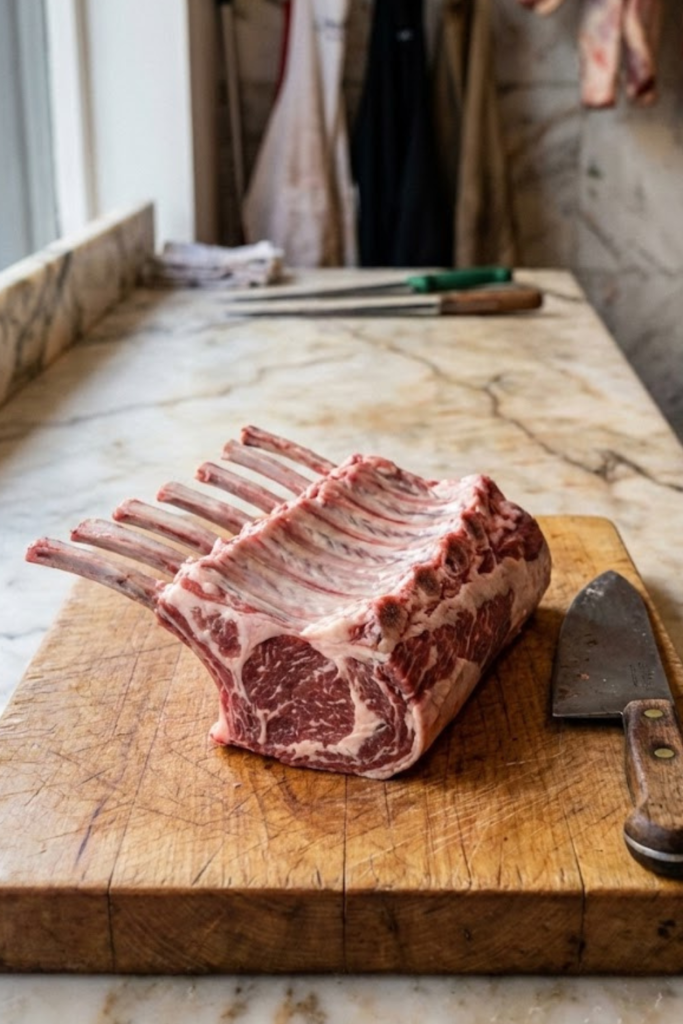
Once you have your green, crumbly mixture ready, you just press it gently onto the mustard-coated lamb. Now it’s ready for the oven!
Roasting Techniques for Ideal Doneness
Okay, this is the part where everyone gets nervous. You spend good money on the meat, you made the crust, and now you have to put it in the heat and pray you don’t ruin it. I used to stare through the oven door like I was watching a suspense movie. But honestly, if you have a plan—and a thermometer—you will be fine.
I’ve overcooked lamb before, and let me tell you, chewing on a grey, dry piece of meat is heartbreaking. So, let’s walk through how to get that perfect pink center without stressing out.
The Sear is Serious Business
Before the lamb ever touches the oven, it needs to hit a hot pan. This is called searing. I grab my heavy cast-iron skillet (or any pan that can take heat) and get it really hot with a little oil.
You place the lamb fat-side down. You will hear a loud sizzle—that’s a good sound! Let it sit there for about 2-3 minutes. You want the white fat to turn golden brown. This does two things: it starts melting the fat so it’s not chewy later, and it adds a ton of flavor. Just don’t burn it. Once it’s brown, take it out, let it cool a little, and then add your mustard and crust.
The Temperature Guide (Your Best Friend)
Please, I am begging you, do not guess when the meat is done. Ovens are different. My oven runs hot; yours might run cool. The only way to know for sure is to use a digital meat thermometer. It is the best tool in my kitchen.
Stick the probe into the thickest part of the meat, making sure you don’t hit a bone. Bone gets hotter faster and will give you a fake reading.
Here is the cheat sheet I stick to:
- Rare (Cool Red Center): Pull it out at 125°F.
- Medium-Rare (Warm Red Center): Pull it out at 135°F. (This is my favorite spot).
- Medium (Pink Center): Pull it out at 145°F.
Remember, the temperature will keep rising a few degrees after you take it out of the oven. So, if you want it to be 135°F, take it out when it hits 130°F.
The Hardest Part: Waiting
Once the lamb comes out of the oven, you are going to want to cut into it immediately. It smells amazing, and you are hungry. Don’t do it.
If you cut it right away, all the juices run out onto the cutting board, and the meat ends up dry. You have to let it rest. Put the lamb on a cutting board and tent a piece of foil loosely over the top. Let it sit there for 10 to 15 minutes.
During this time, the juices travel back into the center of the meat. It makes a huge difference. Use this time to finish your side dishes or pour a drink.
Where Does It Go in the Oven?
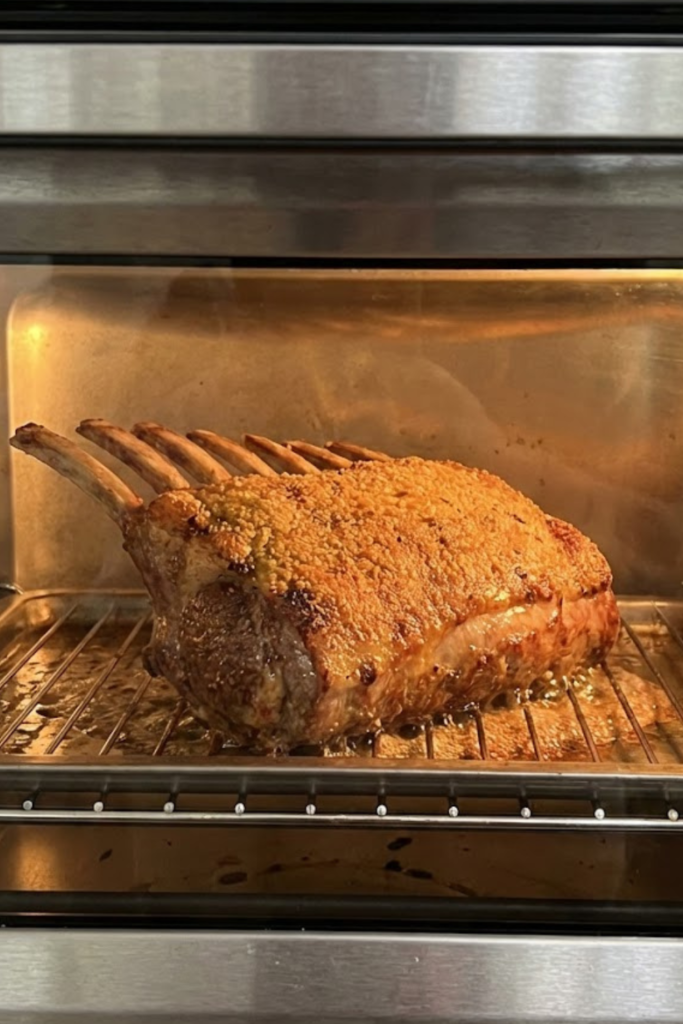
I usually put my oven rack right in the middle. If you put it too high, the herb crust might burn before the meat is cooked inside. If you put it too low, the bottom gets soggy.
I roast my lamb at a higher heat, usually around 400°F (200°C), for about 15-20 minutes depending on the size. High heat cooks it fast and keeps the crust crispy. If the crust starts looking too dark but the meat isn’t ready, just lay a piece of foil gently on top to shield it.
Mastering the Classic Vinegar Mint Sauce
Now, I know some of you might skip this part and just buy a jar of mint jelly. Please don’t do that. That neon green stuff is basically just sugar and food coloring. Real mint sauce is tangy, fresh, and cuts through the rich, fatty lamb like nothing else. It’s what makes the whole dish sing.
I remember my grandmother making this sauce. She didn’t measure anything, which drove me crazy when I tried to recreate it. But once I got the hang of it, I realized it’s all about balance.
Vinegar: The Sour Power
You need acid to balance out the fat of the lamb. If you just eat rich meat, your palate gets tired. The vinegar wakes everything up.
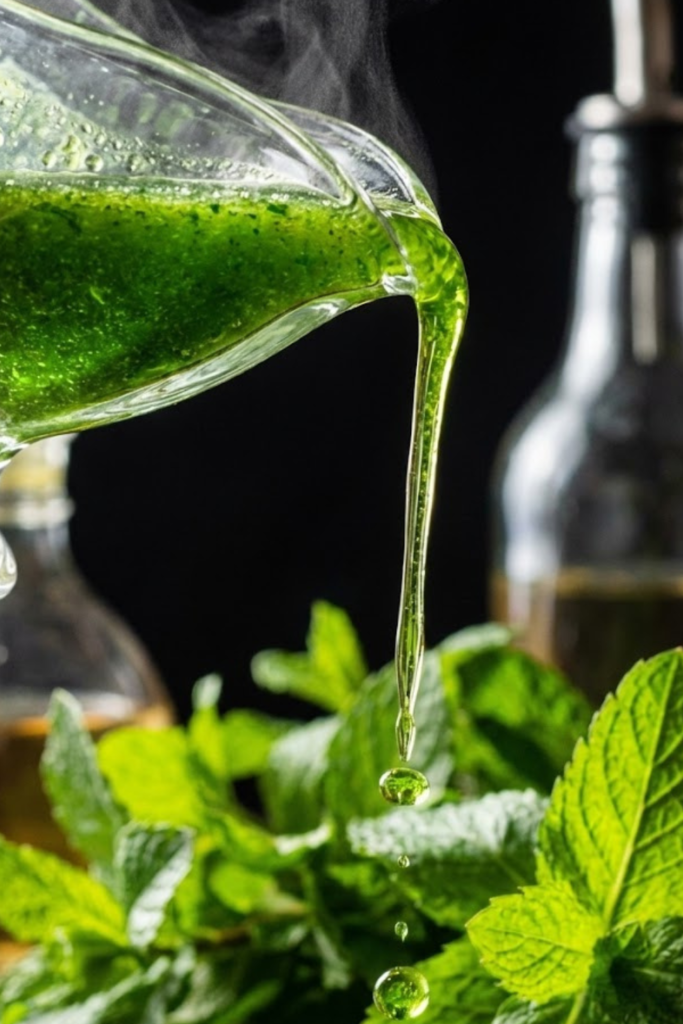
I use white wine vinegar or malt vinegar. Malt vinegar is very traditional—think fish and chips—and has a deeper flavor. White wine vinegar is lighter and cleaner. Just don’t use plain distilled white vinegar; it’s too harsh and tastes like pickles.
Sugar: Sweetening the Deal
Vinegar on its own will make you pucker. You need sugar to mellow it out.
The trick is to dissolve the sugar completely. If you don’t, you get gritty sauce. I usually heat a tiny bit of the vinegar in the microwave for 10 seconds, stir in the sugar until it disappears, and then add the rest of the cold vinegar. It’s a small step, but it makes the texture so much better. You want it sweet enough to taste good, but still tart enough to make your mouth water.
The Chop Matters
Here is where knife skills come in handy. You want the mint leaves to be tiny ribbons, not big chunks. Chefs call this a “chiffonade.”
Stack a few mint leaves on top of each other, roll them up like a cigar, and then slice them super thin. This releases all the oils and flavor without bruising the leaves. If you just hack at it, the mint turns black and mushy. You want bright green flecks floating in the sauce.
The Waiting Game (Again)
Just like the lamb needs to rest, the sauce needs to sit. If you make it right before you eat, the vinegar and mint haven’t had time to get to know each other.
I try to make the sauce at least an hour before dinner. Let it sit on the counter at room temperature. The vinegar will pull the flavor out of the mint, and the whole thing will taste more cohesive. If you have leftovers, it keeps in the fridge for a week, but honestly, we usually finish it all.
This sauce is so simple—literally just mint, vinegar, sugar, and maybe a pinch of salt—but it elevates the dish from “good” to “restaurant quality.”
Plating and Serving Your Lamb Dinner
You made it! The lamb is cooked, the crust looks golden, and the sauce is sitting there smelling like vinegar and spring. Now comes the fun part—making it look like something you’d pay $40 for at a restaurant.
I used to just pile everything on a plate and call it a day, but with a rack of lamb, a little bit of effort goes a long way. Plus, if you spent this much time on the crust, you want people to actually see it.
Carving Without Ruining the Crust
This is the moment of truth. You have this beautiful crust, and you don’t want it crumbling off.
First, make sure your knife is sharp. I mean really sharp. If you use a dull knife, you have to saw at the meat, and the crust will fall apart.
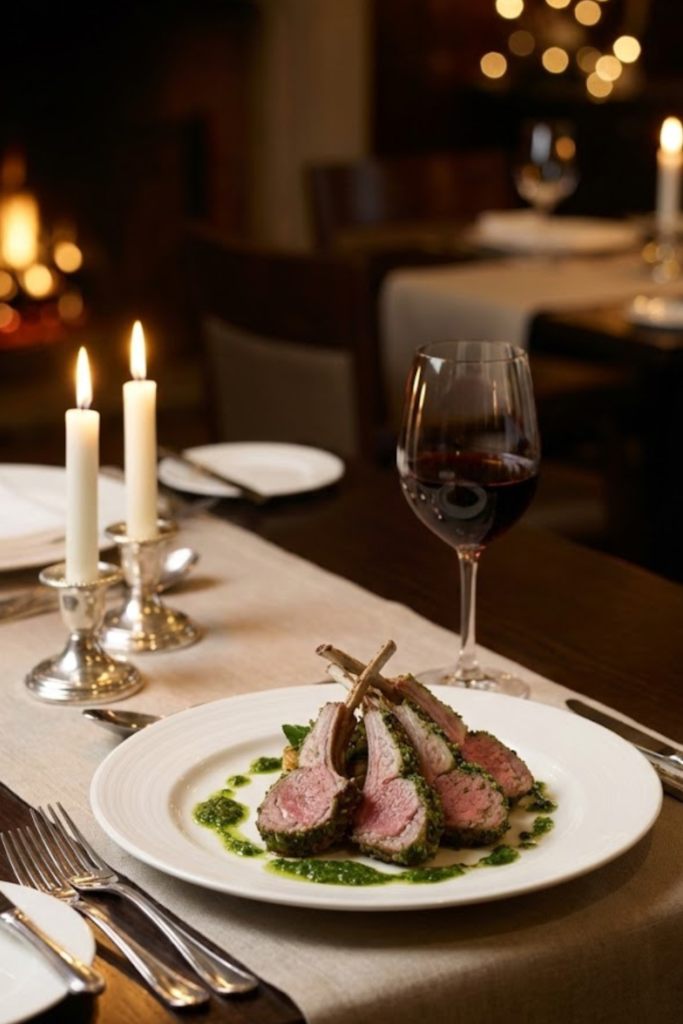
Turn the rack so the bones are facing up (or away from you). You want to slice right between the rib bones. You can cut them into single chops, which are cute and easy to eat (we call these “lollipops” in my house because of the handle). Or, if you want a hearty portion, cut them into double chops (two bones per piece). Just try to do it in one smooth motion if you can.
What Goes With It?
Honestly, lamb is rich. It has a lot of fat. So you don’t want heavy sides that weigh you down.
- Potatoes: I almost always do roasted baby potatoes. Throw them in the oven on a separate tray while the lamb cooks. They soak up the flavor really well.
- Green Veggies: Asparagus or green beans are perfect. They are bright and snap a little when you bite them, which is a nice contrast to the soft meat.
- Parsnip Purée: If you want to get fancy, boil some parsnips and mash them like potatoes. They are a little sweet and go great with the mint sauce.
Wine Pairing (For the Adults)
If you drink wine, red is the way to go. You need something with enough body to stand up to the lamb. A Cabernet Sauvignon is a classic choice—it’s big and bold. If you want something a little lighter, a Pinot Noir works too, especially if you used a lot of herbs in the crust.
Making It Look Fancy
You don’t need to be an artist. Just take two or three chops and fan them out on the plate. Drizzle a little bit of that mint sauce over the meat, but put most of it in a little bowl on the side so people can add more if they want.
Wipe the rim of the plate with a clean towel before you serve it. It’s a tiny detail, but it makes the dinner look clean and professional.
See? I told you it wasn’t that scary. Cooking a Herb Roasted Rack of Lamb with Mint Sauce feels like a huge project, but when you break it down, it’s just searing, crusting, and roasting.
The first time I made this, I was sweating bullets, but now it’s my go-to recipe for birthdays and anniversaries. The combination of the savory, crunchy crust and that zingy mint sauce is just… chef’s kiss.
Give this a try next time you want to impress someone (or just treat yourself). You might mess up the first time—maybe the crust falls off a bit or you overcook it slightly—but that’s how you learn. It will still taste delicious.
If you found this guide helpful, please save it to your Pinterest board! It helps me out a ton and keeps the recipe safe for when you need it. Happy cooking!