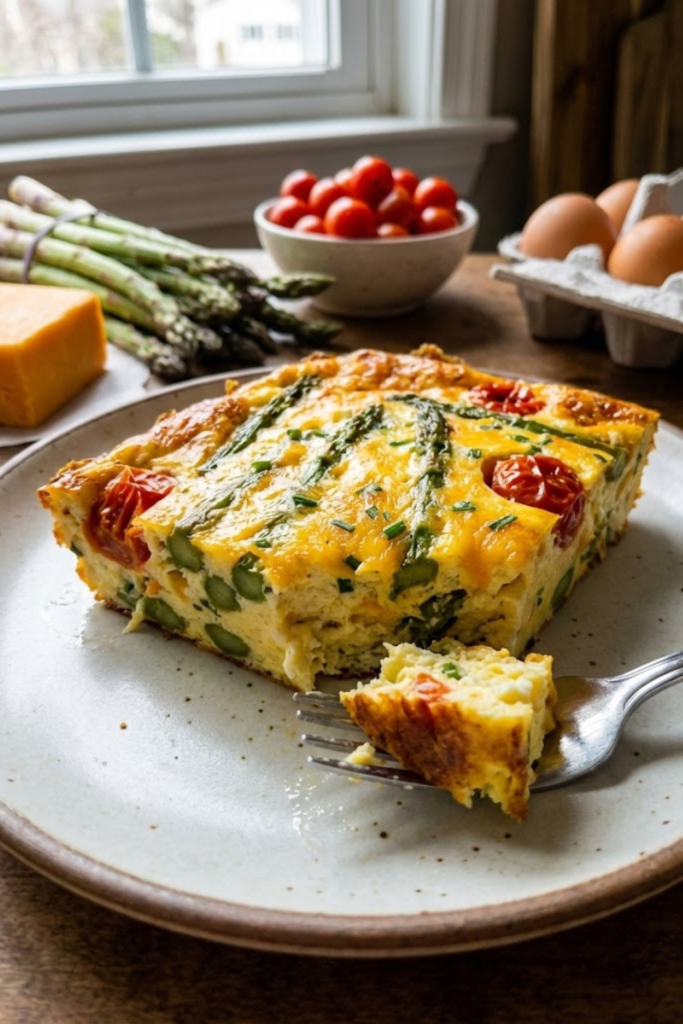
I honestly used to think frittatas were just fancy omelets that failed. You know the feeling, right? You try to flip a giant pan of eggs and end up with a kitchen floor covered in yellow goo. But then I discovered the Asparagus and Tomato Frittata with Sharp Cheddar, and my Saturday mornings changed forever!
Did you know that over 60% of home cooks prefer frittatas for brunch because they are way less stressful than poaching eggs? It is 2026, and we are all about keeping things simple but tasty. I love how the “snap” of fresh asparagus meets the “pop” of a roasted tomato. Plus, that sharp cheddar adds a kick that wakes up your taste buds better than a double shot of espresso.
Why Sharp Cheddar Changes the Frittata Game
When I first started making this Asparagus and Tomato Frittata with Sharp Cheddar, I honestly thought any old cheese would do. Boy, was I wrong! I remember one Saturday morning I tried using some leftover mozzarella sticks I chopped up because I was too lazy to go to the store. Don’t ever do that. It was like eating rubber bands stuck in soggy eggs. The reason we use sharp cheddar is all about that punchy flavor. It stands up to the earthy asparagus and those sweet tomatoes without getting lost. If you use a wimpy cheese, you might as well just eat plain eggs.
The Power of the Age
Most people pick up “mild” cheddar at the grocery store because it is cheap and safe. But inside a big pan of eggs, mild cheese just disappears into the background. It is like a student whispering in the back of the room; nobody actually hears them! You want the sharpest cheddar you can find on the shelf. I usually look for the stuff aged at least one year. This aging process gives the cheese a really complex taste that stays on your tongue. It has these little white salt crystals sometimes that crunch just right. When that cheese melts, it creates these little pockets of gooey, salty goodness that make every bite a surprise.
Grating Your Own Cheese is a Must
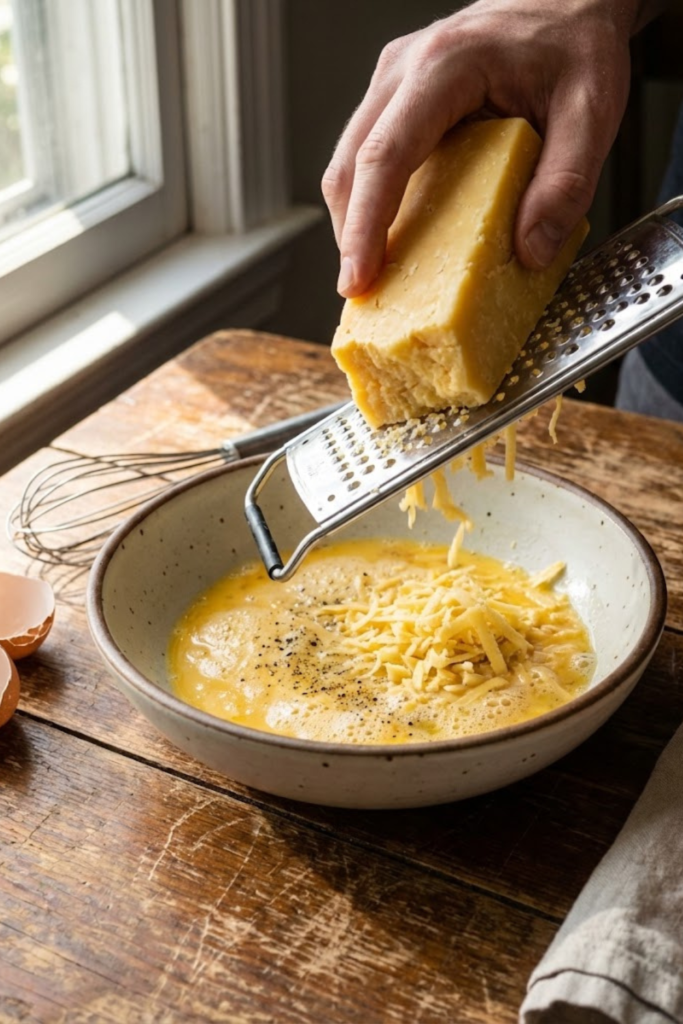
Here is a big tip I tell all my friends, even though they get tired of hearing it. Stop buying those bags of pre-shredded cheese. I know, I know, it is easier and saves you from washing the grater. But those bags have this weird powdery stuff on the cheese to keep it from sticking together in the plastic. In an Asparagus and Tomato Frittata with Sharp Cheddar, that powder makes the texture grainy and gross. I always grab a big block and use my old, rusty box grater. It takes me maybe three minutes, but the way it melts is way better. It gets all stringy and oily in the best way possible.
Getting the Fat and Flavor Balance Right
Eggs are pretty mild on their own. They really need a partner that has some fat and a good bit of salt to wake them up. Sharp cheddar has a higher oil content than some other cheeses you might try. This helps keep the whole frittata moist while it sits in the oven. I found out the hard way that if I skip the good cheese, my family barely touches their plates and I end up eating leftovers for three days. Now, they ask for seconds every single time. It is funny how one ingredient can really change everything about your breakfast. Just make sure you don’t overdo it, or the whole thing will be a grease pit!
Prepping Your Asparagus and Tomatoes for Maximum Flavor
I used to be so impatient in the kitchen. I would just dump everything into the pan at once, thinking the oven would fix any mistakes I made. But I learned pretty fast that if you don’t prep your veggies right, your Asparagus and Tomato Frittata with Sharp Cheddar is going to be a watery mess. Asparagus and tomatoes both hold a lot of moisture inside. If you don’t treat them with a little respect before the eggs hit the pan, that water leaks out and ruins the texture. I had to learn the hard way after serving a “soggy sponge” breakfast to my in-laws one year.
Don’t Eat the Woody Ends
When you go to the store, try to find the medium-sized asparagus stalks. The really thin ones turn to mush, and the huge ones are like chewing on a pencil. I always use the “snap test” because it’s fun and it actually works. You just hold the bottom of the stalk and the middle, then bend it until it snaps. It always breaks right where the tough, woody part ends and the tender part begins. I throw those tough ends in the trash or save them for a soup later. Cutting them with a knife is okay, but you usually end up leaving some of that stringy stuff behind, and nobody wants to spend their brunch picking wood out of their teeth.
Slicing Tomatoes to Save Your Mouth
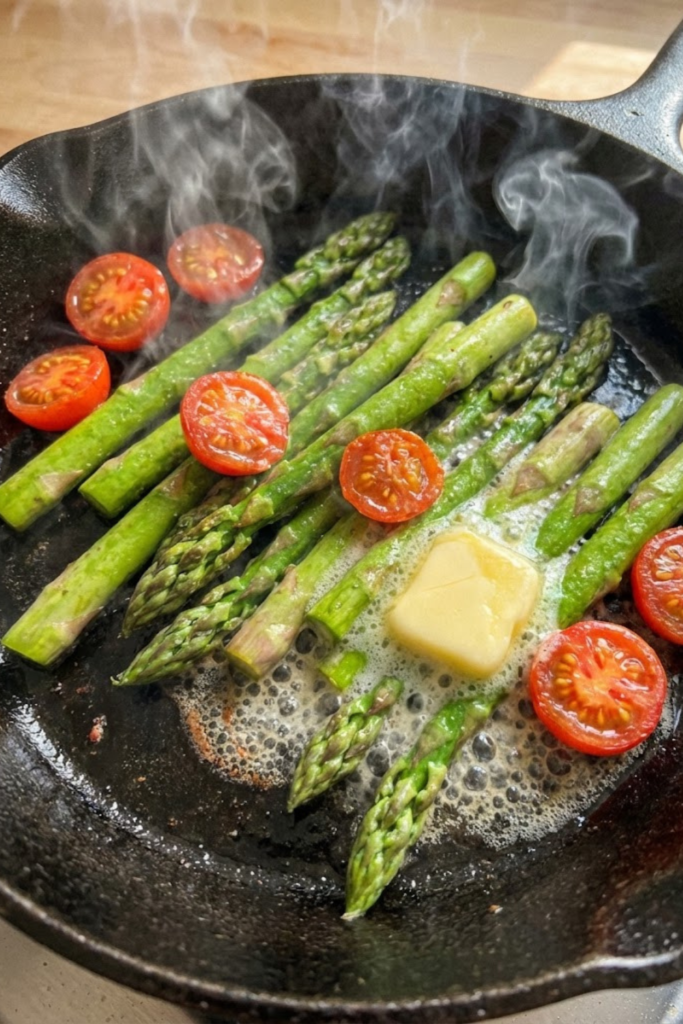
I mentioned this before, but it bears repeating: slice those cherry tomatoes in half! I once made the mistake of leaving them whole. I thought they looked pretty and “rustic” that way. Well, they looked great until my husband bit into one and it sprayed boiling hot tomato juice all over his chin. It was like a little lava bomb went off! Aside from the safety hazard, cutting them in half lets some of the juice evaporate while they cook. It also helps the tomato flavor spread into the eggs instead of staying locked inside the skin. You get a much more balanced bite every time.
Give Them a Head Start in the Pan
You should always sauté your veggies for a few minutes before you add the eggs. I put a little butter or oil in my skillet and let the asparagus get a bit of color. You want them to turn a bright, vibrant green. If they start turning brown or gray, you’ve gone too far. Toss the tomatoes in at the very last minute. You just want them to soften up a tiny bit so they start to caramelize. This extra step builds a foundation of flavor that makes the whole dish taste like it came from a fancy cafe instead of just your own stove.
The Secret to a Fluffy, Non-Rubber Egg Texture
I used to think that the harder I worked in the kitchen, the better the food would turn out. I’d stand there whisking those eggs until my arm literally hurt, thinking I was making them “extra fluffy.” But what I actually ended up with was a dry, bouncy mess that felt like eating a kitchen sponge. It took me a long time to realize that with an Asparagus and Tomato Frittata with Sharp Cheddar, less is actually way more. If you treat your eggs like you’re trying to win a race, they’ll turn out tough every single time. You want them to be soft and almost like a savory custard, not a piece of rubber you could drop and watch bounce across the floor.
Finding the Creamy Balance
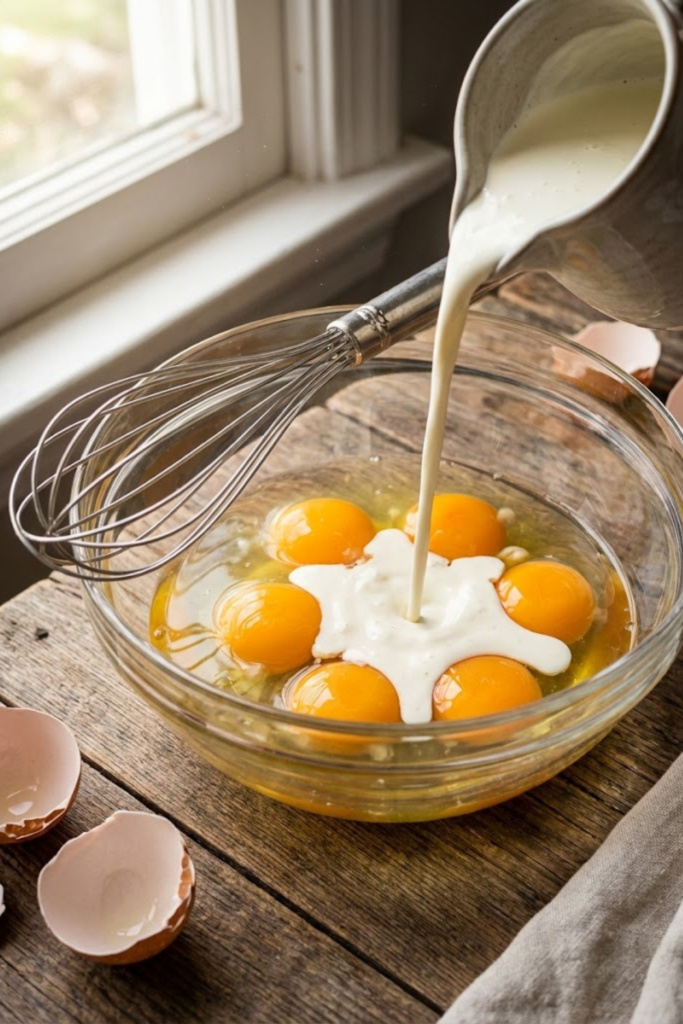
One of the biggest mistakes I see people make is just using plain eggs with nothing else. If you do that, the proteins in the eggs bond too tightly when they get hot, which creates that squeaky, rubbery feel. You need a little bit of fat to get in the middle of those proteins and keep things tender. I always use heavy cream. I tried using water once because I saw it on a cheap cooking show—it was a total nightmare! It made the eggs “weep” in the pan, leaving a puddle of water under the cheese. Milk is okay if you’re in a pinch, but heavy cream makes your Asparagus and Tomato Frittata with Sharp Cheddar feel like a real luxury. I use about a tablespoon for every two eggs. It keeps everything smooth and rich.
The Whisking Trap
Another thing I had to learn the hard way was to put down the fancy gadgets. I know it’s tempting to use a hand mixer to save time, but for a frittata, a simple fork or a basic hand whisk is all you need. If you beat too much air into the mixture, the frittata will grow like a giant balloon in the oven. It looks cool for about ten seconds when you pull it out, but then it collapses into a flat, dense disc. You just want to mix until the yellow yolks and clear whites are just barely combined. If you see a few tiny streaks of white, that’s actually fine! It means you haven’t over-worked the eggs.
The Jiggle Test
Lastly, you have to watch the clock and trust your gut. I used to leave mine in the oven until the top was hard and didn’t move. That’s a huge mistake. You want to take it out when the very middle still has a tiny bit of a jiggle to it, sort of like Jell-O. The heat from the cast iron pan is going to keep cooking the eggs for a few minutes while it sits on the counter. If it looks completely “done” while it’s still in the oven, it is actually already overcooked. Give it that rest time and you’ll see how much softer the texture stays.
Perfecting the Broil: How to Get That Golden Crust
I have a confession to make: the broiler used to be the scariest part of my kitchen. It’s like a dragon living in the roof of your oven. For years, I avoided it because I was terrified of burning my dinner. One minute everything looks fine, and the next minute, you’ve got a black, smoking charcoal puck where your meal used to be. But if you want a truly great Asparagus and Tomato Frittata with Sharp Cheddar, you have to face the heat. That golden, bubbly crust on top is what separates a “meh” breakfast from one that people actually talk about on the car ride home.
Finding the Right Spot in the Oven
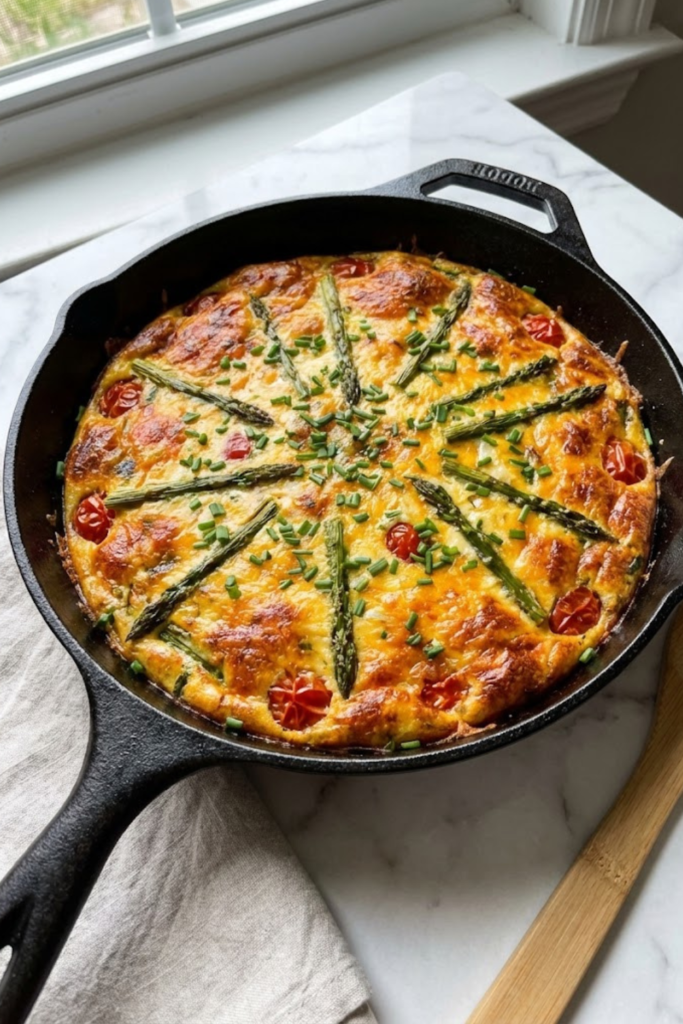
Most people think they should put the pan as close to the top heating element as possible. I used to do that too. I’d slide the rack to the very top notch and watch through the glass like a hawk. The problem is that the heat is so intense there that the cheese burns before the eggs underneath even get warm. Now, I keep my rack right in the middle. This lets the heat circulate a bit better. It takes a few minutes longer—maybe five or six minutes instead of two—but the color is much more even. You get those beautiful little brown spots on the sharp cheddar without the edges of your asparagus turning into ash.
The Power of Carry-over Cooking
This is a lesson I learned from a fellow teacher who actually knows how to cook. She told me that “off” doesn’t mean “done.” When you pull that heavy cast iron skillet out of the oven, it is still holding a massive amount of heat. If you wait until the Asparagus and Tomato Frittata with Sharp Cheddar looks perfect inside the oven, it’s going to be overcooked by the time you put it on the table. I take mine out when it still looks just a tiny bit wet on the very top. By the time I find the spatula and get everyone to sit down, that extra heat has finished the job perfectly. It’s a little scary to pull out “undercooked” food, but trust me on this one.
Adding the Green Finish
Once the pan is out and sitting on a heat-safe pad, don’t just walk away. This is when I add my fresh herbs. I love using chives because they have that mild onion taste that goes so well with the sharp cheese. If you put them on before the broiler, they just shrivel up and turn black. But if you sprinkle them on the hot cheese right after it comes out, the heat wakes up the oils in the herbs and makes the whole kitchen smell like a garden. It adds a nice crunch and a pop of bright green that makes the red tomatoes really stand out. It’s a simple trick, but it makes me feel like I actually know what I’m doing in there!
Wrapping Up Your Frittata Journey
I really hope you feel ready to tackle this Asparagus and Tomato Frittata with Sharp Cheddar now. I know I spent a lot of time talking about my own kitchen disasters, but that is honestly how I learned to be a better cook. I used to be the person who would just order a pizza because I was too scared I’d ruin a bunch of eggs. But once you get the hang of this recipe, it becomes like a secret weapon in your back pocket. It is 2026, and we are all looking for ways to eat better without spending five hours standing over a stove. This dish hits that sweet spot where it looks like you worked hard, but you actually have plenty of time left to enjoy your coffee and read the news.
Final Thoughts on Making It Your Own
The best thing about a frittata is how flexible it is. While I think the mix of asparagus and tomato is the absolute best, you can use whatever you have in the fridge. If you have some spinach that is starting to look a little sad, throw it in there! The main thing to remember is the lesson about the cheese and the whisking. If you keep those two things in mind, you can change the veggies however you want. I sometimes add a bit of ham if I have leftovers from a Sunday dinner. Just keep that sharp cheddar as the star of the show because that flavor is what really ties everything together.
Why This Recipe is a Keeper
I make this for my fellow teachers during our end-of-year brunch, and it is always the first plate to go empty. It is just a solid, dependable meal. You can even cut it into squares and save it for your lunch on Monday. It tastes just as good cold as it does hot! If you are worried about the eggs getting dry in the fridge, just remember that splash of heavy cream we talked about. It keeps the texture soft even after it has been chilled. Cooking should be fun, not a chore that makes you feel stressed out.
If you found these tips helpful, please share this post on Pinterest! It helps me out a lot, and I’d love to see photos of how your frittatas turned out. Go grab your skillet and give it a try—you might just surprise yourself with how good of a chef you really are!