I still remember the absolute disaster of my first attempt at roasting pork in the oven—dry, tough, and completely underwhelming. But then, I discovered the magic of the slow cooker! There is truly nothing like coming home to the savory aroma of a Slow Cooker Pork Roast with Spring Vegetables simmering away, ready to melt in your mouth. Did you know that slow cooking actually breaks down the connective tissue in meat better than almost any other method, ensuring every bite is succulent? In this article, I’m going to share my foolproof method for achieving that fall-apart tenderness paired with the fresh, vibrant crunch of spring veggies. Get your crockpot ready, because we are about to make dinner the highlight of your day!
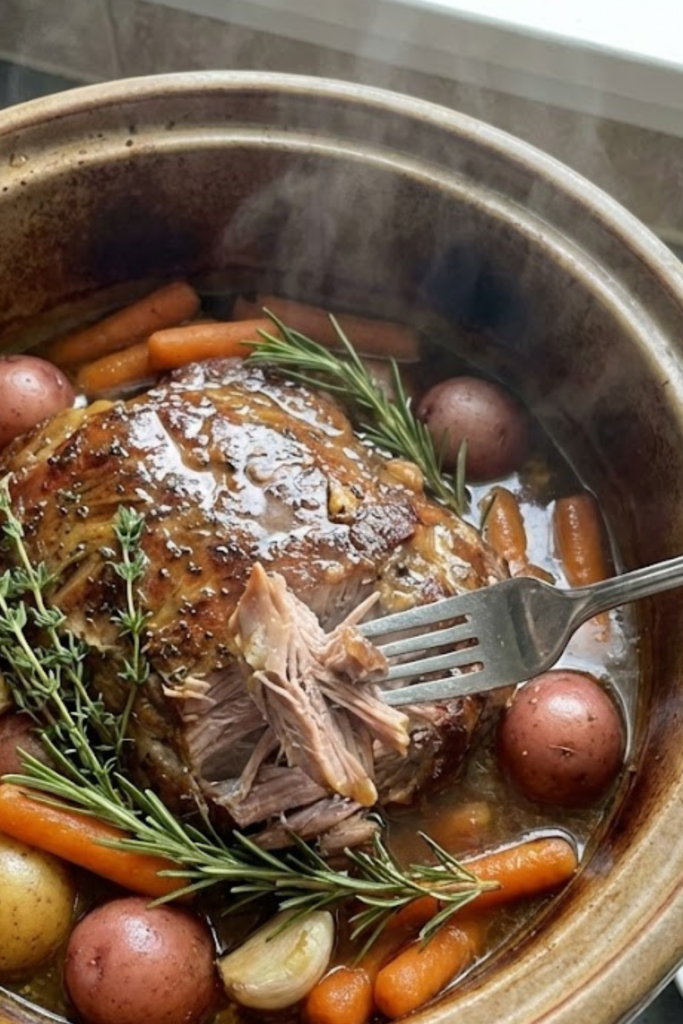
Choosing the Perfect Cut for Your Pork Pot Roast
I still remember standing in the meat aisle of my local grocery store about ten years ago, totally confused. I was staring at a wall of pink meat, clutching a printed recipe that just said “pork roast.” I grabbed a lean pork loin because it looked nice and tidy. Big mistake. That dinner turned out dry as a bone, and no amount of gravy could save it. I learned the hard way so you don’t have to. When you are making a slow cooker pork roast with spring vegetables, the cut of meat you choose is literally the most important decision you’ll make.
Why the Shoulder is King
You might be tempted to grab a pork loin because it looks healthier or leaner. Don’t do it. For slow cooking, you want a pork shoulder, often labeled as a “Boston butt.” This cut has a lot of connective tissue and fat that melts down over 8 hours.
That melting process is what makes the meat fall-apart tender. If you use a lean cut like a loin in the crockpot, it just gets tough and chewy. It’s like trying to bake a salad; it just doesn’t work. Trust me, go for the shoulder. The fat renders out, basting the meat from the inside while it cooks.
Checking the Marbling
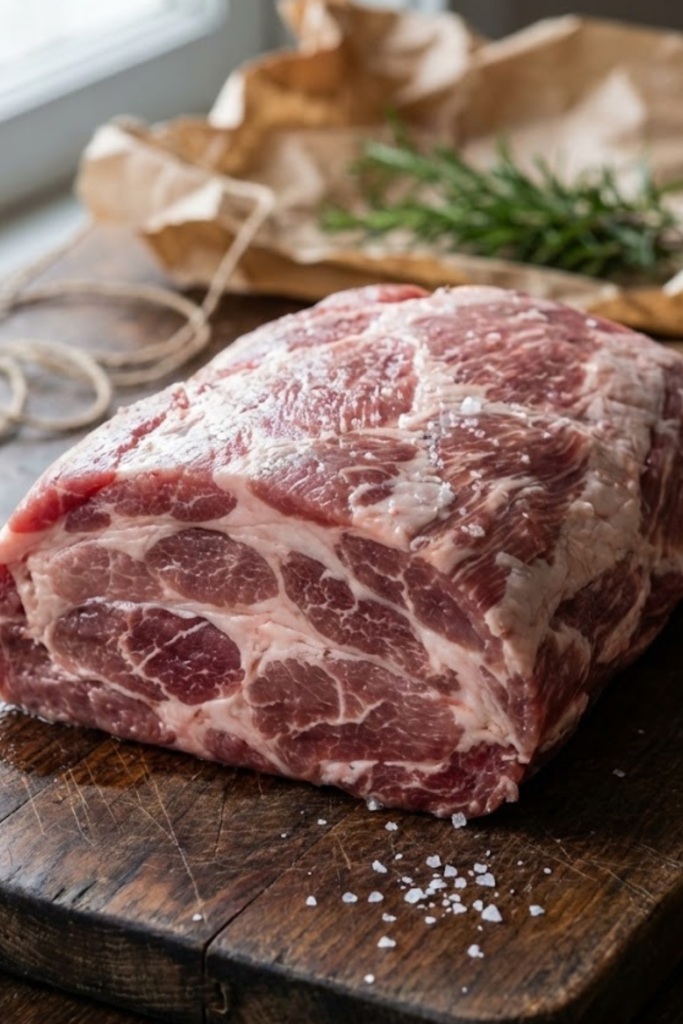
When you pick up that heavy package of meat, look closely at the pink parts. You want to see streaks of white fat running through the muscle, which we call marbling. It’s flavor insurance.
If the meat is solid pink with no white streaks, put it back. You want that internal fat to keep things juicy. I usually aim for a 3 to 4-pound roast for a standard 6-quart slow cooker. That size feeds a family with leftovers but isn’t so big that the lid won’t close.
To Bone or Not to Bone?
This is where people get stuck. Should you get bone-in or boneless? I’ve tried both for my pork pot roast dinners. Honesty time: the bone-in shoulder definitely has a slightly deeper flavor. The bone releases good stuff into the juices.
However, carving around a shoulder blade when you are hungry and just want to eat is kind of annoying. I usually buy boneless now just for the convenience. It’s easier to slice or shred right in the pot. If you do go bone-in, just expect it to take maybe 30 minutes longer to cook.
The Prep Work
Don’t just throw the meat in the pot straight from the package. Most pork butts come with a thick “fat cap” on one side. While fat is flavor, too much of it creates a greasy soup.
I take a sharp knife and trim that fat cap down to about 1/4 inch. You want some fat to melt over the spring vegetables, but you don’t want an oil slick. Also, if you have 10 minutes, sear the outside of the meat in a hot skillet first. It locks in a rich flavor that the slow cooker just can’t create on its own. It’s an extra step, but my family notices the difference every single time.
Essential Ingredients: Fresh Spring Vegetables and Herbs
I used to think that the meat was the only star of the show in a pot roast, but honestly, the vegetables are what I look forward to the most. There is something so satisfying about a forkful of tender meat with a sweet carrot that has been soaking up those juices all day. For this Slow Cooker Pork Roast with Spring Vegetables, picking the right produce is just as important as picking the pig.
The Spring Vegetable Medley
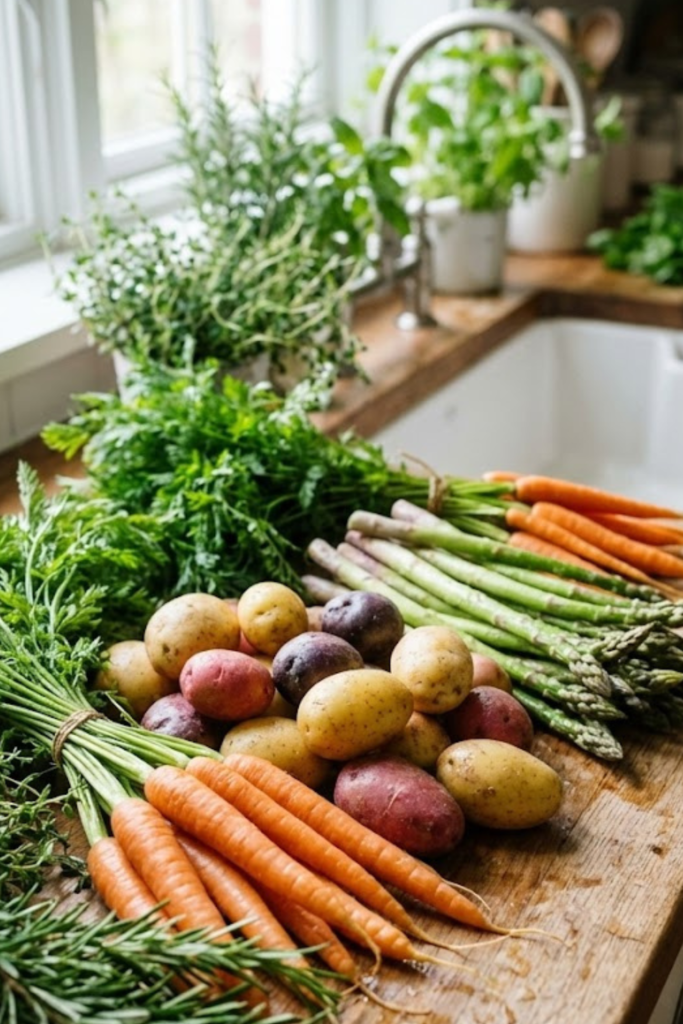
Since we are talking about spring, we want veggies that feel fresh and light, not just heavy winter roots. I love using baby carrots—not the whittled-down “baby-cut” ones in the bag, but actual young carrots if you can find them. They are sweeter.
New potatoes are another must-have. You know, the small red or yellow ones with the thin skins? You don’t even have to peel them! Just wash them and toss them in. They hold their shape way better than a big Russet potato, which tends to turn into mush after 8 hours. If you want to add green beans or asparagus, hold your horses. Don’t put them in at the start, or they will turn gray and squishy. Save those for the last 30 minutes.
The Flavor Base
You can’t just throw meat and potatoes in a pot and hope for the best. You need an aromatic base. I always start with a yellow onion, chopped into big chunks. If you chop it too small, it dissolves.
And garlic. Please, measure garlic with your heart, not the recipe. I usually smash about 4 or 5 cloves and throw them in whole. They get soft and sweet, and spreading a roasted garlic clove on a piece of crusty bread is just heaven. A stalk or two of celery adds a nice salty crunch that balances everything out, too.
Fresh vs. Dried Herbs
Here is a trick I learned from a cooking show years ago that actually works. Use dried herbs for the long cooking time and fresh herbs right at the end. Dried rosemary and thyme are stronger and can stand up to the heat for 8 hours without losing their flavor.
I rub the dried herbs right onto the meat. Then, right before I serve dinner, I sprinkle chopped fresh parsley or chives on top. It makes the dish look like it came from a restaurant and adds a little pop of fresh flavor that wakes up your taste buds.
Liquid Gold
Don’t use plain water. Just don’t. It dilutes the flavor. I always use a box of chicken or vegetable broth. It adds a richness that water just can’t match.
If you have an open bottle of white wine in the fridge, pour a splash in there too! It helps break down the meat and adds a nice little acidic kick. If you don’t do alcohol, a tablespoon of apple cider vinegar does the same trick. It sounds weird, but you won’t taste the pickle flavor, I promise. It just makes the pork roast taste deeper and more savory.
Mastering the Slow Cooker Technique for Maximum Tenderness
I’ve had people ask me if using a slow cooker is just “dump and go.” Well, yes and no. You can dump it all in, but if you want that meat to really fall apart, you have to have a strategy. It’s not hard, but the order you put things in actually changes how they cook.
Layering the Ingredients
Here is a rule of thumb I live by: hard stuff on the bottom. Root vegetables like potatoes and carrots take a surprisingly long time to soften up. If they are sitting on top of a big roast, they might still be crunchy when the meat is done. Nobody wants crunchy potatoes.
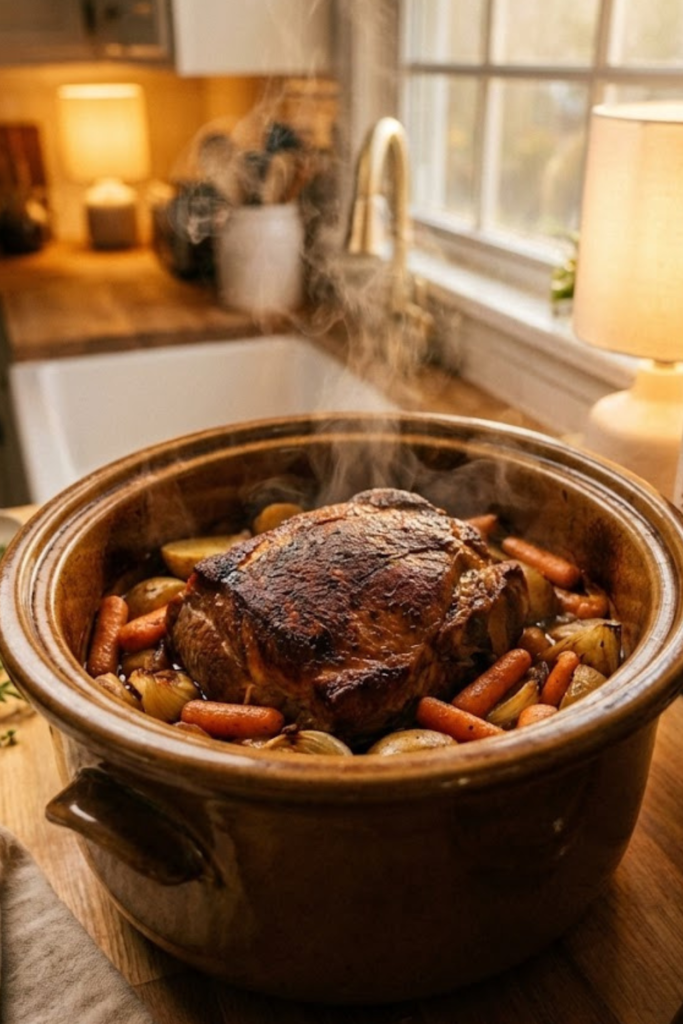
I put the onions, potatoes, and carrots in first to create a “bed.” Then, I nestle the seasoned pork roast right on top. This does two things. First, the veggies are closest to the heat source at the bottom of the crockpot. Second, as the pork cooks, all those delicious juices drip down and flavor the vegetables. It’s a win-win.
Time and Temperature
I know we are all in a hurry, and the “High” setting is tempting. But for a pork roast, “Low” is your best friend. Cooking on High basically boils the meat. It gets it done fast, but it can make the muscle fibers tighten up and get chewy.
Cooking on Low for 8 to 10 hours gently melts that connective tissue I mentioned earlier. That is how you get that texture that you can pull apart with a spoon. If you absolutely have to use High, check it after 5 hours, but I promise the wait for the Low setting is worth it.
The “Don’t Peek” Rule
This is the hardest part for me because it smells so good! You have to leave the lid on. Every time you lift that lid to check on dinner, you lose a ton of heat and moisture.
My grandmother used to say, “If you’re lookin’, you ain’t cookin’.” It takes the slow cooker a while to get back up to temperature. If you peek three or four times, you might have to add an hour to your cooking time. Just trust the process and walk away.
Checking for Doneness
So, how do you know when it’s actually ready? A timer isn’t enough because every piece of meat is different. You need the “fork test.”
Stick a fork into the thickest part of the meat and try to twist it. If the meat yields easily and starts to shred without you having to fight it, it’s done. If it feels rubbery or tough, put the lid back on and give it another 30 or 45 minutes. It’s not overcooked; it’s usually undercooked. The meat needs more time to break down.
Serving Suggestions and Delicious Side Dish Pairings
When that timer finally goes off and the kitchen smells amazing, I am always ready to eat right then and there. But taking just a few minutes to serve it up nicely makes a big difference. This Slow Cooker Pork Roast with Spring Vegetables usually falls apart the second you touch it, which is exactly what we want, but it can look a bit messy if you aren’t careful.
Plating the Roast
I usually don’t even bother trying to slice this roast. It is just too tender. Instead, I take two big forks and shred the meat right in the slow cooker pot. It soaks up the juices immediately.
Then, I use a slotted spoon to scoop out the vegetables and put them in a serving bowl so they don’t get crushed. I pile the shredded pork in the middle of a big platter and arrange the carrots and potatoes around it. It looks fancy, but it took me like two minutes. A little sprinkle of fresh parsley on top hides any messy spots, too.
What Goes With It?
Since I usually cook potatoes with the roast, I don’t always make a separate side dish. But if you skipped the potatoes in the pot, you have to make mashed potatoes. There is no debate here. The gravy from the pork poured over creamy mashed potatoes is the best part of the meal.
If you did do the potatoes in the crockpot, a loaf of crusty sourdough bread is perfect for mopping up the sauce. Sometimes, if I’m feeling like I need more green, I’ll toss a simple salad with a vinaigrette. The acid cuts through the richness of the pork really well.
Don’t Toss the Liquid!
Whatever you do, don’t throw away the liquid left in the pot! That is pure flavor. It’s basically liquid gold.
I make a quick gravy by whisking a tablespoon of cornstarch with a little cold water in a cup. Then, I stir that mixture into the hot liquid in the slow cooker (or pour the liquid into a saucepan if you want it faster). Let it bubble for a minute, and it turns into a thick, savory sauce that tastes way better than anything from a jar.
A Simple Wine Pairing
I’m not a wine expert, but I know what tastes good. You don’t need a heavy red wine for pork. It’s a “white meat,” but it has a lot of flavor.
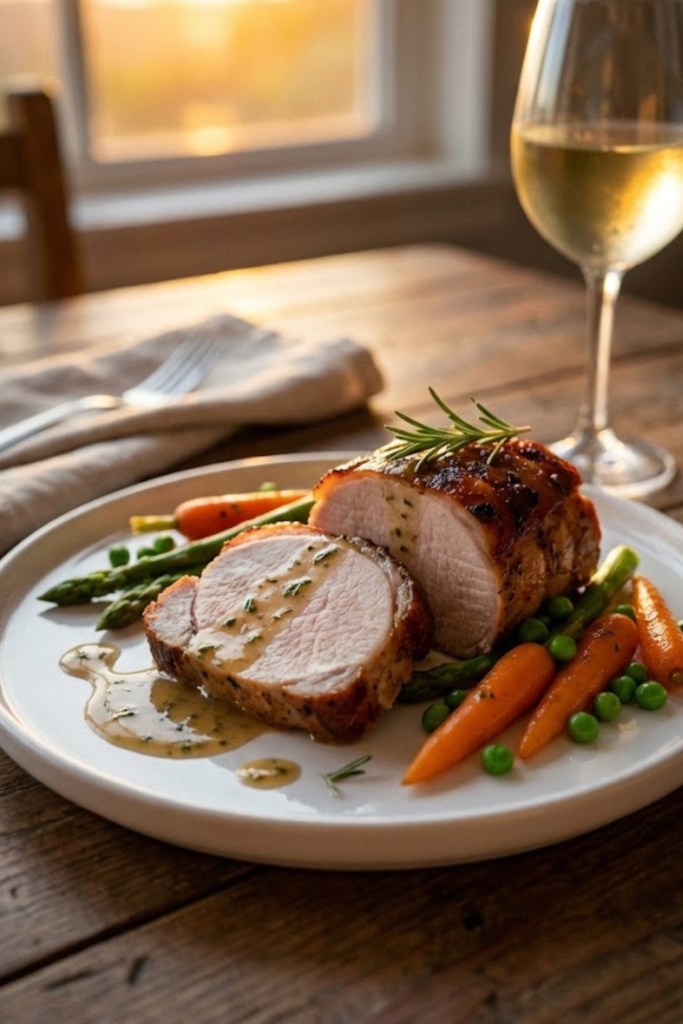
I usually drink a glass of Chardonnay with this because it’s buttery and goes with the rich pork. If you prefer red, try a Pinot Noir. It’s light enough that it doesn’t overpower the spring vegetables but still holds its own against the meat. Just drink what you like, honestly. Dinner should be relaxing, not a test.
Storing and Reheating Leftovers for Busy Weeknights
I honestly think this pork roast tastes better the next day. The flavors just kind of settle in together overnight. But there is a trick to keeping it tasting fresh and not like “old leftovers.” If you just toss the whole pot in the fridge, you’re gonna have a bad time trying to get dinner ready on a Tuesday.
Proper Storage
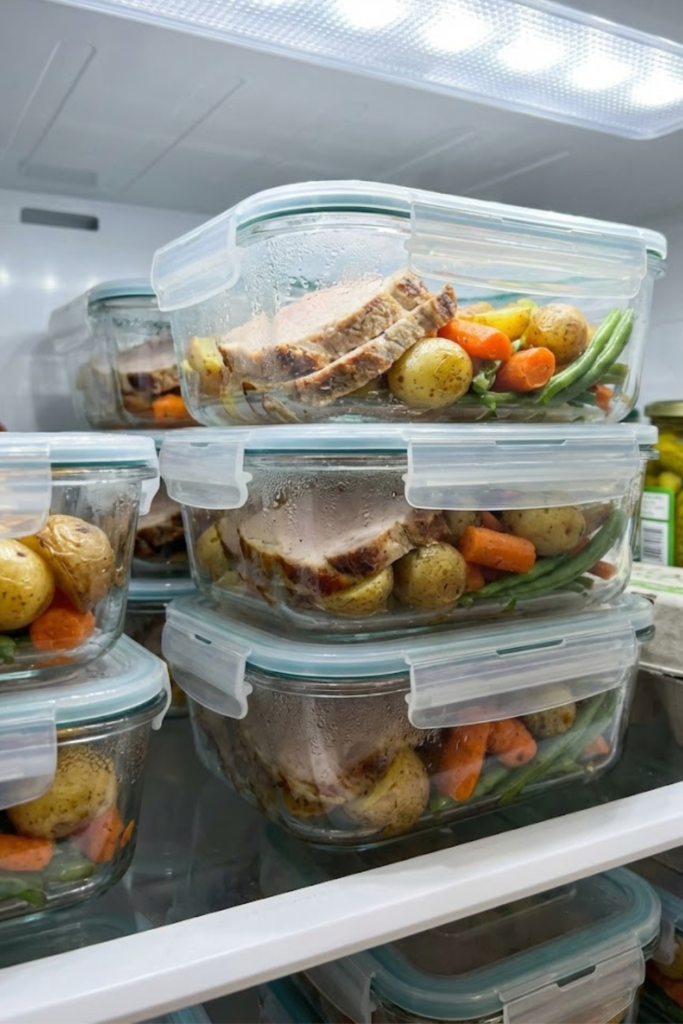
First off, don’t leave the crockpot on the counter to cool down all night. I used to do that, and my mom scolded me about bacteria. She was right. Once dinner is done, get that meat into containers.
I like to separate the meat from the veggies if I can, but it’s not a huge deal if they mix. Use airtight glass containers if you have them. Plastic is okay, but it stains red from the sauce sometimes. It usually stays good in the fridge for about 3 to 4 days. After that, it starts to get a little funky, so use your nose.
Freezing Tips
If you made a huge roast and know you won’t eat it all this week, freeze it right away. Don’t wait until day 4 to decide to freeze it.
I portion it out into meal-sized freezer bags. That way, I can just grab one bag for a quick dinner instead of thawing a giant block of ice. Squeeze as much air out as possible before you zip it shut. Air causes freezer burn, which makes the meat taste like the inside of your freezer smells. Label the bag with the date! You think you will remember what “mystery meat” is in three months, but you won’t.
Reheating Without Drying Out
Here is the thing about reheating pork: the microwave is its enemy. It zaps the moisture right out of it and turns your tender roast into rubber.
If you have time, reheat it on the stove. Put the meat and veggies in a pan and add a splash of chicken broth or even just a little water. Cover it and let it steam on low heat until it’s hot. If you absolutely have to use the microwave, put a damp paper towel over the bowl. It creates a little steam bath that helps keep the moisture in.
Repurposing Leftovers
We rarely just eat the roast as-is the second night. It gets boring. My favorite thing to do is shred the meat really fine and make tacos. A little lime juice and cilantro, and it tastes like a totally new meal.
It also makes amazing sandwiches. Put some cold pork on a roll with a slice of cheese and melt it under the broiler. Or, if you are feeling ambitious on a Saturday morning, chop it up with some potatoes and onions for a breakfast hash. Put a fried egg on top, and you are good to go. It stretches one roast into two or three completely different dinners, which is a lifesaver for my grocery budget.
Well, there you have it! Making a Slow Cooker Pork Roast with Spring Vegetables isn’t exactly rocket science, but it sure tastes like a million bucks. I really hope you give this recipe a try the next time you are staring at a pork shoulder in the grocery store and wondering what to do with it. It has saved my dinner plans more times than I can count, especially on those days when I just don’t have the energy to stand over a hot stove.
Just remember to take your time picking the right meat—look for that fat!—and layer those veggies on the bottom so they cook evenly. It’s hard not to peek under the lid when it smells so good, but patience pays off with meat that falls apart on your fork. And hey, if you end up with leftovers, you are lucky because lunch the next day is going to be amazing.
If you liked this recipe or found my tips helpful, please pin it to your Dinner Ideas board on Pinterest! It helps me out a ton, and that way, you can find it again when you need a comforting meal that feeds the whole family. Happy cooking!