Did you know that rhubarb was once traded along the Silk Road and cost more than cinnamon? It’s true! But today, we are using it for something much sweeter. There is nothing quite like the smell of a Strawberry Rhubarb Pie with Lattice Crust bubbling in the oven to make a house feel like a home. I remember the first time I tried to weave a lattice top—it looked more like a puzzle missing pieces than a pie! But don’t worry. This guide is going to walk you through everything, from that juicy, ruby-red filling to the golden, buttery crunch of the crust. Let’s get baking!
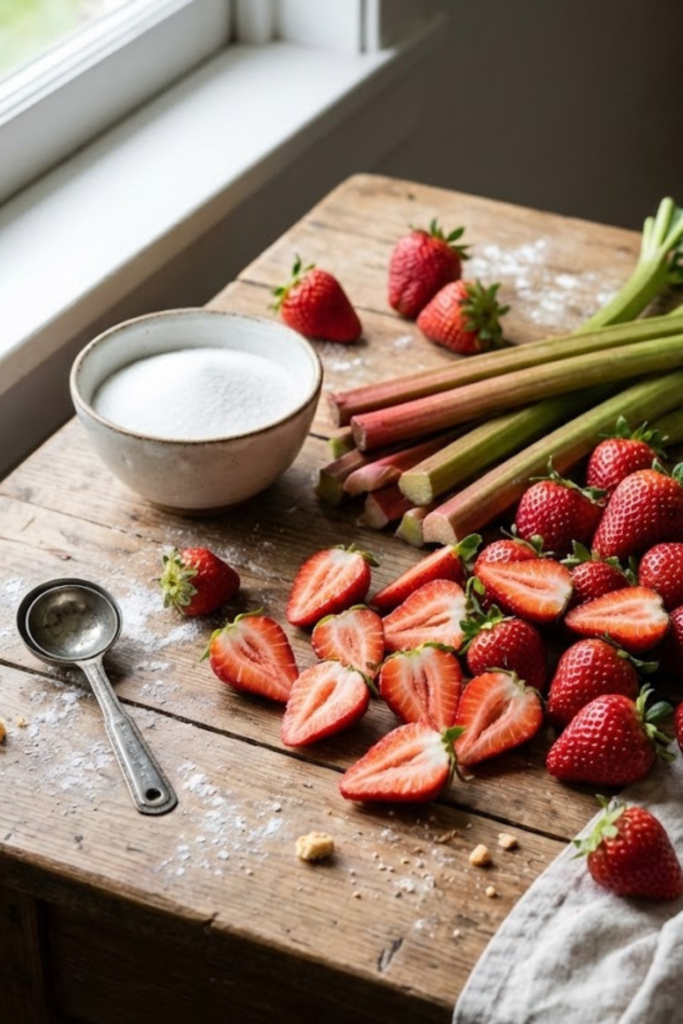
Choosing the Best Ingredients for Your Pie Filling
You know, I used to think any old fruit from the grocery store would work for a pie. Man, was I wrong. I remember the first time I tried to make a strawberry rhubarb pie for a potluck. I just grabbed the biggest strawberries I could find and some limp rhubarb that looked like it had seen better days. The result? A sour, watery mess that no amount of ice cream could fix. It was embarrassing, honestly. But hey, you live and you learn, right?
Fresh vs. Frozen: The Great Debate
People ask me all the time if they have to use fresh rhubarb. The short answer is no, but there is a catch. I’ve used frozen rhubarb plenty of times when the craving hits in December. But one time, I didn’t thaw it properly. I just threw those frozen chunks right into the crust.
Big mistake.
The pie came out swimming in liquid because frozen fruit releases way more water. If you are using frozen, you gotta let it thaw in a colander and drain that excess juice. Don’t be like me and serve “rhubarb soup” in a crust. If you can find fresh stalks at the farmers market, though, grab ’em. Look for the ones that are firm and crisp, kinda like celery. If they bend like a rubber band, put them back.
Picking the Perfect Strawberries
Here is a tip I learned the hard way: bigger isn’t always better. I used to buy those massive strawberries that look like they on steroids. They look great, but they are usually mostly water and white inside.
For the best strawberry rhubarb pie, you want the smaller, deep red berries. They are sweeter and have way less water content. I try to taste one before I buy a basket, if the store lets me get away with it! If the berry tastes like crunchy water, your pie is gonna be bland. You want that sugar punch to balance out the tart rhubarb.
Let’s Talk About Thickeners
This is where I fought with my pies for years. My grandma always used flour, so I used flour. But my pies were always a little cloudy and sometimes pasty. Yuck.
Then I tried cornstarch. It works okay, but sometimes it breaks down if the pie is acidic, and rhubarb is super acidic. I finally switched to quick-cooking tapioca, and I haven’t looked back. It cooks clear and holds the filling together without making it gummy.
- Flour: easy to find, but can be pasty.
- Cornstarch: good, but can get watery leftovers.
- Tapioca: the gold standard for fruit pies.
I actually grind my tapioca a little bit in a spice grinder before mixing it in. It helps it dissolve so you don’t get those little chewy clear balls in your teeth.
Trust me, spending five extra minutes picking good fruit and the right thickener makes a huge difference. You don’t want to go through all the trouble of making a crust just to have the filling flop. Get the good stuff, and the pie will practically make itself.
Mastering the Buttery Flaky Pie Crust
I used to be terrified of making pie crusts. Seriously, I avoided it for years. I would just buy those rolled-up ones from the freezer section because I thought making my own was too hard. My first attempt at a homemade crust was tough as a boot. You could have shingled a roof with it. But after practicing (and throwing away a lot of dough), I figured out that it really comes down to one thing: keeping things cold.
Temperature Matters More Than You Think
If you take only one thing from this post, let it be this: keep your butter cold.
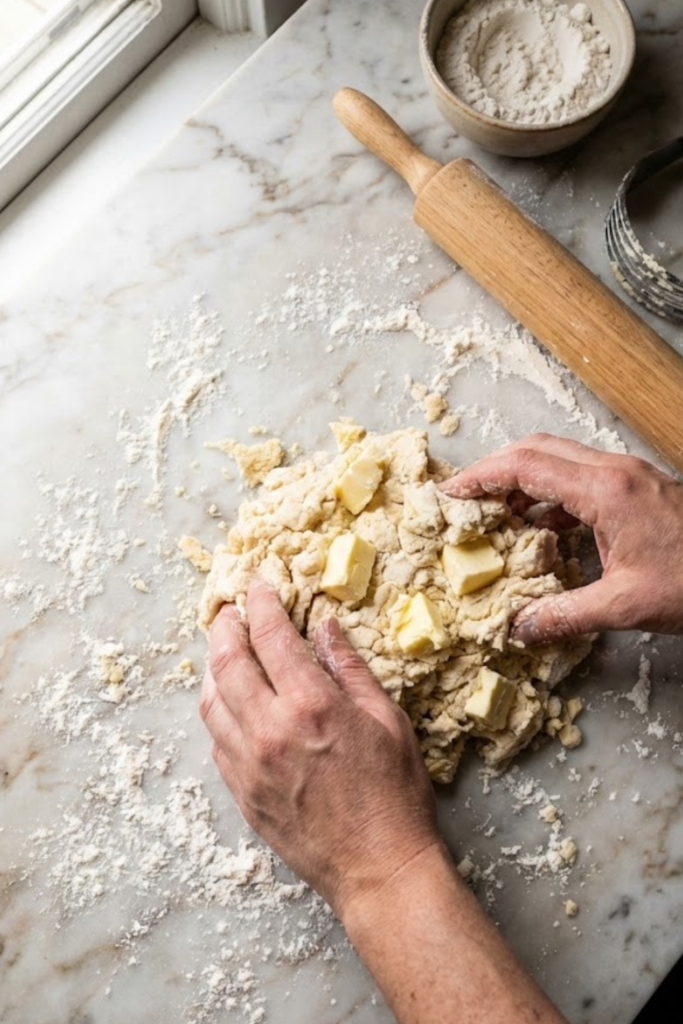
When I say cold, I mean stone cold. I usually cut my butter into little cubes and stick them back in the fridge for 15 minutes before I start. Why? Because you want little pockets of solid butter in the dough. When the pie hits the hot oven, that water in the butter steams and puffs up the layers. That is how you get that flaky texture we all want.
If the butter melts while you are mixing, you end up with a greasy, heavy crust. Not good. On a really hot day, I even put my mixing bowl in the freezer for a bit. It sounds crazy, but it works.
Food Processor vs. Hand Mixing
I see fancy chefs on TV using big food processors. I have one, but I rarely use it for pie dough. It’s too easy to mess up. If you pulse it one too many times, you obliterate those nice butter chunks and end up with a mealy texture.
I prefer using a simple pastry blender or even two forks. It takes a little elbow grease, but it gives you better control. You want to cut the butter into the flour until it looks like coarse crumbs with some pea-sized pieces left. It doesn’t have to look perfect. In fact, if it looks a little messy, you are probably doing it right.
Also, don’t overwork the dough! This isn’t bread. If you knead it too much, you develop gluten, and gluten makes things chewy. We want tender and flaky, not chewy.
Resting the Dough
Once you add your ice water (and yes, it must have ice in it) and the dough just barely comes together, stop. Divide it in half, pat it into discs, and wrap them in plastic.
Now, you have to wait. I know, waiting is the hardest part. But you need to let that dough chill in the fridge for at least an hour. This lets the gluten relax so the dough doesn’t shrink back when you roll it out later. I usually use this time to wash the dishes or prep my strawberries. If you try to roll it out right away, it will fight you and spring back like a rubber band. Give it a nap, and it will behave much better.
How to Weave a Beautiful Lattice Top
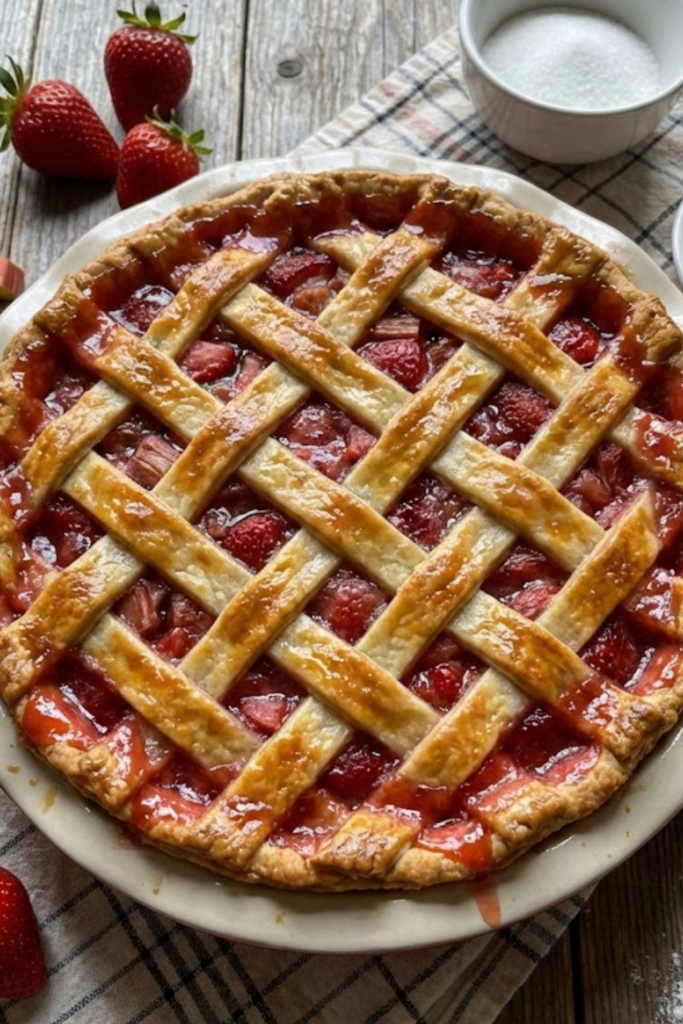
Okay, this is the part that scares people. A lattice crust looks like something you need an art degree to make, but I promise it is way easier than it looks. I remember the first time I tried to do a lattice top. I got confused halfway through and just sort of mashed the dough strips together. It tasted fine, but it looked like a tire had run over it.
Since then, I’ve figured out a system that works every time.
Cutting the Strips
First, you gotta roll out your second disc of dough. I try to make it a little bigger than the pie plate. Now, for cutting the strips, put down the kitchen knife. Seriously. If you use a knife, you end up dragging the dough and making it all wonky.
Use a pizza cutter instead. It rolls right through and gives you nice clean lines. I usually aim for strips that are about an inch wide. They don’t have to be perfect. In fact, a little variation makes it look homemade, which is what we want. I usually get about 10 to 12 strips out of one batch of dough.
The Over-Under Method
Now for the weaving. Think of it like a basket.
- Lay half of your strips vertically across the filled pie. Just line them up with a little space in between.
- Fold back every other strip halfway.
- Lay a new strip perpendicular (across) the ones you didn’t fold back.
- Unfold the vertical strips back over that new one.
- Now, fold back the other set of vertical strips (the ones you didn’t touch last time).
- Lay another strip across.
You just keep doing that pattern—fold back, lay a strip, unfold—until you cover the whole pie. If you mess up an “over” or an “under,” don’t stress. nobody notices once the fruit bubbles up around it.
Crimping the Edges
Once your weave is done, you’re gonna have dough hanging off the sides. You need to trim that off, but leave about an inch of overhang.
Tuck that extra dough under the edge of the bottom crust. This seals the fruit inside so it doesn’t leak all over your oven. To make it look pretty, I use the “thumb and finger” pinch. I push from the inside with my index finger and pinch from the outside with my thumb and index finger of the other hand. It makes that classic wavy edge.
If that sounds too complicated, just use a fork! Press the tines down all around the rim. It seals it just as well and looks neat and tidy. Just make sure you seal it tight, or that strawberry juice will find a way out.
Baking Tips for a Golden Brown Crust
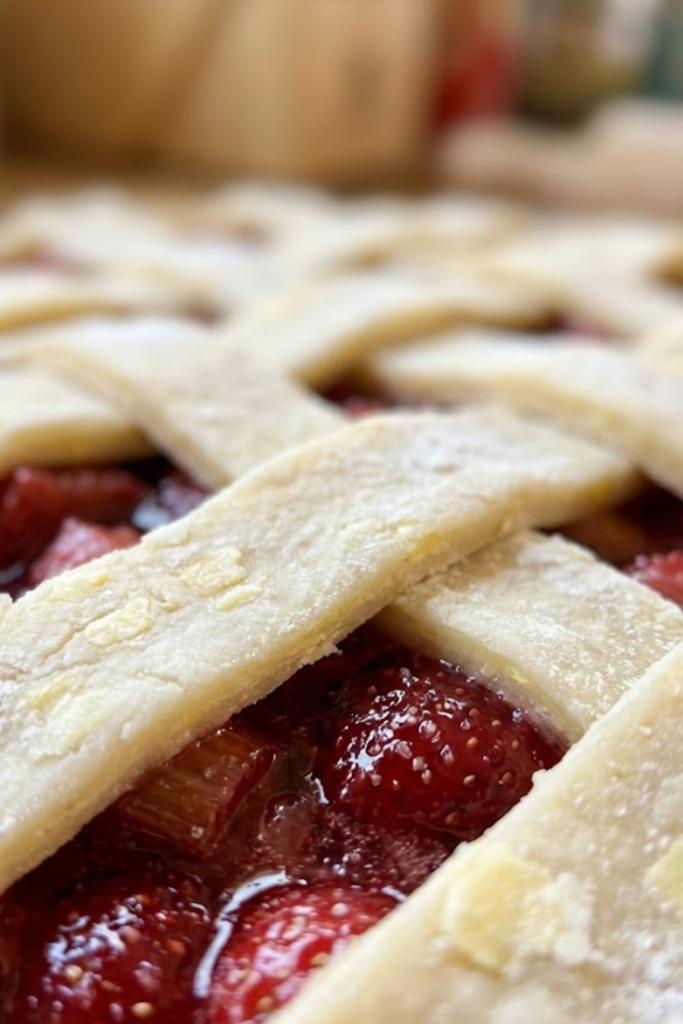
You know that feeling when you pull a pie out of the oven and the crust looks pale and sad? I call it “anemic pie.” It tastes fine, but it just doesn’t look appetizing. For the longest time, my pies looked like raw dough even after an hour in the oven. I couldn’t figure out why until I started paying attention to the little details.
The Egg Wash
This is the secret weapon. If you want that shiny, golden finish like you see in bakery windows, you can’t skip the egg wash.
I just whisk one egg with a tablespoon of water (or milk if I have it open). Then, I grab a pastry brush and paint it all over the lattice. You don’t need a heavy hand here; just a light coat does the job.
And here is my favorite part: coarse sugar. I sprinkle a generous amount of sparkling sugar or raw sugar on top of the egg wash. It gives the crust a nice little crunch and makes it sparkle. My kids love picking the sugary pieces off the top, so I always add a little extra.
Oven Position and Temperature
Here is a trick I learned from a baking book years ago. Most people bake their pies at 350°F the whole time. That works, but it can lead to a soggy bottom because the butter melts before the crust sets.
I start my oven hot—like 400°F or even 425°F. I put the pie on the bottom rack for the first 15 or 20 minutes. This blast of heat sets the bottom crust quickly so it stays crisp. Then, I turn the oven down to 375°F and move the pie to the middle rack to finish cooking. It takes a little more attention, but it stops the dreaded soggy bottom.
Using a Pie Shield
Okay, so the center of the pie takes forever to cook, but the thin edges of the crust burn in five minutes. It’s annoying. I used to just let them burn and tell everyone it was “rustic.”
Now, I use a pie shield. You can buy silicone ones that fit right over the crust edge, but you don’t need to spend money. I usually just tear off strips of aluminum foil and gently curve them over the outer rim of the pie. I put this on after the first 20 minutes. It keeps the edges from turning into charcoal while the middle bubbles away. Just be careful not to burn your fingers when you put the foil on!
Serving and Storing Your Strawberry Rhubarb Pie
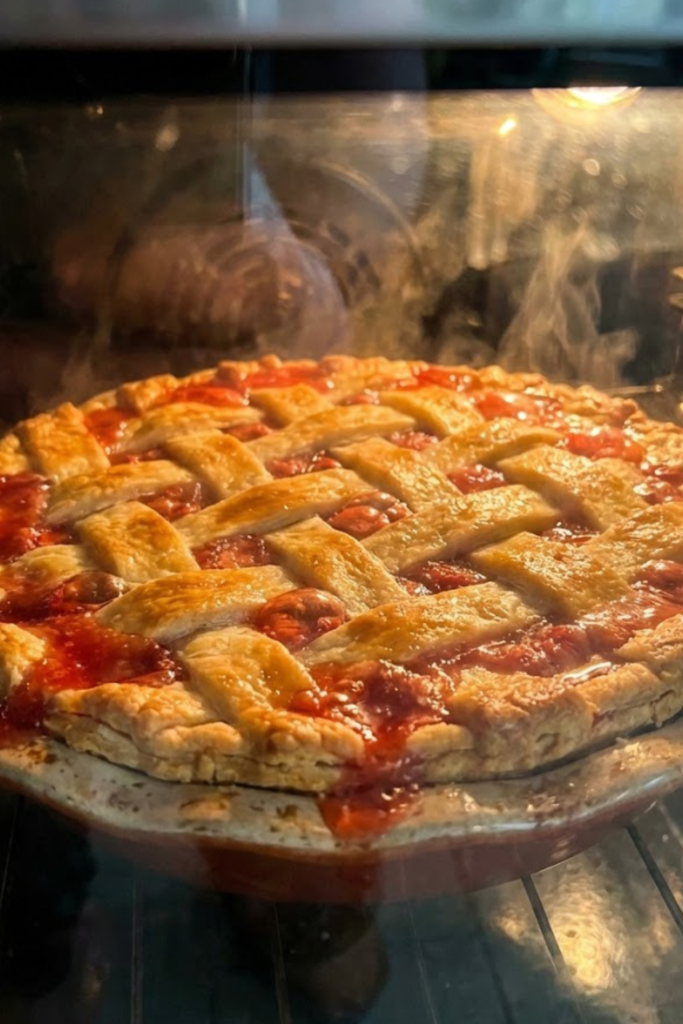
This is the hardest part of the whole recipe. You just pulled this beautiful, bubbling pie out of the oven, and your whole kitchen smells like heaven. You want to dig in right away. I get it. I’ve been there. But you have to stop yourself!
Cooling is Key
If you cut into a hot fruit pie, you are going to be sad. I learned this the hard way when I tried to serve a slice to my neighbor 20 minutes after baking. The filling hadn’t set yet, and it just poured out onto the plate like a soup. It tasted fine, but it looked terrible.
You really need to let this pie cool completely on a wire rack. I’m talking three to four hours. I know, it feels like torture. But as it cools, that tapioca (or cornstarch) works its magic and thickens up the juices. If you wait, you’ll get that perfect, clean slice where the layers stay put. Trust me, it is worth the wait.
Serving Suggestions
Once it is finally cool enough to slice, you have some options. Personally, I think a slice of strawberry rhubarb pie looks a little lonely on a plate by itself.
My absolute favorite way to eat it is slightly warm (you can zap a slice in the microwave for 15 seconds) with a big scoop of vanilla bean ice cream. The cold ice cream melting into the warm, tart filling… there is nothing better. If you aren’t an ice cream fan, fresh whipped cream is a close second. I like to add just a tiny bit of sugar to my whipped cream so it doesn’t overpower the fruit.
Storage Advice
If you somehow have leftovers (which doesn’t happen often in my house!), you need to store them right.
For the first day, I just cover the pie loosely with foil and leave it on the counter. The crust stays crispier that way. But because it has so much fruit, you really should put it in the fridge after 24 hours.
Just a heads up: the crust will get a little softer in the fridge. It’s unavoidable. But I’ve found that if you pop a slice in the oven or toaster oven for a few minutes before eating it, you can bring some of that crispness back. Don’t microwave it too long or the crust will get chewy.
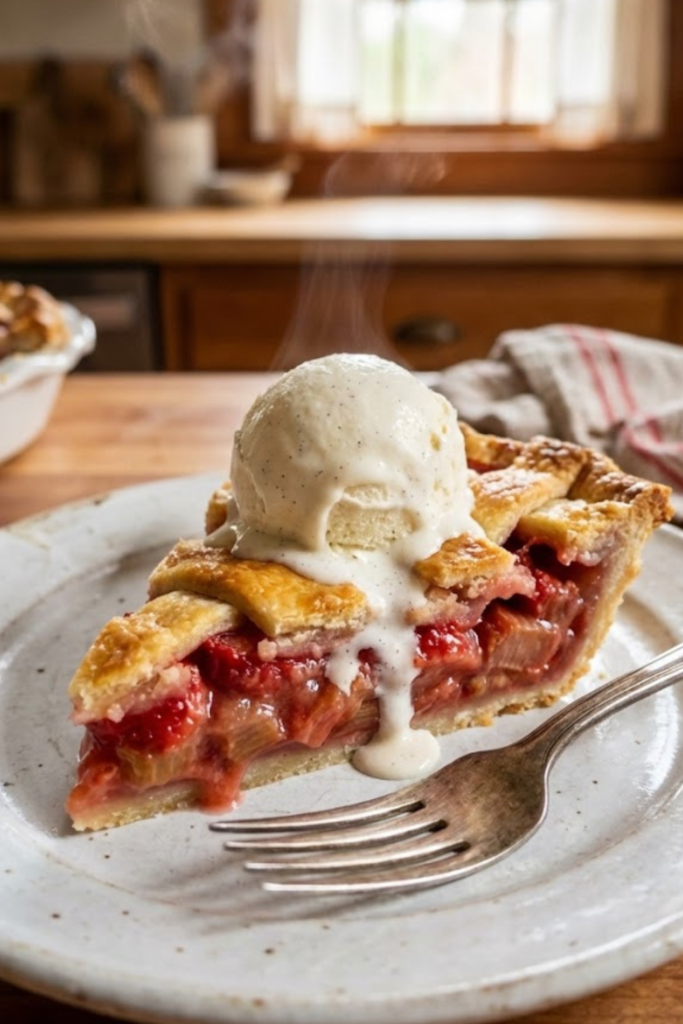
Honestly, making a Strawberry Rhubarb Pie with Lattice Crust from scratch is a bit of work. I won’t lie to you. It takes time to weave that top and it takes even longer to wait for it to cool down. But when you finally take a bite of that sweet and tart filling mixed with the flaky, buttery crust, you forget all about the flour on the floor and the messy kitchen. It really is that good.
Whether you make this for a 4th of July BBQ or just because you saw some nice rhubarb at the store, I hope you love it as much as I do. Just remember the golden rule: keep that butter cold! That is the only way to get those layers we all want.
If you found this guide helpful, I’d be so happy if you saved it to your dessert board on Pinterest. It helps other people find the recipe, and it helps me keep baking. Let me know if you try it!